
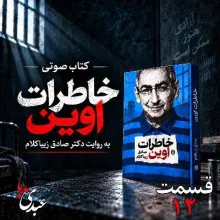
Listen | Episode Twelve | The Book of Evin Memoirs Written by Dr. Sadegh Zibakalam
Listen to Abdi Media on Castbox, without a filter
Read moreFresh stories from Abdi Media
Listen to Abdi Media on Castbox, without a filter
Read more
Listen to Abdi Media on Castbox, without a filter
Read more
Listen to Abdi Media on Castbox, without a filter
Read more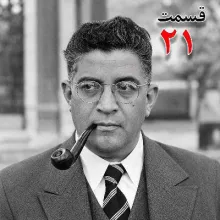
Muzaffar Baghai Kermani a member of the National Council in the 15th, 16th and 17th periods, listen to the founders of the National Front, the leader and founder of the Labor Party, through the efforts of Habib Lajurdi, without filter, in Abdi Media's cassette box.
Read more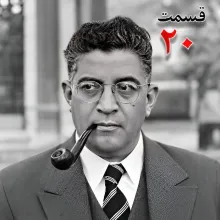
Muzaffar Baghai Kermani a member of the National Council in the 15th, 16th and 17th periods, listen to the founders of the National Front, the leader and founder of the Labor Party, through the efforts of Habib Lajurdi, without filter, in Abdi Media's cassette box.
Read more
Mozaffar Baghaei Kermani a member of the National Consultative Assembly in its 15th, 16th, and 17th terms, one of the founders of the National Front, and leader and founder of the Toilers Party, compiled by Habib Ladjevardi
Read more
The news received by Abdi Media indicates that yesterday, after the visit of Haj Gholam, the representative of Gachasaran and Bashet in the Islamic Council.
Read more
Listen to Abdi Media on Castbox, without a filter
Read more
Listen to Abdi Media on Castbox without a filter
Read more
Simultaneously on Spotify and Apple Podcasts
Read more
It seems that for some people, there is no such thing as morality or God.
Read more
Mozaffar Baghai Kermani member of the National Consultative Assembly in the 15th, 16th, and 17th terms, one of the founders of the National Front, leader and founder of the Toilers Party by efforts of Habib Ladjevardi without filters, listen on Abdi Media Castbox
Read more
The attack on the office of Ali Younis, the Minister of Information / the killing of Azam Tariq, the leader of Sipah Sahaba Pakistan, along with several others, has caused a riot by his followers. They have caused damage and insulted Iran
Read moreI was at home and did not have much work. Mr. [Mohammed Hasan] Rahimian came and I gave a long interview about the war for Pasdar Islam magazine. Mrs. Alam El Huda came and asked for a bus and a place to hold meetings for Zainab's convoy. with Mr. Riazi and Mr. Aghazadeh regarding the arms deal
Read more
I was at home until half past ten in the morning. Because the parliament is on summer vacation, I stay at home more these days. I married another daughter of Mrs. Naqash, a family full of displaced Iraqi girls, and gave her a gift. I performed the Friday prayer at the University of Tehran. Important information in the reports
Read more
I was at home. Efat was supposed to return from Mecca early this morning, but it turned out that the plane was delayed. The children went to the airport and returned empty handed. I spent most of my time studying and resting. Mr. Mohsen Rezaei, that Ayatollah Khamenei met with some of the IRGC commanders
Read more
Mr. [Mustafa] Tarabi informed that a Chinese ship carrying corn destined for Kuwait to Iraq was seized in the Strait of Hormuz and the president consulted on this matter in order to affect relations with China. We told them to treat the ship's staff well. To Mr. [Kamal] Kharazi [Chairman of the Committee
Read more
I arrived at the parliament at eight in the morning. A group of parliament employees came to claim a right, which I said I would handle. In the last days of the parliament of the previous regime, the ruling committee had approved an additional amount for them. [Mr. Morteza Nabavi] Minister of Post, Telegraph and Telephone and [General] Managers
Read more
First of all, Mr. Mohsen Rezaei informed that the Qadir operation has started in the Darband region and our forces have reached the Darband asphalt road from the heights of Hesarroost [in the border region of Ashnoye in the northwest]. So far, progress has been good and it is possible to capture many prisoners from Iraq. Mr
Read more
Mr. [Ali] Shamkhani [Deputy Commander-in-Chief of IRGC] came home early in the morning and explained the limited operation plan in Hor. It is a good plan. He had requests for the army's facilities and brought letters for action that asked the Imam for permission to establish an air and naval force for the IRGC and
Read more
I was at home and spent most of my time studying. Mr. President came before noon and was my guest for lunch. We consulted about the war, Lebanon, American hostages and other issues and more about the future government. Mr. [Ayatollah] Khamenei's opinion is that these did not work well
Read more
The air force announced that it hit an oil center and a radar center in retaliation for the attack on Khark in Iraq. The navy also announced that it seized an Italian ship on the way to the coast of Saudi Arabia and brought it to the Persian island for inspection. The Corps also informed [the passengers] two
Read more
We made an appointment with Mr. [Ayatollah] Khamenei on the phone that a unit of the IRGC forces will go to Khark to strengthen the defense. I told Mr. Mohsen Rezaei to activate the fronts because of Khark issues. He said that they have prepared a unit to operate in the Strait of Hormuz. I said in coordination with the navy
Read more
At nine o'clock in the morning, I went to Imam's pilgrimage in Hosseinieh Jamaran. It was the inauguration of Mr. [Ayatollah] Khamenei's presidency. In his text, the Imam emphasized the necessity of relying on the deprived and the oppressed. In his remarks, Ayatollah Khamenei sarcastically mentioned the weaknesses of the government's performance.
Read more
The guards went to the airport to bring the children who returned from Mashhad. I went to the parliament. At ten o'clock in the morning, a Pakistani delegation headed by the Minister of Commerce came to meet me and the discussion was about the development of relations between the two countries. They are supposed to buy 20,000 barrels of oil from us per day, but in exchange
Read more
I was at home. Before noon, the Foreign Minister came and consulted about the program of the Non-Aligned Conference in Angola. I said that hosting Yugoslavia [at the next summit] is not in our interest, because they are with Iraq, and it is better that India remains the host. The future government was discussed. according to
Read more
On the way to the Majlis, I went to the heart hospital and visited Mr. Taheri Esfahani, Hassan Saeed and Khorasani - one of the Iraqi displaced scholars whose three children are imprisoned [in that country]. In the parliament, most of my time was spent on meetings. Mr. Mirza Taheri came and dismissed himself from
Read more
Mr. Hossein Salari came and complained about the lack of cooperation of the Ministry of Oil for the training of maritime staff. Most of the naval forces of the country are foreign and this dependence is harmful. I decided to follow up. Mr. Gharehi [Oil Minister] asked me to go to Khark [Island] for a visit. Mr. Sayad
Read more
I stayed at home. Early in the morning, Mahdi went to school to go to Mashhad with the school students. The Ministry of Oil informed that a bomb was dropped on Khark Island this morning, but [the oil export equipment] was not damaged. I asked the commander of the air force, who said that he heard the sound of an explosion
Read more
I was at home and spent most of my time studying. In the evening Mr. [Mohsen] Rafiq Doost talked about the offer made by another Chinese company for the sale of goods. The Chinese are selling these goods to us in another way. It seems strange that two companies from a communist country are similar
Read more
Early in the morning, we went to the Abike ground force base and participated in the morning ceremony and visited several warehouses of weapon parts and car parks, and the officials gave reports; Overall, they have a regular situation. From there, we went to the [construction] site of Shahid Rajaei power plant. Concrete pouring of the first unit
Read more
I asked Ayatollah [Mousavi] Ardabili to lead the next Friday prayer. They have not accepted it for some time and they are dissatisfied with the actions of [officials] of the headquarters [of organizing] the Friday prayer [in Tehran] and they have a proposal for reform, but due to the sensitivity of the time and the issue of the government, they accepted that
Read more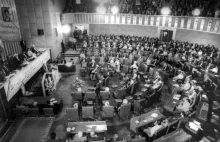
I was at home. I told Mr. [Ayatollah] Khamenei, who is going to Mashhad, to take our children with them. It was decided that Mr. [Ayatollah] Khamenei would lead the Eid al-Adha prayer. I am bored, so I spent most of my time resting and studying. In the afternoon Mr
Read more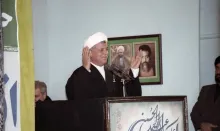
I went to the parliament at eight in the morning. It was not an important issue in the reports. Mr. Jahanara, the father of two martyrs, came and asked for help for the freedom of his other son who is imprisoned in connection with the hypocrites. Mr. [Kamal] Kharazi came with the heads of the war week propaganda committees. I spoke for them and the advertising line
Read more
I used to study at home until eleven o'clock in the morning. I feel a little tired, feel tired and have pain in my joints and bones like a cold. I went to the Imam's office and negotiated with Mr. [Mirhossein] Mousavi regarding the problem of the future cabinet, considering Mr. [Ayatollah] Khamenei's disapproval.
Read more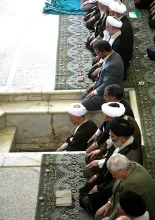
I used to study at home until half past ten in the morning. I went to Tehran University to offer Friday prayers. As usual, Mr. [Ayatollah] Khamenei was supposed to be installed, but he was not ready. In the evening, Mr. [Mohsen] Kongerlu, the Prime Minister's adviser, came and talked about bringing the Tau missile by
Read more
I was at home all day. Mr. Alizadeh, one of the breeders of Gilan, who has been under pressure from extremist elements after the revolution, came to complain. Haj Ahmed Agha came and we discussed with him about the government, war, etc. Mr. [Gholamreza] Aghazadeh came with a report of the arrival of a number of Tav missiles
Read more
I stayed at home. I wrote the Arabic sermon. I read the reports and studied for Friday sermons. Haj Ahmed Agha came and suggested that I go more to offer Friday prayers. I said that the main responsibility lies with Ayatollah Khamenei. About the problem of the future prime minister and the future government
Read more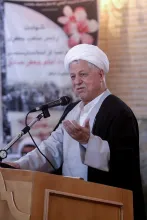
I worked at home until eight in the morning. At nine o'clock in the parliament, the members of the Lebanese Hezbollah council came to meet me. They were worried about Iran's relationship with Lebanon's Amal Hizbullah, and I emphasized the need for cooperation between Shiites and all Lebanese and Palestinian Muslims, and resolved the differences between Hezbollah and Amal.
Read more
I was at home all day. Before noon, Mr. [Hasan] Rouhani came and we discussed the war, the IRGC and the army. He is going to the inter-parliamentary congress in Canada. In the evening, Mr. [Abdul Majid] Maadikhah came and we discussed about the foundation of the history of the revolution. They brought the reports and I read them. Important article
Read more
I went to the parliament to do meetings and administrative work. Our ambassador came to the Soviet and told about the change in the policy of the Soviet after the election of Gorbachev in the direction of economic construction and avoiding international conflicts and asked about our policy regarding relations with the Soviet. I said we are trying to improve relations.
Read more
I was at home all day. Colonel [Mustafa] Tarabi reported that the delegation to Khark had given an opinion that there was a defect in the way of defense and that the pier of T was damaged. [Oil Minister] Mr. Gharehi also gave a report on the amount of damage. Overall, Iraq has achieved a relative success in striking Khark. should be in
Read more
First, I went to Hosseinieh Jamaran and voted for the presidential election. Most of the day, I read the reports while watching TV. TV broadcasted good live programs of the election process. The company of people is very good and destroys the enemy. Mr. [Sheikh Fazlullah] Mahalati
Read more
Dr. Gurji came and asked for help for the currency problem of his son who is studying in America. We had a meeting of the Supervisory Council of Radio and Television. The topic of the meeting was the differences between [Mr. Mohammad Hashemi] the CEO and [Mr. Mohsen Daagu] the secretary of the supervisory council. There was nothing important. They claimed to be their CEO
Read more
I stayed at home. The effects of the cold are still there. I wrote the backlogs for a few days, but I briefly read the reports. I told Mr. [Mohsen] Rezaei that it would be good for the IRGC in Lebanon to try to find a clue of the agents of the American hostages who would exchange the freedom of the Lebanese prisoners in Lebanon.
Read more
I was alone at home. Gas pipe workers and construction repair workers were working. I was also tired because of a cold and did not go to the meeting of the Supreme Council of the Cultural Revolution. Mr. [Ali] Shamkhani informed that they need four helicopters for IRGC operations, I told Mr. Sayad [Shirazi] to give them.
Read more
I stayed at home. I have a cold and a little fever. Fati, Mehdi, Saeed and Sara went to Javaherdeh in the north, where Mr. [Sheikh Hassan] Lahoti left a house. I was left alone. They bring my food from the kitchen of the [Imam's] house. Gas pipe workers work at home. before noon
Read more
On the way to the assembly, I went to the heart hospital to visit Mr. [Jalaluddin] Taheri [Imam Juma of Isfahan]. He went to Labafinejad Hospital for prostate surgery. I stayed in my office until the evening for meetings and office work. Parliament is closed today. Mr. [Reza] Amrollahi
Read moreI worked at home until ten in the morning. I went to Manzariah [camp] to participate in the seminar of heads of education across the country and spoke in detail about the importance of the cultural factor in the fate of the society and returned home. Efat accompanied her sister Ezra Khanum and Fereshte Tabatabai to the airport for Hajj
Read more
Sorry, Mrs. Hamshire Efat came from Rafsanjan. I have fever since last night and in the morning I got fever and chills. I was able to work for Friday sermons and lead Friday prayers at Tehran University by using many accommodations. I talked for almost an hour and a half in a fever. I was very tired in the evening. how many
Read more
After the morning prayer, I wrote the text of the Arabic sermon and sent it for translation. I wrote the answer to Mr. Yoshihiro Nakasone, the Prime Minister of Japan. In the public meeting, we worked together until noon. Two urgent bills were approved with the presence of members of the Guardian Council. I got tired Mr. [Abbas Ali] Bahari
Read more
I worked at home until eight o'clock in the morning and filled some of the interview tape with the youth magazine [Today]. Then I went to the parliament. Two IRGC officials came to Lebanon. I talked to them about the American hostages in Lebanon. They don't know about the hostage takers, but they have some guesses.
Read more
I went to the parliament at half past six in the morning. Several orders were made in the public meeting. Some representatives have gone to Makkah and it is difficult to manage the meeting. Because the quorum of representatives is not reached during voting. In the Majlis, a complicated whisper that Imam said to Mr. Fakhreddin Hejazi [Tehran representative].
Read more
I was at home all day and spent most of my time studying. The report of the failure of the counter-revolutionary attempt to hijack our plane on the Tehran-Bandar Abbas route was received, which is important.
Read more
Early in the morning, I had a meeting with Mr. [Mohammed] Faruzandeh, the head of the IRGC's military engineering, in my office. He consulted about laying a pipe to the enemy's border for war purposes and building a road in Hur. We will comment later. Several orders were made in the public session of the parliament. Many referrals from representatives
Read more
We did not have a meeting due to the travel of the members of the Supervisory Council [Sadasima]. Mr. [Mohsen] Daagu, who was sick, got better and came. There was a discussion with him about the issues that there are differences of opinion in the radio and television. Employing people and paying attention to the wishes of the council is disputed. The meeting was arranged
Read more
I used to study at home until half past ten. I performed the Friday prayer at Tehran University. Efat and Mehdi came with me to the Friday prayer. This year's fresh pistachios were delivered to us today by Mr. Mohammad Hashemi. Shab Akhavizade Farzaneh and her husband Tawakli [Bina] who studies in America.
Read more
I went to the assembly early in the morning. Before the public meeting, Mr. [Ali] Shamkhani [the acting commander of the IRGC] came and gave a report on the situation of the fronts and the IRGC. It turned out that they are delaying the desired operation by two months; The same plague of past wars. I emphasized that in the northern front with Mr. Sayad
Read moreMr. Sayad [Shirazi] came and reported Qadir's operation. He has realized that he cannot do anything important without the help of the IRGC. It has also delayed the main operation. In general, from the performance of Mr. Sayad and the army in the last few months, I have come to the conclusion that the army without the presence of the IRGC
Read more
I worked until eight in the morning. Mr. Dr. [Abbas] Shibani came and complained about the opposition of Dr. [Mohammed Reza] Rah Chamani [Vice Chairman of the Parliament's Health Commission] to the bill to establish the Ministry of Health, Treatment and Medical Education. Mr. Behzad Nabavi, [Mohsen] Nourbakhsh, [Asadullah] Bayat, [Mohammed] Asghari, [Mohammed]
Read more
Mr. [Gholamreza] Aghazadeh [Deputy Prime Minister for Executive Affairs] came and gave a report on the progress in the purchase of weapons. He said that the Chinese behave well and informed that a company from Saudi Arabia has offered to sell Tau missiles, which is strange. Such a company is unlikely without consent
Read more
I stayed in the public session of the parliament until ten o'clock in the morning. In the afternoon, our ambassadors and businessmen came from Europe and America, I spoke to them about the importance of the Islamic nature of the revolution. In the evening, the first meeting of the Central Council of the Islamic Republic Party was held after the Congress and the Secretary General of the Party was elected. Ayatollah
Read more
I worked at home until eight in the morning. Then I went to visit Imam. The Imam is doing well. I discussed with the imam about the future cabinet, selling oil, amending the constitution, and the future of the IRGC and the army, and it seems to me that in all four cases, favorable results were obtained, which will determine the fate of the revolution.
Read more
The family members are in Rafsanjan. I said hello on the phone. Mehdi has gone on a mountain hike. He left early in the morning and came back at four in the afternoon. Today I spent most of my time reading reports. Mr. Behzad Nabavi, [Hossein] Namazi and [Mohsen] Noorbakhsh came and warned about the possible economic crisis.
Read more
In the public session of the Majlis, the plan to establish religion and knowledge in high schools was rejected. I had many references from representatives. In the evening, some of Mr. Montazeri's representatives came to the universities and complained to the office of Tahakim Vahdat and asked for confirmation. The families of the captured doctors in Iraq came and
Read more
I studied until eight in the morning. Mr. [Mohammed Reza] Shams [= Naqdi] in charge of the Ramadan camp came and told about the many facilities in northern Iraq to carry out guerilla warfare and asked for funding, radio and approval. Our agent came to England and gave a report; including the recent seminar to examine the revolution
Read more
I managed half of the public session of the Majlis and left the rest to Mr. Yazdi. I made several appointments in my office. Mr. Mohsen Rezaei informed [Mr. Ahmad Kazemi] that the commander of the 1st Najaf Division, who was supposed to cooperate with Mr. Sayad [Shirazi] in [operations in the] Saidkan area, is not satisfied. emphasis
Read more
The children went to Rafsanjan. I talked with the IRGC commander and minister and the prime minister about the war and IRGC budget and with Aghazadeh about the purchase of weapons. Mr. Motahari's son came and asked for help to publish his father's works. They have a problem in getting the right paper, and because education is a nuisance for independent schools
Read more
After the morning prayer, I went to the assembly. In the public meeting, the bill to collect more fees than the passport was approved. After breathing, I returned to my office. Mr. Anwari and [Ahmed] Natiq Nouri came. They believe in the authenticity of the claim of recognition of the treasures by individuals. I told Engineer Hojjat, Deputy Minister of Culture
Read more
I was at home. The Board of Trustees had a meeting. Mr. [Mohsen] Daagu [Member of the Council] is sick and is hospitalized. There was some discussion about the non-implementation of the Council's resolutions by the Broadcasting Organization. For the campaign of the presidential elections, the goal was to encourage people to participate in the elections.
Read more
I stayed at home and spent most of my time studying and resting. Last week, I was very tired because of the two assemblies of experts and the Islamic Council. I also swam a little. Mr. Mohsen Rezaei came and gave a report on the fronts and complained about the lack of budget and the weakness of the council and the interference of the Imam's representative.
Read more
I stayed in the public meeting until ten o'clock in the morning. I went to Shahid Motahari School to participate in the Congress of the Islamic Republican Party. Ayatollah Khamenei spoke and reported and criticized the losses of the difference between the two currents in the party, which led to the extinguishing of the party's light. I went to the assembly at noon. It's half past three
Read moreThe assembly of experts had morning and evening meetings. Your leadership, Mr. Montazeri, was under orders and no one had the courage to openly oppose or was not openly opposed. Some people said that it is a hasty action and will cause accusations and words of the opponents, and they said that it was an investigation about the rest of the possible people.
Read more
At 7:30 Mr. Tabasi came home and complained that the Imam's office and mass media were treating him badly. The title of representative of the imam in Khorasan, which belongs to him, refers to Imam Juma of Mashhad. I was supposed to take care of it. along with other members of the expert council
Read more
I left for the parliament before six in the morning. I heard from the front that Mr. Sayad said that the first stage of the operation was done well and the enemy has a weak defense. It was decided to bring detailed information from the headquarters of the ground forces, and he said to leave the news under the control of the camp to spread as much as is expedient.
Read more
Although today was a holiday, the Assembly of Experts had a meeting and we worked until noon. While breathing, Mr. [Mousavi] Khoiniha informed that in Aghajari, some workers of the oil company are protesting against the policy of the Ministry of Oil and have gone on strike. The experts of Khuzestan province were consulted in this regard, Haq
Read more
After the morning prayer, I went to the assembly. The board of the council of experts [leadership] was formed in my office and we prepared the schedule of the meetings. The expert meeting should work for five days. The first meeting was held at eight o'clock in the morning and the board of directors was elected: Ayatollah Meshkini is the president and I am the first vice president, Mr.
Read more
I studied for sermons until half past ten in the morning. I performed Friday prayers at Tehran University. A sermon about the rights of women and her character and a sermon about the goals and results of the trip were delivered. In the afternoon, our relatives were our guests. In the evening, the children went to a party and I was alone at home.
Read moreAfter prayer, I worked in my office until half past seven in the morning. In the public session of the parliament, the bill for the establishment of the Ministry of Health, Treatment and Medical Education, which merges medical schools with the Ministry of Health, was discussed. The debates were serious and fierce and the opponents had argued, but with a strong majority
Read more
At seven o'clock in the morning, I went to Mr. [Ayatollah] Khamenei's office and a government meeting was held under his chairmanship to discuss and follow up on the decisions of the China and Japan trip. In this meeting, Dr. Velayati and Aghazadeh explained the achievements of the trip. A committee was formed to follow up the projects
Read moreI went to the parliament early in the morning. Some of the representatives believed that it would be better for the parliament to be closed today due to the death of Mr. Rabbani Amlashi, but the majority did not think it was appropriate, so we did not close it. I talked about him before the order and then we went outside the parliament to perform the ceremony. A lot of people
Read more
Mr. Sayad [Shirazi] came early in the morning and reported the progress of the operation. It seems that they want to act. I was at home all day. The news arrived that Mr. [Mohammed Mehdi] Rabbani Amlashi had died and they consulted about the funeral ceremony and announcements. In the evening of chastity, he went to their family's funeral.
Read more
In [the speech] before the agenda of the public session of the parliament, I talked a little about the trip to China and Japan. After breathing, I was in my office. The representatives of Shiraz came and gave a report of the recent events in Shiraz, that Hezbollah has taken measures against Mr. [Mohiuddin] Hayeri Shirazi, the Friday imam.
Read more
I worked in my office until eight in the morning. I read the reports. Iraq is silent about the Quds operation. Although it is a blow, the world has not reacted much. I presided over a part of the public meeting, then handed it over to Mr. [Mohammed] Yazdi and went to Mr. [Ayatollah] Khamenei's office.
Read more
At 8:30 in the morning, I visited the Imam and gave the report of the trip. Imam was happy. Mr. [Syed Mohammad Mousavi] Khoeini also came. The Imam asked him to accept the position of Attorney General of the country and the problem of Hajj work should be solved by installing a successor in the current year. Until noon in the house of ten reports
Read moreAt half past eight in the morning, we left for the Handa airport and said goodbye to the palace staff. On the way, the head of ceremonies of the Ministry of Foreign Affairs emphasized that the Japanese officials were influenced by the morals and character of our delegation and announced that they broadcast a part of my TV interview last night.
Read more
We had a busy day. Early in the morning, we went to the airport and flew to Nagasaki city to see the museum of the American atomic bomb explosion 41 years ago. The governor and the mayor were welcomed. From the airport, we went to the port to see the Mitsubishi Shipyard. With a ship we are in port
Read more
I woke up Mehdi to eat breakfast and go after work with the children. Ahmad Agha's son Hasan was with us like my children - Yasir and Mehdi. I exercised a little and watched some TV after taking a shower. A Japanese TV channel is available to Americans and programs
Read more
Last night, some unnecessary programs such as visiting factories and the banquet of the Federation of Economic Organizations were removed. Therefore, before noon, I had little work and stayed mostly in the palace. I spoke on the phone with Mr. President and Comrade Dost [IDF Minister], he said that Libya and Syria will fulfill their promises.
Read moreAfter prayer and some exercise, breakfast was served in the room and then we went to the airport. We went to Shanghai with two Chinese planes. We were on our way for one hour and forty-five minutes. At the Shanghai airport, the mayor was welcomed and we were delayed for about an hour until our planes arrived from Beijing
Read more
Chinese Prime Minister [Zaoxiang] came to the residence at half past eight in the morning for the last meeting and farewell. The cooperation memorandum was signed by Deputy Prime Minister [Gholamreza] Aghazadeh and his counterpart. Official negotiations were held and then a private meeting was held at my request. about getting
Read more
After breakfast, which is usually spent at eight o'clock in the morning, we went to see the "Forbidden City", a complex of former Chinese imperial palaces - whose skeleton is made of wood - and they said that its total area is seventy hectares and the number of rooms is 9 thousand, and they also gave explanations. At the end of two people from Ms
Read moreI woke up during the call to prayer and slept until eight o'clock. I spent some time writing memoirs. I prepared to meet President Li Xianyan. He was a quarter of an hour late. The United Press agency took advantage of this delay and telexed the news that I was sick.
Read more
At eight o'clock in the morning, the plane landed at the Beijing airport. A brief reception was held and the official reception will be held in the evening at the Tiananmen Square of Heavenly Peace. We were taken to the palace of the government guest house, which is reserved for the heads of states, and there is a large garden that has been in use since the time of the Chinese Empire.
Read moreI went to the parliament first thing in the morning. After the meeting started, I handed it over to Mr. Yazdi and came to my office to do the work before traveling to China and Japan. Opinions were exchanged about companions and programs. Sayad Shirazi came and gave a report on the war plans, and because he was late, a few times
Read more
Around four in the morning, Tehran time, the plane arrived in Tehran and they woke me up. We prayed the morning prayer at the [Mehrabad] airport. They said that Tehran was told that we will arrive in Tehran at eleven o'clock last night and the futures have been waiting for hours. This disorder when entering Libya and Syria
Read more
I went to our embassy in Damascus at six in the morning. I met with the Lebanese Council and Hezbollah. We discussed the issues of Lebanon and the hijacked American plane. They asked me for my opinion on current affairs. I said that hijacking planes and taking hostages will end up harming Lebanon, so the effort
Read more
A group of companions did not sleep until the morning to prepare a joint statement and did not reach an agreement on the issue of condemning Amal and Nabih Bari's organization - which Liby insisted on very much. During morning prayer, Dr. Hadi reported their work. At eight o'clock in the morning, Jalod came and I intervened to reach an understanding
Read more
I woke up near sunrise for prayer and didn't sleep again. I have a hard time sleeping. The view of the sunrise on the Mediterranean coast, visible from the bed, is very beautiful. I wrote down the issues that we should include in the joint statement - the issues of war and Lebanon and Palestine - and sent them to the Ministry of Foreign Affairs.
Read more
At seven o'clock in the morning, we had a meeting with our companions to discuss the discussed issues. Then five Iranian students who study here came. They are not very satisfied. At nine o'clock in the morning, we went to the tomb [Anonymous Soldier's Monument] of the martyrs of the occupation of Italy, and then to the air base.
Read more
We were going to visit Imam. But I was late and Imam came to Hosseiniyya. I am going to Libya, I have little time. I wrote the remaining memories. I went to visit the imam inside to say goodbye. I consulted about the Lebanese issues that should be discussed with Libya and Syria. imam
Read moreI worked until six in the morning and then slept until half past seven. Mr. Gharehi [Oil Minister] came and consulted about Iran's position in the OPEC conference. I told him to oppose the cheapening of oil. A letter in 14 paragraphs about the war and our conditions and the [war crimes] court for the governments
Read moreWe had a public meeting. In the speech before the order, I condoled the martyrdom of Mr. Fouad Karimi's brother [Ahvaz representative], who was assassinated by the counter-revolution. Several orders were made. I had several meetings in the afternoon. In the evening, the Supreme Council of the Cultural Revolution had a meeting and we made decisions. We were the guests of the President at Iftar.
Read more
We had a public meeting in the parliament. Before the order, I spoke about the greatness of the people's march last Friday. The representatives claim that we have not had such a huge march throughout the country during the entire revolution, especially considering the existing dangers and the misleading advertisements of the radios.
Read more
Today I was at home and spent most of my time studying before noon. In the afternoon, we had a meeting of the [radio] supervisory council. It was discussed more about the differences that the members of the council have with the CEO. Most of the members of the council claimed that [Mr. Mohammad Hashemi], the CEO of [Sadasima],
Read moreI was studying at home until ten o'clock in the morning, and Efat, Mehdi and Fati were going to march, and Yasser Kafanposh participated. Early in the morning, Iraqi planes invaded Tehran as a sign of carrying out threats, but were repelled. It was reported that nine Scud missiles hit the western and southern cities.
Read more
Mr. Sayad [Shirazi] and the army commanders came and we had a meeting for about five hours. They explained the future operation plan, which is not bad, but it has some weaknesses. It is possible that they will not find it practical to do it like last time. Mr. Aruj came in the evening and gave a report of his negotiations in China
Read more
Even though I had slept earlier than previous nights, I did not wake up due to neglecting to set the alarm clock, and Mehdi and I fasted without dawn. I went to the parliament before noon. Colonel [Mustafa] Tarabi came and reported the decisions and facilities for defense against Iraqi air attacks, which is a combination of
Read more
I woke up at half past seven in the morning with the sound of anti-aircraft fire. It turned out that three MiG-25 planes came and dropped three bombs around Geisha, which burst a water pipe and destroyed a half-built house, but there were no casualties. With Colonel Tarabi [responsible for the Imam's advisory office in the army] about
Read more
In the public session of the parliament, several orders were made and I defended the university regulations bill and blamed the opponents for their bad behavior. In the evening, I did an interview with the Japanese [NHK] TV for publication in Japan before traveling to that country; Almost all the necessary words
Read moreThe parliament was supposed to be closed this week, but we did not close it because of the accusation of parliamentarians fleeing from the bombing of Tehran. In the public meeting, two or three orders were made, and before the order, I spoke about the martyrdom of Ashikh Abbas Shirazi. In the afternoon, the Chinese ambassador came to renew the invitation and explain
Read more
First of all, Mr. [Mohsen] Rezaei [commander of IRGC] informed that the coordinated plan of the Air Force and IRGC missile unit to attack Baghdad was not carried out, and due to the lack of cooperation of the Libyan agent, [launching] the missile was delayed and two F4 planes went, one returned and the other crashed.
Read moreWhile having breakfast, Iraqi planes attacked Tehran and dropped several bombs, but no damage was done. Two [surface-to-air] missiles were fired, but did not hit. Mr. [Hasan] Rouhani and [Mohammed Ali] Hadi came before noon. War and defense and political mobilization were discussed. Asr Mohsen Rezaei came and
Read more
In the public session of the parliament, the bill for the establishment of the Iran-Pakistan joint shipping company was approved. I also defended. Mr. Sayad Shirazi came in the afternoon and gave a report on the progress of work on the fronts. He is satisfied and they disagree with the IRGC regarding the action in Sidkan. In the evening, I gave a speech to the security personnel of the parliament.
Read moreEarly in the morning, the alarm was sounded and several explosions were heard without the anti-aircraft guns working. As a result of the bombing in Saadat Abad, two houses were destroyed and two people were martyred. It's embarrassing that anti-aircraft guns don't work. It's like the noise of anti-aircraft guns is a relief for some
Read more
In the open session of the parliament, the law on the supervision of the Guardian Council on the [Presidential] elections was approved. The use of surface-to-air missiles [to counter the Iraqi attack planes] had a great effect on our morale and the people's, and we feel relaxed. At noon, a gathering of public relations staff
Read more
I had a public meeting. There were many references. Last night, Iraq bombarded the neighborhood of Kuy Geisha [Nasr] and left about 40 dead and 60 injured. In the evening, the community of militant clerics had a meeting and discussed the Quds Day march to support the war. I was the guest of Mr. Fazel Harandi at Iftar. after
Read moreI went to the parliament at seven o'clock. I read the reports. Our missile has hit the center of Baghdad. I asked Mr. Sediq why he did not launch a standard missile at the enemy plane. He said his radar was not working well. In the public session of the Majlis, the issue of the presidential election was discussed. Mr. Doctor
Read more
Together with Mr. [Ayatollah] Khamenei, Mr. [Mousavi] Ardabili and Engineer Mousavi, we went to visit the Imam. We presented the situation of the IRGC and the army, the IRGC's proposals regarding the war and the readiness of [Colonel] Sayad [Shirazi] for the operation. The Imam expressed his opinion about the letter of the commander of the army
Read more
I studied at home until half past ten in the morning. I consulted with the imam, the president and the prime minister about the plan to support the war in the World Quds Day demonstration or 15 Khordad, and they all agreed. In the first sermon of the prayer, I started the chapter on social justice in terms of men and women, and the second sermon on war and
Read more
In the public session of the parliament, two or three clauses of the order were acted upon. In the evening, a group of army information protection personnel came, I gave a speech to them. Representatives of Zob Ahan Islamic Associations came and criticized the minister and were completely against him. I advised them. Association representatives
Read more
I did administrative work in my office from eight to ten in the morning. In Mr. [Ayatollah] Khamenei's office, we had a meeting with the IRGC commanders to discuss their plans for the future of the war. After the Badr operation, we assigned them to bring their plan. It seems that they are weak
Read moreIn the public meeting, in the speech before the order, I talked about the Majlis. The presidential election law was on the agenda. I left the management of the meeting to Mr. Yazdi [Deputy Speaker of the Parliament] and came to my office. In the evening, in the Supreme Council of the Cultural Revolution, we approved the establishment of non-profit, non-governmental universities
Read moreAt dawn, Mr. [Mohsen] Rafiq Doost informed that the commander of the Libyan missile team was looking for an excuse and he had to convince him and send him to the area. He suggested that I ask Libby to replace him. In addition, IRGC members also claim that they can [launch rockets].
Read moreWhile we were having breakfast, a red alert was announced and two Iraqi planes attacked Tehran. Anti-aircraft guns worked hard. Iraqi planes dropped two bombs, as a result of which two or three houses were destroyed and 5 people were martyred and 12 people were injured. I told the war propaganda headquarters that the announcement
Read more
I was at home. We had nothing important to do. In a telephone conversation, Mr. [Ayatollah] Khamenei criticized the reduction of Mr. [Mohsen] Qaraati's program on television during the month of Ramadan. They reported the preparation of a surface-to-air missile - which has a range of about 90,000 feet - which, if true, would
Read more
After the morning prayer, I slept until half past seven. I read the American spy nest documents about the nuclearization of Pakistan. The imam sent a message that the mention of piety in the first sermon should not be forgotten. I informed Ayatollah Khamenei about this by phone and discussed with him the action regarding the letter.
Read more
After Suhoor and morning prayers, I went to the assembly. In the public meeting, the general bill of the Ministry of Heavy Industries was approved and a faction of the parliament was defeated. They made jokes in the speeches before the decree, but it was to their detriment. Some of the employees - some of the faithful ladies of the Majlis - came to my office at noon and
Read moreI was at home. After Suhore and morning prayers, I slept until eight o'clock and spent the rest of the day reading and interviewing with Hozha magazine and Payam Elkhebal magazine. On the phone with the president, we talked about the retaliatory attack on Iraq's industrial centers. [Mr. Hassan Ghafouri Fard] Minister of Energy informed that
Read moreI went to the assembly early in the morning. In the public meeting, the bill of the Ministry of Heavy Industries was discussed, but it was not finished. As a warning, Mr. Salehi, representative of Isfahan, said something that offended the Guardian Council and then apologized. At noon, the retired employees of the Parliament came and demanded an increase in their salaries. Director General
Read more
I worked in my office until eight in the morning. Mr. Sefati Dezfuli, the head of the Court of Accounts, came and raised the problem of incompetent employees in the court, lack of funds for additional salaries of professors, and other problems to be solved. Mr. Asefi, our ambassador in East Germany, came and gave a report on the negotiations and preparations
Read more
I went to the assembly early in the morning. In the public meeting, the work of amending the agricultural land bill was finished. If the Guardian Council accepts, it will solve some of the problems. I gave an interview for the special issue of the Majlis on the occasion of the anniversary of the opening of the second term of the Majlis and in an interview with the Islamic Republic of Iran.
Read moreI was at home and I was studying until nine o'clock in the morning. The Board of Trustees had a meeting. The rules for broadcasting news and programs for the month of Ramadan were in order. Mr. Velayati said on the phone that Libya has announced that they are ready to receive us tomorrow. I said that there should be a consultation and finally in the evening
Read more
Early in the morning, we went to Karaj with [Mr. Dr. Zali], the Minister of Agriculture, to visit the Institute of [research and] improvement [and preparation of seedlings and] seeds. First, we watched a movie and they gave an explanation, and then we went to the farm, they explained the process of seed modification and we also observed it in the farm. an interview
Read more
I went to the assembly early in the morning. In the public meeting, there was an order to amend the arable land plan and we made progress. God willing, with the approval and implementation of this plan, the problem of temporary, permanent and barren cultivation lands will be solved and [farmers] will be relieved of their obligations. At noon, a group of Damghan people came and
Read more
I was at home and spent my time reading and walking in the yard. Mr. Velayati said on the phone that [Mr. Saud al-Faisal], the Minister of Foreign Affairs of Saudi Arabia, has a condition to meet with me in order to come to Iran, which I accepted. Mr. [Mohammed Hasan] Zoroq [Deputy of Broadcasting Organization] by phone, permission to broadcast
Read more
After prayer and exercise, I went to the assembly. I saw in the reports that Iraq claims to have hit a ship in the Persian Gulf, but the news is not true. The amendment of the arable land plan was on the agenda of the parliament, a part of which was amended, and we had disturbing encounters from some representatives, and the intensification bill
Read more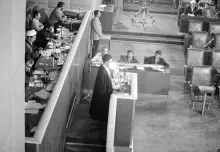
I was at home all day. Before noon, I spent most of the time reading the reports and spent some time with Sara - the daughter of Fatemeh Sabieh. His mother is going to university and he is making excuses. Dr. Alfi came and brought some herbal medicine. His medicine is effective in relieving my hand pain. from
Read more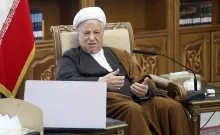
I was in the parliament at twenty-five minutes past six. As usual, I read the telex news and listened to American Farsi Radio to understand the propaganda lines desired by the Westerners. In the public meeting, we had the plan to formalize experimental dentists, which was very noisy and taking a stand.
Read more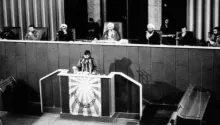
اول وقت آقاى صیاد [شیرازى] آمد و گزارش برنامه عملیات را داد. He almost despairs of carrying out the plan and claims that the troops will not comply and he had other suggestions as well. حاجى یوسف آمد و گزارش سفر تیم خرید اسلحه را داد. مدعى است که آمریکا مایل است اسلحه ها، هواپیما،
Read more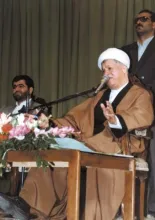
At home, I used to study for Friday prayer sermons until half past ten in the morning. I went to Tehran University to offer Friday prayers. In the evening, Ahmad Agha came and we talked about the war, the Guardian Council and university issues. Dr. [Mustafa] Moin came and asked about his permission to withdraw from the Supreme Council of the Revolution
Read more
Before going to the parliament, I wrote the delayed memories. I did not see anything important in the reports. In the public session of the parliament, several orders were made. At noon, I had a meeting with [Mr. Barik Bin] Imam Juma of Qazvin and a group of officials of this city. Western representatives also came and complained to the governor
Read more
I worked in my office until half past seven in the morning. We also approved some orders in the public meeting. In the afternoon, the fire extinguishing team of Nowruz Well No. 5 - which had been burning since two years ago in the Persian Gulf due to the Iraqi attack - came. They reported their work, it was interesting. I thanked and appreciated.
Read more
I arrived at the parliament at six in the morning. There was nothing important in the reports and the public meeting went as usual. At noon, [the community members] of the fighting clergy of Mashhad came. They had questions about the country's economic situation, war, Hizb [Islamic Republic], disputes, Hezbollah and other matters, and I gave explanations.
Read more
I was at home and studied more. The clerics had come to meet the Imam. Before noon, I got married to my two nieces - Nasser and Maryam. In the afternoon, the relatives were guests at the house of Mohammad - Hamshirezadeh - and I was alone at home. with Mr. Sayad [Shirazi] and Mohsen
Read more
I was at home until three in the afternoon and studied more. Mr. [Gholamreza] Aghazadeh [minister advisor on executive affairs] came and brought a report on the negotiations for the purchase of arms from China and South Korea; Probably, because they see our developing relations with the Soviet Union, they want to prevent us from approaching
Read more
After the prayer, I studied. We discussed with the president about the quality of interaction with the Peace Commission of the Organization of the Islamic Conference - who have announced that they want to come to Iran to negotiate about the war. Mr. [Ayatollah] Khamenei is worried about the consequences of their sister's escape to Iraq. he
Read moreMr. Rezaei informed that the device made by the army did not pass a good test, and therefore it is necessary to develop the example made by the army. He also gave comments on the composition of the forces and seemed more hopeful in finding a new solution. to the prime minister about providing currency to the IRGC and the movements that
Read more
After the morning prayer, I slept until seven in the morning. I spoke about Teacher's Day in the public meeting of the Majlis before the order. After breathing, I came to my office. In the evening, I spoke about the war to the forces of the Khorasan Nasr Army who had come to meet. Ardal and Sangar representatives came and for issues
Read more
I was at home until three in the afternoon and studied more. In the evening, I went to the Majlis and after the board meeting, I left for Qom. I arrived at Mr. Montazeri's house near evening. Mr. [Mirhossein Mousavi] Prime Minister, [Mousavi] Ardabili, [Ayatollah] Khamenei and Ahmad Agha also came.
Read more
I arrived at the parliament at half past six in the morning. I did the administrative work and saw the reports. Before the order, I talked about Martyr [Mortaza] Motahari and Labor Day, and later I realized that I should talk about Mr. Motahari the day after tomorrow. The members of the oil commission came and talked about the new law
Read moreThere is no meeting on Mondays. I was at home and studied more. Ahmad Agha came and told about his negotiations with Mr. Montazeri that he agrees with the end of the war in the form of a ceasefire, and that action should be taken in this field at the right time after things are settled. I asked them to
Read moreI arrived at the parliament at half past six. We did not have any important issues in the reports. In the public meeting, two clauses of the order were implemented. At noon, one of the employees of the parliament - who is a student - came. He had suggestions to strengthen Tarbiat Modares High School. Asr [Mr. Vasuki Miyake] General Political Director [Africa and
Read more
I studied until nine o'clock in the morning. We had a meeting of the supervisory council. Most of the discussions were about the quality of the news. Although reforms have been made after Imam's criticism, there are still many problems. In terms of the tone of the news anchors, the type of news and discrimination in news agencies and... criticisms
Read more
I studied for Friday sermons at home until half past ten. They brought me the reports and I read them. The UN Security Council has admitted that chemical weapons were used against Iranian forces, but it did not explicitly mention the name of Iraq. I consulted with the Prime Minister.
Read moreI worked in my office until half past seven in the morning. In the public session of the parliament, the draft law on forests and pastures was discussed and it took all the time. In the afternoon, the members of the Education Commission came and spoke about the transformation of culture. In the evening, the members of the radio and television planning seminar came and for them
Read more
After the prayer, I went to the assembly and did administrative work until nine o'clock. A group of security guards from the intelligence and war operations unit came and I gave a speech to them. In the meeting of Tehran representatives, the mayor's report about the subway and the governor's report about dealing with the bombing victims were discussed
Read more
After the morning prayer, I went to the assembly. There was nothing important in the reports. I stayed in the public meeting until I took a breath and after that, I did administrative work in my office. I talked with the prime minister about providing currency for the necessary weapons. Dear Mr. Rafiq Dost, to send me the opinions of the IRGC in the war
Read moreI used to study at home until half past eight in the morning. We reached Imam's service with the president and discussed with him about the party [Islamic Republic] and the war. Ahmad Agha was also present. The Imam has reservations about the activity of the party in which the important official figures of the country are; Because of the weaknesses of the party
Read moreAfter the prayer, I went to the assembly. It was not an important issue in the reports. We had the problem of the Ministry of Heavy Industries in the public meeting [Majlis]; Because the theory of the Guardian Council has taken on a political color and political positions make the work in the parliament more difficult. It was a difficult session and with the approval of the bill there was an urgency
Read moreFrom nine in the morning to one in the afternoon, we determined the limits of the duties of the political and overseas vice-chairs in the [Sadasima] supervisory council meeting. In this matter, Mr. [Mohammed Hasan] Zouragh and [Abul Qasim] Qasimzadeh had a difference of opinion. The members of the council were my guests in the afternoon. I told the head of my office that
Read more
I was at home all day. I spoke with Ayatollah Khamenei about the issues of war, Mr. Sayad [Shirazi] and the control of Hezbollah. Mr. Ahmad came. I told him the contents of the fisherman to serve the Imam. He also discussed the contents of Mohsen Rezaei's letter and Mr. [Sheikh Fazlullah] Mahalati's statements
Read moreI used to study at home until nine o'clock in the morning. I went to visit Imam. On the occasion of the Prophet's (PBUH) mission, the Imam had a public meeting in Hosseinieh Jamaran. Imam's speech was based on beating opponents and disrupters in the war. It is thought that he dealt with this issue more than necessary
Read more
I was studying and reading reports in my office in the parliament until eight o'clock in the morning. Mr. [Hadi] Fiqhi Imam Juma came to Birjand; He had brought the aid collected for the front. Usually, Friday imams bring people's help when meeting with the heads of the country. He is from duality
Read moreAfter the prayer, I went to the assembly. We did not have any important issues in the reports. In the public session of the parliament, the plan to extend the trial law of the Ministry of Heavy Industries was discussed. I defended it and it was finally approved, but probably the Guardian Council will reject it due to political considerations. The statutes of the committees
Read moreI stayed at home all day. Bana had come to repair the house. I talked to the Prime Minister on the phone to prevent the doctors from leaving Bakhtran [= Kermanshah]. Mr. [Sheikh Mohammad Ali] Mohdi Kermani, the Friday imam of Bakhtran, informed by phone yesterday that after the crime of [shooting] rockets into the city, eighty
Read more
I went to the parliament at half past six in the morning. There was nothing important in the reports. In the public meeting, the bill to send students abroad and the plan to extend the trial period of the temporary law of the Ministry of Heavy Industries were discussed. Because of the opposition that some representatives have with Mr. [Behzad] Nabavi, the matter has a political aspect to itself
Read more
I stayed at home and studied until nine o'clock in the morning. Agha Jalal built a house to repair some of the ruins. As usual, the [radio] supervisory council had a meeting from nine in the morning to noon. The officials of the news gave explanations on the radio and the members of the council gave their corrective comments about the logo of the news.
Read more
I stayed at home. Resting, walking in the yard, writing diaries and reading filled some of my time. In the evening, Mr. Nasser Kamreai and his relatives came. I spoke with Mr. Sayad [Shirazi]. He said that things are going well, but delays - like some cases in the past - spoil the work.
Read more
I studied until half past seven in the morning. I went to the Majlis and was in the open session of the Majlis until half past ten. I participated in the special commission of the Algerian statement. Friends suggested that the statement office should be strengthened, America's violations should be emphasized, and some people should go to the Netherlands. Mr. Rouhani
Read moreAt half past seven, we went to Hesark [Karaj] with Pasdaran and Mohsen to visit the [Razi] Serum and Vaccine Institute. [Mr. Dr. Abbas Ali Zali] Minister of Agriculture also came. We visited the section of snakes and scorpions, taking poison, preparing polio and measles vaccine, and the library, which was very interesting and
Read more
After the prayer, I went to the assembly. In the official meeting, several agenda items were discussed and I had many references. In the afternoon, the representative of Kashmir came and sought a solution to solve the problems caused by the differences with Imam Juma. I advised him to forgive. The evening of Mr. [Abdul Rahim] the testimony of our ambassador in
Read more
Ahmad Agha came and reported that a traveler who returned from Najaf and Türkiye said that the holy cities of Iraq, which were declared safe, have become extremely crowded. Sunni scholars have gone to Mr. [Sayed Abul Qasim] Khoiy and asked him to call the Imam and request him not to fire rockets.
Read more
After prayer and brief exercise, I went to the assembly. It is not an important issue in the reports. [Mr. Xavier Perez Decoyar] The Secretary General of the United Nations, who was not supposed to come to Iran, has suddenly announced that he is coming. The first meeting of the parliament was held in the new year. Before order, about new adventures
Read moreI woke up early in the morning with the sound of anti-aircraft fire. It turned out that the Iraqi planes dropped two bombs in Tehran, one of which did not work and the other fell in a distant place, injuring four people. Last night, three rockets were fired at Ilam and West Islamabad, which hit the mountains
Read more
I was at home until 10:30 in the morning and I was studying to prepare the sermons for Friday prayers. A large crowd of people had come for the Friday prayer. They expressed a lot of emotions. I announced that today we will launch missiles at Baghdad. The missile was fired at 2:48 in the afternoon. apparently to
Read moreAfter the prayer, Mr. [Kamal] Kharazi announced that Iraq has announced that it will increase its missile attacks on Iranian cities. I said that a statement should be issued from the War Propaganda Headquarters. The President, the Prime Minister and Sayad [Shirazi] were talked about and how to deal with the threats
Read more
I was at home until four in the afternoon. I wrote the Arabic sermon for the upcoming Friday prayer. I told the War Propaganda Headquarters to publish the news of the congratulation of the Soviet leaders to the President and the Prime Minister. Mr. Mohsen Rezaei came and gave an incomplete report on the Badr operation. But he did not provide an acceptable article
Read moreMr. [Kamal] Kharazi [Chief of the War Propaganda Staff] called and it was decided that our policy is to refrain from attacking until Iraq is hit, but we will not announce the cessation of operations. Mr. Velayati [Foreign Affairs Minister] said the same thing on the phone and informed that the success of Mr
Read moreAt half past one in the morning, I woke up to the sound of anti-aircraft fire. Fazeh, who was scared, came to my room. I did not sleep comfortably until the time of prayer. After the morning prayer, I talked to the radio and television about the quality of news broadcasts and told the missile unit to be ready to act according to the order.
Read more
Because Baghdad was supposed to be attacked by missiles at midnight, last night there was a strong possibility that Iraqi planes would invade Tehran's airspace - according to the past routine, they would come a little after the missiles hit - and I was expecting anti-aircraft noise, but there was no news. The morning before
Read moreI called Akhvi Mohammad and warned him about the problems in the quality of news reporting; They act weakly. Colonel Tarabi [responsible for Imam's advisory office in the army] presented a report on the quality of air defense last night. I ordered that it be announced that the Iraqi pilots will be sent to a certain base
Read more
I was at home until 10:30 and after that, I went to the university [Tehran] to offer Friday prayers. A large number of worshipers had come and were very enthusiastic. It is very interesting and such a thing was not expected; Because there was a rumor of Iraq's attack or sabotage. Also, news
Read more
After the prayer, I got busy with my work. I listened to foreign Persian radios to learn about the enemy's propaganda policy. Mr. Rafiq Dost, who is going to travel to Syria to get missiles, came. I asked him to demand missiles from North Korea. I spoke with Mr. Sayad and Mr. Rezaei. they
Read moreI woke up at half past two in the morning with the sound of anti-aircraft fire. By chance, I was dreaming about the start of the Iraqi air attack and I didn't fall asleep again until morning. Later it turned out that a house was bombed and three people were martyred. A person stating that he has something important and urgent.
Read more
At half past one in the morning, I woke up to the sound of Iraqi aircraft bombs exploding and anti-aircraft fire. In the morning, it became clear that a three-story building in 13 Aban Street and a mosque in Daulat Abad, southeast of Tehran, were destroyed by a bomb and nine people were martyred. half past eight
Read more
At five in the morning, I woke up with the sound of breaking Tehran's sound barrier by Iraqi planes and anti-aircraft fire. I guessed that our missile hit Baghdad. Akhvi Mohammad [head of the Broadcasting Organization] informed by phone that the French news agency announced that the massive explosion in Baghdad
Read more
After the prayer, I told Mr. [Kamal] Kharazi, the head of the War Propaganda Headquarters, to make an announcement that due to Iraq's cessation of hitting cities and ships, which happened as a result of our countermeasures in the past twenty-four hours, we have not hit Iraqi cities since last night and until Saddam renews
Read moreI was at home all day. I talked to Mr. Sayad and [Mohsen] Rezaei several times. Mr. Rezaei announced the failure of Iraq's last night's attack on the "Tarabe" checkpoint, as a result of which a number of Iraqis were captured. Most of our forces there are Iraqi fighters subordinate to the Supreme Assembly. Mr
Read more
Mohsen, Azam and Emad went to Rafsanjan very early in the morning. Faezeh and other people are supposed to go too. Agha Jalal also went with them. I was alone at home until half past ten and studied for Friday sermons. Mr. [Ali] Sayad [Shirazi] [Commander of the Army Ground Forces] to provide currency
Read more
We woke up at four in the morning. Efat, Fati, Mahdi, Yaser and Sara went to the airport [Mehrabad] to go to Saudi Arabia for Umrah. I slept a little after the prayer. I went to Hosseinieh Jamaran at around 9 o'clock and we arrived for the Imam's Eid ceremony. Imam gave a detailed speech. How are they?
Read moreI worked in my office until half past two in the afternoon. I read the reports. The [news agencies] of the world are still confused about the results of the Badr operation. At three o'clock [in the afternoon], the parliament session was convened to amend the budget bill. Before the meeting, I told the representatives about the war situation
Read more
First of all, they announced that another missile was hit in the strategic and sensitive military areas of Baghdad. Mr. Ahmad said on the phone; Foreign news agencies have said that today the missile hit the industrial and oil center of "Al-Dura" in Baghdad; It is important. He said that Mustafa is the son of Mr. [Ayatollah] Khamene
Read more
After the [morning] prayer, I asked the front about the quality of the retreat. Mr. Rezaei said [the forces] have completely retreated in an orderly manner, but some of the [military] equipment has been left, and some [of these equipment] have been destroyed so that they do not fall into the hands of the enemies. About one hundred to two hundred people may [place]
Read moreKhatam al-Anbia camp informed that the forces of Najaf camp have retreated in the northern part of Alaf Chardeh bridge. The army of Imam Hossein (a.s.) retreated without permission and without news, and left the Al-Ghadir brigade, which is from Yazd, alone, and as a result, the Al-Ghadir brigade suffered casualties before retreating.
Read moreI heard from the front that the forces have operated in the axis west of the Tigris and have captured the crossing of the Tigris and the Baghdad-Basra highway, but they have not operated from the north, which is the weak point of the work. Later, it turned out that one of the IRGC commanders was against [operations in this area]. I guessed that
Read more
After the [morning] prayer, I called the front. Mr. Rouhani said, the bridge between Majnoon Island and East Tigris is connected, which is important. Last night, we did not have anything important to do except destroying the enemy's forces. The condition of the people who escaped from the Najaf camp is not known. Mr. Sayad is hopeful about the future and said by connecting
Read moreI woke up with the sound of explosions and anti-aircraft fire. An enemy plane invaded Tehran and hit residential houses in the north of Tehran with two rockets. At half past three [in the morning], a missile was fired at Baghdad, and probably this attack by Iraq and the attack on Tabriz coincided with the retaliation of the missile [Iran to Baghdad].
Read more
They described the situation of operations in the fronts as good. In the east of the Tigris, we have made progress and the success of launching missiles to Kirkuk has brought about an important change in favor of our forces. Iraq stupidly denies [missile hitting Kirkuk] and presents the sound of the explosion as a result of sabotage; No one believes
Read moreEarly in the morning, I called the front. All three camps have broken the enemy's line and made some progress, but they have not reached all the goals. Last night, the Iraqi plane's bomb hit two houses in Zafar and Zargande streets [in the north of Tehran], killing three people and injuring several others. Important damages
Read more
Early in the morning, I went to the parliament. The reports reported that several Iranian cities were attacked by Iraqi missiles and planes. The representatives of the relevant regions were very upset, but under the influence of the recommendations, they refrained from reacting strongly. The news came that the Iranian planes are in several cities
Read more
We had a meeting in the morning and in the evening. Even today, Iraq has hit several cities; Ramhormoz, Andimshek, Nahavand, Baneh, Marivan, Abadan, Isfahan, Tabriz, and we have hit several Iraqi cities with cannons and several cities with airplanes; The atmosphere of the society is inflamed. Hitting Isfahan and Tabriz by plane from a high altitude
Read moreI informed the parliament that I will be late and that Mr. Yazdi [Deputy Speaker of the Parliament] should start the meeting. I went to Imam's pilgrimage to negotiate about firing rockets into Baghdad. The imam says, it is possible that by hitting Baghdad, they will harm Tehran and the great powers will open their hands and help.
Read moreI asked about the status of Suleiman Mosque. It turned out that the missiles did not hit the city and there were no casualties. The president said that in retaliation for these missiles, an order has been given to retaliate. Mr. Zarandi called repeatedly from Bakhtran; About the large wastes of the bombardment of Abazar barracks and defense
Read moreAfter morning prayer, I saw the reports. Iraq fired eight rockets at Dezful last night, killing five people, wounding around seventy and destroying many houses. It seems that the reason for the few casualties was the evacuation of the city. I spoke about this in the public meeting [of the Islamic Council] before the order.
Read more
After morning prayer, I went to Majlis [Islamic Council]. It was snowing and the ground was icy. We were delayed on the way more than usual. Before the order, the representatives had many references. The review of budget notes is progressing very slowly. We thought of a solution. In the evening, we had a public meeting. we said
Read moreBefore the order, I talked about Iraq's air invasion of Ahvaz and talked about revenge. Before noon and in the evening, we had a meeting in the parliament. The president was also present. Regarding the evils of Iraq in attacking cities and ships and the complacent silence of world organizations and big governments and giving
Read moreIn the morning and in the evening, we had a public session of the Majlis. In the afternoon, news arrived that Iraq had attacked the oil company's pipe factory in Ahvaz. 11 people were martyred and 30 people were injured. The [Islamic Council] representatives, especially the representatives of Ahvaz people, are impatient for revenge. A group of
Read more
After praying and having breakfast and reading the reports, I went to the public meeting. In the afternoon, I met Mr. [Hossein] Taj Gerdon, the Iranian ambassador in the Netherlands, in my office. He talked about the need to computerize [organizations and institutions] of the country and claimed that the representatives of foreign countries are more focused on Iran than in the past.
Read moreAfter the prayer, I went to the assembly. Budget notes are on the agenda of the parliament. At noon, in my office, I read the reports. Brother Mahmoud came from the Ministry of Foreign Affairs. He brought a message from a French personality to improve relations with Iran. I said we are ready to negotiate. as usual in
Read more
I used to study at home until half past ten in the morning. They brought the reports. I went to Tehran University to offer Friday prayers. In the evening, I watched part of a movie. Relatives came [to the house]. In the evening, Mr. Askar Avaladi came and talked about the new status of the party [Islamic Republic]; more for
Read more
Iraq has claimed to hit a ship. I learned from the fronts; They have delayed the operation again. Note 3 was mentioned in the meeting; It didn't end. In the afternoon, Mr. Gharibani [Ardabil representative] came from the Commission of Internal Affairs and gave a report on the situation of the Iraqi IDP camps, and from the Ministry
Read more
After the prayer, I went to the assembly. Notes two and three [of the budget law] were discussed in the public session of the parliament. The representatives give many suggestions and slow down the work. Because there is no limit [in presenting the proposals of the representatives about the note]. Before noon, I came to my office. Asr, the board of directors
Read more
In my office, I started to do backlogged work. We did not have any important news in the reports. The public session of the Majlis passed on the proposals of note two; It takes a long time. In the afternoon, Iran's ambassadors and diplomats in African and Arab countries - who are having a seminar - came. I spoke for them in detail.
Read more
The discussion about the budget notes [for 1364] started in public meetings. At noon, I went to the president's office to meet the military commanders; The commanders who are going to participate in future operations had gone to Mashhad and today they went to visit the Imam. After the congregational prayer, Ayatollah Khamene
Read more
I studied until half past seven. In the public session of the parliament, we had a general discussion of the budget. The ministers defended their own budget; The [Program and Budget] Commission has reduced about 200 billion Rials from the government's proposed budget and changed the sources of income. A sharp difference between the government
Read more
In the reports, the escalation of Israel's violence in southern Lebanon, in revenge for the attacks of the Islamic Mujahideen, is the most important issue of the day. Also, the UN report on the prisoners of Iran and Iraq, which most of Iraq has been condemned and the news media, puts Iran and Iraq together; Although the UN report
Read more
I was at home all day. Friday prayer was performed by Mr. Emami Kashani. In the evening, the relatives came to marry Hamid Mohidini - the son of my cousin.
Read more
After prayer, some exercise, breakfast and watching the reports, I went to the public meeting. The discussion was about the general budget. After breathing, I came to my office. At noon, Mr. [Hasan] Jafari, the representative of Shahrbabak, came. He complained about the opposition of the [Islamic Republic] party and the supporters of the late Imam Juma of the city.
Read more
I went to the assembly early in the morning. In the public meeting, the budget bill was discussed. At noon, I had a few meetings in my office as usual. In the evening, the board of directors had a meeting. At night, the heads of the forces were the guests of the president; They gave birth to their daughter "Hadi". Discussion about Iraqi prisoners, freedom movement, distribution and export
Read more
Listen to Abdi Media on Castbox, unfiltered
Read more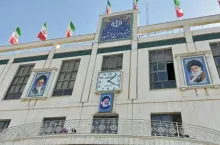
Amid the ambiguous developments in urban management and following the earlier dismissal of the Director General of the Mashhad Municipality’s Inspection Office due to the exposure of misconduct cases
Read more
Listen to Abdi Media on Castbox, unfiltered
Read more
I went to the parliament at half past seven. At eight forty-five minutes, the public meeting began. The budget [for the year 2014] of the whole country is in order. At noon, [Hadi Yaqoubi], the representative of Torbat Heydarieh, came and told about the needs of Saman Al-Aima camp and the possibility of danger [attack] from Afghanistan. Asr, Mr. Behzad Nabovi
Read more
I was at home. Before noon, Dr. Alfi Tabrizi came to check the chastity of his friends. He also examined me. He was supposed to give me a syrup for my stomach. It claims extensive information on the works of plants and has obtained permission to use it. In the evening, the Board of Directors of Sedavsima had a meeting. About making corrections in
Read more
There was nothing important in the reports. I left the public meeting to Mr. Yazdi. I went to the meeting of the Supreme Council of the Cultural Revolution. The headquarters planning groups were in a frenzy. They were discussed for two or three hours. It was decided to be related to the Ministry of Culture and Higher Education from an organizational point of view, but a council
Read more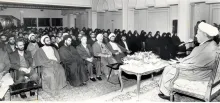
I was at home. The Board of Trustees had a meeting. Dr. Velayati had come to revise the regulations for the transmission of [foreign] guests' news. It was supposed to be fixed. They talked about the quality of supervision of the Council's supervision unit. The differences were resolved to some extent. About securing the Imam's opinion regarding the shortcomings of the news
Read more
I used to study at home until half past ten. I went to Tehran University to offer Friday prayers. Efat, Mehdi and Yaser also came [to participate in Friday prayers]. In the second sermon, I presented an analysis on the large participation of people in the 22 Bahman demonstrations. In the evening, Mr. Colonel [Mohammed] Salimi came; About issues
Read more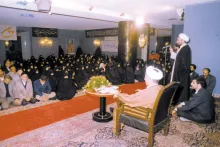
I worked in my office until eight o'clock. Mr. Amrullahi came; He wanted help for more funds for the Atomic Energy Organization. After breathing, I came to my office. Mr. Rouhani came. He gave a report on the situation of the fronts and preparations for the operations and expressed his satisfaction with the progress of the work. Dear friend, you know
Read more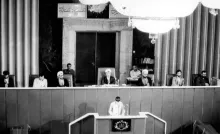
Early in the morning, I went to the parliament. In the public meeting, before the order, I spoke briefly about Imam's message [on the occasion of Bahman 22] and the presence of people on the stage. After breathing, I came to my office and did the work. It was reported that a ship carrying oil was hit by a missile in the south of Khark. Asr, board
Read more
Early in the morning, I went to Mr. [Ayatollah] Khamenei's office. I mistakenly thought that the Supreme Council of the Cultural Revolution was having a meeting. It turned out that the meeting is at another time; Instead, we discussed the party, the second congress, two new ministers, yesterday's march, the war, etc. Mr. [Hussein]
Read more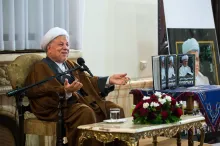
I was at home all day. I studied and rested. The children went to Abali, I stayed alone [at home]. At noon, Ahmad Agha came. He had gone to Azadi Square to read the Imam's message [on the occasion of 22 Bahman]. He was surprised by the large number of people [participating in] the [22 Bahman] march. He insisted
Read more
I was at home all day. Parliament is closed. I spent most of my time studying. Before noon, Mr. [Syed Mohammad] Mousavi Khoiniha came; We discussed about writing the biography of Imams. Before the revolution, we collaborated with him and another group to write a complete and comprehensive history of Imams
Read more
I went to the air force headquarters. I participated in the meeting of the families of martyrs and [air force] personnel. Hymns were performed and I spoke at length. At home, I spent most of my time studying. [Mr. Bijan Namdar Zanganeh] Minister of Jihad [Construction], because he has taken some of his bulldozers.
Read more
I studied at home and organized my library. My guards told me the plan to participate in the air force ceremony tomorrow. I also watched a movie called "Milad"; I think non-religious people made it; But it is good. Mr. Ahmad asked for a phone call [on TV] from the scenes of people's encounters
Read more
After the morning prayer, I went to the assembly. Two or three orders were executed. Before the order, I spoke briefly about the Day of Martyrs, Missing and Prisoners in the Fajr decade and Air Force Day; Due to the hurry of the delegates to travel on the weekend of Fajr, I ended the meeting at half past ten [in the morning]. in my office
Read more
Before noon, Ahmad Agha came. The issues of the day were discussed; Including the expression of Ayatollah Montazeri's displeasure with the Imam's words. Although not all of [his words] were broadcast and they said that the Imam was unaware of the dismissal of Mr. [Asadullah] Lajordi [Tehran Revolutionary Prosecutor] and was not satisfied. At night, with the leaders of the forces
Read more
I arrived at the parliament at half past seven in the morning. In the public meeting, several orders were made. After breathing, I came to my office. I negotiated with the finance minister to get fifty million tomans loan for the parliament. At noon, Mr. Sheikh Saeed Shaaban, the militant cleric of Tripoli [and the leader of the Islamic monotheism movement] of Lebanon came; in
Read more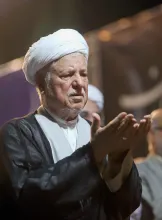
I worked in my office until eight o'clock [at night]. I participated in the meeting of experts. Two plans were presented and rejected. We had lectures before the order. In the afternoon, Mr. Ayatollah Imam Juma Jahrom came to see and discuss the issues of the day. I spoke with Mr. Rabbani [Amlashi], the surgeon. said the dangerous gland,
Read more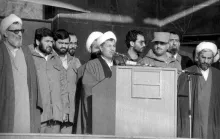
We went to visit the Imam with the members of the experts and Friday imams from all over the country and foreign guests. Imam spoke in detail. I went to the parliament. At the end of the assembly, the guests of Fajr came. I spoke for them. We prayed the congregational prayer and there was a conversation between the two prayers. Asr [Assembly] of Experts
Read more
I was at home until three in the afternoon. The Board of Trustees had a meeting. Usually, the meetings of the supervisory council are held on Saturdays, when the parliament is not in session, and they are held at my house. It was discussed about the tasks of the evaluation and monitoring unit - which has encountered problems in its work. appointment
Read more
I called Ayatollah Khamenei to conclude the marriage of a revolutionary. They said that their usual practice is that they conclude marriages with a dowry of less than seventy thousand tomans, and since their dowry was three hundred thousand tomans, the office did not accept him. They agreed to accept it. about
Read more
At seven in the morning, Mr. Sayad [Shirazi] came. Regarding the delay of operations [on the fronts], he believes that a deadline is necessary. In the public meeting, I spoke briefly about Fajr decade. I told Dr. Rouhani - who is my representative at the [Command] headquarters - to go there more and see how things progress
Read more
I went to the parliament early in the morning and read the reports. I spoke with the military commanders. It turned out that [Iraqi forces] captured a bunker of our [forces] with 15 people in Majnoon Island. At the OPEC conference, the price of light oil was lowered by one dollar; failure Mr. Tawakli
Read more
At half past seven, I reached the parliament. I read the reports. The Iraqis are doing a lot of maneuvering on their incomplete operation yesterday. I inquired about this from the authorities. They said that some of us have been captured and apparently a stronghold in the southern [Majnoun] island has also fallen into their hands. Mr. [Mohsen]
Read more
I was at home. Before noon, I visited Imam. I told the news of the war commanders asking for a deadline; They did not like it, but they did not oppose either. The financial situation of the government was discussed; They said, someone wrote to them [that] the government spent twenty-seven billion dollars in one month, so it brought less.
Read more
I reached the parliament at half past seven. I participated in the public meeting. After breathing, I came to my office. The representative of Kashmir talked about the issues of Kashmir and Mr. [Rasul] Mutjabnia about the headquarters of the second congress of the [Islamic Republic] party and Mr. Rouhani about the front. Around noon, [Dr. Ali
Read more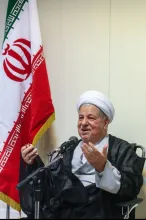
Before noon, we had a meeting of the [radio] supervisory council. The duration of the Council's responsibility was discussed. In Majlis [Islamic Council], some people believe that this council is the rest of the unfinished life of the previous council. There was also a discussion about the [TV program] of Health District, which is objected to by some. was arranged
Read more
I went to university [Tehran] to offer Friday prayers. In the second sermon, I explained about Tehran's subway and sewerage system and mentioned the many benefits of these two plans; Some people are against the implementation of these plans and especially they are campaigning against the [building] of the metro [as a luxury and tyrannical vehicle].
Read more
Early in the morning, I went to the parliament. It was not important in the new reports. The Iraqis claim every day that they have hit a ship, but it is mostly a lie and these [claims] have discredited the French exhaust missiles and disgraced Iraq. In the public meeting, several orders were made. After breathing, I came to my office. noon,
Read more
I was at home all day and mostly studied and read reports. On the phone with the president, I talked about Mr. [Mohammed Mahdi] Rabbani [Amleshi]'s boredom and [the issue of] retaliation in the Persian Gulf and other issues. Mr. Rafiq Dost [Minister of IRGC] to go to Syria
Read more
After the [morning] prayer, I read the reports. In the public meeting, the plan to formalize experimental dentists was approved, against the wishes and opinion of the Ministry of Health. I came to the office after breathing time. Mr. Rohani told the situation of the front; The work is to prepare some rear accessories. There are a lot of soldiers in the camp headquarters
Read more
I was at home and studying until three o'clock in the afternoon. Before noon, Mr. [Mohammedreza] Tousli and [Hasan] Sanei [from Imam Khomeini's office] came home. They talked about Imam's opinion and brought Imam's message about supporting the government. I went to the assembly in the evening. Center of the party [Republic
Read more
Early in the morning, I went to the parliament. According to reports, Israel has begun to withdraw from southern Lebanon under pressure. It is a significant victory for the Muslims of Lebanon. Mr. [Gholamabas] a pilgrim came. A report on the situation of Bandar Abbas and the wrath of Hormozgan Governor and Khalaf the promise of the Minister of Interior
Read more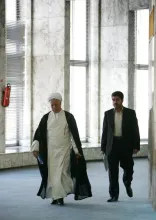
I was at home all day. Mr. [Mohsen] came as a supplicant and discussed about the party [Islamic Republic] and the work of the "key to the Qur'an" project and radio and television. In the meeting of the [radio] supervisory council, there was a discussion about the rules of war news, filming of the program "Ahkam" and other issues. Asr, Mr. [Mustafa] Shoemaker
Read more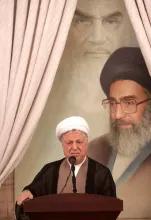
I was at home until half past nine in the morning. Mr. Iqbali came and told about the deficiencies and needs of protection, including the indecisiveness of the protection unit of the Islamic Council. Then we went to the Shi'an garden, which has become an exhibition of military industries of the IRGC, and until seven o'clock in the evening, almost all of the designs and developments of the industries
Read more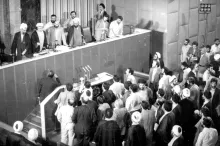
In the public meeting [Islamic Council], several orders were approved. Before the order, I emphasized to the representatives about the necessity of discipline and more attendance in the official meeting. Some resisted. I dealt decisively. After breathing, I came to my office; To do backlogged work that read more
Read more
I went to the assembly early in the morning. A heavy fog covered the streets. It is also raining. This year the rainfall is good. We had a joint meeting of the government board and heads of parliamentary commissions, and this was the first meeting. It was held very well. I ran the meeting. Mr. Prime Minister and I talked a little
Read more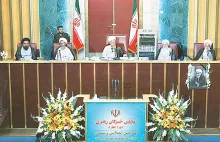
In the public meeting, the bill on the limits of private sector activity was discussed, and its general aspects were approved. After breathing, the members of the program and budget commission came; They said about the unreality of part of the revenues and the large invisible deficit of the budget and they themselves agree that the abnormality of the country's economic situation is affected by
Read more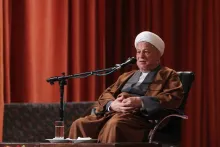
I spent most of my time studying. Akhvi Mohammad and Mr. [Mohammed Hasan] Zoroq [from Sedavasima] came. explained their differences; I settled the dispute. Mr. Ahmad came. He informed that the Imam sent messages in support of the government to the president and the [Islamic Republic] party and [the community] of teachers [Qom seminary].
Read more
Early in the morning, I went to the parliament. I read the reports. The issue of the crash of the German plane that was brought up last night has been discussed for several hours and the first report was from the control tower of the Israeli airport that received the help message, but gradually it became clear that this news was false.
Read more
Until half past nine in the morning, I read and arranged the library. We had a meeting of the supervisory council. The regulations for broadcasting news related to the Imam on radio and television were approved, and radio and television programs on special days and occasions throughout the year were discussed. Resignation of Mr. [Mohammed Hasan] Zoroq
Read more
I used to study at home until half past ten in the morning. I performed the Friday prayer at the University of Tehran. In the evening, at home with Mr. [Mirhossein] Mousavi, [Mohammedreza] Beheshti, [Masih] Mohajeri and [Javad] Ajei to discuss cooperation with other factions in the Islamic Republic Party and safe organization
Read more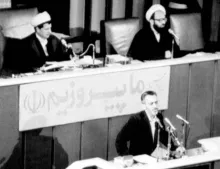
After morning prayer, I did some exercise and study. I stayed in the public meeting and then came to my office. I did the backlog. Dr. Jazayeri came for my hand pain. In the afternoon, I made several appointments. In the evening, the officials of the news agencies of the Islamic Republic in foreign countries came. for
Read more
I went to the assembly early in the morning. In the reports, it was not important. Mr. Sadam Jabr, the former ambassador of Libya and Mr. Gaddafi's envoy, came and brought his verbal message. He invited me to go to Libya. I stressed about the completion of the missile site. I participated in the meeting of representatives of Tehran. Some ritual
Read more
I went to the assembly early in the morning. I read the reports. In his speech on the occasion of the founding day of the Iraqi army, Saddam asked the Arabs for help in confronting Iran. Three orders were made in the public meeting. After breathing, I came to my office. Mr. Rabbani Amlashi came. He said many things; Their nerves are upset
Read more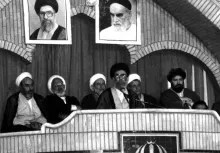
I stayed at home. First, I wrote a message for the Congress of Zoroastrians, which is being held in India, and Mr. [Parviz] Malekpour, the representative of Zoroastrians in the parliament, is participating in this congress. Then I went to visit Imam. I sat inside serving them for a long time. A tendency to isolation has been found in Imam
Read more
In the public meeting [Islamic Council, by passing a bill], the welfare organization was placed under the supervision of the [Ministry of] Health. The representatives had many references. In the afternoon, Mr. Fakhreddin Hejazi came and talked about the army. Mr. [Ismail] Fadayi, the representative of Sarband [Arak] came and from Imam Juma
Read more
Early in the morning, Mr. Engineer Mousavi, [Masih] Mohajeri, [Syed Mohammad Reza] Beheshti, [Javad] Ajei and [Abul Qasem] Sarhadizadeh came to talk about the [Islamic Republic] party. They are in the minority in the central council and the responsibility of the units is mostly from the other faction. They have withdrawn themselves and
Read more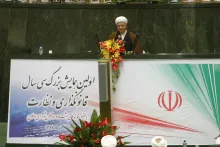
I was at home. Friday prayer was led by Ayatollah Khamenei; For the first time after I was responsible for offering Friday prayers for two consecutive weeks, they offered them. The prime minister made an appointment over the phone to have a meeting about the [Islamic Republic] party and the differences. It was arranged, tomorrow
Read more
In the public meeting, the plan to transform the welfare organization into a ministry and transform the head of the program and budget organization into the deputy prime minister was discussed. Due to factionalism in the parliament, this plan has become completely political. Finally, contrary to the strong desire of the Prime Minister, [turn the head of the Program and Budget Organization into
Read moreAfter prayer, I worked until nine o'clock in the morning. We were supposed to have a meeting with the Minister of Commerce and Mr. [Habibullah] Askarowaladi in the Imam's office about the trade union committee and the dispute between the minister and the former members of the [trade union] committee, but I did not arrive. The President, later they said the Minister of Commerce for his own action.
Read more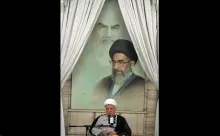
After morning prayer, I went to my office. I stayed in the public meeting until I breathed. In the afternoon, Mr. [Ali] Abdul Alizadeh, the representative of Urmia, came. Regarding the country's employment law, he had new proposals and said that they have reached an agreement with the officials of the Employment Affairs Organization. A kind of contract
Read more
At eight o'clock in the morning, we went to see the Tehran subway. 2.7 km tunnel, in the years before the revolution until 1360, from the unopposed hills of Abbas Abad in the form of an open trench, excavated and then closed. Then we visited Tehran by helicopter. Tehran city, in the west, southwest, east and
Read more
In the public meeting, we approved a bill. I came to my office after breathing time. I saw a part of the video of the special Eid ceremony in Tehran's Mojtahadi School, which was organized by a group; It is a harmful and divisive act; It turned out that they are wanted. The representative of Darud from the Hezbollah demonstrations
Read more
I was at home. Sometimes it snows. At first, Mr. Mohammadi Gilani [Sharia Ruler of Tehran] came. They gave a report on pardoned prisoners; There are about 25 thousand people. Again, the amnesty of prisoners continues. About the property of [the late Abulfazl] Tulit - which is the property of the charity and is practically in the hands of the movement
Read more
Ayatollah Khamenei led the Friday prayer and took a good position on the issue of taxation - which is the issue of the day. The son of Agha Sida Brahim Tabatabai, the son-in-law of Agha Hakim, came to work for his brother. He told a little about his father's situation - who remained in Iraq - and Mr. Hakim's message about the need for more attention
Read more
In the speech before the order of the parliament, I talked about the bombing in Sush Square and the nature of the counter-revolution and the colonialists' support for them. We approved the articles of association of the West Regional Electricity Company; We must do something so that the articles of association of the companies do not come to the parliament, because it is very time-consuming. After breathing time
Read moreAfter the morning prayer, I studied. Mr. [Salah] Zawawi, the Palestinian ambassador, came; While admitting the mistake of Fatah's leadership, he complained that Iran does not provide major aid to the Palestinian people and Iranian officials do not give them an appointment. I acknowledged that more welfare assistance should be given to
Read more
After the morning prayer, I went to the assembly. In the public meeting, several orders were approved. In the afternoon, I had several meetings. In the evening, I had a meeting with the Minister of Foreign Affairs of Sierra Leone. We didn't have anything important. On the first night, the Supreme Council of the Cultural Revolution had a meeting. A part of the work regulations of the council
Read more
I was at home all day. Mr. Sanei came. He consulted about Mr. [Ayatollah Seyyed Kazem] Shariatmadari who is sick and the opinion of some doctors is to bring him [to] Tehran for treatment. It is possible that spreading the news of boredom is the pressure to go outside. most of my time to
Read more
I went to the president's office early in the morning. We had a meeting with the presence of the Prime Minister and the Minister of Oil. We approved the proposal of OPEC members [about the price and quantity of oil sales]. We decided to be firm to maintain the price of oil. Then, Dr. Velayati came. A detailed report of the conference [of ministers of] Islamic countries
Read more
I was at home. At nine o'clock in the morning, Mr. [Mohammed Hasan] Zoreq [from Sedavasima] came and said about some kind of disagreement among the employees of Sedavasima, which leads to disruption in the broadcast of programs, and he claimed that foreign graduates are supported. We had a supervisory council meeting. We decided that part of
Read moreI worked at home until half past ten in the morning and went to Tehran University to offer Friday prayers. I talked about the decisions of OPEC and the Islamic Conference. In the afternoon, the Ministry of Oil received a telegram saying that two Norwegian and Liberian oil tankers, which were loading from Khark, were hit by an Iraqi missile.
Read more
I worked in my office until eight o'clock. I wrote the Arabic sermon for the Friday prayer. In the public meeting, the tax bill was discussed. I also spoke in support of the bill. Although it had strong opponents, it was approved by a strong majority; Due to the length of the meeting, I canceled the afternoon meetings.
Read more
At half past eight in the morning, I went to the parliament. One of the chiefs of Savak came during the Shah's reign. He has been in prison for several years and has been pardoned; He suggested cooperation with the Islamic Republic. I asked him some questions. It is alleged that he has a food stall in a parking lot and makes a living. Dated, later to him
Read more
I worked in my office until eight in the morning. We did not have an important report. In the public meeting, the tax bill was discussed. Because the bill is important and detailed and many supporters and opponents have registered, it took all the time and we extended the time again to continue the discussion. In the afternoon, Mr. Sabri Hamedani came.
Read more
I went to the parliament. I read the reports. Iraq claims to have hit several oil tankers in the Persian Gulf, but only one Greek ship was hit by missiles twice and one Kuwaiti ship was also hit by missiles - probably a mistake - from Iraq. [Mr. Mohammad Nabi Habibi] the mayor of Tehran and a group of metro officials
Read more
Israel's attack on several villages in southern Lebanon, in revenge for the operation of the Islamic Mujahideen, is the most important news of the day. In the public meeting, two bills were approved. There were many referrals from the representatives. I told the delegates the Imam's verbal message before the meeting started, that the Imam did not interfere with some of the delegates
Read more
I reached the service of Imam. Regarding the meeting of the Imam in a meeting with the commanders of the IRGC and their opponents, and the advice of the opponents and the recording of the discussions, I gave a favorable opinion. Earlier, Imam's opinion was the same. But the President does not consider it expedient to invite the opposition to meet the Imam. appointment
Read more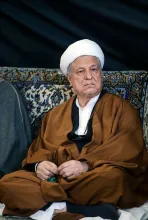
Until half past ten in the morning, I was studying at home to [prepare sermons] for Friday prayers. I went to Tehran University to offer Friday prayers. I didn't have much work in the evening. Due to the current recovery, I rested and watched TV more.
Read more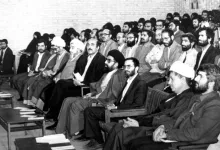
After the morning prayer, I studied until eight o'clock. The news centers of the world still haven't given up on the hijacking story. Little by little, the theory of America's use of this plane hijacking incident to overshadow the gas leak disaster of an American factory in Bhopal, India is being proven. before
Read more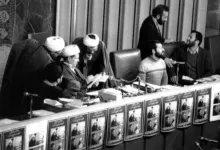
In the morning, after the prayer, I went to the assembly. I read the reports. Before noon, Mr. [Qurban Ali] Dari [Najafabadi] and the governor of Tehran came. We discussed about Tehran subway. We were supposed to have a meeting next Monday. Mr. [Hasan] Rouhani came and gave a report on the progress of the engineering work
Read moreI am not bored yet. I read the reports at home until nine o'clock in the morning. The news centers and newsmakers of the world are dumbfounded by Iran's actions regarding disarming the hijackers and retrieving the plane from the hijackers. Foreign news agencies do not want to praise this action
Read moreEarly in the morning on the radio, I heard the news of the end of the flow of the hijacked plane in Kuwait - which I was expecting. Our special forces, in a lightning operation, disarmed them and freed the hostages. I feel better than yesterday, but I have a fever and no appetite
Read more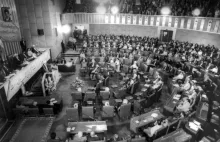
I spent the last night in discomfort, I had a high fever. I could not go to the parliament. Dr. Motamedi - one of the doctors on duty at Beit Imam - examined me; I had a two degree fever. I took laxatives and liquids. From the evening, I started to feel better. The issue of the Kuwait plane had become acute. [hijackers]
Read more
I was at home. I sent the names of a group of academics to the Imam for membership in the Supreme Council of the Cultural Revolution, which was agreed upon by [Ayatollah Khamenei] the President and me. Mr. Ahmad called and asked about those people and the text of the Imam's statement [about the membership of those people in the Supreme Council
Read more
I was at home. I spoke with Mr. [Ayatollah] Khamenei and Mr. [Mir Hossein] Mousavi about the fate of the hijacked Kuwaiti plane. There is no progress [in solving the hijacking problem], but the hope of accepting some of their demands, from the [government] of Kuwait, has increased. It was said in the news, the letter
Read more
I inquired about the status of the hijacked plane; It is critical. There is a possibility of danger for airplane passengers. Before the order in the public meeting [Islamic Council], regarding the week of unity and the unfortunate incident of the release of toxic substances from the American chemical factory in "Bhopal", India - which led to death
Read moreI was studying in my office until nine o'clock in the morning. The person in charge of motor pool [= vehicle affairs] came to the parliament. He told his needs and problems. He wanted to receive information about overtime, spare parts, setting up a repair shop, and punishing and encouraging drivers [Majlis service provider]. Mr. Ahmed Beheshti [Representative
Read more
Early in the morning, I went to the parliament. In the reports, the hijacking of a Kuwaiti plane with 155 passengers and 11 crew members and the arrival of the [hijacked plane] to Mehrabad Airport were mentioned. I stayed in the public meeting [Islamic Council] until ten o'clock in the morning and then I came to my office. Mr. [Ahmed] Beheshti, representative
Read moreIt is snowing heavily. In the afternoon, I married two Iraqi refugees, Ms. Naqash and Mr. Shirazi, and I gave them a gift. I discussed current affairs on the phone with the Prime Minister, the President, the President of the Supreme Court, Beit Imam, Sedavasima and my office. I asked the prime minister that one
Read moreIn the public meeting [Islamic Shura Council] before the order, I thanked Ayatollah Montazeri for his statements and by thanking, I closed the way of abuse by the hypocrites - who had started to say that he had criticized the council - and in return I asked them to focus on fundamental issues.
Read more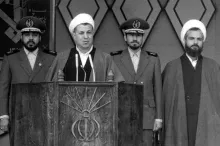
I was at home. I used to study until nine o'clock in the morning. Mr. [Mohammed Hasan] Zoroq came and gave a report on the situation of the broadcasting organization, and then a meeting of the council [supervision of broadcasting] was held. The technical deputy [Sadaosima] had a consultation about the priorities of covering the villages. reported that C
Read more
Friday prayer was led by Ayatollah Khamenei. It has been raining since last night. This year, except in the southern regions of the country, we had good rainfall. In the evening, Mr. Hossein Marashi, the deputy governor of Kerman, came. He explained about Jiroft, Kohnuj and Jazmurian watersheds and the plans there. water and land
Read moreI worked in my office until eight o'clock. Mr. [Javad] Ajei came and gave a copy of a letter signed by five people: Mr. Engineer [Mirhossein] Mousavi, [Masih] Mohajeri, [Javad] Ajei, [Syed Mohammad Reza] Beheshti and [Abul Qasim] Sarhadizadeh wrote to Ayatollah Khamenei - and in the dominant script
Read more
I read the reports. Demonstrations of Egyptian students against Egyptian rulers have become an important issue. [How to establish] relations between Iraq and the United States and the Palestinian [National] Council in Jordan is also an issue of the day. Mr. [Iraj] Sefati Dezfuli - who was elected as the head of the Court of Accounts - came and the program
Read more
Early in the morning, I went to the parliament. After reading the reports, I went to the public meeting. [Mr. Iraj Sefati Dezfuli was elected as] the head of the Court of Accounts and the general rules of the car tax bill were approved. At noon, I had two or three meetings. The internal disputes of the IRGC regarding the command took a lot of my time.
Read more
I was at home today. At noon, Mr. [Mohsen] Rezaei, [Mohsen] Rafiq Dost and [Sidjalal] Sadatian came. They brought the report of the introduction ceremony of the commander of the Tehran [Guards] Corps, where some of the opponents of the command had crowded and rioted. They wanted permission to follow them. Minister of Energy, from
Read more
After the prayer, I went to the assembly. I usually listen to the news at seven o'clock in the morning on the car radio on the way. It was not important in the reports. Foreign counter-revolution, on the statement of the spectators of Friday's soccer match, which was moved to Amjadiye due to Basij's seminar in Azadi Stadium.
Read moreAt eight o'clock in the morning, we went to the 100,000 people [Azadi] sports stadium for the opening ceremony of Basij Week. 12,000 Basij had come from resistance bases all over the country. First, the Imam's message was read. Then the parade of young Basijs was held. I gave a detailed speech about Basij. before
Read more
I was at home all day. I entrusted Mr. Imami Kashani with leading the Friday congregational prayer, and as usual, they consulted about the topics of the day and I pointed out some topics [to be presented]. He went to study and rest. In the evening, a group of [Islamic] members came
Read more
I was at home. Before noon, Mr. Mohsen Rezaei came. He gave a report on the progress of preparing the preparations for future operations and was especially pleased with the initiative of [building] a bulldozer active in water. Expressing great displeasure with the movement of his opponents in the IRGC and disruption of work in the Tehran region, against the [IRGC] command and
Read more
I worked in my office until eight in the morning. Mr. [Dr. Abdullah] Jasbi came. He reported the progress of Islamic Azad University and asked for help. He talked about the [Islamic Republic] Party and the Islamic Women's Organization. Mr. [Reza] Amrollahi, the head of the Atomic Energy Organization, came and said, Germany is here
Read moreI stayed in the public meeting [Islamic Council] until I could breathe. I had many references from representatives. Usually, I don't write these short references inside the parliament in my diaries. Although sometimes it is important and historical, but if I want to write, it takes a lot of time and space. Zohar, Mr. Mohadi's son
Read more
At 8:30 in the morning, Ahmad Agha informed that Mr. [Ayatollah] Khamenei had come to the Imam's office, that we should visit the Imam together. we went The issue of universities and disputes [Mr. Iraj Fazel] Minister [Culture and Higher Education] with the headquarters of the cultural revolution and the issue of reforming the headquarters of the revolution
Read more
I managed the [Islamic Council] meeting until half past ten in the morning and after taking a breath, I handed over the chairmanship of the meeting to Mr. Yazdi. I had a meeting with Mr. [Abdul Halim] Khodam, the vice president of Syria and the accompanying delegation. [Mr. Abdul Halim Khaddam] More on the need to strengthen the axis of the developing Arab countries, for
Read more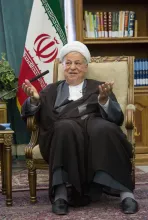
Before noon, the [radio] supervisory council had a meeting. There was a discussion about the budget and the quality of the representation of women in films. We approved the use of ethnic languages such as Turkish [Azeri] and Kurdish, etc. in the radio stations of the cities and prevented the showing of local costumes in local cinemas.
Read more
I went to Tehran University to offer Friday prayers and returned home at around two in the afternoon. Mr. [Mohsen] Rafiq Doost informed that today in Bakhtran, in a meeting by some of the Guardsmen, [Mohsen Rezaei] protested and insulted the [Guards Corps] commander. Mr. [Sadiq]
Read more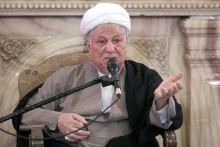
At noon, Ahmad Agha came. He returned from a ten-day trip. They went to the surrounding villages of Isfahan, Kashan, Najaf Abad and Qom. He is very satisfied with the spirit and satisfaction of the villagers and the help of construction jihad and the government to these areas. The decisions of the meetings held in his absence with the heads of forces about the headquarters of the revolution
Read moreI studied for Friday prayer sermons. In the evening, Mr. Ayubi, the head of the evaluation unit of the Supervisory Council [Sadasima], came and complained about the letter of the director of Channel 1. At night, we went to see the Prime Minister. We were guests of the Prime Minister with other heads of forces. About the establishment of the Supreme Council of the Cultural Revolution instead of the headquarters
Read more
In the public meeting, several bills were approved. After breathing, I left the meeting to Mr. Rabbani and came to my office. Mr. Seyyed Mehdi Tabatabai came and complained about the weakness of Hizb [Islamic Republic] teachings and the magnificence of their mistakes in handing over land in Tehran by the authorities. Mr. [Syed Hossein]
Read more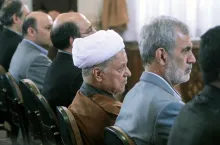
Early in the morning, I went to the parliament. It was not important in the reports. I worked in my office until 10 am. We had a meeting of representatives of Tehran, where [Mr. Sirajuddin Kazerooni], Minister of Housing, explained about the housing construction program; It looked interesting. It will be discussed in the next meeting.
Read more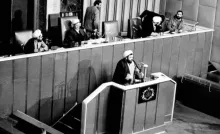
I went to the Majlis [Islamic Council] at seven in the morning. In the reports, we did not have anything important. In the public meeting, we approved two bills. Without time to breathe, I got tired. At noon, Mr. [Mohammed] Salehi, a member of the Guardian Council, came to my office, and consulted about resigning from the Council and going on a mission abroad.
Read more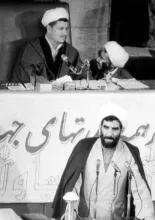
I was at home all day. I used to study until nine in the morning, and then until one in the afternoon, the board of trustees had a meeting. There was a discussion about the plan and program unit and the management of Network One and the quality of news. In the evening, they brought the reports, I read them. My statements yesterday in the Friday prayer,
Read moreI used to study at home until half past ten in the morning. The painter's family - who are exiled revolutionary Iraqis - came to marry their daughter. A father and a son from their family were arrested five years ago by the Saddamites for the crime of supporting the Imam, and there is no news of them until now.
Read more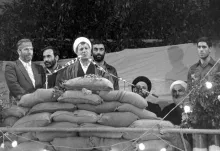
Before the meeting, I had several inquiries about Mr. Hamidzadeh's credentials. His supporters complained to Mr. Yazdi that yesterday they gave the tape that was against him to the representatives and did not give the tape that was in his favor and denied the first tape to the representatives. From Mr. Islamit, secretary
Read more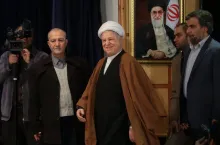
I had a meeting with Mr. Kharazi who wanted information about the war plan and more funds for the Islamic Republic's news agency for war propaganda. Mr. Habibi, Minister of Justice, came and gave a report about the new organization of the Ministry of Justice; Little by little, he feels less free; He was satisfied so far.
Read more
After the morning prayer, I went to the assembly. The reports indicated that last night two Yemeni people brought a plane from Saudi Arabia and parked it at Mehrabad airport. I spoke with [Mr. Velayati] the foreign minister about this. It was decided to try to get the plane safe and sound
Read moreI was at home and I was studying more. Before noon, Ahmad Agha came. Discussions were held regarding the [Islamic Republic] Party and the existing lines and the headquarters of the Cultural Revolution and other matters. In the evening, Mr. [Abd al-Majid] Maadikhah came and there was a discussion about the work of the History Compilation Foundation. Night, Mr. [Ali]
Read more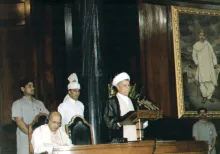
Before the order [of the public meeting of the Islamic Council], I gave a short speech about [November 13th], the exile of the Imam and the seizure of the American embassy. After the breathing time, I handed over the chairmanship of the meeting to the Deputy Chairman. A person who had been introduced by Akhwan Marashi came to get permission to build a factory
Read moreI was at home. The family of Alam Al-Huda Ahwazi came with Mr. [Sadiq] Ahengaran [Madah] of the IRGC. They complained about the state of Ahvaz after the elections and the weakening of the Governor and Imam Juma and the administration of the province by the MPs. The Supervisory Council [Broadcasting] had a meeting. Officials of Channel One TV
Read moreI was at home. Mr. [Ayatollah] Khamenei performed Friday [prayer]. In the evening, Mr. [Syed Mohammad] Khatami [Minister of Islamic Guidance], [Mohammed] Abayi [Khorasani], [Assadullah] Bayat, Jafari Langroudi, Hadi Khamenei, [Mahdi] Karroubi, [Mohammed Ali] Hadi [Najafabadi] came. Concerned about progress
Read moreI read the reports in my office until eight o'clock in the morning. The important issue is the killing of Mrs. [Indira] Gandhi [Prime Minister of India] and the OPEC agreement and the reduction [production] of 1.5 million barrels of oil per day, in order to maintain the price and fight against the western conspiracy. In the words before the order of the parliament, about the assassination of Mrs
Read moreIranian ambassadors in England, Holland, Denmark and Nicaragua came and gave reports and advice. The [Iranian] ambassador came to Poland and gave several years' salary from his former job to help the front. Messrs. [Masih] Mohajeri and [Syed Mohammad Reza] Beheshti came from their opposite faction in the [Republican] party.
Read more
At eight o'clock in the morning, the [public meeting of the Islamic Council] started. Several bills were passed by noon. In the afternoon, Iranian ambassadors in Europe and America came. I gave a speech for them. I talked about the need to have relationships and maintain principles and be proactive in dealing with opponents and rivals. Asr, Mr
Read moreI was at home all day. On the phone, I asked Haj Ahmad Agha to give Mr. Mohadi Kermani an appointment with the Imam to discuss the issues of Kermanshah. Imam's answer to the question of the Trade Commission was also discussed. In the evening, Mr. Tawakli Bina came. Regarding the Mustafafan foundation construction company
Read moreAt eight in the morning, the public meeting started and the important order was the plan to create a new army, which was not finished. A group of representatives of "Line Three" came and protested the news of the appointment of Mr. [Ahmed] Salek as the head of the Islamic Revolution Committees. I advised them. Zohar, [Mr. Seyed Ali Hosseinzadeh]
Read more
I used to study at home until nine o'clock in the morning. The Board of Directors of Sedavsima had a meeting. It was decided to prevent the broadcast of films that encourage anti-government activities and sabotage and covert work. Officials of the second TV network came and reported on the work. We decided to cooperate
Read moreI stayed at home. I rested and studied. Mehdi and Yaser went to learn horse riding. Mr. [Mousavi] Ardabili performed the Friday prayer. I spoke with Mr. [Ayatollah] Khamenei on the phone; Regarding Mr. Dehashti's request from Abadan to prevent Iraqi bullets from hitting him
Read moreAfter prayer, I studied until half past seven in the morning. Mr. [Hasan Ghafouri Fard] Minister of Energy came. We talked about the work they have assigned to them on the southern front in Horulhuyza; He considers that work too heavy. It was arranged to talk to [Mr. Mohsen Rezaei, commander] of the IRGC about this
Read more
I went to the assembly early in the morning. [Mr. Hossein Nili] The Minister of Mines and Metals wanted help to solve the problems of moving the central office of Isfahan Steel to Tehran. The representatives of Isfahan [in the Islamic Council] oppose. Mr. [Javad] Maghsoodi, the person in charge of the Friday prayer headquarters, came to Tehran. From management
Read more
I reached the parliament at seven in the morning and read the reports until eight. Discussions in the political circles of the world - based on the results of the Mimak operation - continue. The opposition is trying to hide the failure of Iraq. In the public session of the Majlis [Islamic Council], several bills were approved. [Mr. Zahiri] Minister of Oil, about
Read more
I was studying at home until around noon. I read the delayed reports. They did not have anything new at the front; They complained about the tolerance of the Ministry of Energy and Agriculture in engineering works behind the front. Around noon, I went to see the Imam to greet him. I also talked about the Supreme Council of Culture
Read moreI went to the assembly early in the morning. I read the reports. Last night, the Iraqis launched a counter-attack on the Mimak front, but they were barely defeated. Before the order, I talked about the western operation and conspiracy to lower the price of oil. Almost all the time of the parliament was taken up by a plan that was rejected.
Read more
I was at home all day. I set up my library until nine o'clock in the morning and I was very tired. We had a meeting of the supervisory council. This meeting lasted until two o'clock in the afternoon and discussed the broadcast of foreign films [on TV]. It was decided that more control and censorship -
Read more
I used to study at home until half past ten in the morning. Mr. Timuri came to change my library shelf. We emptied the shelves. I went to university [Tehran] to offer Friday prayers. It is also raining. In the second sermon, about the success of our forces in the war and criticizing Türkiye and Iraq regarding
Read more
I did not go to the parliament. Mr. Yazdi [Deputy Speaker of the Islamic Council] chaired the meeting. The order to deal with the request for the vote of confidence of the two proposed ministers was for defense and education. Finally, Col. Farrokh Azimi Etemadi - the proposed Minister of Defense - did not vote [and Mr. Seyyed Kazem Akrami the Minister
Read moreGendarmerie commanders came. I spoke for them in detail. [Dr. Ebrahim Behnam] the ambassador of Iran in Greece, who has been assigned to India, came. He gave a report and consulted about [his mission in the country of] India. From ten in the morning to twelve in the afternoon, a meeting with the representatives of Tehran province
Read more
We had a bill in the public session [of the Islamic Council] and the credentials of Mr. Seyed Mehdi Tabatabai, the representative of Mashhad and the former judge of Tehran Municipality, were discussed. It was protested because of giving a lot of land to the people, but it was approved; The issue was controversial. In the afternoon, I had several meetings because of
Read moreMr. [Hashem] Rasouli Mahalati came and expressed the displeasure of the officials of the Housing Foundation about the establishment of a huge construction company in the Mustafafan Foundation. He wanted the participation and cooperation of Maskan Foundation with this company. I told them to coordinate with Mr. [Abulfazl] Tawakli. At night, they reported that Iraq had hit a large oil tanker
Read more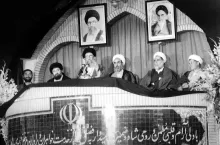
I went to the assembly early in the morning. I read the reports until eight in the morning. In the public meeting [Islamic Council] before the order, I condoled the martyrdom of Ayatollah Ashrafi [Isfahani Imam Juma Bakhtran]. They reported, unfortunately, two of Kurdistan's lawyers the previous day and [brother] Ali Nadizadeh
Read moreA meeting of the Board of Directors of Sedavsima was held. We discussed the annual budget, foreign films, mourning programs and the image of the mourning committee. Mustafa Davodizadeh came and had questions about the needs of the IRGC's naval unit and the lack of funds. In the evening, Mr. [Abdul Majid] Maadikhah came. said
Read more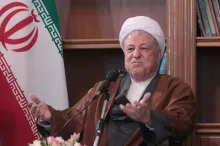
Friday prayer was performed by Ayatollah Khamenei. I was at home all day. I rested and studied. At noon, the prime minister and the advisory office [Imam in the army] and the president separately informed that two ships - yesterday and today - had an accident in the Persian Gulf. And the news came that the Mahal hotel
Read moreI worked in the office until eight o'clock in the morning. The public session of the parliament was held; It was long and lacked content. At noon, Dr. [Hasan] Rohani gave the report of the inter-parliamentary delegation's trip; There is a sign of our sojourn there. They complained to our ambassador in Saudi Arabia because of the poor management of the delegation's trip there.
Read more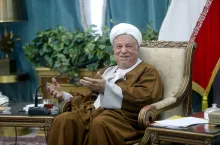
I went to the parliament. I did the administrative work. I read the reports. We had a meeting of representatives of Tehran. They brought a report on the situation of the miners [south of Tehran]. A commission was appointed to prepare the final plan to improve their situation. Their living conditions are very sad. They said four thousand five hundred
Read more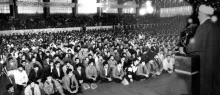
After a week off [Islamic Parliament], I went to the parliament early in the morning. I read the reports. The Shia-Sunni conflict in Pakistan is not over yet. Shia scholars have also blamed the [Pakistan] government. I also spoke briefly about this before the order. A few commands
Read moreI was at home all day. I used to study until half past nine in the morning. Mr. Mohsen Rezaei [commander of the Islamic Revolutionary Guard Corps] came. reported the progress of the war plan; He had nothing new to say. He had referred mostly to solve the problems he has with the Imam's representative in the IRGC. to [Mr
Read moreI was at home all day. I read the performance report of the Ministry of Road [and Transport]. I also read an article about the influence of capitalists in the American Congress - which is good for the people's use and lesson. I should mention it at the right time in the [sermons] of Friday prayers. At night, Ahmad Agha came home.
Read moreToday [Ashura], I was at home. Mr. [Abbas] Kothari and Seyyed Abbas Hosseini came from Qom's preachers and prayed in the house; I gave one thousand tomans to each of them and a cloth bag to Mr. Kaushari, who recites better. He had a good tear. They also raised demands regarding water and health in Qom.
Read moreI used to study until half past ten in the morning. I went to the university [Tehran] to [perform] the Friday prayer and I was at home in the evening. They brought the reports; It didn't matter. They informed that 100 of our disabled prisoners - who were released by Iraq - have arrived in Iran by Lebanese plane. we
Read moreI was at home all day. In the morning Mr. Nasser came with a camera; He informed that his father, Ayatollah Haj Mirza Khalil, was on his deathbed, and he had requested the imam to get a [permission] for the burial place in Balasir Mosque of Hazrat Masoumeh (PBUH). I told Ahmad Agha to convey his message to Imam. more
Read moreI worked at home until eight in the morning. I went to the parliament. In the reports, it is not important. The news of the United Nations and the expulsion of Israel [from the United Nations] are more relevant. At nine o'clock in the morning, on the occasion of the martyrdom anniversary of Ashrafi [Esfahani], I had a television interview. Mr. Jasbi came. about
Read more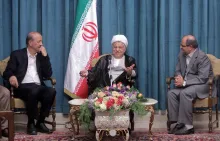
The Majlis [Islamic Council] had a public meeting. A few orders were made. In the afternoon, I made several appointments. In the evening, the members of the Supreme Council of the [Islamic] Revolution of Iraq came. They had requests for the welfare of Iraqi immigrants. I also elaborated on the need for Iraqis to use the exceptional opportunity of the Iraq war
Read more
I was at home all day and studied more; Especially [the book] the death of "Al-Zariyah" in the history of Ashura. Mr. Mohalati came before noon, he was upset with the Imam's order limiting his powers in the army. I said [this restriction] is temporary and the limits of [powers] should be changed later.
Read more
At seven in the morning, I went to the parliament. I read the reports. In the public meeting, several orders were approved, including the increase of the deposit in the International Bank [Reconstruction and Development] and the commercial agreement with Algeria. After the meeting of the board of directors and heads of branches, to investigate increasing the capacity of accepting commissions for
Read more
We had a meeting of the supervisory council. Regarding foreign news and the quality of dealing with foreign radio broadcasts, a decision was made. In the evening, they brought the reports from the Majlis [Islamic Council]. Today, Iraq has launched five missiles at Imam Port. in petrochemical [Bander Imam]
Read more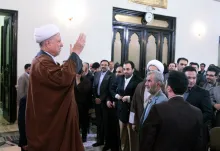
I studied at home until half past ten in the morning for Friday prayer sermons. Then I went to Tehran University for Friday prayers; Chastity also came. The sermons were very long. About the limits of the activity of the private sector and the comparison and similarity of hypocrites and their cooperation with the infidels and hypocrites of the time of the Prophet (PBUH)
Read more
I went to the assembly early in the morning. Mr. Zamani, Jahantab and Haji Saeedi, deputy of Mr. Amrollahi [head of the Atomic Energy Organization], came to my office. We talked about the claim of discovered uranium; It was decided to investigate immediately. I read the reports. It was not important. in the meeting
Read moreAll day, I was in the parliament and working in my office. From seven to nine in the morning, we had a meeting of the chairmanship of the Assembly of Experts. There was a discussion about the future meeting and seminar on the Velayat-e-Faqih and building a place for the Majlis in Qom. In the evening, the board of directors [Islamic Council] had a meeting. Arabic sermon for Friday prayer and introduction
Read more
We had a public meeting of the Majlis. In the afternoon, I had several meetings. In the evening, we had a special commission meeting to determine the positions of the Islamic Republic Party and it was decided to print the final text of the positions that was approved. I stayed the night in the parliament. At night, I woke up several times with chest pain; I guessed that you are upset
Read more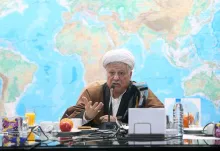
I was at home today. I used to study until ten o'clock in the morning. Mr. Mohsen Rezaei came. The operational plans that are going to be carried out in a few months were brought and discussed. In order to reduce the interference of Imam's representative in the army, he again asked for help. Around noon, Ahmad Agha came. Group interview tape
Read moreI went to the assembly early in the morning. I read the reports. Mr. [Asadullah] Bayat came; He said a little about the situation of Iranian pilgrims in Mecca. At 8:45 in the morning, the first public session [of the Islamic Council] after the holiday began. Before the order, I talked about the war week and the start of schools.
Read more
Akhvi Mohammad [the head of the Broadcasting Organization] informed that today we do not have a meeting of the [Broadcasting] Board of Trustees. I mentioned about the program "Simai Farzangan" radio. The children returned from Rafsanjan and are preparing to [go to] school and university. In the evening, to visit and open the ceremony of the week
Read more
We are alone at home. The children have gone to Rafsanjan. Haj Ahmad Agha, in the letter of the commander of the Islamic Revolutionary Guard Corps, told the Imam that they are complaining about the overlapping of responsibilities with the Imam's representative [in the Islamic Revolutionary Guard Corps] and the problems of their involvement. Ahmad Agha from Farzangan's Simai program which is broadcasted on the radio these days and related to
Read more
I used to study in the parliament until eight o'clock in the morning. America and Israel have started a strong activity against Iran's move to expel Israel from the United Nations. We prepared and announced the program of next week's parliament. In the barracks of Imam Hossein (AS), in the closing ceremony of the 40th training course of the Islamic Revolutionary Guard Corps, the company
Read more
I went to the parliament first. I read the reports until eight in the morning. Razavi and Dadashi came. From the behavior of the prosecutors in Tehran, during their ten days of detention in connection with the Kashmiri case [related to the bombing of the prime minister's office and the martyrdom of Rajaei and Bahnar] and from their suspicions of
Read moreI was at home all day. At four in the morning before the call to prayer, all the family members went to the airport to travel to Rafsanjan. After the prayer, I slept a little. I was alone at home and spent most of my time studying. They brought me lunch from the army and dinner from the Imam's office. before
Read more
They brought the baby of one of the guards. [in his ear] I called the call to prayer and gave him a clear eye. I cleaned the water treatment plant of the pool and asked Mr. Emami Kashani to lead the next Friday prayer. Mr. Ahmad came. informed that today three hijackers at the airport before going to
Read more
صبح زود به مجلس رفتم. مهدى [فرزندم] هم با من براى بازدید از صحافى مجلس آمد؛ براى محل [گذراندن] طرح کادش. گزارش هاى تلکس، خبر از ربوده شدن یک هواپیماى عراقى بر فراز سوریه، توسط یک لبنانى و دو قبرسى مى داد که بلافاصله مأموران گارد عراقى بر آنها مسلط شده اند.
Read more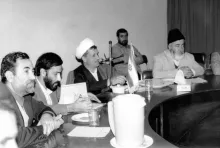
I did two interviews about the war, with the Islamic Republic newspaper and the [newspaper] Information. We had a meeting of the supervisory council. It was decided that Imam's words will come in one shift from now on in the text of the news. In the past, their summary came in the news and its text after the news. but
Read moreBefore noon, some relatives came and visited Imam. Efat also went to visit the Imam and received five hundred tomans from the Imam. He is very happy. Dr. Lee - an acupuncturist from South Korea who works in Iran - came to convert to Islam. Explanations about the Muslim cause
Read more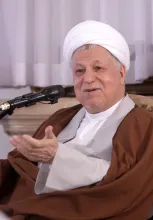
At six in the morning, Mr. Sayad Shirazi came. With sadness, he announced the acceptance of our recent decision in war management; Of course, he himself made this offer and reached here. Before noon, Ahmad Agha came. About the reactions and movements of the government opponents and conservatives about the Imam's statements, in
Read more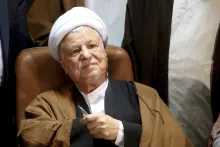
Early in the morning, after the prayer, I did some work at home and at half past seven in the morning, I went to the assembly. I usually go to the parliament on Sundays and Wednesdays during the one-month summer vacation. The security officer and the officer of the [Mehrabad] airport corps came to Tehran and gave a report on the security and control situation
Read moreI was at home all day. I wanted to go to the airport to welcome Ayatollah Khamenei [who was returning from a trip], but since they were arriving very early - at six o'clock in the morning - and there was a need for some guards, I had to summon them and it would be a source of trouble for them and in terms of security.
Read more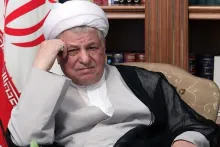
I went from home to the al-Zahra (SA) Hosseiniyeh. Before a gathering of Friday Prayer Leaders, I spoke about the characteristics of the era of the Imam and the Revolution, including the emphasis on the governmental dimension of Islam.
Read more
[Mr. Noorollah Miripanah], Director General of the Ilam Provincial Inspection Office, came and said that the province’s major projects had slowed down.
Read more
I spent about two hours being interviewed by the Islamic Republic newspaper. I did not answer their important questions.
Read more
Messrs. [Morteza] Alviri, [Secretary of the High Council of Free Trade Zones], and [Ali] Ma’navi-Rad came. They gave me explanations about the parliament’s legislation concerning free trade zones so that I could help them with the matter.
Read more
Mozzafar Baghaei Kermani a member of the National Consultative Assembly in the 15th, 16th, and 17th terms, one of the founders of the National Front, and the leader and founder of the Toilers Party. Listen to it unfiltered, produced by Habib Lajvardi, on Abdi Media on Castbox.
Read more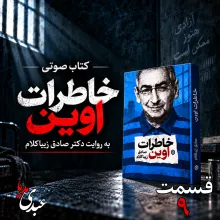
Listen to Abdi Media on Castbox, without filters
Read more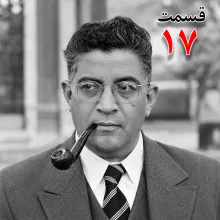
Mozzafar Baghaei Kermani a member of the National Consultative Assembly in the 15th, 16th, and 17th terms, one of the founders of the National Front, and the leader and founder of the Toilers Party. Listen to it unfiltered, produced by Habib Lajvardi, on Abdi Media on Castbox.
Read more
In line with this contract, the Municipality of Mashhad apparently paid 3,364 billion rials in cash from the place of bonds and the budget of its Economic Deputy, and committed to bartering Mehr properties (1, 2, and 3 with an area of more than 12,000 square meters) and 10,000 billion rials of construction permits
Read more
Central Bank Governor: This year, the foreign currency supply process was very good. From the beginning of the year to mid-October, $24.9 billion in foreign currency has been supplied.
Read more
Do you remember my previous note, “What considerations does the head of the judiciary have,” which is also attached to this post?
Read more
Listen to Abdi Media on Castbox, unfiltered
Read moreThe Combatant Clergy Association discussed the parliamentary elections at its meeting. Some believe that it would be better for the Combatant Clergy not to openly participate in presenting a list, while others believe the opposite. / The failure to approve the proposed European Union constitution at the Italian summit has left them confused.
Read more
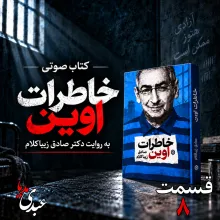
Listen to Abdi Media on Castbox, without filters
Read more
Exclusive to Abdi Media, unfiltered, listen on Abdi Media on Castbox
Read more
Listen to Abdi Media on Castbox, unfiltered
Read more
Listen to Abdi Media on Castbox, unfiltered
Read more
Starting today, the exclusive broadcast of “Mohsen Sazegara’s Memoirs” begins on AbdiMedia; a firsthand audio account in which Mohsen Sazegara, in his own voice, recounts his life from his earliest childhood years to the present day.
Read more
Mozaffar Baghaei Kermani (1291, 1366), a member of the National Consultative Assembly in the 15th, 16th, and 17th terms, one of the founders of the National Front, and the leader and founder of the Toilers Party. Listen to it unfiltered, produced by Habib Lajvardi, on Abdi Media on Castbox
Read more
Technology can be imported; but you cannot do this with history, sociology, and psychology.
Read more
Hossein Khomeini, the son of Aqa Mostafa who has gone to America, spoke against Iran at a meeting held by hardline conservatives and said that religious rule should not continue and that if the solution is limited to U.S. intervention, the Iranian people will accept it!
Read more
Dr. Salehi, Iran’s representative to the International Atomic Energy Agency, said that negotiations with the IAEA delegation are progressing well and criticized the lack of coordination among the relevant bodies. / At Mr. Khamenei’s office, there was a meeting of the heads of the three branches of government. He advised them on coordination and solidarity among the leaders, avoiding expressing differences in public, and preventing tensions during the elections in the face of external threats.
Read more
Members of the Islamic Consultative Assembly approved Article 22 of the bill on countering foreign influence.
Read more
The resolution of the Supreme Council of Cyberspace regarding the document on regulating commercial advertising in cyberspace was issued.
Read more
The case file concerning the allegations against the Zaviyeh Financial Group, which in the previous note referred to the lack of thorough investigations and even inquiries regarding all the natural and legal persons complained against
Read more
Judge Balouri, head of a branch of the Tehran Province Court of Appeals, was appointed and formally introduced as deputy of the chief justice and head of the appellate courts of Tehran Province after other options such as Hossein Masroor Naeimi and Shoushtari were considered.
Read more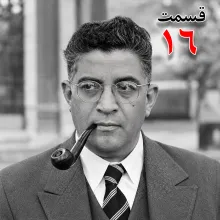
Mozzafar Baghaei Kermani (1291–1366), a member of the National Consultative Assembly in its 15th, 16th, and 17th terms, one of the founders of the National Front, and the leader and founder of the Toilers Party. Listen to it unfiltered on Castbox, Abdi Media, by Habib Lajvardi.
Read more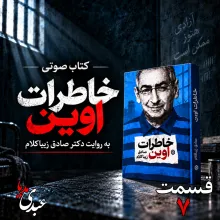
Listen to Abdi Media on Castbox, unfiltered
Read more
I believe in things like the political, social, intellectual, and cultural forces that shape society.
Read more
We pass judgment so easily; this has become our humanities!
Read more
Conspiracy theory has eaten away at Iranian society like a canker!
Read more
In 1401, students would tell me, “Professor, don’t be afraid, come out into the streets with us”; this was said by a political science student at the University of Tehran.
Read more
Studying and reading are no longer worthwhile now.
Read more
Blaming sanctions and inflation and so on is more of an excuse; we should first ask ourselves whether we accept the premise of the problem?
Read more
Can't you find an Iranian researcher who has worked on America, Japan, and World War II
Read more
In the humanities, one cannot see difference with the naked eye.
Read more
who conducted it as the judge of Branch 1064 of Tehran Criminal Court 2, specialized in economic crimes?
Read more
Listen to Abdi Media on Castbox, unfiltered
Read more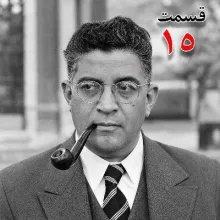
Mozaffar Baghaei Kermani (1291–1366), a member of the National Consultative Assembly in the 15th, 16th, and 17th terms, one of the founders of the National Front, and the leader and founder of the Toilers Party. Listen to it unfiltered, produced by Habib Lajvardi, on Abdi Media on Castbox.
Read more
“Tabatabaei,” Deputy for Communications and Information at the Office of the President: Following the acceptance of Mohsen Paknejad’s resignation, Dr. Pezeshkian, the President, appointed Hamid Bord as acting Minister of Petroleum.
Read more
Prosecutor Eman Ebrahimi of Branch Three of the Prosecutor’s Office for Government Employees. No precise information has been received to date regarding the allegations attributed to him.
Read moreMr. Alizadeh, head of the Tehran judiciary, criticized the performance of Mr. Saeed Mortazavi, Tehran prosecutor, and Mr. Seyyed Mahmoud Hashemi Shahroudi, head of the judiciary; particularly regarding the cases of Zahra Kazemi and Mohsen Sazegara. He said that Sazegara would be released / A report has been published in the American media that Hossein Khomeini met with Reza Pahlavi and encouraged him to fight, and said that the people of Iran consider him an alternative to the regime...
Read more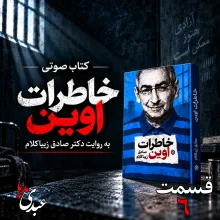
Listen to Abdi Media on Castbox, unfiltered
Read more
Ali Salehi, Tehran’s Prosecutor General and Revolutionary Prosecutor, assigned responsibility for the Prosecutor’s Office for Government Employees to Mohammad Javad Rostami, the former investigating magistrate
Read more
Listen to Abdi Media on Castbox, unfiltered
Read moreIn the session of the Expediency Council, the twenty-year vision of the country was discussed. Its generalities were approved. Previously, in the constructive government, the "Great Islamic Civilization for Iran " plan was supposed to be approved, but the reform government kept it silent, and now its incomplete form is being discussed...
Read more
David Kay, the head of the American inspectors, presented his preliminary report to the U.S. Congress after three months of work in Iraq with 1,400 personnel; a report that has poured cold water on the White House, as it says that so far no weapons of mass destruction have been found.
Read more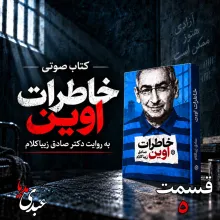
Listen to Abdi Media on Castbox, unfiltered
Read more
Mr. [Seyed Mehdi Mir] Abutalebi, our ambassador to Turkmenistan, came. He was concerned that relations between the two countries had cooled and asked me to accept Mr. [Saparmurat] Niyazov’s invitation and travel to Turkmenistan in order to ease the tensions in relations.
Read more
On the issue of Kosovo, there appears to be some progress. At the NATO foreign ministers’ meeting in Germany, attended by the Russian foreign minister, they agreed that Kosovo’s autonomy should be taken seriously, that armed forces under the management of the United Nations should maintain peace and security for the people, and that the refugees should return.
Read more
I studied at home until eleven in the morning. I went to the Koushk office and spent the time until five o’clock attending to affairs and reading bulletins and newspapers.
Read more
Mr. [Seyed Mohammad] Jahromi, [Deputy for Executive Affairs and Elections of the Guardian Council], came. He gave a report on the results of the municipal council elections and said that, given the right-wing faction’s share, the expectation is that this faction will not have a significant share in the parliamentary elections.
Read more
With the release of three prisoners of war, Milošević’s request for a meeting with [Bill] Clinton, [President of the United States], and increased activity by [Viktor] Chernomyrdin, [Russia’s special envoy], the possibility of an end to the war in the Balkans has increased.
Read more
[Mr. Mohammad-Jalal Firouz Nia], Iran’s ambassador to Bahrain, came to report on the situation in Bahrain and bilateral relations, in connection with his meeting with the Minister of Foreign Affairs.
Read more
Mr. [Mohammad Reza] Rahimi, the former governor of Kurdistan, came. He reported that the High Supervisory Board had filed a complaint against the Ministry of Interior because the Ministry had not accepted its position regarding the Tehran City Council. He also spoke about the situation of a large number of former managers who were wandering without positions and were left in a state of uncertainty.
Read more
Listen to Abdi Media on Castbox, unfiltered
Read more
Listen to Abdi Media on Castbox, unfiltered
Read more
Mozaffar Baghaei Kermani (1291, 1366), a member of the National Consultative Assembly in the 15th, 16th, and 17th terms, one of the founders of the National Front, and the leader and founder of the Toilers Party. Listen to it, without filters, on Castbox, by Habib Lajvardi, Abdi Media.
Read more
Simultaneously on Spotify and Apple Podcasts
Read more
I was working at the Koushk office. At night, Faizeh came to the house and gave an explanation about their seminar. Despite my opposition, she said that she had been accepted at the University of [Birmingham] in England. Mr. [Mohammad] Ali-Akbari came to continue providing energy. I have not reached any conclusion from the previous meeting; he insists on [going] with me for
Read more
I told the Ministry of Science that I didn’t want to study chemical engineering; the only person who supported my decision was Dr. Abdolkarim Soroush.
Read more
I presented a project in collaboration with the Ministry of Culture and Islamic Guidance in which I interviewed a number of political figures and personalities; I had one question, "What caused the Mohammad Reza Shah regime to fall"
Read more
The reality is that we are terribly backward in the humanities.
Read moreI was at home all day. I had no important work. I spent most of my time studying. Before noon, Ahmad Agha came. He had brought the anti-revolutionary newspapers from abroad [the country], and the differences between them have become severe and they are fighting each other. He said, sir [Imam], I am satisfied with the sermons of last Friday prayer
Read moreI was supposed to visit the shrine [of Imam Khomeini] on the way to the Majlis; But because the security guards stationed there had arranged a program that would take a lot of time and I would not be able to do my work, I gave up on this visit. The [hijacked] Boeing 727 plane that took us to Cairo.
Read more
I was at home all day. I spent my time reading and walking in the yard. In the afternoon, they informed us that another of our planes was hijacked on the way from Bandar Abbas to Tehran and went to the south of the Persian Gulf. Then the news arrived in Bahrain. We told [authorities] in Bahrain
Read more
I went to Tehran University to offer Friday prayers. I devoted the first sermon to the topic of foreign trade and to explaining the ruling line of the system and explaining the Imam's recent statements in the meeting of the cabinet. had created many ambiguities; I wanted to clarify the ambiguity. In the evening, the children came from Qom.
Read more
I went to the Imam's house to participate in the meeting with the Imam. We visited Imam. Mr. [Mohammad Taqi] Falsafi said that Mr. Hashtroudi, who is hospitalized in Germany, asked me for help for the treatment expenses. I told Mr. [Mehdi] Karroubi to pay. In Hosseinieh Jamaran, the imam is speaking
Read more
Early in the morning on the way to the Majlis, I visited the Tehran International Exhibition. They are busy preparing the booths - for a few days to be opened with the company of 37 countries. I visited the warehouse of antiques and valuables of Mustafafan Foundation; It is very strange and huge. Such goods from home
Read moreI studied all day at home. In the evening, Mr. Sayad [Shirazi] and [Mohsen] Rezaei came and the plans were discussed. Mr. Sayad is upset that his plan was not accepted. Two workers from Nughi [from Rafsanjan] came. For Ali Hamami - whose son recently fell in a well and died
Read more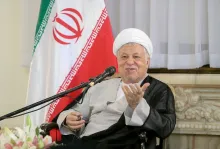
I used to study at home until ten o'clock in the morning. In the afternoon, Mr. Tabasi, Mr. [Ayatollah] Khamenei and Ahmad Agha were my guests. Before noon, we went to visit the Imam with Mr. [Ayatollah] Khamenei. They said goodbye to Imam for traveling to Syria, Algeria and Libya. with the imam about
Read more
Early in the morning, I went to the president's office and we discussed with him about the two plans of Sayad and Mohsen Rezaei. We accepted Mr. Rezaei's plan and Sayad's [plan] was found to be impractical. Regarding the Ministry of Defense and the Joint Staff and the Commander of the Navy and the Imam's representative in the Supreme Council of Defense
Read more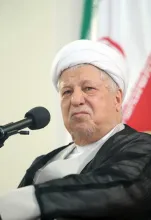
I was at home all day. Mr. Ahmad came. He asked me for my opinion about the quality of the prosecution of the prime minister's explosion case [and the martyrdom of Rajaei and Bahner]. The Board of Supervisors had a meeting; We discussed more about news policies.
Read more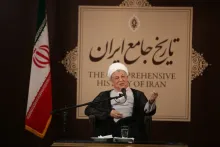
Friday Imam of Tehran, Ayatollah Khamenei, performed the Friday prayer himself. Ahmad Agha came at ten in the morning. He criticized our stagnant advertising about the hijacked passenger plane; I also confirmed. We told the Ministry of Foreign Affairs to appoint a person responsible for following up on the news and keeping it alive
Read more
Until ten o'clock in the morning, I was reading about the statements of Orientalists about Islamic civilization and the way Muslims deal with others. At ten in the morning Mr. [Mohsen] Rezaei and Sayad [Shirazi] came; To present their own comprehensive plan for war. Mr. Sayad presented his revised and timed plan in writing, for example
Read more
At half past six in the morning, I went to the parliament. I read the reports. Today, the passengers of the hijacked plane were taken to Karbala for pilgrimage. The film broadcasted by Iraqi TV showed many female travelers without hijab. I dealt with the problems of the parliament staff until 10 am; most
Read more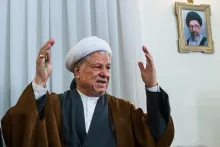
It was reported that one of our planes with 190 passengers was hijacked on the Shiraz-Tehran route and went to Iraq and landed in Baghdad. Probably, the [aircraft] hijackers have coordinated with Iraq in advance. It was protested to the Corps and the director of the airline company that why the decision was made
Read more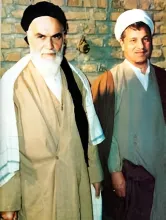
I went to visit Imam. I gave them the report of the preliminary agreement with Mr. Sayad [Shirazi] and [Mohsen] Rezaei regarding the management of the war; They agreed. I proposed to amend the constitution, which was noticed by him; They were supposed to think [about this]. Because of the existing constitution
Read moreDespite the closing of the parliament, I went to the parliament early in the morning. I am supposed to go to my office two days a week because of meetings. Mr. [Mohammed Javad] Asamipour, the head of the grain organization, and his colleagues came and gave a full report [of the organization's performance]. All silos are full of wheat; A four-month reserve is available.
Read more
I was at home all day and spent most of my time studying. Before noon, Ahmad Agha came. They talked about the war and the amendment of the constitution and the current situation of the country and the differences between the two political lines and information. It was decided that I will go to visit the Imam the day after tomorrow. We had a meeting of the Supervisory Council of Radio and Television. about
Read more
I used to study at home until half past ten in the morning. I went to Tehran University to offer Friday prayers. Engineer Mousavi [Prime Minister] gave a speech before the sermons. In the evening, two people from Sedavsima organization came. They criticized the [radio] programs and management; Especially from movies
Read moreYesterday and today, I am a little bored. I spent most of my time reading and writing. Mr. [Sidjalal] Sadatian informed that today at eight o'clock in the morning, a bomb exploded in the railway square [Tehran] and so far five martyrs and hundreds were injured. An anonymous group of royalists,
Read moreI went to the parliament early in the morning, many representatives have gone [to their constituencies]; Some have stayed to take over the car or do other things. Mr. [Sidjalal] Sadatian [the head of my office] also complained about the way some of the office staff were treated. Mr. [Gholamohsin] Jami Imam
Read more[Mr. Mirhossein Mousavi] Prime Minister, on the phone to advise the opponents of engineer [Hossein] Nili [Minister of Mines and Metals], he asked me for help because they have put pressure on him regarding the transfer of the [company] steel office from Isfahan to Tehran. In the evening, Mr. Sayad [Shirazi] and [Mohsen] Rezaei came.
Read moreMr. [Mohammed] Gharehi, the Minister of Oil, informed that they have learned from the OPEC circles - through the Algerians - that the Saudis have stated that it is necessary to work to relieve the pressure of Iranian oil so that Iran can meet its needs [through exporting oil]. [The Saudis] have told the Japanese that
Read more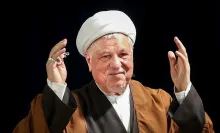
I went to the parliament at half past six in the morning. The problem of agreement on the ministers had not been resolved. There are people in the parliament who try not to fix the work of the government ministers so that the cabinet is in trouble. They want the parliament to be closed without the work of the cabinet being completed. To the Prime Minister and the President [about the approval of the ministers
Read moreFirst of all, the president spoke on the phone about the discussed ministers to propose to the parliament. There is no agreement about the Minister of Education. He does not want anyone to come and clear Mr. Parvesh's appointments. Until the evening, two or three times with [Mr. Mirhossein Mousavi] the Prime Minister and [Ayatollah
Read more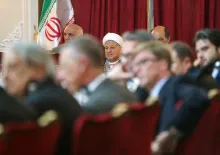
I used to study at home until half past ten in the morning for Friday prayer sermons. I performed Friday prayers at Tehran University. I read a sermon on social justice and a sermon on foreign policy, "sustainable peace and reciprocating the sufferings of others". In the evening, Mr. Sayad [Shirazi] came. about
Read more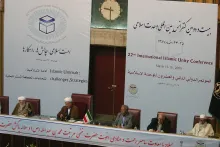
Early in the morning, I started the public session of the parliament. I left [chairing the meeting] to Mr. Rabbani Amlashi and went to my office. I was tired I read the reports. The most important issue in the world is the laying of mines in the Suez Canal and the arrival of American, English, French and Italian forces to clean up the waters of the Red Sea.
Read more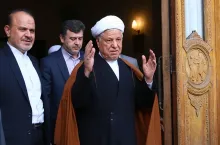
In the public meeting, we had a discussion about the three new ministers of information, justice and housing [and urban planning]. I also defended [the ministers]. It was accepted with a high vote. Mr. [Hasan] Habibi also defended himself well. The meeting lasted until almost two o'clock in the afternoon. In the evening, the board of parliament had a meeting. then
Read moreIn the public meeting, the continuation of yesterday's discussion about the cabinet was on the agenda. We had a public meeting in the morning and evening. The ministers defended the criticisms [of the opposition representatives]. Finally, near the evening, we voted. As a result of the votes, defects and problems have been announced in terms of matching the number of sheets with the number of attendees
Read more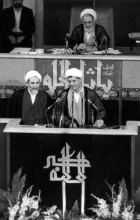
The agenda of the public meeting of the parliament was to discuss the ministers. Most of the objections were about the ministers of oil, country, foreign affairs, mines, heavy industries, higher education, education, health and defense; It was somewhat linear. Although they gave performance color. The supporters did not have a strong defense of the proposed ministers. me too
Read moreEarly in the morning, I wrote the backlog of four days. I went to the Majlis [Islamic Council]. I read the reports. In the public meeting, we had several resolutions and a certificate of accreditation was approved. There was a problem with the credentials of Mr. [Sadegh] Khalkhali [the representative of Qom]. Finally, by withdrawing the protest from the protesters,
Read moreI went early in the morning and saw the new building of the establishment of the Islamic Republic of Mashhad. it is good Then we went to visit Targ Dam. They were busy pouring concrete. This dam is built by our own experts. The French have broken the treaty and left. From there to the builder's garden - from the property of Imam Reza (a.s.).
Read more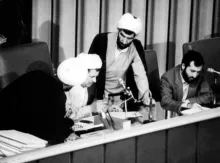
Early in the morning, Mr. Tabasi and I went to visit a new carpet weaving workshop founded by Razavi's Astan Quds and the developed village of Astan Quds. I spoke for the people there. The workshop has been built with good quality as an example of the improvement of carpet weaving workshops. Zohar, Mr. [Mohammed
Read more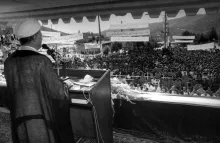
At 8:30 in the morning, Mr. Tabasi and I went to the [World Imam Reza (AS)] Congress in the hall of Razavi University of Islamic Sciences, which was newly established and opened. I stayed until noon. I was the last speaker. I presented new information about the history of Imam Reza (a.s.) and Ma'mun. Visit the university
Read moreWe had a public meeting. The amendment to the implementation bill of Article 49 [on illegal property], which was returned from the Guardian Council, was approved. In the evening, we entered the city [of Mashhad]. An official reception was held at Mashhad airport. About 200 personalities also took another plane to [participate in] the congress
Read moreI participated in the public meeting of the parliament and near the time of breathing, I handed over the meeting to Mr. Mohammad Mehdi Rabbani Amlashi. Newspapers have written harsh articles against the opponents of the government. The representatives of the opposition to the government approached me and sought a solution; Especially this time, the aspect of opposing the Imam
Read more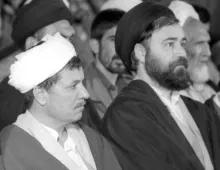
After the morning prayer, I worked in my office until ten o'clock. Most of my time was spent studying the history of Imam Reza (a.s.) for a speech at the Imam Reza (a.s.) Congress. We had a meeting with representatives of Tehran to deal with Tehran's affairs; It took two hours. There was some discussion about the form and regulations of the meeting
Read moreWe had a public meeting of the Majlis. The request for a vote of confidence in the government was in order. [Mr. Mirhossein Mousavi] Prime Minister spoke. The opponents did not say anything important or new. Mr. [Ahmad] Azri Qommi [the representative of Qom] made bad statements about the Imam's approval from the government, which did not insult the Imam.
Read more
After morning prayer and feeling healthy compared to yesterday, I started studying. At nine in the morning, Ahmad Agha came. He said [Mohsen Rezaei] the commander of the IRGC has written a letter to Imam and explained the situation of the fronts and operations, and he complained about the pressure that comes to carry out operations and told us
Read moreDue to boredom, I asked Mr. [Ayatollah] Khamenei to perform the Friday prayer. They were not ready, but there was no choice. I was at home all day; I was bored I rested and read a little to fill my time. They brought the reports, I read them. Still on the incident
Read more
I went to the assembly early in the morning. I read the reports. The hijackers have announced their demand: "The release of the prisoners related to the attack on Bakhtiar's house in France" and have given a short deadline. [Mr. Hans Dietrich] Genscher, the German Foreign Minister, has asked me to rescue the hostages and extend
Read more
At seven o'clock in the morning, it became clear that the plane, after going to Beirut and Cyprus, is finally sitting at Mehrabad Airport; We have to wait for the next events. I spoke with Ayatollah Khamenei and Ahmad Agha for tonight's party of the heads of state at our house. We set the time to meet Imam in the evening. He is a member of the board of directors
Read more
In the public meeting, Mr. [Ahmad] Azri Qomi's credentials were discussed. The meeting was exciting and difficult; Inappropriate things were also said [in this meeting]. Both the Islamic Propaganda Organization was attacked, and the teachers' community, etc. After taking a breath, I handed over the meeting to Mr. [Mohammed] Yazdi and to do the work
Read more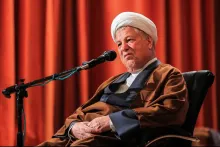
Today, due to the density of work, we held a public meeting. The emergency plan was finished and contrary to expectations, the Guardian Council did not use anti-government policy in its comments, but removed the restrictions that the parliament had set for the right to request a vote of confidence in the government. Several accreditations have also been approved
Read moreIn the public meeting [Majlis], the revision of the regulations for obtaining a vote of confidence for the government was discussed. In the afternoon, Mr. [Abdullah] Atayi, the representative of Sanandaj, came to my office and complained about the performance of the officials in Kurdistan province. Several representatives of Kerman province came and complained about the governor of Kerman and me
Read more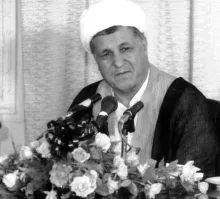
After the morning prayer, I made up for the two or three days delay in compiling the memoirs. Ahmad Agha Amed said that Westerners have paid attention to the acceptance of political ways to end the war. Others also said this. These are my two statements
Read more
After prayer, I used to study at home until half past ten in the morning. I performed the Friday prayer [Tehran]. I spoke about the anti-hijab demonstrations last week and their dealings with the [Islamic Revolution] Committee and the Minister of the Interior, and I also gave a sermon about the life of Imam Sadiq (AS). after
Read more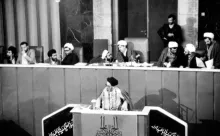
I went to the assembly early in the morning. I read the reports. The important issue related to us is the discovery of an armed Iranian group in [Madrid, the capital] of Spain, who, according to the Spanish, intended to hijack a Saudi plane; They have made a lot of fuss. In a public meeting
Read more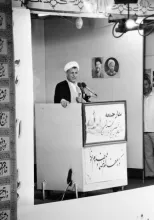
I stayed at home today. I was studying the states of Imam Sadiq (a.s.). [number] We have changed the home phones and few people know about the new grades. Telephone inquiries are few. Usually, after a while when many people have learned the [number] of the phones, we have to because of problems
Read moreIn the open session of the Majlis, the urgent plan to amend the [Internal Majlis] bylaws was discussed. About the quality of the vote of confidence in the government, they had argued that the plan was detrimental to the parliament, and it was rejected. The rejection of the plan was a source of happiness for the traditionalists and the Guardian Council. The plan that they gave is in the order of the parliament
Read more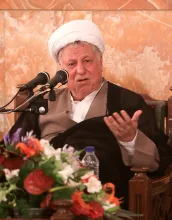
Early in the morning, I studied the life history of Imam Sadiq (a.s.) for Friday prayer sermons. I went to the Imam's office to visit the Imam. Mr. [Ayatollah] Khamenei also came. We went to serve the Imam together. We reported the situation of the front and the opinions of the commanders about future operations. We asked them for their opinion.
Read moreAfter the morning prayer, I worked in my office until eight o'clock in the morning and read the reports. In the public meeting, two credentials were approved and the urgent amendment of the regulations for the method of obtaining a vote of confidence in the government - which he requested and does not have a specific procedure in the parliament - [was approved]. while breathing,
Read more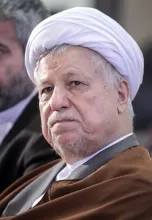
After the morning prayer, we had a meeting with the commanders and officials of the four camps. Each of them spoke separately and most of them in some way opposed the operation and presented arguments. After them, I spoke and while thanking them for their reminders, the impossibility of studying all the desired facilities
Read moreI wrote the memories of yesterday. Friday prayer was led by Ayatollah Khamenei. In the afternoon, Siddique's sister-in-law and her children and Ashikh Mohammad came without being informed. We took food from outside. I went to the airport at three in the afternoon and immediately flew to Khuzestan. in Dezful Vahdati Air Base,
Read moreI wrote the delayed memories. At half past six in the morning, I went to the parliament and studied the reports until eight o'clock. Then I went to the public meeting. The bill of abstracting control and audit from the army headquarters and annexing it to the Ministry of Defense was discussed. Mr. [Brigadier General Qasem Ali] Zahirenjad [Chief of the Joint Chiefs of Staff of the Army]
Read moreThe council of experts had a meeting until noon. We finished the meeting and took a group photo in the courtyard of the parliament. In the afternoon, Mr. Yatharbi, Imam of Juma Kashan, came to my office for the affairs of Kashan, and then Mr. [Syed Ali Mohammad and Sayyed Ali Asghar] Dastghib [the representatives of the people of Fars province in the parliament
Read more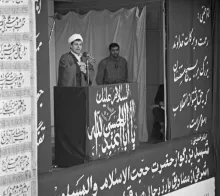
I went to the assembly early in the morning. I read the reports. The important issue of the news agencies is our invitation from the Saudis to Mecca, which has various interpretations. Because the Saudis are silent and my acceptance is not known. Doubts have arisen in the principle of my invitation and acceptance, and the news agencies in this matter
Read moreAfter prayer, I worked in my office until eight o'clock in the morning. In the morning and in the evening, we had a meeting of experts. There is no important matter in the order. Before the order, most of the speakers complained about the lack of attention to the dignity of the experts and wanted to enter into the issue of the main duties - which is to identify the competent people for leadership and
Read moreAt eight o'clock in the morning, the meeting of experts started. We did not have an important item in the order. Some expressed their satisfaction with the invitation to Hajj by the Saudis, and some were worried about the desire for peace and closeness to the reactionaries. In the evening, I attended the [Islamic Republic] Party meeting. after
Read more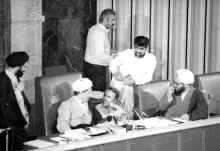
We had the first session of the second session of the Assembly of Experts. At six o'clock in the morning, I went to the parliament to solve any problems in the preparations. I worked in my office until nine in the morning. I called the front. Progress is not limited to plans; It was decided that the commanders would come to Tehran. I as
Read more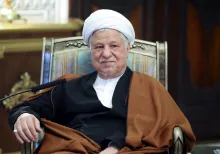
I was at home all day. I entrusted the Friday prayer to Mr. Imami [Kashani]. Haj Seyed Ahmad Agha came and we discussed that there should be an adjustment in the government's policy of making some of the affairs that are better done by the private sector; Like rice design. About the reciprocation program and
Read moreMr. [Mohammed Ali] Hadi [Najafabadi] came and expressed concern about Shiraz elections. He wanted me to support Mr. Mr. [Hatem] Naroui, Bam's lawyer, also came and was upset that Kerman Radio and Television did not report the news of Bam's Friday prayers. I said explain the reason
Read more
I was resting and studying at home until the evening. When Mr. Imami [Kashani] was scheduled to lead the Friday prayer this week, there was some leisure. Usually in every month, two weeks I and one week Mr. [Ayatollah] Khamenei and one week, one of the three people Mr. Mahdavi Koni, Mousavi Ardabili and Emami.
Read moreI asked Mr. Yazdi [Deputy Speaker of the Parliament] to manage the meeting. I went to the 100,000 people [Azadi] stadium to give a speech to the joint seminar of clerics, supervisors and managers of Hajj. Meetings have been held in the wrestling hall. They expressed warm feelings. It is a huge hall. Today's spirit has caused it
Read moreEarly in the morning, I negotiated with the prime minister about the introduction of cabinet ministers. Due to the difference of taste with the president, he is trying to use the new status of the parliament to solve the root problem and complete the work.
Read more
The public session of the parliament was devoted to credentials. The credentials of [Mr. Seyyed Farajullah Afrazideh], the representative of Nowshahr, were first objected; Mostly because of one of his speeches during Taghut. Because he defended well, [his credentials] were approved. Opponents, mostly because of Mr. Allah
Read moreI was at home all day. I spent most of my time studying. I called my office and Mustafafan Foundation and talked about the proposal to establish prefabricated housing factories. Mr. [Mohsen] Rafiq Doost to meet the envoy of Mr. [Yasser] Arafat [leader of the organization
Read more
I used to study at home until half past ten in the morning. I went to Tehran University for Friday prayers. I delivered a sermon on the atrocities of the western whites towards Africa and a sermon on the issues of the day. Dr. [Hasan] Rouhani came and gave a new test report of the facilities of the Ministry of Oil, which
Read moreIn the public session of the parliament, the election bill was amended and the absolute majority quorum in the first stage became a one-third majority. In the afternoon, Mr. [Ismail] Fedayi, the representative of Arak, came. He complained about Imam Juma Arak's dealings [with him]. [Mr. Imam Mousavi] Shushtar's representative also came and suggested to stop chanting
Read more
Before noon, I was studying, taking notes and writing the Arabic sermon for Friday prayers at home. Mr. Ahmad also came and we talked about the war and... The children had a shooting competition with an air rifle in the yard. Ahmad Agha and I also participated [in this competition]. In the evening, the presiding committee of the parliament had a meeting.
Read more
The reports were not important. We had a public meeting of the Majlis. Several credentials were approved and we had several choices. The votes are relatively moderate. Two urgent amendments to the election law were approved to make the elections one-stage. In the evening, Mr. Hamid Bahrami [Iranian Ambassador] came from The Hague. this
Read moreI was at home all the time today. I called the parliament and checked the weekly order. [Colonel Mustafa Tarabi] The official of the Imam's consultation office called and asked for permission to go to the south, to cooperate in the confrontation, and reported the quality of the ships' convoy going back and forth to Imam's port.
Read moreSome people who wanted to attend the Imam's meeting and did not have a meeting card, used to cross the [inspection] barriers in the name of our house. We have such cases on the days of the Imam's visit. I went to Hosseinieh Jamaran, almost all the personalities and heads of the organizations were there. First, as usual
Read moreMr. Dr. [Hasan] Rouhani came with a previous appointment. He gave a full report of the results of the facilities survey to the front and was satisfied with it and said that it is relatively effective and desirable. Mr. [Ayatollah] Khamenei, [Mohsen] Rezaei and Sayad [Shirazi] came; Talking about future operations - Wal-Fajr 7, 8 and 9
Read moreI stayed at home all day. The Friday prayer was performed by Mr. Mahdavi Kony. Mr. Sayad Shirazi was supposed to come, but he informed from Isfahan that he will reach Tehran late at night. In addition, they had a maneuver in Gavkhoni area of Isfahan with helicopters and rangers, which should be done in future operations.
Read more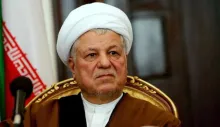
I did the overdue work, which was mostly reading the reports received from other organizations. I read a detailed report on the purchases of the ground forces, which I sent to the commander of the ground forces and the president for further investigation. responsible
Read moreThe head of the Majlis [Islamic Council] had a meeting. Mostly, the discussion was about the rights and privileges of the representatives of this period, which must be determined anew in each period. It seemed to be the same as last time. I had a few meetings with the representatives, mostly about the needs of their constituencies and solutions
Read more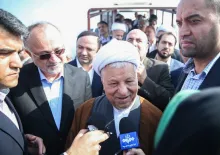
At nine o'clock in the morning, the public session of the Majlis [Islamic Council] began. Most of the time of the meeting was spent examining the credentials of Mr. [Miraboulfazl Seydrihani] Mousavi Tabrizi - who was objected to because of his past cooperation with Mr. [Ayatollah Seyyed Kazem] Shariatmadari - but he gave a good opinion;
Read more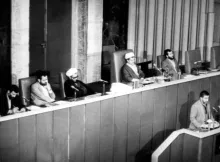
I worked until six in the morning and then slept until eight and then read reports until nine. It doesn't matter. Following the attack of the Greek ship by the Iraqis in Khark, the world is more worried about the escalation of the crisis in the Persian Gulf. The public session of the Majlis [Islamic Council] started at nine o'clock.
Read more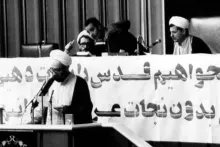
Early in the morning, a 300,000 ton Greek ship was hit by an Iraqi missile at the Azarpad Khark dock, caught fire and damaged a dock. At half past eight in the morning, they extinguished the fire. Before the public meeting of the parliament, about the quality of discussions
Read moreI warned Dr. Velayati [Foreign Affairs Minister] over the phone that they should be more serious about the UN inspector coming to Iran [about monitoring the ceasefire in the cities]. Iraq falsely accuses us of violating the [ceasefire] agreement and complains to the United Nations even though it violates it.
Read more
I stayed at home all day. Fasting has reduced my work power. Even the studies do not make the usual progress. I read a book about the "causes of Africa's backwardness and Europe's responsibility in this regard" to be used in Friday prayer sermons in the discussion of "racial discrimination". Phone call too
Read moreI read the reports. I wrote the delayed memories. It is not important. The circles, centers and political people of the world are confused by the delay of Iran's ground attack on Iraq - which they have been expecting for a long time - and they attribute it to the lack of military equipment, the differences between Iran's leaders, the fear of weapons
Read more
At half past eight in the morning, I went to the parliament. The parliament is closed due to the lack of preparation for the new term. Several butcher workers came and complained that the owners of the butcher shops had planned to fire the workers of the shops; Because with meat rationing, limited hours are needed
Read moreI was at home all day. I spoke on the phone with [Mr. Ali Akbar Velayati], the Minister of Foreign Affairs, about pursuing the countries that accept our hijacked plane. The hijacked plane left Egypt and refueled in Italy and landed in the south of France.
Read moreI was at home all day. The parliament has no work due to the lack of formation of commissions. The branches [checking credentials] have not finished their work yet, and the situation of the new representatives is not good either. They do not have a house to live in. Before noon, we spoke on the phone with Ayatollah Khamenei [President].
Read moreI went to the Majlis [Islamic Council]. I reviewed the reports. The important issue of the media is my statement in the Friday prayer yesterday when I said that we are ready to leave the war in the Persian Gulf. Almost all the important news media in the world have counted on it, and the debate is whether we should go to Iraq as well.
Read more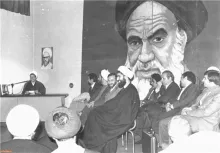
I was at home all day and until the evening, my time was spent studying, resting and sleeping. In the evening, the Supervisory Council [Sadasima] had a meeting. The secretaryship of Mr. [Mohsen] Daagu for [Seda and Broadcasting Supervisory Council] was extended. We also had other approvals and guidance on the quality of editing history films
Read moreI used to study at home until half past ten in the morning. I went to university [Tehran] to offer Friday prayers. Even though I am fasting and there is weakness, I spoke without effort for about an hour and a half and I mentioned Iran's readiness for a cease-fire in the Persian Gulf, which will probably lead to a new wave in the world.
Read moreI stayed up until six in the morning and then slept until half past seven. I read the reports. It was not important. At eight o'clock, I went to the [credentials check] branch. We approved two or three credentials. In the open meeting of the parliament, the credentials of 31 representatives were approved and [credentials].
Read more
I was at home until four in the afternoon; I rested and studied. I wrote the Arabic sermon for the upcoming Friday prayer and studied and took notes about the crimes of the Khmer Rouge in Cambodia and the brutal killing of Muslims there. At four in the afternoon, I went to the parliament.
Read moreAfter the morning prayer, I couldn't sleep and I worked until six o'clock. Then I slept until half past seven in the morning. At eight o'clock, the meeting of the branch [reviewing credentials] was held and the credentials of Mr. [Syed Hossein] Mousavipour from Abhar - who had many complaints [about his credentials] - were approved. hour
Read moreI woke up at two in the morning; I ate suhoor and prayed the morning prayer and slept a little. At eight o'clock in the morning, we held a meeting of the branch [review of credentials] and we worked until two o'clock in the afternoon and received and approved nineteen lawyers' credentials. I was tired A little rest in the evening
Read more
At eight in the morning, I went to the parliament and did the administrative work. I had several meetings. A group from the Islamic Association of Iran Aircraft Organization came; They complained to their CEO that he purges Hezbollah forces. It was decided that the consultation office [Imam in the army] will deal with this matter
Read moreWhile having breakfast, the prime minister's office informed that at two in the morning, two Iraqi missiles hit the city of Dezful. Later it turned out that 44 people were martyred and 200 people were injured [as a result of this missile attack]. We will also hit Basra [in retaliation for this attack]. All day at home
Read more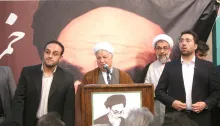
Mr. Mohsen Rezaei informed that the situation of Basij forces is better than what he said yesterday and asked that the radio and television should pay attention to today's IRGC statement so that an atmosphere of war is created and popular forces are mobilized for operations. With Mr. [Ayatollah] Khamenei [President] as well
Read moreAt dawn, the Prime Minister was informed that Iraq bombed the city of Nahavand last night and fired rockets at the cities of Dezful and Masjid Suleiman. In Nahavand, 15 people were martyred and more than 100 people were injured, but in Dezful, only a few were injured, and in Masjid Suleiman, rockets were fired outside the city.
Read more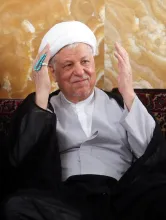
I went to the parliament at eight in the morning. I read in the reports that yesterday one of our F-4 planes was shot down in the airspace of Saudi Arabia and that Saudi Arabia has officially taken responsibility for shooting down the plane. It is a bitter incident and it has had a wide impact. This flow can be the beginning of our conflict with
Read more
At seven in the morning, I went to the airport [Mehrabad] to see off Mr. Rabeh Bitat, the Speaker of the [People's] Assembly of Algeria. Journalists interviewed him in the Republic Pavilion. He just said the generalities; Algerians are very conservative and want to be friends with everyone around them. With Homa plane
Read more
Mr. Sadatian informed that [Mr. Rabeh Bitat] the Speaker of the Algerian People's Assembly is coming to our house for iftar. I told Fati and Faiza to prepare iftar for the guests and I told Agha Jalal to buy and bring the catering equipment. I told Mr. Mukhtar, who is in charge of the protection of Imam's house, that Agha Jalal
Read more
In the morning, I visited the Majlis dentist. The doctor examined my teeth; It needs some work. I was supposed to visit after the holy month of Ramadan. A group of students under the training of the Ministry of Energy came with Dr. [Hasan] Ghafourid. [The Minister of Energy] made a report and I also made a report regarding necessity
Read more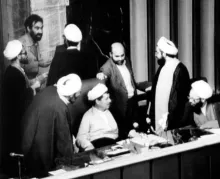
After the morning prayer, I slept until eight o'clock and then read the reports until noon. I spoke with the president on the phone. They have given the order to retaliate against the Tabriz refinery. I also spoke with the oil minister; The damage caused to the Tabriz Refinery was not much and will continue for the next few days
Read more
Last night, no one saw the [Ramadan] crescent. Until dawn, I called the Imam's office several times about the sighting of the crescent moon; The sighting of the crescent moon has not been confirmed. I woke up at dawn and had breakfast alone; Because the month of Ramadan has not been established, the children did not fast. I worked until eleven o'clock in the morning and then for Iqamah
Read moreMr. Sayad Shirazi came and he is satisfied with the progress of the preparations for the operation, unlike the IRGC commanders - who are not very hopeful. It was reported that the Iraqis bombed the Tabriz refinery at 7:15 p.m., which resulted in the martyrdom of several people. In this attack
Read moreI used to study at home until nine o'clock in the morning. Today, the representatives of the first and second parliaments had a meeting with Imam. Before the [official] meeting, I had a private meeting with the imam, and the imam asked about the status of the new representatives; I expressed my satisfaction. It was discussed about the rights of the Guardian Council and that
Read moreI read the daily reports; The scope of the Persian Gulf crisis has decreased a little. It seems that the policy of reciprocating has worked and they have settled; If there is no calm before the storm. Before the public meeting, we consulted about the chairmanship of the parliament, and then the public meeting of the parliament, for
Read moreEarly in the morning, I started working. At eight in the morning, we had the opening session of the second term of the Islamic Council. Problems had arisen for the accommodation of the guests and the Guardian Council objected to the place of its lawyers. Quran [recitation] and hymn [performed] and Imam's message about the meeting
Read moreThe deposition session, as the last session of the first term of the Islamic Council, started at eight in the morning. The Qur'an [was read], the hymn [was performed] and my detailed speech about the Majlis and the representatives [was given], and then the commemorative tablets - which we made from the Imam's message - were distributed. Then in
Read moreThis morning and evening, we had a public meeting [Islamic Council] and passed some second-pass bills left over from the previous meeting. Mr. Engineer [Mehdi] Bazargan [Tehran representative] wanted to give the speech before the order instead of Mr. [Hashem] Sabbaghian on the last day of the parliament, but because in general
Read moreI was at home all day; I spent most of my time studying and resting. I assigned Mr. [Mohammed] Emami Kashani to lead Friday prayers [this week in Tehran]; He relied a lot on the Imam's support from the Guardian Council. Talking with the Prime Minister and the President regarding the ship accident
Read moreI went to the parliament at seven in the morning, but I did not participate in the public meeting; Because I was a little bored. I studied reports and administrative work. Mr. Gharehi [Oil Minister] informed that last night, the Iraqis attacked an oil tanker in the internal ports [of Iran]. with Mr. President regarding reciprocation,
Read more
I used to study until half past eight in the morning. Then I went to the Atomic Energy Organization. I visited some of the facilities there. Then, in the plasma physics application seminar, I talked about "chains of global arrogance for the movement of backward nations". From 10:30 onwards, the meeting of the supervisory council
Read more
In the public meeting of the parliament, two urgent bills to help Syria were discussed. It turned out that Mr. [Ali Akbar] Moinfar [Tehran representative] wrote a name as an opponent; It was speculated that he intends to crowd and create problems and raise himself in the last days of the life of the parliament. It was suggested to prevent it
Read moreIn the open session of the parliament, several bills were approved, including urgent aid to Syria. Before the meeting, I told the delegates the Imam's message - that their differences hurt their hearts. I had several meetings in my office at noon. [Hujjat al-Islam Salehi] Imam of Friday Azna, [Amount 200
Read moreI went to visit Imam. In the Imam's service, we discussed the critical situation in the Persian Gulf and the possibility of the intervention of major powers. The Imam was also worried about the consequences, and they gave the possibility of danger if America and the Soviet Union came to an understanding. Of course, they didn't think it was right to hand in hand and export
Read more
After the closure of the parliament due to the elections, the first day of the public meeting was. Some representatives who failed in the second stage were not in a good mood, but the parliament worked normally. Just a brief conflict in connection with the letters sent by a group of representatives in support of the council
Read moreI used to study at home until half past ten in the morning. Then I went to Tehran University to offer Friday prayers. I dedicated the first sermon about Imam Zaman (AS) and the other one about the oil tanker crisis in the Persian Gulf. Mr. [Abulqasem] Khazali [guardian council member] before the sermon in the lecture
Read moreIn the mobile branch, 110 Jamarans, who were brought to Imam's House to vote, voted together with the children. In the evening, I participated in the awarding ceremony of the soldiers in Loisan barracks and gave a speech to them and gave the awards to their representatives. At night, the reports arrived from all over the world
Read moreEarly in the morning, [Colonel Mohammad Salimi] the Minister of Defense came and gave an explanation about the plan to visit the munitions factories of the Defense Industries Organization, and together we went to the site of the [actual] factory in the north of Pasdaran Street. We visited several units; including 130 and 155 cartridge making and bullet making
Read more
I went to the parliament for some meetings and administrative work. I read the reports. The important topic of the day is the hitting of oil tankers in the Persian Gulf. Mr. [Ali Mohammad] Besharati applied for the administrative work of the parliament and his future. [Nakhodaikm Esfandiar Hosseini] the commander of the naval force came and opposed
Read more
I was at home all day. Early in the morning, the Ministry of Oil informed that one of our oil tankers had an accident and caught fire in Bushehr. The Iraqis must have struck. Akhvi Mohammad [head of the Broadcasting Organization] regarding the broadcast of Isfahan Governor's protest against Mr. Emami Kashani's statements regarding the cancellation
Read moreI stayed at home until ten in the morning. Mr. [Ayatollah] Khamenei was supposed to come to our house after visiting the Imam, but it was late and we canceled [our appointment] and I went to the assembly. A group of martyrs' families had come; I spoke to them about the greatness of martyrdom and martyrdom. farmers
Read more
At half past eight, Mr. Shirazi, Imam of Mashhad came; Mostly to complain about the move of the Guardian Council in canceling some of the funds and the elections of some areas and the composition of the supervisory board. His son in Darab constituency was also affected by the same policy and his success was due to cancellation
Read moreAfter the morning prayer, I rested. The sound of an explosion from a close distance shook the windows of the house; I investigated, they said that the gas canister exploded in the shop next to Jamaran square. There is also a possibility of vandalism. Officers are investigating. Mr. [Hossein] Marashi came. The office brought the transfer document
Read more
I spoke with Ayatollah Khamenei [President] on the phone about the need to speed up the implementation of the decision to retaliate against oil tankers [in the Persian Gulf]. Mr. [Asadullah] Bayat also informed by phone that Mr. [Ahmed] Janati [Jurisprudence member of the Guardian Council] about the process of signing the letter by
Read more
I was at home until two o'clock in the afternoon. I wrote the memories. I read the reports. A coup has started in Libya and it has failed. The Minister of Foreign Affairs consulted on the phone to go to Libya to strengthen them; I agreed. Mr. [Sheikh Hassan] Saneyi came; To hold the ceremony on June 15
Read moreMr. Prime Minister informed that last night another ship of Saudi Arabia [named "Al Hud"] - which was carrying oil from Kharq to Italy - was attacked. consulted about the quality of advertising and reaction; We decided to make a decision in the Supreme Defense Council. In the public session of the Majlis, imams
Read moreEarly in the morning after the prayer, I started my work. At seven o'clock, Mr. [Mirhossein Mousavi] the Prime Minister and Mr. [Mohsen] Kongerlu came. Counter-revolutionary [movements] in Europe were discussed as well as the introduction of three new ministers. In the open session of the parliament, several bills were approved. Part of the administration of the meeting to Mr
Read more
We had a public meeting. In my breath and before the meeting, I listened to the complaints of the delegates about the election glitches. At noon, several meetings were held in my office. In the evening, I did not go to the meeting of the central council of the [Islamic Republic] Party; Because of a little interest and because of a lot of work I had. Mr. [Masih] Mohajeri
Read moreI was studying in the morning. I arranged the library. By noon, we had a meeting of the supervisory council [of Islamic Republic of Iran Broadcasting] and a decision was made regarding holding a seminar for the World Quds Day and the regulations of the political unit, the Supreme Political Council, as well as encouraging and punishing the editors of Khabar. evening to
Read moreI was at home all day and spent most of my time studying. The children had gone to a party and I was alone for lunch. In the morning, [Mr. Natiq Nouri] the Minister informed that the opinion of the Guardian Council is to deal with about thirty cities - which he did not have time to deal with - in the second phase of the elections.
Read moreI was at home all day. Mr. Dr. [Hasan] Rouhani came. He went to Khuzestan to equip and coordinate and test defense facilities - which was not positive. I was alone at home. They brought the reports from the parliament; It doesn't matter. Mr. [Fazlullah] Mahalati [representative of the Imam in the army] and Mohsen
Read moreThe assembly was closed, but I stayed in the assembly to make meetings. I talked with Mr. [Mortaza] Katirai about completing the administrative work and handling the complaints of some employees about their work situation. Dr. Hemmati, the head of microbiology department of Shahid Beheshti University, came and suggested that
Read moreI worked in my office until half past seven in the morning. We had a public meeting. The work ordered by the parliament has been completed. Next week, a holiday has been announced for the representatives to participate in the campaigns of the second phase of the elections. Before the order, I talked about Labor Day. Before noon, the board of directors had a meeting. about
Read moreBefore the agenda of the public meeting, I talked about the Imam's statements yesterday. These talks were later objected to by Mr. [Ahmad] Azri Qommi [Qom representative]. There was an urgent plan to amend the election law; It didn't end. It is fruitless; Because it does not reach the second stage of the election. What time is it at noon in my office?
Read moreThis morning, I was at home. Mr. Mohsen Rezaei came and discussed the issues of Iraqi Kurdistan. I said that taking into account the future problem of Iraq, action should be taken in connection with the Supreme Assembly [of the Islamic Revolution]. I went to the Imam's office. A group with a group of leaders and officials, [on the occasion of the anniversary of the Prophet's mission
Read moreI went to the assembly early in the morning. Reports show that the Westerners do not want the explosion of a Saudi ship in the Persian Gulf to become too big to cause a crisis in the oil situation. We are not against this policy either. I went to the Majlis Hall for the funeral of Martyr Mehdi Shahabadi. A large crowd has come
Read more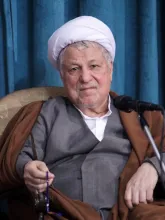
Until half past ten in the morning, I was studying at home about the history of the life of the 7th Imam (a.s.) for the Friday prayer sermon. I consulted with the president and the prime minister about the quality of the statements, about the [oil tanker belonging to] Saudi Arabia - which has caught fire. with
Read more
I was at home all day and studied more. Early in the morning, they informed the prime minister that last night, the Iraqis had taken a large oil tanker of 340,000 tons [named "Safina al-Armat"] - owned by Saudi Arabia and leased from South Korea - which had taken oil from Khark, in 250
Read moreI was at home all day. Mrs. Shahid Motahari came and demanded more attention to keep her name alive. Ahmad Agha about prescribing the publication of a book by Dr. [Ibrahim] Yazdi [from Iran's Freedom Movement] regarding the Imam's direct meetings and negotiations in Paris with Western countries, including
Read moreIn the public session of the parliament, two urgent plans to amend the election law were discussed. I was tired and bored; I left the meeting to Mr. Yazdi [Deputy Speaker of the Parliament] and came to my office. For Friday prayer sermons, I studied the history [life of Hazrat Musa Ibn Jafar (AS)] of the seventh Imam and did the office work.
Read moreWe had a public meeting in the parliament. After breathing, I came to the office. Mr. [Syed Abolfazl] Razavi Ardakani explained the election of Ardakan Shiraz; The claimant is cheating on the part of the competitor and he acquitted himself of the incidents there. Mr. [Rasul] Mutjabnia [representative of Shush and Andimeshk] also came and talked about the situation of Khomein
Read moreBefore the public meeting of the parliament, Mr. Hassan Rouhani came and I talked to him about the front. In the public meeting, the discussion about the foreign trade bill was over. After announcing the breathing, I went to my office. In the afternoon, Mr. [Ali] Hamzai, the representative of Asadabad, [Mohammad Taqi] Al Saidghfoor, the representative of Shushtar and
Read moreMr. [Mohammed Hasan] Zoroq and Akhvi Mohammad [from the Broadcasting Organization] came and proposed the formation of the "Global Front of the Oppressed" to make the revolution more general. They were worried that the Islamic revolution would be limited by Iran and Shiism. Also, young people's attention to personal issues
Read moreI used to study at home until half past ten in the morning. After three weeks of not going to perform Friday prayers because of the elections, I went today. Because of the false and widespread rumors that were spread about the terror, the worshipers welcomed and expressed passionate feelings. Lunch at home
Read moreEarly in the morning, Mr. Sayad Shirazi came home and talked about the same words as before about the unity of the command. I went to the parliament and read the reports. In the public meeting, the amendment of the bill [nationalization] of foreign trade, to provide the opinions of the Guardian Council - which is in hand with import monopoly
Read more
After the morning prayer, I worked in my office until eight o'clock. In the public meeting, I congratulated the Army Day. Several bills were approved. Because of complaining about the election and expecting me to deal with it - which is not related to me either - there is a lot of mental pressure on me. In the afternoon, I have several meetings in my office
Read moreI went to the assembly early in the morning. After some time off - for [the presence of representatives in the field of] elections - the first meeting was held. The representatives who have won are very happy, and those who have lost or fallen to the second stage, are in a bad state of mind and it is difficult to keep them in the meeting.
Read more
I was at home all day. I was supposed to visit the military industries, but it was postponed to another day due to the meeting of [Colonel Mohammad Salimi] with the Imam. They announced the results of the parliamentary elections in some constituencies. The [candidates] of the community of teachers [the seminary] were defeated in Qom. in
Read more
I used to study until eight o'clock in the morning. They had brought a mobile fund to the Imam's house to collect votes. We went with modesty and voted; Thirty people for the Islamic Shura Council and one person for the Expert Council. Then we went to the Pasdaran courtyard garden and to complete the videos we visited the Lar Dam
Read more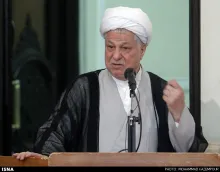
I was at home all day. From nine in the morning to noon, as usual, we had a meeting of the Supervisory Council of Sedavsima. A decision was made about war propaganda and other issues. In the evening, Ahmad Agha came and informed that the Saudi ambassador was pursuing the issue of negotiations [with Iran]; Ishan, Colonel
Read more
Early in the morning, we left the house to visit Lar Dam. At the officer college, we boarded a helicopter with [Mr. Hassan Ghafourifard] the Minister of Energy and some relevant engineers and visited the details of the work at the dam site. The Italian contractor and the English consultant have betrayed and the water is under the dam
Read more
I was at home all day. I studied more. We were not important in the world and on the fronts. Mr. Mohsen Rezaei complained about the lack of movement in the Karbala camp. I asked Khatam headquarters to increase the mobility according to the plans. Water from the west of the southern island of Majnoon to the east of it
Read more
At eight in the morning, I went to the parliament to do office work and meetings. The parliament is closed due to the second term elections. At nine o'clock in the morning, the members of the Friday prayer staff came [to Tehran]. They gave a report on the [construction] of the [Imam Khomeini] mosque. At ten o'clock, Mr. Dehghan, the commander of the IRGC
Read more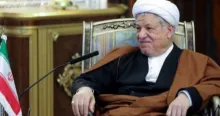
I was at home all day. Mr. [Mohammed Reza] Tausli came [from the Imam's office] and invited me to give a speech in the meetings of Imam Sadiq University during the days of Ramadan. I did not accept Mr. Ahmad came and discussed the negotiations between the members of the Guardian Council and the Imam [regarding the disqualification of Mr. Khalkhali and Mousavi.
Read more
I went to the assembly in the morning. Several members of the parliament's staff came to solve problems related to housing. [Mr. Philip Naz] Ambassador of Hungary and [Mr. Mohammad Sakhawat Albari] Ambassador of Bangladesh met in Tehran; The second one was talking about war and wanted to understand our position for peace. Mr
Read more
I used to study until nine o'clock in the morning. We had a meeting of the Supervisory Council of the Broadcasting Organization. As usual, some cases were approved. Mr. [Ahmed] Janati from the Guardian Council called and told the members of the Council that the Imam did not consider it expedient to remove Mr. Khalkhali and Mousavi of Tabrizi.
Read moreToday, I was at home all the time. Mr. [Mohammed Reza] Mahdavi Koni performed the Friday prayer [Tehran]. There were very few phone calls. Ahmad Agha said, Mr. [Sadiq] Khalkhali and [Syed Hossein] Mousavi Tabrizi - whose representation authority was rejected by the Guardian Council - have said, we ourselves
Read moreOn the occasion of the new year, I had a meeting with the Majlis [Islamic Council] staff; I talked to them about solving the problem of the employees of the previous regime's offices. In the afternoon, I had a few meetings. Mr. Dr. Magharai [surgeon] talked about the progress of plastic surgery in Iran
Read moreNear morning, I had a terrible dream and woke up and did not sleep again. I contacted Mr. Sayad Shirazi, Mohsen Rezaei and Mousavi Qavidel about the fronts; The situation is not bad. I spoke with [Colonel Hoshang Sediq] the commander of the air force about the lack of mobility of the air defense in the front; He was upset. the requester
Read more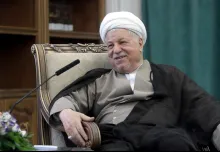
Early in the morning, I went to the parliament. The first meeting was in the new year. I read the reports; It doesn't matter. The public meeting is very little prosperous. We removed the speeches before the order; Because public facilities should not be used to advertise the elections, and the speech of the representatives and their introduction may be from
Read moreI stayed at home all day. I studied more. Mr. Gharehi [Oil Minister] came. He was upset with the Syrians' miscalculation and not paying for oil. It was proposed to be converted into a loan with the government's bill and the approval of the parliament, in order to give a deadline and preserve the demand. He is satisfied with the sales situation and the elasticity of the oil market. with
Read more
First, I read the reports. I advised Akhvi Mohammad, [the head of the Broadcasting Organization], that these days the content of the Western mass media regarding the [use of] chemical weapons [in the war by Iraq] should be used more in the broadcasting; Good content. Mr. [Fazlullah] Mahalati, [representative of the Imam in
Read moreI was at home all day. Due to the fact that today is between two holidays, an official holiday has been announced by the government. Most of my time was spent studying reports, telexes and studying the scenario of "Serabdaran" series. These days, the mass media of the West, as a whole, forcefully speak in our favor
Read more
I stayed at home all day. Friday prayer was led by Ayatollah Khamenei. I talked to him on the phone about my trip to Qom. His opinion was that Qom [Islamic Republic] party should not comment on the differences between the madrasah community and their opponents in the elections in order to avoid conflict.
Read more
I read the reports in the parliament until half past seven in the morning. The trip of foreign journalists to the Majnoon Islands had good effects. Then we moved to Qom. At half past nine in the morning, we arrived at Mr. Montazeri's house. I talked with them for about two hours. He wrote about the war, the army, the prisoners,
Read moreI was at home until half past three in the afternoon. Ahmad Agha came and brought a letter from Mr. Nabih Bari [political leader of the Amal Movement] from Lebanon [Khattab] to the Imam, who declared his loyalty to the Islamic Republic and complained about Iran's lack of attention to him and the Amal Movement. It was arranged in the meeting of the heads of forces
Read moreAkhwa Mohammad prepared the breakfast. Until eight o'clock in the morning, I was reading about the situation of fisheries in the countries of Pakistan, India, Korea, Japan, etc. Then I went to visit Imam. They were worried about the condition of the prisoners. It was decided that more attention should be paid to their freedom as they are not dangerous. I am about
Read moreToday, I was at home all the time. It rained last night and today. Early in the morning, Mr. [Mohsen] Rezaei called from the frontline and complained about Mr. Colonel [Ali] Sayad Shirazi's speech to the commanders of the Karbala base up to the battalion commander level. He said, the rain hindered the movement of troops
Read moreI was at home all day. I spent most of my time studying. I told Mr. Kharazi, the person in charge of war propaganda, to invite foreign journalists to visit Majnoon Island. It was decided that the reporters will go [to Majnoon Island] next Tuesday. I spoke with Ayatollah Khamenei on the phone and the herds
Read moreI was at home all day and reading filled most of my time. I used to walk in the yard and do some things on the phone. Lunch was brought from Imam's office as usual. I watched TV in the evening and at night. Nowruz entertainment programs were relatively good overall; Artists
Read moreUntil half past ten in the morning, I used to study at home for Friday prayer sermons. I also called Rafsanjan and asked about the family. I arrived at Tehran University at eleven o'clock. Two sermons, one about the social justice of Islam in the fight against racial discrimination in the world and the other about
Read moreAfter morning prayer, I read the reports. The issue of the use of chemical weapons by the Iraqis and their false propaganda about the islands is still an issue of the day. Dr. [Hadi] Manafi [Minister of Health] came and we talked about the martyrdom of his son. The security guards came for Eid. The text of the Arabic sermon
Read moreI was alone at home. Chastity and children have gone to Rafsanjan. Faeze has also gone to her home. After the morning prayer, I did the remaining work. From Mr. [Mirhossein Mousavi] the Prime Minister and [Ayatollah Mousavi Ardabili] the President of the Supreme Court of the country and [Ayatollah Khamenei] the President, by phone
Read moreEarly in the morning, after the prayer, I went to the assembly. We had put the amendment of the budget bill - after the objections of the Guardian Council - on the agenda of the parliament. Because it was necessary to approve the budget bill before the beginning of the new year, we kept the representatives; Although it was an official holiday. Without the hassle of parliament
Read moreIt is an official holiday. I stayed at home. First, Mr. Velayati came and gave a report about his trip to Algeria and Romania. In Algeria, they have been successful in playing an active and correct role of Algerian mediation in Algeria's statement at the Hague Court. Until now, Algerians used to tolerate violations
Read moreAfter the prayer, we went to the assembly. I asked the situation of the fronts from the Najaf base. At night, the enemy attacked in Talaiyeh, but was defeated and took several prisoners. They said that 400 of our forces were injured yesterday due to the use of chemical weapons by Iraq. About 20 people are not well. this
Read more
I went to the assembly early in the morning. I read the reports. I called the Najaf headquarters. They said that last night, the enemy attacked in Talaiyeh, but it was suppressed and fled, and some people were captured, killed and wounded. In a public meeting, to Mr. Urumian, the representative of Maragheh, and Dr. Manafi, Minister of Health, for their testimony
Read moreI was at home all day. I assigned the Friday prayer to Mr. Mousavi Ardabili. It has been snowing since last night. May God not freeze the heads of the trees. But because of the drought, this rainfall is very useful. They also informed from the front that it rained in Khuzestan last night and with a counter attack
Read moreI went to the assembly early in the morning. I read the reports. The conference of foreign ministers of 18 Arab countries - in Baghdad - has passed a resolution in favor of Iraq and against us. In the public meeting, the work on the budget notes was finished and the budget was approved with about 400 hours of work in the commission and 67 hours in the public meeting. before noon
Read moreAfter the morning prayer, I read the reports and greeted the front. I still felt the tiredness of yesterday. In the public session of the parliament, the budget bill was discussed. We had morning and evening meetings. I got angry two or three times because of the disorganization of the representatives. I came to my office before noon
Read moreWe had a public meeting in the morning and in the afternoon. Towards evening, a Nicaraguan delegation came to meet. We talked for about an hour. They told about their problems and the interference of America and the counter-revolution and asked for help. I asked them some questions and we got some information. Claimed to be successful in many
Read moreAfter the prayer, I read the reports and got news from the front. The enemy did not start the path and the reason was our limited operation last night. From several points, our forces have approached the enemy. The enemy feels threatened and cannot invest more on the island
Read moreAfter the prayer, I read the reports. There is a lot of excitement among the Iraqis and they promise to take back the islands. The noise of using chemical bomb has been raised with the injured people going to European countries and America has also taken a negative position in this regard - against Iraq. From Najaf camp
Read moreI had some work to do in the camp. Consultations were held with Dr. Rouhani, Colonel Mousavi Qavidel and Rahim Safavi about the war. We went to Najaf camp around noon. I asked for the casualty statistics, they brought them. It turned out that about 1,800 martyrs, about 5,000 missing, and about 15,000 were injured
Read moreI heard from the front early in the morning. It turned out that we did not do anything last night. They were supposed to attack the island. I decided to go south for more monitoring. I informed [Jalal] Sadatian and Qavidel. I worked for Friday prayer sermons. I spoke with Mr. President about the military announcement
Read moreEarly in the morning, after the prayer, I went to the assembly. I got information from the front. It turned out that last night they hit the Iraqis inside the [Mad] Island and they retreated. The subject of most reports is still Majnoon Islands and chemical weapons. I was in the public meeting until half past ten in the morning. bill
Read moreI called the front. They said that the severe torture of Iraq has continued today. The Najaf base was a little worried. Iraq has equipped everything to take back [Majnoun] Island, and we also have the problem of preparing the island. The progress of the bridge work has slowed down. They have invented a bridge to cross the water
Read moreAt first, I asked about the status of the Najaf camp. They said that the enemy has attacked from the south of the island and there is a fierce conflict. Representatives are also worried about war. The budget is on the agenda of the parliament and we have meetings every day. It is a wide field for representatives and many are willing to speak; Especially in Astana
Read moreI called the front early in the morning. The enemy's path to the island has started, but the defense is good. We have the problem of transporting and supplying troops on the island. I managed a part of the public meeting and came to my office to do the rest of the work. I read the reports. The international atmosphere has improved a little. with
Read moreAfter the prayer, I read the reports and participated in the public session of the Majlis and returned to my office before noon. In the afternoon, Mr. Mousavi Khoiniha came and brought a message from Mr. Montazeri. It turns out that they gave false reports to them. I gave an explanation. They think that the army
Read moreI went to the parliament. I read the reports. Western news sources, based on the lie of many martyrs in Uzir, have launched strong propaganda in favor of Saddam and against us. I called the front, they didn't care. I participated in the public session of the Majlis. The general [bill] of the 1963 budget is discussed. ten o'clock
Read moreAfter the morning prayer, I asked the Najaf camp for an explanation about last night's operation. It turned out that they have made progress in retrieving the same embankment yesterday. They said that the enemy used a chemical bomb and disrupted wireless communications - which is a means of directing and coordinating the units involved. from
Read moreAfter stopping the operation, we rested and asked the commanders for a summary and a new decision. The camp in Karbala was unsuccessful in its operation for the second time, but it was ready for the next night. Unlike the previous time, he had completely given up on acting in an unsuccessful position. In the meeting of the commanders, the evening program
Read more
Early in the morning, Mr. [Mohammed Baqir] Hakim and some members of the Supreme Council of the Islamic Revolution of Iraq came. They are trying to plan for the areas of Iraq that will come under our control. They did not know about the evacuation of East Tigris. They said that the Iraqi immigrants were very excited and turned to the fronts
Read moreWe asked Mr. Hossein Kharazi and Ibrahim Hemat, the commanders of the armies of Imam Hossein (a.s.) and Muhammad Rasulullah (s.a.), and we negotiated to open the land route to the island. The mission was given to two divisions. [Mr. Hoshang Sediq] We also summoned the commander of the air force and asked him about the provision of air space
Read more
I called the front early in the morning. They reported in code that out of the three axes that were supposed to be implemented, they were relatively successful in Uzair, there was little progress in Korna, and they were not implemented at all in the Talaiyeh-Jazirah axis. In the island, because the enemy forces had entered the island, the force was only used to expel them
Read more
I went to the assembly early in the morning. I contacted the front, it turned out that they did not operate in the south of the island where we were supposed to have an operation; They have operated in the island and have been relatively successful, and they have been semi-successful in Qarna. The representatives expressed their happiness that I came safely from the front. before
Read moreWe woke up very early in the morning. After the prayer, we received information from the Najaf headquarters. It became clear that the link-up operation had not been carried out last night; because at Tala'iyah, they had been unable to clear the minefield. They had not carried out the operation from inside the island [Majnun] either. Along the Tigris, our forces in the north and south,
Read moreEarly in the morning, we learned that the enemy had struck the two cities of Borujerd and Khorramabad with missiles, and nearly 100 people had been martyred and 350 wounded, with extensive destruction caused. It was decided to announce the news of the capture of the oil-rich Majnoon Island to counter Saddam's propaganda, and to strike the cities of Iraq from Paveh
Read moreI woke up at dawn. I got the news in the operation room. The Karbala base was unsuccessful and the Najaf base was successful, but they were dissatisfied with the performance of Hovanirouz helicopters. Havaniroz was supposed to transport thousands of troops to the other side of the water; But he had taken less than a thousand people. I emphasized that the continuation
Read more
Early in the morning during morning prayers, several enemy rockets - apparently Katyushas - fell on the ground around the camp. Before noon, we arranged the affairs at Khatam al-Anbia camp. Mr. [Hasan] Rouhani stayed in the camp and we went to Ahvaz with the children to take a bath and check the situation of the supplies. In the local barracks
Read more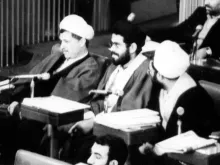
Early in the morning, after the prayer, we sat down to discuss the operations. Mr. Taheri [Imam Juma of Isfahan] also came. Since the operation of deception and support was planned for independence in the coming night in Chebilat and Chezabeh, Mr. Taheri went there to encourage the fighters. To see readiness
Read moreAfter the morning prayer, Mr. [Hossein] Kharazi, the commander of the army of Imam Hossein (AS) came; It turned out to be ready for action. Last night, due to lack of preparation, we delayed [the operation] for one night. In the morning session, coordination became stronger. I got acquainted with the quality of Karbala camp operation. By phone, health news to
Read more
After the prayer, I read the reports. We didn't care. In the public meeting, before the order, I spoke about the martyrdom of Sheikh Ragheb Harb and the assassination of Mr. Mohtashmi and Operation Wal-Fajr 5. In the meeting, they informed that Mr. Mohsen Rezaei has informed from the front that it is necessary to contact them
Read moreI went to the assembly early in the morning. I read the reports. The Moroccan people's movement is the first news of the world. The topic of the public meeting was the election bill. In the afternoon Mr. [Mohammed Ghori] the oil minister came and talked about the amount of oil extraction and sale. I emphasized that we must try, twenty-four billion dollars are needed
Read more
I went to the assembly early in the morning. We had a public meeting. The intervening forces in Lebanon have been defeated and are retreating, and the Muslims have captured the west of Beirut. This is one of the shameful historical failures of America and Israel and one of the important conquests of the Islamic people. What time is it at noon in my office?
Read moreI was at home all day. [Reading the script] I finished the series of Sheikh Fazlullah Nouri; It has a fundamental flaw. Mr. Mohsen Rezaei called from the front and said that the army brothers are not ready for the operation on the scheduled date. He emphasized that the deadline should not be extended for more than two days. with [verse
Read more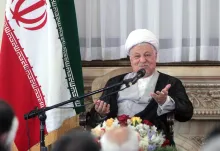
I was at home all day. Mr. Emami Kashani led the Friday prayer. Most of my time was spent reading the script of Haj Sheikh Fadlullah Noori's film. It was prepared by the Islamic Propaganda Organization and they asked me to read it for consultation. He questioned the principle of the constitution and the root of the work
Read moreWe woke up at five in the morning with an alarm clock. Efat left for the airport with her sister Ezra Khanum to travel to Syria. I also went to the assembly after praying and sending the children to school. I got the reports from the front. It turned out that last night at twelve o'clock, the first stage of Wal-Fajr 5 operation started in Chengoleh
Read more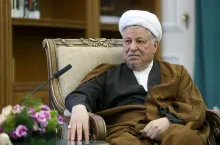
After morning prayer, I started working in my office. I read some of the deliberations of the Revolutionary Council. Dr. [Abbas] Shibani, who was the secretary of the meetings, made brief notes. He is now working on correcting and typing it. It is a valuable document and text of the history of the revolution. Like thirteen
Read moreI was studying in my office until eight o'clock in the morning. I did not participate in the public meeting of the Majlis and left it to Mr. Yazdi [first vice president of the Majlis]. I had several meetings in my office at noon. Mr. Bahrami came. He brought a letter from Seyyed Abdul Reza Hijazi, who asked for advice for traveling abroad. to them
Read moreI went to the public meeting. Before the order, I talked about countering the Iraqi cities. The moment I spoke coincided with the beginning of the shelling of the three cities of Basra, Mandali and Khanaqin, which started with previous warnings at seven o'clock this morning. The majority of the representatives approved this retaliation.
Read moreI was at home all day. Around dawn, Mr. Daniyali informed the Prime Minister by phone that at half past five in the morning, the Iraqis attacked Dezful with three missiles. One of the missiles hit Afshar Hospital. Around seven o'clock, they consulted about broadcasting the news. i
Read moreI went to university to offer Friday prayers. Foreign guests and army and Basij armies also came. The prayer was magnificent. I dedicated a sermon about the effects of the revolution and another sermon explaining the reasons why Iraqi cities made decisions and explaining the reasons why cities were not built in the past. Evening and night to
Read moreI was at home all day. Due to excessive fatigue, I spent most of my time resting. Mr. Ahmad came; Eleven members of parliament brought a letter to the imam in which they asked the imam to ban the right of women to be elected to the parliament, as in 2041. said
Read moreAfter the morning prayer, I worked in my office until eight o'clock. In the public meeting, the bill to implement Article 49 was discussed; We did not make progress. The items covered by the principle are the most important provisions of the law. At noon, about 5,000 people from the [Region 10] forces headed to the front came in front of the parliament. I spoke for them. Mi
Read moreI went to the assembly early in the morning; Before the order, I talked about the confirmation of the President's warning to Saddam. The election bill was finished and two questions were asked. At noon, I had several meetings in my office. Mr. Khair, the deputy minister of oil, came and said that he wants to be a candidate for the parliament and that he will be successful
Read moreAfter the morning prayer, I studied until eight in the morning. In the public meeting, the discussion was about the election bill. We made good progress. I went to Shahid Motahari's headquarters in order to speak to a group of Majlis security guards who were going to the front. They were very cool; They impressed me.
Read more
I went to the assembly early in the morning. It has snowed a lot. In the official meeting, the election bill was discussed. I had several meetings in my office at noon. Before noon, I handed over the meeting to Mr. Khoiniha and participated in the meeting of the headquarters of future operations in the president's office. After the meeting with the commanders of the Corps
Read moreI was at home all day. I used to study until half past nine in the morning. A meeting of the Board of Directors of Sedavsima was held. The snowfall continued from last midnight until seven o'clock in the evening. There was a discussion about the propaganda of the war and the axis of the future propaganda of the operation. Saddam's adventure, the work of informing
Read moreIn the news at eight o'clock in the morning, the Iraqi threat announcement was read; But signed by the Prime Minister [Mr. Mirhossein Mousavi] instead of the Supreme Defense Council. I asked the president the reason. It turned out that the Prime Minister acted without coordination. The principle of the declaration is good. If from the Supreme Council of Defense
Read moreI heard from the front early in the morning. The situation was the same last night. They are building a road to deliver supplies and power. In the public session of the parliament, the election bill was on the agenda. At ten o'clock in the morning after breathing, the guests of Fajr came. They watched the performance of the parliament for an hour and chanted
Read moreI stayed at home until three in the afternoon. We were supposed to have guests at home at night. Since Efat had an invitation to participate in the meeting of foreign guests during the Fajr decade, I decided to welcome the guests - which is a meeting of the heads of power - in the Majlis. A few days' worth of memories
Read more
Before the order, I spoke in a public meeting about the Fajr decade and Imam's arrival in Iran from Paris. The election bill was on the agenda. We had a problem regarding the approval of an article in the conditions of the [elections] executive board - which was approved with a proposal - that the regulations [of the Parliament]
Read more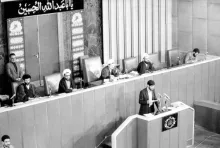
After the morning prayer, I went to the president's office. The headquarters of future operations - Khyber - had a meeting. The topic of discussion was the possibility of informing the enemy about the operational area. The interview of Iraqi military officials has raised such a possibility. Decisions were made to protect information and plan operations. Mr. Sayad
Read moreI went to the assembly early in the morning. It is snowing. I presided over half of the meeting and left it to Mr. [Mousavi] Khoiniha [the second deputy speaker of the parliament] and came to my office. I did the administrative work. I had several meetings in the afternoon. Mr. Korani came from Lebanon and is helping the Lebanese Mujahideen
Read moreUntil nine o'clock in the morning, I was studying racial discrimination at home - for use in future sermons. A meeting of the Board of Directors of Sedavsima was held. We had some negotiations and in the middle of the meeting I went to serve the Imam. For Mrs. Sabbour Urdubadi - Claiming to have the message of Imam Zaman (AS) for Imam - Time
Read moreI was at home all day. Mr. Mahdavi Kony performed the Friday prayer. I spent most of my time resting and studying. In the evening, Mr. Rahimian, Mehri, etc., who have undertaken the task of completing the "Key to the Qur'an", came. I don't like their way of working; There was some discussion. They decided to change the method.
Read moreI stayed at home. I spent more time reading and writing memoirs. Mr. [Sidreza] Zavareh spoke on the phone. He was worried that a group of representatives had officially requested his dismissal from the Broadcasting Council. Eighteen [Members of Parliament] signed a letter
Read moreSome news agencies report the beginning of a broad Islamic movement in Morocco against King Hassan. Considering the Islamic movement of the Tunisian people, the spread of this Islamic wave in West and North Africa is interesting and promising. There have been hundreds of martyrs and Malik Hasan on TV by presenting announcements
Read moreI read the reports before going to the public meeting. The US Secretary of State has threatened preventive operations regarding the operation of suicide bombers attacking their (imaginary) forces. I consulted with Mr. President that we should also make a statement and threaten them.
Read moreI worked in my office until eight o'clock in the morning; The guards had Halim for breakfast. In the public meeting, the discussion was on the election bill. After breathing, I came to my office to do the work and sign the decrees of the parliament employees. I asked Mr. Mahdavi Keni to lead the next Friday prayer; with
Read more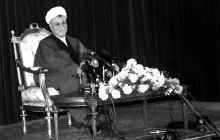
I was at home before noon. As usual, we were supposed to have a meeting of the Supervisory Council of Radio and Television; Because the other members had gone there with the president to inaugurate the 800 kilowatt transmitter on Kish Island, the meeting was not held and I found time to read the reports. Mr
Read moreI used to study at home until half past ten in the morning. I went to Tehran University to offer Friday prayers. I delivered the first sermon in the summation of two years' sermons on social justice in the economic dimension and the second sermon on the conference of Islamic countries. Around two in the afternoon, as usual
Read more
After the morning prayer, I wrote the text of the Arabic sermon and sent it for translation. In the public meeting, the election bill was discussed; Several articles were approved. In the afternoon Mr. Akhtar came and protested about the cooperative plan. Mr. Farhamandzadeh, the former governor of Gilan, came and asked Mr. Ehsanbakhsh [Imam Juma
Read moreWriting backlogs and replying to clients took most of my time. I went to the assembly in the evening. The board of directors had a meeting. Then I did things. At night, I went to [Ayatollah] Mr. Khamenei's office for the preliminary work of the headquarters for the future operations. Mr. Rahim Safavi and
Read more
I went to the assembly early in the morning. I read the reports. I read more about the conference of heads of Islamic countries - which was held in Morocco and we did not go. Overall, the majority is with the reactionaries and they will probably make decisions against us. It would have been better if we had gone. In the public meeting, the bill
Read moreI went to the assembly early in the morning. The debate in the parliament was on the implementation of Article 49. I had several meetings in my office at noon. Mr. Seyyed Mohammad Al Ahmed came; has problems Mr. [Mohammed Kazem Mousavi] came to Bojunordi and presented the plan of compiling the Islamic encyclopedia and asked me for help to start it.
Read more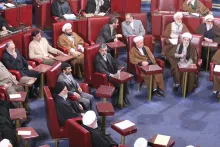
I worked in my office until eight in the morning. In the public meeting, the implementation bill of Article 49 of the Constitution was discussed. I had several meetings in my office at noon. Mr. Khosro Tehrani [Prime Minister's Information Officer] came and had information about the [Ministry]. Mr. Davodabadi came with information from inside Evin prison
Read more
Before noon at home, we had a meeting of the Supervisory Council of Radio and Television. Decisions were made about removing haram music from the program, encouraging speakers who sing correctly and punishing those who sing incorrectly, controlling movies and many other things. In the evening at 3:30 in the Majlis, I met with [the community] of the fighting clergy of Mashhad
Read moreI used to study at home until half past ten in the morning. I went to Tehran University to offer Friday prayers. In the evening, a group of protestors came to the command of war operations; I advised them to return to their work. Strange scenes told about the sacrifices of information and operations. First night Mr. [Mohsen]
Read moreI went to the assembly early; I read the reports. We didn't care. Several bills were approved in the public meeting. In the afternoon, Mr. Mahfozi, the representative of Mr. Montazeri, came to Tehran University. From traveling to America and bringing more than a hundred professors [to the country] and the need to pay attention to Hezbollah and not to give sensitive responsibilities.
Read moreI stayed at home. I used to write and study until ten o'clock in the morning. Then some children from the front came who had a disagreement with the commanders of the army and were angry. They gave explanations that it turned out that due to lack of coordination, the sensitive operation of Wal-Fajr 5 was not carried out. They said that some of the commanders
Read more
In the public meeting, the plan of cooperatives was discussed. It was controversial and contradictory and agreeable; Two lines of economic thought were facing each other. I spoke briefly as a supporter and it was approved. Mr. Dr. [Hasan] Rouhani and Mr. [Sidreza] Zavarahi from broadcasting Imam's words in meeting with
Read moreAfter the morning prayer, I read the reports and did my office work. We had a public meeting. Several bills were approved. Dr. [Hasan] Rouhani came to my office before noon. He brought the result of his negotiations with a mediating claimant from the Kurds of the Muhareb and reported that a person named Motamed Waziri
Read more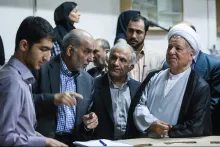
We had a public meeting. The International [Islamic] University bill was discussed. In the afternoon, Imam Juma came to Buruj and brought money for the expenses of the fronts. He complained about the lack of clergy in the region. Consulted for the future lawyer of the parliament - instead of the current representative, Mr. Shahab Mahmoudi. Mr. [Mohammed] Abayi [Khorasani]
Read more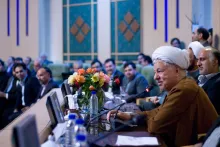
At 8:30 in the morning, we went to visit the Imam with the rest of the members of the Broadcasting Council. The imam talked about reforming the programs and criticized the lack of content in the news and the vulgarity of the mourning shows and the presence of a small amount of haram music, and he criticized the statements made by individuals in the Hizb Shura.
Read more
I stayed at home; Friday prayers were offered by the president. Relatives came and greeted each other. The chastity of Hamshirezade Nosrat's house went for the ring ceremony of Maryam and Naser Hamshirezade. At night, Kazem Hamshirezadeh came with his wife and child. No important news arrived today.
Read more
I worked in my office until eight in the morning. In the public meeting, I stayed until noon and I was very tired. In the afternoon, the official of Mustafafan Foundation came and was upset that according to a note in the former budget bill, they want to take the factories from the foundation and give them to the government. Mr. [Gholamali] Shahraki and
Read moreI entrusted Mr. Imami Kashani to lead the Friday prayer. It was delayed for a few days in writing the memoirs; I made up for it. I had some walks and rest.
Read moreI worked until eight in the morning and then went to the public meeting. The meeting continued until noon. In the afternoon, I spoke to the audience of about five hundred people who came from the cities. I signed the marriage contract of one of the parliament employees. Mr. Agharahimi, the representative of Shahrbabak, came and was a candidate
Read more
I went to the parliament early in the morning to participate in the program [and budget] committee. I was in the meeting until almost noon. In the same way yesterday, a discussion and a little understanding was found with the government. We will have another meeting to choose the discussion method. in the president's office in the joint meeting of the Supreme Judicial Council and the Council
Read more
After the negotiations started, I handed over the meeting to Mr. Yazdi and went to the program [and budget] commission meeting. There is strong opposition in the commission to the five-year plan. There are many objections to it; It is highly likely to be rejected. My opinion is that this program should be modified
Read more
We had a public meeting; The plan for conscription is still in order. I left part of the meeting to Mr. [Mousavi] Khoiniha and came to my office. Because the newspapers of Paris wrote falsely that Mr. [Mousavi] Khoeini went to Paris to lead Islamic terrorists; Especially the administration
Read moreI stayed at home all day. From nine o'clock in the morning to twelve o'clock, the Board of Directors of Sedavasima had a meeting. The officials of headquarters units and programs were discussed and decided. They brought the reports from the parliament; i read
Read moreI used to study at home until half past ten in the morning for Friday prayer sermons. I performed the Friday prayer at Tehran University. The weather was very cold, that's why I delivered the sermons concisely. The total of two khutbahs plus the Arabic khutbah was one hour, which is usually an hour and a half to one hour
Read more
I went to Hosseinieh Jamaran to visit the Imam. It was an official meeting and all institutions of the country participated. [Ayatollah] Mr. Khamenei congratulated [the birth of the Holy Prophet (PBUH)] and the Imam spoke in detail. I was at home the rest of the time. It was reported in the news that the headquarters of the French in
Read moreI read the reports and went to the public meeting. The whole time was devoted to the plan of military service. At noon in my office, I received a group of Hamadan people who wanted to strengthen cooperatives to expand production. Mr. [Mohammed Asghari] the Minister of Justice also came and offered to become a lawyer in the next term of the parliament.
Read more
After the prayer, I read the reports and did the office work. In the public meeting, the rest of the first draft of the real estate tax bill was discussed, which was approved; It is important. Several other bills were also approved. I left part of the meeting to Mr. Yazdi and came to my office. I did the work. Mr. [Mortaza]
Read moreI managed the public meeting until ten o'clock in the morning. At ten o'clock we had a meeting with the commanders of the ground forces and the IRGC in Mr. Khamenei's office. The discussion was about the command of the operation, which we have suffered a long time ago due to duplicity. They have a difference of opinion. Colonel Sayad Shirazi believes,
Read moreI studied until eight in the morning. I read a book by a German author about the atrocities of the Europeans on the people of the colonies in the last five hundred years and the crimes of the European white race against the black, red and yellow colored races. It is useful for future discussions of social justice. over
Read moreI was at home until noon. I read the reports. The arrogant propaganda of the world has targeted the Islamic Republic as a terrorist, adventurer, and warmonger. They are afraid of us and Islam, and they don't have the power to confront them directly, so they entered through these ways.
Read moreI went to the parliament early in the morning and read the reports until eight o'clock. In the public meeting, several bills were approved. As usual, I had inquiries from representatives about various issues. At noon in my office, we had a meeting of the Supervisory Council of Radio and Television; Not much work was done. Some delay and some time
Read moreI was at home all day. From nine to twelve in the morning, we had a meeting with the Supervisory Council of Sedavsima. We got a full report on the coverage of radio and television programs and technical issues, and decisions were made. The officials of the subordinate units of the council were elected. In the evening, they brought the reports from the parliament and
Read more
I went to the parliament early in the morning and did the administrative work. We had a public meeting. The speeches before the order are mostly about the Imam's statements and defense of Ayatollah Montazeri. Especially one line of thought of the parliament relies more on the statements of Mr. Montazeri regarding the condemnation of the elimination of worthy forces;
Read more
There were plans that I canceled. I stayed at home. It is snowing. I read some. Mr. Ahmad Agha came and informed that they had called Mr. Montazeri's house and asked the imam to explain that he did not comment on Mr. Montazeri in his comments on Saturday and if
Read more
I went to the assembly early in the morning. I saw the received reports and went to the public session of the parliament. Imam's words yesterday overshadowed everything. Some representatives withdrew their questions from the ministers. A group of people were signing a letter with the title "In support of the Imam's statements". in
Read more
I was at home all day and spent it reading, writing, relaxing and doing things on my phone. Ahmad Agha came before noon and informed that the imam has supported the government today in the meeting with the parliament commissions. Recently, the movement of government opponents in parliament, mosques, markets and houses
Read more
I stayed at home. [Ayatollah] Mr. Khamenei led the Friday prayer. I spent some time organizing my books and my library. Efat went to visit Mr. Kamal - his uncle - at the hospital. I was also tired, I rested. Mr. Ahmad came before noon and asked about the price and queues
Read moreI worked in my office until eight in the morning. I got the reports about the rocket-hit cities of Andimeshk, Dezful, Behbahan and Ramhormoz and the bombing of Nahavand; We have had more than 30 martyrs and around 300 injured and dozens of houses and shops destroyed. Before the order about this and the bombings
Read more
Early in the morning, we left for Qom to participate in the seminar of the provincial Friday imam councils. We arrived in Qom at half past eight. First, I went to Ayatollah Montazeri's house and talked a bit and participated in the meeting with him. I spoke in detail and commented on the quality of the Friday imams' dealings with the elections
Read more
I worked in my office until eight in the morning. We had a public meeting. The news was received that Mr. Abdullah Emami, the representative of Torbat Heydarieh, has passed away. They were sick from the beginning and we sent them abroad for treatment. He suffers from kidney disease. I offered my condolences. I had several meetings in the afternoon. Evening, personnel
Read moreAs usual, I went to the parliament at seven in the morning. I read the reports and went to the public meeting. The draft of the duty system was in order. It is very detailed; It takes two or three weeks of the parliament's time. At noon in the office, I had several meetings with representatives. Usually, after noon prayer until two o'clock, short meetings,
Read more
In the public meeting, the conscription plan was on the agenda, which took all the time. At noon, I had several meetings in my office. In the evening, the central council of the [Islamic Republic] party had a meeting in my office. Council meetings are usually held in the presidential center; Because [Ayatollah] Mr. Khamenei had gone on a trip to Shiraz.
Read moreI was at home. I used to study until ten o'clock in the morning. They brought a solar oven sample for us to test. I spent some time and it didn't work well; Maybe I was not fluent either. Brother Mohammad came and talked about issues related to radio and television and the dispute with the previous council. From renewing disputes
Read moreI was at home all day. The Friday prayer was performed by Mr. Mousavi Ardabili [President of the Supreme Court of the country]. It was raining heavily, but people participated and this is a very interesting thing. In the evening, Mr. Davodi, a retired worker of the Ministry of Interior, came with his son. Both of them have returned from the front.
Read more
I went to the assembly early in the morning. I read the reports. I started the public meeting at quarter past eight and came to my office. Mr. Yazdi chaired the meeting. The draft of the duty system and some questions were on the agenda. I did the backlog. In the afternoon, the engineers of a company that owns and claims patents came
Read moreI worked in my office until eight in the morning. We had a public meeting. Due to the density of bills, we have decided to hold public meetings four days during the week. There were new ministers. There were many objections. I also defended them. Mr. [Abbas Ali] Zali and [Hossein] Nili for the ministries
Read more
We had a public meeting. The new ministers were officially introduced. The wave of opposition is intense; It must be helped. In the afternoon Mr. [Mohsen] Rathi, the representative of Miandoab and the governor and commander of the army [of this city] came and complained about Imam Juma. Mr. Mohsen Mousavi of Tabrizi came and discussed the new rules of university management
Read moreI was at home all day. We organized the first meeting of the Supervisory Board of Sedavsima. We chose Mr. [Mohsen] Daagu [executive power representative in the Shura] as the secretary. A few days of writing diaries, I'm behind and I don't have notes. I have forgotten some of the work of those days.
Read moreAlthough it was a public holiday [due to the anniversary of the death of the Holy Prophet (PBUH)], I went out to do the necessary work. Early in the morning, in [Ayatollah] Mr. Khamenei's office, we had a meeting with the commanders of the IRGC and ground forces to coordinate and resolve differences for future operations; Successful meeting
Read moreI was at home all day. Reading, writing and resting filled my time. Before noon, Haj Ahmad Agha came and said about the reaction of my statements in yesterday's Friday prayer, regarding the use of force to maintain the value of oil, in case of the continuation of the reactionary and colonialist conspiracy to lower the price of oil.
Read more
I was at home until 10:30 and I was studying for Friday prayer sermons. Mr. Velayati called and said that our representative in the United Nations says that they are going to condemn Iran in the United Nations Human Rights Commission and if we agree that the representative of the Secretary General of the United Nations
Read more
I went to the assembly early in the morning. I read the reports. In Tripoli and Damascus, delegations go back and forth and hope for peace a little. Lebanese Muslims continue to demonstrate against the severance of Lebanon's relationship with Iran. In the public meeting of the parliament, the first vote of the election bill of the parliament
Read more
I was at home until the evening. Most of my time was spent reading reports and letters that I had brought home. Mr. [Syed Mahmoud] came to pray. The carrier was an offer from a company that offered to sell weapons. I said that there are many of these suggestions, but many of them are not true. or they want
Read moreI worked in my office until eight in the morning. Then I went to the public meeting. The work of the Jihad-making statute was finished, and the Prime Minister [Engineer Mousavi] presented the 1963 budget bill and spoke for an hour. Some representatives wanted to make noise by raising the issue of ministries without a supervisor
Read more
I went to the parliament early in the morning and did the office work. I read the reports and went to the public meeting at eight in the morning. The whole time of the meeting was taken by the statute of the Ministry of Jihad [Construction]. While breathing, I went to the courtyard of the parliament. Mr. [Ali Mohammad] Basharti has ordered that instead of fences, walls
Read moreI was at home all day. I did not participate in the central council of the [Islamic Republic] party. Commuting in the streets is difficult; The moving and waiting rituals of the guards hurt me. I try to travel less. I talked to the president on the phone; They had information about the war that they did not want on the phone
Read more
I was at home all day and read the accumulated reports. Before noon, Ahmad Agha came and informed about Imam's doubts about expressing admiration and relations with Soviet. He said that the Imam said that I should supervise the trial of Mr. Sadegh Tabatabai so that the extremists do not condemn unnecessarily.
Read moreI studied at home until half past ten in the morning for Friday prayer sermons. I went to Tehran University to pray. A group of participants in the "Labik or Khomeini" project and a number of doctors were guests of the seminar. I studied in the evening until the end of the night. Children and their uncle's family to
Read moreI used to study until eight o'clock in the morning. We did not have any important news. In the public meeting, the bill of the Ministry of Jihad was discussed and the resignation of Mr. [Abbas] Dozdozani, representative of Tabriz, during the discussion, a verbal argument and insults occurred between him and Mr. Seyyed Hasan Mousavi Tabrizi [Representative of Hashtroud]. noon sir
Read moreI used to study and write at home until the evening. In the evening, the board of the parliament had a meeting. We had nothing important to do. After the prayer, the Supreme Defense Council had a meeting. It was decided to appoint Colonel [Hoshang] Siddique as the commander of the Air Force instead of Colonel Moinpour. No one objected in the meeting. Colonel Moin
Read more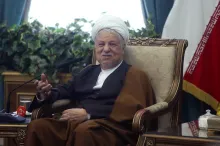
I went to the assembly early in the morning. I read the reports. One of our ships has been attacked and sunk in the Persian Gulf region. Iraq is claimed to have hit seven ships. In the public session of the parliament, the review of the bill [establishing] the Ministry of Jihad continued. Two questions [of representatives] from the Minister of Interior
Read moreI went to the assembly early in the morning. The Commission for Reforming the Positions of the Islamic Republic of Iran held a meeting from 7:30 AM to 2 PM. It didn't end. At four o'clock in the afternoon [Ayatollah] Mr. Khamenei came to my office and we discussed and made a decision about replacing the commander of the Air Force. then
Read more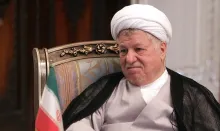
Before the order, I talked about the French and Israeli attacks in Lebanon. The agenda of the meeting was the constitution of the Ministry of Jihad. I left some of the meeting to Mr. Yazdi and came to my office. Frontline news says that last night's attack was initially successful, but retreated due to enemy pressure
Read moreI was at home until three in the afternoon. دو مصاحبه انجام دادم. One about the records of Mr. Montazeri and the other about migration from the villages with Jihad Roosta magazine. I spent some time in the garden with Sara - my baby Fati - and we took a picture. Mr. Ashtiani came from Beit Imam and
Read moreI stayed at home. I had taken one course of negotiations for all sessions of the parliament. I read some of the discussions of the first parliament and the reports of the day. [Ayatollah] Mr. Khamenei led the Friday prayer. In the evening, Dr. Velayati [Foreign Affairs Minister] called and asked for a meeting for adoption
Read moreI worked in my office until eight o'clock in the morning. I consulted with [Ayatollah] Mr. Khamenei to talk about the bombing of our center in Lebanon by the Israelis - which resulted in several martyrs and several wounded. But I didn't think it was appropriate and I didn't say anything before the order of the parliament. Some representatives
Read moreFirst, I went to the Joint Staff of the Army and negotiated with the heads of the staff departments. Then I came to the Imam's consultation office in the army and asked the staff how they were doing. They gave a report on the situation of the navy. I went to the parliament at half past nine in the morning. Mahmoud's brother came with his father-in-law Mr. Esfahani. from
Read more
I went to the parliament early in the morning and did the work until eight o'clock in the morning. In the public meeting, the statute of the Ministry of Construction Jihad was discussed. Several articles were approved. In the afternoon, Mr. [Mohammed Ali] Sadouqi, the representative of Yazd, came and was upset with the criticism and opposition of some of the clerics of Kerman to the governor. offer
Read more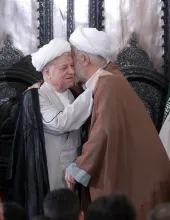
I was at home all the time. I read some and wrote memoirs. I gave a detailed interview to Pasdar Islam magazine about the war. Mr. Rahimian brought some Kuwaiti dinars and gold for the mosque in Tehran. with [Ayatollah] Mr. Khamenei about the work of [establishing the foundation] compiling the history [of the revolution
Read moreWe had a public meeting. Several bills were approved. I answered the letter of the merchant engineer. In the afternoon, the deputy prosecutors of the revolution came and complained about Mr. [Syed Hossein] Mousavi Tabrizi. Mr. [Mohammed] Salehi, a member of the lawyers of the Guardian Council, came and made an offer from a foreign company based on his willingness to sell.
Read more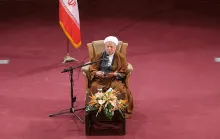
I was at home most of the day. I was studying and writing. In the morning, Mrs. Ahmad Agha called and asked about the family problems of one of the officials of the revolutionary institutions. At eleven o'clock I arrived at the Imam's service. I negotiated and consulted about the war and other issues. They agreed that because of scare
Read more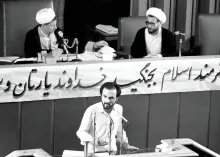
I was at home all day. I assigned the Friday prayer to Mr. Emami Kashani. Before noon, Ahmad Agha came and talked about various issues. Regarding the war, it was decided that I will go to Imam's service tomorrow. Before noon, Tayyaba's nurse came and asked for help to finish her unfinished house. a piece of land
Read moreAt seven o'clock in the morning, we had a meeting in Mr. Khamenei's office with the presence of Mr. Mohsen Rezaei and Rahim Safavi, and we discussed the future of the war. A plan was approved and the quality of cooperation between the army and the IRGC - which has been in trouble recently - was determined. Unfortunately, differences between the commanders of the army and the IRGC are on the way
Read more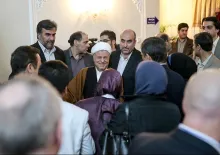
I was at home all day. Most of my time was spent studying. I had a telephone conversation with the Prime Minister, the President, the Minister of Foreign Affairs, and the CEO of Sedavasima about state affairs. Mr. Ahmad also came and consulted about various issues; Among them [Syed Hossein Mousavi Tabrizi] the Prosecutor General of the Revolution and
Read more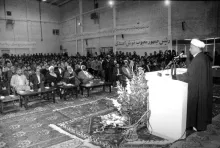
After the morning prayer, I went to the assembly. I did the administrative work. I called the front; They said that we are established in the west of Kani Manga region. A report says that last night the French in Beirut tried to blow up our embassy, but they did not succeed, and this action was carried out before the order of the parliament.
Read moreI called the front. It turned out that last night they took advantage of the disorganization of the Iraqi army and advanced a little to the west of Panjvin, but they lost the 1904 peak. I was at home all the time. Ahmad Agha came and brought a message from the Imam that the differences between ideological and political and military commanders
Read moreI used to study until half past seven in the morning. I wrote an introduction to the second edition of the book Positions of the [Islamic Republic of] Party. Last night they took the heights of 1904 from Iraq, and there is a difference between the army and the IRGC in the way of operation, which both complained. Mr. [Natiq Nouri] Minister of Interior before the discussion
Read more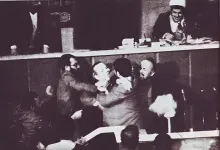
In the public meeting, Mr. [Hashem] Sabbaghian [Tehran's representative], in his speech before the order, told Mazloum Namei about the incident on Friday, and at the end of his speech, Mr. Karabagh intervened and they had a fight. He got into a fight. I cut off the podium and the radio stopped playing. Gentlemen [Ali Akbar]
Read more
I was at home and studying until the evening. I wrote a detailed letter in response to the freedom movement and reminded them of their mistakes and bad deeds and wrong positions. I advised them to stop conspiracy and divisiveness. Mr. Ahmad came. I consulted with him about the contents of the letter; Additional things
Read more
I used to study at home until half past ten in the morning. I went to university [Tehran] to offer Friday prayers. I also called the front. They said they are fine. Between the IRGC and the army, information about the performance of helicopters to rescue the wounded from the battlefield in the mountains where there is no road
Read moreThey said that part of the objectives of the operation has been achieved. The forces are moving forward. In the public meeting, before the order, I talked a little about the 13th of Aban [anniversary] of the Imam's exile and occupation of the espionage nest [in Tehran]. We passed several bills. Mr. Zahor [Mohammad Amin] Soghasagnejad [Representative
Read more
I was at home until three in the afternoon. Reading, resting and writing memoirs filled my time. In the evening, I went to the parliament to participate in the board meeting. We didn't have much work. They talked about the quality of holding the [Minister of the Interior's] impeachment and its procedural problems. At night, my office work
Read more
I studied at home until the evening. Before noon, Ahmad Agha came and consulted about the Imam's answer to King Fahd's verbal message. Amendments were made in the proposed text. Several points were relied upon: 1- Iran's lack of danger to its neighbors 2- Desire for unity and cohesion of Islamic forces 3- Necessity
Read moreAfter the morning prayer, I went to the assembly. I had breakfast in the parliament. I read the reports. I signed the explanation of Mr. Natiq [Nouri], who insisted on expediting it. Several bills were approved or rejected in the public meeting. In the afternoon, Ashikh Mostafa Rahmana came. His main job is to deal with
Read more
I was at home all day. Before noon, Akhvi Mohammad came and there was a discussion about the Broadcasting Council and its programs and the development of its coverage, especially in the overseas sector. Ahmad Agha also came and talked about the war and the content of Fahd Shah's message to the Imam. In his message, Fahd expressed his friendship
Read moreI was at home all day. [Ayatollah] Mr. Khamenei performed the Friday prayer. I talked to the prime minister on the phone about the new ministers. We were supposed to have a meeting next week. At night, the children had guests; The family of the deceased. Spend some time watching a movie
Read moreI went to the assembly early in the morning. I read the reports about Behbahan; The situation is very dire. The representatives have signed a letter to take the Iraqi prisoners to the cities located within the range of Iraqi missiles. Before the order, I talked about Saddam's crime; But it is repeated enough, insensitive
Read more
Mr. [Syed Ahmad] Zerhani [Dezful representative] called from Dezful and requested to send tents and construction materials and financial aid to the people. The issue of the explosion of the headquarters of the American command in Beirut is still a global issue. Early in the morning to the hospital for kidney and bladder imaging
Read more
I went to the assembly early in the morning. I asked the situation of the front last night. They said that it is good and Panjvin is surrounded from three sides. I managed a part of the public meeting. Two lawsuits were rejected. After taking a breath, I handed over the meeting to Mr. Yazdi [First Deputy Speaker of the Majlis]. The official of the consultation office [of the army], a report on the situation
Read moreI was at home all day. I called the front early in the morning, it turned out that last night the second phase of Wal-Fajr 4 operation was started with the aim of capturing the city of Panjvin [Iraq]. We have approached this city from the north, east and south, and there are Iraqis in the west. The war continues. Before noon Mr. Tabasi Tulit
Read more
I was studying in my office until half past seven in the morning. I called the front; The situation is good. In the parliament, before the order, I spoke about Saddamian's baran missile crimes against the cities and civilians. At half past nine, I came to my office to follow the work of the war and the damaged cities. Mr. Hadi
Read moreI was at home until half past three in the evening. They brought news and reports from the parliament. The condition of the fronts is good. In Sardasht, the strikes against the counter-revolution and Iraq and in "Shiller" the development of Iraqi soil in Iran - between Baneh and Marivan - our forces continue to progress. 700 Iraqi prisoners
Read more
I woke up to a phone call from Mr. Mohsen Rezaei from the front. He told me some things about last night’s second phase of the operation, in which they had made some advances, to be presented at Friday prayers. I studied at home until ten-thirty for the Friday prayer sermons. I devoted one sermon to Operation Valfajr 4. To the news
Read moreI contacted the front and the Hamzeh Seyyed al-Shohada Headquarters and the 28th Sanandaj Division and asked about the operation. All the reports say that the first phase of the attack, which began at midnight, has been successful. From Baneh and Marivan—from the north and south—we have attacked the Shiler region, which covers a large area of land
Read more
After the prayer, I went to the session. I took care of the administrative affairs and read the reports. The entire time of the open session was spent on the bill concerning Islamic labor councils. During the recess, I attended to the representatives’ requests. Usually, before the session, during the session’s proceedings, and during the recess, the representatives, [attend to] personal or social matters and
Read more
I stayed home all the time; because the representatives had attended Ashura ceremonies in their constituencies, we took today off. I spent most of my time reading about the history of Iran's political parties and the activities of the Fourth Majlis and the rise of Reza Shah. Last night in Sardasht, a large-scale operation was carried out against the counterrevolutionaries, and
Read moreI was at home all day. The Kowthari family came to our house after the mourning ceremony for the Imam at the Jamaran Hosseiniyeh. Mr. Kowthari recited a mourning elegy, and it brought about an emotional state. I gave him some pistachios and one thousand tomans as a gift. I spent part of my time studying maqatil and the rest studying the history of political parties.
Read more
I was at home all day. We didn’t have any guests either. I mostly spent the time reading and listening to the mourning ceremonies broadcast by the state broadcaster.
Read more
I was at home all day. We were supposed to have a meeting of the Supreme Economic Council in the afternoon to discuss the causes of inflation, but the meeting had been canceled. I called the President to ask the reason. They said it had been canceled because of mourning. Mr. Prime Minister called and spoke about the new Minister of Mines and Metals
Read more
Until ten thirty in the morning, I was studying at home. The Prime Minister called me and asked me to confirm at Friday prayers the cancellation of the martyred Prime Minister Rajai's government's directive concerning the holding of congregational prayers at noon in government institutions, which had recently been abused in banks and factories.
Read moreAt night, I was somewhat upset. In the morning, I had a slight fever. I went to Parliament. In the open session, the bill on the Islamic Labor Council was being discussed. Since I was unwell, I entrusted the session to Mr. Yazdi and came to my office. I rested until eleven o'clock. Before noon, Mr. [Hossein] Mahlooji came and spoke about the need for greater attention
Read more
I was at home the whole time. We sent Mehdi to Firouzgar Hospital with Effat. As a result of the blow to Mehdi’s nasal cartilage [in the car accident], the cartilage and bone have been injured. They returned home from the hospital in the afternoon. Before noon, most of my work was reading the report
Read more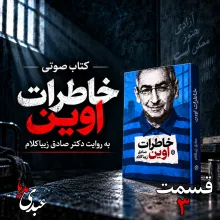
Listen to Abdi Media on Castbox, unfiltered
Read more
Listen to Abdi Media on Castbox, unfiltered
Read more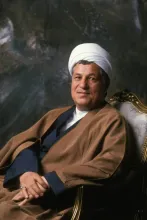
After the prayer, I studied until the open session began. The bill on Islamic labor councils was on the agenda. I was a little tired. After the recess, when the questions were being raised, I went to my office and rested. At noon, Mr. Shabestari came and brought a complaint about the IRIB housing cooperative, which had [laid claim] to the adjoining lands - which, on the part of
Read more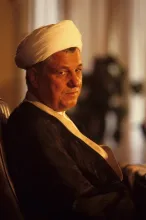
Early in the morning, Mr. [Hossein] Marashi came. I called the governor of the Central Bank and asked him to help prevent the thief from cashing the guaranteed checks. In the afternoon, I went to Parliament. We had a meeting of the [Parliament] representatives' association who were members of the Islamic Republican Party. As usual, they gave the news and then discussed the limits of party authority and freedom
Read more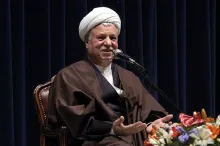
I went to the parliament early in the morning; sometimes I go very early so that the streets are less crowded. I had breakfast at the parliament. I read the reports. The latest international news was the explosion of a bomb at the site of the South Korean president's visit in Rangoon, the capital of Burma, and the killing and wounding of about sixty people, including four ministers and
Read more
Early on, I spoke by phone with the prime minister about the Mazandaran provincial governorate's violation of our resolutions concerning the rice plan and the prohibition on selling to anyone other than the government, and stressed the need to expedite the introduction of the new ministers and the government's representative on the supervisory council of IRIB. In the afternoon, Mr. [Abdolmajid] Maadikhah came and gave an account of his trip
Read moreThe Friday prayer was led by the President. I stayed at home all day. Dr. Velayati came early in the morning and gave a report on his trip to the United Nations, the impact of his speech there, and his meetings. He believed that both the West and the East wanted to win our trust. The Japanese Foreign Minister and
Read more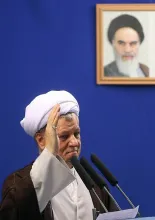
Until seven in the morning, I studied and wrote [Persian text] the Arabic sermon for the Friday prayer. Dr. Ki-Nejad, the nominee for the Ministry of Agriculture, came. I encouraged him to accept. He has been upset about the mistreatment he suffered in the past during his governorship of Hamadan and is more inclined to remain at the university,
Read more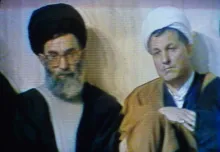
I studied at home until nine in the morning. I also helped Effat a little in looking after Sara—the daughter of Fati—who had gone to university herself. On the occasion of the arrival of the month of Muharram, we went with the clerics to visit the Imam. Mr. [Mohammad-Reza] Mahdavi Kani [Secretary-General of the Combatant Clergy Association of Tehran] a little
Read more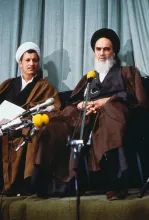
Early in the morning, I went to the parliament. The door to my office was closed because it had a combination lock and the person who knew the combination was not there. I waited a little until Mr. [Jalal] Sadatian, the head of the office, arrived. I read the reports. In the open session, several bills were passed, and I spoke in favor of the bill to not charge students any money.
Read more
[Ayatollah] Mr. Khamenei spoke by telephone about a text prepared for the Supreme Judicial Council and signed by him, Mr. [Mousavi] Ardabili, and me, concerning the Imam's authorization regarding the punishment of hoarders and profiteers. The Minister of Defense came to see me and asked me to tell the Prime Minister that, in
Read more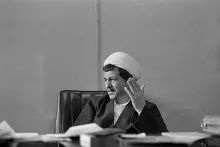
I went to the parliament early in the morning and read the reports. Around eight in the morning, the session began. Before it started, I exchanged greetings with the representatives. Before the agenda, I spoke on the occasion of the beginning of the parliament’s work after the summer recess and the missile strikes on Dezful and Andimeshk. We passed several bills. In
Read more
I was at home all day. I spoke by telephone with [Ayatollah] Mr. Khamenei about the disagreements between Mr. [Ali Akbar] Parvaresh [Minister of Education] and [Mohsen] Doagoo [Deputy Minister of Education]. It was agreed that we would have a meeting and discuss the need to expedite giving Saddam a response regarding the missile attacks
Read more
I assigned the Friday prayers to Mr. Rabbani Amlashi. Before noon, Mr. [Mohsen] Doagoo, deputy minister of education, came; his situation with Mr. [Ali Akbar] Parvaresh [minister of education] has reached a critical stage. They had disagreements from the beginning, but recently Mr. Parvaresh has from him
Read more
I was at home all day. In the morning, Mr. Ahmad came. He was concerned about the rising prices, and there is indeed reason for concern. He spoke of the onslaught of propaganda by the enemies’ foreign mass media regarding human rights violations in Iran and the publication of forged documents and fabrication of false news, such as taking prisoners’ blood and... I said, it would be better
Read more
I went to the parliament. At eight in the morning, Mr. [Ghasemali] Zahirnejad, chief of the Joint Staff [of the Islamic Republic Army], came and complained about discrimination in the cabinet resolution regarding the distribution of aid vouchers to army personnel and government employees, and wanted the army’s membership in “SIZM” to be approved, which had been rejected by the parliament. Mr.
Read more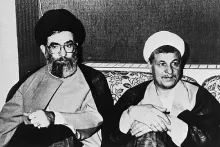
Until the evening, I studied and rested at home, and I edited, as a sample, one of the Friday prayer sermons that the Ministry of Culture and Islamic Guidance [Islamic] had transcribed and prepared for publication. In the afternoon, from three-thirty to six-thirty, we had a session of the [Islamic Republic] Party's committee for revising positions, which was reviewing
Read more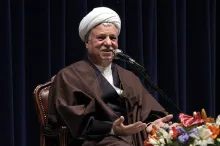
Until nine in the morning, I was working at home, then I went to the Jamaran Hosseiniyeh to visit the Imam. A group of the underprivileged and two or three of the country's top officials were there. [Ayatollah] Mr. Khamenei congratulated [him on the arrival of Eid al-Ghadir], and the Imam spoke. Then [Mr. Khamenei], the president
Read moreI went to the Majlis at seven in the morning. Until eight-thirty, I read the reports and took care of the administrative work. Mr. [Khosrow] Tehrani, head of the Prime Minister's Office Intelligence Department, and his colleagues came; they wanted explanations about the future of the [Ministry of] Intelligence. They complained about the Prime Minister's lack of confidence in them.
Read moreI consulted by telephone with [Ayatollah] Mr. Khamenei about Mr. [Mohammad-Mahdi] Rabbani [Amolashi]'s employment and the transfer of conscript specialists — who are in the 88th Zahedan Division — to government service, and about a statement that the Tehran organization [of the Islamic Republic Party] had sent to the branches and concerning
Read moreUntil ten-thirty in the morning, I worked at home. I led the Friday prayer; I delivered one sermon [presenting] a report on the trip to three southeastern provinces and another sermon on the analytical history of the war. In the afternoon and evening, I also worked at home. [I reviewed] the reports concerning the proceedings of the International Court of Justice in The Hague and the Algiers Declaration.
Read moreToday too, I stayed at home all day. The first day of the week is wartime, and an elaborate ceremony is being held at Behesht-e Zahra. I spent most of my time reading, resting, and writing up my overdue memoirs. Messrs. [Sheikh Hassan] Sanei and [Mohammad Reza] Tavassoli came to see me after their trip. In the afternoon, Mr. [Mohammad Mahdi] Rabbani
Read more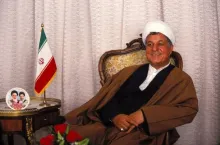
At night, I had spoken by telephone with Mr. President. It was agreed that they would come to meet the Imam, and then they came here with Ahmad Aqa and we discussed the trip and the war and... Mr. [Mohammad Gharazi], the Minister of Oil, with a group of workers who had brought under control well number three at Nowruz - and to the catastrophe of the leak
Read more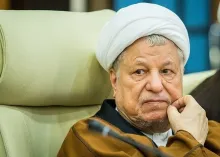
Early in the morning, after the prayer, I recited some Quran for my late father, remembering his regular Quran recitations. They filmed various parts of the house. Some relatives and people gathered. Among them, I recounted memories of the past with jokes and amusement, and it was recorded on film. Until the age
Read more
Early on, the university community of Kerman came and consulted about political and economic issues and the elections. We went to the governor's office and took part in a gathering of the [provincial] officials. [Hojjatoleslam Jafari] the Friday prayer leader spoke, and some of them raised their concerns. I also, at length
Read moreAfter the prayer and breakfast, we went to the guesthouse. I met with the provincial council of the Islamic Republic Party [Islamic]. Most of what they said was complaints about the Friday prayer leader. I went to Imam Mosque. After the Eid [al-Adha] prayer, I gave a speech to the people. The city's electricity has still not been restored; only with the previous turbines
Read moreAlthough I was tired, the work started early in the morning. After the prayer, the naval officials came and spoke about the navy's needs and complained that the navy's pier project in the Chabahar–Konarak Gulf had been changed and was being implemented in an unreliable manner.
Read moreWe were supposed to go to Zabul by plane; because the radio had announced the news, the [army] advisory office became concerned about security - because of the danger from inside Afghanistan - and decided that I should go by land. At six-thirty in the morning, we set off in several armed vehicles. The road was dry and
Read more
Early in the morning, we went to the airport to travel to the provinces of Sistan and Baluchestan and Hormozgan. [Messrs. Hadi Nejad-Hosseinian, Hassan Ghafouri-Fard, Hadi Manafi] the ministers of roads, energy, and health, [Mohammad-Taqi Banki, minister without portfolio and] head of the Plan and Budget Organization and the deputy prime minister and deputies
Read more
Early in the morning, I went to the Majlis. I took care of the tasks so that I could prepare for a six-day trip to the southeastern provinces of the country. The ambassador of Gabon came; he had nothing to discuss, it was a ceremonial visit. I had a meeting with the officials of the IRGC naval unit. They gave good explanations about the history of the formation of this unit and the progress of its work.
Read more
Early in the morning, we went to the international exhibition [Tehran] with Yaser and Mehdi and the guards, and visited the booths showcasing Iranian innovations and industries. It took three hours. I got very tired. The owner of each booth expected me to listen to his grievances; we would be delayed a lot. The program was not carried out. We left many places
Read moreI was at home all the time. The [Supreme] Defense Council was supposed to have a meeting; since it was not necessary, we canceled it. Some reports had been collected; I read them. Usually, all the organizations send me a report; for example, the [Islamic Revolutionary Guards] Corps, the Ministry of Foreign Affairs, the [Islamic Revolution] Committees, the Ministry
Read moreI went to the Majlis early in the morning. Mr. Rabbani Amolshi and his brother Sadegh came; objections to the head of the Atomic Energy Organization were raised. He had nothing important to say; it was repetitive: acting unilaterally and failing to pay attention to self-sufficiency, and changing his views and methods. Several members of the Society of Experimental Dentists came and, on behalf of the society,
Read moreFrom ten in the morning until two in the afternoon, we had the commission on correcting the positions of the [Islamic Republic] Party. At four in the afternoon, Mr. Munir Shafiq, the Palestinian, came. He said that the hopes of the oppressed and the fighters of the region had been cut off from everyone except the Islamic Revolution, and he emphasized our statements about helping the movements of
Read moreI studied at home until ten in the morning. I went to the university to attend the Friday prayer. I spent the afternoon studying and resting. We received news that Iraq had bombed the city of Marivan again today. We had no other important news.
Read more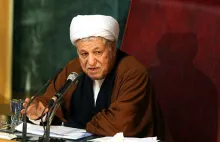
I was at home all day. Before noon, [Mr. Seyyed Ali Akbar Mohtashami], our ambassador in Syria, came and gave a report on the events in Lebanon and the expanded Islamic movement in Tripoli. The Tawhid movement is in control of the situation. It has taken over the centers of supporters of Iraq and...; in Baalbek, the Muslims [have taken over] the Sheikh Abdullah garrison.
Read moreMr. [Ali] Abbaspour, the President's adviser, came and had some points regarding the five-year plan. It was decided that he would participate in the special commission. The Russian ambassador came. He conveyed the greetings of the leaders of the [Soviet Union]. He called for improved relations and complained about the "Death to the Soviet Union" slogan. I [explained] the reasons for the emergence of this slogan
Read moreI stayed at home. I studied the issue of the Guardianship of the Islamic Jurist from the book “Awa’id al-Naraqi”. I also read some of the reports. I spoke by telephone with [Mir-Hossein Mousavi], the prime minister, about reviewing the regulations and the situation of the Chamber of Commerce. Mr. Emami Kashani said that there was a lot of money in the Chamber of Commerce’s account.
Read more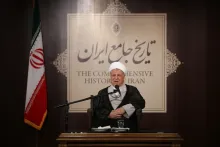
I rested until eight in the morning. A cold was added to the malaise as well. At nine in the morning, I went with Messrs. [Ayatollah] Khamenei and Mousavi-Ardebili to visit the Imam. We discussed with him the decisions of the Economic Council to combat inflation, by announcing prices and punishing violators and distributing goods fairly.
Read more
I studied until eight in the morning. My kidney was hurting. Because of several meetings, I was supposed to be at the Majlis. Mr. Khosrow Tehrani [head of the Prime Minister's Information Office] came. He complained about the way he had been treated. He has resigned; I told him not to resign. Mr. [Seyyed Mahmoud] Doaei, accompanied by a person from
Read more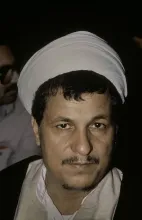
I was at home until three-thirty in the afternoon. Mr. Ahmad came and spoke about Khosrow Tehrani’s [head of the Prime Minister’s Information Office] distress and that those who serve should not be made dissatisfied. He said that some people themselves accuse him of exercising personal influence and interference at the Imam’s household.
Read more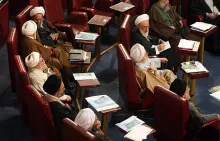
I stayed at home. Friday prayers were led by Mr. [Ayatollah Khamenei], the president. Early in the morning, two men from the Jihad [Construction Jihad] of Rafsanjan came and wanted an appointment for the [members of] Jihad [Construction Jihad]. I spent most of my time reading that book, which is full of lies from beginning to end, and the more I read,
Read more
I was at home all day. I read part of a new book written by someone named Parand, which apparently has been published with American help, in a very beautiful edition, and sent to prominent figures. The author is fiercely counterrevolutionary, a lackey of foreigners, and brazen. Almost all the contents of the book are lies and
Read more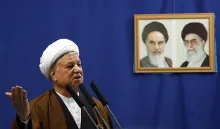
Until three in the afternoon, I was at home. I made up for several days of delay in recording the memoirs. Parliament is adjourned from today until the tenth of Mehr. Many of the representatives are going to Mecca; it is not a good thing. It is discriminatory and brings disgrace. Mr. [Sheikh Fazlollah] Mahallati came; he has visited the Imam.
Read more
At seven in the morning, I went to the parliament. I read the reports. The news about the hijacked airplane is at the top of the news; [the hijackers] have threatened to blow it up. In the open session, we amended the interest-free banking law. We gave the prime minister permission to oversee the three ministries that were without ministers. The last session,
Read more
We had a public session. The extension of the [human resources] restructuring law was on the agenda; it was extended for three months, but the Guardian Council objected and rejected it due to lack of funding. The issue of the hijacked French airplane is the topic of the day. They came from the Shemiran Revolutionary Committee and complained that after Mr. Maleki,
Read more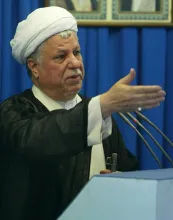
I was studying until seven thirty in the morning. It is said that the Air France plane that was hijacked is heading toward Iran. The authorities do not know whether to allow it to land or not? The Ministry of Foreign Affairs has opposed it. A cabinet reshuffle was on the agenda [of Parliament]. The prime minister at the meeting
Read more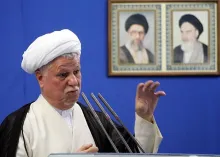
Until three in the afternoon, I stayed at home; I rested and studied the authority of the Imams and the scholars and the just among the believers. Hajj Ahmad Aqa came and, regarding [Khosrow] Tehrani, the head of the Prime Minister's Office intelligence, said that since the accusation has no evidence, it is not good to offend the servants of the Republic. Regarding
Read more
I was studying at home until ten thirty in the morning. The country's airline's excuses regarding the passports of some passengers upset me, because of the obstacles the government offices put in people's way. I contacted the Prime Minister's Office and asked them to follow up so that they could identify those causing the trouble. At the Friday prayer, during the sermons
Read more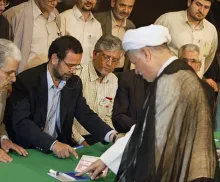
Early in the morning, I went to the Majlis. I read the reports. The ship “Iran Rashadat” was hit by a missile yesterday and is still burning; they have brought it to Kharg by tugboat. In the past few days in Kurdistan, we have dealt a heavy blow to the counterrevolution. In the open session, the bill for the deferment of Pakistan’s loan was under discussion; in
Read more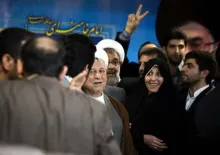
I stayed home; I prepared the Persian text of the Arabic sermon for translation. I read the reports. I reviewed the article I had previously written under the title “Nahj al-Balagha and Politics” for the Nahj al-Balagha Congress, for revision. I spoke with Mr. Nateq Nouri [Minister of the Interior] about the impeachment.
Read more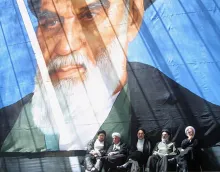
Early in the morning, after prayer and breakfast and writing down the memories of the past two days, I went to the Majlis. I read the reports. I went to the public session. The draft statute of the IRIB was completed; some provisions were contrary to the Imam's and my views. My opposition had no effect either. The prevailing atmosphere in the Majlis calls for this. Because of its importance
Read more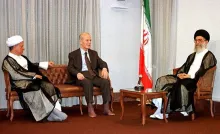
I studied until seven in the morning. I went to see the site of the new library. Because of the lack of space, we have moved the Parliament Library to the site of the Negarestan Museum - in the garden of the former Marble Palace, adjacent to Parliament -. It is a good place and they have made good decorations; but there are few visitors and in fact,
Read more
Before the public session, I worked for a while in my office. In the public session, the draft statute of the IRIB was on the agenda. Although I conveyed Imam's view opposing some of its provisions—which had given extensive powers to the supervisory council—the section opposed by Imam and me was approved. The majority
Read more
I worked at home until ten in the morning. I went to visit the Imam; in the Imam's outer office, Mr. [Kazem Seifian], the mayor of Tehran, and a group of others were present; the issue of the lands allocated by the municipality's religious judge was being discussed. They have been allocated very arbitrarily and without any accounting; although a number of needy people, to a piece of land
Read more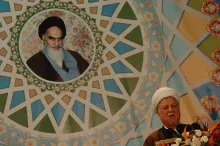
I entrusted the Friday prayer to Mr. Emami Kashani. I went to the Latian Dam with family members and the Revolutionary Guards; going via Lashgarak and returning via Abali. In the lake, behind the dam, there was a peninsula-like promontory, where they had built a good building during the Shah's time, and after the Revolution until
Read more
In the open session, Mr. [Mohammad] Norouzi, the representative from Gonbad, announced in his pre-agenda speech that, with the signatures of fifty representatives, the Minister of the Interior had been impeached. They caught us off guard like this. I had spoken with some of them to withdraw it, but because the grounds for the impeachment had not been specified, it was admissible
Read more
Mohsen, Sahar went to the airport with her father and they did not wake us up. At eight in the morning, she called from the airport saying that the plane was delayed and now they say they have oversold fifty tickets and will not let some people board, and there has been a disturbance at the airport. With [Mr. Hadi Nejad-Hosseinian]
Read more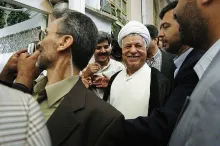
In the public session, elections were held to determine the parliament’s representatives on the council overseeing the IRIB. At the Imam’s request, I accepted the nomination; I myself was opposed, but I know that given the problems that have arisen, this is the solution and the Imam’s view is sound. It is supposed to be from the government and
Read more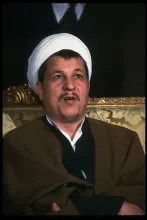
Until three in the afternoon, I was at home. In the afternoon, I attended the [Parliament] Rules Commission, and at five-thirty I spoke to the clerics of the Hajj caravans - who numbered more than a thousand and were holding a seminar at Alborz School. Near sunset, Hajj Agha Kamal Faqih Imani of Isfahan to
Read more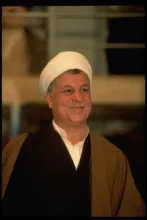
I went to Parliament. Before the session, I met with Mr. [Mohammad-Mahdi] Rabbani Amlashi. He had some remarks concerning the Ministry of Intelligence and the Imam's view of the minister, as well as other matters. We also reviewed the [final statement of the Assembly of Experts]. In the open session, before the agenda, I made some brief remarks about the launch
Read more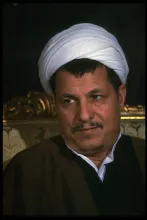
I was at home all day. Mr. Engineer Morovat came and consulted with me and outlined a plan regarding the proposal that had been made to him by the Ministry of Housing and Urban Development. He also spoke about the construction of the homes for members of parliament - which we are building next to the old National Assembly - . Mr. [Mir-Hossein Mousavi] the prime minister,
Read more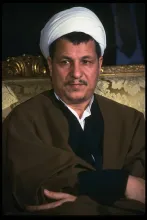
I was at home until ten-thirty in the morning. The children went to Karaj. The board of trustees of Refah and their families had a gathering; I too had previously been a member. I went to the university to attend the Friday prayers. I had lunch alone. They brought me lunch from the Sepah Beit center. The weather was hot. In the afternoon, Ahmad Agha came.
Read more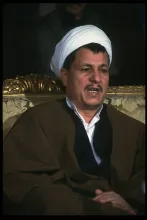
I worked in my office until seven in the morning. I wrote the Persian text of the Arabic sermon of the Friday prayer and sent it for translation. The news of the bombing of Gilan-e Gharb was confirmed; the rest of the people have left the city; they are right. Before the order on this matter, I spoke briefly. The speaker before the order was Engineer [Mehdi] Bazargan
Read more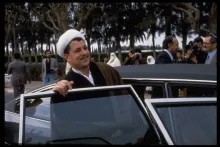
Before noon, I spent most of my time reading the memoirs of [William] Sullivan [the last U.S. ambassador in Tehran]. It provides a great deal of information about the history of the Revolution and the internal developments within the Shah's government and its relations with the United States. Books like these are useful for people like us. Professor Hossein
Read more
I went to the office of [Ayatollah] Mr. Khamenei. At six in the morning, I had a meeting with him and Messrs. Sayyad Shirazi and Mohsen Rezaei to review the outcome of the operation and plan for the future. They were satisfied with the results of Operations Valfajr 2 and 3. Iraq's extensive assault in Mehran with forces that had been brought in from the surrounding areas
Read more
I stayed at home. In the morning, Dr. Motamedi, the Imam’s attending physician, came. I told him that over the past two or three weeks, I had experienced chest pain two or three times. He said that I should be very careful. It was agreed that next week he would take an ECG of my heart and that I would also have a blood test. I complained about the state of hygiene
Read more
Mozaffar Baghaei Kermani a member of the National Consultative Assembly in the 15th, 16th, and 17th terms, one of the founders of the National Front, and the leader and founder of the Toilers Party, by Habib Lajvardi’s efforts Listen without censorship on Abdi Media on Castbox
Read moreAt the Leader’s Office, there was a consultative meeting on nuclear issues. He agreed that, under certain conditions, the protocol could be signed and effectively implemented, but he opposed suspending enrichment activities, which is what the International Atomic Energy Agency and Europe, the United States, and Russia are seeking. Messrs. Rouhani, Kharrazi, and Khatami called for a temporary suspension. Dr. Rouhani was proposed to travel to Europe for negotiations, but my view is that someone should come from there and negotiations should be held in Iran.
Read more
We must bring our economy to the number one economy in the region.
Read more
We must accept our shortcomings and take the enemy's plan to overthrow the regime into consideration.
Read more
What we witnessed in this war, apart from the domestic traitors, cannot be attributed to infiltration in any other way.
Read more
Now Sheikh Hamid Rasaei, the current member of parliament, has been ordered to prison to serve a sentence for committing a press-related offense or for any other legal reason, a sentence that has also gone through all stages of judicial proceedings.
Read more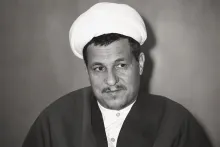
The Expediency Discernment Council [of the System] was in session until noon, and we completed the review of the general policies of the Third Development Plan.
Read more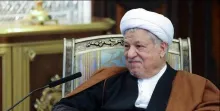
The morning and afternoon were spent studying. At noon, I went to attend the Friday prayers. In the first sermon, I analyzed the factors behind and the consequences of Ashura, and in the second sermon, as usual, I spoke about the week’s events and occasions.
Read more
Listen to Abdi Media on Castbox, unfiltered
Read more
Soon, the deputy of the Chief Justice and the head of the Tehran Province Courts of Appeal will also be appointed and introduced.
Read more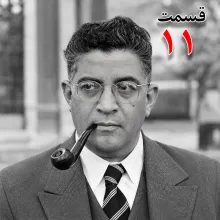
Mozzafar Baghaei Kermani a member of the National Consultative Assembly in the 15th, 16th, and 17th terms, one of the founders of the National Front, and the leader and founder of the Toilers Party. Listen to it unfiltered, produced by Habib Lajvardi, on Abdi Media on Castbox.
Read more
Listen to Abdi Media on Castbox, unfiltered
Read moreIn a meeting with the Leader; decision on the Additional Protocol and preparedness for possible problems / Syria’s First Vice President is concerned about Iraq becoming federal and the constitution being drafted based on the current situation, and is dissatisfied that Arab countries have not opposed the Governing Council
Read more
Mr. Rouhani's mistake is that he does not understand the difference between defense and war!
Read more
The economy has fallen into the hands of those who are centers of power.
Read more
I spent some time writing the closing statement for the session of the [Assembly of] Experts [of the Leadership]. We had assigned it to two or three other people; they had not written anything good. In the Assembly’s public session, the bill to establish industrial townships was approved in the first reading. I also defended it; it is a good bill. A question was asked of Mr.
Read more
I was at home until three in the afternoon. I read some reports from government organizations; I also read some of [William] Sullivan’s book—the U.S. ambassador to Tehran during the Revolution. In this book, there are many things about the nature of dependent regimes and how they relate to colonialist countries,
Read more
In the open session of Parliament, I paid tribute to the martyr Dr. [Hassan] Ayat - on the anniversary of his martyrdom. We had an interpretation of the Urban Land Law, and there was a problem with the bill of the Ministry of Construction Jihad, which I resolved. Mr. [Morteza] Fahim [Kermani] wanted help with the delivery of a number of motorcycles for the front, for which the money had been
Read more
I was at home all day. [Ayatollah] Mr. Khamenei led the Friday prayers. In the morning, Ahmad Agha came, and we talked about [reshuffling] the cabinet, the war, and inflation, and he said it had been proposed to the Imam that, to prevent the influence of the Anjomanis and Tudeh members, they should appoint a representative in the Ministry of Education; I said influence
Read more
Until seven in the morning, I was studying. Mr. [Ali Akbar] Mohtashami, our ambassador to Syria and head of the IRGC, and Mr. Sayyed Abbas, a member of the Council for Lebanese Affairs, arrived. They gave a report on the situation there and on the fact that the IRGC in Lebanon operates mostly through the Dawa Party - Messrs. Sobhi and Kourani.
Read more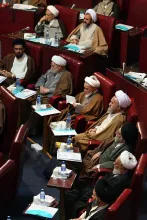
Early in the morning I went to the parliament. I read the reports. On the Walfajr 2 and Walfajr 3 fronts, clashes continue with our superiority. In Shalamcheh, Iraqis have attacked our first embankment. In Turkey and the southern Persian Gulf countries, concerns are felt regarding our victories; uproar
Read more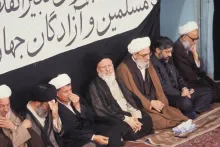
I stayed home all day today; it was a rest. I also wrote a few pages of the article "Haft-e Tir [Narrative of Separation]". Part of my time was spent reading the memoirs of [Zbigniew] Brzezinski [US National Security Advisor] about the events related to the fall of the Shah and the victory of the Islamic Revolution. From these memoirs, many things
Read more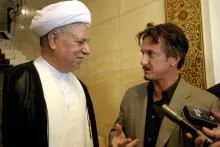
Colonel Sayyad Shirazi [Commander of the Army Ground Forces] confirmed that the Iraqis had recaptured the Gardaneh Mend heights; but the Nemah Kalan Bo heights are in our hands and they also have a plan to continue their advance. They have taken forces to the field. The news of Operation Valfajr 3 is also good. In the public session, before
Read more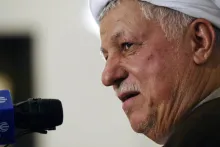
Until 3 PM, I was at home, studying and resting. Last night, my chest hurt, and I slept a little. My office informed me that Operation Valfajr 3 had begun in Mehran and had been relatively successful. The Nasr and ... divisions had reached their objectives, but the Tharallah division encountered problems.
Read more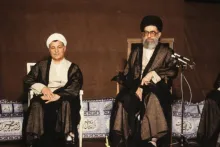
To relieve fatigue and lack of sleep, I slept after the morning prayer; I studied a bit for the Friday prayer sermons. Ahmad Agha came; he is not well, suffering from a stomach ache. He said it's so severe and prolonged that it might be cancer; of course, he said it jokingly. He reminded me about the differences
Read more
Near eight in the morning, I started the official meeting of the Islamic Consultative Assembly, and then handed over [presidency of the meeting] to Mr. [Mohammad] Mousavi Khoeiniha [Second Deputy Speaker] and went to the former library of the parliament, to participate in the meeting of the Assembly of Experts [of the Leadership]. The number of attendees had not reached quorum.
Read more
I worked in my office until 8 AM. I wrote the Persian text of the Arabic Friday prayer sermon and sent it for translation. Until noon, we had an official meeting of the Assembly of Experts [of the Leadership]. At noon, we had lunch with the President and Messrs. Meshkini and [Seyyed Asadollah] Lajvardi [Tehran's revolutionary prosecutor] as guests of Mr.
Read more
At eight in the morning, I met with the Imam. I discussed the meetings of the parliamentary commissions with the Imam; they agreed. It was decided that two commissions would meet with him every month. We also talked a little about the recent issues of صداوسیما (Voice and Vision), but I don't want to get into the details. The Supervisory Council [of the organization
Read more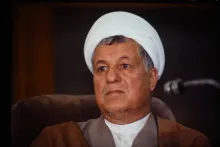
The children went to the airport early in the morning for a trip to Rafsanjan. I came to the parliament. We had a meeting of the Assembly of Experts [Leadership]. In the afternoon, I had a few meetings. In the evening, we also had a meeting of the Assembly of Experts [Leadership]. At night, a meeting of the Supreme Defense Council was held in the President's office. Reports related to
Read more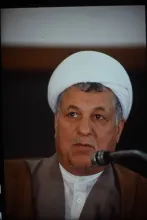
We had a public session. In my speech before the orders of the day, I spoke about Operation Val-Fajr 2. Several bills were passed. At noon I also had several meetings. In the afternoon we had a session of the Central Council of the [Islamic Republican] Party; the disagreements were raised, and there was especially discussion about the disagreements at the Broadcasting Organization. It was decided that the disagreements
Read more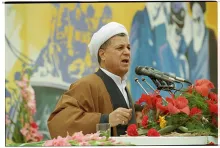
I read a booklet about the history of the Muslim Brotherhood. They were supposed to give the war news, but until eight in the morning they had not. I spoke with the [President]; it was decided that the publicity about the victory should begin. It has been well planned. For the marriage of Farzaneh [Hashemi Bahramani], my niece, to
Read more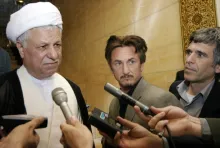
Early in the morning, I inquired about the front's situation. It became clear that no significant changes had occurred. We had captured two or three more heights. The President quoted Colonel Sayyad [Shirazi] as saying that about three thousand Iraqis had been killed and our situation was good. Due to field problems, there were few prisoners.
Read more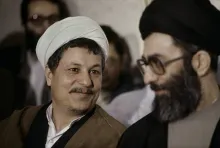
I went to the parliament early in the morning. I had breakfast there. Reports said that our fighters had captured Haj Omran barracks last night. I asked General Zahirnejad; he, on the contrary, gave negative results. I told him the report, and he became flustered. A few minutes later, he confirmed my news. The first news was
Read more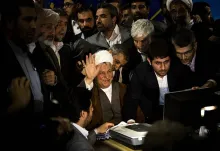
Studying the reports and signing the personnel orders took up my time until eight in the morning. Early in the morning, the telegrams reported that last night, west of Piranshahr, our forces from the Hamzeh Sayyid al-Shohada base had launched an attack with the aim of capturing the Iraqi garrison of Haj Omran. The initial reports said that [they had advanced] to ninety...
Read more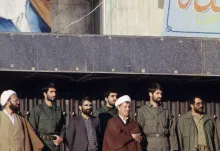
I put Mr. Yazdi in charge of running the [Assembly] session and went with the members of the Assembly of Experts to visit the Imam. The Experts and their bodyguards were present. Ayatollah Meshkini spoke briefly, and then the Imam offered some advice. At home, I spent several days writing up my backlogged memoirs. I also wrote a few pages of the article [Narrative
Read more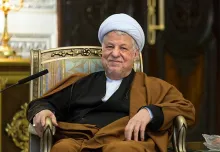
Until eight in the morning, I signed the new promotion decrees for the [Islamic Consultative Assembly employees]. At eight, the Assembly of Experts meeting was held and we made good progress. I asked Mr. Emami Kashani to lead this week's Friday prayer. At noon, I met with Mr. Sadegh Ehsanbakhsh, the Friday Imam of Rasht.
Read more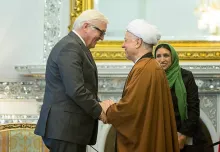
After praying, in the yard of the house, I started studying and cleaning the pool. I chlorinated the water, it is clean. After breakfast, Mohsen went to the Atomic Energy Organization for work. His university has agreed for him to spend a month of work-training in Iranian institutions. At 3:30 I went to the parliament. Mr.
Read more
After prayers, I headed towards Qom to attend the meeting of experts. I arrived at Feyziyeh School at 7:30 AM. Before the meeting, in the room of the late Saheb al-Dari - the school's office - we discussed with a group of teachers. Mr. [Mohyeddin] Haeri Shirazi, referring to the Imam's message, presented a part of its content related to the house.
Read more
I studied at home until 10:30 AM. I went to Tehran University for Friday prayers. The weather was very hot; I came home after the prayer. The pool at home is small; it's a large pond. On the recommendation of doctors, I have to swim due to back pain. It is difficult to use outdoor pools.
Read more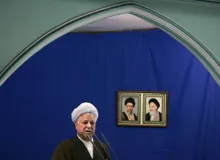
I went to the parliament early in the morning. Until nine o’clock in the morning, I read the reports and supervised the preliminary work of the Assembly of Experts. At nine, the session of the [Leadership] Assembly of Experts began. The Quran, Imam’s message, Mr. Mahdavi Kani’s speech [chairman of the Central Supervisory Board for the Assembly of Experts elections], and the seating of the board
Read more
Until four in the afternoon, I was at home; I studied and rested. Mr. Mohsen Rezaei [commander of the Islamic Revolutionary Guard Corps] complained by telephone about Mr. [Asadollah] Lajevardi [Tehran Revolutionary Prosecutor], saying that he had assigned several people to the intelligence-gathering office. He said that the IRGC had dealt a blow to the Mojahedin in
Read moreAt my suggestion, [Ayatollah] Khamenei led the Eid al-Fitr prayer at the site of the new grand prayer ground. We plan to allocate the former Abbasabad barracks site, along with the surrounding lands, which amount to about one million square meters, to the prayer ground. Several billion tomans will be needed for the construction of the prayer ground and its surrounding facilities.
Read moreBefore the sermon, I spoke about Eid al-Fitr and the fight against inflation and the counterrevolutionaries' conspiracies. We had the election of the presiding board [of the Islamic Consultative Assembly]. With 165 votes, I was elected president of the Assembly [Islamic Consultative Assembly] for the fourth time. The previous presiding board, with the replacement of Mr. Mohammad Khamenei by Mr.
Read more
At eight in the morning, the public session began. The proposal requiring a two-thirds majority to approve the necessity of setting aside the primary rulings was on the agenda. Since it concerned the parliament's rules of procedure, it failed to obtain a two-thirds majority and was rejected; the Imam had said that a two-thirds majority is necessary. The Imam's directive is followed, and it is better that in the rules of procedure
Read moreI went to the Majlis early in the morning. Before the agenda, there was discussion about current issues. The bill to establish an independent ministry or organization for water was rejected. At noon, I had several meetings in my office. In the afternoon, at the President's office, we discussed inflation with the Economic Council. The foreign currency for industries, for importing goods and increasing production,
Read more
Until ten in the morning, I studied at home. Then I went to Friday prayers. I spoke about Palestine and the danger of Zionism in Lebanon. I returned home, I was tired. I slept until five in the afternoon. In the evening, in the courtyard of the house, I read some reports and wrote the overdue memoirs.
Read moreAt seven in the morning, I went to the parliament. I read the reports. The Kuwaitis, contrary to our insistence, have given fuel and food to the hijackers, and about half of the passengers have been released and have flown toward Paris with the rest. [The hijackers] are remnants of the Mojahedin. The Kuwaitis are cooperating with them and
Read moreWe had a public session; several bills were passed. At ten in the morning, I went to the president’s office to discuss ways to curb inflation, and we spent several hours discussing it with the Supreme Economic Council and other responsible officials; the discussion is continuing. In the afternoon, the [Parliament] presiding board had a meeting. We were guests of the prime minister for iftar. A large crowd
Read moreI went to the parliament. Before the agenda, the speeches of the representatives were not consistent with the Imam's advice and positions, and I called the statements contrary to the Imam's directives. Some were in favor and some were opposed. The administrative divisions of the country were not completed; it takes a lot of time. Mr. Aghazadeh, the Minister of State without Portfolio, had also taken up time and
Read moreI got up at nine in the morning; I had a slight fever and studied listlessly; about the sciences that went from the Islamic world to the West. I gave an interview to the Jomhuri-ye Eslami newspaper about Palestine for Quds Day. For the interview, I also read some of the book “The Story of Palestine.”
Read more
Messrs. Akhavi, Mohammad and Qasemzadeh from IRIB and Vaezi from the IRGC came. They consulted about the propaganda line, regarding the Tudeh Party and the Soviet Union and communism. I said, we do not intend to disrupt our relations with the Soviet Union, and it is not in our interest; especially during the war. Domestic affairs must be separated from
Read more
Before noon, Ahmad Agha came. He said: The Imam had become uncertain about preferring any one of Mr. Emami Kashani, Agha Reza Shirazi, or Mahdavi Kani, for membership in the Guardian Council. I spoke with him at length; it was decided that they would discuss it with the Imam. Late at night, Ahmad Agha came and said the decree for the three,
Read more
I was at home all day. Since I had stayed up for the night of Laylat al-Qadr, I slept for part of the day—before noon and in the afternoon. [Ayatollah] Mr. Khamenei led the Friday prayers. A lot of reports had accumulated during the week, which I read. The pool water had turned green; I added chlorine, but very much
Read moreWe had a public session; the bill on the country's administrative divisions was under discussion. Before noon, I came to my office. Mr. [Mohammad] Mohammadi [representative of Gorgan] came, complaining about Mr. Nourmofidi [Gorgan's Friday prayer leader], saying that during Friday prayers, he had threatened him and demanded that he repent. Because in private gatherings,
Read more
Until nine-thirty in the morning, I rested and studied. Then I went to the President's office. The discussion was about high prices and distribution [of goods]. There was a detailed discussion about the production and distribution of textiles, and we decided to distribute them through the trade guilds and to supply only a few major types of textiles to the housing cooperatives and
Read more
I woke up at seven thirty in the morning. I attended the public session; before the agenda, I spoke about the martyrs of the seventh of Tir. I entrusted the end of the session to Mr. Yazdi and came to my office to take care of some work. Around noon, I went to sleep to make up for the lack of sleep the night before and woke up at three thirty. Noon prayer
Read moreFor the speech in Isfahan, I did some studying. I read the report of the UN delegation; it is relatively realistic: the Iraqis have had very little destruction in their country. For the most part, regarding civilians and the population—as the delegation itself admits—there was no deliberate targeting or intent on our part, but the destruction of
Read moreWe had a public session. All the time was taken up by the first reading of the bill for implementing Article 49; it was approved by a strong majority. At noon, in my office, we consulted about the amendment to the law on reforming the salaries of employees [Islamic Consultative Assembly]; they have raised the salaries very high, which will have a bad effect on other organizations. Family
Read moreAfter the morning prayer, I came to the library and wrote some material to complete the article on the martyrs of the Seventh of Tir, based on the suggestion of the Jomhuri Eslami newspaper. Then I slept for a while and continued writing until noon. I was using the written memories from those days. It became clear to me that this
Read moreI stayed at home; I was studying and writing. Before noon, Ahmad Agha came. He reported that the Society of Seminary Teachers of Qom and the Combatant Clergy Association [of Tehran] had given Imam a list to complete [the members of] the Guardian Council, but apparently Imam had already made his decision. He said that
Read moreI went to sleep after suhoor and prayer. At seven in the morning, I went to the session. Before the [start] of the open session, I read the reports. The United Nations delegation's report on the destruction caused by the war has been given to the Secretary-General and apparently favors Iran. The text should be seen; apparently the United Nations wants to restore Iran's trust in itself
Read more
At eleven in the morning, we had a meeting in the president's office to examine the causes of rising prices and ways to combat it. [This meeting] continued until two in the afternoon. It was decided that we should give priority to essential goods; we discussed wheat and tea; it was decided that we should flood the market with them in abundance and saturation and
Read moreIn the open session, before the agenda, I spoke about the anniversary of the martyrdom of Dr. [Mostafa] Chamran. One of the representatives came and reported on another representative's campaigning for Mr. [Mohammad] Yazdi's chairmanship; I said it was not important. At noon, Mr. [Mohammad-Mahdi] Pourgol [representative of Bandar Anzali] came and reported on the progress of the work
Read moreAfter the morning prayer, I did not sleep. I read some of the memoirs related to the days of Mr. Bani-Sadr's dismissal and the bombing at the central office of the Islamic Republic Party [Islamic], for an article I am working on. After the seven o'clock news, I went to sleep. They informed me from the Prime Minister's Office that last night Iraqi agents in Tehran,
Read moreAfter suhoor and prayer, I slept until seven in the morning. Then I went to the session. I read the reports. In the open session, before the agenda, I spoke about the crimes of Ba'athist Iraq and the martyrdom of six—or three—clerics of the Al-Hakim family. Messrs. [Seyyed Mohammad Mahdi] Jafari [representative of Dashtestan] and [Seyyed Abolhasan] Haeri-Zadeh
Read moreI was at home the whole time; usually, the Majlis has no sessions on Saturdays. I spent most of my time studying. Mr. Sadegh Tabatabaei came by appointment. He recounted the story of his troubles in Germany and believes that it was a conspiracy against him and that he is truly innocent. He complained about the embassy for its delay in cooperating.
Read moreWhen we got up to eat suhoor, Aqa Jalal called to say that Kazem Marashi had been in an accident and had been taken to the hospital. I did not tell Effat; because she was very upset and worried. I struggled to come up with an excuse for the phone calls that were being made about this. I told the guards, no longer to put the phone through to
Read moreAt seven in the morning, I went to the parliament. We had a public session. I entrusted part of the session to Mr. Yazdi. Before noon, I spoke to the guards at the Imam Hussein (AS) training center. After the noon prayer, I met with Mr. Rabbani Amolshi. He raised several issues; about the Guardian Council and
Read more
Before noon, I was studying and writing at home. Dr. Velayati [Minister of Foreign Affairs] consulted by telephone about helping some of the groups in Palestine; they are asking us for assistance. It was decided that, after further consultation about them, the Afghans, and other movements, we would make a decision. In the evening, near iftar
Read moreAfter the morning prayer, I went to sleep. At eight in the morning, I went to the public session. Before I arrived, Mr. Yazdi had begun the session. Several bills were passed. Several questions were addressed. At noon, Mr. [Bahram] Tajgardoun [representative of Gachsaran], accompanied by Mr. Nouri Borujerdi from the committee following up on the decree [eight-point
Read moreAt two o'clock, after a short sleep, we woke up to eat the pre-dawn meal. Mehdi was not satisfied with the food available and ate some ready-made food. Yaser was also at his maternal uncle's house. After the prayer, I slept until seven in the morning and then began studying the reports. In the afternoon, I went to the session. The Rules of Procedure Commission and the meeting of the party representatives that
Read moreA martyr’s father came from Karaj and returned the 160,000 tomans that the army gives to the families of martyrs, to be spent on the war. Messrs. [Esmail] Ferdowsipour and [Mohammad Esmail] Shoushtari, who had gone to Germany to participate in a seminar of the Islamic Students’ Union, came and gave a report and spoke of the pressure
Read more
I was at home all the time and mostly studied. Before noon, Mr. [Gholamhossein] Karbaschi, the governor of Isfahan, came and was concerned about the danger of the disputes in Isfahan, which had led to the weakening of Mr. [Jalaleddin] Taheri [the Friday prayer leader of Isfahan] and, in his words, the weakening of Ayatollah Montazeri, and for
Read moreUntil ten-thirty in the morning, I studied at home. I went to the university to attend the Friday prayer. In the afternoon, I also spent time studying and writing about the events of the past three days. I also tinkered a bit with the pool and the garden. In the afternoon, Mr. Faqihi came and spoke about the revolutionary prosecutor of Gorgan, who had taken a factory from its owner without religious authorization.
Read moreAfter the prayer, I read the reports and [Persian text] wrote the Arabic sermon. In the open session, the bill on interest-free banking operations was under discussion; we made good progress. At noon [Mr. Mostafa Kiaei], the representative from Tuyserkan, brought 480,000 tomans in cash and some gold and jewelry for the fronts; of these items
Read moreBefore noon, Mr. Ahmad came. His view was that we should agree to Iraq’s proposal to conclude an agreement on not attacking civilian cities under the supervision of international organizations, and take this weapon away from Iraq. He was upset about the Foreign Ministry’s negative response; I also agree with his view. It was decided to with
Read more
I read the reports and made up for the three-day delay in [writing] the [daily] memoirs. I spoke by telephone with Mr. [Mohammad-Mahdi] Rabbani Amlashi and Ahmad Agha about the new members of the Guardian Council. At ten o'clock, I went to Imam's residence to meet with Imam. Together with the President, we went to see him.
Read moreAfter the prayer, I wrote a message for the Jihad seminar. I read the reports. I went to the open session and stayed in the session until ten o'clock. I went to the Guardian Council to conduct the lottery ceremony. [Ayatollah Khamenei] the president, the prime minister, [Ayatollah Mousavi-Ardebili] the chief justice, [Ayat
Read more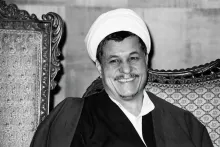
I went to the parliament. I read the reports. The open session began at seven-thirty in the morning. I offered my condolences on the death of Ayatollah [Mohammad Ali] Angaji in Tabriz, during the Fifteenth of Khordad demonstration. The bill on banking operations [without usury] was under discussion, and the question by one hundred representatives to Mr. Asgaroladi [Minister
Read more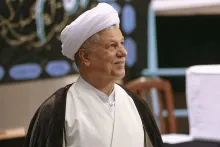
I was at home before noon. I was studying and resting. Effat and Yaser went to Karaj with the families of the Imam and the President, Martyr Beheshti, Martyr Motahari, and some others. On the way back, they were complaining about the condition of the cars and the guards and the newly built building of the garden where they had been guests. At two o'clock in the afternoon
Read more
Until nine-thirty in the morning, I was studying at home and reviewing the reports. The representatives and staff of the Parliament met with the Imam. Before the general meeting took place, I went to visit the Imam. The Imam sweetly complained about my praise of him yesterday in the Friday prayers and said that it might be possible
Read more
Until ten-thirty in the morning, I studied and rested at home. I went to the university to attend the Friday prayer. Mr. [Abdolmajid] Maadikhah called; I told him the outcome of the negotiations; he wants an independent organization affiliated with the presidency. In the afternoon, Mr. Seyyed Mohammad-Baqer Hakim [spokesman for the
Read more
Before going to the public session, I wrote the Arabic sermon for the Friday prayer and sent it for translation. I studied the reports. In the public session, the bill on interest-free banking operations was under discussion; we did not make good progress. Many discussions become lengthy, and since the matter is important, it is tolerable. At noon, Mr. Seyyed
Read more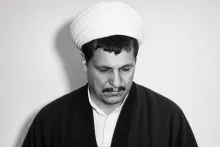
Until the afternoon, I was at home and mostly studying the book “Muntakhab al-Athar” for the Friday sermon about the Awaited Imam (may God hasten his reappearance). I went to the exhibition introducing the Parliament Week; it is not bad. I found the museum itself more interesting. Until six in the afternoon, we had a meeting of the presiding board. Dr. Gharavi to
Read moreBefore the public session, Dr. [Mohsen] Nourbakhsh, the governor of the Central Bank, came and expressed concern about Article Three of the [interest-free] banking operations bill, which had undergone a major change in the commission. He said that two thousand billion rials in demand deposits that currently earn interest would, under the commission’s decision, be deprived of interest in the future
Read moreAfter the prayer, I studied the book “Muntakhab al-Athar” for the Friday prayer sermons—which I want to speak about Imam Mahdi (may God hasten his reappearance)—. Dr. Velayati came to the house and complained about the reproach I had made last night because of his opposition to Engineer [Mir-Hossein] Mousavi becoming head of the political office;
Read moreAfter the prayer, I recited some Quran. In the past, since childhood, I always read the Quran in the mornings. A few years ago, when I began writing “The Key to the Quran” in prison, because I would immediately after the prayer begin studying and taking notes from the Quran, I thought there was no need to read
Read more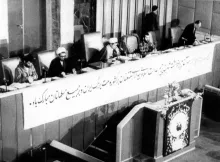
Until nine thirty in the morning, I was studying and writing at home. I wrote a message for the seminar of the Islamic Associations of Indian Students. I went to visit the Imam. I arrived late; the Imam had already begun speaking. I sat among the others near the door of the Jamaran Hosseiniyeh, but the cameramen and photographers did not stop
Read more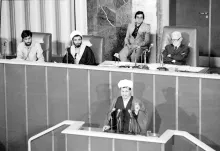
Early in the morning, I went to the President's office; we discussed the issue of distribution [of goods] and the serious disagreements surrounding it, as well as the factors behind rising prices in the government, Parliament, and society at large. It was decided that we would bring the two sides of the dispute within the government together for negotiations in our presence; the Prime Minister was also informed.
Read more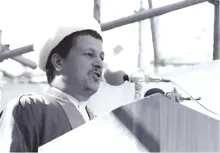
I stayed home all day. Reading and taking notes took up most of my time. I cleaned the pool and filled it with water. [Ayatollah] Mr. Khamenei called and asked me to go to his office to attend the Friday Prayer Leaders’ seminar for Tehran Province; since I had given the guards leave, it was difficult to do so; I did not go.
Read more
Until the start of the parliamentary session, I took care of the overdue tasks in my office. The Imam's remarks and condemnation of extremism, in the representatives' [pre-agenda] speeches—which weaken the government—have had a profound effect on the parliament. The Imam considers such statements, which call the achievements of the Revolution into question, and
Read moreI was at home until three in the afternoon. I was studying and resting. Because the water in the Karaj Dam became muddy as a result of the recent floods, the water supply has been cut off. Mr. Ahmad called and asked me to pursue the Imam's views in my talks. Mr. [Seyyed Hossein] Mousavi [Tabrizi], the [General] Prosecutor of the Revolution, came and
Read moreI went to the parliament early in the morning. I had breakfast at the parliament and read the reports. In the open session, the bill [defining the duties and organization] of the [National] Security Council was under discussion. The Guardian Council does not accept councils and general assemblies that make decisions; because the person responsible has no accountability to the parliament;
Read moreI was at home until nine in the morning. Dr. Velayati informed me that the Russians had decided to expel three of our diplomats, but not announce it, and had given a response with a high-handed stance, and it was decided that we would retaliate in kind as well. The Prime Minister's Intelligence Office had also previously [expelled] three other Russians.
Read moreEarly in the morning, after the prayer, I thought for a while about the problems that differences among the various lines and currents create for the Revolution and unity, and I sketched out and noted down some solutions in my mind so that I could take action through various means later, and then I wrote two or three days of the backlogged memoirs. My library
Read moreUntil seven-thirty in the morning, I was in my office studying the reports. The agreement between Lebanon and Israel is an important global issue that has overshadowed everything and will be the source of major events. In the open session, the remarks before the agenda by Mr. [Gholamhossein] Nadi, the representative of Najafabad, who with the time of Engineer
Read moreUntil nine in the morning, I worked at home, studying and writing. At a quarter past nine, I arrived at the Majlis. The representative, the governor, and the Friday prayer leader of Rudbar came and gave a report on the situation in the city. They spoke of the plot by the communists there, who are numerous and connected with the forest, and the Friday prayer leader spoke of the office of the Islamic Republic Party
Read moreI worked until seven-thirty. I reviewed the new employment orders for the Parliament staff, which they had prepared based on the new law. Some people’s salaries seem high. I told them to review them again so that nothing improper would be done. I opened the public session and entrusted it to Mr. Yazdi. I came to my office.
Read more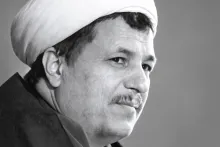
I stayed at home until three in the afternoon, studied, and rested and relaxed in the yard. Mr. Jasbi called and said that the results of the Islamic Azad University entrance exam had been announced. He also gave the results of the second round of voting for the Central Council of the Islamic Republic Party; a good composition has emerged.
Read more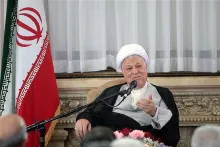
I went to the Majlis early in the morning. One hour before the public session, I took care of the administrative matters. I signed the decrees and sent the resolutions to the Guardian Council and the executive branch. In the public session, the bill [to establish the Ministry of] Intelligence was on the agenda. We made good progress. Temporarily, the Revolutionary Guards were authorized to
Read moreEarly in the morning, Dr. Sheibani came and asked for help in obtaining loans from the banks to complete the university buildings and also to arrange for the Congress guards to meet with the Imam. I went to [the] Manzariyeh [camp] to attend the Congress plenary session. We removed several unnecessary items from the agenda. [Ayatollah] Mr. Khamenei
Read moreI was studying at home until ten-thirty in the morning. I spoke by telephone with Mr. Jasbi at the congress and with [Ayatollah] Mr. Khamenei and Rabbani Amlashi, and we consulted about the new candidates for the party's Central Council. Mr. Jasbi complained about the students' behavior and the congress's bylaws commission.
Read more
Early in the morning, Dr. [Abbas] Sheibani came, and I got him an appointment card with the Imam for the other members of the congress who had not met with the Imam. I spoke with the president by phone, and it was decided that the meeting we have tonight would be held at the Imam's office. The approval of the qualifications of the candidates for the [Central] Council of the [Islamic Republic] Party
Read more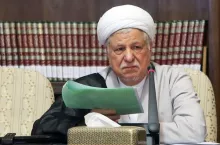
Mr. Shirazi, the Friday prayer leader of Mashhad, called and said that he was heading to Qom to prepare the groundwork for a letter from the Friday prayer leaders to the Majlis or the government. The letter is to request land reform and the acquisition of the lands of large landowners. He is working with passion and faith to resolve this chronic problem. Before noon, accompanied by
Read moreI went to the Majlis. I had a meeting with Messrs. [Ayatollah] Khamenei and Rabbani Amolshi to review the qualifications of the candidates for the Central Council of the Islamic Republic [Party]. In the open session, the bill [establishing the Ministry of] Intelligence was under discussion. Most representatives favor concentrating intelligence matters and, at the request of the IRGC
Read moreAfter the prayer, Mr. [Ayatollah] Khamenei and Rabbani [Amolshi, a member of the Guardian Council] came to the Majlis, and we consulted about the candidates for the Central Council and general issues of the party and the country. In the public session, we had the bill for establishing the Ministry of Intelligence; it made relatively good progress. Before the agenda, during Mr.
Read moreAfter the prayer, I went to the assembly. We had a public session. Several bills were passed. At noon, I had several meetings at the office. In the afternoon, we had a meeting to revise the positions of the [Islamic Republic] Party, and then a meeting of the party's Central Council, which was mostly about the congress. Then I had a meeting with the commanders of the Revolutionary Guards and the government about related issues
Read more
Early in the morning, the filmmakers and photographers came to film and take photographs of a day in my life; they filmed and photographed scenes of me having breakfast in the kitchen, living room, and library. Fortunately, Mother and Sister Tayyebeh were also present, although unfortunately Fati and Faezeh and Mohsen were not. Mehdi and Yaser
Read more
I stayed at home. Mr. Mahdavi Kani led the Friday prayers, and before noon, Sheikh Ghodrat Alikhani came and [read] the text of a letter that had been prepared at the Friday Imams' seminar and signed by several people, and then, following opposition from supporters of the Islamic Republic Party and Mr. Meshkini, had been shelved,
Read moreI did not go to the Majlis early in the morning. I went to the President's office. I attended the Political Bureau meeting of the party. The discussion was about the disruptive activities of the Third Line. We made some decisions about how to deal with them; mostly toward winning them over through friendship and affection rather than confrontation. I did not go to the public session. At ten o'clock to my office
Read moreAfter the prayer, I studied until nine-thirty in the morning. I read the reports. At nine-thirty, a group of new employees of the parliament came and complained about the administrative officials. Mr. Rouhani, the Iranian ambassador to Lebanon, came; they have asked him to resign because of his relationship with one of the female employees of the embassy,
Read moreWe had a public session. The bill to convert the Niavaran Palace into a guesthouse for receiving high-ranking foreign guests was under discussion. The representatives strongly opposed it and spoke in slogans, and it was rejected. I also had several meetings at noon. In the afternoon, I attended a meeting of the Hezbollah representatives of the parliament. Some explanations about the party
Read more
Until nine in the morning, I was studying at home. The family of the martyred Motahari, who had come to visit the Imam, came to our house. They complained that [Dr. Ali] Abbaspour had been removed from the presidency of the Organization for Scientific and Industrial Research of Iran. Mr. Amoli [Larijani] reported on the revision of the draft
Read moreI went to the parliament early in the morning. Before the [start] of the session, I read the reports and took care of the administrative work. Before the agenda, I referred to Workers’ Day, Teachers’ Day, and the martyrdom of Ayatollah Motahari. The bill on the scope of powers and jurisdiction of the [work and jurisdiction of the revolutionary prosecutors’ offices and] courts was under consideration and was approved. In
Read moreI stayed at home and mostly studied in the library. The interrogators of the Tudeh Party leaders came and brought [Bahram] Afzali's confessions. He has confessed to a minor level of cooperation. The interrogators say that he has not disclosed many things; they do not consider it advisable to release him, because of the possibility of escape from
Read more
Karbasschi’s collaboration with the Great Islamic Encyclopedia and threats from unidentified individuals/ The United States called for negotiations with Iran, Europe asked Iran to accept the Additional Protocol and halt enrichment
Read moreMohsen, the chairman of the board and CEO of the Metro Company, came and said that he had decided to resign from managing the Tehran Metro because he disagreed with the monorail plans of Mr. Mahmoud Ahmadinejad, the new mayor.
Read more
The bulk of our trade exchanges are conducted by land, rail, and the Caspian Sea; we have reduced our reliance on maritime transport.
Read more
We are pursuing solutions that can protect the people of Iran from the harm of U.S. aggression.
Read more
America must stop its arrogance toward the independent countries of the world.
Read more
Through war, we only achieved some of our objectives; through negotiations, we could not have achieved our true nuclear rights.
Read more
Before entering the court, a Kayhan newspaper reporter asked him: Are you ready to stand trial? And Amir-Entezam, smiling, said "Yes, I have been waiting for ۴۵۲ days now"
Read more
Listen to Abdi Media on Castbox, unfiltered
Read more
Mozzafar Baghaei Kermani (1291–1366), a member of the National Consultative Assembly in the 15th, 16th, and 17th terms, one of the founders of the National Front, and the leader and founder of the Toilers Party. Listen to it unfiltered, produced by Habib Lajevardi, on Abdi Media on Castbox
Read more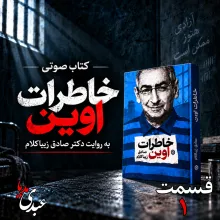
Listen to Abdi Media on Castbox, unfiltered
Read more
Conversation with Dr. Bijan Abdolkarimi, philosopher, writer, and university professor
Read more
The vast majority of our presidents were not political figures.
Read more
If there is any criticism, it should also be raised in private meetings between parliament and the government; without the criticisms being made public.
Read more
Due to governments' lack of belief in a resistance economy, this approach was not realized.
Read more
Listen to Abdi Media on Castbox, without a filter.
Read more
From the YouTube channel Abdi Media
Read more
Listen to Abdi Media on Castbox, without a filter.
Read more
Now we have to see what the next step is for implementing this ruling in government agencies?
Read more
Mozaffar Baqaei Kermani (1912, 1987), a representative in the National Consultative Assembly during the 15th, 16th, and 17th terms, one of the founders of the National Front, and the leader and founder of the Toilers Party, by Habib Ladjevardi, unfiltered, listen on Castbox, Abdi Media.
Read more
and Latif Sarvi as the chief of the Tehran General and Revolutionary Courts.
Read more
The United Nations announced that it is withdrawing its non-Iraqi personnel from Iraq due to the lack of security, which has angered the United States / The arrest of two members of the Guantanamo prison guard force in the United States has caused a stir / In Japan, two powerful earthquakes occurred within an hour, with a magnitude of 8.7 on the Richter scale ...
Read more
The role of the Assembly of Experts in selecting the Leader is a completely independent role.
Read more
Since this era is moving toward pushing America out of the region, it has its own demands.
Read more
The memorandum of understanding has no enforcement guarantee.
Read more
There are forces in this country that destabilize the country for their own interests.
Read more
If we treat a student violently simply for asking a question, this is condemnable.
Read more
They should ask this question: what happened over the course of nearly half a century under a government that some of those who chanted "Death to the Shah" when this government was founded, half a century later chanted "Long live the Shah"?
Read more
Mr. Khatami came to my office in Koushk. We also agreed regarding the nuclear issues that we should pursue the proposal of the three countries, Britain, France, and Germany. I advised him not to think about stepping down and to continue his work...
Read more
Listen to Abdi Media on Castbox, without a filter.
Read more
Until 10:30 in the morning, I was studying at home. The President informed me by phone that the commander in question [Captain Bahram Afzali] had been summoned and was in custody. I said that he should first be investigated there; if he acted honestly and was only a sympathizer, he should not be sent to prison. He agreed. For Friday prayers
Read moreEffat and Fati went to Faezeh's house to help with hosting that night. At eight in the morning, Ayatollah Montazeri, who had come to Tehran to meet with the Imam, came to our house. We talked for about half an hour. He had objections about many of the ongoing affairs; the distribution of goods, the condition of the prisons, the lack of
Read more
I stayed home and wrote down the memories that had fallen behind. I was informed by the Imam's office that the President had arrived. I went as well. We visited the Imam. We talked about issues related to Libya. The response was postponed until later. [Ayatollah] Mr. Khamenei, the news of the arrest of the members of the secret organization of the Tudeh Party and
Read moreEarly in the morning I went to Parliament. I read the reports. The Kuwait Convention [for the Protection of the Environment] has held a meeting to resolve the problem of the damaged Nowruz wells; we need to make an effort to get it resolved. They say the danger from the leaked oil is also approaching our shores. Before the agenda, about the airspace violation and
Read moreI went to Parliament early in the morning. We had a public session; instead of next Thursday, which we canceled because it fell between two holidays. Several bills were approved. After the recess, I came to my office. Around noon, a group of radical representatives came to my office and complained about Parliament's hands being tied from taking action
Read moreEarly in the morning I went to Parliament. The General Accounting Law bill was under discussion; although the government opposes it, it was passed by a slim majority; it will make executive work difficult. This bill took up all of today's parliamentary time. During the recess I gave a speech to the spectators. At noon I had several meetings. In the afternoon, a session to revise the party's positions.
Read moreI was at home until the afternoon. Studying, resting, and doing household chores filled my time. In last night's missile attack on Dezful, 40 people were martyred and 200 were injured. The government has declared public mourning. In the afternoon, I went with the President, the Prime Minister, and the Chief Justice of the Supreme Court to visit the Imam. About
Read more
I was at the Assembly until eleven o'clock, studying and taking notes. Then I went to Friday prayers, and at one-thirty in the afternoon we came home; I was together with the family members. The painting of the house is still not finished. The Revolutionary Guards got us food from outside. The house was in disarray. In the afternoon, a number of
Read moreAt 7:30 in the morning I went to the public session of the [Islamic Consultative Assembly]. Before the agenda, I spoke about the crime committed by the Iraqi army in Dezful. The credentials of Mr. [Mohammad Jasim] Saadati, the representative of Mahabad, were brought up; because of his background and his connection with the Komala [Party] and the Democratic [Kurdistan] Party and his failure to condemn
Read moreEarly in the morning, the children went to school. Fati also went to the university. I was also studying and handled the Parliament's work until eight in the morning. Then I went to the President's office for a meeting and discussion with him. We consulted for two hours about various issues; the defendant's confession to knowingly participating in
Read moreI studied until 7:30 in the morning. Several bills were approved in the plenary session. I handed over part of running the session to Mr. Yazdi and attended to miscellaneous tasks in my office. At noon I had several meetings. In the afternoon, Mr. Saveh, the Director General of Education in Kerman, came to meet me; about the monopolistic attitude of the University Community.
Read moreI was at home until the afternoon, studying. In the afternoon, I went to the Military Academy; it was the ceremony for awarding promotions to the Army's ground force units. The promotions were awarded. The President was supposed to attend this ceremony, since he had not attended today's Army Day ceremony, so that they would not be upset,
Read more
Before the start of the public session, I read the reports in my office. Saddam spoke at the seminar of scholars from fifty countries held in Baghdad and engaged in a great deal of demagoguery. In the public session, several bills were passed. At the end of the session, I handed it over to Mr. Mohammad Khamenei, the Second Deputy Speaker of Parliament, who during the term
Read moreEarly in the morning, I contacted the front. Mr. Mohsen Rezaei [Commander of the Revolutionary Guards] confirmed the loss of Hills 142 and 145, along with some casualties and about 25 prisoners taken. He said that in return, we had struck elsewhere, and that they were supposed to withdraw from Hill 112 as well. I went to visit the Imam.
Read moreLate at night, Mr. Ahmad called and said that they had reported from the front that there was heavy fighting over two or three captured hills, that we had suffered casualties, and that we had retreated. I was deeply affected. Ghafouri's daughter also came with Mrs. Yousefian Rafsanjani, whose son had been captured, and they were asking for help. Mr. Rahimian
Read moreEarly in the morning I went to Parliament. In the public session, the credentials of Mr. [Seyed Taqi] Khamoushi and Mr. [Ali Akbar] Pourostad, the representatives of Tehran, were under consideration. Mr. Karroubi and I defended Mr. Khamoushi and Pourostad; they were approved by a large majority. During the recess, I gave a speech to the spectators. With Dr. Mr.
Read moreAfter the prayer, I studied until eight in the morning. Colonel Sayyad Shirazi, using a code, explained the situation at the front and the future plan. The enemy's resistance is strong. Before noon, I had several meetings. A group from the student branch of the [Islamic Republic] Party came. They explained the quality of the education and asked for guidance.
Read moreEarly in the morning I went to the Parliament. I contacted the Khatam al-Anbiya Headquarters; the situation is not bad, but overall it is unsuccessful. To prevent the impact of Iraq's heavy negative propaganda and that of the enemies, and to preserve the morale of the fighters, we deemed it necessary to speak more. Before the agenda, I spoke about the operation and its successes.
Read more
Early in the morning, the Revolutionary Guards informed us that at midnight last night, [Colonel Sayyad Shirazi], the commander of the [Army]'s Ground Forces, had called from the front. I contacted headquarters. It turned out that last night they had begun the first phase of Operation Valfajr [One] with the code phrase “Ya Allah.” They had advanced on the Najaf headquarters axis and in
Read moreI went to the Parliament earlier than on other days. The streets were quieter. Before the parliamentary session began, I took care of the administrative work. In the plenary session, several bills were passed. I handed the session over to Mr. [Mohammad] Yazdi and attended a meeting at the President's office with the Minister of Foreign Affairs and the Prime Minister.
Read moreA great deal of my time was spent studying the interrogations of the Tudeh members; if they have told the truth, it was a vast conspiracy. Dr. Velayati called and consulted me about how to deal with [Yasser] Arafat's representative. I said it should not be a cold reception. With my brother Mohammad [Managing Director of the Islamic Republic of Iran Broadcasting Organization]
Read moreI was at home until 10:30 a.m., studying for the Friday prayer sermons. Mr. Mohammad Darvish came. He brought a machine-made carpet—which we had bought from him—and gave a report on the sale of confiscated goods in Kish and by the Revolutionary Guard. I went to the university to lead the Friday prayers. The Iraqi refugees to
Read moreEarly in the morning I went to Parliament. Before the session, I read the reports. During the public session, several bills were passed. During the recess, I spoke to the spectators who had come from Saveh, Isfahan, Shahrekord, and the Ministry of Oil; about the superpowers' anger over revolutionary Islam being presented as a school of thought. Mr. Yazdi continued
Read moreThe transportation situation for the kids to go to school and university was not well organized. Fatemeh, who had given her car to take Yaser and Mehdi, was delayed for a while. I didn't have much work. I spent the time reading and resting. I didn't go to Parliament either; I spoke by phone with the board of directors, who were in a meeting. Before noon
Read moreAfter prayers, I studied until 7:30 a.m. We had a public session. I entrusted part of the continuation of the session to Mr. Yazdi and came to my office; to complete the work on the book "Schools and Values." Mr. [Mohy al-Din] Fazel [Harandi] [Representative of Eqlid, Fars] came and gave a report on the seminars in Lar, Shiraz, and Kerman.
Read moreAt seven in the morning, Mr. Ahmad called and said that at the center that had been identified, where the IRGC commanders had said someone had been, no one was there, and it was possible that the plan had changed or that the confession had been deceptive. The suspicion of propaganda grew stronger. In the afternoon, I went to Parliament. I met with the Syrian ministers of oil and economy. They were satisfied with the new contract; one
Read moreToday I also stayed at home and spent most of the time studying books of hadith and jurisprudence. Before noon, my brother Ahmad came. He is an employee of the Sarcheshmeh Copper [Company]. He explained the situation there. He said that the Yugoslav experts and the East German experts will soon complete the molybdenum section and the refinery and
Read moreWe got up early in the morning. The children went to school and I went to Parliament. Before the session, I spoke for a few sentences. Several bills were approved, and during the recess I spoke to the Quran reciters who had participated in the competition and the members of the Islamic Republic Party of Rafsanjan who had come to Parliament. At noon, in my office, Mr.
Read moreLast night I wasn't comfortable with the feeling of loneliness in the house. I told one of the guards, and he came and slept downstairs. They usually sleep in the adjacent courtyard. Previously they would stay awake inside the house, but for now, since we are Imam's neighbors and security in the surrounding alleys is tight, there is no need to stand guard.
Read moreAfter the prayer, I began studying the reports. Around eight in the morning, the Prime Minister arrived, followed by Mr. [Ali] Shamkhani and the interrogators of the Tudeh Party leaders, and they said that the party leaders had confessed to very dangerous truths and had exposed a joint conspiracy by the two superpowers and reactionary forces, and the names
Read moreI hadn't slept well at night, and in the morning I went to the parliament tired. I took care of the administrative work. Mr. [Reza] Mirza Taheri, the head of the Environmental Protection Organization, came and spoke about the need for that organization to become more prominent, gain more authority, its importance, and the story of the pollution of the Persian Gulf. His information
Read moreUntil ten in the morning, I studied at home and wrote an introduction to the [book] Parliamentary Record, which had been prepared by the Public Relations Office for the third year of Parliament. I went to see the Imam; he is in good health. He was satisfied with the progress of the work and optimistic about the future. Regarding the proposal that had been signed by 81 members in Parliament -
Read moreI stayed home all day today. I was studying and writing and revising the book "Values and Schools of Thought." Fa'ezeh and Hamid, who have returned from their trip to Mazandaran, came by. Hamid was talking about the need to determine the status of the lands so that the landowners would know where they stand and devote themselves to their work and invest
Read moreThe President has gone to Bandar Abbas to visit the naval and air forces and inaugurate the Minab Dam. I was also supposed to go, but because of the current circumstances, friends said it wasn't right for the two of us to travel together; we had to be cautious for the sake of security. I had asked the Prime Minister that
Read moreI stayed home all day; I was studying and writing. I contacted Mr. Mousavi Ardabili and arranged to lead next Friday's prayer. I spoke with Prime Minister Mr. [Mir-Hossein] Mousavi about the earthquake situation and the measures they had taken. At first, they said we had suffered more than a thousand casualties,
Read more
Until ten thirty in the morning, I was studying at home for the Friday prayer sermons. I led the Friday prayer at the University of Tehran; discussions on social justice were pursued and I gave an explanation of the Imam's statements on Nowruz day. His words have strengthened our position against the supporters of capitalism.
Read moreI was at home all day studying. In the morning, I spoke on the phone with [Ayatollah] Mr. Khamenei; I described the trip and asked about the front. They conveyed from Colonel Sayad Shirazi that the situation is good and that they will come in two or three days to report, but they conveyed about Mr. Mohsen Rezaei
Read moreWe did not sleep after the prayer; we talked a little with Mr. Mousavi Ardebili about the country's situation, the future of the revolution, problems, and possibilities. Then we walked a little in the garden space. There were two prisons in two corners of the garden; one for men and one for women. The fact that I could feel a group of detainees next to us made me
Read moreWe had arranged to go to Nowshahr with Mr. Mousavi Ardabili for a rest. Mr. [Mir-Hossein] Mousavi [the Prime Minister] said there was a secluded place there; Mr. [Abolhassan] Elahbedashti, the representative of Nowshahr, also invited us. The Revolutionary Guards went ahead to wait at Nowshahr Airport. At three thirty.
Read moreI started my tasks early in the morning and studied until the moment of the New Year's arrival. I also played a little with Yasser. At the moment of the New Year, I had breakfast with Efat and Yasser. Mahdi and Fati were also at the late Lahouti's house. [I attended] the messages from Imam [Khomeini] and [Ayatollah] Mr. Khamenei and Mr.
Read moreI was at home all day. I studied reports and rested. Before noon, Mr. Taheri Esfahani came to the house with Mr. [Abdollah] Nouri, [the Imam's representative in] Jihad [Construction]. Mr. Taheri had written a letter to the Imam and delivered it to the members of the Central Council of Friday Prayer Leaders. In this letter, from
Read moreToday was a public holiday, but because I had canceled meetings that had been scheduled for the previous week in order to work on the budget, I went to Parliament. I promulgated the budget bill. I took care of the backlog of administrative work. Mr. Saeed al-Zakereen, the head of [Parliament's] Public Relations, came and the anniversary commemoration program
Read moreI studied at home until eleven o'clock. I went to the university to perform the Friday prayer. Mr. [Abbas] Vaez Tabasi was the speaker before the sermons, and Mr. Kowsari recited the lament for Lady Fatimah (PBUH). Mr. Gharazi came and gave a report on OPEC's work, and we exchanged views regarding the issue of preventing the fall in oil prices.
Read moreI went to Parliament. The session began at seven-thirty. By noon, we finished the budget work. The representatives had proposed many new clauses, and because of the lack of time and their need for discussion, they agreed that they would be presented separately later. During the recess, I spoke to the spectators. For reforms
Read moreMorning, afternoon, and night, Parliament sessions were in progress, and I canceled the meetings. We were reviewing the budget. In the afternoon, I went to my office for a couple of hours and handled administrative work. I wrote the Arabic sermon for Friday prayers. At night, there was a meeting of the Central Council of the [Islamic Republic] Party, which I was unable to attend.
Read moreAfter prayers and writing two days' worth of memoirs, I went to the Assembly. Mr. Yazdi was presiding over the public session. In my office, I met with Mr. [Mohammad Reza] Mahdavi Kani. The Imam had summoned him and expressed concern about the disagreements among the clerics over economic issues, and had assigned him.
Read moreI went to the plenary session. The discussion is on the budget's clauses. The work is progressing slowly. A few people oppose the budget and, with pointless proposals, are trying to reduce it. But the majority is on board. During the recess, for the spectators who were from the Revolutionary Committee and the Army's Political-Ideological Department and the clerics of the West
Read moreEarly in the morning I went to Parliament. The public session began at seven-thirty. The discussion was on the budget bill. Before the agenda, I mentioned the anniversary of Ayatollah [Abolghasem] Kashani's passing. During the recess, I spoke to the guards. I went to my office. I handled administrative work. At noon, Mr. Jafari, the unsuccessful candidate from Bonab
Read moreI went to the Parliament. On the way, I got the news. Mr. [Mir-Hossein Mousavi], the Prime Minister, who returned from New Delhi last night, called. He had come back satisfied. He said that despite the unfavorable atmosphere of the conference, where they mostly spoke in favor of Iraq, the outcome of the meeting had been in our favor; because there was nothing in the resolution about the war
Read moreI stayed at home. I entrusted the holding of the Friday [prayer] to Mr. Mahdavi Kani. Before noon, Mr. [Seyyed Hossein] Mousavi [Tabrizi], the Prosecutor General of the Revolution, came to the house and spoke about how to deal with the detained leaders of the Tudeh Party who are not talking, and several of whom have so far attempted suicide and succeeded
Read moreIn the public session, the budget was being debated. I spoke in support and attacked the opponents' slogan-like remarks. The opponents had made harsh, slogan-like statements without paying attention to the wartime conditions. Around noon, regarding the government, some people complained about the harshness of my remarks, while others thanked me. For the disabled who
Read more
I stayed at home until nine-thirty. Writing the overdue diary entries took up the time. Then I went to Parliament. Opponents and supporters of the budget were speaking. I chaired the last hour of the session. At noon I also had several meetings. In the afternoon, the Board of Directors had a meeting. Members of the Islamic Propaganda Organization came. A report on their work
Read more
I worked at home for a while and went to the parliament. The budget bill was brought up. The committee's rapporteur and the opponents and supporters spoke. It will be like this for another two or three days. Around noon I handed over the administration of the session to Mr. Yazdi and for the spectators, who were the Sepahian of Rasht [and the members of the Islamic associations of Firuzkuh]
Read moreWe passed several bills. Most were revisions to the Guardian Council's returned bills. The Guardian Council sends many bills back; it's not without reason. During the recess, I spoke to the families of the martyrs and the Basij of Qomsheh and Jarqouyeh. They have brought three kilograms of gold for the war. It has been collected from the people's small donations. Noon
Read moreEarly in the morning I went to my office. I read the reports. Mr. Khamenei called. He informed me that, following consultation with Imam, he had decided not to go on the trip to India. We consulted about announcing the reason for the cancellation. We agreed to have a meeting before noon. In the public session, a number of representatives spoke about Friday's statements.
Read moreStudying and writing overdue memoirs filled most of my time. Before noon, Mr. Ahmad came and said that apparently the Düsseldorf court in Germany had agreed to Mr. Sadegh Tabatabaei's immunity, and if released, he would be expelled from Germany as an undesirable person. The Imam's meetings resumed after two weeks.
Read more
I studied until 10:30. I went to Friday prayers. One sermon was about extravagance and the other about current issues. I was very tired, so I rested in the afternoon. At night I studied the reports, and Ahmad Agha Marashi came with a group. He wanted help with issuing a passport for a doctor. In Isfahan, in an incident, his wife
Read moreIn the morning they informed me that the second round of negotiations with the Speaker of the Algerian Parliament would begin at nine o'clock in Parliament. I hurried to Parliament. I arrived a little late. But the guests also arrived late; lack of coordination and disorder in the office and the Foreign Ministry. In this session I did most of the talking and presented Iran's views on issues
Read moreEarly in the morning, as planned, I headed toward Azadi Hotel to go to the airport with the Algerian guests. On the way, they informed us through the car phone that they had already gone to the airport. We joined them at the airport. We waited for an hour. The hospitality was poor. The cameraman had not come either. Mr.
Read moreEarly in the morning I went to Mehrabad Airport to welcome the Algerian guests. They arrived exactly at the scheduled time of 8:15 on a Lufthansa [airplane]. The welcoming ceremony was held, and the [Speaker of the Algerian Parliament] read a statement he had prepared from a written text in the airport hall. I also spoke
Read moreAfter the start, I handed the session over to Mr. [Mohammad] Yazdi and went to the office. Until night, most of my time was spent studying reports and the draft manuscript of a book about “Schools of Thought and Values” that I wrote in prison. It is planned that the Jomhouri newspaper and the Pasdar-e Enqelab magazine will publish it.
Read moreVery early in the morning I went with the Revolutionary Guards to Behesht Zahra; to visit the graves of the martyrs. Several sections, consisting of thousands of graves, photographs, and lamps, are dedicated to the martyrs and are increasing. At the graves of the seventy-two martyrs and Ayatollah Taleghani and the martyred gentlemen Bahonar, Rajai, Chamran, and...
Read moreToday I stayed at home. I did some reading and talked with my mother and consulted her about the will and the charitable works she could do. Then I went with Mr. Khamenei to visit the Imam. The Imam has been feeling a little unwell for the past few days, and he is receiving more care and resting. He is unwell.
Read moreIn the morning, I was studying for the Friday prayer sermons, and then I went to the University of Tehran to lead the Friday prayer. The sermons became very long. Effat and the children came too. Mehdi and Yaser were very happy that they were seen in the film and in the front row of the prayer that night. In the afternoon, Hajiyeh Mother and my sister, who from
Read moreBefore the order, I spoke about the assassination attempt on Mr. [Abbas Vaez] Tabasi. The credentials of Messrs. [Ali Akbar] Pour Ostad and [Seyed Ali Naqi] Khamoshi were raised, and Messrs. Fouad Karimi and [Kazem] Akrami, the representatives of Ahvaz and Hamedan, objected. It was referred to the Investigation Commission. Some thought
Read moreI stayed home all day. I studied until eleven o'clock. Mr. President and Ahmad Agha came, and we discussed the Imam's illness. The Imam's physical condition, considering his previous heart attack, has made us deeply worried. Dr. [Hasan] Arefi and Dr. Ranjbar also came and explained. Very important
Read more
In the public session, several bills were passed and the proposal to create offices for representatives in the electoral districts was rejected. The majority of the representatives are in good spirits and are not willing for any budget to be imposed on the public treasury. During the recess, I spoke with [a group of members] of education affairs, the Revolutionary Guards, and athletes. Around noon, a few
Read moreI studied until eight o'clock and completed the overdue tasks. In the plenary session, several bills were passed. During the recess, I spoke to the Islamic Associations of the guilds, the Tharallah Battalion—which is responsible for patrols in Tehran to combat terrorists—and the athletes of Shahr-e Rey, and about the Islamic Associations.
Read moreWe had a public session. Several bills were passed. After the recess, I participated in the Budget Committee. Many of the ministers complain about the conduct of the Budget Committee members, saying it is neither ethical nor realistic, and the Supreme Judicial Council also complained that they insist on dragging the council members into the committee.
Read more
Before noon, I had discussions with Mr. Ahmad Agha about the war and judicial matters. In the afternoon, Mr. Mohsen Rafiqdoost described the situation at the front. He complained that [Mr. Faker], the Imam's representative [in the IRGC], vetoes the decisions of the command and the IRGC's central council; among other things, the IRGC wants to expand, and Mr. Faker prevents it.
Read moreI wrote down the memories of the past few days. Friday prayers were led by Mr. [Mohammad] Emami Kashani. Before noon, Ahmad Agha came. He reported that the Imam's condition was better. We consulted about the war policy. Akbar Agha Safarian had come from Isfahan and spoke about the weak management of the huge Polyacryl factory and its losses.
Read more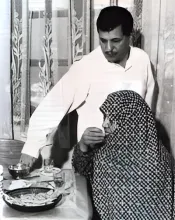
Mr. Khamenei led the Friday prayer and I stayed at home the whole time. Two people came from the imam's office and told about the opposition of some members of the Qom madrasin community and the differences of some of the party offices in the cities with some of the Friday imams. In the evening Mr. [Mohsen] supplicant came and
Read moreMr. [Mohsen] Rafiqdoost and [Fazlullah] Mahalati had come from the front and brought a detailed report. At night, we had a meeting in the Imam's office with the presence of the commanders of the army and ground forces, the president and Mr. [Mousavi] Ardabili. They gave a full report of the front. We have made two attacks, but they have not been successful. in statistics
Read more
Early in the morning, Dr. Velayati came and gave a report about his trip to North Korea and Sri Lanka, and he complained about the arbitrariness of the agents of the Movements Unit [Pasadaran] in foreign affairs, and he brought suggestions from these two countries. In the morning, they didn't say anything about last night's attack on the news, I called the front and it was clear
Read more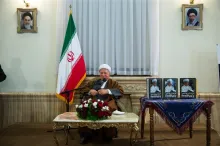
I went to the assembly early in the morning. The plan of the Islamic councils took most of the time of the parliament and there was intense conflict. up to debate In the afternoon, I spoke for the employee branch of the [Islamic Republic] party who had come to the parliament. I met with several representatives. In the evening, they came from the consultation office [of the army] and the reports
Read more
I stayed at home until half past three in the afternoon and studied. Ahmad Agha came and informed that the imam of Parishab had become uncomfortable after night prayer at 4:30 in the morning and after an hour they informed others about their resistance. The doctors came and took the heart under control and that's why
Read moreWe approved several bills; Including the amnesty bill on export income from taxes. Leftist representatives strongly opposed this bill. I had to speak in favor and break the atmosphere and it was approved. I spoke while breathing for the guards and athletes who were watching the parliament. usually
Read more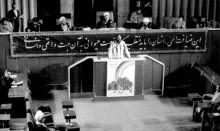
We had a public meeting. Several bills were approved. I spoke to the audience about the war while breathing. I had several meetings with representatives in the afternoon. The rabbi of the Jews came with their representative and a group of their leaders and brought the amount of 42 million riyals [aid] to the fronts and strongly expressed their loyalty.
Read more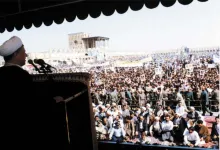
I went to the assembly early in the morning. We had a public meeting. Several bills were approved. The representatives are worried about the failure of the attack and protest to the Corps and the command. I spoke about the war and the future while breathing for the audience who were disabled from the war and the literacy movement. The representative of Mahabad in the speech before
Read moreI stayed at home. Ahmad Agha called and said that he had contacted the front and they said that the attack was delayed for a few days, he came and we discussed, it was decided that I would give an interview and tell the news of the war in such a way as to guide people's expectations, which were raised due to the propaganda on the first day of the attack.
Read moreI stayed home until the afternoon. I spent the time resting, reading, and writing my memoirs. I called the front. Mr. [Reza] Seifollahi, the IRGC intelligence chief, said they had carried out a small operation last night to link the Najaf and Karbala headquarters and eliminate the gaps the enemy had created in our forces. Effat decided
Read moreI found out from the front early in the morning. It turned out that they have broken the front line and fortifications of the Iraqis on the border and have taken out several Iraqi and Iraqi outposts from their grasp. They have advanced several kilometers in Iraqi territory towards Al-Amara, but they have not reached all the goals. Before the order of [Majlis Shura
Read moreAs usual, Mehdi and Yaser went to school before sunrise. After them, I went to the assembly. After studying the reports, I went to the plenary session. Several bills were passed. During the recess, I spoke to the female students of Masoumiyeh School in Qom. The representatives of the provinces of Hamadan, Bakhtaran, and Kurdistan came at noon.
Read moreI was at home all day. I rested and spent time reading and writing several days' worth of overdue diary entries. I spoke with Mr. Behzad Nabavi about the copper byproduct industries. The people of Kerman and Kerman's representatives are worried that these industries will be moved from Kerman to another place. It became clear that, upon review, they had reached this conclusion.
Read moreUntil 10:30, I studied at home for the Friday prayer sermons. Then I went to Tehran University to lead the Friday prayers. Last night, Ayatollah Montazeri's office informed me through the Islamic Movements Unit of the Revolutionary Guards that it seemed the counter-revolution had a plot against me at today's Friday prayers.
Read moreI went to the public session. The guests of the Ten-Day Dawn celebrations and the students of Alavi School had attended as spectators. After the session, the guests met with the representatives, and two of them gave speeches, and I also spoke, and it was translated into Arabic and English. The congregational prayer was led by me. Lunch
Read moreI was at home until noon, studying. My guards and their wives went to kiss the Imam's hand and came to our house. I spoke to them. Hossein Sharifian came from Mashhad and said that the factory where he works, which had been confiscated, and after the Imam's Eight-Point Decree, part of it was returned to
Read more
Early in the morning I went to Parliament. I read the reports and then went to the plenary session. Before the agenda, I spoke about the anniversary of the Imam's return to Iran and called it the Day of Mercy. During the recess, I gave a speech to a group of spectators. At noon, I officiated a student marriage ceremony. In the afternoon, Messrs. Kamyab and Abbas
Read moreUntil nine o'clock I was studying at home, and because of the meeting with the Imam I did not go to the session. I went to visit the Imam. Mr. [Abbas Vaez] Tabasi had also come from Mashhad. He had some points about the construction of the Mashhad squareabout some of the endowments of Astan Quds [Razavi] in Tehran and the reconstruction of Hoveyzeh. I spoke about the necessity of
Read moreEarly in the morning I went to Parliament. Before the plenary session, I read the reports. In the plenary session, I paid tribute to the new IRGC martyrs and the two martyred commanders, Bagheri and Baqaei. We had a very exciting session. Because of the bill permitting prescription dispensers with ten years of work experience to establish pharmacies, which has many implications, finally
Read more
I stayed at home. Studying and writing my overdue memoirs took up most of my time. In the afternoon, Mr. [Mir-Hossein Mousavi], the Prime Minister, called about a problem that had arisen for the land allocation committees after the Guardian Council rejected the bill passed by Parliament, and he was seeking a solution. At night, Ahmad Agha called and was worried.
Read more
I was at home all day, studying and resting. I spoke with Mr. Khamenei by phone. He had requested that this afternoon we meet in his office with Messrs. Sayyad Shirazi and Mohsen Rezaei, who had come from the front for consultation on a matter. About the documents of one of the political groups
Read moreWe had a public session. The abolition of mandatory insurance for small workshops was under discussion. During the recess, I spoke to the Hezbollah members from Arak and Kohgiluyeh. At noon, we were guests of Mr. Mousavi Ardabili. We discussed the country's important issues with the President, the Prime Minister, and Ahmad Agha. In the afternoon, [we had] the Positions class.
Read moreI participated in the special commission reviewing the bill to Islamize the banks. The bill was completed and a report was submitted to Parliament. I also participated in the Budget Commission, which is busy reviewing the new budget bill. At noon I had several meetings. We also had a session with the newly arrived midterm representatives, where they were
Read moreWe had a public session. Before the agenda, I spoke about the Imam's remarks in the meeting with the representatives and somewhat eased the representatives' displeasure and justified it. Several bills were passed. During the recess, I spoke to a group of officials organizing the [Ten Days of Fajr] ceremonies who had come from Paveh, Kurdistan.
Read moreToday we did not have a public session because of the meeting with the Imam. Only the members of Parliament were present in the Jamaran Hosseiniyeh. It was also snowing heavily. Before the Imam's speech, I spoke briefly about the state of Parliament and praised the representatives. In the introduction to his speech, the Imam confirmed what I had said, but in his advice
Read moreEarly in the morning I went to Parliament. We had a public session. Six bills were passed. Before noon I took part in the Questions Committee and resolved the doubts they had about its legality because of the elimination of the Investigation Committee. At noon I met with the governor of Lorestan, who was satisfied with the progress of the work and with the pressure from the party
Read moreI studied. I also filled out a form with answers to the questions from the Orweh al-Wuthqa publication of the [Islamic Republic] Party, which they are preparing for the anniversary of the [Islamic] Revolution's victory. Mr. [Masih] Mohajeri from the [Islamic Republic] newspaper called to inform me that the Iraqis had attacked at Changuleh.
Read moreI went to the [Tehran] University to hold the Friday prayer. I delivered a sermon on the etiquette of tax collection and the necessity of the government's compassionate treatment of taxpayers, and a sermon on the necessity of unity among the Imam's line forces and an analysis of the opponents' views. Yasser was making excuses about going skiing; with Mr. Rahmani, the bodyguard,
Read more
I wrote down the memories of the past few days. Mr. Ahmad called and strongly objected to the film "The Trial" that had been broadcast last night, considering it deserving of reprimand. I warned the deputy managing director of the IRIB; they said they would look into it. I called Mr. Ali Akbar Nategh-Nouri, the Minister of Interior, and Mr.'s complaint
Read moreIn order to rest and regain full health, I did not go to Parliament today either. I spent most of the time studying. I asked the Minister of Health to have Mrs. Fatemeh Marashi, who recently gave birth to triplet girls and has become ill, admitted to the hospital. The Imam's wife and daughters were guests of Effat; on the occasion of a post-visit.
Read more
I participated in the public meeting. The draft plan for revitalization and transfer of cultivated lands, which was approved in the parliament, was rejected by the Guardian Council with many problems. Of course, the imam has ordered that it be rejected. The Imam told me that if the Guardian Council does not reject it, I will reject it myself. facilities
Read more
Because of illness, I did not go to the session. I contacted Mr. Rabbani [Amoleshi]. He is deeply upset and is under pressure from those around him not to accept any position. I advised him and said that this confrontation would be taken into account and would have consequences. It was agreed that he would accept. Ahmad Agha was also following up on the matter to make it happen.
Read moreEarly in the morning I went to the Parliament. Because I had a fever, I handed the session over to Mr. [Mohammad] Yazdi and went to my office. I took care of administrative work and read the reports. We had two controversial bills. The interpretation of the law, over which there is a dispute between the Ministry of Oil and the Planning and Budget Organization, and the merger proposal
Read moreI was at home all the time. It has snowed heavily and is still falling intermittently. I studied a little and rested a little. I still have a fever, but it has subsided; Boredom has spread. Dr. Saeed Lahoti, who is a soldier in the barracks, informed that he also caught the flu. before
Read moreI slept badly because of high fever. I still have a fever today. I have kept myself fresh with housing. Friday prayer was led by Mr. Emami Kashani. At night, they discussed on the phone about the issues that should be raised. Two people came from Qom and complained about the dismissal of the Qom revolution prosecutor (Mr. Karaji).
Read more
It is snowing. I went to the parliament. We had a public meeting. Several bills were approved. MPs were elected in Sada Wasima's Supervisory Council. I spoke for Khorramabad's Hizbullah and Tehran's Basij. In the afternoon, Dr. Magharai and Dr. Jazairi came and talked about the plan to transfer educational facilities
Read moreI stayed at home until the afternoon. I was studying. I also talked with the guests. In the evening, the board of directors had a meeting in the parliament. A decision was made about the next week's order and the administrative work of restoring the employees' rights. I had a meeting with the editor-in-chief of the Kayhan newspaper, which is critical of the necessity of healthy criticism
Read moreI got up at five o'clock. After praying, I studied. At 8 o'clock, Mr. Morteza Al-Wairi came and complained that Mr. Akbar Parves [Minister of Education] dismissed Mr. Nowrozi Damavandi from the deputy [Ministry of Education] because of the inspection report of the entire country. In the public meeting, the bill
Read moreChildren's school was closed due to heavy snow. The landlord-tenant relationship plan was approved. Two steps have been taken in favor of the tenant. Mr. Natiq Noori, Minister of Interior, who came to the parliament to answer the question, with Mr. [Mohammed] Ghafari, the representative of Selmas, and Mr. [Kamel] Abedinzadeh, the representative of Khoi.
Read moreI went to the assembly early in the morning. We had a public meeting. I had several meetings in the afternoon. Heavy snow has fallen and schools have been closed since noon. The Minister of the Islamic Revolutionary Guard Corps and his deputies came and gave a report, and I also spoke for them. The Minister of Culture and Higher Education came with the reconstruction delegations and according to the order of the Imam,
Read moreIn the morning I went to visit Imam. I defended Mr. Rabbani [Amleshi] and said that he was oppressed, and I offered to strengthen him in the meeting. Mr. Emami Kashani also said that he wants to talk about this. They protested about the plan to hand over agricultural land and said that it was necessary to take it
Read more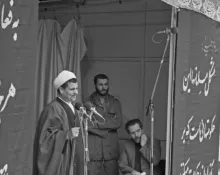
I went to university to offer Friday prayers. A group of Friday imams and groups of the Unity Congress who are still in Tehran were in prayer. I talked about taxes and issues of the day. Ahmad Agha came in the evening and we talked about the issues of the day and the consequences of Imam's order. Dr. Velayati came and talked about necessity
Read more
I went to the assembly early in the morning. I managed some of the public meeting and left it to Mr. [Mohammed] Yazdi and came to my office to do things. I had several meetings in the afternoon. In the evening, I had a lesson on the positions of the Islamic Republic of Iran. Major Tarabi came from the [army] consulting office and a report from the navy and air force
Read more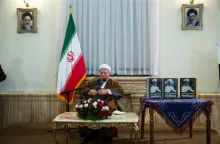
I studied atonement for Friday prayer sermons. The Imam's statement about the dissolution of the elections and criticism of their harsh and extreme elimination action and their unnecessary questions was published. Mr. Daagu, the deputy of the Ministry of Education and the person responsible for the selection of that ministry, came and I explained about the Imam's message.
Read more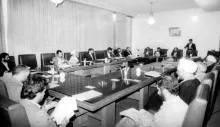
I went to the public meeting. In the ninth article of the plan of the owner and the tenant, there were important amendments that give the courts the right to refrain from [issuing] an eviction order in the case of finding hardship and embarrassment for the tenant. Originally, the roof plan was for one year, we removed this roof. In the afternoon, a group of representatives who went to Kurdistan
Read moreI went to the parliament. We had a public meeting. The plan of lessor and lessee was in order. I spoke to the two hundred and three hundred veterans of the Khorasan revolution who came to the parliament, and called them a proof for the people's patience and resistance and a reason for the continuation of the revolutionary spirit, and I asked the government to provide
Read more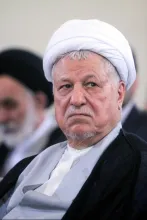
I was at home until nine o'clock. Mr. Vafi's daughter, who was supposed to be called by the imam, came to our house with Mr. Daa'i's nephew. Waiting for the opportunity. Fati stayed to receive him. The children went to the Alborz mountains with Saeed for the opening ceremony of the resort's cable car. me too
Read moreI spoke with the president on the phone and he was consulted about the changes that are supposed to be made in the Supreme Judicial Council and the Guardian Council. It was decided that the meeting of the Supreme Defense Council will be held tonight in the Imam's office. I also talked with the governor of the central bank about the situation of the banks. informed that after the interview,
Read more
I stayed at home. I studied and rested. Mehdi, Yaser and Nasser, along with Agha Masha Allah Pasdar, went to Abali for skiing with the Shahid Foundation group. They returned very happy and satisfied in the evening. Mr. Ahmad came in the afternoon and talked about the restoration of the Supreme Judicial Council and the arrival of Mr. Mahdavi [Kani] and other people from the Council.
Read more
Early in the morning, Mr. Mousavi Ardabili came to my office and discussed the quality of the work of the Imam's eight-point command follow-up staff, and the strength of the work and the lack of haste in announcing the criminals before the crime has been conclusively proven, and about the restoration of the Supreme Judicial Council and speeding up the approval of the fugitives' property bill.
Read moreI was at home. I studied more and dealt with current affairs on the phone. I went to the assembly in the evening. Mr. Dr. [Abdullah] Jasbi came to get the signature of the [Islamic] Azad University declaration and to sign the check for the university expenses. We decided to accept three thousand people in nine units. Board meeting
Read moreI woke up with the sound of the call to prayer. I studied until the beginning of the public meeting. Before the order, I spoke about the Congress of Imams of Fridays all over the country and the world, which started today in Tehran at the invitation of Mr. Montazeri. The plan for revitalization and transfer of agricultural lands was approved by the parliament;
Read more
We arrived at Imam's service with [members] of the central council and provincial secretaries of the Islamic Republic Party. The imam said general things. They did not mention the [Islamic] Republican Party. It's like Imam Salah doesn't know that the party will become very big and strong and they don't want it to be weak or hurt. once in the past
Read more
I went to the parliament. Before the public meeting, Mr. [Abdullah] Jasbi was supposed to come to discuss about [Islamic] Azad University, but he did not come due to the work of the teachers of the [Islamic] Republican Party who came from the cities. The meeting was a continuation of the plan for revitalization and transfer of agricultural lands.
Read more
I was at home all the time. Before noon, the officials of the house guards and security came and the problems in their work are not known in terms of the persons exempted from the search and the lack of control over Ahmad Agha's bodyguards and the lack of permission to search the goods and packages that are used for the consumption of the Imam's house. I have a ticket too
Read more
I went to university to offer Friday prayers. Fati and the children were guests at their uncle's house. I was a guest in Imam's office and I was alone at home until night. I was studying and resting. The reports inform about the arrest of our arms shipments coming from Spain, Argentina and Italy. the night
Read moreAfter starting work, I left the meeting to Mr. [Mohammed] Yazidi and went to my office. I did the remaining work. Mr. Fazel Herandi, who is going to Europe on behalf of Mr. Montazeri, came and said goodbye. Mr. Khazai came from the Economic Commission and talked about the robbery of the National Bank in London
Read moreI stayed at home. The condition of the heating and spa house was untidy; We corrected it with the help of Agha Jalal. Bathing, resting, studying and doing phone work took my time. For the upcoming Friday sermons, I studied more about Zakat. Fati went to the Islamic Republic Party in the evening and late at night with
Read more
We had a public meeting. The seminar program of the Friday imams of Islamic countries was discussed with Mr. Hadi Khamenei. I had several meetings in the afternoon. In the evening, Pars Khodro engineers came and reported on the conversion of luxury car production to Jeep production, and I spoke to them. A group of marketers
Read moreI went to the parliament. We had a public meeting. The land plan took a long time. In the afternoon, I had several meetings with the parliament staff, representatives and other clients. In the evening, there were two meetings and an interview with TV for explaining about the last Friday prayer sermon about Khums. After that, the contents of the Friday prayer, anti
Read more
I sent the children to school early in the morning and went to the assembly. The bill of the Ministry of Health and Medicine, which came back from the Guardian Council, was brought up. Because the ministers of health and science were against it, the work became difficult and we remained silent for a month. The continuation of the discussion was on the land reform plan. Before the order of Mr. [Mahdi] Tayeb
Read more
I studied for sermons at home until half past ten. I went to Tehran University to offer Friday prayers. I read the sermons very detailed and long. Before me, Mr. [Mohsen] Qaraeti had a good speech. I was alone at home in the evening. At the end of the night, the children came, they had dinner outside.
Read moreI stayed at home all day. They informed me that my talk yesterday in the university about khums on savings has caused some people to imagine that the government will take khums from bank savings and that they may withdraw money from the bank. To solve this risk, an interview with the newspaper Gomohri
Read more
Before the order, I talked about Imam's message. I continued the session without breathing until noon. After the meeting and prayer, I had several meetings. In the evening, a class was held on the positions of the Islamic Republic of Iran, and then a detailed lecture was given to the commanders of Quds groups who came to the parliament as the commander of the ground forces.
Read moreI went to the assembly early in the morning. Due to the snow and the delay of the representatives, the parliament started one hour late. We removed the speeches before the order. I was also a little nervous because of the lateness of the representatives, and I was aggressive with some of the representatives in the parliament office, but they tolerated it. In breathing for a group
Read more
I stayed at home because of the public holiday. Reading reports and walking filled my time. Yasser and Mehdi brought their classmates to study together and prepare for the first term exams. It was one of the rare days that I had few visits and relatively rested. Mr
Read more
Early in the morning, the children went to school and I went to the parliament. Before the meeting, I read the reports. Article 6 of the land reform plan, which included the transfer of large barren lands, was approved by a weak majority. In the afternoon, a group of Ramyan trainers came, I spoke to them. A few members of the parliament staff came to
Read moreWe had a public meeting. I stayed at home because of a cold. Mr. [Mohammed] Yazidi ran the assembly. The discussion was in Article 6 of the land reform plan, which was still unfinished. It took three days for the same material, it will take at least one more day. I studied all day. Noon with Mr. President
Read moreI studied until nine o'clock in the morning. Then I went to visit Imam. The Imam was satisfied with the quality of the elections and the state of the country and said that the revolution has been established and I can die easily and be sure of the future. I said that Iran and the revolution are very indebted and need you, and we hope that in the coming years,
Read more
I went to Jamaran Hosseiniyeh to vote in the [Assembly of Experts] and the mid-term [Islamic Consultative Assembly] elections - they had brought a special ballot box - and I voted. Imam had voted before me. I spent some time watching the election report. People received it very warmly.
Read moreAfter prayer and some studying, I went to the public session. Article 6 of the draft on the transfer of agricultural lands, which concerns the compulsory sale of lands, was raised and was much discussed and disputed. Two sessions' time was taken, and it is still not finished. At noon, Mr. [Reza] Zavareh came and talked about housing and...
Read moreWe woke up at dawn. Schools were closed due to snowfall. Mehdi and Yasser stayed at home. At eight in the morning, I went to the parliament. The public session began with a one-hour delay. Snow and icy roads prevented the representatives from arriving on time. At noon, the intelligence officer of the Revolutionary Guards and Mr. [Mohammadreza] Fakhr, the Imam's representative, ...
Read moreI stayed at home today as well. Heavy snow has fallen and is still falling. The Education Department has closed the schools in Shemiran due to the snowfall. Electricity in Jamaran was cut off for a few hours. Considering that many devices are electric, it causes problems. An emergency power generator for
Read more
I stayed at home. Studying took up most of my time. The Prime Minister called, and we talked about recruiting the forces after announcing readiness to accept them, and about the Factory and Industries Protection Law. Since yesterday, the snow has been continuing intermittently until now. Mehdi and Yasser are playing in the snow in the garden, and sometimes
Read more
The parliament is adjourned. I went to the parliament for meetings and administrative work. I studied until half past nine. Then the meetings began. One of the clerics from Kashmir, India, came and brought some khums for the Imam; I introduced him to the Imam's office. Six new ambassadors and attachés headed to the location.
Read moreI was at home all day. I mostly studied; Mr. Montazeri's Khums book and the reports. At noon, Effat had guests. Yaser, who had eaten out last night, was feeling unwell today and stayed home. Azam, Mohsen's wife, arrived today with her mother from Rafsanjan. Agha Jalal went to pick them up from the airport.
Read more
I stayed at home all day. The Friday prayer was led by the President. Reading the book on Khums by Mr. Montazeri took up most of my time. In the afternoon, Mr. Dr. Velayati, the Minister of Foreign Affairs, came and discussed the results of the trips of the delegations to New Zealand, Pakistan, Yugoslavia, and Bulgaria, as well as the economic agreements and
Read more
Before the public session, I met with the commander of the Ground Forces [of the Islamic Republic Army] in the parliament. He was heading to the front, and discussions were held about the Quds battalions and... [the representatives in] the public session finally approved the seizure of barren lands from the owners with certain limits and restrictions. During the recess for seven hundred
Read more
Fati came from Rafsanjan after a two-week trip. Dr. Saeed [Lahooti] and Aghajalal picked him up from the airport. I spoke with the parliament by phone and reminded the board of directors, who were having a meeting, of some matters. Mr. [Mohammadi] from Rey-Shahri came and reported the discovery of a wide network of [the Komoleh Party] in Tehran and the uncovering of an anti-
Read more
The plan for cultivated lands was on the agenda. Three articles were approved. Some of the representatives oppose the 'necessity,' and necessity is the basis of many of the articles. At noon, I had meetings with a few of the representatives. Mr. Mahdavi, the deputy in charge of party organization, came and said Mr. [Reza] Zavarei
Read moreThe public session agenda was about the plan to revive and transfer agricultural lands ('land reforms'). Definitions and terms were approved. Two questions were also carried out. At noon, the Friday prayer leader of Qorveh came and spoke about the disagreement between the governor and the Imam's representative in the west [of the country], and about the need to establish a religious sciences school for Shia.
Read more
Before eight o'clock, the Jihad officials came who were upset about the progress of the statute. Mr. [Hossein Ali] Montazeri also spoke with me about this over the phone the previous night. The Imam also stated that the Jihadis should not be upset. In the public session, the proposal to refer the statute to the commission for approval according to
Read more
At noon, Mr. [Abdolmajid] Ma'adikhaah came and discussed the history writing department of the revolution. I suggested to him that he take responsibility for it, and he wants to be independent and not under the supervision of official organizations. Mr. Mohammadi Gilani called and talked about the punishment of rebels who have repented,
Read more
I studied at home until ten thirty. I performed the Friday prayer at the university. In the second sermon, I talked about the strength of the Islamic Republic. In the evening, Ahmad Agha came and talked about the continuation of the matter of my court case of vices, the Supreme Judicial Council, and the statements of the Imam. At the end of the night, Mr. Engineer [Seyed Mohammad].
Read moreWe had a public session. The statute of jihad was discussed. During the break, I spoke to the Islamic Association of Indian Graduates, who had come to the meeting as spectators because of the pressure exerted on students in India. At noon, I had a meeting with several doctors about a plan for the rapid training of general practitioners.
Read moreI stayed at home all the time until three thirty in the afternoon. My activity was studying and walking in the yard. At noon, Mr. [Ali] Sayad Shirazi came. He had complaints and suggestions for changes regarding politics, ideology, and the joint staff. It was agreed that a joint meeting would be held for addressing the matter, and both parties
Read moreI studied from six to eight o'clock. In the public session of the parliament, the statute of Jihad was discussed. We are delayed a lot because there are many proposed amendments. Propaganda and cultural services were removed from the objectives of Jihad, and the Jihadis were very upset. Several questions were raised to the Minister of Interior. Representatives of Khuzestan
Read moreI studied until eight in the morning. Until noon, I was in a public parliamentary session. At noon, Colonel Hatami came and complained about unemployment and asked for help. He explained the management problems at the Officers' College. Mr. Ghazali, the commander of the Khorasan Corps, came and spoke about the influence of the Islamic Revolutionary Mujahideen line in the Corps and some matters from
Read more
Listen to Abdi Media on Castbox, without a filter.
Read more
It is not possible to make a specific prediction about when the Supreme Leader will appear; it depends on security issues and the level of conflict with the United States.
Read more
Listen to Abdi Media on Castbox, without a filter.
Read more
Simultaneously on Spotify and Apple Podcasts
Read more
Read the attached note and my accurate forecast regarding the tax evasion situation and Social Security claims related to the Zaviyeh Financial Group, especially the final section, again.
Read moreChirac also asked Iran to make its nuclear issues transparent by signing the Additional Protocol, and acknowledged that the peaceful use of nuclear technology is Iran's right. At the same time, Mr. [Ali Akbar] Salehi, Iran's representative to the International Atomic Energy Agency, announced that Iran was reducing its cooperation with the Agency to the level required by the NPT.
Read more
If the answer is yes, was he not present at the president's meetings?
Read more
Mozzafar Baghaei Kermani a member of the National Consultative Assembly in the 15th, 16th, and 17th terms, one of the founders of the National Front, and the leader and founder of the Toilers Party. Listen to it unfiltered, produced by Habib Lajvardi, on Abdi Media on Castbox.
Read more
The martyred Leader issued nearly fifty policies on matters needed by the country to the executive, legislative, and judicial branches.
Read more
Listen to Abdi Media on Castbox, unfiltered
Read more
I tried to be a servant of the truth as much as possible.
Read moreKofi Annan, the UN Secretary-General, in his opening speech condemned America's unilateralism on the global stage and the use of force without UN authorization, and described Iran as a victim of terrorism and weapons of mass destruction. Bush defended the occupation of Iraq and said that it would not be possible to hand over the administration of Iraq to the Iraqi people so soon, and accused Iran of trying to build nuclear weapons....
Read more
Can the Mujahideen, Jaish al-Adl, and ethnic separatist forces really sit down at the same table?
Read moreAyatollah Montazeri called for restoring relations with the United States/ Attacks on American forces in Baghdad, Samarra, and Baqubah, and demonstrations against the British in Basra/ The Taliban claimed to have captured four cities in Afghanistan
Read more
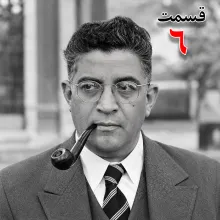
Mozaffar Baqaei Kermani (1912, 1987), a representative in the National Consultative Assembly during the 15th, 16th, and 17th terms, one of the founders of the National Front, and the leader and founder of the Toilers Party, by Habib Ladjevardi, without filters, listen on Castbox, Abdi Media.
Read more
Listen to Abdi Media on Castbox without a filter
Read more
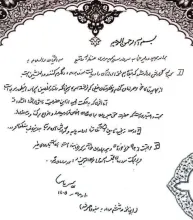
This letter is addressed to Commander Seyyed Majid Mousavi and is dated the 10th of Mordad.
Read more
Listen to Abdi Media on Castbox, without a filter
Read more
Mozaffar Baqaei Kermani (1912, 1987), a representative in the National Consultative Assembly during the 15th, 16th, and 17th terms, one of the founders of the National Front, and the leader and founder of the Toilers Party, by Habib Ladjevardi, unfiltered, listen on Castbox Abdi Media
Read more
Listen to Abdi Media on Castbox, uncensored
Read more
A clash of ideas takes place fully across the country; the Leader’s positions are viewed from various angles.
Read more
Some Western newspapers have written that Saddam, through intermediaries, has entered into negotiations with the Americans to surrender, go into exile in Belarus, and provide information about weapons of mass destruction.
Read more
The government has taken responsibility for the support dimension under wartime conditions.
Read more
Listen to Abdi Media on Castbox, without a filter.
Read more
Mozaffar Baqaei Kermani (1912, 1987), a representative in the National Consultative Assembly during the 15th, 16th, and 17th terms, one of the founders of the National Front, and the leader and founder of the Toilers Party, by the efforts of Habib Lajvardi, unfiltered, listen on Castbox Abdi Media.
Read more
Listen to Abdi Media on Castbox, without a filter
Read more
Listen to it on Abdi Media on Castbox, without a filter.
Read more
Mozaffar Baqai Kermani (1912, 1987), a representative in the National Consultative Assembly during the 15th, 16th, and 17th terms, one of the founders of the National Front, and the leader and founder of the Toilers Party. Listen to "By the Efforts of Habib Lajvardi" unfiltered on Castbox, Abdi Media.
Read more
Anyone who downplays this incident has blood on their hands for these young people.
Read more
Now that we have the IRGC, this is our situation; if they weren't here, imagine what our situation would be.
Read more
Intellectuals who express joy over Khamenei's assassination are clueless; they think democracy will happen under the boots of the Israelis.
Read more
Iran has managed to withstand two nuclear powers.
Read more
We have a polarized society; one says Soleimani is a hero, another says he is a terrorist.
Read more
What I tried to do at Abdi Media was to avoid selling dreams.
Read more
Who do you mean by "the people"? Aren't the families of military personnel part of the people?
Read more
What do you mean by the absence of leadership? If it's a clown like Trump, and he's in the media every day, does that mean he's present in the course of his social life?
Read more
Bijan Abdolkarimi: The main problem with our opposition and intellectuals is this; before the dialogue even begins, a political and psychological conclusion has already been presented behind these discussions.
Read more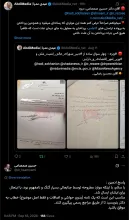
Since you insist so much on using "admin," then in that case it would be good to change the account name from yourself to your office. Anyway:
Read more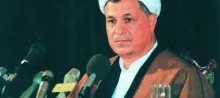
We had a public session. I entrusted the latter part of the session to [Mr. Mohammad] Yazdi and came to the office. At noon, I met a number of representatives in my office regarding their affairs. Mr. [Hassan] Kafi, who some time ago was the target of an assassination attempt by terrorists and was seriously wounded, came and brought some money to purchase an ambulance for the fronts and asked for assistance to continue his treatment.
Read more
Mr. Aghazadeh gave the report on the negotiations with ElBaradei as well as the Agency's new proposal. He has asked for an explanation regarding the origin of the enrichment machines [= centrifuges], the people who manufactured them, and the conversion into metallic uranium. I said that he should respond that cooperation would be provided within the framework of the NPT, and also pursue cooperation with the three countries, Germany, France, and Britain, based on their proposal with modifications.
Read more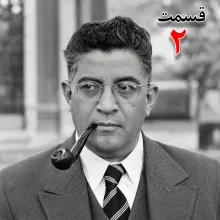
Mozaffar Baghaei Kermani (1291, 1366), a member of the National Consultative Assembly in the 15th, 16th, and 17th terms, one of the founders of the National Front, and the leader and founder of the Toilers Party. Listen to it, without filters, on Castbox, by Habib Lajvardi, Abdi Media.
Read more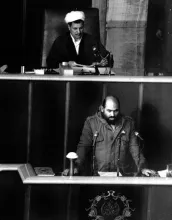
Early in the morning, I went to the Majlis. The election of two members for the Commission for the Supervision of the Banknote Reserve and the auditing of the budget, and the amendment of the bill on councils were on the agenda. At noon, I had several meetings with representatives, and in the evening with the Pakistani Foreign Minister, and before that with Mr. Pouya, who is Iranian, but had come from Pakistan.
Read more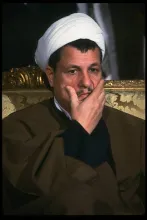
I was at home all the time. I read the reports and also a little of Mr. [Hossein-Ali] Montazeri's writing about Friday prayers and khums. Before noon, the families of Dr. Vahid and Dr. Va'ezi came. They have a committee to help the front. They are useful and hardworking people. For two or three guards, assistance to buy a house
Read more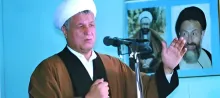
I studied until ten-thirty and then went to Friday prayers. Before the sermons, Mr. [Seyyed Mohammad-Baqer] Hakim, spokesman for the Supreme Council for the Islamic Revolution in Iraq, spoke. In the afternoon, Mr. [Seyyed Jalal al-Din] Taheri, the Friday prayer leader of Isfahan, came to the house and spoke about the new governor for Isfahan and the Assembly of Experts
Read more
After the prayer, I went to the assembly. I had breakfast and read some of the reports. We had a public session. The budget supplement was completed. Mr. [Hojjat] Kashfi came at noon and had some remarks about encouraging Islamic art. In the afternoon, I had a positions class and then a meeting with Sina Vahed, who spoke about the shortcomings of art and films;
Read more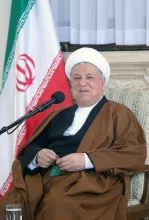
I was at home until the evening. Resting, studying, writing overdue memoirs, and repairing the home water heater, which had broken down, kept me occupied. In the morning, Mr. [Seyyed Hossein] Mousavi Tabrizi came and, regarding an issue that had been raised by the Judicial Council concerning the Anti-Vice Department, after the meeting
Read more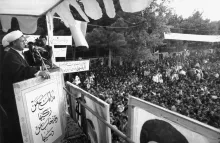
Before the public session, I studied. The budget amendment was on the agenda, and its general principles were approved. During the recess, I said goodbye to the Guards who were leaving the Parliament for the front and spoke to them. At noon, Deputy Minister of Mines Mr. [Hossein] Mahlooji and the head of Mobarakeh Steel came. Regarding the representation
Read more
Early in the morning, I went to the Majlis. The supplementary budget bill was on the agenda. I entrusted the session to Mr. [Mohammad] Yazdi. I came to my office. In the Majlis, there was an objection from some of the representatives regarding the dispatch of a delegation by the President to Moscow for Brezhnev's funeral. I had several meetings at noon. In the afternoon
Read more
Before the meeting, I read the reports. The open session of Parliament had on its agenda a proposal to reopen some of the faculties. Despite the opposition of the Minister of Culture and Higher Education, it was approved that the first year should begin with new students from Farvardin 62. At noon, I had several meetings with representatives, and in the afternoon, several more meetings.
Read more
I was at home until noon. At noon, we were guests of Mr. Ahmad Agha. The President and Mr. [Seyyed Abdolkarim] Mousavi Ardebili and Mr. [Mohammad-Mahdi] Rabbani Amlashi were also there. Matters related to the court for combating vice and the possibility of corruption were discussed. At four-thirty in the afternoon, I went to the Majlis. With the Foreign Minister
Read more
I wrote down the memories. Mr. Mohsen Rezaei informed me by telephone that Iraq had launched a counterattack this morning with four brigades in the Moharram operational area, but it had not been successful, had suffered heavy casualties, and we are still engaged in fighting. I entrusted the Friday prayers to Mr. [Mohammad] Emami-Kashani. In the afternoon, one of the teachers at the girls' school
Read more
I entrusted the public session to Mr. [Mohammad] Yazdi and came to my office to take care of the pending tasks. Mr. [Abdollah] Emami, the representative of Torbat-e Heydarieh, asked for assistance with treatment abroad, which I arranged. In the afternoon, we had a class on positions. Mr. [Abdolrahim] Govahi, our ambassador to Japan, also came and gave a report.
Read moreI was at home until three in the afternoon. Mr. Ahmad came and was concerned about the efforts being made against figures such as Messrs. [Seyyed Mohammad] Mousavi Khoeiniha and [Seyyed Mohammad] Khatami and... Last night, Mr. [Seyyed Mohammad] Mousavi Khoeiniha also told me the same thing. The remaining memoirs as well
Read more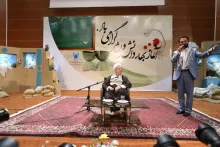
In the public session, the discussion was about the new ministers. I also spoke in support of them. All three received votes of confidence. In the afternoon, I met with the Algerian ambassador and the South Yemeni ambassador. They made many friendly remarks. The Jihad Agriculture Committee also came and gave a report on their work and initiatives.
Read more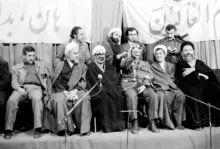
I studied until ten in the morning. The so-called hardline ministers came and had things to say about the moves being made against them and Clause “C” of the Law for the Protection of Industries and Agriculture: Messrs. Behzad Nabavi, [Hossein] Namazi, [Shahab al-Din Parvin] Gonabadi, [Mohammad] Salamat, [Mohsen] Nourbakhsh, and.... Piloting
Read moreI went to the parliament early in the morning. They reported that the third phase of Operation Moharram had been carried out the previous night, that three hundred square kilometers of Iraqi territory and several oil production units and the Zubeidat township had been captured, and that one thousand five hundred Iraqi soldiers had been taken prisoner, along with abundant spoils, and the agenda was the transfer of the army's development projects from the Ministry of Housing.
Read more
After the prayer and a little reading, I went to visit the Imam. I asked about the contents of the will that they had entrusted to me, and they said that it concerned their personal affairs and informed me that they had prepared their political will in nearly thirty pages, which had not yet been signed. Regarding the admission of students from the groups of
Read more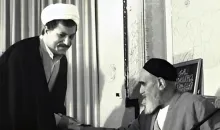
I stayed at home all day and mostly studied. Mr. [Seyyed Mahmoud] Doaei came before noon and gave a report on Kurdistan and West Azerbaijan. They informed me from the Imam's household with concern that the Imam's blood pressure had risen, so I went there worried. Dr. [Hassan] Arefi was present and said that the Imam had
Read more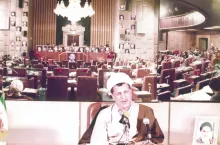
Until eight o'clock I studied the positions of the party for the class. The public session was spent on the impeachment. Finally, the Minister of Housing won a vote of confidence, and the impeachers were upset with me for supporting the minister and say that he won because of your support. The reality is that their statements were weak. In the afternoon, from the office
Read moreEarly in the morning, I contacted Mr. Rahim Safavi at the front. He reported that the Iraqi forces' breach had been blocked and that the number of prisoners had reached six hundred and fifty, and he was satisfied. I went to visit the Imam. The Qom seminary teachers and the militant clergy of Tehran had been summoned. The Imam was concerned about the declining level of the Assembly of Experts and recommended
Read moreI called the front headquarters early in the morning. It turned out that the operation had been successful on four axes and unsuccessful on one. We have retaken the strategic heights and the oil-rich areas and several oil wells that had been occupied by the Iraqis, and we now overlook the town of Tayeb and the Iraqi supply road. Before the order regarding
Read moreAfter the prayer, I studied until eight-thirty. Then I attended the Economic and Finance Commission. The government's agreements with Turkey, Pakistan, and Syria were under discussion. Since the government had implemented them before parliamentary approval, some were saying that we should leave the matter unaddressed, but it was decided that there would be discussion and a vote and
Read more
I studied until eight o'clock. The public session began at eight forty-five and several bills were passed. At noon I had several meetings in my office. In the afternoon I had a meeting with the commercial official of the Mostazafin Foundation. Mr. Mehri objected to the centralization policies and the prevention of the private sector and someone to
Read moreBefore noon, I studied and worked at home, and around noon I went to the Majlis. A number of representatives came to attend to matters concerning their constituencies. Some who had gone to the fronts also gave reports on the fronts and their needs. In the afternoon, I had several meetings. At night, there was a meeting of the Combatant Clergy in
Read more
I studied until ten thirty in the morning and went to the University of Tehran for Friday prayers. As usual, I delivered one sermon on Islamic economics and another on current issues and the achievements of the Revolution, and returned home. In the afternoon, I walked a little in the yard of the house. Mr. Mahdian brought dinner from Qoba Mosque'
Read moreI devoted more time to studying and listening to accounts of the tragedies. The children went to take part in the mourning ceremony and to visit Sheikh Hossein Hashemian—who is hospitalized at the Heart Hospital due to a heart attack. I recorded a tape to answer the questions from the Yazd branch of the Islamic Republic Party; for recording and preserving history
Read more
I studied before the public session. During the public session, several bills were passed, and the Minister of Commerce answered a question about inflation and shortages of goods, and there was a discussion and vote regarding the absence of Ghafoor [Sadeqi] Givi, the representative of Khalkhal, who had been absent for several months due to a prison sentence, which was approved in
Read more
After the prayer, I walked around the courtyard for a while and made up for the backlog in writing my memoirs. I stayed at home until night. Ahmad Aqa came, and I spoke with him about the need to cooperate with the sincere Palestinian Muslims, to accept their believers in Iran, and to give them a base for propaganda, and it was agreed that with
Read more
Early in the morning, Mr. [Mohammadreza] Fakar came and gave explanations about disciplining the offenders of the Omid-e Enghelab magazine. He consulted about transferring Mr. [Abbas] Shirazi from the General Inspection Office to the IRGC. I attended to administrative affairs until noon. The Iraqis have carried out air attacks on Dezful and Ilam, more than twenty people
Read moreI studied until eight o'clock. We had a public session and continued without a break until noon. After prayers and a rest, I had several meetings. Mr. [Reza] Seifollahi and the intelligence officials of the IRGC's ten regions came, gave their work report, and described the current situation regarding the counter-revolutionaries and security.
Read more
I was at home until three in the afternoon. Mrs. Fatemeh reheated the leftovers from last night for lunch. The guards also gave us some of their own food, which they had brought from the Revolutionary Guard Corps. Mr. Ahmad came and informed us of the Imam’s approval of a meeting with representatives of Lebanon’s Islamic groups and discussed the conditions
Read more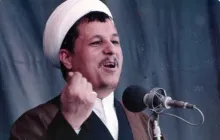
I was studying in the assembly until nine thirty. A group of believing Lebanese mujahideen came and reported the unity of three groups of mujahid scholars, the Students' Union, and the believers of Amal, and consulted with me. They are to have a council for decision-making. I went to the university to lead the Friday prayer and lunch
Read more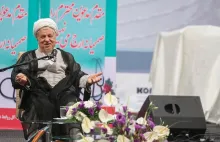
I studied until nine o'clock and then went to the Imam's office. I had a meeting with Mr. [Mohammad Mohammadi] Reyshahri, Mr. [Seyyed Hossein] Mousavi Tabrizi, and Ahmad Agha, to review the assets from the public treasury that had been in the possession of Mr. [Seyyed Kazem] Shariatmadari. It was decided that the immovable assets would remain in the possession of
Read more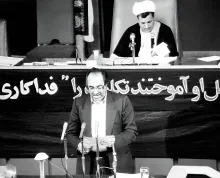
Early in the morning, I went to the airport to see off the Korean delegation. Before their departure, we held some talks, and the official farewell ceremony and formalities were carried out. We gave an interview and I returned to Parliament. We had a public session. The bill to amend the tax law was under discussion. During the recess, I spoke with students expelled from Germany.
Read more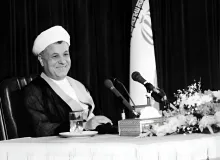
The home radiator is faulty. I spent some time trying to fix it, but it didn't work. The IRIB news reported successes in Kurdistan against the counterrevolutionaries. I wrote down a few overdue memories. Ahmad Agha called to report that the news agencies had reported the marriage of Massoud Rajavi to [Firoozeh], Bani-Sadr's daughter, that
Read more
After the prayer, I studied until eight in the morning and then went to the public session. Before the agenda, I spoke about the martyrdom of Ayatollah Ashrafi [Isfahani] and announced that we would attend the memorial service at Shahid Motahari Mosque. The bill to amend the taxes was under discussion; it was not finished. A number of representatives signed a letter
Read more
At eight o'clock, we went with family members and relatives to see the Imam for Mohsen's marriage to Azam Hashemi. I, acting as Mohsen's proxy, and the Imam, acting as the bride's proxy, recited the marriage formula, and Fati recorded it with a tape recorder. The Imam signed the Quran included in the dowry and gave some advice, and Hossein-Aqa
Read more
I was at home all day. Mr. Emami [Kashani] led the Friday prayers. In the afternoon, news arrived that Ayatollah Ashrafi [Isfahani], the Friday prayer leader of Kermanshah, had been martyred at the site of the Friday prayers with a grenade, in the same manner as the assassination of the Martyrs of the Prayer Niche, Madani and Sadouqi. Unfortunately, because of inadequate security, four
Read more
At ten thirty, I went to the University of Tehran for the Friday prayer. Torrential rain was pouring down, and some of the people were out in the rain. Mr. [Mehdi] Karroubi attacked the Freedom Movement in his speech before the prayer because of its open letter and spoke very harshly about their weaknesses. Because of the rain
Read more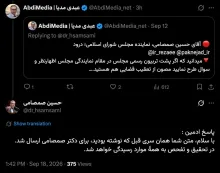
which apparently no one dares to address that particular cause.
Read more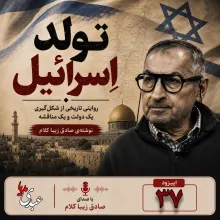
Listen to Abdi Media on Castbox without a filter.
Read moreAt the Board of Governors of the International Atomic Energy Agency, another fiasco occurred, and under U.S. pressure, the Arab countries withdrew the resolution they had submitted to compel Israel to join the NPT, and instead, a watered-down statement was issued/ Edward Kennedy, the brother of a former U.S. president and the senator from Massachusetts, launched a sharp attack on Bush's warmongering policy and said that he had damaged America's reputation and undermined its credibility.
Read more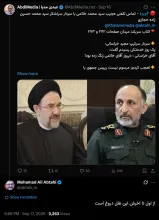

Simultaneously on Spotify and Apple Podcasts
Read more
Interview with Hamidreza Taraqqi, a member of the Central Council and Deputy for International Affairs of the Islamic Coalition Party
Read more
Interview with Hamidreza Taraqqi, a member of the Central Council and Deputy for International Affairs of the Islamic Coalition Party, now on Abdi Media's YouTube channel.
Read moreIn Iraq, in several operations, a number of the occupiers have been killed and wounded, and once again the Kirkuk-to-Ceyhan oil pipeline has been blown up, and there are reports that Saddam is seriously ill...
Read moreUntil eleven in the morning, I studied the history of early Islam, the Umayyads, and the Marwanids in preparation for tomorrow’s Friday sermon. I went to the Koushk Office.
Read moreBefore noon, the Expediency Council held a meeting, and several important provisions were approved. In the afternoon, Messrs. Hossein Marashi and Ali Hashemi came.
Read moreNATO members decided to take steps to expand the sanctions against Yugoslavia and to prevent fuel supplies, air traffic, trade, and other forms of commerce from reaching Serbia’s neighboring countries, while assuring them that they would support them in the event of a Yugoslav attack.
Read more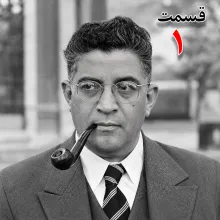
Mozaffar Baqai Kermani (1912, 1987), a representative in the National Consultative Assembly during the 15th, 16th, and 17th terms, one of the founders of the National Front, and the leader and founder of the Toilers Party. Compiled by Habib Ladjevardi. Listen without a filter on Castbox, Abdi Media.
Read more
Four years have passed since the killing of Mahsa (Jina) Amini, the daughter of Iran. On this sorrowful anniversary, Iran once again faces a profound question.
Read more
It reminds me of the family massacre years ago, when a factory owner and his family were massacred.
Read more
Today all eyes are fixed on one point: the closed-door negotiations between Iran and the United States. The market has fallen silent. The dollar and gold are rising and falling, investors are watching, and people are waiting. We have neither definitive news nor a future that is clear. In such a situation, we must ask: if an agreement is reached, how will Iran's economy react? If it is not, what scenarios should we expect? Does Iran's economy have the capacity to withstand more pressure, or is it in a gradual collapse? Does the government really have a plan for the conditions ahead? We are talking about the people—people who have become desperate and are left asking, "What should we do?" They are looking for information so they do not lose their modest savings in the gamble of politics and the market. Today I will discuss these very scenarios with you.
Read more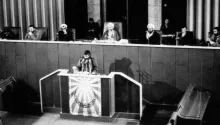
I spoke by phone with Mr. [Mohammad Mohammadi] Reyshahri about the payment of the money taken from Mr. [Seyed Kazem] Shariatmadari, which, by Imam's order, was supposed to be given to the Islamic Republic Party. It became clear that it had been spent on other expenses, including the Islamic Propagation Office in Qom and the families of those who had been executed.
Read moreI spoke by phone with Mr. [Mohammad Mohammadi] Reyshahri about the payment of the money taken from Mr. [Seyed Kazem] Shariatmadari, which by the Imam's order was supposed to be given to the [Islamic] Republic Party. It turned out that it had been used for other expenses, including the [Islamic] Propagation Office in Qom and the families of those executed
Read more
At eight o'clock I went to Parliament and arrived a little late. Mr. [Mehdi] Bazargan was scheduled to give a speech before the agenda, and in my absence they were worried about the developments. When I arrived, they were relieved. Fortunately, he showed foresight and refrained from giving the speech. The Intelligence Ministry bill, despite the opposition of the Revolutionary Guards, with a majority
Read moreAs usual, the children went to school at seven-thirty, and Faezeh went to her prep class. I called my office to reserve a plane ticket for Effat, who wants to go to Rafsanjan to bring the bride. It was decided that they would leave tomorrow morning. At noon, Ahmad Agha came; he had nothing important. In the afternoon, a group of
Read more
Early in the morning I went to the dentist. At eight o'clock I arrived at the Parliament. Mr. [Mohammad] Yazdi had started the session. The Intelligence Ministry bill was under discussion, but it was not finished. I went to the office, handled the administrative work, and read the reports. The propaganda atmosphere in the Arab world and the West is that Iran is warlike and
Read moreI was at home all day and studying. The Imam's wife and the families of Martyr Beheshti, Mr. Khamenei, and Martyr Motahhari, and... had come to visit Effat. I spoke with the Prime Minister by phone about paying the money to Islamic Azad University and introducing the ministers of the IRGC, Culture and Islamic Guidance, and Welfare. It was decided that Mr.
Read more
If Iran had a nuclear bomb, Trump would have had to speak more politely to Iran's leader. Now the question is: is Trump himself leading Tehran to the conclusion that security can only be achieved with a nuclear bomb? On the other hand, the U.S. election is approaching, the war continues, the Strait of Hormuz has become a stage for displays of power, and Mojtaba Khamenei and Donald Trump are moving one step closer to a more direct confrontation every day. What will happen after the election?
Read more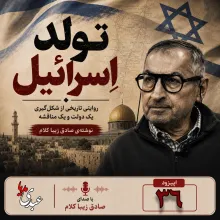
Listen to Abdi Media on Castbox, without a filter
Read moreGeorge Bush has ordered the drafting of a plan for economic sanctions against Iran / We went to inspect the under-construction Bafq-Mashhad railway—which had been started during the Reconstruction era. We visited a station and the 2,400-meter tunnel in the Khomari Heights, near Torbat Heydarieh. The project is scheduled to become operational by the end of next year.
Read more
I was surprised; it's not customary for the president to call anyone below the commander-in-chief.
Read more
A simple question for Mr. Nozari, Acting First Deputy and Deputy for Supervision and Inspection of the Tehran Public and Revolutionary Prosecutor's Office.
Read more
They say there will be a war in the fall; what should we do from now until the fall?
Read more
He (Ayatollah Khamenei) knew that the slogan of Israel's destruction also depends on its means.
Read more
[Today is Tasu'a.] I stayed at home. Lunch was brought from the charitable offerings made for Muharram. I had brought a large number of bulletins from the office and read them.
Read moreBefore noon, I attended to my work and took part in the mourning ceremony held by the staff. A group of mourners from the Presidential Office came and held a mourning ceremony.
Read moreI was at home. I spent my time exercising, walking in the yard, and studying.
Read moreI stayed at home. I spent my time exercising, walking in the yard, and studying.
Read moreWe went to the Koushk Office at eleven in the morning. I read the newspapers and bulletins. Among domestic issues, the extensive coverage of the impeachment of Mr. [Ataollah] Mohajerani, [Minister of Culture and Islamic Guidance], and the severe attacks by members of Parliament on the President’s performance in their pre-agenda speeches were significant.
Read moreThe Expediency Council held a meeting. We approved several more provisions of the general policies of the Third Development Plan.
Read more
The interests of the Iranian nation will lead to certain concessions; greater consideration should be given to the public interest.
Read more
America's main course has nothing to do with Trump.
Read more
Fereydoun Majlesi: Mr. Bani-Sadr has reached the conclusions based on decision-making; this is a conspiracy theory.
Read more
May the day never come when others make decisions for us amid chaos!
Read more![پس از نماز مشغول مطالعه شدم. ساعت هفت و نيم به تالار مجلس رفتم. آقاى [محمد] موسوى خوئينىها جلسه را افتتاح كرده بود. به دفترم برگشتم و به مطالعه پرداختم. بعد از تنفس به جلسه رفتم كه بحث اساسنامه سپاه ادامه داشت.](/sites/default/files/styles/medium/public/1405-06/rafsanjani_0.jpg.webp?itok=p2eiIL-2)
I was at home until three in the afternoon. I studied, rested, and went for a walk. At four o'clock I went to Parliament and read the reports. Dr. [Abdollah] Jasbi came and spoke about Islamic Azad University, whose management he has accepted responsibility for, and about full-time work in the party and the work...
Read more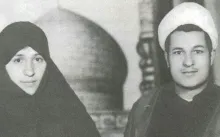
Because Effat and Fati had to leave the house at 3:30 a.m. to go to Mecca, I stayed awake until almost 4:00 a.m. After the dawn prayer, I slept until 8:00 a.m. I studied for the Friday prayer sermons. Mr. [Mohsen] Doagoo, the deputy minister of Education, came and spoke about the disagreements.
Read more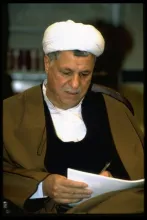
We had a public session. The amendment to the IRGC's charter was on the agenda. During the recess, I spoke to the female seminary students from the Masjed Soleyman school and a group of selected instructors heading to Mecca. After the session ended, I spoke to the officer cadets who had come to Parliament to observe. At noon, the minister
Read more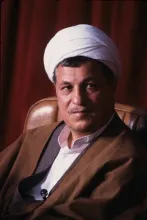
At ten in the morning I went to Parliament, read the reports, and had several meetings with representatives. I also gave an interview about the Islamic councils of the villagers. In the afternoon, the families of the martyrs from Saveh came, and I spoke to them. We had a meeting of the Presidium. The agenda for next week and ongoing matters
Read more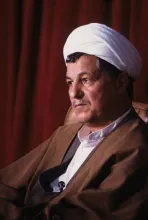
After the dawn prayer, I began studying the reports. We had a public session. Before the agenda, I spoke about the Imam's directive regarding the repeal of laws contrary to Islam and asked the representatives to cooperate in resolving the problem. During the recess, for the Islamic associations of university students and teacher-training interns,
Read moreToday, with the attack on the railway line in Iraq during the passage of a train carrying American military personnel, a new chapter in the struggle against the occupiers began, and multiple operations were carried out against them. In the UN Security Council, the United States intervened to veto the Arab-proposed resolution on preventing the expulsion of Yasser Arafat, the President of the Palestinian Authority.
Read more
The Third Leader's perspective and horizon will be more precisely observable in the continuation of direct and indirect changes in these areas.
Read more
One must be a little patient and see what happens after Seyed Mohsen Mousavi, the former First Deputy of the Prosecutor General, who was appointed as the head of the National Center for Dispute Resolution Councils
Read moreWe had a public session. Several bills were passed. Mr. [Asadollah] Bayat was talking about Dr. [Ebrahim] Yazdi's secretive negotiations during the Hajj trip. A number of representatives were seeking to file criminal charges against the Freedom Movement. A tense atmosphere prevails. Some also wanted an official closed session, but I dissuaded them.
Read moreThe ministers and some other friends who had gone to congratulate the Imam came to see me in the morning. Around noon I went to visit the Imam. Yasser, Mehdi, and Sadegh were there too. We took a photo with the Imam, and the Imam gave me a Shah Maqsoud prayer beads as an Eid gift. In the afternoon was the wedding ceremony of one of my bodyguards (Mr.
Read more
Early in the morning I went to Parliament. We had a public session. Mr. [Ali] Movahedi Saveji, in his speech before the agenda, attacked the Freedom Movement and Engineer [Mehdi] Bazargan because of an open letter they had recently written to me, in which they denied all the achievements of the Revolution and made accusations, and a group of hardliners
Read more
Early in the morning I went to Parliament. After a three-week recess, we had a public session. Before the agenda, I spoke about the victory, the Naser Khosrow explosion, and the UN Security Council, which is supposed to discuss and examine the issue of the Iran-Iraq war tonight. Two or three bills were passed. Until the afternoon I read the reports. One
Read more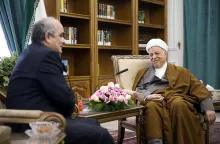
Early in the morning I went to the dentist. Dr. Shirazi was not available because I had not informed him again—which I should have done yesterday. I went to Imam Square and saw the site of Friday's explosion. It had caused a great deal of destruction; all the windows of the buildings around Imam Square were shattered, and a number of the buildings
Read moreEarly in the morning, I requested an explanation from the Prime Minister's Office, the Islamic Republic News Agency, and the Ministry of Interior about last night's explosion. The Prime Minister consulted about declaring a public day of mourning, and because of the conquest and victory, it was decided that it would not be declared today. From Mr. [Ali Akbar] Nateq[Nouri] regarding the death of two or three million fish
Read more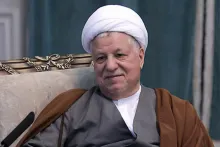
I stayed at home. Friday prayers were led by Mr. [Seyyed Abdolkarim Mousavi] Ardebili. Early in the morning, Mr. [Ali] Sayyad Shirazi called from the front and reported that last night's operation had been successful; so far, eighty percent of the objectives had been secured and Iraq's counterattack had been repelled. It was decided that the publicity should take into account,
Read more
I was at home all day, and most of my time was spent studying and taking notes. I contacted Mr. Mousavi-Khoiniha in Mecca, and it was decided that the members of Parliament would come on the first flights and that we would have a plenary session on Monday.
Read moreI studied at home until ten o'clock. The children went to school, and Faezeh and our housekeeper Mrs. Fatemeh went to Fati's house to clean it because Fati will soon return from Hajj. At ten-thirty I went to the Parliament. Mr. [Morteza] Alviri, who had come from Italy, gave a report on the state of the conference
Read moreI was at home all day. Mr. President led the Eid prayer. Mr. [Seyyed Abdolkarim] Mousavi Ardabili came and spoke about his trip to Mazandaran and said that things were going well and they had no major issues; he was satisfied and said that Mr. [Seyyed Mohammad Sadegh] Lavasani to serve Imam
Read more
Until 9:30, I studied at home for the Friday prayer sermons. At 10, I went to Dr. Shirazi's dental office, and at 11, I went to the university. I delivered the sermons about war and usury. In the afternoon, I listened to the interview with thirty-two remorseful and repentant leaders of the militant groups.
Read moreToday I was at home studying until nine o'clock. I went to meet the Imam. I explained to the Imam about the problem of the abrupt elimination of interest from the operations of banks and the disagreement between the two hardline and traditional schools of thought in society, Parliament, the government, and the Party. Until noon I read the reports at home. In the afternoon [Mr. Mohammad
Read more
I was at home all day and studying. Mr. Rahimian conducted an interview with me for the Pasdar-e Enqelab magazine about the situation in Lebanon and the effects of the Arab leaders' conference and ... The Israelis and the Phalangists attacked a Palestinian refugee camp in Lebanon, nearly two thousand people...
Read moreToday I was at home. Parliament is in recess and there are fewer visitors as well. I mostly spend my time studying reports and performance booklets of government organizations. Ahmad Agha and Mr. Reyshahri came and brought the news of Mr. Qotbzadeh's execution—which was carried out last night—as well as the contact with Mr. Shariatmadari to condemn
Read more
I stayed home all day. Mr. Shojaei came from the IRGC and reported on the propaganda activities underway abroad aimed at directing the counterrevolution. Mr. [Abolfazl] Tavakkoli [Bina], the supervisor of the Hajj pilgrims, came to say goodbye and report on the work. News arrived that Bashir Gemayel, the President of Lebanon, yesterday in
Read moreToday I rested at home. Before noon, Mr. Mohammadi, the Friday Prayer Imam of Ilam, came and complained about the governor of Ilam and that the title deeds for the lands that the underprivileged had taken and built on after the Revolution were not being issued. I spoke with Mr. Khamenei by phone so that the Supreme Defense Council would provide the force
Read more
Early in the morning I went to Dr. Shirazi's dental clinic. From six-thirty until ten, he worked on several teeth. I went to the Majles late, and some of the visitors had already left. A group of people from Ghahderijan came and complained about the separation of Ghahderijan and its annexation to Najafabad and the changing of the name of Lower Lenjan to
Read moreAt home, I studied the reports and letters. I spoke with the President by phone so that he would lead the Eid al-Adha prayer. He did not promise and it was agreed that he would give an answer tomorrow. Ahmad Agha came in the afternoon and brought the text of Mr. [Seyyed Kazem] Shariatmadari's letters to the Army Revolutionary Court.
Read moreAfter the prayer, I began studying, and at eight o'clock I went to the assembly. After handling administrative work and having breakfast, the meetings began. Our ambassadors to Bangladesh and the UAE came, and I discussed political objectives with them. Our policy is a policy of engagement. The physical education teachers came, and for them
Read moreI stayed at home. I mostly studied and rested.
Read more
Because of not getting enough sleep last night, I was sluggish today. At noon, the children came and had eaten out. Mr. Ahmad came and reported an explosion at the bus terminal in the south of the city that had killed two people and injured several others. He believes that people should know it was the work of the Mojahedin, and I agreed too.
Read moreEarly in the morning I went to the Parliament. I read the reports and handled administrative work. At nine o'clock the Belgian ambassador came and spoke about the interest of Belgian industrialists in doing business with Iran, and that, in general, the condition of Western industries is not good and they are suffering from a recession. A group of physicians from the Medical Council came and
Read more
I was at home until 10:30. In the morning, one of our fellow townsmen came and brought some fresh pistachios and sweets. I studied for the Friday prayer sermons. In the Friday sermons, I strongly attacked the resolution of the Fez Conference and mentioned Hafez al-Assad's support for Iran, so that the people would know about our cooperation.
Read more
I studied at home until eight o'clock. A report had arrived from an officer in the Air Force about the misconduct of the Air Force Intelligence and Guidance and the infiltration of the MEK, which is important and we must investigate. At nine o'clock, I had a meeting at the Parliament with a group of Shiites from abroad. Suggestions for active
Read moreI'm alone at home. I studied and wrote continuously until twelve o'clock. The children, who had gone to a horse riding competition, came back after lunch. In the afternoon, Ahmad Iskandar, the Minister of Information, and Nasser Qaddoura, the Deputy Foreign Minister of Syria, came with Dr. Velayati. Their goal was to clarify the situation of the conference.
Read more
Early in the morning I went to Parliament and studied the reports until nine o'clock, most of which were about the results of the Arab summit conference. It seems that the Arabs have agreed to tolerate Israel; apart from Libya, no one objected, and Saddam was also supported. [Sheikh Asad Bayoud Tamimi] prayer leader
Read moreToday I stayed at home as well. Mr. Hamid Algar, a Muslim professor at the University of California, Berkeley, came and conducted an interview. He asked about the performance of the Islamic Republic, about lands and factories, our approach toward Islamic associations and their role, the Mojahedin-e Khalq, the dismissal of Bani-Sadr, and foreign policy. Apparently he is a person
Read more
Before the plenary session, I read the reports. Before the agenda, I spoke about the Arab Summit Conference in Fez and yesterday's bomb explosion, and after the session I also spoke to the spectators. At noon, a group of representatives came to say goodbye before the trip to Mecca. Mr. Amiri from the Revolutionary Guard came and spoke about the case of “Molavi Nazar Mohammad
Read moreAfter the dawn prayer until the start of the public session, I studied. The Arab leaders' conference in Fez begins today, and they may want to recognize Israel in some way. The bill for the Ministry of Health, Treatment, and Medical Education was approved. Mr. Engineer Gonabadi [Minister of Housing and Urban Development] in two sessions
Read moreUntil 10:30, I studied at home for the Friday prayer sermons. I led the Friday prayer and delivered the second sermon about the situation in Lebanon and the Arab summit conference, exposing America's policy. Until night, I studied and rested at home. Mr. [Abdolmajid] Maadi-Khah proposed
Read more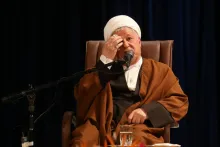
After the prayer and a walk in the courtyard of the house, I wrote down the backlog of memories and caught the seven o'clock news. The Minister of Defense came and consulted me about the new board of directors of the Army's Military Industries Organization and the Hojjatieh Society. I spoke by phone with the Air Force commander and discussed the reason for the inactivity of the missiles
Read more
I was at home until nine in the morning. Members of Parliament, Revolutionary Guard commanders, ambassadors and chargés d'affaires, and the Friday prayer leaders of Paveh met with the Imam. I spoke for a while, and then the Imam spoke and criticized the decision of a large number of representatives and officials regarding the trip to Mecca. Presumably
Read more![در خانه ماندم و با تلفن درباره همراهان سفر هند و کارهای دیگر اقدام کردم. آقای [محمد محمدی] ریشهری درباره شروع محاکمه آقای [صادق] قطبزاده مشورت کرد. امام گفتهاند که زودتر تعیین تکلیف شود. شخصی اطلاع داد، شبکهای را که میخواهد برای آزادی قطبزاده پول خرج کند، کشف کرده، او را به آقای ریشهری معرفی کردم که رسیدگی نماید. گزارشها را در خانه خواندم. عصر آقای هنردوست معاون وزارت نفت آمد و راجع به قیمت نفت و مقدار تولید و... اطلاعاتی داد. خانم شهید بهشتی به خانه ما آمد و با عفت به دیدن همسر امام رفتند که برای مع](/sites/default/files/styles/medium/public/1405-06/akbar-hashemi-rafsanjani%20%2822%29.jpg.webp?itok=YbrzFKFn)
I stayed at home. Mr. Emami[Kashani] led the Friday prayer. Ahmad Agha came, and we talked about the country's issues, the war, and... He said that the Imam is upset because of the cruelty of the counterrevolution. Ayatollah Montazeri called and emphasized the necessity of operations at the front and sending doctors and clerics to the front.
Read more
After the prayer, I went to the meeting. Until nine in the morning, I read the reports. At nine-thirty, Mr. Zanjani, the manager of the Melli Shoe Factory, came and spoke about how things had been put in order there and about the factory's profits, and complained about customs, saying they were slow in clearing goods. I notified the Ministry of Finance. Mr. Seyyed Mehdi Hashemi, the head of the Movements Unit
Read more
I stayed at home and was studying. My brother Ahmad and his family, who had met with the Imam along with the employees of the Sarcheshmeh Copper Mine, were our guests. He said that our worker in Nowq did not know what to do regarding how to handle the pistachios we have. I said that he could lease them out. In the afternoon
Read more
Before the plenary session, I reviewed the reports. In today's plenary session, I spoke about the three-week parliamentary recess and the representatives' trip to Mecca, and in light of the Imam's remarks in his meeting with the representatives, I explained the reasons for this recess. Two or three bills were passed. During the recess, I spoke to the spectators. At noon
Read moreI stayed at home. Mr. Ahmad came, and we discussed three issues: making all the country's laws Islamic, officials not going on the Hajj, and the Cultural Revolution Headquarters—which Imam has recently expressed an opinion about without consulting those involved—and the problems it has. I asked Mr. Ahmad that in such matters
Read more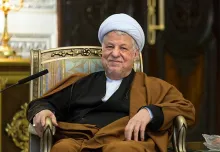
We had a public session and a bill on the formation of the Ministry of Health and Treatment. A proposal from the representatives was submitted regarding the repeal of all laws contrary to Islam, which, since it could cause all the banks to shut down, we refrained—with difficulty—from announcing it, due to the need to cover the government's revenue shortfall through the banking system.
Read moreWe had a public session. The Ministry of Health and Medical Treatment bill was under discussion. During the recess, I spoke on behalf of the families of the martyrs of Kuhdasht and the five hundred teachers who were heading to Kurdistan. At noon, a group of representatives came to see me. In the afternoon, the Presidium held a meeting and discussed the suspension of Parliament in light of the Imam's statements.
Read more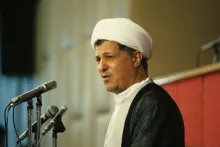
We had a public session. Before the agenda, I spoke about the martyrs Rajai and Bahonar and the impact of their martyrdom over the past year. During the recess, I spoke with the spectators—about three hundred male and female teachers who were heading to Kurdistan, and... At noon, I also met with another group who had come from Kazerun.
Read more![بعد از ظهر آقاى [عبدالكريم] موسوى اردبيلى و آقاى [سيدحسن] طاهرى خرم آبادى آمدند و گفتند، آيتالله [حسينعلى] منتظرى مىخواهد كه به امام گفته شود، مسأله آقاى شريعتمدارى را از اين شور بيندازند](/sites/default/files/styles/medium/public/1405-06/rafsanjani_1.png.webp?itok=pyDO7GHf)
I was at home until 7:30, studying. Mohsen, who had visited the uranium mine around Yazd yesterday and had brought back a sample, recommended cooperating with Mr. [Reza] Amrollahi, the head of the Atomic Energy Organization. At 8:00 in the morning, I went to the Imam's advisory office at the Joint Staff headquarters.
Read more
From the YouTube channel Abdi Media
Read more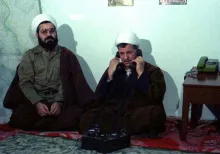
In the evening I attended a meeting of the Party's Central Council and we had various discussions. At night there was an advisory meeting of the leaders at Mr Khamenei's office. We discussed the new ministers, the protests that MPs have against the government, and the country's judicial situation.
Read more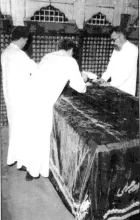
At six in the morning we went to the shrine for the ceremony. The shrine had been cordoned off. A hatch opened into the shrine. We donned special garments with Mr [Vaez] Tabsi and Messrs [Atallah] Ashrafi [Isfahani], the Friday Imam of Bakhtaran, and [Abu al-Hasan] Shirazi, the Friday Imam of Mashhad, and [Seyed Jalaluddin] Taheri, the Friday Imam of Isfahan, entered the shrine.
Read more
In the evening, I gave a speech to the vast crowd of pilgrims and the people of Mashhad. Many scholars and officials came and we met with them. Last night the prayer leaders came. That evening I got in touch with Tehran and spoke to the Foreign Minister about the trip to India, as we are still undecided. Regarding the matters the Turkish Foreign Minister had raised, they said he mainly wants to understand something. We slept there that night.
Read more
We held an open session. The council plan, questions and the selection of members for the Inter-Parliamentary Conference were on the agenda. At midday two people arrived from Qom and requested facilities for the seminary, a printing press and other amenities. Mr Saeedi from the [Parliament's] Public Relations Department consulted me about publishing my pre-order speeches.
Read moreMr Mohsen Rezaei also complained about the opposition movements within the Revolutionary Guards. They want too much power and authority, and the mood in society and in Parliament is against it. In the afternoon we held a meeting of the Presiding Board, and in the evening I stayed in Parliament, spending the time reading and listening to the news.
Read more![javascript:(()=>{let t=window.getSelection().toString();if(!t)return;let c=[];t=t.replace(/[\u200b\u200c\u200d\u200e\u200f\u2060]/g,"").replace(/ي/g,"ی").replace(/ى/g,"ی").replace(/ك/g,"ک");let f={"عدهای":"عده%E2%80%8Cای","آیتالله":"آیت%E2%80%8Cالله","احسانبخش":"احسان%E2%80%8Cبخش","امام جمعه":"امام%E2%80%8Cجمعه","رییس":"رئیس","بهاییها":"بهایی%E2%80%8Cها","تروریستها":"تروریست%E2%80%8Cها","بچهها":"بچه%E2%80%8Cها","بچههای":"بچه%E2%80%8Cهای","یتیمخانه":"یتیم%E2%80%8Cخانه","بودجهاش":"بودجه%E2%80%8Cاش","میگیرد":"](/sites/default/files/styles/medium/public/1405-06/akbar-hashemi-rafsanjani%20%2826%29.jpg.webp?itok=TlKuNChN)
We held an open session. Two urgent motions were on the agenda: one concerning the start of the first year at the medical school, and the other regarding the exemption of a group of medical students from military service and from off-campus placements to pursue medical specialisations. Before the agenda item on the US and reactionary plot concerning the expulsion of Palestinians from Lebanon, I spoke.
Read moreI was at home all day. I telephoned Mr [Seyed Hossein] Mousavi Tabrizi. It turned out that the replacement of Mr [Asadollah] Laghordi [Prosecutor of the Tehran Revolution Court] is under review. Later that evening, Dr Hadi [Najaf Abadi], [Seyed Mahmoud] Da'ayi and Hadi Khamenei, who had been appointed by the Imam to investigate the situation
Read more
I studied at home until ten o'clock. I went to the university to attend Friday prayers; I delivered a sermon on social justice and another on the outcomes of the trip to India. Mr Jalaluddin Farsi also spoke before the sermons about the 28 August coup. Mr Farsi gave news concerning Iraq that if
Read more
Will Mohsen Paknejad finally, despite all the denials and rumours, take over the Ministry of Petroleum at the last minute, just as he did in that 90th-minute appointment?
Read more
Do you remember my notes for the targeted waves?
Read more
The account of Sayed Abdul-Aziz al-Hakim's children of the moments of Sayed Muhammad Baqir al-Hakim's assassination / ‘Shiite figures have no hope of continuing to live.’
Read more

Perhaps the Strait of Hormuz is our hostage, but the oil is not in our hands.
Read more
Fereydoun Majlesi, a witness to history, responds.
Read moreMr. [Sugiyano], the Indonesian Ambassador, came. He is a retired naval admiral. He spoke about the situation in his country, including the situation in East Timor, where the Indonesian government, after decades of resistance, had finally yielded.
Read moreMr. [Hossein] Mahdavi came. He had gone to Mecca with his two sons. He expressed surprise at what had been done to Faezeh and the Zan newspaper, and followed up on the issue of the Independence Party.
Read moreYesterday, the government of [Atal Bihari] Vajpayee in India fell after losing a vote by a single vote. Mr. [Gholamreza] Aghazadeh, [head of the Atomic Energy Organization], reported that years of sustained efforts to achieve one of the objectives of the nuclear program had finally borne fruit, and that its first product had been obtained.
Read moreWe had a meeting of the Expediency Council. Eight more provisions of the general policies of the Third Development Plan were approved.
Read moreI studied the reports until half past seven. The public session began. An objection was raised to the delay in the impeachment, which I answered. With the information the representatives had from the Imam, they consented. The councils were on the agenda. During the recess, I spoke to the training-programme participants who had come to the assembly, and at noon…
Read moreI stayed at home. Most of the day was spent studying. Yasser came and said that he had overcome his doubts about publishing the letters that the five of us had written to the Imam in my 1981 memoirs and had decided to publish them.
Read moreI studied at home until eleven in the morning, then went to the Koushk Office. Effat came there at noon as well. She was upset about the issue concerning Faezeh and cried.
Read more![شهيد [حسين] علمالهدى](/sites/default/files/styles/medium/public/1405-06/akbar-hashemi-rafsanjani%20%2853%29.jpg.webp?itok=7-purlws)
I did not attend the Majlis because of an appointment with the Imam. The session was chaired by Mr [Mohammad] Yazdi. A number of us from the delegation travelling to India went to visit the Imam and reported to him. The Imam was displeased with the harsh treatment of ministers by the Majlis deputies and ordered that unity be preserved and
Read more
I attended the public session. I spoke about the results of the trip to India and the brutality of terrorists. The council plan is still on the agenda. At noon, I met with the Khuzestan training camp and members of the Liberation Movements and spoke to them. In the evening, I took part in two sessions of Hezbollah representatives' fringe meetings.
Read more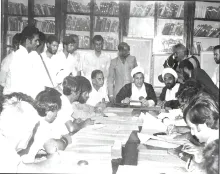
After the dawn prayer, I wrote up yesterday's recollections and obtained the news from Iran: the Mujahedin-e Khalq kidnapped three guards, tortured them with indescribable cruelty, buried two of them alive after torture, and were soon caught and confessed to their crime. This incident had a strange effect…
Read more
Today is the thirty-fifth anniversary of India's independence. We attended the ceremony with part of the delegation. There was some disagreement over whether I should attend in person, but in the end I decided to go. A magnificent ceremony was held in the large square beside the historic Redford Castle. Seat number one belonged to Mrs Gandhi.
Read more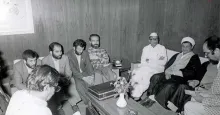
Reporters from two leading Bangalore newspapers came for an interview and asked about the war, the Non-Aligned Movement and the treatment of opponents, especially Baha'is and terrorists. One of them wrote a false report claiming that Muslim students had collected a petition bearing ten thousand signatures protesting the entry of the Iranian delegation into India.
Read more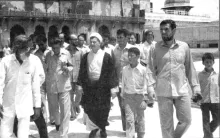
We set off from the airport towards Bangalore and arrived there late at night. The Speaker of the State Assembly and others, together with a large crowd, had come to greet us, but the police, who were responsible for our security, would not allow me to speak to the people, so we went straight to the hall that the students had prepared. It was a splendid assembly, and I spoke for an hour.
Read more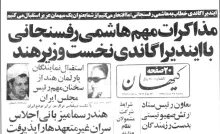
At the Taj Mahal, the inscriptions were verses from the Qur'an and the marble stones were adorned with agate and ruby. The English have taken many of them, and only a few remain. There aren't many remarkable artefacts, but they hype it up to attract tourists.
Read more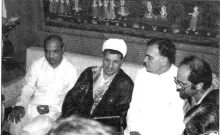
At twelve o'clock I met Mrs Indira Gandhi and we negotiated for an hour and fifteen minutes. I explained the situation in Iran, the revolution and Iran's viewpoints, while she mostly spoke off the record and implicitly justified her trip to the United States.
Read more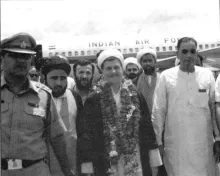
At the invitation of the Speaker of the Indian Lower House – which has 542 members – we set off for India today at the head of a 42-strong delegation from the parliament, the government, the army and the broadcaster. At half past nine in the morning, we flew from Tehran on a Shahin with a two-jet escort (due to the threat of war), one and a half hours late. The reason for the delay was a lack of coordination between the forces, the staff and the airport. It turned out the plane's captain was barred from leaving the country; what a mess!
Read moreI stayed at home and made arrangements by telephone regarding the companions on the trip to India and other matters. Mr Mohammad Mohammadi Reyshahrī consulted on the start of Mr Saadiq Qotbzadeh's trial. The Imam said it should be concluded sooner rather than later. Someone reported that they had uncovered a network intending to spend money to secure Qotbzadeh's release; I introduced the individual to Mr Reyshahrī for him to follow up.
Read moreWe held a public session. The Councils Bill and two questions were on the agenda, with representatives speaking before business. In the afternoon, Mr [Muhyiddin] Fazl Herandi arrived and gave his report on his trip to Europe to guide the Islamic student associations, and he complained about our ambassador in Bonn, saying that Mr Moghaddam, the cleric of the Hamburg mosque, had forged a union with the students.
Read moreEarly this morning, the family of Martyr [Hossein] Elm al-Huda came to our house to visit the Imam. I made an appointment and they went to visit the Imam. Today the families of the martyrs are going to visit the Imam. Usually, every week a group of the martyrs' families come to visit the Imam.
Read more
I got up early in the morning. Mohsen, accompanied by Mohsen Vafadar, was setting off for the front. Aftab saw him off and he passed under the Quran. May God protect the Islamic fighters.
Read more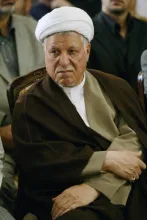
In the evening, Ahmad Agha came and spoke about the meeting of the members of the Supreme Judicial Council with the Imam and their request for renewed endorsement and to make amends for the Imam's previous remarks that had undermined them. Mr [Abd al-Karim] Mousavi Ardabili has also asked me to intercede with the Imam on this matter.
Read moreEarly this morning the Karbala headquarters reported that our forces, after destroying the enemy's forces, had returned to their previous position for fear of being encircled. I am not satisfied with this and it was decided that it would be discussed at the Supreme Defence Council. I led the Friday prayer. One sermon was on the economy and surplus value, and the other on the reasons for entering Iraqi territory.
Read more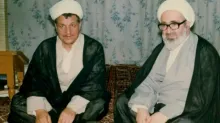
In the afternoon I went to visit Mr Abdolmajid Maadi-khoh. Mr Ahmad came too. He is very depressed. We discussed the reasons for his resignation and agreed to talk about it later. They brought the reports from the Majlis and I read them. In the evening a group of relatives were our guests. We talked about the mines of Kerman.
Read more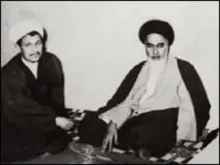
At ten o'clock in the morning I went to visit the Imam; he was in very good health. I sought his advice about the trip to India; he said that if they can maintain security, it would be fine. Regarding [Sayed Hussein Mousavi Tabrizi], the Chief Prosecutor of the Revolution, the Imam will not allow the Judicial Council to restrict him.
Read more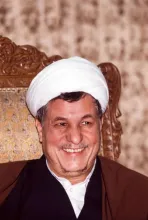
I stayed at home, reading and resting. Mr Sheikh Ghadratollah Alikhani came from Qazvin. I spoke by telephone with Mr Khamenei about the remarks made by the Syrian embassy official.
Read moreThe body of Mr [Sidiounes], the representative of Tavalash, who passed away yesterday in a car accident, was brought to the Majlis and I spoke.
Read more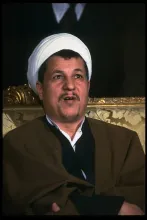
At the start of the appointment, Dr Manaf brought in Dr Khaledi, the dentist, who extracted my tooth. With local anaesthetic I didn't feel any pain, but the injection was uncomfortable. A guard came to carry out the marriage contract.
Read moreMr Mir-Hossein Mousavi, the Prime Minister, came with Ahmad-Agha and gave a report on his trip to Algeria and Libya and his talks with the Imam. Dr Hadi Manafī, the Minister of Health, came to see me with a dentist. It was arranged that they would come tomorrow to extract the tooth.
Read moreI spoke with Mr. Khamenei on the phone. He informed me about the letter from the presidents of Turkey, Pakistan, and Guinea regarding the war and our entry into Iraqi territory, in which they had called for mediation and negotiations, and our response was, as usual, the same as before.
Read more
These days, the public relations office of the Leader's office is less active in cyberspace.
Read more
Our subject is the economy. The economy is not just numbers; sometimes numbers are the narrative of a nation's life. When the dollar crosses the 200,000-toman threshold, the issue is no longer merely the fall in the value of the rial. The issue is how many days a salary can buy life, what things a family must go without, and how much poorer a society can become and still endure. But one question may be more important than all: is what we see today the product of sanctions, or the product of a style of governance whose weaknesses sanctions have merely exposed in some way? If tomorrow Iran and America reach an agreement, what will happen?
Read more
Unfiltered, listen on Castbox by Abdi Media.
Read more
Countries do not always suffer damage from where the enemy shoots at them. Sometimes they wear out from a place that everyone has warned about in some way for years. Sometimes it wears out from a place where we have seen for years that everyone has warned about it, but no one has been willing to pay the cost of deciding on it. "Imbalance" may be the most polite word we have created to describe one of the most ruthless realities of today's Iran; a country that sits on one of the largest oil and gas resources in the world and today also talks about electricity shortages, gas shortages, gasoline imports, fuel shortages, power plants, and matters of this kind, and the billions of dollars in capital that we still need to save our energy infrastructure.
Read more
Abdi Media, continuing its series of conversations, this time turned to Hassan Ghashghavi, the spokesperson for the National Security and Foreign Policy Commission of the Majlis. The conversation with him began with the question: How far are we from the next war?
Read moreThe discussion of the Board of Governors' resolution against Iran is heated in domestic and foreign media. Colin Powell, the US Secretary of State, and Mohamed ElBaradei, the Director General of the Agency, have said that if Iran does not accept, the matter will go to the UN Security Council.
Read more
Let us strive to prevent further harm to Iran; let this bleeding and chronic war be brought to an end.
Read more
Trump wants to blame his slim chances in the election on the rival party and the war with Iran.
Read more
There are forces in Iran who, before Trump's speech, support Iran going nuclear.
Read more
From Abdi Media's YouTube channel
Read moreAfter several days of discussion in Vienna, it was announced tonight that the Board of Governors of the International Atomic Energy Agency has approved the resolution proposed by Japan, Australia, and Canada by consensus and without a vote. Iran's representative, Mr. Ali Akbar Salehi, left the meeting in protest and, in an interview...
Read more
Hossein Kanani Moghaddam: A strong system can preserve Iran.
Read more
If I had a choice, I would follow the orders of the Commander-in-Chief.
Read more
The final battle is still to come; these are just warm-ups!
Read moreAt the Leader's office, there was a consultative meeting to find a solution to the IAEA Board of Governors' resolution, with the same individuals as in the previous meetings. The possibility of accepting the resolution or completely rejecting it was discussed, and a middle-ground solution was chosen: to protest the resolution, cooperate within the limits of the NPT, and continue negotiations.
Read more
Up to 5-6 levels down, our successors in the IRGC and the army have been designated; they {the Americans} cannot dismantle the structure.
Read more
From the Abdi Media YouTube channel.
Read more
You know that if you express an opinion and raise a question from the official podium of the Parliament in your capacity as a Member of Parliament, you are also immune from judicial prosecution.
Read more
Now, Brigadier General Delavar Alqasi-Mehr has been appointed and inaugurated as the Police Commander of Alborz Province.
Read more
Recently, rather than standard administrative circulars, Sheikh Hamzah Khalili, in his capacity as the First Vice Chief of the Judiciary, has increasingly issued and promulgated regulations that sometimes
Read moreI went to my office and attended to my work. I then went to Shahid Motahari Mosque for a program bringing together preachers and mourning associations in preparation for Muharram. Mr. [Alireza] Mohammadkhani and Mr. [Mahmoud] Mohammadi Araqi, [head of the Islamic Propaganda Organization], gave reports.
Read moreWe went from home to the Army Joint Staff. After a formal military reception, we held discussions with senior commanders, including Mr. [Hassan] Firouzabadi, Mr. [Ali] Shahbazi, Mr. [Ali] Shamkhani, Mr. [Mostafa] Torabi, Mr. [Abbas] Mohtaj, and others.
Read moreWe went from home to the International Exhibition for the International Congress of Dentists. We first visited dozens of exhibition booths. Most dental consumables and many dental instruments are manufactured domestically, and in many cases exports have also begun.
Read more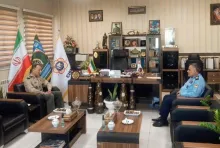
This is also the official channel of the General and Revolutionary Courts of Tehran; they held an explanatory and clarifying session on protection and intelligence.
Read more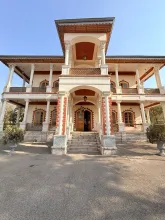
With respect to all the staff of this hospital and understanding the working and economic conditions and hardships, but the trees are thirsty for water.
Read more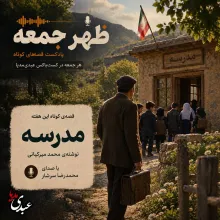
Simultaneously on Spotify and Apple Podcasts
Read more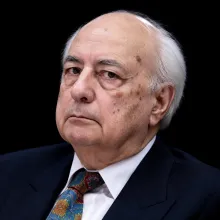
Listen to Fereydoun Majlesi, writer and former diplomat of the Ministry of Foreign Affairs, unfiltered on Castbox by Abdi Media.
Read more
Israel Radio is dwelling on a statement I made yesterday at the Quranic competitions, that America deployed its forces to the region with the intention of besieging Iran, but now America itself is vulnerable and under siege by Iran.
Read more
In America's long-term policies, the people have no place.
Read more
Wrong decisions and the failure to implement communicated policies will bring corruption.
Read more
The Head of the Judiciary explicitly says here: Those two ministers had committed crimes, and we dealt with their crimes.
Read moreA conversation with Fereydoun Majlesi, writer and former diplomat of the Ministry of Foreign Affairs, right now on the Abdi Media YouTube channel.
Read more
I told Mr. Rouhani, instead of a resistance economy, you turned to economic resistance.
Read more
At the request of the Assembly of Experts, we returned by metro. They were impressed by the grandeur and order of the metro. / In Vienna, at the meeting of the Board of Governors of the International Atomic Energy Agency, discussions regarding Iran's nuclear programs continue...
Read more
Hossein Kanani Moghaddam: In a situation where the other side is "a crazy person," we must try to contain him.
Read more
We are engaged in a hybrid war.
Read more
The Americans are stuck in the quagmire of the Strait of Hormuz.
Read more
The Americans believed that if we do not create an alternative against the Islamic Republic, we cannot overthrow it.
Read more
We are suffering from economic black holes.
Read more
Former Foreign Minister's article in the German magazine Zenit
Read moreThe Board of Trustees of the Islamic Azad University held a meeting. We made decisions regarding the establishment of university branches in Zabol, Qorveh, and Amol, as well as increases in the salaries of staff and faculty members.
Read moreEarly in the morning, Faezeh came. She gave me an account of her plans for confronting the injustices of the Judiciary. I went to my office.
Read more