
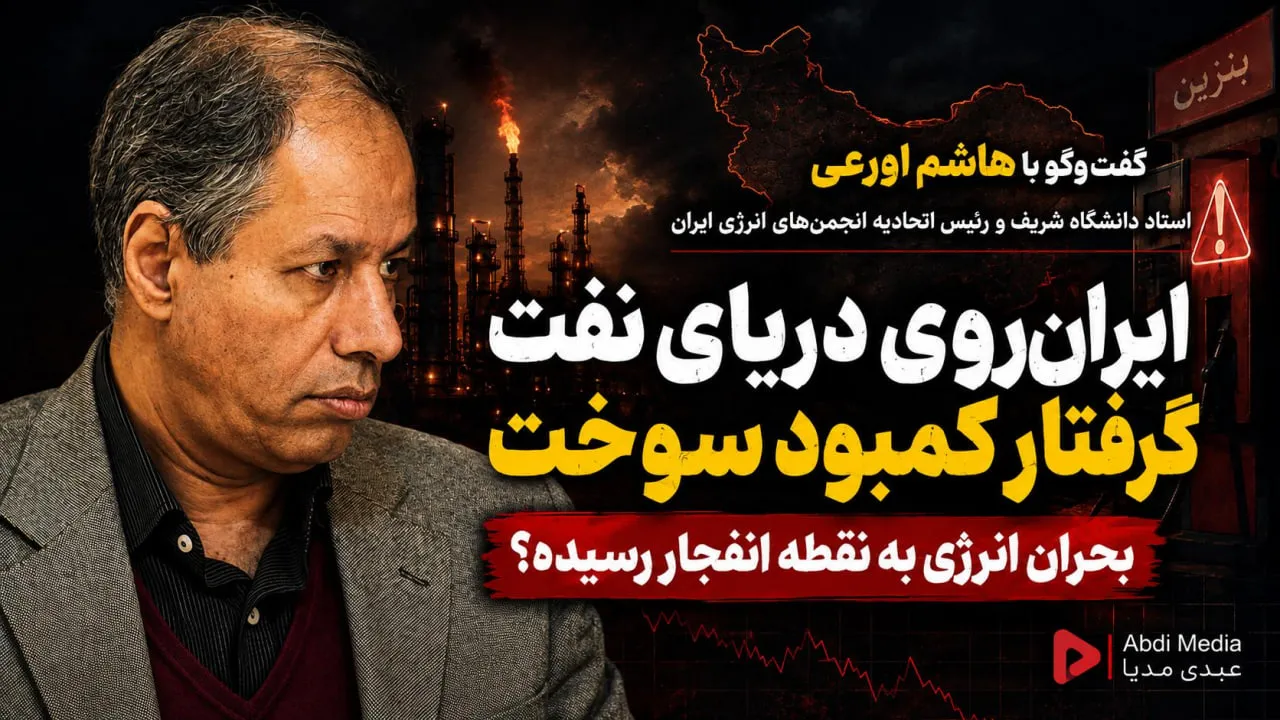
Countries do not always suffer damage from where the enemy shoots at them. Sometimes they wear out from a place that everyone has warned about in some way for years. Sometimes it wears out from a place where we have seen for years that everyone has warned about it, but no one has been willing to pay the cost of deciding on it. "Imbalance" may be the most polite word we have created to describe one of the most ruthless realities of today's Iran; a country that sits on one of the largest oil and gas resources in the world and today also talks about electricity shortages, gas shortages, gasoline imports, fuel shortages, power plants, and matters of this kind, and the billions of dollars in capital that we still need to save our energy infrastructure.
Abdi Media: Countries do not always suffer damage from where the enemy shoots at them. Sometimes they wear out from a place that everyone has warned about in some way for years. Sometimes it wears out from a place where we have seen for years that everyone has warned about it, but no one has been willing to pay the cost of deciding on it. "Imbalance" may be the most polite word we have created to describe one of the most ruthless realities of today's Iran; a country that sits on one of the largest oil and gas resources in the world and today also talks about electricity shortages, gas shortages, gasoline imports, fuel shortages, power plants, and matters of this kind, and the billions of dollars in capital that we still need to save our energy infrastructure.
This is not just an economic contradiction; it is the bill of several decades of decision-making. Because energy is not just oil, gas, and electricity. When there is no electricity, the factory stops. When there is no gas, homes and industry are set against each other. When gasoline becomes scarce or its price changes suddenly, the issue enters directly into people's daily lives. When the government knows it must decide but fears the cost of deciding, the crisis is no longer just an energy crisis; it is a crisis of decision-making power. Now another variable has been added to this equation: war. Alongside it, sanctions, American pressure on oil exports, the difficulty of attracting capital and technology, the budget deficit, and an economy that cannot tolerate a new shock. In such a situation, one question may be more important than all: Is Iran really facing an energy imbalance? Or are we facing the early stages of a crisis that can pass from power plants and refineries to people's tables and ultimately become a social and political crisis? Perhaps the bigger contradiction lies right here: how can a country sitting on a sea of oil and gas become caught in fear of an energy shortage?
I want to invite all of you, before starting this conversation, if you believe in the existence of an independent media that can ask these hard questions of experts and those who play a role in decision-making, and if you believe that supporting this media is essential, please support Abdi Media. By supporting independent media, help this conversation continue. Media independence is not achieved by talking; it survives through the support of its audience.
But my guest tonight probably needs no introduction. My guest tonight is a familiar face of the energy industry, Dr. Seyyed Hashem Oraei. He is a professor at Sharif University of Technology, a full professor at this university, and the head of the Union of Scientific Energy Associations of Iran. Someone who in recent years has repeatedly warned about the state of electricity, gas, gasoline, investment, and the future of Iran's energy system, and who even believes that the word "imbalance" sometimes hides the true depth of the crisis we are facing.
I want to start the discussion not with numbers and charts but with a diagnosis. I want to know where our dear Iran exactly stands in the energy crisis. I am very sorry that I must place the name of Iran, which is drowning in a sea of energy and has a God-given blessing, next to the word crisis and use this phrasing in this conversation. If we set aside all pleasantries and conservative words, where does Iran's energy system stand today?
Seyyed Hashem Oraei: We are about one percent of the world's population, and Iran's economy is four-tenths of one percent of the world economy, to take an optimistic view. But despite one percent of the population and four-tenths of one percent of global GDP, we have nine percent of the world's oil resources and 17 percent of the world's gas. So we have no problem in terms of capacity and resources. But you asked where we stand. The reality is that, with great regret, we have not yet reached the bottom of the well.
We have now had the energy problem become public for about two to three years. That is, there was a time when we saw more than a decade ago that the trend was wrong. Almost from the early to mid-2000s, that is about two decades ago, the trends showed that we would face a problem in the future, but it was not given the attention it deserved. Gradually it reached a point where it became obvious. We became familiar with blackouts in summer, with gas shortages in winter. But this talk began three or four years ago. At that same time, I myself introduced the combined term "imbalance" and said that you should not think that power cuts and blackouts are necessarily specific to summer or gas shortages to winter. Unfortunately, these predictions came true exactly as expected. This imbalance became a crisis, and today it can be called a super-crisis. If we want to look at the future with the trajectory we are currently on, I believe—and I emphasize again, with great regret—that we are still sinking into this well. The reason is that the numbers all clearly show it. Our economy is in recession. The latest statistic that the International Monetary Fund has predicted for Iran is a negative economic growth of 5.4 percent for the current year, which we will have.
When economic growth is negative, it means you do not feel the intensity of the need for energy in the industrial sector, which is one of the largest consumers of energy. So from this perspective, we are in a very good time. Of course, it is bad that we are in recession, but from the perspective of energy demand, this is a break, and even during the break, we still have a severe energy shortage problem. Now the question is, our economy is not supposed to remain in recession forever. Does the Seventh Five-Year Development Plan not say 8 percent annual economic growth? Does it not say 8.5 percent annual development in the industrial sector? Well, where is its energy supposed to come from? My point is that our problem tomorrow in the energy discussion, in my opinion, will be greater than our problem today, just as our problem today was greater than our problem yesterday. Therefore, measures must be taken to correct this trend. And let me add that I am not as worried about the household sector, because the household sector is very bad—in summer it must endure heat, in winter it endures cold, the refrigerator goes off, all of this is bad, there is no discussion. But let us remember that the household sector, which is one of the two largest consumers alongside industry, is an economically non-productive sector. The more important problem is the productive sector of the economy, meaning production and industry. As long as we cannot fully meet the energy supply needs of the country's industry and production, we cannot expect to see the resolution of the country's economic problems, including the lack of growth and high inflation.
Abdi Media: In many places, I have read that "imbalance" is somehow a polite word for ineptitude. You, in any case, discuss this proposition as well. Do we really have to assume this same ineptitude from this so-called imbalance? Are we still facing a manageable imbalance? Or have we entered a path—you used the word super-crisis in your remarks—do you think we have entered a path where in the coming years and months the country could simultaneously face serious shortages of electricity, gas, gasoline, and even restrictions in oil production for domestic consumption? Is the situation like this?
Seyyed Hashem Oraei: Yes, absolutely. I really wish I could say that we have passed that peak of imbalance or shortage or whatever we call it, but I believe that—I do not see it. I still do not see that light at the end of the tunnel.
Abdi Media: Have we reached the peak of the imbalance?
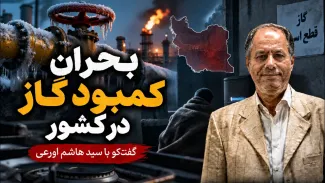
Seyyed Hashem Oraei: No, for example, in gas, certainly not. The reason our problem in gas is greater than in electricity is that we also suffered a lot of damage in the production sector during the war. If I want to give numbers, normally our daily gas production is about 800 to 850 million cubic meters. In the war, we lost 230 million cubic meters of production capacity. About 80 of it has returned to the grid, but by the coming winter we cannot bring back the rest, meaning 150 million cubic meters. On the other hand, demand increases. If we have a cold winter, predictions say we will have a shortage of between 400 and 500 million cubic meters of gas per day. We will not be able to supply about 50 percent of our needs. Consequently, this percentage was lower last year, and lower the year before. Therefore, at least in the gas sector, we have not yet reached the peak of the imbalance. The same is true for gasoline and diesel. Perhaps in the electricity sector, if the country's industry does not transform and remains in recession, maybe next year the electricity deficit in summer will be like this year; meaning we are around the peak.
Abdi Media: In your opinion, have Mr. Pezeshkian's reforms failed? Masoud Pezeshkian came to power with the slogan of relying on the opinion of experts. After months have passed—of course, perhaps he could be given the title of the unluckiest of the Islamic Republic of Iran, or perhaps we could say the most unfortunate or unluckiest, or it was from his footsteps or from luck. Even his inauguration ceremony—he himself has not seen a good day. But setting those matters aside, we still do not see a sign of a comprehensive and effective program to reform the energy structure. Can it be said that the reforms intended by Mr. Pezeshkian's government in the energy sector have practically failed?
Seyyed Hashem Oraei: Yes, in my opinion, it can be said. We are severely witnessing a weakness in planning in the energy sector. Energy is inherently a long-term issue, and consequently, planning and management, for example, five-year, ten-year, up to twenty-year, becomes very important. However, the country's energy sector is hardly and severely caught up in day-to-day matters. For example, in electricity in summer, exactly like firefighters—where is it cut off today, let us fix it. No one thinks about tomorrow. The conditions are like this. The same is true in gas. Everyone is thinking about getting through the winter. And consequently, I believe that as long as we move forward with this trajectory and—a look—we must change our look at the energy issue. Why do I say it has failed? Because we keep promising that the problem will be solved next year. Well, next year the problem is not solved. It really does not happen like that. Simultaneously—I have said and written many times—simultaneously with these day-to-day measures that are being taken, which are necessary, I understand this, but I believe that in parallel with this, there must be a group—not 50 people, three, four, five people who have certain characteristics. Let me mention a few of these characteristics: they must be knowledgeable, honest, worldly-wise. If we want to gather these characteristics, these mean you should no longer look for these people in the body of the government. It is very difficult to find them. A group of people that I say are looking to go into a room with long-term planning—I say you must redesign. In the room, put a pen, paper, and a calculator. We have nothing to do with the firefighters who put out the fire. Truly, an energy plan means we see the capacities, we see the capabilities, we see the limitations, and something we call—we do not have an energy policy. We have a Supreme Energy Council, but we do not have an energy policy. Well, you cannot deny this or easily pass over it. I say with complete frankness and full conviction, we do not have anything called an energy policy. We have seen energy policy in the last two decades—our government officials in the ministries and relevant organizations have not been successful in policymaking. Therefore, let us invite experts, away from political issues—a very important point—away from political issues, to draft a roadmap for this energy crisis. But let us remember that we must tell the people two realities. The two realities are—I mean to say that if we draw up the best program, this program will certainly have these two characteristics, both of which are unfortunately negative. One, it will not be solved overnight. And two, it will not be solved without pain. Who will come and say this to the people with complete frankness and honesty? Why do we have these two characteristics? Because you cannot expect to travel on a wrong path for twenty, twenty-five years and then overnight, quickly and without pain, change the path. Well, this is impossible. In other words, we want to solve a problem that is not solvable. For this reason, we have not yet fallen onto the right path.
Abdi Media: Does the root of this blockage that you confirmed lie in Masoud Pezeshkian's government, in the absence of expert planning—because whenever there was talk of a plan, they said we have a plan and this is the development plan—or in your view is it a shortage of resources, or the lack of political courage to make hard decisions, or the issue of sanctions and America and Israel and Iran's enemies? What do you see? What do you see as the root of these problems and the blockage and super-crisis of energy?
Seyyed Hashem Oraei: First, regarding the reference you made, for example, to the Fifth Development Plan, I have repeatedly said that by definition these cannot be called plans. They resemble statements and essays more than plans, because a plan must have an expert backing and one must be able to defend it. We see our plans—in, say, the last two decades, which part of the plan was correctly implemented? In the energy sector, it is the same. We have not prepared a correct plan at all. Where is the root of the problem? It is generally said, and the matter is to some extent correct, that the matter began to deteriorate in the early 2000s. The Sixth Majlis passed a law saying that energy carriers, or the price of energy carriers, should increase in step with inflation. This meant the price would remain constant in real terms. But the Seventh Majlis annulled this law and replaced it with a law titled "Stabilization of Energy Carrier Prices." At the time this law was announced, the then Speaker of the Majlis, because it was Esfand (February-March), announced it as a Nowruz gift to the people. These are to a large extent the product of that gift that was given to us that day. And from that time onward, we in fact turned energy from a commercial commodity into a political tool. I mean to say that politicians and the country's managers also have a role and share in this problem. My expectation is that in presidential election debates, candidates should come and say what their plan is for increasing the price of energy carriers and consequently allowing the formation of a market, increasing investment, and ultimately bringing energy to equilibrium. The requirement of this is one of its requirements is price increases. We say exactly the opposite. Without exception, in all the elections we have had in these decades, they say we insist and emphasize that we have no plan to increase energy prices. That is, today it is the same. All officials say and deny—no, gasoline prices are not going to increase. But they do not say one thing: where is it supposed to come from? This is the inequality. The issue is that we did not plan correctly. It started from there, then we kept abandoning it, this felt became heavier and heavier. Now I am not saying no one has the strength to lift it, but no one dares to try. That is the story.
Abdi Media: We are faced with a lot of warnings. They say save. And "speech therapy" has always been a constant fixture. In recent weeks, the issue of energy and fuel shortages has even become a serious discussion in media and channels close to the establishment. Energy sector officials have repeatedly warned about the difficult situation of the coming months. In contrast, Pezeshkian has repeatedly invited people to save. You too have criticized this type of approach. Why, despite all these warnings, does the government's output still resemble advice and speech therapy rather than an economic plan commensurate with the dimensions of the crisis? In your opinion, does the government recognize the crisis? Or does it not have the ability to decide about it?
Seyyed Hashem Oraei: The government does not need to recognize the crisis. All the people recognize the crisis now. In my opinion, right now in energy governance, we have been unsuccessful in this test. We have failed in this test, because the art of governance is that before an unfortunate event occurs, conditions should be created to prevent the national economy from being challenged and the people's welfare from being harmed. But let me—this point is very important—let me say this. You and everyone raise the talk of saving. The government tells everyone that people should consume less. We have two terms; we must separate them from each other: one is saving, one is productivity. I believe the matter of solving the gasoline problem—no, the whole energy issue—must first start with productivity. Of course, I do not mean that I do not believe in saving or deny it, but I declare with complete certainty that saving alone will not untie any knot. What is the difference between saving and productivity? Saving is that we do not do a task and do not consume energy. That is, if my air conditioner is on and I am comfortable, I turn it off, I do not do the task, and less energy is consumed. Saving works in the short term. Saving's scope of impact is limited, and most importantly, saving is done by the people, meaning by society. All of it is very good. But more important than saving is productivity. What is the characteristic of productivity? First of all, when you improve productivity, in fact the prescription you write is that the task is done and less energy is consumed. This is very important economically, because when you say the task is done, it means you can also have economic growth. So productivity says the task should be done—the car should go from point A to point B and consume less gasoline, not that our car does not move. Second, productivity is not achieved overnight; it is time-consuming. And third, which is very important, is that productivity is the government's job; it requires planning.
My point, and the reason I separate these two terms, is that "saving" is presented in a way as if the knot is supposed to be untied by saving, whereas that is not the case. Saving is supposed to help somewhat so that we can solve the energy problem through productivity. But what is its social point? I have said many times that as long as attention is not paid to improving productivity, as long as the government and policymakers do not act, and we want to place the entire burden on the people's shoulders through saving, it will certainly not work. People rightly say: let the government do its own job, show us its plan, report every month or every three months so we can see whether it is doing its job properly. We will also help the government to accelerate reaching that goal, and we will also save. But does the government do this? Let me give a concrete example. In the gasoline sector—well, where is gasoline consumed? Almost all gasoline is consumed in cars or smuggled. Ninety percent of the country's gasoline goes to these two places. Tell me, in the last ten years, what has the government done in the automotive industry that has led to improving productivity?
Abdi Media: It has done one big thing: it has raised the hiring capacity in these same two car companies for the children of high-ranking officials.
Seyyed Hashem Oraei: Meaning it has raised its fixed costs, so that even if one day there was supposed to be a budget of one hundred tomans for research and development to improve the productivity of our cars, that too, thank God, no longer exists.
Abdi Media: I am forced to respond with this bitter sarcasm: that the two car manufacturers have turned into two places that, in any case, have quotas for the children of many gentlemen, and in any case their employment, the many issues that exist there, have been discussed many times, and the fundamental principle is rent-seeking, and a collection of them have joined hands with one another. Apart from that, the car issue—well, the issue of car imports was also raised. At some point there were discussions about why we should even be car manufacturers, when Iran began car manufacturing at a time when everyone pointed the finger of accusation at it after the revolution—that in fact the imperial regime had nothing but assembly work for Iran. In all industries, first the parts come as components and are assembled, then after that the process of production and design is carried out, and all countries have developed it this way. But the factories we had—in any case, in some way and for many reasons that themselves require numerous programs to discuss—what happened? Iran National was destroyed. Aside from the fact that it was confiscated and its owner was dissatisfied, and its management issues aside, after that too we have truly stagnated in various places. On the one hand, we could not produce cars, could not give good quality cars to the people so that people would not lose their lives on the road. On the other hand, imports were closed. The big car mafia, in any case, plays its role in this same energy equation. That is, there is a loop in which many benefit, and this same benefiting has caused the situation we see.
Seyyed Hashem Oraei: Exactly. This disorder in the automotive industry continues, and we ask people to save on gasoline consumption—gasoline that had no role in the amount of their car's consumption. And second, smuggling. Well, how can you tell people not to move their cars, not to consume gasoline? Gasoline is not eaten by anyone; it is consumed by the car. Come, for example, with that next point—it is interesting—come use public transportation, which does not exist. So we abandoned the automotive industry. Your phrase—in one word, its name is "a private backyard." The car, in that way, whether domestically made or imported.
Then do not control smuggling, let smuggling continue, do not have public transportation. In other words, have no meaning in the field of productivity, and then ask people to save. My question is: does saving even make sense here? This is what I am saying—this is why I say we have still not fallen onto the correct path.
Abdi Media: If Iran in the coming years simultaneously faces shortages of electricity, gas, and fuel—as it is said Iran is moving in this direction—facing severe shortages in all energy carriers, and even oil production capacity may come under pressure, how does this existing situation combine with the high inflation that exists and the chronic budget deficit? What will happen to the production chain and mother industries like petrochemicals, steel, cement, and other energy industries?
Seyyed Hashem Oraei: This will not happen—this has already happened and is happening. The Statistical Center of Iran, in its latest quarterly report related to the spring of this same year—we are talking about two months ago—announced that the industrial sector shrank by 4.5 percent in the last quarter. I think you saw a piece I wrote regarding the country's industry, and the main reason for this shrinking of the industrial sector, which is truly a disaster, is the impossibility of securing energy. The final result—well, the statistics say the country's GDP in the year 1403 at constant prices was equal to that of 1386. All these talks are included in this comparison. That is, the country's economy has stagnated for 17 years. Continuation of this trend—we now usually put the country's GDP figure at 350 billion dollars. So as not to look pessimistic, I say 400 billion dollars. It has remained here for years. Look at Turkey—it is regrettable—Turkey's economy is four times Iran's economy, close to 1,600 billion, and it is rising. It is predicted that in 2030 it will reach above two thousand billion, five and a half times our economy.
My point is that we must solve not only energy but other problems. This too is a precondition. If we cannot in the coming years solve the energy needed by the active sector of the economy, the final result is that economic growth will be nothing but an illusion, and we will remain at this same 350 billion dollars. The country's population increases, and consequently per capita production decreases. In simple terms, the process of the impoverishment of the Iranian people will continue.
Allow me to give a figure. Today, the average global per capita GDP is 11,500 dollars. Iran is 5,000 dollars. In other words, we are less than half the world average. Consequently, if we seek to truly develop and, behind it, reach welfare, we must solve the energy dilemma—not only energy, we must solve the energy dilemma. But in my opinion, the root of this problem is deeper than drilling four oil wells and building a refinery. The main problem is in energy governance, in management. As long as we do not see the matter differently—that is, we must review our choice of the country's management system. I mean to say the matter is even beyond energy. We are raising energy as an example. Let me say this, perhaps it is not bad—I said it before in an interview, it was also spontaneous. There was talk of imbalance. Well, suddenly I said—let me repeat it, because apparently this sentence was well received in that gathering—I said: Look, if in our country we saw that everything was right and we, for example, had a shortage of electricity, we should have called it an electricity imbalance. If we saw we have no electricity, no gas, little gasoline, but everything else is right, we should have said we have an energy imbalance. But when we look, we see electricity, water, gas, economic growth, pension funds, the level of environmental pollution, and so on—they are all imbalanced. I said here, and I still believe, and I believe it more than then, that our problem is not the imbalance of water, electricity, and gas. Our problem is an imbalance of reason, apparently, and we are in confrontation with rationality. This worries me. This makes me say that more than seeking to reform energy governance, we must seek to unify the problem statement. Let me add this again, this is more recent. In a talk I said: I am gradually beginning to doubt whether the reason we cannot solve our problems is that we do not have a unified problem statement. Well, if we do not agree on the problem statement, we certainly cannot solve it. And in its example, I said—perhaps, I am not judging at all, I have nothing to do with it—perhaps a group's problem is that they want to reach welfare and development and such, and another group's problem is that they want to turn the White House into a Hosseiniyeh. These two problem statements cannot have a common solution. If they can, you tell me.
Abdi Media: I have nothing to say. Just one point has really occupied my mind. On Abdi Media, I speak with various experts. Tonight I have this opportunity to speak with you about energy. I have spoken about economics, culture, and various other subjects. This phrase has really struck my ear—they said in energy governance you stated we have a problem; they said we have a problem in economic governance, we have a problem in cultural governance, we have a problem in judicial governance, we have a problem in governance, we have a problem in governance itself. When everything is broken, an analogy came to my mind. A person goes to a doctor and says my whole body hurts; wherever I touch, it hurts. Then the doctor took his finger and said, look, your finger is wounded. Because it is wounded, wherever you touch, it hurts. Here this came to my mind, and of course it is not strange to me—it is something we have long been living with.
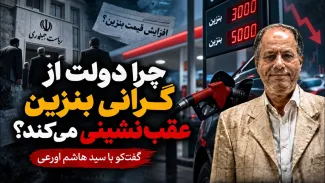
Let me ask my questions in this university class from your presence. Perhaps this is one of the strangest pictures of Iran's economy: a country with one of the largest oil and gas reserves in the world, but caught in a gasoline deficit and fuel imports and concern about long lines. How has it come to the point where we talk about gasoline deficit, fuel imports, and gas station lines? Venezuela is the same—it has the largest energy reserves in the world; we have the second largest. In Venezuela that happened. Oil seems to have been a curse for us rather than a blessing. How have we reached this point? Is this mismanagement, the bankruptcy of the energy model, or both?
Seyyed Hashem Oraei: First, this is not an event at all. I always say I am surprised that we have reached such a situation. My only surprise is why everyone is surprised that we have reached this point. And if we go down this path a hundred more times, we will end up in the same place. What do I mean by this path? We have gone down a path where demand—and non-productive demand at that—has been constantly increasing. For example, in the gasoline sector, if we set aside last year, the average of the five years before it was a ten percent increase in demand. Electricity, seven percent. Gas, in Tehran, thirteen percent. That is, every year for several decades we had ten percent demand growth. Now, ten percent demand growth—if it had given me, I do not know, eight percent or ten percent economic growth, I would have been satisfied, I would have been very happy. The wonder of the age is that our demand for energy has constantly increased, while its output has been zero. Nothing has come out. Why? Neglect of the energy issue. This is where my meaning of energy governance comes in. This is where I say this energy matter is an effect. We must be careful not to swap cause and effect, because if it is swapped, we will not reach a solution. The reason is—I said—in the first half of the 2000s, a populist action—I do not say demagogic, I say deceitful—we pass a law that does not align with any reason in economics. Why? Because we want to tell the voters we have worked for you. Then no one dares to come and fix it, and this path continues. Then our car—for the reasons you mentioned—no one comes to step into the field. If it also wants to have nothing to do with domestic cars, at least it should not support it so unreasonably and unintelligently as to close the door in the country, so that whatever car you want, produce it and sell it at any price. When energy—and let me also say this—you come and say the price of our domestically produced gasoline is 50,000 tomans per liter. I can no longer—I do not want at all—the government sells it at 1,500 tomans. Why should I subsidize it? People should pay. Look at the nation's answer. The nation says let it be. They have two reasons. They say, first, the smaller reason is that they say you are a government; you make it expensive—whether electricity, gas, or gasoline. Let the market form; give it to the people; then we will pay its price. Do I and you, when we go to a fruit shop to buy a watermelon, expect the government to pay 90 percent of the price? No, we pay the whole price. Both I, the buyer, am satisfied, and the watermelon seller is satisfied. But in gasoline, everything is governmental. When you say the cost price must be paid, you are saying you must pay the cost of my government's total failure. So one place the problem is this. At the same time, it says you tell me to pay the cost price of gasoline—let me, when I buy a car—someone calculated it as 20 years—meaning you give me the car so expensively that I have paid the price of twenty years of its gasoline in cash at the very beginning. Can you, the government, say it is a different matter, it has nothing to do with me? From society's perspective, the question is unanswered. It is for these two reasons that society does not accept that the sale price of gasoline be equal to the cost price.
Abdi Media: How serious is the gasoline issue?
Seyyed Hashem Oraei: Gasoline is completely serious. Due to today's conditions, let me give numbers and figures, because I see some are giving numbers. From the Majlis Research Center, I saw that one of its experts had announced that we have no more than two million liters of imbalance per day and no shortage. This is not correct. The most reliable numbers are that we have had an average daily gasoline consumption of 132 million liters in the current year. In Mordad, the daily figure was 138 million liters—the latest statistic. The CEO of the Refining and Distribution Company announced this: in Mordad, the average daily consumption was 138 million liters. In Shahrivar, which is usually a high-traffic month, it is predicted to be 140. It seems that in the most optimistic case, we will have a daily consumption of 145 million liters. If we add refinery production, which is 112 million per day, plus 9 million from petrochemical production, we have a daily production of 121 million liters. This means we have a deficit of at least 15 million liters per day, and this is happening. Every day we had two ways to supply this. One of the ways we have taken—the matter has not become complicated—has been imports. Today, imports are not possible. Even if the financial resources existed, from the south, usually the UAE would supply it, which is not possible for geopolitical reasons. Our bad luck—Russia too...
Abdi Media: It has its own problem.
Seyyed Hashem Oraei: It has gone to buy gasoline from India. The line stretches to 50 kilometers. That is, it is overwhelmed by its own burden. So we have lost the possibility of imports. One remains—because you asked how acute it is. Well, what remains? Strategic reserves. Right now we are forced to consume from strategic reserves. Well, that is its name—strategic reserves—it is for not being used, not for being used. Therefore, we must certainly, certainly address the gasoline issue seriously. But unfortunately, we have lost time. We cannot fix the car overnight. We should have been working on it ten or twenty years ago. Therefore, while the issue is very serious, unfortunately it cannot be solved overnight and without pain, in my opinion.
Abdi Media: Using strategic reserves is not very bad, but there is an issue. They say red gold is for the black day. Now there is also war. These reserves must be used so that people do not face problems. But strategic reserves are also not unlimited; in any case, they are for a limited period, and these reserves will run out. Its name is reserve; a reserve is not unlimited, and these will run out. A solution must be thought of. Now, when perhaps a solution can be found, it must be thought about. Consumption cannot be stopped. There is a lot of talk that in many channels, many people who analyze say the crisis of next month—they even announced the month—they said in Shahrivar or early Mehr, people will revolt because of the energy and gasoline issue and will take to the streets. How realistic do you see this? How close are we to moments that can create a crisis? Will we reach this level of shortage?
Seyyed Hashem Oraei: There is no doubt that if no action is taken, if things are not done properly, ultimately this problem will lead to a serious social, political, and security challenge. But it is very difficult for me to want to determine a time for it. But I believe another month—not at all—another day, another year...
Abdi Media: With the same number you gave—for example, we consume 135 million, our production is 112 million, petrochemical production is 9 million—someone who has the address of the homes of senior officials, military generals, the statistics of energy reserves—I do not think anything is beyond that. They know when, even if these strategic reserves are used, they will run out. They at least have the information for this too. They also have the determination. These are numbers—addition and multiplication. If even this blockade—meaning the part of the blockade in the Persian Gulf that prevents part of the imports from happening—if it is lifted, do you think the problem would be solved, or do we have the same challenge? Will this continue?
Seyyed Hashem Oraei: Perhaps the fact that we cannot import is a blessing that makes officials take the gasoline issue more seriously. It was the same in electricity. For several years in summer there was an electricity shortage. As the saying goes, so that society would not notice, we hid it under the carpet. We gave all the shortage to the industrial sector—meaning the worst possible choice—to the productive sector, so that people would not understand, society would not understand that we have an electricity shortage. And when society understood, they could no longer give all the deficit to everyone. In gasoline, too, this story of war and naval blockade and the impossibility of imports brought forward the day—you saw that—that yes, the issue is really serious. But regarding the last point, our problem is not solved at all. We can only endure a little more. And that too is little. Why? Because with today's dollar price, every liter of gasoline is going toward its cost price—I mean the imported cost—for example, 120,000 tomans. Well, a shop that buys something for 120,000 tomans per kilo and sells it at an average of 2,100 tomans—well, the issue is when it will go bankrupt. I mean to say our problem is not the impossibility of imports. The impossibility of imports has exposed our problem sooner, and this may be a good thing. We must still, I repeat, return to the design room. Let me also say this, because there is a lot of talk about gasoline prices—we have two spectrums. The issue—perhaps the question of whether the gasoline shortage is part of your question—I am a teacher; until you honk, I will go. Some speak in a way that those who consider the market as the only stage director and effective factor—as if the gasoline imbalance problem is solved by increasing gasoline prices. This is not correct. This group is in fact saying let us entrust everything entirely to the market. These are in fact setting aside very important social side issues that later become security issues. Yes, the market solves it, but before that the nation takes to the streets and does not let it reach the equilibrium point.
Another group, whose thinking is more leftist, says—interesting, I will not name names, but my economist friends openly say that the price elasticity of gasoline is zero. That is, when you raise it, no matter how much you raise it, it has no effect on consumption. This too is not correct. Consequently, regarding price, my opinion is that it lies somewhere between the two spectrums. Neither is the issue solved merely by price, nor must price certainly be part of the prescription. My opinion is that simultaneously, even before price reform, we must solve the other issues of the problem—the automotive industry, the development of public transportation, the prevention of smuggling. We must solve these, and simultaneously move the price toward becoming real. But alongside it, we must also place support for the vulnerable class in the program.
Listen unfiltered on Castbox.
Abdi Media: The government, on one hand, does not have sufficient financial resources to import gasoline and diesel, and this naval blockade also exists. On the other hand, the inflationary and social consequences of fuel price reform also, in any case, cause the government's fear, and in their statements we see they pay attention to this. If it does not increase the price, the cost of subsidies and imports increases. If it increases it, there is the danger of inflation and social dissatisfaction and revolt. Has Pezeshkian's government practically fallen into a decision-making trap where every choice has heavy political, economic, and security costs for it? And what is the expert solution to exit this deadlock from your perspective?
Seyyed Hashem Oraei: There is no doubt that it has fallen into a trap. This is not a trap that the fourteenth government has set for itself. This trap began twenty years ago. The bad luck of the fourteenth government is that simultaneously with it, other problems also exist. Probably the fourteenth government no longer has the choice to drag it out and throw it on the shoulders of the fifteenth, sixteenth, and later governments; it must solve it. So this problem can no longer be transferred to the future. But what should it do? Well, if the government had sufficient social capital, its task would have been much easier. Unfortunately, we do not have that state either. But I believe two annexes must be prepared. That is, two groups should go into two rooms and start planning. One group—the price-executive group—of the gasoline issue itself, I do not know, cars and so on—should make a proper package. The second group should work on its cultural-social annex, which has been severely neglected. The solution is this—these have been raised many times—that they must create the ground for society's acceptance. For example, what does this require? It requires honesty. It requires courage. It requires frankness. You know, because I say frankness—because in Iranian culture it is an art that you come and speak on television for half an hour but say nothing. This does not solve our problem.
Abdi Media: We have many artists.
Seyyed Hashem Oraei: I even say this is art—not only the government, in society it is also art. In a company's board meeting—I talk about these things in my class because they are young, we want to change them—the person really talks for ten minutes and I do not understand what his opinion is, whether he agrees or disagrees or abstains. This is art, whereas it should not be this way. I mean that in the cultural-social annex, the government must launch a new plan. First, for example, IRIB—I said these exact sentences to some officials—you can have a tribune, IRIB, various places, let us use IRIB as an example. First, you do not do this work; you must do this work. It should talk about, for example, the price of gasoline. It should tell both sides of the coin. It should say, this money I am putting down, I am not taking from you for gasoline; I do not have this money, because I do not have it, I must go print money. When I print money, I spend money I do not have; this becomes inflation. Who loses from inflation? You. That is, it is not the case that this side of the coin is all flowers and nightingales. It should come and speak repeatedly with the people.
What should the method of execution be? Very simple, friendly, not in a master-servant manner. Well, now suppose we want to send someone—I told friends before that when I open that Iranian television channel, the very face of the person I see, 50 percent of it is gone. The poor person has not even opened his mouth yet, and I have lost whatever cultural-social connection there was. Why? Because I see a face that—wrongly, unjustly, and hastily—I judge and say this thing is of no use to me. When he opens his mouth, in a way, the same content that, if properly compiled, he reads or says, makes the other half disappear too. I mean to say there are two annexes: one technical-economic-executive annex, plus a cultural-social annex. If we do the cultural-social annex properly, I believe this is it—our little social capital will be enough for the president to come and tell the people: people, we went wrong, we made mistakes, but it has come to this. Now I promise you this is my executive plan, and month by month I will also say, if I take more gasoline money from you, how much and where we spend it. People do not accept—where is the extra money spent? At the end, he should also ask them to trust my government one more time, trust me. He should show the other side of the coin, put his beard as a pledge.
Abdi Media: People have a problem with the beard.
Seyyed Hashem Orsei: In my opinion, correctly, if Pezeshkian has nothing else positive, still the general public has a slight belief in his honesty. Let him pledge that. He does not have much time, but let him follow it. Let people see the movement is on a tightrope; it is very hard work.
Abdi Media: It is the edge of the sword.
Seyyed Hashem Oraei: Exactly. We have no better way, in my opinion.
Abdi Media: Every time this crisis intensifies, you pointed to the people—again they raise the high consumption of the people, in fact, as one of the main reasons. What really is the people's share in Iran's energy crisis? We spoke of the share of decades of wrong policymaking, infrastructure wear, inefficient pricing, energy waste, high-consumption cars. What is the people's share in the energy crisis?
Seyyed Hashem Oraei: Many times and many times this question has been raised. Whenever I answer, I am reproached by some colleagues at the university. But I stand by my word. It is a custom in our country that all mismanagements, lack of planning, all the flaws whose result later becomes a problem like energy—the first thing that is said is it is the people's fault. I believe in the energy matter, too, the people have the least share in reaching the dead end, because they have the least role. Well, in gasoline, in gas, what role do the people have in delivering it to the final consumer that I should place part of the blame on their shoulders? Do I hoard gasoline? I pour it into a car in whose consumption rate I have had the smallest role. It is smuggled—in the amount of smuggling I have the smallest role. Consequently, the answer to your question is very simple for me: the people have no role in reaching this point. But this does not mean they should not help us solve it. Why? Because its smoke goes into the people's eyes. Consequently, I say once again we have no choice—we must trust once again so that the problem is solved.
This response is AI-generated, for reference only.
Abdi Media: You have repeatedly criticized lobbies and non-specialist appointments in the country's energy structure. Today, too, how much are key decisions about gasoline and such matters made in expert rooms? Could structural reforms in the energy sector have been the key to a greater economic opening, or conversely, does prioritizing aggressive policies—in your view, I wanted to pass over this, but I do not know if you are willing to address it or not—in your view, has prioritizing aggressive military policies in the establishment deprived Pezeshkian's government of the chance to contain the energy collapse?
Seyyed Hashem Oraei: Can you explain more so I understand the question correctly?
Abdi Media: Some analysts believe that as long as the issue of international sanctions and regional pressures is not resolved, attracting the tens of billions of dollars of investment needed in the energy sector is impossible. Now, one part is the international perspective. In your view, could both the structural reforms that could have led to the entry of capital—various reforms, structural reforms in the energy sector—have been the key to greater economic openings? Or in your view, these structural reforms—on the contrary—this thing that happened, prioritizing military policies in the establishment, the issues that were placed as ideological issues or governance issues—have these deprived Pezeshkian's government of the chance to contain the energy collapse, to contain this crisis, this super-crisis?
Seyyed Hashem Oraei: It is somewhat simplistic if we think that if, for example, we spent ten billion dollars or twenty billion dollars a year in the energy sector, we would not have an energy problem. I believe more important than the financial issue is the matter of structure and that same energy governance and energy management. Therefore, even if we were not financially constrained, our energy problem would still reach such a dead end—but later, not that we would have no problem. Secondly, can we—now that we are in these conditions of war and sanctions—is fixing the energy matter in the current conditions impossible? I say no, it is not impossible, but it has conditions. For example, a change of view in the management system of the energy sector, to the same extent the importance of ensuring the empathy of the people. The conclusion is this: if the whole matter is to be seen as two things in front of the country's energy system or the government—inside and outside the country—if you ask me, outside: sanctions remain and we do not have the outside; and inside: we say whatever the people say, I will do my own thing—it will certainly get worse day by day. But if we say, can we be under sanctions—not that this is good, let it be temporary, in any case we are now—if we can have the empathy and harmony of a significant majority of society, in these conditions can we endure? I say yes. But are we going in that direction? Honestly, I do not see it. It is interesting—I do not understand this. I always thought if an external enemy applies pressure on you, you should take more care of your own people. But sometimes I see things that seem as if some are after this very thing. What is inside the matter? I do not know.
Abdi Media: Who are the insiders? It is a ten-unknown issue that I do not think even Sharif University professors know. Let us consider it among the super-issues of the world—if these are identified, many problems will be solved. Professor, you have always criticized non-specialist appointments in the body of the country's energy sector. How much are the current government's decisions in the energy field shaped under the influence of pressure from specific media like IRIB, or even the establishment's fear of the street's reaction or people's protests? Can it be said that energy management in Iran is now decided not in expert think tanks but in security and media institutions?
Seyyed Hashem Oraei: Did not the Vice President—the vice president responsible for energy—just two days ago say—it was interesting to me—he said if I say these things, they will come and break the glass? This shows that this lobbying is very strong. Let me give you a number. It has been presented in society in a way as if, for example, if the price of gasoline goes up by one hundred tomans, everything collapses, inflation becomes such and such. The statistic that the Statistical Center of Iran cites based on Central Bank data says that the role of gasoline—the price of gasoline—in the household basket is about one percent. It says the role of gasoline prices in transportation, or transportation in the household basket, is between two and three percent. It says the elasticity of this—economists have calculated it—the inflationary elasticity of gasoline prices is 5 percent. What does this mean? It means if the price of gasoline doubles overnight, it is predicted to add about 5 percent to inflation. But these same lobbies have presented the matter in society in a way that everyone thinks if the price of gasoline doubles, inflation will also double. I mean to say—and I do not find it unlikely—that those who smuggle twenty to thirty million liters of gasoline and diesel a day and profit billions per minute from this route spend a very small amount of it in this field to inflame the atmosphere against any increase in gasoline prices. That is, there are both political reasons behind it and economic reasons behind it. And this causes the fourteenth government, unfortunately, despite initially posing that it wants to raise the gasoline price—like the previous time when 5,000 tomans was proposed, first 10,000 tomans, then they said 5,000 tomans, then they said the surplus of the quota, then they said these are exempt—to melt like ice in the sun. They dragged it out so long that the day they announced it, in my opinion, inflation had already eaten that price increase. Two weeks ago they said 87,200 tomans. In the morning they said it was a mistake, sorry, forget it. That is, the economic and political resistances are so strong that the government backs down. Now everyone is back to "who was it, it was not me." Everyone is saying—one says it is not going to get expensive, one says he should make it expensive. There is all kinds of talk. Until last week it was going well. Well, I mean it was being shown that this time they would go forward with strength, but its wind has died down for now, and everyone is passing it to one another. Do you agree or not?
Abdi Media: What you see, I assure you, is the expert view, not the governmental and establishment view. I certainly have special respect and trust for the expert view. There are narratives that the way the energy crisis is managed and explained to public opinion—these very things you mention—have also caused dissatisfaction at higher levels of the power structure. If these narratives are correct and these dissatisfactions also exist at higher levels of the power structure, and the government simultaneously faces social dissatisfaction from below and pressure from centers of power from above, how much real authority remains for the government to make hard decisions? In your opinion, can the energy crisis—this same gasoline issue—affect Pezeshkian's government's relations even with the office of the third Leader, perhaps other main centers of power? Is this possible?
Seyyed Hashem Oraei: This is an opportunity. We usually leave it for the last minute, meaning extra time, to score a goal. We have its example—the story of the chastity and hijab law. You are aware that it went through all legal stages, but at the last moment, this same government—which everyone in Iran rightly says governments are weak, but when it stood firm, the government of the person of the president, the head of the executive branch, succeeded in preventing the implementation of the law. This was not a small achievement. I am not saying it was a good or bad thing; I am saying it in terms of impact. Perhaps the gasoline matter, or energy—specifically gasoline, and in winter gas, a problem arises—these are opportunities for the government and the head of the government to actually raise its power in decision-making and make the government's role more prominent. I think, I believe this is how this can be done.
Abdi Media: Let me return to this same discussion of the war. In any case, how much of this imbalance is affected by this war and the recent attacks—the 12-day attacks, the attacks after that, which are in fact known as the 40-day war, this thing where we are neither at war nor at peace? How much did these affect the imbalance? If it had not happened, would our situation be the same, or did it have an impact? Tell me the extent of its impact as well—how much is it?
Seyyed Hashem Oraei: No one can say that the war had no impact on the country's energy imbalance. No one can say that the entire imbalance is from the war. We have seen this—the imbalance existed before the war anyway. We saw today from ten years ago. But the war has done one thing: it has brought the matter forward. Its acuteness also differs in different places. For example, in electricity we did not suffer much damage. In electricity, we are mostly using the war story as a justification for blackouts in the hot season. In gas, the damage has been greater. In gasoline, to some extent. Therefore, I want to say if we want to connect the imbalance to the war, it is again erasing the problem statement. The reality is that we have gone the wrong path regarding energy. The war has caused us to reach the dead end of the alley sooner.
Abdi Media: Let me ask you a question from another perspective as well. Sometimes when I see the conditions of the West and the thousand-colored world, and on the other side I see the potential of Iran's soil, its people, its youth, truly a mountain of sorrow and grief comes to me, and a chest of words surges. In our speech, out of fear of religion, though we are silent, because there is much foam—in fact, I have much to say that I want to say about it. But it is truly a blessing, especially breathing in the atmosphere of Iran, which is truly the land of Ahura and paradise, a place where it seems perhaps in this part of its history, we, the inhabitants of the land of Iran, did not appreciate it much. We all, I think, in some events are guilty together. But let us pass over these heartaches.
Let me again use your expert discussion and knowledge. Professor, I have a university question in your presence. Sometimes complex equations occur to my mind regarding the crises that exist. How much could the war and these attacks that happened—these United States attacks, Israeli attacks, combined attacks—how much could they help solve the energy crisis, solve this crisis, and justify officials to solve the energy crisis? How much can the war atmosphere help the Islamic Republic for these matters?
Seyyed Hashem Oraei: As I said, this war caused the matter to become evident sooner. And from a positive view, if we look, officials can present it this way—and they do—that, in any case, this war damaged us, especially in the gas sector, and use this matter to reach greater empathy, provided they can bring the people closer to themselves and set proper plans. I still do not see that depth in the executive and policymaking body of the energy sector, unfortunately. The depth of foresight—the nature of our work in the executive sector in the government has become short-term. The longest-term person sees—and it is not only today's issue—sees the end of their own ministerial term. At most it is 4 years.
Abdi Media: Some theories say if this war had not happened, the establishment would not have had a very convincing reason for the people—what is this energy crisis? Anything it can say: it is wartime conditions, endure it, it is force majeure conditions, and everything is affected by these conditions. There is a theory that says this war itself and the war atmosphere that exists has helped the establishment manage this crisis from the perspective of controlling public opinion. We remember Aban 98, from which we are not very far, and we know what happened. It was all because of this same fuel and gasoline crisis. From this perspective, I said.
Seyyed Hashem Oraei: That does not solve the problem. Yes, the war has somewhat intensified the matter, but it existed before the war as well. In any case, even today if the war ends, our energy problem was neither created with the start of the war nor will it end with the end of the war. You can use a juncture of the war to, as the saying goes, seize the force of the matter, but you cannot erase this problem. Consequently, I believe we must seek to solve the problem, not—I do not know—buy time for a month, two months, six months. Especially for this reason: the more time passes, the more complicated the matter becomes.
Abdi Media: If the hostilities intensify again, or in any case the threats Trump makes regarding targeting infrastructure occur, or more infrastructure is damaged, to what extent does Iran have the capacity to simultaneously manage production, storage, transmission, and supply of domestic needs—these needs for fuel, needs for energy? If these infrastructures are targeted, how much capacity do we have?
Seyyed Hashem Oraei: Here, unfortunately, I am not optimistic. In any case, I look at the gas network, the electricity network—these are very worn out. For years we have not invested even as much as depreciation. Our electricity production is concentrated—to a large extent it is concentrated. When I raised the discussion of passive defense 15 years ago to justify and explain the necessity of developing renewable energy—meaning wind energy and solar energy—no one paid attention. Consequently, I believe we have little capacity and ability to confront this—that if our energy facilities are to be targeted. Let us remember the electricity network is like a living being; it is dynamic and has mobility. Fortunately, regarding electricity, we are passing the peak of heat, we have some spare capacity, a few power plants. If they are hit, the problem of network collapse will not occur. My concern is more about gas, that if, as we move toward cold, part of our gas facilities is damaged—which we saw last time—we will have a severe problem. We do not have storage capacity for our gas. We cannot quickly increase capacity in any way, and imports are problematic. That is, the truth is, in my opinion, if I look seasonally, we are soon entering autumn. I believe the weakest link in the chain is gas, and unfortunately, we are vulnerable.
Abdi Media: In your opinion, is it possible that the next protests in Iran will start not with a political slogan but with gas stations there, or with electricity bills, because people complain about electricity bills, they are worried about gas stations, sometimes a gas station runs out of gasoline?
Seyyed Hashem Oraei: I think this possibility exists. It is not a new thing; it has been said before, and in practice we see it. Why does the government back down on raising the price? Although, in parentheses, let me say the price alone does not solve our problem—the government is only after the easiest task, but that alone does not solve our problem at all. But let me return to your question: this possibility, this danger, has always existed. Energy today in the world—today energy of any kind is so intertwined with people's daily life and professional life that if a serious disruption occurs in sustainable supply, the possibility of social harm and being drawn into the social sector is completely present.
Abdi Media: One of the arguments put forward during past periods for the Islamic Republic's nuclear program was the country's need for energy. At the same time, Iran has huge oil and gas resources, extensive capacity for solar and wind energy. If we put the direct cost of the nuclear program and its indirect cost caused by sanctions and conflicts surrounding it on one side of the scale, and on the other side put the real share of nuclear electricity in the country's energy basket—I understand nuclear energy is not just electricity; it has other derivatives, radiopharmaceuticals, and it seems to me that in normal conditions a large part of them could be supplied—from this perspective, from the perspective of purely energy economics, I want to ask you: was this path worth all this cost? If we had spent this same cost, these resources, over the past two or three decades on developing gas fields, increasing power plant efficiency, reforming the electricity network, and developing renewable energy networks, would Iran's energy situation today not be different?
Seyyed Hashem Oraei: The answer to this is very simple. Even I, a non-expert, can answer. The answer is also very definitive: it has been all loss.
Abdi Media: You mean nuclear energy.
Seyyed Hashem Oraei: Yes, from the electricity perspective I am saying. Power plant capacity has recently exceeded one hundred thousand megawatts. Bushehr's production capacity is 1,000 megawatts—one percent. We now have nuclear. Creating nuclear capacity has cost us more than ten times other methods of electricity generation. That is, in terms of electricity generation, it has been all loss. From whatever angle you take it, we should not have entered this valley. But the issue is that I believe we did not make the decision to go toward nuclear—we did not make it; it was made for us.
Abdi Media: In the next conversation you must open this up more. In your opinion, can the inability to manage the energy crisis pass from a managerial failure to become a determining factor in the political future of Pezeshkian's government, challenge the government's continuation, cause Pezeshkian to resign, or for them to want to remove him? This same government, this same parliament that proposes strange plans—will this happen? Will they even at the high level of the establishment reach such a conclusion?
Seyyed Hashem Oraei: Energy has this capacity that the government—if, for example, the fourteenth government succeeds in solving the problem, solving the trend to some extent, changing the trend—it can easily remain as the fifteenth government, this same government. The opposite is also true. If it continues, it can be at the cost of Pezeshkian's removal in the government after the end of the fourteenth government. Imagine winter, the peak of cold, gas is cut off in part of the country, the country freezes. Imagine there is no gasoline, electricity—the network collapses. It has this capacity not only to prevent the fourteenth government from reaching the fifteenth, but even to prevent it from reaching the end of its own term. Energy is very important. Both its positive side can make this tree bear much fruit, and its negative side can inflict great damage on the government.
Abdi Media: If Pezeshkian asked you today to set aside all these political considerations and propose three urgent decisions to save Iran's energy system, what are those three decisions? In your opinion, is there still time to save the country's energy system, or have the establishment and the government reached the point of no return?
Seyyed Hashem Oraei: I do not accept that they have reached the point of no return, because I believe there is never, anywhere, a point of no return. The important thing is that we can find the way. You mentioned three decisions. One is that we truly seek to redefine our energy basket, meaning from a truly expert body—I said—we should employ people who can solve the problem and redefine the country's energy basket. This is very important, but it will certainly not work overnight. Second, this is the longest-term. The other two concern management. The reality is that I am speaking—this is also true of other sectors; it makes no difference—the country's management system is not based on meritocracy. Let us not think anyone claims it is. I mean, it is very simple to prove. I believe if the cadre in the energy sector has reached the bone, we must take a serious look at the management system of the country's energy field. Without fear, almost anyone who has had the smallest benefit in the energy management sector in recent decades must be set aside, because we see the result at the end of the matter. We should not have reached this point. The management system, the people, all must change. People still accept Pezeshkian. Let him tell the truth: everyone acted badly, but I took action, I played my part.
Abdi Media: Do you think Pezeshkian has this courage and boldness to say it?
Seyyed Hashem Oraei: Well, if he does not have it, it will get worse day by day. He must have it. Why should the cadre reach the bone? Every day it gets worse and harder. He must say these people brought the work to this point; I threw them all out; I brought people who can—give me one more chance, I promise I will no longer bring people because of their political affiliations, and so on. If he does this, God willing, we can—I am not saying it will be solved overnight, but let us start the trend toward improvement. How possible is it? How likely? I do not know. I hope so.
Abdi Media: This is a sound statement, provided the government and the president personally have sufficient authority. Right now, in any case, there is a crisis, and in a crisis they always look for a scapegoat. Many times, at the very beginning of Masoud Pezeshkian's presidency, I wrote to him this famous verse: "Water does not always grant the seeker's wish; sometimes it is a pretext to sacrifice him." In any case, the energy crisis is one of the bottlenecks that seems capable of drawing Masoud Pezeshkian into yet another of the challenges—that he should have a collection of all these crises.
They said imbalance equals the incompetence of officials, the theft of their relatives. They said we have not yet reached the bottom of the well of imbalance. They confirmed your words. They said in election campaigns they give many promises, but later there is no one to hold the candidates accountable for their campaign slogans. Ehsan said if there were no oil, gas, and gasoline, we the people would still suffer. If it is reformed, we suffer. They also said it would be better if, along with reforming affairs, alongside the suffering, they bring down a calamity on the embezzlers and thieves. Various opinions have been raised.
One question they asked: Have Iran's universities written the energy policy that we the people should read? I doubt it. Have many universities used it? Do they use it?
Seyyed Hashem Oraei: No. These are operating as islands. The university does its own work; the government does its own work. Thank God, neither accepts the other.
Abdi Media: In the short term, what factors cause the continuation of the imbalance in Iran? What combination of interventions sustainably reduces this imbalance in the short term? They said mismanagement and illiteracy have driven the country to decline. It is regrettable. Ebad said history is repeating itself. How similar we are to the Qajar era. Final words—if a point has been neglected, mention it.
Seyyed Hashem Oraei: I was very happy to meet you. I hope these minutes we spoke together—which I also enjoyed and learned from—were acceptable and useful to friends as well. I will end my remarks with three short points. First, I believe our generation was not a good trustee. That is, I consider myself ashamed before the next generations. I believe the country—I am speaking of those who are my age—we are unfortunately not handing over the country to the next generation as well as we received it, and we accept this. The second point is that I have no way but to reform the country. I always say and believe the country is like one's child. When your child has a flaw, you do not have the choice to take his hand, give him to the civil registry, and take another. You have only one way: to reform the child. Do all your effort. The same is true of the country. We have one way, and that is to join hands. Despite all the problems it has, we must only be hopeful and try to reform it. We have the right to be upset about the country's situation—I am also upset. We have the right to be dissatisfied—I am also dissatisfied. But we do not have the right to be hopeless, because if we, God forbid, lose our hope, it means the country's future is doomed. And finally, let me give not a piece of advice but a testament, and truly ask a question: the country must be built—how long can one sit waiting for the resurrection? Rise, so that you may bring a thousand resurrections to life.
Abdi Media: Thank you for your kindness, generosity, and magnanimity. The most important point of what was said is that the energy crisis does not begin only when the lights go out or the cars stop working. The real crisis may begin where the solutions are known, the warnings have been given, but the decision-making system does not have the ability to pay the cost of hard decisions. Iran has oil, gas, sun, wind, universities, and expert forces. Therefore, the final question is not whether Iran has enough energy or not. The more important question may be whether Iran still has the opportunity, capital, and decision-making power necessary to use what it has. If the answer to this question is negative, what lies ahead for the country is not merely an energy imbalance; it can become a crisis in production, in people's livelihood, and ultimately a crisis in politics.
I am Abdollah Abdi. You are watching my conversation with Dr. Oraei, a full professor at Sharif University of Technology, who was my guest. I am very honored. If you think this kind of independent conversation should continue, subscribe to the Abdi Media YouTube channel, share the video with others, like it. You are supporting an independent media that tries, instead of selling hope and fear and perhaps dreams—I do not sell dreams here—but instead tries to raise real questions. And I ask you to support this independent media. Until the next conversation, take care of the truth, and more than anything, let us take care of Iran.
The full file of Abdi Media's conversation with Dr. Seyyed Hashem Oraei, professor at Sharif University and head of the Union of Iran's Energy Associations
Take less than a minute, register and share your opinion under this post.
Insulting or inciting messages will be deleted.
Sign Up