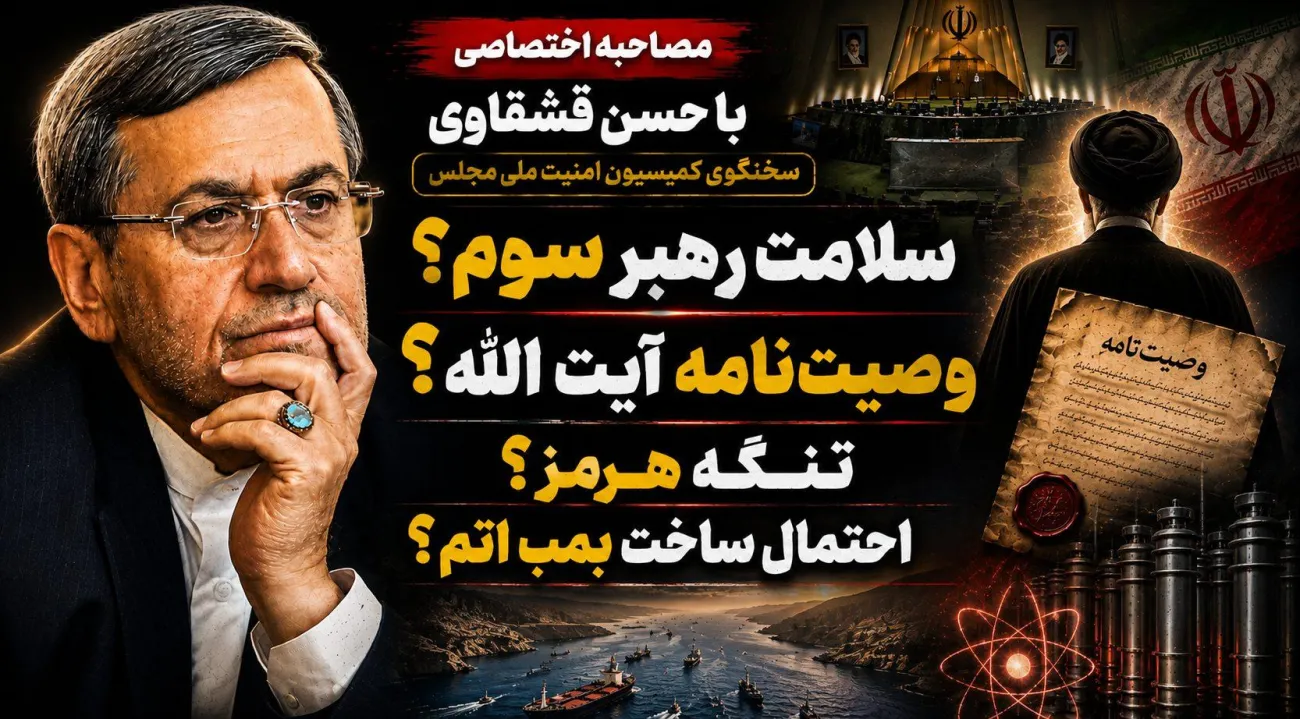
Abdi Media, continuing its series of conversations, this time turned to Hassan Ghashghavi, the spokesperson for the National Security and Foreign Policy Commission of the Majlis. The conversation with him began with the question: How far are we from the next war?
Abdi Media's conversation with Hassan Ghashghavi; from the possibility of the next war to the Strait of Hormuz, negotiations, and Iran's future.
Abdi Media, continuing its series of conversations, this time turned to Hassan Ghashghavi, the spokesperson for the National Security and Foreign Policy Commission of the Majlis.
The conversation with him began with the question: How far are we from the next war?
**Hassan Ghashghavi:**
In my opinion, this question should be asked of Trump and his team. We did not start that war, and we are not seeking war now either; we are seeking to secure our national rights. The one who started the war, not only in Iran but in many parts of the world, is America. They and the White House should be asked when they want to start the war again and when they want the ceasefire to continue. Are they really seeking for the agreement that has been made to be implemented? In my opinion, everything is in the hands of the American side, and we are always defending our national rights.
**Abdi Media:**
Let's start with this part, because people's concern is also to have an assessment of the possibility of tension escalating given the recent regional developments; especially the border and maritime tensions.
In your view, are the two sides, especially now that other parties have somewhat stepped back and even Israel is not very much in the field, moving toward a widespread military confrontation? Is it now specifically the Islamic Republic on one side and the United States on the other? Or are there still red lines for controlling the crisis?
**Hassan Ghashghavi:**
In my opinion, ultimately at the height of that tension and war, after the 12-day war and after the 40-day war, regardless of whether we accept the 14-article provisions of Islamabad or have criticisms of it, it was almost the first time after the victory of the revolution that two presidents at the presidential level signed it. If it is determined who violated this agreement, I think perhaps your question about the future will also become clear. We believe that the American side has violated the agreement.
Why? Because based on the provisions of those same 14 articles, it was supposed to return the passage of ships through the Strait of Hormuz to the pre-war conditions within one month. Let me tell you, in the very first days, more than 60 to 70 percent of the cases that the naval armed forces referred to the commission showed that the movement of ships had begun. In addition, it was supposed to be that if a corridor is to be created from the south, this corridor should also be based on specific arrangements. What does it mean when we say the Strait of Hormuz is not an international strait? Geographically and legally, the Strait of Hormuz is not an international strait. This issue has been raised both based on the 1958 Conference on International Law and discussed in the 1982 Convention on the Law of the Sea.
The late Matin Daftari was the head of Iran's delegation to this conference during the previous regime. Iran, both during the Shah's time and in the Islamic Republic, has officially declared through official notes that this strait is not legally an international strait, but rather lies within the territorial waters of the two countries. In the 1982 Convention, a specific definition for a strait is also set forth; a strait that connects two high seas or, especially in the 1982 definition, two exclusive economic zones. On the Persian Gulf side, it is not a high sea but a semi-enclosed sea. Therefore, from a geographical and legal standpoint, this strait has its own specific status. Of course, functionally, it is true that international ships pass through it and there is international transit; but this is different from the legal and geographical concept of an "international strait." Why did the parliament not ratify the 1982 Convention? We signed it, but we did not ratify it. Iran submitted an official note and protested this matter, that the Strait of Hormuz is not international and lies within the territorial sovereignty of the two countries.
**Abdi Media:**
After the agreement was signed, were any financial resources released for the Islamic Republic or injected into Iran? Did any resources return to Iran?
**Hassan Ghashghavi:**
The head of the Central Bank said no. Of course, serious talks had taken place. I am even saying this here for the first time: during the funeral of the martyred Leader, one of the mediating parties spoke with the Iranian side about a mechanism to receive about 300 billion dollars for reconstruction.
**Abdi Media:**
The Pakistani mediator?
**Hassan Ghashghavi:**
No, it was the Qatari mediator. He had come, but America did not agree.
America applies pressure and interferes and does not allow the countries of the region to be friends with one another and to de-escalate based on their own national interests and create regional arrangements. What problem do we have with Qatar? What problem do we have with Oman? Our relations with Oman have existed since the Shah's time. With other countries, too, we are Muslims, we are neighbors, we have a common Prophet, we have a common qibla and Quran.
An outside party 12,000 kilometers away draws a line and says this is my national interest, and from morning to night advises others to respect international law. The first peremptory rule of international law is non-aggression against countries and recognition of national sovereignty. Freedom of navigation comes after that. You violate the first, you violate the second, and then you shout that there is no freedom of navigation. It doesn't work that way. This difference existed even during the Shah's time. Look at the Shah's son and the monarchists; many of their positions today have no affinity with the Shah's positions.
Books and documents exist. Read the memoirs of Alam and the memoirs of Amir Aslan Afshar. I have read these. Iran's geographical reality during the Shah's time has not changed from today. Our geopolitics and geostrategy have not changed. Even the Shah himself stated that this strait is not international and that Iran's sovereignty in it must be taken into account, because our national security is in this region. The Shah accepted neither innocent passage based on the 1958 Convention nor transit passage of 1982.
America wants to pull the wool over both sides' eyes. Perhaps it has not been able to do so regarding the Islamic Republic, but look at what it did to the Shah. Richard Nixon, the then President of the United States, said in 1982 that you must accept transit passage. Many signed, but America itself did not sign the convention. It even threatened and said that if you do not accept it, other things will happen. They were pursuing their own interests.
We signed the convention, but we did not ratify it. In these matters, there are strategic discussions. Iran's geolocation has not changed from the Shah's time, although political positions have changed.
**Abdi Media:**
Regarding the monarchists, it has been discussed repeatedly. Their view is that whatever happens to Iran is no worse than the Islamic Republic, and they even justify a foreign attack or intervention that leads to Iran's destruction.
**Hassan Ghashghavi:**
I am not their spokesperson. I only gave an example and did not want to pay much attention to them in the middle of this fight. My discussion was about the historical course of the matter. For example, saying that the 1958 Convention belonged to that regime and 1982 belongs to this regime is not correct.
Even today in Russia, an important part of that country's national power, such as nuclear weapons and some other capabilities, belongs to the Soviet era. One cannot say that because the regime changed, all the national and strategic achievements of that period are gone. This is making a mockery of public opinion.
**Diplomacy and Mediation by Regional Countries**
**Abdi Media:**
You were Iran's ambassador to Spain for years and have been active in the diplomatic apparatus. Is there an opportunity for temporary agreements, extension of the ceasefire, or even crisis management through the mediation of regional countries such as Oman or again Pakistan? Or in your view, given the conditions you see, has diplomacy reached a dead end?
**Hassan Ghashghavi:**
Many mediating countries are interested in this matter. Perhaps based on their own national interests, they want to play a mediating role. Just yesterday, one of the mediators was in contact with the Iranian side, and these efforts continue. The economic situation of the regional countries is now also affected by this crisis. Look at Qatar's LNG situation. The Persian Gulf is not just about oil; medicine, chemical fertilizers, agricultural inputs, and many other matters are involved. Everything is locked with this situation, and there is no clear outlook for improvement. If we assume Iran's blockade becomes complete, naturally oil prices will increase. Just as in the case of sanctions on Russia, at one point they had to adjust some oil restrictions so as not to put more pressure on the market and not increase oil prices. The countries of the region naturally do not want such a situation to continue. Iraq, Kuwait, Qatar, Oman, and other countries all suffer from this situation.
For any country that mediates, success in mediation can be important in terms of prestige. A successful diplomacy leaves a record and legacy in the history of that country's diplomatic activity. But there is a more powerful party like America that can prevent it.
We have faced economic sanctions and pressure since the early days of the revolution and generally for nearly 46 or 47 years. It was said once that the economic blockade did not work and they entered the military phase, and now they have returned to the same economic blockade. We have also gained experience; we have acquired the experience of circumventing sanctions. Now they want to return to the same policy of economic blockade again. I do not know how long this vicious cycle is supposed to continue. I hope it will be cut off one day; certainly from Iran's side. Sanctions ultimately apply pressure, and its pressure is always greater on the vulnerable segments of society. I am the representative of the two most deprived counties of Tehran Province, Robat Karim and Baharestan. Generally, the working class lives there, and because the area is close to Tehran, I see the economic pressure daily. After the war, I also visited the families of the martyrs. I saw families living in 50 or 60 square meter houses with two or three children. One father of a martyr had seven children.
Despite all these difficulties, the families of the martyrs asked us not to back down. Their demand was that diplomacy be coordinated with the battlefield and that we move forward. This wrong cycle of "ceasefire, negotiation, war, negotiation again, and war again" must be stopped once and for all.
**The Strait of Hormuz; Diplomatic Card or Strategic Decision?**
**Abdi Media:**
How do you predict the establishment's approach to managing traffic in the Strait of Hormuz and its reaction to international pressure? Is the Strait of Hormuz a diplomatic bargaining chip, or is controlling and closing it considered a permanent strategic decision? Some believe that if this card is not used timely and correctly, it may lose its function and strategic advantage.
**Hassan Ghashghavi:**
This is a strategic decision. We also discuss it in the commission. Of course, our effort is to preserve both sides of the coin; one side is freedom of navigation in the Strait of Hormuz, which we accept, and the other side is preserving national sovereignty. During these 47 years, even in the law on the maritime boundaries of the Islamic Republic of Iran approved in 1993, Iran's surveillance zone has been specified. According to the 1982 Convention, the surveillance zone is set at up to 24 nautical miles. If this were a maritime zone, it would be a different discussion, but there we reach Oman's territory. Perhaps we have had shortcomings in the past; otherwise, if we had not been negligent, how were 14 bases established in the region? How were all these radars created? Later it became clear that many of them were not against Israel, but against Iran.
If tomorrow or the day after, our islands are attacked and claims about the three Iranian islands are still raised, what decision would any country in Iran's place make? I was once Iran's ambassador to Spain. In the Strait of Gibraltar, Spain considers the waters of the region as its own and has emphasized this position for years. Every time we went, they said this matter is based on law for us.
No country is willing to compromise even an inch of its national sovereignty. Why should we think tactically? When the law was passed, the strategic law is no longer merely for negotiation. For example, the strategic nuclear law that the parliament passed—did we return to the pre-law situation after that? No. If another law is passed in the parliament in a month or two, it must be clear whether this action is tactical or a natural and strategic right. Every action taken against national interests in the past years, whether during the Shah's time or in the Islamic Republic, must be taken into account. Which patriot and Iran-lover can accept that such a conspiracy against Iran is formed in the neighborhood of their country? In this very war, from Minab, Lamerd, and Sirik to other areas, we witnessed this situation.
We were in Qeshm with the members of the commission. The people were present there and resisting the attacks and damages. The people understand these things. I emphasize once again that no system is infallible. We do not claim infallibility. In economic, cultural, and foreign policies, we certainly have strengths and weaknesses, and we must correct the weaknesses. But to substitute one word for "Iran" and say "Islamic Republic," and then justify all the actions of Israel and America, while at the same time saying "the seal of Iran," these do not add up.
**The Strategic Action Plan for the Strait of Hormuz**
**Abdi Media:**
Just a few days ago, you announced the approval of the general outlines of the Strategic Action Plan for Ensuring the Security and Development of the Strait of Hormuz and the Persian Gulf in the National Security Commission. What is this plan supposed to change compared to the current situation? Are we talking about an economic and legal framework, or is the parliament practically creating a legal basis for imposing restrictions on the passage of certain ships through the Strait of Hormuz? Are we going to receive money? What benefit does this plan have for the country?
**Hassan Ghashghavi:**
Determining a corridor is one of the main axes; the same thing that is raised in the law of the sea under the title of PSS and is also approved and communicated by the IMO. The determination of the corridor is done by the coastal states. After that, the discussion of control comes into play; meaning, first the corridor is determined, and then its control is carried out based on a specific mechanism. Another issue is the costs of environmental protection, navigation costs, and related services. The coastal state, as exists everywhere in the world, has the right to receive fees for the services it provides. These are our three main legal pillars: Iranian arrangements, Iranian management, and Iran's natural right. We have also negotiated with Oman, and as far as the latest news goes, the corridor issue is almost resolved and other parts have also progressed. If American pressure allows, the Omani side can also cooperate. You saw that as soon as America realized things were going well with Oman, pressures increased and they even threatened Oman. Really, in terms of international law, who is America to want to determine the fate of our region? If it is about power, the European Union is a power, China is a power and supplies about 60 percent of its oil from this region, but none of them make such a claim.
In drafting this law, the representative of the Ministry of Foreign Affairs, who represents the Pezeshkian government, is present. Representatives of the armed forces, the Deputy for International Law of the General Staff of the Armed Forces, the Ports and Maritime Organization, the Environment, and the Research Center of the Parliament are also present. The reason the work is progressing is that we examine it word by word. First, we try to preserve Iranian sovereignty and management and national security, and second, we do not want to be in conflict with international law. It is preferable that, as much as possible, international rules be observed so that it is understandable to the world. We do not want more than our right, but we certainly will not back down from our right. This is not a factional discussion either, to say one side is radical and the other is slow. Expert differences are natural.
In the commission meetings, we sometimes discuss a single article for three hours and ultimately approve one article. This stems from expert discussion. Today we have very strong experts and international lawyers. Recently, Dr. Bagherpour, the Director General of Legal Affairs of the Ministry of Foreign Affairs, spoke in English about the legal foundations of the Strait of Hormuz and presented various documents. I myself have been working on these topics for about 30 years. I also have experience with the Caspian Sea issue. I was once Iran's ambassador to Kazakhstan and after the collapse of the Soviet Union, I participated in the negotiations related to the Caspian. I even debated with Russian representatives in the Russian Duma about 27 years ago. My education is in law, and after that I also studied in the field of jurisprudence. There are very prominent experts in the Islamic Republic in the field of international law.
The Caspian Sea
Abdi Media:
I also have a question for you about the Caspian Sea. You said you have been involved in this issue for about 30 years.
Hassan Ghashghavi:
Dr. Momtaz is also one of the educated of the Shah's time and played a role in drafting the 1993 law. May God grant him health. In these matters, we are all one. Anyone who is a patriot, what difference does it make whether they are with the Islamic Republic or not? I myself sometimes use the speeches of Iranians abroad on YouTube. They may not have contact with inside the country, but when I see they are concerned about national interests, I truly enjoy it. I pray for all of them and may God keep them healthy wherever they are. Anyone who has a heart for the growth and elevation of Iran is respected by us.
What Does America Want?
Abdi Media:
On the 10th of Mordad, in an interview, you said that while the media talks about escalating tension, America is seeking negotiations through existing channels. What exactly is America requesting negotiations about? Merely the Strait of Hormuz? Security and maritime arrangements? The nuclear file? Or a larger and broader political agreement? Are these negotiation channels security-related or merely intermediary countries?
Hassan Ghashghavi:
If we go back to the two or three rounds of Geneva negotiations, many told us that we talked about everything, especially in the recent rounds. Individuals like Jared Kushner, Witkoff, and even Cooper were present in this process and talks took place. At one point, even our economic deputy went, and they told us that if Trump's economic interests are important to him, define projects so that he feels a sense of benefit.
We also defined projects; we presented about 150 to 200 billion dollars in specific projects. We had no problem with the presence of American companies. According to America's own laws, American companies had restrictions on investment, and these sanctions existed in their own domestic laws. We have never had a problem with the economic activity of American companies. In the JCPOA, too, when we wanted to buy airplanes, our position was that whoever offers better and cheaper goods can be the party to the deal; whether it is China, America, or Europe. We conduct buying and selling based on the interests of the Iranian people.
Listen unfiltered on Castbox.
The 14-Article Islamabad Agreement
Hassan Ghashghavi:
I opposed some clauses of the Islamabad negotiations in the parliament and announced this on Iranian television. After that, in the first meeting we had with Mr. Araghchi, I told him that based on my knowledge of America, I suspect they will not implement the provisions of the agreement and will renege on it.
Despite all the criticisms regarding the 14-article agreement, the Supreme National Security Council and the system as a whole accepted these 14 clauses. Look at what was not in these 14 articles that should have been there. In the second clause, respect for national and territorial sovereignty and the prohibition of threats of war and military action were mentioned. Regarding Lebanon, we mentioned Lebanon's name several times. Lebanon does not belong to the Islamic Republic. If you read Alam's memoirs, you will see that during the Shah's time, Lebanon was also discussed. The late Shah was asked what Lebanon had to do with Iran, and the answer was that Iran, as the only Shiite government in the Middle East, cannot be indifferent to the Shiites of southern Lebanon. Assistance to Imam Musa Sadr existed since the Shah's time and continued after the revolution.
In major issues, some differences with what existed in the past were not very fundamental. The 14-article framework, in my opinion, was a good framework. In it, we said sanctions should be lifted. They said they would be lifted. We said compensation should be paid. They said compensation in this form is not possible. We said in the form of reconstruction. We also said Iran's blocked financial resources should be released. This money is not America's money. It is not the money of the American people and their taxes. The major part of these resources has been obtained from the sale of Iran's oil.
This situation is similar to you having sold your house or car, and the other party has used it for 40 years but does not give you its money. We say let us use these resources for medicine and basic goods for the people.
Sanctions and People's Lives
Hassan Qashqavi:
My late brother's fortieth-day memorial was yesterday. He had liver cancer. We tried very hard for a specific medicine that could relieve his pain. One item of chemotherapy drugs cost about 400 million tomans. Family and those around helped, borrowed money, and the cost was provided.
Calculate how many special patients we have in the country. With which logic of human rights is this situation compatible? Can someone say they accept human rights and sleep comfortably at night, while Iran's financial resources for buying medicine and treating people have been restricted? The country's revenue sources are specified in the budget law. It is not the case that all the money is spent abroad. These are justifications that, in my opinion, are raised to soothe the conscience. I believe the 14-article agreement was a good framework, but it was set aside, and in return, an attempt was made to forcefully create another corridor.
Then they say the Iranian side is warmongering and wants to continue the war. Which sane person is a warmonger? What good does war have for the people? We see families where four of their members have been martyred. In Dasht-e Mahyar, seven members of one family were martyred. In Qeshm, several members of one family were killed. The same happened in Minab, and two children of one family were not found. Who said war is good? When war is for defending sovereignty and national interests, defending the country is necessary. From a religious standpoint, a mother is the manifestation of compassion and war is the manifestation of violence. But in Islamic culture, in conditions where defense is necessary, defensive jihad takes on a different meaning. Someone who likes violence has no reason; but at a certain juncture, defense may become necessary. We have been in a cycle of ceasefire, negotiation, deception again, death, and then negotiation for 47 years. We want this cycle to end; as the saying goes, death once, mourning once.
Decision-Making Structure and the Role of the Leadership
Abdi Media:
The combination of your background—being a diplomat, a member of parliament, activity in the Ministry of Foreign Affairs, an ambassador, and seminary education—has caused various dimensions to be raised in this conversation. Let's return to the process of major decision-making in the Islamic Republic. After the 40-day war, what change has occurred in the decision-making structure? Where is the main decision made? Which body has the authority for the agreement?
Some discussions have been raised about the Supreme National Security Council and that the council decides independently. On the other hand, you monitor issues in the National Security Commission. What is the role of the new Leader, Ayatollah Seyyed Mojtaba Khamenei, in the main decisions?
Hassan Ghashghavi:
The Islamic Republic is like a family. In every family, for important decisions, there are different viewpoints. In the expert stages, certainly different viewpoints are raised. In the Supreme National Security Council, one person looks from a security standpoint, another from a military standpoint, and another from a diplomatic standpoint. Expert differences of opinion are natural. But there is a mechanism. Some matters are referred by the Leadership to the political committee or specific committees. We also have a six-member committee. Members of the Supreme National Security Council are also present in the decisions. During the war, military commanders have the right to vote in the council based on the constitution, and in addition, they also have the right to express their opinions. Matters do not enter the main session of the Supreme National Security Council raw. At the expert levels, deputy ministers, ministers, and various bodies examine it so that the matter is matured.
Regarding the Strait of Hormuz, 12 plans have been proposed by representatives in the parliament. In addition, the General Staff of the Armed Forces, the IRGC Navy, the Army Navy, the Ministry of Intelligence, and other bodies have presented their opinions. It is possible that the Leadership may refer a matter to a body in some cases or say that the final decision is with his own opinion. This matter is not hidden. According to the constitution, the approvals of the Supreme National Security Council become executable when they are confirmed by the Leadership.
The Health Status of the New Leader
Hassan Ghashghavi:
Two or three weeks ago, apart from Mr. Pezeshkian's public statements, I had the opportunity to speak with the President for about an hour in a private meeting. He gave more explanations about his meetings with the Leadership. After the first meeting and the next meeting with the Leadership, the last meeting had also lasted for hours.
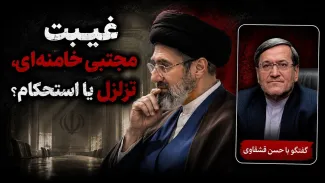
At a gathering, he was asked about the health status of the Leadership, and he said that when I spoke with him for seven hours about various issues, what else should I explain? Mr. Pezeshkian emphasized the Leader's health. Other sources I have also confirm this. In my opinion, the rumors raised about his physical condition are baseless. Those who have met with him have also emphasized his complete health and his mastery over affairs. I myself have not met with him, but I have spoken with those who have met with him.
The Selection of the New Leader
Hassan Ghashghavi:
Regarding the selection of the new Leader, I must also say that from the very first polls and official sessions of the Assembly of Experts, the overwhelming majority turned toward Ayatollah Seyyed Mojtaba Khamenei. From the perspective of jurisprudence and ijtihad, no doubt was raised about him. In the seminary atmosphere, the discussion of virtue and ijtihad is a serious matter and not something that can be joked about. In my opinion, a significant consensus formed regarding his leadership. He is not indebted to domestic factions, and neither the extremists nor the centrist currents played a determining role in this selection. The people were in the field, and then the Assembly of Experts performed its legal duty and voted. The atmosphere that was created after the martyrdom of his father and the people's sense of confrontation with the actions of America and Israel created new conditions. As legal scholars put it, fundamental changes have occurred in Iran's governance mechanism, and some do not want to accept this reality.
The Role of the IRGC in Decisions
Abdi Media:
Much has also been said about the role of the IRGC. If you have a point about this matter, please share it.
Hassan Ghashghavi:
The IRGC is not a political force; it is a military force. In the armed forces, there may be different expert viewpoints. We have old and new IRGC members, and in the army, this same diversity is natural. In America, too, despite the two-party structure, there are very serious differences between Republicans and Democrats. Even within a single party, different viewpoints are raised. In the armed forces, too, there may be differences at the expert level, but when the matter reaches the level of national goal, the final opinion is determined at the level of the General Staff of the Armed Forces. Therefore, it is not the case that we turn every expert difference into a political or factional difference. In the discussion of the war, too, some Persian-language media abroad are interested in highlighting the difference between the IRGC and the army. We saw the army in Bandar Abbas and other areas. God is witness, the commanders and military forces stood firm in very difficult conditions.
Even some families, despite the bombardment, were not willing to leave their areas. During the 13 years I was an ambassador, I saw many mechanisms of foreign services up close, but the national solidarity of the Iranian people was a reality.
It is possible that at the expert level, there may be a difference of opinion between the General Directorate of the Persian Gulf of the Ministry of Foreign Affairs and the Legal General Directorate about a matter, but when the matter reaches the level of the minister, these viewpoints are like rivers that ultimately become a single river.
The Public Presence of the New Leader
Abdi Media:
Since the selection of Ayatollah Seyyed Mojtaba Khamenei as Leader, we still do not have a clear public audio or image of him. Our reference is to your statements, Mr. Pezeshkian's, and some other sources. Is there a demand from the representatives of the parliament to end the ambiguities about the Leader of the Islamic Republic? Will we soon see an audio message, video, or public appearance by him?
Hassan Ghashghavi:
It is certainly a security matter and has no other reason. The protective protocol in conditions where the life threat continues requires such measures to be taken. The Israeli Defense Minister has threatened and said we will attack. Therefore, past experience and reason dictate that security officials take the necessary considerations. Some have repeatedly said the Islamic Republic system is individual-centered and dictatorial. But dictators are usually the last to be killed, not the first.
In this war, the first person to be martyred was the Leader. If the Leader is not in public view, but the system remains coherent and everyone believes in its mechanism, is this a sign of the system's weakness or its strength? Even we representatives of the parliament may disagree with one another on cultural, economic, or monetary policy, but the system as a whole is standing.
We, as Shiites, believe in the Imam of the Time, while it has been more than a thousand years that he has been in occultation and no one has seen him. But this occultation does not mean the destruction of our belief and adherence. I hope that if there are security obstacles, they will be removed whenever possible; because we all long to see him.
The Possibility of a Change in Nuclear Doctrine
Abdi Media:
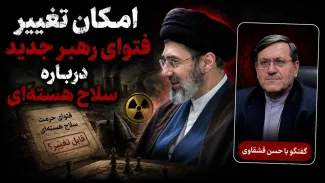
One of the important discussions is that Ayatollah Ali Khamenei had always considered nuclear weapons forbidden and was, in a way, the brake on building nuclear weapons. Now some in the military and political structure believe that if Iran had nuclear weapons, it might not have been attacked. Some even talk about withdrawing from the NPT and quickly building nuclear weapons. Given the change in leadership, is it possible that the nuclear doctrine of the Islamic Republic will change?
Hassan Ghashghavi:
In religious terminology, you used the word "fatwa." We must note that a fatwa in jurisprudential matters may change. Even in personal and devotional matters, a person may refer from one source of emulation to another and receive a different ruling. Therefore, from a jurisprudential perspective, it is possible that the opinion of a current living authority may be different. One of the discussions that was raised was what opinion the previous Leader had regarding the legacy of leadership and his son. He had repeatedly announced that he was not seeking leadership for his son. This matter was even raised in some sessions of the Assembly of Experts. But in any case, the previous Leader had not specifically entered into the question of who should be the next Leader. Now the conditions have changed, and the new Leader has been selected and the Assembly of Experts has voted for him based on the legal mechanism. If the public interest of the country and the decision of the Leadership are that Iran withdraws from the NPT, I tell you honestly that in the current parliament, there is a basis for voting on such a decision. Apart from my personal opinion, the groundwork for a change in nuclear strategy exists among a segment of the elites, political factions, and even the parliament. When I was an ambassador in various countries, I also observed this difference of viewpoint in Europe.
In some official and academic circles, it was said that Iran should not go toward a nuclear bomb; but among some elites and academics, they said why doesn't Iran go toward a bomb? They said Iran has been sanctioned, its scientists have been assassinated, and it has paid the cost, so why does it continue this policy? In contrast, governments and official parties warned that such an action would create an arms race and set the region on fire.
Even among American foreign policy theorists, this difference exists. Some realists believe the Middle East issue might change with Iran acquiring a nuclear weapon, and others consider this very dangerous. Iran, since the Shah's time, had raised the issue of a Middle East free of nuclear weapons. After the revolution, too, the official position was that nuclear weapons are weapons of mass destruction and should not be built. The most nuclear inspections have also been conducted in Iran, and even various American oversight bodies have at times said that Iran, after certain years, did not seek to build a nuclear bomb.
But behind the scenes, even some foreign journalists and elites said: Why don't you seek an atomic bomb? With all this pressure and sanctions, why don't you pursue this option? I cannot say what decision will be made. Until the Leadership's opinion and the official policy of the system are determined, we cannot definitively say that the nuclear strategy has changed.
Abdi Media:
Meaning, we currently do not have a specific strategy?
Hassan Ghashghavi:
Not at the moment. But if a strategic change is to be created, today the groundwork for it exists. If the parliament knows that the Leadership's opinion or fatwa has changed, it might even decide on withdrawing from the NPT with a double-urgency motion. But whether Iran will ultimately go toward building a bomb or not, I cannot honestly say at the moment.
The Will of the Previous Leader
Abdi Media:
Regarding the will of Ayatollah Ali Khamenei, has the parliament had any demand about when this will should be read?
Hassan Ghashghavi:
I have not seen representatives from different factions express a specific opinion about it. In the current conditions where the country is under security pressure and a ceasefire is also being discussed, it is natural that some matters be postponed. The parliament also holds its sessions with special security protocols.
Abdi Media:
Some people expected the will to be read at the funeral and burial ceremony.
Hassan Ghashghavi:
Regarding Imam [Khomeini], too, such discussions were raised in the first session of the Assembly of Experts.
The Assembly of Experts has its routine sessions, and the official session for selecting the Leader was also held, which was the right thing to do. Of course, the commissions of the Assembly of Experts are very active. It is natural that all of us would be interested in knowing the will. The will is a treasure for the future. A will is fundamentally written for the time after a person's death and can be of great importance.
Livelihood Problems and Cultural Issues
Abdi Media:
People are currently grappling with numerous difficulties, the most important of which are economic issues. Alongside these problems, people expect the establishment to at least make their lives easier in some cases and not cause further hardship. From cultural issues, from the hijab issue to women riding motorcycles and matters that have been resolved in much of the world, to the tightening of certain judicial rulings and also new laws being proposed under the title of "infiltration." Many believe that legislation and criminalization can make people's lives harder, and legal reform can make their lives easier. What measures do you have in the National Security Commission to make people's lives easier, especially in the area of personal and cultural matters, and to manage issues that do not necessarily require judicial and security confrontation in another way?
Hassan Ghashghavi:
Certainly, in your own family, there are various individuals, and many of them are in cyberspace.
The perspective of the religious within the country is that they are upset about certain cultural matters. You mentioned women riding motorcycles, which has become common today.
Abdi Media:
They don't have licenses and it's not legal.
Hassan Ghashghavi:
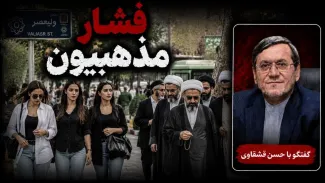
The concern is that excessive laxity will increase. Even a segment of women who observe less hijab also object to certain manifestations of protest. In my own family, not everyone observes the same level of hijab. But many say what is this situation, and we did not think it would reach this extent. Previously, until a year or two ago, the main pressure was from the other side and the discussion of social freedoms was raised, but now more pressure is entering the parliament from religious forces in society and even within families, asking how long this situation is supposed to continue.
Regarding judicial matters, since I myself have studied law, I do not comment without entering into specific cases about executions and judicial rulings. A judicial case usually has a process; the primary court, the appeal, and in some cases the Supreme Court. There is even the possibility of applying Article 477 by the Head of the Judiciary. Various reports are also received. We lawyers have learned not to issue a ruling about a case without reading it. But the reality is that outside the country, some issues are highlighted excessively, while the main concern of the people is livelihood.
In all polls, the issue of the economy and people's lives is at the top. If I were to give an approximate figure, perhaps cultural concerns are ten percent and economic and livelihood concerns are 90 percent. Of course, I have not conducted a poll myself. People want medicine, cheaper treatment, employment, and the fight against inflation.
If a loudspeaker, whether inside or outside, ignores this 90 percent of people's concerns and highlights only the ten percent, people will not accept it. I see this in the deprived area of my constituency. People are not just looking for loans.
Abdi Media:
Their nightly bread.
Hassan Ghashghavi:
Their nightly bread, medicine, and treatment.
While some opposition currents try to attribute concerns to the people that are, in their view, resolved or secondary. In our society, everyone knows about the issue of clothing, and everyone sees the conditions. We are a religious society, and the majority of society also holds religious beliefs. But extremism on one side may cause neglect on the other side. There must be moderation.
We believe in freedom of expression and the preservation of social freedoms, but to the extent that it does not lead to norm-breaking and does not harm the religion and beliefs of the majority of the people.
The Law on Infiltration and Cooperation with Hostile Governments
Abdi Media:
Regarding infiltration, too, there are different viewpoints, and it remains to be seen what the final text will be.
Hassan Ghashghavi:
Yes. We must see what the final outcome of the approval will be. After the parliament, we have the Guardian Council, and if no agreement is reached, there is also the Expediency Discernment Council. This process continues, and it does not end merely with the approval of one article in the parliament.
Abdi Media:
Currently, the plan to intensify the punishment for cooperation with hostile governments is on the table, and many rulings are issued based on this same matter.
Hassan Ghashghavi:
Ultimately, in cases where cooperation with a hostile government is proven, the law exists.
Abdi Media:
But what exactly does the new infiltration law help with?
Hassan Ghashghavi:
I said that where we have a law, we must pay attention to that same law. Legislation should not be done in a repetitive manner. For example, in the Strait of Hormuz law that we are drafting, in some cases we have referred to the 1993 maritime boundaries law. When a law exists, there is no need to legislate the same matter again.
When Will Iran See the Color of Peace?
Abdi Media:
At the end of the conversation, I want to know what your outlook is. When will Iran see the color of peace, and when can we reach more stable conditions?
Hassan Ghashghavi:
We are peace-seeking. We are diplomats. I have also been present in the war, but I do not have expertise in military affairs and have mostly been active in the field of propaganda and speeches. Both the military and the diplomats ultimately pursue one goal: balanced growth and development, sustainable development, and the calm and stability of the country. We seek domestic and foreign investment. Our dear Iranians who have left the country for whatever reason, their footsteps are on our eyes; let them come. I was the Deputy for Iranian Affairs for three foreign ministers for eight years, and we tried to facilitate the entry of our compatriots.
A part of Iranians abroad are our national capital; economic, scientific, legal, artistic, and media capital. We hope they return within their own borders and land. Iran belongs to all Iranians. Iran is not the property of me or my kind. Anyone who is concerned about national interests and national security is our brother, sister, and compatriot. But Iran's fate has been that we have always faced war and conflict; from the Iran-Russia wars to the Iran-Ottoman wars and then the treaties of Golestan and Turkmenchay and other agreements that separated parts of Iran's territory. Iran during the time of Cyrus had an area of about 10 million square kilometers, and throughout history, parts of it were lost as a result of war, pressure, and agreements. Today, Iran's area is about one million six hundred and forty-eight thousand square kilometers. If we do not hold our hats on tight, we may lose even what we have.
We must not allow Iran's rights in the Caspian and the Persian Gulf to be ignored; just as the warriors and martyrs sacrificed to preserve this land. In fact, I believe there is a real bipolarity in the country, but not that old political bipolarity. We went to Bandar Abbas and saw that some warriors had not seen their families for six months. If I do not control my emotions, I am still affected by seeing those scenes. Someone has not seen his grandchild, has not seen his wife, and in 50-degree heat and very high humidity, he defends the country. On the other side, if someone is after personal interests, encroachment on public property, rent-seeking, cronyism, and his own electoral and economic benefit, this is a real bipolarity.
Many of these warriors are from the weak and middle strata of society. The salaries of many of them are around 20, 25, or 30 million tomans, and the soldiers have much lower incomes. These individuals defend the country in the heat of the south and the cold of Kurdistan's winter, against threats and separatist groups and other threats. Therefore, the real bipolarity of the country is between those who are willing to give their lives for the country, Iran, and their religion, and those who still exploit the country's conditions for their own personal interests. This bipolarity must be taken seriously, and for Iran's future, justice, national interests, security, and development must be placed alongside one another.
The full file of Abdi Media's conversation with Hassan Ghashghavi, spokesperson for the National Security and Foreign Policy Commission of the Majlis.
Take less than a minute, register and share your opinion under this post.
Insulting or inciting messages will be deleted.
Sign Up