Written report

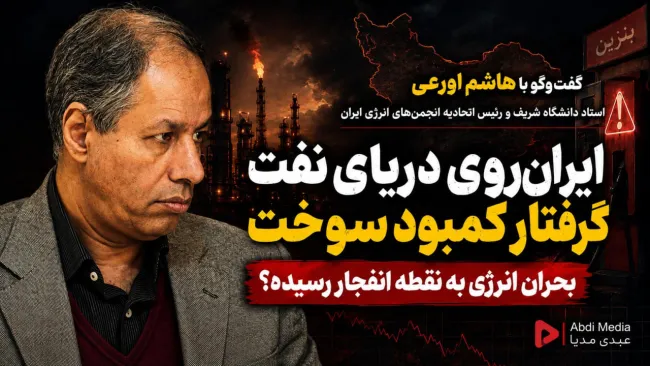
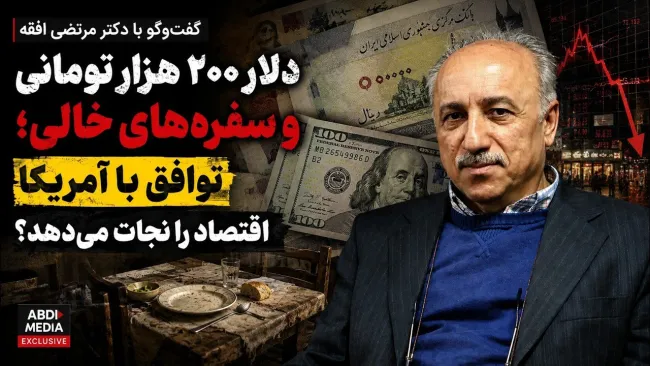
Hope or a Deception Plan? Negotiation, Explosion; Agreement and Hostility with Dr. Majid Behestani, Professor and Faculty Member of Imam Hossein University.
We will go to the heart of the mystery together. From the very beginning, we must know that in a world where truth and falsehood are intertwined, only one thing is certain: every signature has a cost, and every cost has a future. Tonight, I have the honor of being with Dr. Majid Behestani, an analyst of international developments and a professor and faculty member of Imam Hossein University, to fearlessly lift the veils. What led these two long-time enemies to sit at the negotiating table?
Read more
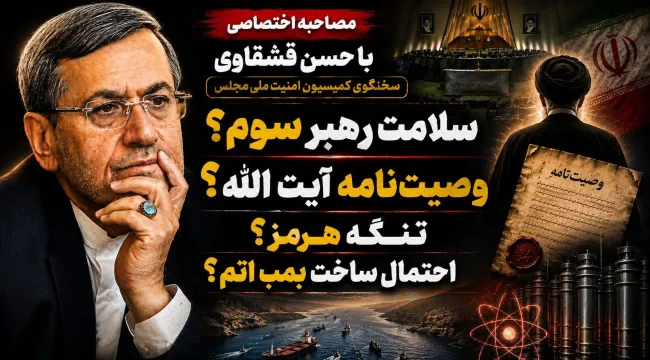
Latest developments in the foreign policy of the Islamic Republic of Iran in a conversation with Dr. Hassan Qashqavi, a former diplomat and member of the National Security and Foreign Policy Committee of the Islamic Consultative Assembly.
In a tense world and a volatile region, the foreign policy of the Islamic Republic of Iran is under the microscope of public opinion and international analysts more than ever. From complex relations with global powers to Iran's role in regional equations, these raise important questions about the goals, achievements, and costs of the Islamic Republic's foreign policy. In a situation where threats from the United States and Israel, military movements in the region, and increasing tensions in the Persian Gulf have intensified, the fundamental question before us is: how is the strategy of the Islamic Republic of Iran defined in the face of a possible confrontation? What is the outlook of the Islamic Republic's foreign policy, especially in dealing with Trump's America? Engagement or confrontation?
Read more
Iran Without Water; The Alarm of Climate Collapse | How Did They Drive a Land to Death? With the presence of Mohammad Darvish, Senior Expert in Environment, Rangeland, and Watershed Management, and Environmental Activist.
Iran is thirsty, not only due to lack of rain but also due to lack of thought. Not only due to water scarcity but also due to the folly of a history that has forgotten water and soil. Tehran, the capital of Iran, now stands on the precipice of absolute waterlessness. Groundwater aquifers have been emptied. We look to the sky with supplication, and officials offer pumps and reservoirs. This is our concern. In the midst of this, the main question is not how much rain we have; the question is why we have no management. Why has no one thought of the future water rights? Who decided to sacrifice the fate of a land for development? And now the bells have tolled—not for someone else, not in another country. The bell of a land's end is right here, in the heart of Iran. The water crisis has passed from a crisis to the brink of climatic collapse.
Read more

The Role of Russia in the Iran-U.S. Nuclear Agreement" with the presence of Dr. Elaheh Koulaei, Professor of Regional Studies at the University of Tehran
In this dark theater of power, the roles are not pre-written, but the life and death of nations are determined in every unspoken dialogue. Every smile behind the glass table may conceal a shadow of betrayal, and the one who remains silent may be more dangerous than the one who shouts. Here, the truth lies not in what they say, but in what they do not say.
Read more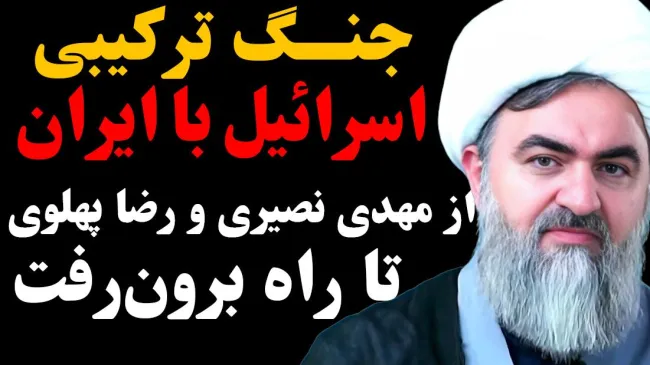
Israel's Hybrid War with Iran: From Mehdi Nassiri and Reza Pahlavi to the Way Out, featuring Hojjat-ol-Islam val-Moslemeen Mohammad-Taqi Akbarnejad, Lecturer at the Qom Seminary
Has the war ended? Or have we just entered its main phase? When the enemy no longer approaches from the border but strikes from other directions, how, who, and where does it collapse? Amidst fire and diplomacy, in a land that still smells of gunpowder, a fundamental question lies before us: How can one stand without being destroyed? How can one fight without being a warmonger?
Read more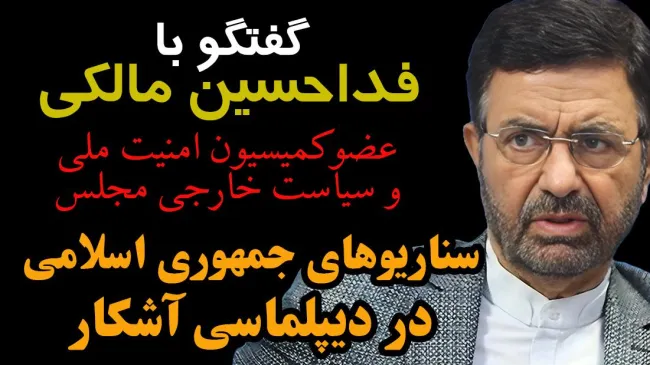
Scenarios of the Islamic Republic in Open Diplomacy with America: A Conversation with Fadahossein Maleki, Member of the Parliament's National Security and Foreign Policy Commission.
In the geometry of global power, dialogue is sometimes a tool of peace and sometimes a mask for war. The Islamic Republic, from its very first days, has defined itself in opposition to what it calls imperialism and the hegemony system—namely, the United States. But throughout all these years, behind closed doors, the power of diplomacy has always been flowing: sometimes loudly, sometimes with sealed lips. Now, on the eve of major regional and global transformations, amid economic deadlocks and increasing social pressures, and while the world is experiencing a complex America led by Trump, it is watching this period's negotiations with Iran. The fundamental question is: what scenario does the Islamic Republic have in mind for confronting the United States under Trump's leadership? Has open diplomacy replaced covert policy?
Read more
See | The Inevitable Future of the Islamic Republic; From Protesters to Power Transfer; A Conversation with Faezeh Hashemi
Is it possible to escape the future? This is a very important question: is there any escape from the future or not? History is neither sleep nor fantasy; it is a stubborn reality that sometimes shows its face in the mirror of popular protests, sometimes in negotiations behind closed doors, and sometimes in the shadow of the comings and goings of leaders and their successors. The Islamic Republic, after nearly half a century, now seems to me to be standing in a purgatory between continuity and transition.
Read more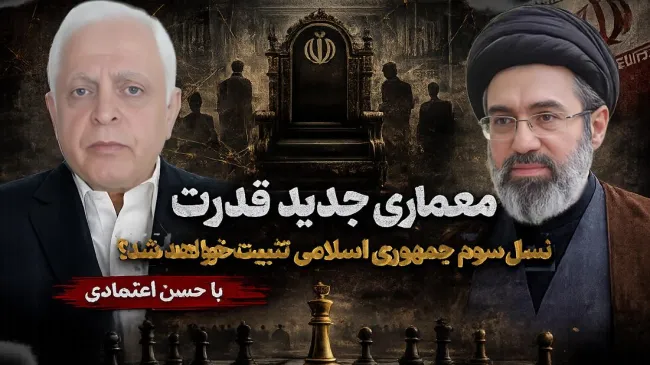
Mojtaba Khamenei and the New Architecture of Power; Will the Third Generation of the Islamic Republic Be Consolidated? A Conversation with Hassan Etemadi, Political Analyst.
It is very clear that the Islamic Republic is at one of the most sensitive historical junctures. Therefore, we are going to discuss an issue that is important for the future of Iran, and the topic of our conversation is the structure of power in Iran. We know that after the attacks that took place in recent months, and after the killing of Ayatollah Khamenei and the transfer of leadership in a very strange and extraordinary process to his son, Mojtaba Khamenei, many now believe that the Islamic Republic has entered its third generation. Although to this day, we have not seen any live voice, image, photo, or even a live signature from the new leader. Has Iran entered the era of a military-security government? And can the new architecture of power stabilize the Islamic Republic system and the nascent system of Mojtaba Khamenei, or will new crises arise?
Read more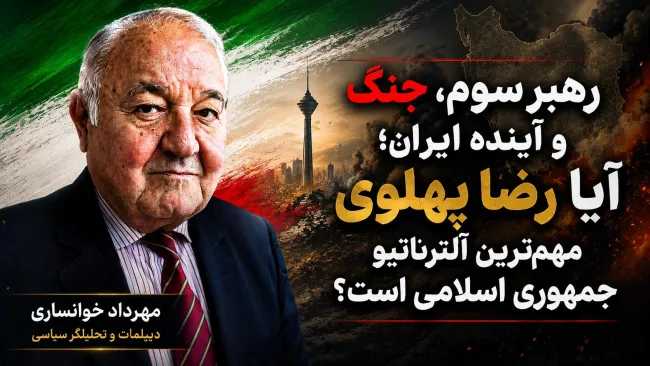
Watch | The Third Leader, War, and the Future of Iran; Is Reza Pahlavi the most important alternative to the Islamic Republic? In a conversation with Mehrdad Khansari, former diplomat and political analyst.
History is a testing ground for power, and in this testing ground, nations have repeatedly faced similar questions: when a political system enters a phase of erosion, or when for many it becomes conditional and reform is no longer enough, and for many the question arises as to when the survival of a government becomes its greatest issue, and more importantly, for many the question arises as to when the future separates from the past. Today, Iran is in one of the most sensitive periods of its contemporary history: the American and Israeli attack and the war that has changed the equations of the region, the killing of the second leader of the Islamic Republic, the emergence of the third leader of the Islamic Republic, changes in the balance of power within the establishment, the increasing role of security and military institutions, the intensification of political rifts, the current negotiations with the United States, and simultaneously, the return of the discussion of alternatives to the center of attention, and the return to a question that has loomed over Iranian politics for decades: Will the Islamic Republic pass through this historical turning point? If not, how will Iran's future be shaped?
Read more
Reza Pahlavi, the Islamic Republic, and the War Trade — Shaghayegh Norouzi speaks frankly.
I want to speak on Abdi Media about one of the most complex and tense arenas of Iranian politics — a space between war and freedom, between the opposition and power, and between truth and the politics of commerce; about a society that has for years been suspended between anger, fear, hope, revenge, freedom, and collapse, and now stands at a point where it is simultaneously afraid of war, afraid of the continuation of the status quo, and afraid of a future of which it still has no clear image. In years when Iran is simultaneously entangled in internal crisis, external pressure, the threat of war, and the collapse of public trust, great questions remain — questions whose answers many might find important to know: Who truly speaks for Iran?
Read more
Iran After Ayatollah Khamenei | Mojtaba, Reza, Donald, Benjamin, Ahmad, or Mohammad Bagher: Who Will Shape the Future? A Conversation with Mohsen Sazegara, Political Analyst
The Spinoza of Iran? | The Future of Islam in the Islamic Republic featuring Haj Sheikh Abdolrahim Soleimani Ardestani, Scholar of Religions, Retired Professor at Mofid University, and Former Member of the Assembly of Teachers and Scholars of the Qom
In a frank and candid conversation with Haj Sheikh Abdolrahim Soleimani Ardestani, we have explored the fundamental challenges of Islam in Iran's contemporary political landscape. From the relationship between ethics and religion in power to the question of the future of faith in an era distancing itself from traditional institutions; this dialogue is an attempt to understand the catastrophe targeting social ethics and a re-examination of the path the Islamic Republic has traversed over these 47 years.
Read more
Simorgh | Intellectualism, Power, and the Deadlock of Republic in Iran – Conversation between Mehdi Motaharnia and Sadegh Zibakalam
In a conversation with Sadegh Zibakalam, we examine the narrative of intellectualism, power, and the challenges of republicanism in present and future Iran. He believes that society must learn that it is possible to engage in dialogue on important issues despite differences and distinctions. Zibakalam, who for years has defended the right to vote, political participation, and dialogue with the system, now faces a part of society’s disillusionment with this approach and explicitly asks: Was the previous approach during the terms of Mr. Rouhani and Pezeshkian correct or mistaken? What are the reasons, and how can they be interpreted and justified?
Read more
Simorgh | Wisdom, Governance, Identity — a conversation between Mehdi Motaharnia and Dr. Ali-Asghar Pourazzat on Abdi Media
In the latest episode of Simorgh, Dr. Mehdi Motaharnia hosts Dr. Ali-Asghar Pourazzat, a prominent professor of management at the University of Tehran. The conversation begins with sharp criticisms and candid responses, and then shifts to broader discussions on public trust, wisdom, and governance in today’s Iran. The session examines topics ranging from capitulation and structural corruption to the decline of public trust and the meaning of public administration under current circumstances.
Read more
Listen: Simorgh | Economy, Justice, Hidden Collapse — a conversation between Mehdi Motaharnia and Dr. Hossein Raghfar on Abdi Media
Structural corruption, the banking system trapped in the grip of security institutions, and the education crisis; Hossein Raghfar warns bluntly in an interview that if military institutions and ruling foundations do not step aside from the economy, there will be no hope for the country’s political survival.
Read more
The Right to Protest and Iran's Future Governance Model, Mehdi Motaharnia's Conversation with Hedayat Aghaei on the Simorgh Program
In a world where political order is being redefined, the key question is how reformism in Iran will have to do with the future; Can it be the accelerator of change or will it become a deterrent? Part of the community has passed through reformism in year 6, and this will undoubtedly affect the future of Iran and the future of politics in the country.
Read more
Water Crisis and Natural Resources; A Conversation Between Environmental Activist Mohammad Darvish and Ataullah Ebrahimi, Director of the Soil Conservation and Watershed Management Research Institute
While natural resources can act as the cornerstone of a country's stability, their lack of proper management can lead to serious problems and even the collapse of the land. To this end, today, with Dr. Ebrahimi, the head of the Institute for Soil and Watershed Management, we are discussing the effective challenges and strategies in the country's natural resource management.
Read more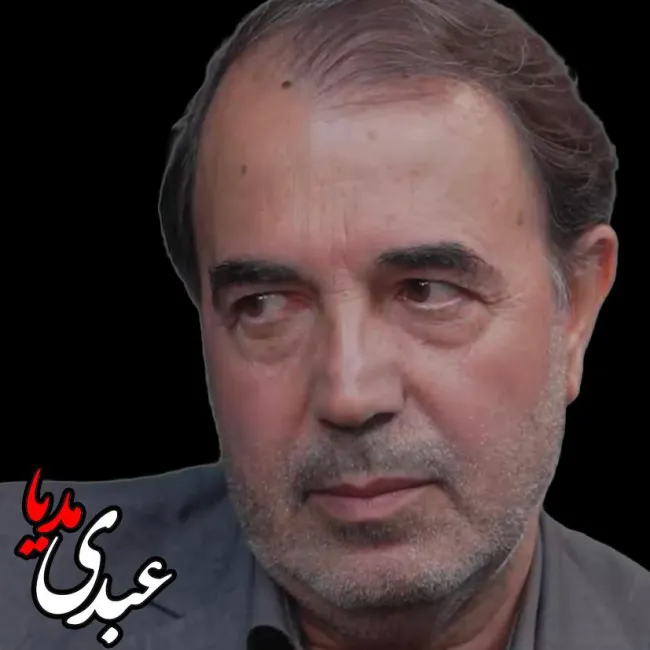
See: The Water and Environmental Crisis in Iran, a conversation between environmental activist Mohammad Darvish and ecologist Adel Jalili
Today's interview is with Dr. Adel Jalili, a well-known name in the field of natural resources and long-time director of the National Botanical Garden of Iran; someone who has worked for years to protect endangered species and expand ecological knowledge, but now speaks at a time when the news of the dissolution of the Natural Resources Organization in the new government has raised serious concerns
Read more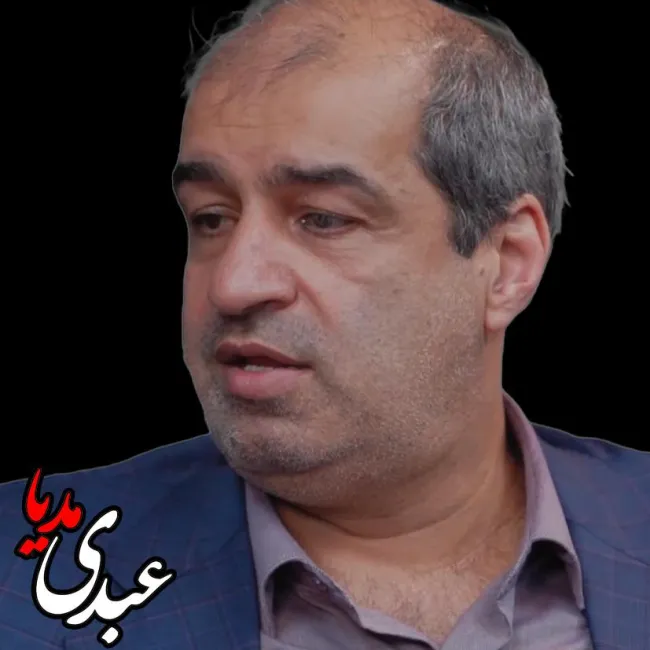
Water Crisis in Iran – Conversation between Mohammad Darvish, environmental activist, and Isa Bozorgzadeh, spokesperson for Iran’s water industry.
Reducing water exploitation in the country’s provinces has now become one of the main environmental concerns; an issue that experts believe is the only way to achieve resilience, reduce imbalances, and control land subsidence. However, this major change requires a reconsideration of livelihoods and businesses that are heavily dependent on water.
Read more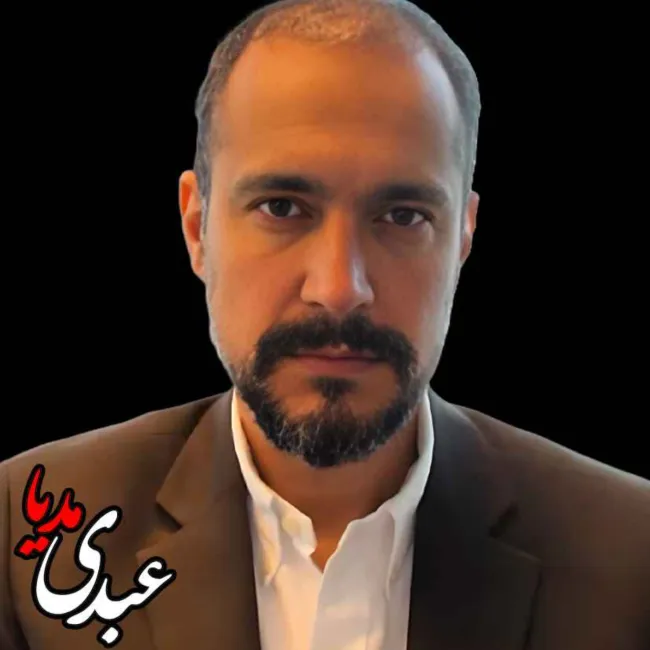
Water Crisis in Iran; A Candid Conversation with Dr. Kaveh Madani, Head of the Water, Environment, and Health Institute at the United Nations University
Iran has been facing a serious water crisis for years; a crisis that not only threatens the daily lives of people but also affects the country’s future security and economy. In this conversation, Dr. Kaveh Madani discusses both the hidden and apparent aspects of this issue and its consequences.
Read moreMost Read
Popular reads across Abdi Media