
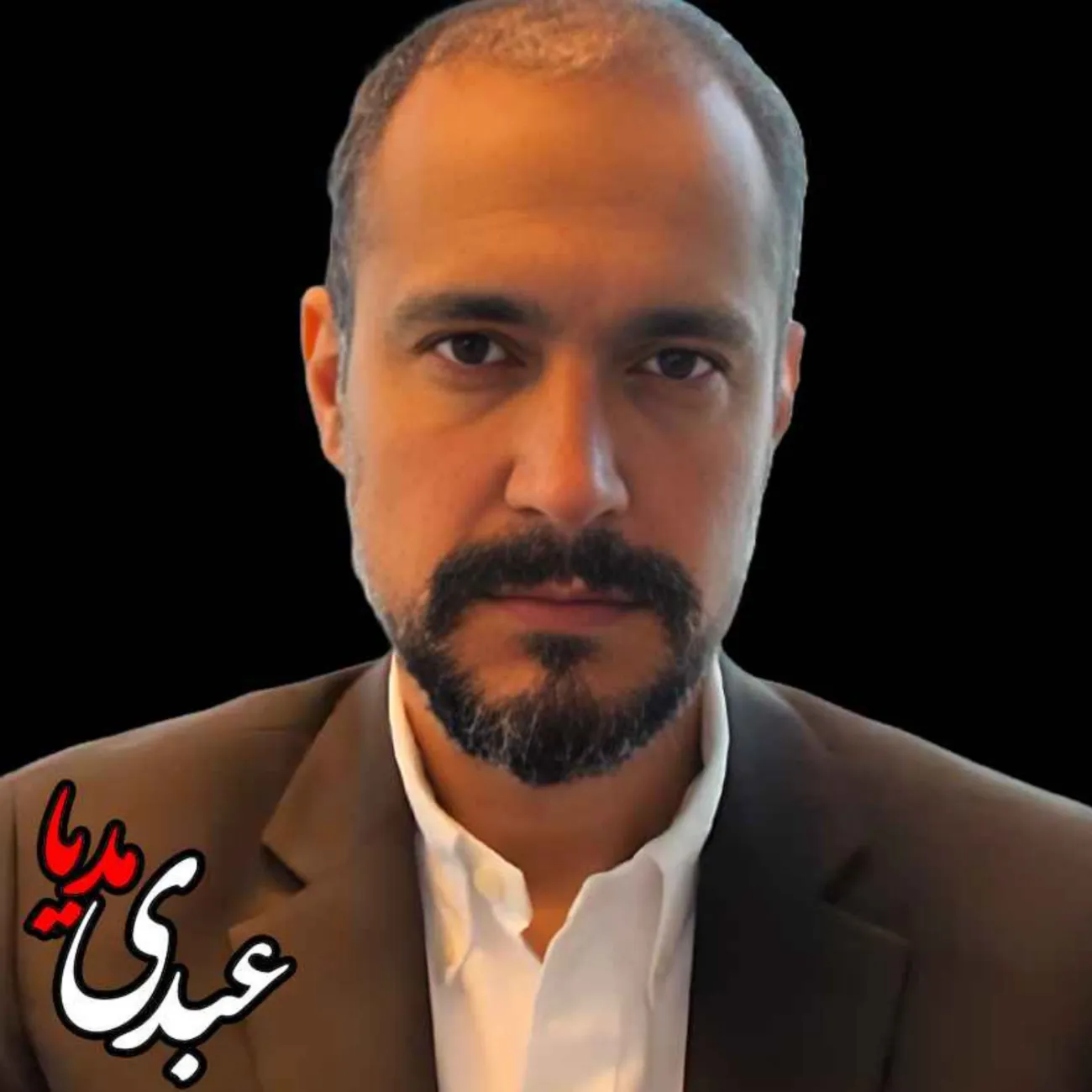
Iran has been facing a serious water crisis for years; a crisis that not only threatens the daily lives of people but also affects the country’s future security and economy. In this conversation, Dr. Kaveh Madani discusses both the hidden and apparent aspects of this issue and its consequences.
Dimensions and Consequences of the Water Crisis in Iran
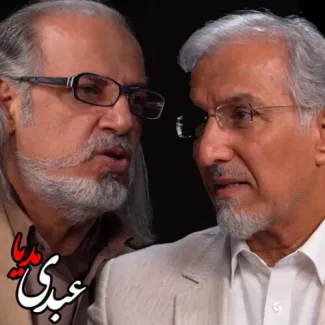
Abdí Media: In a world where the water crisis is not just an environmental issue but determines the fate of societies and civilizations, Iran today stands at the forefront of this challenge. From drought to mismanagement of resources, from wetland destruction to climate-driven migration, the key question is: Do we still have the opportunity to create a sustainable future for the next generations? Today on Abdí Media, I want to delve into this question. My guest is a figure who independently represents Iran’s voice globally, a scientist who has been on the frontlines of water science, policy, and diplomacy for years: Dr. Kaveh Madani. Once Deputy of Iran’s Department of Environment, he is now the Head of the Water, Environment, and Health Institute at the United Nations University, recognized as the UN’s water think tank globally. He is one of the most prominent international experts in water and environmental issues, who has consistently emphasized the connection between science, society, and decision-making both as a researcher and a policymaker. This conversation is a unique opportunity to address the water crisis in Iran alongside him.
For years, the water crisis in Iran has been recognized as one of the country’s most serious environmental and social threats. From your perspective, where should the roots of this crisis be traced?
Kaveh Madani: These days, all we can do is hope for rain from the sky, but the water shortage in Iran is not a new issue. Part of it is intrinsic: Iran is naturally one of the world’s water-scarce countries, and the Middle East, in general, is worse off compared to other regions. Overall, Iran is one of the dry and semi-arid countries in the world. Our ancestors understood this and struggled with it; they endured hardships and developed methods for survival. Over time, Iran, like other countries, developed. Development brought many good outcomes, but it also had some drawbacks. One of these drawbacks is the situation we see today: Iran’s water bankruptcy is a product of unsustainable development.
To identify the roots of water bankruptcy, it’s useful to look at an article I wrote in 2014 (1393 in the Iranian calendar), in which I tried to introduce three main causes. One is the population issue and rapid population growth, but the most important is the geographical distribution of the population across Iran. Iran’s population doubled in the two decades following the Revolution. Part of this was due to improvements in life expectancy and health conditions, enabling Iranians to survive and grow. A demographic pyramid formed accordingly, and this happened. The policies of the Islamic Republic also encouraged this, and the population increased.
If we look at per capita water availability, the situation was not bad initially. However, another development occurred: this population surged into cities, and several very large cities formed in Iran. Compared to Europe, smaller cities did not develop, and the concentration of population in a few specific areas and megacities created numerous long-term problems. The situation we see today in Tehran illustrates why this has been problematic and how unsustainable development has shaped this issue.
The next topic is agriculture in Iran. Iranian agriculture is not particularly remarkable in terms of economic efficiency. Iran’s economy, both before and after the Revolution, has been oil-based. Essentially, oil revenue was collected and converted into subsidies, which were then injected into the agricultural sector to create jobs, improve the status of agriculture beyond its primitive, impoverished form, and provide farmers with employment so they could continue their work. Yet, agriculture has largely remained in this same form.
The slogan of food self-sufficiency after the Revolution reflects the push for wheat production and independence from the West. This pursuit existed even before the Revolution. Other countries in the region have followed similar paths without necessarily having conflicts with the West or being under sanctions or war. They also went through this process. Rulers of oil-rich countries were frustrated because oil was being exchanged for wheat.
The Pahlavi Monarchy and Its Connection to the 1979 Revolution
Abdí Media: It was considered humiliating.
Kaveh Madani: Yes, it was considered humiliating. But for the other side, it was perceived differently. The idea was that a ruler in Iran, or a few Arab sheikhs, could control oil prices globally and exert economic pressure. This partly contributed to the pressures on the Shah of Iran in those years, and similar dynamics occurred at different times afterward.
Abdí Media: There’s a famous interview stating that "blue-eyed people cannot set oil prices." The press conference of Mohammad Reza Shah Pahlavi regarding oil issues after the OPEC summit was highly significant and arguably one of the contexts leading up to the 1979 Revolution.
Kaveh Madani: Exactly. That interview illustrates the issue well. If we take a broader view, it’s important to consider the region and other areas of the world, not just Iran. Leaders of the Islamic Republic, Saddam Hussein, and even Gaddafi faced similar pressures.
Oil-rich country rulers believed they could use oil and gas revenues to mask or even solve water issues. Meanwhile, the Revolution in Iran led to war, conflict with the United States, and slogans of self-sufficiency, particularly in agriculture, though these slogans were not always realistic.
Agriculture in Iran has been largely inefficient economically, contributing little to GDP, but strategically it created jobs for rural populations—who today make up less than 30% of the country—keeping them employed in an economy under pressure. We never achieved true self-sufficiency, and the soil and water were degraded. Short-term subsidy policies weakened agriculture further, fragmenting land ownership and reducing productivity. Industrial agriculture did not develop, and farmers remained poor. The government’s focus was always on supporting the underprivileged, unlike industrial farmers in California or Switzerland.
Mismanagement and Strategic Errors
Mismanagement occurred both in water and more broadly beyond the Ministry of Energy, Agriculture Jihad, Department of Environment, Ministry of Industry, and other institutions. Many agencies were overlooked by media and accountability mechanisms. National development plans also failed to address water as a limiting factor. This strategic neglect created the current water crisis.
Dimensions and Consequences of the Water Crisis in Iran
Abdí Media: Compared to global climate change, do you see it more as poor management or natural causes?
Kaveh Madani: Everywhere in the world, floods, fires, droughts, and water shortages are partially natural, but the accountable party is always the manager. These crises don’t appear overnight—they are predictable. Think of a person who has neglected their health for decades: unhealthy habits exacerbate vulnerability. Flu alone does not kill, but in a fragile patient, it can be fatal. Similarly, water scarcity is intrinsic in Iran, but poor management and ignoring development limits have worsened it over time. Global climate change has accelerated droughts, making them longer and more severe. Fires and floods have always existed; human adaptation is key. The model and path of development were poorly chosen, and external events only magnify the pressure.
Nature’s Response: Karun River and Environmental Warnings
Abdí Media: Many believe nature retaliates when mismanaged by humans.
Kaveh Madani: Nature cannot literally have personality; it’s a human metaphor. Nature is generous but has limits. When I returned to Iran and documented the Karun River, my point was that the river suffers from human conflicts. The Karun provides water from its source through several provinces, yet human disputes prevent it from sustaining its flow. Sometimes it floods or retreats, reminding people not to settle too close. Nature is kind but finite; disregard for limits leads to crises like Lake Urmia.
Human and Managerial Roots vs. Natural Factors
Abdí Media: How much more significant are human and managerial factors than natural ones in Iran’s water crisis?
Kaveh Madani: It’s clear that regional human decisions outweigh global natural factors. For example, Tehran’s water issues are more a result of bad decisions than global warming. Water scarcity is not about abundance but about poor decision-making. Just as gas mismanagement led to energy bankruptcy, water mismanagement has caused the same problem.
The Urmia Lake Case and Water Management in Iran
In the case of Lake Urmia, is anyone denying that the inflow of water makes a difference? No. When a dam is built and the balance is disrupted, the same kind of problems occur as were seen in the former Soviet Union. If water inflow to a wetland is cut or reduced, it will inevitably face serious issues. Rising temperatures also accelerate evaporation and speed up the process of degradation, making destruction easier and faster.
However, we cannot simply blame drought as the sole factor. Look at Lake Urmia today—it has been largely abandoned for five years. There used to be a revival headquarters (ستاد احیاء) that, despite criticism, was functioning. Since President Raisi’s administration, this responsibility was handed over to the provinces. The fate of Urmia under the presidency of someone from Tabriz, born in West Azerbaijan, shows that the lake is in its worst state ever.
This clearly demonstrates the impact of management. Even with an imperfect system that has many criticisms, the revival headquarters had visible effects. And Urmia is not unique—other water bodies like Anzali, Parishan, Bakhtegan, and Gavkhuni face similar issues. If drought affects Mazandaran or Gilan, it creates severe hardships. Thus, the problem is not intrinsic water scarcity; the problem is poor planning. This shows that in all areas, unsustainable development has caused systemic problems.
Although Iran has energy and gas, a number of problems were ignored and resources spent recklessly. Because money and capital existed, they were essentially “burned,” but nature eventually responds.
When we talk about water scarcity or water poverty, there are two types:
Physical water scarcity, as in Iran—so much water has been extracted that almost none remains.
Economic water scarcity, as in some African or South American countries, where rainfall is abundant and the land is green, but children and women must walk kilometers to fetch water because there is no infrastructure or funding for investment. Iran never faced this issue. In some areas, Iran developed abundant water infrastructure because infrastructure creation was appealing from a sense of national pride and profitable for contractors.
Everything we observe today in Iran is a result of poor management. But “poor management” itself needs definition; it’s often a vague term. For example:
Were unauthorized wells legalized by Ahmadinejad the cause?
Was a dam built before the Revolution responsible?
Or a dam after the Revolution?
No. It is a sequence of interdependent decisions: one made during Khatami’s era, followed by another during Ahmadinejad’s, both linked to earlier decisions by Rafsanjani and Khamenei. The development path Iran followed initially resembled Western models. In the western United States, the same development mindset existed—creating dams, transferring water, drilling wells—to try to control water.
The “beneficial use” concept was applied economically: water left in rivers for the environment was not considered “beneficial” use. Water should not be “wasted” into the ocean. This same logic applied in Lake Urmia—development was prioritized over ecological needs, leading to the current crisis. Environmental groups and “green movements” advocate for ecological restoration, but often economic capacity is lacking to fully implement alternative paths.
The Role of Technology in Managing Iran's Water Resources
Abdi Media: Technology is also important. Besides economic capacity, desalination technology should be available.
Kaveh Madani: This is an important issue. We must ask: where, when, and in which parts of the country should technology be used? Anyone who says “don’t use technology” is essentially saying, “let’s live in trees and caves.” If someone denies the value of technology, in my view, they are not living in the real world. You and I might not have survived to this day if Iran had not built dams, had no electricity, and lacked development. We might have died from cholera at age four if there were no treatment plants. Therefore, it is absurd to deny that development has been beneficial for the country. It would be foolish to claim today that certain infrastructures should not have been built, and that the country should have relied solely on traditional qanats.
Over-Reliance on Technology: Opportunity or Illusion?
Abdi Media: The point is that the West, besides having money to correct mistakes, has access to technology, which helps to compensate for errors.
Kaveh Madani: In some cases, yes. Let me clarify: some water technologies are not extraordinary. A country capable of producing missiles can easily manage desalination—it’s not unknown science. The real issue is over-reliance on technology. Again, desalination is important.
If people in southern coastal Iran lack drinking water, and rivers are unavailable, desalination is necessary, with attention to environmental impacts. But transporting desalinated water to Mashhad, while people in Zabol, Sistan, and Baluchistan are thirsty, is nonsensical. Iran has no problem with desalination technology.
However, transferring desalinated water to faraway regions like Tehran or Isfahan was a flawed development path. Middle Eastern rulers fell into the illusion that desalination alone could solve water problems, which has happened in many places globally.
The key question is: at what time, in which location, and with what capacity should technology be applied? Have other measures been taken first, such as reducing consumption, wastewater treatment, or alternative solutions, before resorting to massive infrastructure with heavy side effects?
Technology is like a knife: it can save a patient’s life, or it can be used for harm. Technology is not inherently bad. Every invention has a proper time for use. Useless inventions disappear over time.
The question is: at which stage is it wrong to rely on cutting-edge technology to save Iran? If water issues exist in California or Iran, they are not due to lack of technology. Israel acquired some technologies earlier than other countries. Therefore, our problems are not technological or engineering issues.
However, if we claim solutions for Iran, Israel, and California should exclude technology, that is purely an illusion. Technology must be used and be part of the solution.
Yet, any ruler or manager who thinks they can solve a problem solely through technology will face the same disaster that Iran and many other countries have experienced.
Immediate and Long-Term Solutions for Managing the Water Crisis
Abdi Media: Assuming that you personally were in charge of Iran's water, with the highest level of authority, what measures would you prioritize to resolve Iran’s water crisis today, especially regarding drinking water?
Kaveh Madani: There would be a combination of two types of actions. If I were in charge today, based on the explanations I provided, even a minister of energy does not have full authority—perhaps not even the president—because the issues are interconnected. But there are two categories of action:
One is emergency and crisis management. People currently do not have water; Tehran’s water reserves are running out. We might last until the start of the new water year in Mehr (September/October), but if we do, we may still face “Day Zero” once rainfall begins—or the next year could be even drier. In this area, time is critical. The only thing a ruler can do now is create transparency and build trust with the public, which is one of the hardest things for the Iranian government.
Returning to COVID-19, in the early stages they denied and lied about the severity until they had to confront reality. Water has been the same: officials claimed that videos showing low water in dams were false, saying the water was sufficient. They did not understand how much water was actually needed until taps ran dry and daily life—cooking, bathing, sanitation—was disrupted.
During COVID, the government provided the public with accurate data. Now, every night in Iran and Tehran, the authorities should inform citizens about consumption and savings, and visible actions in the city should signal that the government is taking the issue seriously: stopping irrigation of green spaces, closing swimming pools, creating an environment that encourages public cooperation.
Comparing the Water Crisis with COVID-19: The Need for Transparency and Public Cooperation
Abdi Media: Do you see the water crisis at the level of the COVID crisis?
Kaveh Madani: In Tehran, yes. Water doesn’t directly kill people, but the nature of the crisis is similar. During COVID, results did not happen just because people were scared or trusted authorities. Some countries, by building trust, used social capital effectively: they could tell people to stay home and citizens complied. In other countries, people were arrested for leaving home; martial law was enforced. Population size influenced behavior.
Now, water tank vendors are thriving. People insure their apartments for water; the wealthy have full swimming pools and irrigation. Recently, the Minister of Energy mentioned that someone was irrigating despite restrictions. When warned, the person said it wasn’t the official’s business and that the Minister himself had ordered it—raising ethical issues. Is this behavior applied to all high-consumption consumers across the country?
There is a need for transparency and public communication, showing that the government takes the crisis seriously. Actions like stopping irrigation of green spaces, closing pools, and public communication are vital.
From my perspective, Iran’s water issues are tied to economic pressures over time. When a country is in conflict with the world—rightly or wrongly—seeking sovereignty and public rights, it faces a reality: the world is dominated by power struggles. Economic pressure drives decisions to exploit natural resources—water, soil, forests, mines, oil, gas—for survival.
If you try to radically reform the economy overnight, such as creating alternative jobs for farmers, conspiracy theories emerge, accusing you of trying to destroy agriculture. In the short term, shutting down agriculture is not feasible. Solutions include supporting rural communities, industrializing agriculture, consolidating small plots, providing economic incentives, focusing on exports, and diversifying the economy.
Without economic diversity, the water crisis cannot be solved. Jobs created solely for survival without real productivity, as seen in Iran, will not help the system; people will continue their routines simply to survive. True resolution requires economic growth, diversification, and sustainable employment.
How to Achieve Economic Diversification Under Sanctions?
Kaveh Madani: How can economic diversification be achieved when we are under sanctions? If measures had been taken ten years ago, we wouldn’t be facing this misery now. The situation has become tighter, problems have caught up with us, and solutions are more limited. Back then, if fundamental actions had been taken, some of this could have been avoided.
I remember in 2017 (1396 in the Iranian calendar), officials said that eastern Isfahan—home to families of martyrs and supporters of the Islamic Republic—was suffering. They discussed compensations: why spend money now to prevent recurring problems in future years? Floods and other disasters occurred, and the illusion of abundance was forgotten. Without fundamental action, nothing can be fixed. Transferring water to Tehran doesn’t solve the problem if the city lacks capacity to absorb it. Development must occur along the coastal strip.
If I were in charge at some point and had power, I would change the development path. Sometimes, you must yield to strong powers; you know they are coercive. But the question is: should I fight for survival? Some might perceive it as weakness, but the path we are forced to take is one that preserves the country. Otherwise, the nation collapses, infrastructure burns, and people—the very people whose rights you intended to defend—cannot breathe, have no drinking water. What kind of defense is that?
Dignity in the world can be preserved with pride, but for most Iranians, this is not the ideal. If you destroy people’s welfare and claim everything is fine, it is a tragedy. People live once, children are born once, and youth and adulthood come only once. Those who experienced Iraq before and after Saddam might say: “I wish Saddam was there, not the Americans.” These issues are difficult and complex.
The reality is: without rescuing Iran’s economy, the water crisis cannot be resolved. We can give temporary relief—like morphine—but chemotherapy is required. Even if rainfall occurs, winds blow, pollution remains low, and China or Russia provide some relief, the country’s “patient” continues to deteriorate. Natural infrastructure suffers just like social, educational, economic, and engineering infrastructures. Iran, in all domains—social, economic, educational, welfare, health, natural, and engineering—suffers from fatigue and deterioration. In structural engineering, this is called “fatigue,” and our nation experiences it across every sector.
Society, Economy, and Politics: Hidden Dimensions of the Water Crisis
Abdi Media: It’s not just the country—people are involved too.
Kaveh Madani: Yes, our social infrastructure is also at stake. It might appear stable for a while, but it can collapse in an instant. This is our challenge: we don’t know what events may occur at any moment. You cannot ultimately say an event happened just because egg prices increased. Thousands of other factors exist, and the egg price rise is merely one manifestation. For instance, during the Arab Spring, a baker set himself on fire—it wasn’t the cause of the Arab Spring; thousands of other factors contributed. Did drought worsen conditions for Assad in Syria? Perhaps, but it was Assad’s governance model and the Ba’ath Party’s long-term mismanagement of water and other sectors that determined Syria’s ultimate fate.
It’s simplistic and short-sighted to reduce a complex, interwoven crisis of this scale to just “drought for five years.” In reality, any other country wouldn’t have been affected the same way; context and decisions matter. Decisions about dam gates or electricity production depend on prior government actions, including previous administrations.
Even if the Islamic Republic no longer exists tomorrow, the decisions of current and future leaders remain influential. For example, read about Chitchian, Iran’s former Minister of Energy, and the situation during Rouhani’s second term. He explained that those who refused to take office in the second term believed the Ministry of Planning and Budget, and officials in Rouhani’s government, were responsible for Iran’s current water and electricity problems.
Accusations, the Paris Agreement, and Political Misunderstandings
Abdi Media: Tonight I heard something new from you. Apart from the “water terrorist” and “ISIS” accusations, I mostly heard espionage allegations attributed to you.
Kaveh Madani: They are interconnected. Other issues also came up, including misconceptions about the Paris Agreement. Even in diplomatic circles, some misunderstandings persisted. Just because someone came from abroad doesn’t mean they are pro-Western. Those who have interacted with both East and West often understand negotiation strategies and can secure rights and benefits for the country better than outsiders.
We shouldn’t isolate issues. Environmental actions, for instance, are connected to the economy, military, and health sectors. Ignoring this interconnectedness has crippled the country. The think tanks that should address these issues in the Planning Organization haven’t done so. Who writes programs, allocates budgets, and ensures execution? Does the Minister of Energy make unilateral decisions? Does the Minister of Industry? We don’t see these processes.
The Minister of Energy doesn’t determine the population of megacities; the head of the Environment Organization cannot unilaterally protect water resources—they can only report that wetlands are in poor condition. Agricultural concerns are often dismissed with statements like “90% of water is used in agriculture.” Other countries also have overlapping ministries and conflicts, yet they progress. In Iran, the development program itself contains contradictions, and even presidential candidates’ plans for water often conflict with agricultural and energy policies. False promises abound, and no one addresses these foundational issues.
Even the information exchanged and discussions held today overlook the root problems: we haven’t examined the development model. Take Israel, for example. Many believe technology “saved” Israel because it has desalination. Israel didn’t give this technology to Iran or Arab countries. Why? And yet, the U.S. also has water problems.
Psychological Warfare of Israel and the Reality of Iran’s Water Crisis
Abdi Media: Are recent statements by Mr. Netanyahu about solving the water crisis accurate?
Kaveh Madani: It’s psychological warfare—a game. A country the size of Iran cannot secure its future solely with desalination. Israel has the technology, but it’s a newly established country that has had issues with the world from day one. It knows the threats, and it must take food and water supply seriously. Water is scarce from the beginning, and Israel sees water as a limiting factor in its development model. It also has international cooperation and assistance.
Some educated and skilled individuals from the U.S. and other parts of the world contribute to this effort. Legal infrastructure is also built differently in this context. Israel invests in technology and tests some solutions first, especially those related to self-sufficiency and domestic production. It listens to internal critics and specialists, and then it advances technologically, which is very helpful.
When there is no water, actions must be taken to secure drinking water. For example, the UAE ensures drinking water supply, manages some agricultural needs, desalination, wastewater treatment, and recycling. Every drop is used multiple times efficiently.
Strategically, what has helped Israel is “decoupling”—separating the economy from water pressure. This is exactly what I have been emphasizing for years: not shutting down agriculture, but investing in industry where a drop of water brings more benefit. Support should go to farmers who struggle with drought, subsidies, and harsh conditions.
Israel, despite its size, has tech companies that excel globally in services. We cannot ignore this complexity. Simply building a couple of desalination plants does not capture the full picture. Similarly, seeing a large dam in the U.S. and thinking that building a dam alone solves problems is simplistic. Technology is part of the solution, but supplying water to Tehran via desalination from the Persian Gulf or the Sea of Oman is foolish and unrealistic.
Perhaps the problem needs a redefinition of development. Some laughed at the idea of changing the capital, but strategically, increasing population settlement in southern Iran is important and beneficial. Such ideas require political courage, costs, and determination. Chemotherapy, metaphorically, doesn’t just need a solution; it requires money, insurance, pain, and bravery. You can say chemotherapy isn’t necessary yet, but early stages are tough and the body weakens.
Acknowledging the Crisis: The Need for Root-Level Treatment in Water Management
Abdi Media: At the very least, the body must admit it has cancer and accept that it needs treatment. The body of Iran must first acknowledge that it suffers from a “cancer,” and that chemotherapy or surgery is necessary.
Kaveh Madani: Doing plastic surgery—changing the nose, stretching the skin, altering the appearance so that no one notices the disease—won’t work in this situation. You can only give painkillers and morphine; a smile may appear on the lips temporarily. Two rains and winds may bring some relief. Four years of a presidential term may pass. Maybe next year the conditions improve; maybe the U.S. problem is resolved; maybe Israel does not attack—but “inshallah” and “mashallah” alone cannot run a country.
No one denies progress has been made. Strange and amazing things happen in our country. I studied civil engineering, and my colleagues in Iran remain in consulting firms—they are engineers designing bridges and doing incredible work. In Toronto, no new metro stations have been added, but in Tehran massive projects have been undertaken. Yet corruption, bribery, and other issues overshadow these achievements. Roads and bridges are built, but what about other issues? Has Tehran become a more livable city? Migration increases.
Back in 2015 (1394), I wrote a paper whose research results showed that for the Zayandeh Rud basin, implementing water transfer projects would worsen Isfahan’s problems. I later investigated why this happened. I realized that in areas where development capacity is limited, artificial “breathing” or temporary water supplies give people an illusion of abundant water. This illusion of water availability itself drives more development, attracting more people, improving welfare temporarily—but the problem returns later on a larger scale.
This has happened in Tehran, Isfahan, Mashhad, Los Angeles, Las Vegas, and many other arid megacities worldwide: water was brought in, the cities developed, yet the situation worsened. Does this mean water transfer is bad? Should we avoid using technology? No—it can be used. But if the water brought in is consumed without defining new uses per drop, nothing changes. If wastewater is treated, irrigation efficiency improved, and every drop is reused, the same problem persists.
Without a plan to manage and reduce consumption, nothing will work. Iran needs consumption reduction, which cannot happen without economic reform. This must occur across all sectors. In Tehran, domestic water consumption is high; the share of Tehranis in regional water use is considerable. Reducing consumption has an impact, yet when it happens, complaints arise: “Why do you have green spaces? Why does the municipality irrigate?”
Zayandeh Rud and Observing the Water Crisis in Isfahan
In 2016 (1395), while we were working with Al Jazeera on a documentary about Iran’s water crisis, I encouraged them to cover Isfahan. Everyone had talked about Lake Urmia, but Isfahan—the first serious megacity in Iran—was experiencing water bankruptcy with all its signs. Isfahan is like London, a city whose identity is tied to water, yet its river is dry.
I will never forget that at 11 a.m., under the scorching sun, the Zayandeh Rud was dry. I saw a municipal worker across the street watering the green space near Si-o-Se-Pol. I was furious witnessing this contradiction: the river is dry due to excessive water consumption, yet the municipality is not responsible for the river—it is responsible for irrigating trees, grass, and green areas. Watering at noon, the worst time of day, is exactly the kind of inefficiency that demonstrates we do not understand the interconnections of the issue.
The industries along the Zayandeh Rud—whether correctly or incorrectly established—are they national industries? Do their benefits reach Iran as a whole, or only the people of Isfahan and the Zayandeh Rud basin? If they are national, the cost should not be borne by the local residents, just as Khuzestan bears costs for projects that serve national interests. This is a misunderstanding of the issues and their interconnections.
The Real Share of Different Sectors in Iran’s Water Consumption
Abdi Media: The Ministry of Energy has repeatedly announced that roughly 90% of Iran’s water is used in agriculture, 9% for domestic consumption, and only 1% in industry. Based on these statistics, first, how accurate do you think they are? Could industry be underreporting its real consumption to avoid criticism? What’s your view on these figures?
Kaveh Madani: I cannot measure it myself.
Abdi Media: How reasonable and logical is it?
Kaveh Madani: It’s not very logical because allocation differs from actual consumption. In agriculture, there is a belief that if irrigation efficiency is 30%, the remaining 70% is wasted. In flood irrigation, especially in northern Iran, not all water is lost—some infiltrates the soil and replenishes groundwater. That water is not wasted. While irrigation efficiency for production is low, actual water consumption may be less than 70% of the total because of return flows. Some water, God willing, also goes to environmental purposes.
The point I want to make is that to save the country, the water share for industry should be increased at the expense of agriculture.
Industry, Agriculture, and Unequal Water Distribution in Iran
Abdi Media: Some experts believe the real share of industry is not 1%, but at least 12%. If we assume about 9% for domestic consumption, agriculture’s share at best is 79%, not 90%. Its share is therefore not extremely high. What does the current situation tell you? What’s your assessment?
Kaveh Madani: I consider this a petty argument. In my view, these percentages don’t matter as much. The real issue is whether the country can simultaneously reduce overall water consumption while increasing the share of industry and services. If that can happen, the country is on the right path. Arguing about whether the ministry’s 90% figure is exact or not is not the main point. The irrigation efficiency at farm level differs from basin-level efficiency; some water returns, but that is not the crucial issue.
Worldwide, roughly 70% of water is used by agriculture. In developing countries, agriculture’s share is higher; in developed countries, it is lower. In my water management classes, we showed slides comparing sectoral shares in developed versus developing nations. The key point is added value: if water is redirected to industry and services, it can generate much higher economic return per drop in comparison with cheap food production.
European countries often sell high-tech industry and services to African nations in exchange for cheap food, maintaining a structural economic gap. Similarly, Iran has placed itself in a path where water is not used for maximum value generation. For example, in California, 80% of water is for agriculture; this is not surprising given dry regions and irrigated crops. Urban water use remains relatively low, around 6–7%.
If water is redirected to industry and services, the situation improves—but not by giving more water to low-efficiency industries. Instead, the goal is to expand productive industries, increase employment in these sectors, reduce agricultural labor, and improve the economic welfare of rural populations. Supporting rural communities, investing in them, and improving their well-being is key to addressing Iran’s water and economic challenges.
Abdi Media: Should we “accept the obvious” or believe the reassuring statements?
Kaveh Madani: I don’t know. This is part of the double-edged sword of development. In the 1970s, if university students had not gained access to education, leftist and communist tendencies might not have arisen. People who experience welfare start demanding more. When people are in economic pressure, their main concern is food, housing, and employment, not freedom or democracy.
Development creates trade-offs: without infrastructure, there is no development; with development, the environment may be harmed. Poor, uneducated populations may be easier to manage politically, but educated people become aware, question policies, and demand change. The art of governance is balancing these conflicting pressures. Diplomacy is understanding how to navigate this turbulence, creating alliances to withstand adversaries in a constantly volatile environment.
Water Crisis or Water Bankruptcy; Concepts and Realities
Abdi Media: Given the current imbalance, can the Iranian government bring the situation to equilibrium? In your view, to reach balance, how much agricultural activity—given that agriculture is the largest consumer—needs to be reduced?
Kaveh Madani: Again, this is the story of double-edged swords. I don’t call it an “imbalance” in the strict sense. Imbalance refers to short-term disruptions in the system. What I have been talking about for years—and for which I’ve even been criticized—is what some call “water bankruptcy.” Some were not even allowed to say this term in meetings because it was associated with me; it was “forbidden.” Photos and discussions in social media reflected this.
The important point is that those who criticized us initially now acknowledge that mismanagement is the real issue. The minister eventually accepted it, and experts in the system now recognize the problem. I don’t consider this a “crisis.” In my 2014 article, I used the term “crisis” to highlight misconceptions about Iran’s water issues, focusing on root causes and solutions.
Crisis, by definition, is temporary. It cannot last forever. During a documentary on groundwater in Iran, I was later removed from involvement because of sensitivities over the term “crisis.” Even archival films from before the revolution labeled Iran’s water situation as a crisis, but that was historically accurate for the 1960s–1970s—not forever.
The term “crisis” has been overused; everything seems “crisis-like,” and its sensitivity has been lost. A crisis implies an acute emergency—an urgent situation that could occur suddenly. Crisis management works by preparing for unpredictable events, mobilizing all resources, and attempting to restore normalcy.
For example, in a building fire, firefighters arrive: some parts are saved, some are lost, property may be destroyed, lives may be lost. Either partial control is achieved, or the building collapses entirely. But a crisis does not last indefinitely; it ends when the immediate emergency is addressed, even if not everything can be saved.
Using terms like “super-crisis” or “vital crisis” repeatedly diminishes their impact. You cannot label the water issue as a permanent crisis since the concept of crisis implies temporariness and urgency. Effective preparation and response are key—otherwise, calling everything a “crisis” only creates noise without solutions.
When we speak of “crisis,” it implies a severe but temporary period. By signaling that the situation can be restored, you send a message to government, the public, media, and society that mitigation and investment in restoration could “save” us or compensate losses.
However, this is not the case for the environment. We cannot undo all the damage. Lake Urmia, for instance, might be fully restored in five years if some parts remain viable—but for wetlands, the Karun River, groundwater aquifers, deforested areas, or land subsidence, many damages are permanent and irreversible.
Therefore, beyond mitigation and preventing further deterioration, we need adaptation to a new harsh reality. Temperatures in large cities have risen—partly due to global warming, partly due to urban heat islands caused by human activity, traffic, population density, and energy consumption. We cannot return Tehran’s climate to the state we experienced as children. Today, children may even skip school due to air pollution; they don’t have the same opportunities to play outdoors.
We have exhausted surface water “checking accounts” in rivers and wetlands, and even groundwater “savings accounts” inherited from previous generations. We drew from these reserves to meet development and agriculture needs. Ideally, deposits should be replenished in good years—but we have depleted both current accounts and savings. Studies show that, despite warming trends, cultivated land in Iran has steadily expanded, increasing water consumption. Agriculture development often relied on depleted groundwater and aquifers.
If you do not acknowledge that your “business” is bankrupt, or that your development model has failed, you will continue to take on new debt, believing each new project will succeed. But this is the last water transfer—we cannot keep repeating this cycle.
Acknowledging Water Bankruptcy
Abdi Media: So, have we reached water bankruptcy?
Kaveh Madani: For years, many parts of Iran have reached water bankruptcy, and on a macro level, it is true across the country. Bankruptcy means raising your hands in surrender, admitting that your model failed, so everyone who depends on you—employees, creditors, society—understands the failure.
Even foreign leaders do this: U.S. presidents have declared bankruptcy in their budgets. You must acknowledge: “This model no longer works; our water inventory is insufficient; debts exceed resources; we cannot fulfill all allocations.” If you don’t, you will worsen the situation and tighten the constraints.
Declaring water bankruptcy allows you to recognize the need to reduce consumption and costs, rather than pursuing unrealistic solutions like building new infrastructure, desalination plants, or transferring water from distant sources. Some damages cannot be repaired even in decades. We need mitigation and prevention—but also acceptance that many systems are permanently damaged.
This is not a temporary situation; it is a sustained, structural problem. The situation could worsen if ignored. If water bankruptcy had been declared a decade ago, we might not be in the current predicament. If we fail to acknowledge it today, the consequences will be even worse.
Maintaining Appearances and Lack of Confidence in Governance
Abdi Media: I interpreted “maintaining appearances” in the context of the father of the Islamic Republic as mostly avoiding admitting problems and keeping hands up—he doesn’t want to reveal the issue. I think this is an important point.
Kaveh Madani: Leaders around the world share this tendency. Admitting failure is significant because it weakens your position. Not all leaders are willing to acknowledge mistakes.
Even in some democratic systems—like Sweden during COVID—they initially decided not to implement lockdowns. When the virus reached nursing homes, many elderly people died. The society has a system that can accept a high-risk decision gone wrong. But where power is centralized in one individual—be it a king, a president, or a ruler—it is much harder to admit mistakes publicly.
For example, in Canada, during the previous government, there was resistance around carbon taxes. The next leader, who had previously worked with the UN on climate finance and carbon issues, initially promised to remove them. Some policy changes occur during transitions even between governments of similar political orientation, but generally, public admission of errors is rare.
In Iran, I was told: “We know we have a water problem, but don’t admit it in front of the enemy; you must say you will solve it.” But is the water problem not visible? I’m not the only one who discovered it—it’s obvious. The enemy’s misunderstanding has caused us trouble.
Another issue tied to “maintaining appearances” is lack of confidence. For instance, regarding the Espinas Plus Hotel: I argued that while the hotel is modern and located in northern Tehran, it’s not impressive for foreign visitors. In the UAE, U.S., or China, there are many unusual and extravagant structures. If a foreigner comes to Tehran, they should see something like the historic Abbasi Hotel or well-restored old structures—the architectural spirit matters, not just a modern hotel with generic design.
National Confidence and a Local Development Perspective
Abdi Media: That’s completely understandable.
Kaveh Madani: Put him in downtown Tehran—if you don’t have confidence, the new generation has now developed it. Our dream was for people to see Paris and London. The new generation can enjoy wearing a chador at a traditional clay-brick home, enjoy eco-tourism, and domestic travel. But without confidence, you want to imitate them. You shout “Death to America,” but in some development models, you may be more “American” than them. You curse them but don’t learn from their mistakes.
In a meeting in Isfahan, I invited foreign experts. Interesting results: when inviting guests, I suggested Spanish experts—they understood Iran better than Americans due to similar conditions. We went to Park-e Ab o Atash and the World of Children; the foreign guests were looking for Iranian bread. I ran around for barbari, sangak, and lavash. Everyone had baguettes that were not authentic Iranian bread—this shows a lack of confidence. I’m happy to serve foreign guests traditional dishes like abgoosht or kalleh pacheh, but we often serve them steak that doesn’t represent Iranian cuisine.
In some diplomatic meetings, some ambassadors frowned when we joked or laughed with opposing delegations. Diplomacy is not just frowning and silence—it’s also strategic interaction, sometimes serious, sometimes playful. Interacting with Trump, for example, requires specific tactics: like it or not, he was the U.S. president for four years. You must protect your national interests. No country in the world can be fully self-sufficient in all areas; doing so is naive.
The core lesson: learn from history, maintain confidence, and navigate real-world diplomacy wisely. Every country has successes and mistakes. Iranian leaders must understand that foreign and domestic actors are not always aligned with your vision—they pursue their interests. Confidence and strategic thinking are essential to protect national welfare without causing unnecessary suffering.
Return of Elites – Guarantees and Structural Barriers
Abdi Media: Has anyone formally invited you back, like a specific official saying “Come back, we need your expertise”?
Kaveh Madani: Which official in the Iranian system can guarantee that?
Abdi Media: Supreme Leader Ayatollah Khamenei.
Kaveh Madani: Even then, Iran’s system is parallel and fragmented. No single person can promise safety or authority. Returning doesn’t mean I can magically solve problems—saving water or reforming systems requires deep structural change. Five years later, it will be even harder. The system itself is not unified; even the president cannot fully control other powerful institutions.
The problem is not personal. Many Iranians abroad can contribute, even if they are not high-ranking officials. My experience can teach the system how to better integrate returning experts. But the system’s lack of confidence, fear, and internal politics make structural reform slow and uncertain. Many talented professionals avoid returning because of fear of political consequences, surveillance, or false accusations.
Despite all this, the focus should be on improving quality of life for Iranians. Anyone with expertise—researchers, scientists, or technocrats—should be able to apply their knowledge without fear. Many skilled Iranians are willing to help their country, even if critical of the system, but structural barriers and fear of repression prevent them from doing so.
Return or Emigration; a Bitter Question
Abdi Media: I have a fantasy question: assuming the Islamic Republic remains, and Ayatollah Khamenei, as the highest authority, sends a letter via the Iranian ambassador to the UN saying, "Mr. Kaveh Madani, we’ve rolled out the red carpet for you, we will play anthems and military marches when you arrive—come back." No obstacles exist. With this mental premise, would you return or not?
Kaveh Madani: If we want to fantasize… that’s not my issue. I can’t perform miracles.
Abdi Media: You are an example of someone who left the country. If you were invited like this, with such guarantees, would you return?
Kaveh Madani: To see my family, or to work?
Abdi Media: To work.
Kaveh Madani: Then the question is, what is supposed to change? A managerial post? You could appoint me head of the Environmental Protection Organization, or Minister of Energy—I wouldn’t really have power. You could make me president, yet I would be powerless. The point isn’t to sit there and have a title. The point is: what is actually going to change? Even if a hundred Kaveh Madanis returned to Iran, the system has to be able to respond to what is truly changing. Is anything fundamentally going to change? I believe that if I were to return to the past, I would make the same decision. When they told me to come, I didn’t ask about salary or benefits; I only said, “Are you sure I will be approved security-wise? Because I don’t want to end up in jail.” That was my only condition; I didn’t want to profit. When I arrived, at the airport, they immediately detained me.
The Nightmare of Interrogation and Memories of War
Abdi Media: My bitter laughter is sadder than my crying.
Kaveh Madani: I want to say, if that experience hadn’t happened, I am first of all lucky. My family, my loved ones—I am here today like Mr. Seyed Emami is not; I wasn’t imprisoned for years. With all the interrogation nightmares I still see in my sleep, I want to say I am not a spy. Could you even endure that level of tension? You don’t understand what’s happening. I still have nightmares from missile attacks and the war when I was six—because a missile hit near our home, the war had ended. Despite all the nightmares and events, I am lucky. I am one of the luckiest people that I survived all of that, and that’s why I can speak. I have the courage to discuss water issues.
Accusation of Espionage; a Wound Deeper than War
Abdi Media: Were you more upset by the missile or the interrogation memory?
Kaveh Madani: The issue of espionage and betrayal is not only about the Islamic Republic; it’s about Iran. If you are a spy, sometimes you might work against the Islamic Republic, but in many cases, you betray the country. Betraying your homeland and people is a serious matter. It’s not something you casually dismiss. Being accused of espionage is terrifying; it carries weight and stigma. They might have told you to laugh it off, but it hurts. Just recently, someone told me, “You received this prize, it’s an honor.” Tomorrow they could say, “You’re a spy and a traitor.” Thirteen years of your life were monitored moment by moment—it obviously hurts and can destroy you, cause hair loss.
The point is, if that hadn’t happened—and if I were a spy, I would have been a spy inside Iran for the government. I would have reported that some things are conspiracies, some corruption, that some people in the country are good, some foolish, some educated and patriotic, some remorseful for their mistakes. Many wrong decisions happen because someone was late, someone lied—things are not always conspiracies or evil. Sometimes they just mess up, sometimes absent-mindedly, sometimes absurdly. But in the end, you have to cover it up, smooth it over, fix it. Because if someone says, “The IRGC made a mistake,” it’s embarrassing for a security institution to admit error.
Some of those who recently perished in attacks, the inspector of the commander’s case that was made—while looking at their photos, I thought: I was supposed to give intelligence to so-and-so, so they would know everything about you. Your movements in Iran were monitored, and you perished. They told me I was an Israeli or CIA spy.
Remembering Seyed Emami and the Environmentalists Who Were Victims
Abdi Media: Even the accusations against the late Mr. Seyed Emami—which I really wanted us to remember—were never proven in any of the judicial authorities of the Islamic Republic, except for claims made by the IRGC intelligence. Later, a non-prosecution order was issued for Mr. Seyed Emami. That is, these accusations were never proven anywhere; they remained mere allegations.
Kaveh Madani: I’m glad to hear that. Hopefully, the people hear this. I hope the supporters of those who always cared for them understand: yes, they stand tall, and the Iranian people never accepted, not only his story but the stories of the other environmentalists. From day one, it didn’t make sense, but their lives are gone; their loved ones will not return. The other young people who suffered—it’s incredible how much they loved Iran. They were in the Environmental School prison, and most of them stayed in Iran to care for and work for Iran. Their love was for Iran, and the nature of Iran brought them peace. But during the missile-related stories, we also understood that the cheetahs were in the same area as the missile activities. These poor ones, unfortunately, were operating there without knowing, yet, for whatever reason, they were given misleading information to carry out other actions. It’s bitter and painful, but in my view, the conflict between two security agencies made the situation worse. One side did not want to, while the other insisted they were not spies, and one side refused to compromise, prolonging the matter. During the same period, many others were detained by the same agency, and their issues were resolved nationally, yet this side didn’t compromise, and these events happened.
Regretfully, I always say that Seyed Emami’s arrest and death were also a turning point. His story became connected to the Asiatic cheetah and wildlife. What he had spent his entire career trying to teach the Iranian people and the world was ironically highlighted by his arrest. This actually made the story more prominent, and the Iranian people understood the Asiatic cheetah story better.
Accusation of Espionage, Distrust, and Fabricated Cases
Abdi Media: It’s important for me to know about your state of mind and morale. After all, you were accused of espionage. During the Israeli attack on Iran, it showed the depth of Israeli espionage and penetration in Iran, and what kind of information they had at what level. Naturally, it might have been above your level and scope. Did seeing this level of infiltration make you think…
Kaveh Madani: I would say, the story is that some delusional, insecure people who cannot distinguish friend from foe, yet have weapons and ropes, do whatever they want. Law has no meaning for them. First, they select the victim, then they build the case. It’s painful. Mr. Taeb gave a speech last year and said Kaveh Madani was a good water specialist—they are correct—but he said I had gone to Israel four times for training. I now say, prove one trip, and I accept the other three. When the highest authority of that intelligence agency has this information about me—someone whose entire life was monitored from day one, they knew every little story about me—I had an Iranian passport, I was an Iranian citizen, every visa stamp, all my belongings returned to Iran with me: suitcase, flash drives, memory cards, hard drives, computer. All this information was known to your system, you monitored every moment of my life, and yet you fabricate these imaginary stories. I think to myself: maybe Israel misled them; I don’t know if they made up this story.
Hope, Suffering, and Shared Nightmares
Abdi Media: This sentence of yours stayed with me—that you are happy, and indeed one should be happy, sitting here and not having suffered the fate of many of these dear people, like Mr. Seyed Emami or others. At this moment, a scene flashed in my mind, and I went to the interrogation session of Saeed Emami’s spouse, where the interrogator asks her about a trip to Israel. She says, “I swear I have never been to Israel.” He replies, “What if we make it seem that you have been? Today, we will make it so that you go to Israel and come back.”
Although I enjoyed the conversation, I also felt shared suffering—I empathized with you. It was a very sweet conversation. Please share your final point.
Kaveh Madani: Every time I talk about Iran, I tend to avoid it. For years, you’ve invited me to speak. The truth is, whenever I do, first, I don’t want my personal story to be the focus because I am fortunate—I am someone who has lived and worked healthily. I went through a difficult period, but I managed to work. Let me say this: on the first day I started working, I wondered—was I happier when I returned to Iran, or on the day I went to work at the UN? I definitely think I was happier returning to Iran. With tears in my eyes, I was arrested at Tehran airport.
But here’s the story: I feel sorrow. Now, I can work with all UN member countries, yet I feel sad that it seems like Iran should be erased from the map. Iranians are afraid to work with me, which makes it difficult. I feel sorrow because sometimes talking about Iran is like sprinkling salt on the wounds of people who don’t know what to do in their despair. They message me asking what to do, and I have no answer: “Turn off the tap while brushing, take shorter showers,” but in this environment, it has no effect until big decisions are made. Some actions may delay bad conditions, but decisions must be made.
If I were to say, “See, I told you, look what happened,” it doesn’t help the person who was killed, nor does it help the people or officials of the Islamic Republic. We have already said these things. I wish I were wrong as a specialist, I wish all forecasts, computational, intelligence, and scientific predictions were incorrect, and Iran and Tehran’s current state were different. Perhaps one of the specialists—or many others who wished their forecasts were wrong—would have seen a different reality. I hope people experience a better situation. Iranians deserve more, worldwide, including those living inside Iran. We should be bigger, more successful, wealthier, have better welfare, better freedom—but it depends on many factors.
Simplifying it: suppose tonight the Islamic Republic ends, and Iran overnight becomes Switzerland—this won’t happen. The bitter truth is that the longer major decisions are delayed by people and government, the more irreversible the situation becomes—the more scorched the land becomes.
I remember the period of “women, life, freedom.” Some people were forming cabinets, saying the Islamic Republic would go. In these various cabinets, my name appeared as Minister of Environment. Jokingly, I told friends, being Environment Minister is the worst position after all these events because no environmental minister can perform miracles and save the environment without everything else being corrected. It will take years to compensate for much of the damage. One cannot build a power plant or petrochemical industry overnight, nor produce products from raw materials overnight. The process is long and requires national determination, unity among the people, and rulers who are capable of assuming positions.
I hope the future is better and that very soon, both inside Iran and abroad, we can talk about more encouraging things, take pride in Iran’s developmental path, and recognize when it has admitted failures and been willing to do better.
Full interview of Abdi Media with Dr. Kaveh Madani, Director of the Institute for Water, Environment, and Health at the United Nations University

Take less than a minute, register and share your opinion under this post.
Insulting or inciting messages will be deleted.
Sign Up