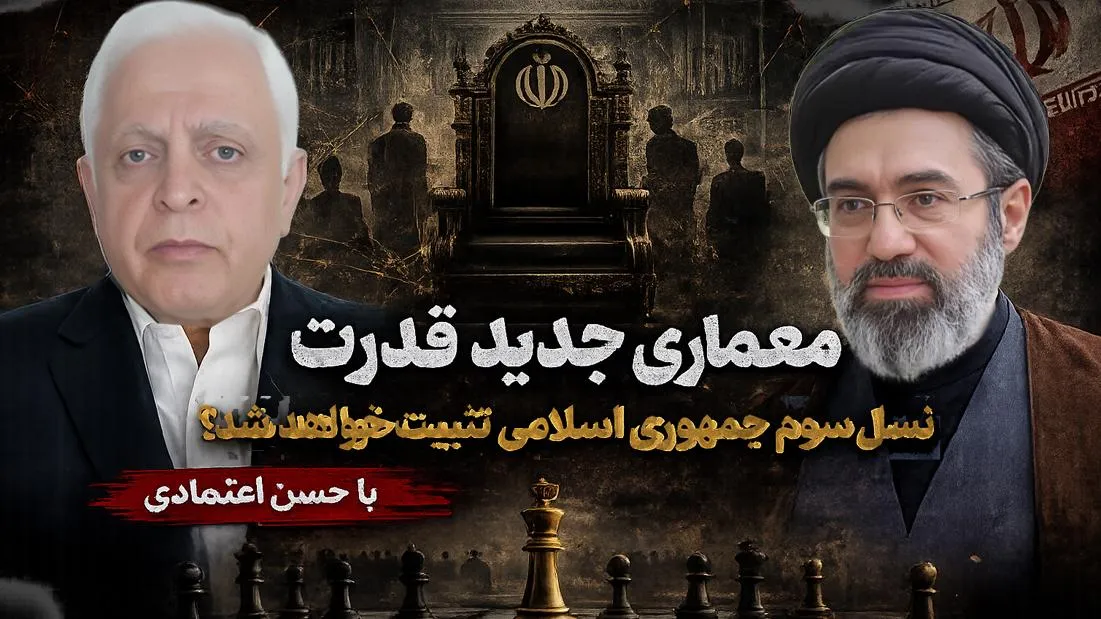
It is very clear that the Islamic Republic is at one of the most sensitive historical junctures. Therefore, we are going to discuss an issue that is important for the future of Iran, and the topic of our conversation is the structure of power in Iran. We know that after the attacks that took place in recent months, and after the killing of Ayatollah Khamenei and the transfer of leadership in a very strange and extraordinary process to his son, Mojtaba Khamenei, many now believe that the Islamic Republic has entered its third generation. Although to this day, we have not seen any live voice, image, photo, or even a live signature from the new leader. Has Iran entered the era of a military-security government? And can the new architecture of power stabilize the Islamic Republic system and the nascent system of Mojtaba Khamenei, or will new crises arise?
Hassan Etemadi in a conversation with Abdi Media: The 1979 revolution was not the revolution the people wanted.
The revolutionaries had said they were opposed to a hereditary system, but they ended up doing the same thing.
It is unlikely that the country will be run by Mojtaba Khamenei.
Hashemi Rafsanjani later became a critic of Ali Khamenei.
It is very clear that the Islamic Republic is at one of the most sensitive historical junctures. Therefore, we are going to discuss an issue that is important for the future of Iran, and the topic of our conversation is the structure of power in Iran. We know that after the attacks that took place in recent months, and after the killing of Ayatollah Khamenei and the transfer of leadership in a very strange and extraordinary process to his son, Mojtaba Khamenei, many now believe that the Islamic Republic has entered its third generation. Although to this day, we have not seen any live voice, image, photo, or even a live signature from the new leader. But let me speak about the third generation — a generation that, if we conclude in this program that it is approved or can approve itself, may no longer be defined based on revolutionary legitimacy, but rather around security, survival, and the concentration of hard power. The questions I will pursue tonight and ask the program's guest revolve around these topics: Has the Islamic Republic, which was based on the clergy — meaning the clerical Islamic Republic — come to an end? Has Iran entered the era of a military-security government? And can the new architecture of power stabilize the Islamic Republic system and the nascent system of Mojtaba Khamenei, or will new crises arise?
My guest tonight needs no introduction — in conversation with Hassan Etemadi, a well-known figure and someone I consider a veteran in the field of journalism and media.
Hassan Etemadi: I see you as an innovative journalist. You are also young — despite your youth, you are very innovative, active, and hardworking. The topic you have chosen is also a controversial one. What we will discuss regarding your chosen topic is merely an opinion and interpretation of what is happening today in society and this sensitive historical period, and it certainly cannot be complete. I am sure that after this conversation, various opinions will be expressed.
You remember the experience of the 1979 revolution — it started with this: that 1979 was not a revolution but an uprising. And of course, every revolution is accompanied by an uprising. Why was this terminology introduced? We know that these words have been coined not very long ago, and they have been coined by certain groups and media, some of which you yourself have played a role in. Basically, there is no revolution without an uprising. In the literature of many, why was the 1979 revolution referred to as the 1979 uprising?
Hassan Etemadi: The truth is that those Iranians who do not agree with what happened in Iran in February 1979 (Bahman 1357) have tried over the years to use the term "uprising" and other labels. A significant portion of the Iranian people chanted slogans against the ruling system — the monarchy — and resisted, fighting day and night in the streets until the regime in power was removed. Naturally, we can even say that this was a political revolution. The definition of revolution itself also has various definitions from different experts and theorists. That is, every revolution must go through various stages for fundamental changes to occur. It is true that in 1979, the people did not know what government with what characteristics they would bring to power instead of the monarchy, but they knew that they did not want the regime of that time. They knew that the Shah's regime did not fulfill the source of their demands and aspirations. Perhaps we can confidently say that the representatives of the dissatisfied majority in the streets wanted to remove the regime.
From my perspective, it was a political revolution, but we cannot say it was a revolution that could change the fundamental economic, social, and cultural foundations. Unfortunately, a government came to power that did not care about such issues; its only goal was to take political power. They had no remedy for these problems, and for this reason, they began their government with a lack of planning. Because they could not respond to the people's demands, like the previous regime, they resorted to violence, leading to the formation of an authoritarian structure. And the result is what all our fellow citizens, including yourself, know.
What were you doing during the uprisings of the revolutionary days yourself?
Hassan Etemadi: Before the revolution, I had come abroad. I was a member of the Confederation of Iranian Students. I was one of the officials of the confederation branch in Sweden. At that time, the conditions of the confederation were not stable — similar to the recent years when opponents of the regime are living in a state of dispersion. The confederation itself had also split into numerous factions. Political currents with various tendencies, along with their cadres and members, had an impact on the Confederation of Iranian Students. Although the confederation tried in its final days to remain as a democratic and national current — "national" in the sense that anyone who opposes prison, torture, and execution, and who wishes for a democratic government, could be active within it. At that time, I had been abroad for more than four years before the revolution. After the events that are recorded in Iran's history took place, and given that our country's borders were closed at that time, I, along with a few of my friends, were in Turkey, waiting for the borders to open so that we could make our way to our country. After years, finally on February 14, 1979 (25 Bahman), we were able to enter Iran from Turkey by bus.
Some people's demand during the Shah's time was bread and water.
What did the people want? Why did the revolution happen?
Hassan Etemadi: For some, it was bread and water, but for many, it wasn't just bread and water. In the years 1969, 1970, 1971 (1348-1350), after graduating from high school, I had gone to serve in the "Sepah" (Health Corps). I had the opportunity to witness the lives of the Iranian people up close in rural areas — or at least a portion of the Iranian people. My service at that time was in the governorate of Semnan. The environmental organization had provided me with the means to visit all the villages in that region. The truth is that a city less than 150 kilometers from Tehran did not have paved roads; the villages did not have electricity or running water. Despite the regime's propaganda at the time — it is true — but wherever I visited in the region, some had, some didn't. I do not want to deny or overlook the services that the Sepahs (Corps) provided at that time, but the reality is that there was no organized plan.
Interesting name — the Sepahs existed before the revolution too.
Hassan Etemadi: Yes, but they are different from these Sepahs (IRGC).
These similarities and continuities are interesting. The comparison is strange and pointless.
Hassan Etemadi: During the year and a half that I served at my post after six months of training, the real face became clear. The situation in the villages was not good. There was unemployment in the cities. Even in Greater Tehran at that time, where supporters of the former regime talk about flourishing and progress — and the images that exist are from Enqelab Square upward, from University of Tehran Street — you never see images of South Tehran, of Javadieh, Naziabad, the poor areas. Of course, they exist. Even in many films of that time, if you refer to them, you see poverty. There are documentary films that certainly those who want to tell the truth can see. In the Darvazeh Ghar area of Tehran, next to the Tehran Bazaar, people did not have running water, and in some areas, there were public toilets that people used. There were people on the margins — neither did the government care about them, nor were they provided with facilities. Corruption was significant relative to the population of that time — drugs, prostitution, and many other things. It was enough to visit some of the coffee houses in those areas to see how people were living. So, when you asked why the revolution happened, one reason was these shortages, inadequacies, and injustices that prevailed in society at that time.
Part of these things that were shown from the street upward — we should blame you for that, because you played a role in launching many of those networks. Of course, I think it is very important for people to become familiar with history, and what happened, and not selectively — because in any case, the Islamic Republic also had its own approach. I myself was involved in making many documentaries, and their perspective was to show only certain parts — to show the tin shantytowns or the ruins, or to show the brothels. There are many documentaries. But in my opinion, showing one part and not showing another — I don't want to judge whether it's good or bad — is a betrayal of history. I think this betrayal of history happened after the 1979 revolution, from both sides of the story.
**We talked about the revolution. If we agree that a revolution took shape in 1979 and that the people wanted a change of government and the overthrow of the previous government — the government of Mohammad Reza Shah Pahlavi — it seems that the people revolted to gain things they did not have, or to put it briefly, not to lose the things they did have. In fact, I think the strategic error that the Islamic Republic made in the 1980s, 1990s, and even recently, was that it took away things that the people had. The people wanted to gain things they did not have. In conversations with many activists who fought against the Pahlavi regime, I asked them. They said it was about political freedoms, about political prisoners, torture, the issue of SAVAK, and economic issues — though the latter is mentioned much less, and cultural issues are referred to more often. The revolutionaries themselves who are at the helm of the Islamic Republic consider the revolution to be more cultural in nature. But beyond all these matters, for better or worse, the Islamic Republic has passed through two generations of itself. And still, for better or worse, crooked or straight, it holds power. And in some way, power has been transferred from the second leader, Ayatollah Ali Khamenei, to his son, Seyyed Mojtaba Khamenei. This is what we are seeing on the ground now. If you will allow me, I would like to move into the main part of my discussion, because there are many issues we can talk about along the way. Just to reach a basis — was it a revolution? You use the term "revolution," and it was valuable for me to know your point of view.
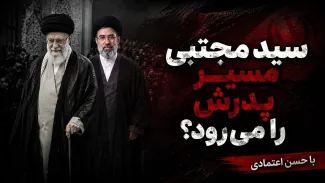
Now that Ayatollah Khamenei has been killed and his son, Mojtaba Khamenei, has taken over the leadership of the Islamic Republic, how do you see this power transfer? On one hand, the Islamic Republic's foundation was that — one of its principles was — it always said, "Our system is not a hereditary system." But with the selection of Mojtaba Khamenei, in a way, his son — meaning his crown prince — has reached a position of power. He did not become the "King of Kings," but he has attained the position of caliphate or governance — the "house of power" is under his control. On the other hand, the Islamic Republic always said, "We will not have a hereditary system," but this happened. I want to know your view. Of course, many say that Ayatollah Khamenei himself was opposed to his son becoming leader, and many consider this a coup by the IRGC. What is your opinion?
Hassan Etemadi: I think your question was very eloquent — in other words, it was a question that contained its own answer. That is, the Islamic government — the founders of this government — had said from the beginning that they were opposed to a hereditary monarchy. For this reason, one of the problems of the monarchy that they pointed to and knew about was its hereditary nature. But today we see that they have done the same thing themselves. And this was done regarding an individual about whom we do not know much. That is, over the past years, he has no speeches; he has not expressed his opinion on issues. Of course, there have always been rumors and news and information circulating in society — for example, that he has good relations with the IRGC and its commanders, or we see photos of him with Qassem Soleimani. These could confirm these rumors and such news — that Mojtaba Khamenei had very close relationships with IRGC commanders compared to others. So from this perspective, it is clear, as I said, that there is a contradiction: they claimed to be opposed to a hereditary system, but in practice, they did the same thing. And this is another sign of the structure of authoritarian regimes, which under no circumstances are willing to lose power, and by any means possible, they want themselves and their children to remain in power. Just as right now, even though there is still no sign that the monarchy is going to return to Iran, they are already talking about Reza Pahlavi's eldest daughter — that she will be the future queen of Iran — even though she has not yet become queen. And this perspective, in my opinion, is not a correct or democratic perspective. All of these are signs of an authoritarian mindset that prevails in religious and monarchical governments of the Iranian type.
In your own opinion, was the Islamic Republic able to control the succession crisis? Or has it merely postponed it? In any case, the chosen successor — they said in their own nightly slogans, "You wanted to kill and destroy Khamenei, now Khamenei has become young. It is the same Khamenei who has become young." Is this belief correct? Do you think the succession crisis is over?
Hassan Etemadi: The issue of Mojtaba's succession, and whether the Islamic Republic government will reach its third generation — we are discussing now how possible it is. But let us assume that if the war between America and the Islamic Republic ends, and this regime wants to remain in power for at least another period, it seems that given the current circumstances, if he can respond to the issues and problems of Iranian society today, perhaps he might remain for a period. But all of these are questions: Given the political and economic complexities, especially the cultural and social problems that exist in Iran, can the government of Mojtaba Khamenei respond to all of these? The truth is unknown. That is, this war itself has created very severe economic problems. Can the Iranian regime — a regime that, with all the problems, as you pointed out, has remained in power — can it respond to these problems, dilemmas, and demands? I do not think so easily. But these are the prelude to a conversation and discussion that needs to take place. Experts in economic, cultural, political, and other affairs will present their opinions. But as a political activist, or to the extent that I pay attention to the political issues of my country, I think it will not be an easy task unless a miracle truly occurs — meaning that Mojtaba Khamenei, contrary to his father's policies, presents a different performance and can bring about political transformation in economic, cultural, and social fields, and at least for a period, satisfy various groups in society. Is he capable? We must wait and see whether such a thing will happen or not.
Khamenei tried to gain power in the region by creating the Quds Force.
If he wants to do such a thing, we must see its signs. When you look at Ali Khamenei — whether during his leadership or during his presidency — do you consider him a successful leader, or do you think he was not successful?
Hassan Etemadi: Naturally, from the perspective of Ayatollah Khamenei's supporters, they consider him successful. And the truth is that since 1989 (1368), Khamenei came to power as the leader of the Islamic Republic based on the proposal and the story of Mr. Rafsanjani, who quoted Khomeini as saying that he was worthy of leadership. Mr. Khamenei was able to maintain the structure of the Islamic Republic of Iran. At the same time, he was able to create bases for himself in some countries of the region, such as Iraq, Syria, Lebanon, and Yemen, in a better position than before. He created the Quds Force. And in order to be present as a determining power in the region, through this same Quds Force and its activities and the proxy groups he built, he tried to achieve this degree. Of course, he always faced problems because of the main rival in the region, which was Israel. But from this perspective, he was able to create a position for the Islamic Republic of Iran. But from the perspective of opponents and critics — even factions within the Islamic Republic of Iran — they were not in agreement with Mr. Khamenei's policies. Even Hashemi Rafsanjani, who himself helped him come to power, later became one of his serious critics.
I don't care about individuals' dissatisfaction; that is another matter. This individual, in terms of what he wanted to accomplish — because success can be evaluated from various angles — did he accomplish what he wanted?
Hassan Etemadi: He considered himself successful.
I don't care about himself at all — an external perspective.
Hassan Etemadi: No.
Listen without filter on Castbox.
What did he want to achieve that he did not achieve?
Hassan Etemadi: First of all, the promises that governments usually make — it is true that for a large portion of our country's population, progress was achieved. It is true that during Khamenei's rule, villages gained electricity and running water, and facilities at that level came about. Cities grew larger. Numerous universities were established in Iran. The level of education increased compared to the Shah's regime. There were more graduates than during the Shah's regime. These were positive points. However, compared to the advancements in the world today, Iran, with its resources, natural wealth, and young, specialized workforce, was not able to benefit as it should have. We faced various crises, including the migration of elites.
**Khamenei never said, "I want to stop the migration." He never made such statements. We do not want to judge his rule — if we want to evaluate it from an external perspective, it can be criticized in terms of human rights, the establishment of parallel institutions, and many other matters. But did Ali Khamenei accomplish what he wanted to accomplish? What he wanted — I see success this way: If I achieve what I want, I am a successful person. This success may be, from an external perspective, a negative success. There are many examples where if an individual achieves a goal, it is not necessarily evaluated as a positive development in the social context. I don't care about positive or negative; I want to say: Was that individual successful in achieving what he wanted?
Hassan Etemadi: I think that any authoritarian leader, with any belief, thought, or ideology — if you ask them, they will certainly say, "I want to bring progress to my country and create security and welfare." In my opinion, in these areas, he was not successful. You yourself pointed to issues such as human rights violations, executions, and the killing of opponents and critics — which unfortunately continue to this day. There are still deficiencies.
In recent years, from 2009 (1388) until now, we have witnessed many protests from the Iranian people, from the Green Movement to the 2017-2018 protests, to the movement named after Mahsa (Amini). All of these were signs of people's dissatisfaction. In my opinion, the result is that they did not fulfill their promises. I think that if you had asked Mr. Khamenei, "Do you want the Iranian people to be prosperous and happy, and to live in welfare, comfort, and security?" he would certainly have said yes. But with the programs he had, with the policies he had — creating security organs, and every time a problem arose, he would immediately interpret it as an operation managed by a foreign power — he created the grounds for suppressing protests. Therefore, from this perspective, he was not successful.
**From this perspective, I say that many of Mr. Khamenei's supporters — you also mentioned supporters — consider him a successful person. How much do you agree with this proposition? They say: Ali Khamenei, during his lifetime, first of all, reached the highest political and social position in the country. During the period he became leader, he did everything he wanted — that is, there was nothing he wanted to do that he did not achieve. From suppressing opponents to expanding military and security institutions, to expanding the structure of the Leader's office (Beyt), creating an institution like Beyt — these were among the things he did. Alongside that, the development of the missile industry and military matters — these were accomplished. In terms of controlling elections, he did almost everything he wanted. He struggled with illness for about ten years, and in his old age, he was killed in the manner he wished. He always said he wished for martyrdom. And his final interpretations regarding America — "Because one like me will not sit with one like you" — meaning that he ruled with the very things he wanted, and he was killed with the very things he wanted. Do you agree with these propositions, or do they hold no weight?
Hassan Etemadi: As you pointed out, from the perspective of his supporters, and from his own perspective, and even from the perspective of you and me as an independent external observer if we want to judge — I think yes, he achieved these goals. From this perspective, he was successful. But was this success in the interest of our country's national interests or not? I believe it was not. I confirm that his supporters — a portion of the Iranian people, I don't know what percentage — they take pride in implementing such policies. They view him as a political figure and a leader — they agree with him, and even look at him with great respect — for succeeding in achieving all his goals. And from their perspective, Mr. Khamenei's goals were both culturally valuable and beneficial for our country. Right now, they say our country has become one of the great global powers. In fact, they say the war showed that we are a great power — at least in the Middle East region, we militarily resisted superpowers like America and Israel. They attribute all of this to Mr. Khamenei.
This proposition is not incorrect. Missile capability is considered part of the performance of Ali Khamenei's era of rule. I say we may have a discussion about his goals — we may say the goal was not a good one: the goal of developing the Shia Crescent, or making compulsory hijab a political taboo — these may not be appropriate or good goals. But our discussion is about to what extent he achieved what he wanted.
Hassan Etemadi: I believe from the perspective of his supporters, he was successful. Regarding the creation of defense capabilities for the country, and the activities related to the production of missiles — the types of missiles used in this war — he was successful. Given the sanctions that Iran faced over the past 47 years, this war showed that these missiles, which were produced in Iran years ago, were able to — whether for the benefit of the people or for the benefit of the Islamic Republic — in reality, use our country's credibility and maintain Iran until this moment. I believe this war, as it ends, was able to preserve Iran's independence. As an opponent of the Islamic Republic of Iran, from this perspective, I see this positively. Given the resources we had, we could not produce aircraft on the level of the British or Swedish military, but apparently, with the technique of missile production, they succeeded in creating such capabilities to maintain our country's security. From this perspective, it is a positive example.
It seems that the third generation will be different — and perhaps you will say they are not different either. In your opinion, will this third generation of the Islamic Republic remain an ideological government, or will it remain a government based on the mass of clerics, or will it move toward security and military structures, etc.?
Hassan Etemadi: That is a very important question. I think that within the regime, there are people — even among the IRGC, there are individuals — whose intention is to change the conditions according to the desires and inclinations, especially of the younger generations of our country, because they cannot ignore the issue of hijab. In any case, the Islamic Republic of Iran has accepted — although within the legal framework, hijab is still one of the legal requirements for women's way of life and appearance in society — but practically, a portion of urban women across the country do not comply. And they themselves have accepted it. And you yourself know that regarding the issue of hijab, new approvals were supposed to be passed in the parliament, but some politicians within the same regime opposed them and said, "We do not accept them." Therefore, it is still too early to know whether they are ready to respond to the desires, way of life, and demands — especially of our country's younger generations. Do they have the ability? The same issue of the economic problems that have now arisen — can he respond to the material, cultural, and social needs of a large portion of our country's people? We cannot give an opinion about it from now. But my feeling and impression is that some officials of the Islamic Republic of Iran know that it is no longer possible to run society based on ideological and religious frameworks like before. They need to change their views. They need to reconsider. They need to allow society to have the progress that younger generations naturally desire, based on knowledge and study — like all the youth of the world — they want to have a modern way of life. They need to allow that, while at the same time providing opportunities, providing employment, enabling them to live in relative financial and social security, and not having cultural problems. Perhaps this way, they can truly bring about a transformation in terms of political and ideological perspective on societal issues, and become a third current — but unlike the first and second Islamic Republics, they would not act based on religious criteria.
xactly — the recent remarks by the Friday prayer leader of Gilan in Rasht regarding women without hijab faced a strange reaction, to the extent that even one of the eulogy singers (madah) said: "Even if you are without hijab or have partial hijab, you are still a girl of Iran." The reactions were centered on not creating division and discord. It seems that the issue of hijab is no longer on the agenda to some extent; it has been passed by. What remains is only regret for those who were killed on this path — including Mahsa Amini and many women and girls who, over these years, were imprisoned, humiliated, and beaten with batons for the sake of hijab. Only sadness and a lump in the throat remain. This nation has paid a price for everything it has wanted to achieve. These days and moments will not be forgotten. Perhaps a large part of these freedoms is owed to the Mahsa Amini incident and that event. The blood of Mahsa Amini opened a new chapter in the history of Iran in the women's freedom movement.
Let us return to the topic of the third generation. How influential do you think the role of the IRGC and intelligence institutions will be in this new period of the Islamic Republic? How will they operate? Do you think the IRGC will behave the same as the IRGC of the 1980s, 1990s, and 2000s, or do you think they will undergo a transformation?
Hassan Etemadi: I have some personal experiences. You yourself know that the granddaughter of Ayatollah Khomeini lives in Canada as a completely modern girl. She wears whatever clothing she wants; if she likes something, she can wear it. All her children do these things. The same "princes" (offspring of officials) we are talking about — many of them hold passports of Western countries, in America, Canada, and other European countries. When their children have undergone such transformations, it naturally affects their fathers as well. In that case, regarding this third generation you mentioned — the truth is that its politicians, based on this very principle of hereditary political power in our country — the leader of the Islamic Republic of Iran, Ali Khamenei, appointed Mojtaba as his successor. I think that certainly the ministers and even the IRGC commanders — they can have their children not in the guise of being in the IRGC, but in various sectors of the IRGC and the economy. You yourself know that a large portion of our country's economy is in the hands of the IRGC, and they play a major role. Of course, they are not the only ones. In any case, it is a country where from the very first day, various layers of religious groups united with one another and created this government. The wealth that existed in the country was divided among themselves. In many places, they may compete with each other. They know that to remain in power, they must get along with each other and divide the country's wealth. We are talking about a third current that would end the war — that is, that can calm the people, provide for the people's needs, fix international relations, free political prisoners, free the press, have no restrictions on civil institutions, and grant the people the right to protest and strike.
Mojtaba Khamenei must end the war and grant the people the right to protest and strike.
Anything forbidden (haram) can become permissible (halal). Why was it not possible before? These things leave a mark on one's heart. Can it be claimed that our jurisprudence (fiqh) is dynamic? What is your opinion on this clip?
Hassan Etemadi: This has always been the policy. During election periods, girls without hijab participate in meetings. When elections are near... but now the war situation has caused that when they say, "This girl without hijab is our country's girl," and she participates in anti-war protests, sometimes you cannot stop her when she goes about her life on the street with the same clothing. Therefore, I want to say that part of the transformations that have been taking shape in Iran are happening now. A clear example is the issue of hijab. Part of it — through the Mahsa movement — the final shot was fired. Schoolgirls stood up for everything; they lost their eyes, they lost their lives. It is now uncontrollable. Naturally, any government that wants to remain in power must submit and bring about the people's satisfaction. Otherwise, it cannot survive. I am sure that if they want to continue as before — some say Trump has said that if they come to terms, the blocked funds will be released, sanctions will be lifted. Some even say that for passage through the Strait of Hormuz, ships that pass through must pay money. If they can use these funds for the welfare and progress of society, they can certainly remain in power for a long time. If they continue looting and stealing as before, they must expect a new wave of dissatisfaction — which may be far more severe than the protests that took place in December (Dey). The reason is clear: economic pressures are now excessive. The issue of homelessness — a large portion have lost their homes due to the war. There are one million unemployed. If this situation continues, the number of unemployed could reach two million. Faced with these two million unemployed people, and the dissatisfaction that arises in various fields, this regime cannot resist. Either out of necessity, they must change their views and methods — stop the theft and corruption that exist. Today, I think Mr. Pezeshkian addressed the judiciary and said, "Deal with economic corruptors in the harshest possible manner." That is just one example. In all fields, the reality is that this country — as you and I discussed, that Khamenei was successful in doing everything he wanted, fulfilling his wishes — at the end we said yes. But the reality is that the corruption that prevailed in our country — now it is a war period, and we do not know if it exists to that extent or not — but it has inflicted heavy damage on our society.
If it is decreed that all corrupt individuals must be arrested — meaning that all these people in the government must somehow be arrested?
Hassan Etemadi: In any case, in a situation where they must at least meet the basic needs of the people — economically, socially, and culturally — as I mentioned, perhaps it got lost in the midst of our conversation. Even in political matters, serious reconsiderations must take place. Political prisoners must be freed. The brutal practice of executions must be stopped — while in these very days we are going through, they execute several people daily. If they want to continue like this, firstly, there are 8 million Iranians outside the country who will not remain silent. A large portion of the opponents of the Iranian regime are outside the country. At least in the field of human rights issues — the issue of freeing political prisoners, the issue of abolishing execution sentences — they can do effective work. Moreover, if Europe is going to come to terms with this regime now, they must pay attention to these issues. It is true that Trump pays the least attention to the lives of our political prisoners; he speaks for his own political goals and for earning more money for himself, his family, or his friends — for his country — within that framework, even though it is about the issue of war. But the issue of human rights, the issue of the lives and youth of our country — these are important matters. And these are points that if the Islamic Republic of Iran cannot provide appropriate responses, it certainly will not be able to survive.
You also mentioned Iranians outside the country, which is a very complex story. Talking about Iranians abroad — a large portion of Iranians outside the country are either those living in exile, those who have emigrated, or those who have been pushed out in one way or another. We are truly worried about Iran. In whatever way we can, the situations are very different. This intense polarization that has emerged in Iran, especially outside the country, is very important. But I want to ask about the recent attack that took place — the last attack carried out by the United States and Israel on Iran. Many say, "Should we say the Islamic Republic?" Can it be separated or distinguished or not? At least in the speech and discourse of the US rulers, they do not distinguish. What effect did this attack have on the balance of power within the Islamic Republic, and how much did it affect the freedom-seeking struggles that many political activists were pursuing — whether those who were thinking of reforms in some way, or those who were thinking of reform (reform), transition, or even overthrow? What effect did this attack have?
Hassan Etemadi: Many say war is an absolute evil. In my opinion, from various aspects, it had very many negative effects. It created division and even multiple factions among political groups outside the country, even among supporters of specific opposition blocs. There is a video that Parviz Sayyad released. He was invited by an Iranian association in New York for an event that was supposed to take place. He was a guest. Events occurred there where part of that event took place in a park in New York. He himself described it, and the documentary film exists. Supporters of the monarchy disagreed over chanting a slogan; they argued with each other. Mr. Sayyad took the microphone and reconciled them. Apparently, the slogan was, "This is the final battle, Pahlavi will return." There was a disagreement over this slogan. Mr. Sayyad said, "Let's say, 'This is the final battle, Shahrbanoo will return,'" and the entire crowd said, "This is the final battle, Shahrbanoo will return." I mention this because of your reference to the creation of duality, division, and multiple factions among Iranians.
From one perspective, in my opinion, this creation of duality among part of the opposition is not very valuable. But overall, it was important. That is, it created a great schism among various parts of the opposition. Inside Iran, however, I think that contrary to appearances, it led to a kind of cooperation between different layers and factions of the government. I see this until today. Some believe that there are multiple factions among the government and that this factionalism might lead to the collapse of the regime. I do not think such a thing will happen.
There are many disagreements among the opposition.
Let me ask you about your slogan — a very common and well-known one: "This is the final battle." In your opinion, will Pahlavi return to Iran?
Hassan Etemadi: From the very first day, due to my experience and knowledge of him and what is happening — when Trump says from day one, "We do not seek the overthrow of the regime" — last night on VOA TV, I was present on a program with two other friends. I said that I do not believe at all that America and Israel want to remove the Islamic Republic. For the simple reason that the Islamic Republic is an ideal regime that can secure the interests of the great powers — whether in the region or in Western countries, from Europe to America. Their only intention is that this regime should not interfere in the internal affairs of other countries, and should not disrupt the security of the region. Let me also say — because in other programs, this sentence of mine has always remained unfinished — there is a serious difference of opinion between Trump and Israel regarding how to deal with the Islamic Republic. Neither of them wants the Islamic Republic to go away, because the Islamic Republic is an ideal regime that can secure their interests. In addition, at the same time, Israel is careful that in the region where they are present, another country — especially Iran — should not be able to provide facilities for progress and development. This issue is very important. I do not want to go back to what has happened over these 47 years. The comparison I had when talking with some friends once or twice was this: what has happened over these 47 years under the Islamic Republic — they say it is the result of the programs that the Shah had in mind. But in any case, from various aspects of society, the fact that the number of educated people increased, illiteracy decreased, and relatively valuable facilities were provided to villagers and small, underdeveloped towns — these actions have been positive.
This slogan they used to say — "Pahlavi will return" — will he truly return?
Hassan Etemadi: No, he will not return. Because if Pahlavi returns, America and Israel will not know what will come out of it. Pahlavi cannot form a government, nor can he maintain a government.
Why not? As some say, "Is he deaf and blind?" Like the same clerics who are there. I am speaking from the perspective of his supporters. Like those same clerics who had no education — the "water jug clerics" who came — these can build something better than them. Pahlavi has a history of civilization-building. Pahlavi has deep roots. Whatever Iran is, Pahlavi built it. He will build it again. He is the only Iran-building dynasty. Why wouldn't he build it again?
Hassan Etemadi: "Iran-builder" and similar terms — kings and ayatollahs do not build Iran; the people build it. The technical workforce, the workers, and the individuals who are the main designers of various projects in society — they build it. But the reason I say he will not build it may require a detailed explanation. Khomeini, before the Shah's government was completely overthrown — since Bakhtiar, the Shah's elected prime minister, was in power, the parliament government was in place, all dependent on the Shah's government — boarded a plane and left Iran. His supporters were in the streets. Now, during these recent weeks, when supporters of the Islamic Republic are in the streets day and night, do you see any sign of supporters of the monarchy chanting slogans in the streets? No, they do not exist. These are subtle points.
They say that if they chant slogans, the other side has guns and will kill them.
Hassan Etemadi: That is one reason. But when Khomeini came to Iran — of course, it can be seen from two aspects. As a documentary states, America told the Shah's military commanders not to interfere, especially since Bakhtiar had come to power and they had pledged allegiance. Do you think that today, the IRGC commanders would pledge allegiance to Reza Pahlavi? He himself says, "I am in contact with some of them," but it is a joke. The team he has, the supporters he has — do you think there are people who will set foot in Iran? Do you have such an impression of his supporters? The reality is that there are not. In Munich, he stood behind bulletproof glass to give a speech. Khomeini in Paris sat in a villa house on the outskirts of the city; anyone who came could meet with him. He would lead congregational prayers; everyone would come from afar, stand behind him, and pray. The point is that his supporters have to collect money, have to have a strange and extravagant protective force, because there is sauce spilled on the collar of his jacket! Therefore, there is no special quality in this individual. He has no social base. His recent claim that 80-90% of the Iranian people support him — that does not exist. The destiny of any revolution is determined by the people on the streets. If you and I think that supporters of the monarchy will fight in the streets, overthrow the Islamic Republic, and bring back the Shah — very well, that can happen. But I do not believe such a thing. Nothing indicates that he has a social base in Iran. The events of January 8-10 (18-20 Dey) were an incident that had no connection to him. He thinks they came because of Reza Pahlavi and the return of the monarchy. They thought Trump was going to send reinforcements, that he would bring the "Immortal Guard" into the streets, help, and we would all go, this regime would flee, we would take over, and they would return and establish a government in Iran.
Of course, Mr. Pahlavi, during that same December (Dey), issued a message saying, "I will soon prepare to come to Iran." And in fact, I think it is a fortunate event if he, as the leader of the struggle against the Islamic Republic, boards a plane with his supporters on an Airbus headed for Tehran. I hope other commandos will also protect him. But let's see the outcome. In any case, for a while, people cannot remain hopeful about this battle, cyberspace issues, and popular movements, and act based on their hopes — when that outcome, in confrontation with a regime armed to the teeth that dominates the country and geography of Iran under the name of the Islamic Republic, results in many deaths and the loss of many young Iranian lives in the hope that freedom will return, or freedom will come, or whatever they believe in will be achieved. This duty must be clarified. I think it is a very fortunate event if conditions are provided for Mr. Reza Pahlavi to return to Iran. Do you think these conditions will be met, and he will return? After this war, or in the coming months?
Hassan Etemadi: You remind me of the proverb about someone who wants to make a sea of buttermilk from a bowl of yogurt. When they want to create a security apparatus to protect Mr. Pahlavi as he travels between Munich, Los Angeles, and London — one of his supporters was speaking on a TV program and said, "Do not even expect to take a photo with him." That is, supporters who come to the place where he is giving a speech, chanting slogans and expressing their support, cannot take a souvenir photo with him. Then do you think a country like Iran, which has forces like the IRGC and all kinds of security forces, will open the way for him? Even if he himself wants to do this, I think no conditions are provided. If this war — which I think will end — and the Islamic Republic of Iran remains in power even for the short term, and this event occurs, I promise you that more than 90% of those who, in recent weeks, in Los Angeles, Toronto, London, and Paris, were chanting "This is the final battle, Pahlavi will return" — you will no longer see them. Another part that remains will find serious differences with each other and will attack each other, saying, "Didn't you say Pahlavi would return? Pahlavi did not return." Mr. Pahlavi himself will quietly go on a long vacation. This is not a prediction; it is based on my knowledge of him. His political performance in past years has been like this. The fact that you now see Reza Pahlavi's name being raised more than anyone else in this period — the reality is that there were vast advertising resources and substantial funds spent by certain countries to use him as a tool for their own purposes. Otherwise, it was not simple. Until a few years ago, Mr. Pahlavi traveled around the city by taxi and ate in any restaurant. But they created conditions to show his position and status as different from other political figures in the opposition from every aspect. Therefore, I do not believe at all that he will return to Iran, nor does he want to return, nor do America and Israel agree with his return. A country like Iran, with its political, cultural, and class diversity — to hand it over, for example, to people who from now on have racist and classist views? Iranian society is a highly classist society. Millions of Iranian youth live in absolute deprivation. By what standard does this gentleman want to organize our country with the help of Israel, Netanyahu, and Trump? Therefore, this will not happen. But I think that at least when this war ends, it will have good achievements for the Iranian people. They will no longer pin their hopes on foreign powers, nor will they so easily accept the claims of self-appointed leaders like Reza Pahlavi. As it is, there is no talk of him now — contrary to the efforts of certain people or specific media to present it otherwise. They should try to stand on their own feet. At the same time, opponents of the regime outside the country must know that if they want to play an effective role, they must become an active force behind the front lines for our fellow citizens inside Iran. Today, there are many opportunities for Iranians outside the country to work, especially regarding the issue of executions, the release of political prisoners, freedom of the press, social freedoms, and so on. They should try to convince public opinion, international organizations, and Western governments that they must pay attention to these aspects of Iranian issues. However, this requires that our fellow citizens inside Iran be prepared to restart activities for fundamental changes, their origins, and their demands. You and I cannot determine this; they themselves must decide whether to do this or not. As things progress, if the economic, cultural, social, and various freedoms that every Iranian living in that country today desires are not provided, the regime cannot survive. Therefore, it will face widespread problems and protests. Especially economic issues are now one of the most important matters to which the regime must be responsive.
Reza Pahlavi quietly went on a long vacation!
We talked about legitimization, which is a media issue. Your comments can be very interesting because in both media outlets that in some way defend Mr. Pahlavi's origins, you have played a role and know the ins and outs. Both you and I, and Iran International in some way, are aware of it. We can talk about it. You also criticized that they only show above Parkway intersection (four-way). You yourself were involved — you have many interesting stories. Do you think Mojtaba Khamenei will continue his father's path? Even though we really have no information about him.
Hassan Etemadi: From the very beginning of launching the "Man O To" (You and I) TV channel, I did everything I could. Regarding Iran International, I was invited from the very beginning and lived in London for a period to speak with the management of that time. They offered me an independent program to host. But in the end, when it came time to sign the contract, I was supposed to invite about four guests with various tendencies in each program — a different format similar to programs now done on various media outlets — but the design was very different. In the end, they said, "Out of the four guests, we will invite two guests." From the beginning, I had said, "If we cannot work together based on mutual trust, I will not accept this work. I promise you that I will always maintain a neutral role as a media figure." They did not accept.
The Iran International network wanted to select two of the guests.
Hassan Etemadi: Yes, to invite two out of four guests. But it didn't work out. Like many other friends and activists, before these events and the change in Iran International's policy — which completely distanced itself from its previous form and turned into a propaganda megaphone for Mr. Pahlavi, supporting war and military attack on Iran — naturally, they put me on their blacklist.
"Man O To" (You and I) from the beginning was in some way supportive of Mr. Pahlavi and the Pahlavi era.
Hassan Etemadi: No. In the first three years, Keyvan Abbasi could not stand the sight of Reza Pahlavi — meaning he was not willing at all. But new sponsors that "Man O To" found changed "Man O To's" policy. Keyvan Abbasi, in exchange for receiving payment, acted according to the desires and wishes of the sponsors. After I resigned, the policy changed and it became a media outlet that advertised for Reza Pahlavi. But in the first three years, absolutely not. On the first day when I asked Keyvan Abbasi, "What goal is this TV channel pursuing?" he told me that the sponsors had told him, "You must produce programs that make Iranians, especially young people, feel the differences between the previous regime and this regime," mostly regarding the lifestyle and conditions that were available for a portion of the country's youth at that time. Based on my own thinking, I thought it was justifiable to some extent — that anything that can make people more aware is useful. And as far as I knew, as a consultant to the newsroom, I was absolutely the determiner of daily political reports and news as the editor-in-chief. But in other matters, if they asked my advice on documentaries, with that motivation I mentioned, I would also help. Even I made one or two documentaries at that time — especially one about Bakhtiar; I made it absolutely from beginning to end. Some works would air under other people's names. So regarding these TV channels, I wanted to express this difference.
I made the documentary on Bakhtiar.
In your opinion, will Mojtaba Khamenei follow his father's path?
Hassan Etemadi: If this third generation — a term you have correctly used for them — whether led by him or someone else (because it is completely unpredictable what will happen in Iran in the coming days), any of these individuals, if they want to maintain this regime, must act according to the desires and demands of the Iranian people. If they can, perhaps they will remain for a period, and they must try harder than ever. If they do not try, they will not survive. That is, this young generation that now exists in Iran will not back down. These young women who are on the streets of our major cities — Isfahan, Shiraz, Ahvaz, Karaj — are nothing like the Iran of two or three years ago. The restaurants that have opened, even in the production of films and series produced in Iran — a large portion of which are produced with the capital of the IRGC — all of these matters indicate that currently, a portion of the government, including the IRGC and the eulogy singers (madah), play an effective role in today's Iranian society. The clerics, the ayatollahs, the IRGC members, and those who are members of the financial oligarchy within the government — whom you and I do not see, but a large portion of Iran's capital, banks, and other economic resources — all of them know that changes must take place in Iran. If they can — if they have the ability — perhaps they will remain. Because the reality is that this event has greatly wounded the credibility of the opposition. The monarchist faction, I think, from now on will not be able to play a role. But the other factions must think more carefully to regain the people's trust. My impression is that one of the results of the war is that Iranians inside the country will think about organizing themselves, about creating a leadership that can take control of the country in another movement, if all conditions are ready. Regarding these points, it is impossible to give a definitive answer. We must wait and see how the war ends and under what conditions, what their reactions and policies will be. The situation of Mr. Mojtaba must become clear. It must be seen — the people cannot live with an invisible leader. They must see him and hear his words. And the regime's performance is important.
If anything else had happened — any scenario other than war — we would have witnessed the leadership of Mojtaba Khamenei. Would he have been able to have the same legitimacy he has today?
Hassan Etemadi: You said that Khamenei himself was not in favor of a hereditary succession and Mojtaba becoming his successor. If the war had not happened and Khamenei had not been killed, I consider it unlikely that Mojtaba would have become leader, because Khamenei was not someone who would tell the people, "I want to make my son my successor."
If Mr. Khamenei had died a natural death by any means — would Mojtaba Khamenei, selected under pressure from the IRGC, have been able to have such legitimacy in non-war conditions? The people in the streets carry his photo a lot. Some of course — these people do not know...
Hassan Etemadi: I would not have expected that from you.
Some of these — the people do not know — but they are the people.
Hassan Etemadi: In Iran, anyone who wants to become leader must have the support of various factions and parts of the government. First and foremost, the IRGC, then the security organizations and institutions, the judiciary, the Guardian Council, and government-affiliated institutions — whether appointed or elected. I think yes — even the reformist factions of the regime would have accepted Mojtaba's leadership. Of course, they would have tried, like Hassan Rouhani, to create a position for themselves. But the war messed up all the calculations and equations. Currently, I think everyone agrees that Mr. Mojtaba should remain as leader, because they have no other alternative. And due to the rivalries that exist among them, these rivalries do not allow influential elements from this part of the regime or that part to be chosen as leader. Mojtaba Khamenei — I cannot have an accurate understanding of his personality, but from what I have seen in detail and heard about his behavior and character — he is not someone who can easily manage a country like Iran and a government with the characteristics of the Islamic Republic. Others would have to manage for him. The IRGC would have to help; security forces would have to help; even the reformists would have to help him. The parliament, the judiciary — all these institutions would have to help him. Naturally, his supporters would have to be present on the scene for him to remain as leader. It seems that, for now, in these war conditions, these facilities are available to him. But after the war ends, can such conditions take shape? I do not know. We must wait.
I disagree with the comment that if Mojtaba wants to change the situation, rogue forces will not allow it — they will suppress protesters on the streets, because rogue forces also act on the orders of commanders. If the third Islamic Republic is to remain, it must reconsider everything. Can it? Can it tolerate legal protests by the people? If it cannot, and if it wants to start massacres with weapons again, I think the path of struggle in Iran will change. That is, the people might decide to deal with this government in another way. These are points that cannot be opined on; we must see the events.
From the very beginning, the title of the Islamic Republic included the word "Islam," and the clergy played a prominent role. Now it seems that the role of the clergy — despite the fact that its leader still wears clerical clothing — has diminished. It is possible that everything will again be in the name of Islam, the "Supreme Leader" (Vali Amr Muslimeen), and "Absolute Guardianship of the Jurist" (Velayat-e Motlaqeh-ye Faqih), but it seems that some say that in the third generation, military and security forces hold the majority of power, not the clerics. What is your opinion?
Hassan Etemadi: I agree with this view. That is, the main force among the factions and various parts of the Islamic Republic is the IRGC, which holds power in all arenas. From television — you yourself have valuable experiences in this area — to media, newspapers, press, cinema, theater, music, concerts that are held, to ports, airports, and so on. Everywhere you look, any business that you see thriving and common in Iran, the IRGC's hand is in it. Of course, it is not absolute; other sectors also have their shares, and they too benefit from what exists in our country. But it is the IRGC that has the upper hand. And the IRGC, as I said, has understood what the situation of the country and the people is. The clerics have also understood; the ayatollahs have also understood. The reality is that one of the characteristics of religious governments is that they always have the ability to act differently to justify changing their policies. You are young. At the beginning of the revolution, when the founder and leader of the Islamic Revolution was still alive, at first they said that "This fish, sturgeon, and caviar are haram (forbidden)." Then they said, "This caviar is more expensive than gold," and later they made it halal (permissible). That is, someone like Khomeini, who was their leader and issued such fatwas, would change his opinion whenever their interests demanded it. Regarding the eight-year war between Iran and Iraq, you know that he drank the famous "cup of poison" to keep the system standing, because he was told, "We can no longer fight." Rafsanjani had given a letter saying that providing boots for soldiers had become difficult for them. The situation is the same even now. The Islamic Republic can no longer survive with the performance of previous years. Mr. Mojtaba, Mr. Pezeshkian, the IRGC commanders, the ayatollahs — everyone knows that they must change their colors. You have seen these color changes in recent years. Clerics become film directors. They speak about poetry, literature, and Hafez. These things have happened sporadically. That is, it started a long time ago. I think that from now on — the question is still there — the point is: if they want to remain, they must make a fundamental and radical change, not just in this area. Regarding the issue of political prisoners — it makes no sense in today's society for someone to be imprisoned for expressing their opinions. Freedom of the press must be guaranteed. If they do these things — whether we like it or not — they will remain. If they do not, they should prepare themselves for a wave of widespread and nationwide protests, and this will happen. I am sure that in the next round, civil institutions — many of which are operating secretly in Iran — have gained experience, will organize themselves, create nationwide connections among themselves, establish a leadership for themselves, create a collective leadership, and will settle matters with them. Which one will it be? It depends on the policies of the third Islamic Republic, international and regional conditions, and the situation of the opposition.
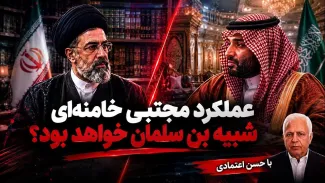
Parsa wrote: "In your opinion, will Mojtaba act like Bin Salman? Will the country's foreign policy change?" Faezeh Hashemi also raised this point once and said that he might act like Bin Salman. What is your opinion on this matter?
Hassan Etemadi: The possibility is very high. Because no matter how much they claim to be an Islamic country and to believe in Islam, the reality is that the true owner of the house is Saudi Arabia. Therefore, if they want to claim to be Muslim and to have an Islamic government, when such a transformation takes place in Saudi Arabia — both in domestic affairs and in international affairs, where they enter into relations with America — they were even supposed to come to terms with the Israelis in the Abraham Accords, but these events and a series of other matters did not allow it. So Mr. Mojtaba can also go this path. He has no other way. That is, if they want to keep the Islamic Republic, only its name can be Islamic; it must take another form. All the changes that happened in Saudi Arabia must happen to a much greater extent in Iran, because the Iranian people, culturally, have a relatively more secular outlook than the people of Saudi Arabia and other Islamic countries. If it is otherwise, they cannot.
Nader wrote: "You are right. They have changed their governing style somewhat. They have returned to the 1980s (Decade of 1360). Right now, they are executing people like that time, and we don't see any protests either." If you have any comments on this comment, we would like to hear them.
Hassan Etemadi: In my opinion, the Islamic Republic is taking advantage of this situation to eliminate its opponents. One of the reasons is that we outside the country — 7 to 8 million people — could have done effective work for the release of political prisoners and to prevent execution sentences. The dispersion among the opposition has not made this opportunity possible. Although parts of organizations and political groups opposing the regime try to organize protests, the international community does not give in to the demands of dispersed forces. For example, Mr. Reza Pahlavi alone issues a call to all these 7 to 8 million people — and all these numerous political groups — to hold demonstrations for the release of political prisoners. Experience has shown that no one responds positively to the call of a single individual, especially Iranians outside the country. An opportunity came; you yourself say you gathered several hundred thousand — a million people — but that project ended; the project failed. If you want to mobilize forces for any issue — by "you," I do not mean him personally — he must be a member of a collective. They must sit together, create a group, and say, "We must work for the release of political prisoners, force public opinion, international organizations, and governments outside the country to pressure the regime." Has such a thing happened? In my opinion, no.
Regarding Reza Pahlavi's interference within the opposition — do you not think that Pahlavi is an external arm of the Islamic Republic?
Hassan Etemadi: There is a 100% belief in this point: that the Islamic Republic, in certain periods, tried — and perhaps still tries — to keep Reza Pahlavi as the only alternative on the political scene as an opposition force, because it is confident that Reza Pahlavi poses no threat to it. Therefore, it was not only the Israelis who used Reza Pahlavi as a tool of pressure over all these years; the Islamic Republic itself also used him. Consequently, now conditions may have changed somewhat — this tool of pressure may still be in the hands of the Israelis, and the Islamic Republic may not insist on it from now on. However, during the events of January 8-10 (18-20 Dey), what Reza Pahlavi did helped the Islamic Republic. Those who came into the streets with their lives in their hands are a force that can change the destiny of any society. But due to Reza Pahlavi's wrong and irresponsible guidance, this force was unfortunately lost. However, I think that in every period, the dissatisfied force is reproduced — self-sacrificing individuals who are willing to pay any price to save their country. As long as there are young people, this will happen.
This final question is very relevant to my closing question: After this war, what will become of the opposition?
Hassan Etemadi: The part of the opposition that consists of monarchists — a high percentage of them will become frustrated and disillusioned, assuming they were in the arena from day one with genuine belief, and not that some of them came with superficiality. A portion will become frustrated. A small part that remained in previous years and had formed organizations under this title will fall into disagreement with each other. Because what Reza Pahlavi did has effectively discredited a segment of the monarchists. There are a few figures from the monarchy who opposed and criticized the military attack; they will probably remain. But can they form an organization? I doubt it, because at least I know these friends closely. Two of them are not organizationally minded, and the third does not have enough energy to do this. As a result, the monarchist opposition, in my opinion, will largely have its fate determined and will, so to speak, be pushed aside in the political scene. That is, the people will not trust them. Even if conditions re-emerge, Reza Pahlavi will never again be able to make claims like before. The other parts of the opposition, in my opinion, will come to their senses, because the other parts also failed greatly. Under the excuse that "we don't have the means," they did not perform their duties properly — and their statement is correct. But they must think seriously about themselves. It has been shown how effective the existence of a media outlet is in this war. The national, freedom-seeking, democracy-seeking opposition must have a national media outlet. Otherwise, in the next round of protests, they will again be behind. In a society like Iran, where there are no political parties, no civil institutions to mobilize the people, media outlets play a very effective role. Even in the West, it is like this, even though there are political parties, syndicates, and unions. But in Iran, especially, there is a need for an independent national media outlet. Over the past years, they failed and could not create one. But I hope that from now on, they will think about creating a media outlet. For common work, they should also create a common institution with each other. For the release of political prisoners, we need a large human rights organization. The Human Rights Charter is one. Why have 174 organizations been created? You must create one organization within the framework of those standards and the goals of the Iranian Human Rights Charter. Everyone — left, right, center, national, reformist, non-reformist, etc. — must all operate under that umbrella. If we can pressure the regime to close political prisons and dare not carry out executions, that alone is enough. That alone will create a basis for raising the morale of the Iranian people — that they will not be arrested, executed, or imprisoned for expressing opinions, opposing, or criticizing. They themselves, in the middle of the arena, will settle matters with this regime. This is something that, in my opinion, can deliver the same message as war to the regime's opponents outside the country.
Final remarks.
Hassan Etemadi: I hope that other friends who have watched our conversation will express their opinions. I think you have the necessary ability to open this discussion. These discussions must be opened. We must know our own strengths and weaknesses. We must know our assessment of this war and its effects on Iranian society and the opposition. We must examine where we failed and where we did not. Many of the friends who are present outside the country ask, "How can we create a national media outlet?" What occurs to me is not sufficient. Especially individuals like you, who are both young and familiar with new media phenomena — all of you must help. That is, the opposition must help to use the power of people like you so that you can perform your duties within the framework of a national media outlet. In the next round of protests that will take place in Iran — if the regime cannot respond to the people — we should not say, "Iran International caused this situation." Yes, Iran International caused it, but what did we do? I believe that the number of journalists and those who can do the work of clarification among the regime's opponents is thousands of times greater than the cadre working in this or that television channel. But due to a lack of technical and material resources, they cannot connect with the people. I hope that you yourself, given your valuable experiences, will pay attention. Ask both from your own generation and from various parts of the opposition to have the determination to make this work happen.
Like you, I hope that a truly national media outlet is established for Iran, whose most important line and criterion is that this media outlet does not lie. This media outlet does not distort reality. If someone is dead, it says dead; if not, it does not try to convey that they are dead. In reality, the job of media and journalists — all the writings of the world — must be to tell the truth. Personally, as a simple journalist, I suffer when I see a media outlet that does not tell the truth, and the truth suffers from that media. That is, the very essence of truth suffers, and because the truth is not told, the people also suffer. The people face problems. The people suffer from decision paralysis. The people fall into dreams. Many have sold dreams to the people. And then, like giving medicine after death, after Sohrab's death, they said, "We sold dreams. Trump is not after this or that. You must stand on your own feet, and no one will clap for you except your own fingertips." Later, they distorted things and brazenly looked the people in the eye, and the same statements of the past few months were followed by attempts to whitewash them. I hope that such media outlets will come into existence. We have many very honorable media colleagues, both inside and outside the country. The truth is, anyone who is afflicted with a profession — we are truly afflicted with media. Those of us who are afflicted also need to earn a living. The issue and problem of making a living is also there. It is true that many are not willing to sell their pens, and they do not speak at any price. In any case, the fact that a journalist cannot express what is in their heart — their inner thoughts and the results of their research — regardless of whether they want to be a political activist, this creates a problem. You, who mentioned "national media" — you have reignited my passion. I hope that one day, for the great people of Iran, both inside and outside, anyone who holds love for Iran in their heart, a truly national media outlet will open, and they will be at ease that here, they will hear the truth, they will hear the whole truth, and no one will play with their emotions and feelings, steering them in the direction they want, giving them information, and allowing them to decide what they want — whether I want to overthrow this Islamic Republic or I want to defend it — they will respect my right and my judgment, and will not try to dictate a policy.
Hassan Etemadi: Recently, through social media, I came across a journalist — from a distance and up close, I have seen the talents and abilities in him that I see in you — but I know what you are doing. Just the fact that you, as one person, run a media outlet — it is not only that you are a journalist; you are someone who can run a media outlet. I had the honor of getting to know someone of your age in Iran through social media. After contacts before the war — when he could use his internet — we spoke, and there was correspondence. I realized how much valuable ability this young man has. He was working in one of the provinces, in a radio and television outlet, in one of the media outlets. I knew his situation. One place, when he was looking for work, they told him, "Send your resume." Is there a possibility outside the country or not? I still have connections with some friends who are connected to media outlets — without addressing whether the policies of this media are right or wrong — I do not get into that. In total, I thought that among the few media outlets that have the most viewers in Iran, I would call and send his resume. I said, "He is in Iran now. Can you do something, while maintaining security considerations, so that he can work in Iran, even produce content and send it to you?" The first thing he wrote — it was absolutely astonishing — a young man with so much talent. That is, you pointed out that there are many talented and capable people in Iran and outside the country. It is a fact.
This young man alone can run a media outlet. I know that your generation — whether inside the country or outside Iran — will surely find each other. I am sure that you know many of your colleagues, and they are both honorable and competent
The full file of Abdi Media's conversation with Hassan Etimadi, a political analyst
Take less than a minute, register and share your opinion under this post.
Insulting or inciting messages will be deleted.
Sign Up