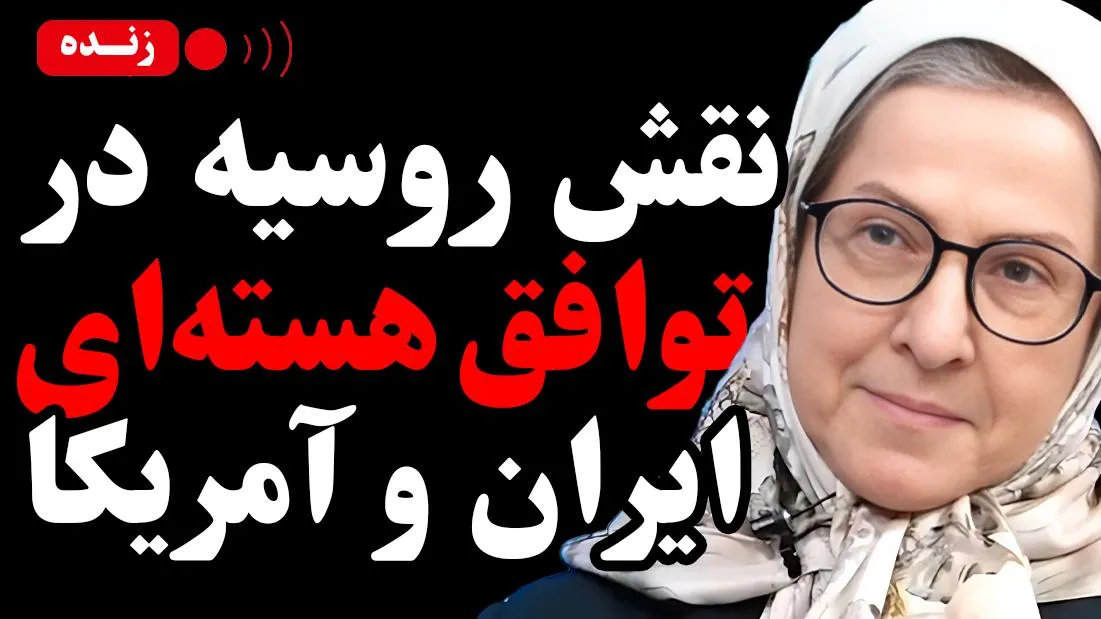
In this dark theater of power, the roles are not pre-written, but the life and death of nations are determined in every unspoken dialogue. Every smile behind the glass table may conceal a shadow of betrayal, and the one who remains silent may be more dangerous than the one who shouts. Here, the truth lies not in what they say, but in what they do not say.
Abdi Media: I am honored to be able to speak with you again tonight. The world is a field of interests and lies, players each wearing a mask, and an audience that still does not know which play to watch. In this dark theater of power, the roles are not pre-written, but the life and death of nations are determined in every unspoken dialogue. Every smile behind the glass table may conceal a shadow of betrayal, and the one who remains silent may be more dangerous than the one who shouts. Here, the truth lies not in what they say, but in what they do not say. In a world where lies are published loudly and capabilities are buried in whispers, understanding is itself a form of resistance, and it will certainly lead to victory.
In politics, truth is as important as light on a stage in the theater; what is seen is more important than what is, and sometimes a diplomatic smile is a disaster dressed in respect. Is Russia the savior of the East? Or a silent jailer? Is the enemy of my enemy necessarily my friend, and is there any place for friendship in the world of powers at all? In this misty stage of politics, a fundamental question strikes the mind like a hammer: Why have Iran and America still not reached an agreement? Is Russia a player in this, or the director? Thank you very much for following Abdi Media. At the outset, I want to invite you to subscribe to Abdi Media, especially the channel on YouTube, like the video, and share this video. Of course, I should say, if you are used to lifeless analyses, this is not your place. Here, thinking is painful, but the cure comes through this very pain.
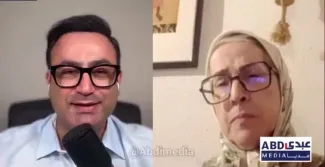
Today, I am honored to have a different and thoughtful guest on Abdi Media—a figure who has analyzed politics not only from behind the university desk but also from the heart of geopolitical fields. Dr. Elaheh Koulaei, a distinguished professor of regional studies at the University of Tehran, a researcher with a historical-civilizational view of international relations, and someone who knows the Middle East not just by map but by its living arteries. For me, this is another classroom lesson I can benefit from you. At the outset, I want to ask you, though a general question: Does Russia ever want a complete agreement between Iran and America? What does Russia think, and where does it stand in Iran's equations with other countries?
Elaheh Koulaei: I hope that in this one hour I have with you, I can help you better understand Russia's views and policies regarding Iran, especially regarding the Islamic Republic's nuclear program, and by presenting noteworthy material, we can make this image somewhat clearer and more precise.
I think before anything else, we must see what Russia's expectation of the agreement is, what goals it pursues in its relationship with Iran, and what factors influence Iran-Russia relations. In fact, we should first have a broader and more macro view of Iran-Russia relations. To have such a broader view, we must see how Russia's relationship with Iran, especially in the last few decades after the fall of the monarchy and the victory of the Islamic Revolution, entered a new phase and what the characteristics of that new phase were. You know, an anti-American system came to power in Iran at a time when the Soviet Union still existed. So even in that era when the Soviet Union existed, the type of relationship with Iran was very important for the Soviet Union as a superpower in a bipolar system and one of the pillars of that system. But when the Soviet Union collapsed, the new Russian state expected a new relationship and a new position in the world—not only in its relations with Iran, which had experienced the Islamic Revolution, but also in its relations with America and Europe in a global position. So, I think in the discussion of Iran and Russia, and indeed the nuclear dossier of the Islamic Republic, we must look at this macro view of Russia—or in other words, the role of the international structure and the international system—on these relations: in what space are Iran and Russia's relations formed? That is, we must pay attention to the structural factor in the relations between these two countries. Well, the bipolar system collapsed, the Soviet Union disintegrated, an independent Russia emerged, separate from the republics, and this Russia expected to open a new relationship with America as an equal player, seen as having abandoned communism, and to define a new identity, a new role, and a new function for itself in the global system.
Iran, as you know, is in the south of Russia, with a historical connection to warm waters and access to them, and has always been of particular importance for connecting Russia to broader parts of the Middle East. But as I mentioned, in this new space, Russia faces a country with an anti-American orientation, and the Russia that began its relationship with Iran after the collapse in the 1990s was heavily influenced by tendencies toward the West in Russia—pro-Western or anti-Western attitudes. These positive and negative aspects toward the West directly affect Russia's relationship with Iran. That is, whether Russia sees Iran as a country that can help facilitate and develop these relations or can play a deterrent role and create disruption in these relations—this greatly influences Iran's relations with Russia. Note that when we discuss developments, Russia initially had a very optimistic view toward America and Europe.
Abdi Media: Which period are you referring to when you mention Russia these days?
Elaheh Koulaei: I am referring to Russia in the 1990s, before Mr. Putin, before we entered the first decade of the 21st century.
Abdi Media: Because you mentioned the Soviet Union, which is a detailed discussion and I don't want the discussion to deviate—many people point to the Soviet Union as a mirror of lessons and say that despite all its power, its collapse can be a great lesson for other powers, and its collapse is a long story. Since you returned from the collapse of the Soviet Union, I wanted to ask which period you are referring to.
Elaheh Koulaei: I am referring to after the collapse, what Russia's expectation from America was, what its expectation from the world—the West—was, that Russia would be taken as an equal partner in the global game. This was not fulfilled. So Iran is placed in such a space in its relationship with Russia. We want to return to this period because I want to refer to the nuclear agreement of 2015 and 2016, when this agreement was formed, at a time when these pessimisms and disappointments toward the West were spreading in Russia. Russia was in dire need of economic resources, and its view of nuclear cooperation with the Islamic Republic was purely economic. We must pay attention to the conditions and space in which Russia's cooperation with Iran was formed. When this nuclear cooperation began, many in Russia strongly opposed it. The notion that it could have a military dimension and be used militarily had a very negative impact on public opinion, among elites, academics, and Russian politicians. But nevertheless, why did this cooperation begin? In a space where Russia was entering a new phase—that is, it needed to demonstrate its independence, that it is not subordinate to America, that it does not follow America, even though America and the Islamic Republic have problems and pursue sanctions policies, Russia pursues its own policy, has independence, and pursues nuclear cooperation with Iran. In fact, note the space in which the foundation was laid and the cooperation began. So we are facing a Russia that is moving very slowly on the path of confrontation with the West. That is, a Russia whose expectations are not being met, and it has disagreements with America in the Balkans and the peripheral republics. In such a space, nuclear cooperation with Iran exists. Many believe that nuclear cooperation with Iran has become a symbol of independence in its foreign policy—that even though the West or America imposes sanctions, Russia expands its cooperation with Iran, considers it in the field of nuclear cooperation, and cooperates with Iran to complete the Bushehr nuclear power plant project.
Elaheh Koulaei: The important point is to pay attention to this space. So, I wanted to first point out the conditions under which nuclear cooperation with the Islamic Republic of Iran began, and what exactly the Russians' view of this cooperation was. The Russians have repeatedly emphasized—I repeat—that Iran is pursuing its nuclear programs within the framework of the NPT and international obligations. Russia is pursuing this project given Iran's adherence to the nuclear non-proliferation agreements. For Russia, many believe that given the problems that arose after the 1986 nuclear power plant explosion, nuclear cooperation with the Islamic Republic is an opportunity. Through this, Russia can cooperate with the IAEA on security and safety aspects, facilitate the exchange of needed technology and information, and benefit from it. So, it seems we must pay attention to this beginning and why Russia helped the Islamic Republic implement this program and complete the Bushehr nuclear power plant project—which, of course, in subsequent decades, especially during Mr. Putin's period, we see these cooperations expand, even with new agreements and contracts for two more nuclear power plants, contrary to all the dissatisfaction that existed regarding the completion of Bushehr, this cooperation extends to other projects.
Therefore, Russia's policy has been to help Iran advance a peaceful, civilian nuclear plan and to bring this cooperation to fruition in accordance with international agreements and IAEA supervision.
Abdi Media: We are at the early stages of the JCPOA discussion.
Elaheh Koulaei: Exactly. We haven't reached the JCPOA yet. I'm referring to before the JCPOA—how this cooperation expanded and what Russia's goal was. In fact, Russia started this cooperation with an economic goal in 1994–1995, but later it took on serious political dimensions, which I will explain.
Abdi Media: I think I can confidently say that Iran has not been influenced by any country as much as Russia, and no country has had as much influence on Iran as Russia. Any country we consider in the region, perhaps if we deeply examine its extent—from Tsarist Russia, the shameful Qajar treaties, moving forward to the Soviet era, the role of the communists—it has had a tremendous influence. That is, perhaps the models that many took as examples from that time, from great Russian writers who created revolutions, cannot be overlooked. I note that we are only going to discuss this within the context of the agreements, but the roots are very enchanting. I want to use that word to convey my meaning—the relationship is very enchanting. I am sure that wherever there is a program and Dr. Koulaei is present, the Russians will translate this program into their own language. Welcome—because if they are watching, I want to extend this welcome to the Russians who will later see and hear this program.
We have come to the point of the JCPOA and before it, and it seemed that Russia at that time used Iran as a pressure lever against America and Europe. We have this history, and it seems to continue. Do you agree?
Elaheh Koulaei: Of course, I haven't reached the JCPOA yet. We must consider the decade before the JCPOA, the years before it, when UN Security Council resolutions were being passed against Iran. Because the JCPOA was the end of that path and was thought to be a way forward to reduce the security dimension attributed to Iran's nuclear program, and indeed to de-securitize this program with a comprehensive agreement that tried to provide the possibility for Iran to use nuclear energy in civilian fields.
Abdi Media: Please explain wherever it remains.
Elaheh Koulaei: Let me first say that I mentioned that the role of the international system's structure and indeed global power equations has been influential on Iran-Russia relations. When we look at the Russians' view of America, their expectations of America, and especially their expectations in their periphery—one of the areas of disagreement being the republics left from the Soviet collapse, ultimately leading to the Ukraine war—what considerations Russia has and what duties the West has in these areas, Russia very soon had disagreements with the West. With America in the Caspian Sea region, east and west of the Caspian, we see these disagreements intensify. Under the influence of these disagreements, we can clearly see how these disagreements or proximities and distances affect Russia's relations with Iran. Specifically, in the first term of Mr. Putin's presidency from 2000 onward, or by the end of his second term, these disagreements gradually became prominent—from the color revolutions in Georgia, Ukraine, and Kyrgyzstan, the democratization projects strongly supported by the Americans were expanded and strengthened, causing Russia concern about U.S. intervention in these countries' internal affairs, until Putin's strong statement of dissatisfaction in the Munich conference.
Abdi Media: We come to the period of Mr. Medvedev, from 2008 to 2012, a period when we see an effort to improve relations. You can see that the effort to improve relations between Russia and America is reflected in the type of cooperation with the Islamic Republic. In not delivering the S-300 air defense system, which the Russians had promised to deliver, they create problems in its delivery. Other discussions in the relations between the two countries bring grievances and dissatisfaction, and the Russians' effort to restart relations with America results in alignments at the IAEA Board of Governors, where votes are cast against Iran. At the Board of Governors, and in the Security Council regarding resolutions, Russia votes against Iran. I mean to say that these are important matters where you can see the effects of relations with America on the type of Russia-Iran relations. Whenever you see these relations improve, its negative impact on Russia-Iran relations in fulfilling commitments and promises made in the past, which could be against America, you can see direct effects in Russia-Iran relations. So pay attention to this.
Abdi Media: The famous theory is that friendship and enmity are not permanent. When the Russians see their interests in relation to America, and indeed make an agreement with America, they either reduce or limit their commitments to Iran, or it is affected.
Elaheh Koulaei: To whatever extent, yes, you see the effects. I mean to say that when you examine Iran-Russia relations over all three decades after the Soviet collapse, step by step, you see that depending on the type of relationship with America, the effect of this relationship, positive or negative, on relations with Iran can be fully observed. This is a very important discussion: to see what the nature of Russia's relationship with America has been and how its effect on relations with Iran has manifested itself.
Abdi Media: Let me ask a question. I came across a very interesting phenomenon in the relations. Whenever the Russians decide or feel it is in their interests, they very quickly become close to the enemies of the Islamic Republic, America and Israel. What is the reason? Is it because Russia's system is non-ideological? For example, today, if Putin decides, he can easily get close to America. Is the closeness to the point that Iran could be sacrificed? Even the Russians' closeness to Israel, to Jews, is undeniable. That they have centers, the type of activities, and many Russians have Jewish blood in their veins and travel to Israel without any problem. This bond with Israel is also very deep. What is the reason? What do you see? Why can they get close so quickly and then distance themselves again so quickly? What is the reason?
Elaheh Koulaei: You pointed out a very important point. We have a somewhat romantic view of foreign policy—of course, we have the same approach to domestic policy. Basically, we Iranians don't see many issues with a realistic approach, as they are; perhaps we don't pay attention to them.
Abdi Media: We are subject to emotions.
Elaheh Koulaei: There is a very high dose of emotion and this turn to emotional words among us Iranians. Words you used like "sacrifice" in foreign policy don't have much meaning. You know, in the world we live in, all countries without exception have a compass in adjusting their behavior and relations with other countries. Everyone knows that any country, any move it makes in foreign policy, it makes in response to other countries and in defense of its own interests. But when you have an approach, a framework, a stereotype that is in fact unrealistic—which could be emotional, idealistic, ideological, whatever it is, but not from the essence of reality—when you set that as the basis, then you use words like being sacrificed, making sacrifices, spreading, withdrawing, standing—words that don't have much meaning in the norms of international politics. In international politics and in regulating relations between countries, there is a governing principle: national interest. That is national interest. Well, it is very clear for the Russian state. They clearly emphasized, in the name of pragmatism, in the post-collapse period, they announced they would base everything on whatever is in Russia's interest and what Russia's interests require. When the basis of policy-making and policy implementation is a country's interests, you know that the international environment, relations between actors, and the actions of actors are constantly evolving and changing. You can't have a view that is absorptive, a view that sets goals without regard to reality, designing roles without considering realities. Well, these cannot bring good results for countries. So they very quickly announced—and Putin himself emphasized—that Russia's policy is a pragmatic policy. What is pragmatism based on? That is, wherever Russia's interests require, we will have the necessary flexibility. It's not a Cold War system; it's not the ideological system of the Soviet era, with a series of pre-designed "shoulds" and Communist Party resolutions. There is a set of interests defined for Russia in the changing conditions of the region and the world, and Russia pursues this.
So we have areas of cooperation and conflict simultaneously. These areas of conflict and cooperation are constantly evolving. In the international system, based on state behavior, there is no permanent friend or enemy. That is why, contrary to the expectation we Iranians have—we talk about loyalty, about not sacrificing—it is not like that.
Abdi Media: We have a poetic view.
Elaheh Koulaei: I want to say that the reality in the international system and in regulating relations between countries is that regimes are formed, agreements are made, regulations are established, contracts are signed—all these are in place. But actions are taken within this framework. However, in the case of Russia, we see this very clearly: even though a contract is signed, even though an agreement is made, often in relation to Iran, especially in relation to Iran, we see that policies change very easily, commitments are set aside very easily. Why? Because countries, in regulating relations with others, try to use all their sources of power; they try to use various levers of their national power. Iran is a powerful country in terms of the sources of power it possesses, but as I said at the beginning, we went through a revolution. After this revolution, opposition to America and confrontation with America continued and persisted. When this continues and becomes an unresolved issue, it naturally becomes an opportunity—a position for others to exploit. Not just Russia; many countries have exploited this situation to their advantage over the past decades. But because Russia is an influential actor, naturally these issues are raised more, more diversely, and in a more multi-layered manner.
Abdi Media: Of course, many people sent you greetings and welcomed your presence—I wanted to mention that. I have a memory from a conversation with Elias Umakhanov in Moscow. I asked him, "If America wants to attack Iran, where will you stand?" He gave several answers. Finally, he said, "I myself will come, put on combat gear, enter the field, and defend Iran." One of the companions in that recorded meeting was from Dagestan; Umakhanov is also a senator from Dagestan, representing Dagestan in the Federation Council of Russia. He told me, "If Mr. Umakhanov comes to Dagestan, we would be very happy if Iran remains." These challenges exist. I might have even seen double-facedness in many people and various politicians. I spoke with Mr. Levan, but afterward, I saw that all other ambassadors also have this double-facedness. They laugh and smile with you, but where their interests are at stake, they are firm and serious, with the same smile, and don't step back an inch.
Regarding the point you made, I want to ask another student-like question: Why, in the post-revolution Iranian literature, did "Neither East nor West" become stronger in the West? What happened? Was it because the Easterners were good, or did they play their role well in this theater of politics? What happened that "Neither East" became "East"?
Elaheh Koulaei: Let's not forget the JCPOA discussion either—the policy Russia pursued in the JCPOA and the role Russia played in reaching the conclusion of those negotiations, in terms of the views that existed in Russia. I emphasize that when we examine Iran-Russia relations, we must definitely see what the general atmosphere governing Russia's foreign policy has been in the Middle East. Now, you raised the issue of Israel, which we must address later, and see in what conditions Russia understands Iran and what position it holds for Iran. At one time, I examined this issue and published it in a book about what Russian leaders' view of the Islamic Republic is. But note this: in our country, the view of Russia and the study of Russia are generally done through Western sources. Even in our own country, these pro-Eastern currents make no effort to create suitable conditions for understanding Russia in a systematic, academic, and educational process. That is, in our country, we actually understand Russia through a Western perspective, with Western glasses. Keep this in mind.
Abdi Media: There is the influence of Western propaganda in understanding Russia.
Elaheh Koulaei: Iranian society is not pro-Russia. You cannot find a social counterpart to the Iranian government's policies with the same speed, intensity, and scope. That is, you can easily follow and observe negative reflections in society—those with a completely Western orientation toward expanding relations with the East. These are realities that exist in our society. But the important point is to correctly recognize these capacities and possibilities and to identify them based on our interests. The point you mentioned goes back to the same currents that have existed in Iran-U.S. relations. Over all these years, for more than four decades—almost five decades after the Islamic Revolution—you see that relations with America remain unresolved. Not just with America, but with the West—the U.S. allies in Europe or other regions—when Iran is subjected to sanctions and maximum pressure, when it faces smart pressure and smart sanctions, it's not just America; America's allies also join these pressures. Iran is a country that must be able to meet its needs in all areas. I have always said that the policies of pressure against Iran are one of the factors that have driven, guided, and forced Iran toward the East. We must pay attention to this: when Iran doesn't have the possibility to meet its needs in the West, it is very natural that it moves toward more suitable markets to meet its needs. I mean to say that the more pressure from the West, the more closeness to the East increases. We have experienced this over the past years. That is, you go to Afghanistan, you cooperate with the U.S. in the Northern Alliance, then you become the "axis of evil." Those currents that favor cooperation with the U.S. are severely pressured and face problems. You recommended and pursued these cooperations, and this is the result. I think there are various layers that need to be examined, but it seems this governmental and state orientation toward Russia is one thing: the unresolved nature of these relations, the development of relations to meet needs in the West. And part of it, as I mentioned, goes back to the paths pursued within the country to meet its needs, which naturally expands in areas where there is more room and opportunity. As I mentioned, the more pressure from the West, the more this tendency and inclination of the government toward the West and meeting needs from the East intensifies.
I think this goes back to Iran's geopolitical characteristic, where unfortunately balancing does not take shape, which naturally becomes an opportunity for others and deprives Iran of its own geopolitical access.
Abdi Media: We want to make a leap. Every moment and year of the history of Russia relations could be discussed for hours—from the votes they cast against us in the Security Council to the point where we became so intertwined with the Russians that if an agreement is to be reached or if negotiations are to happen, it seems to me a very complex and interesting point. I want you to open this up for us: what happens when America and Russia are at war—not directly, but on one side is Ukraine, and on the other side is Russia? But when it comes to a nuclear agreement or negotiations, both Witkoff goes to meet Putin and the Iranian representative, Mr. Araghchi—I think they went, if I'm not mistaken—Mr. Araghchi also goes to meet Putin. Putin shows his relations very closely with Mr. Raisi, as Ayatollah Khamenei's envoy. That is, Putin perhaps even has emotional relations with Ayatollah Khamenei as two high-ranking leaders of the two countries, and even deepens them. What happens that this occurs? How can this equation be solved when America, even facing Putin, sends its envoy and chief negotiator to Russia?
Elaheh Koulaei: You are talking about a government that has declared its priority to end the considerations currently ongoing in Europe or the Middle East. So, when Trump talks about ending the Ukraine war, on one side is Russia, and here in the Middle East, the issue of Russia's nuclear cooperation with Iran is raised, which you referred to. Naturally, we must also have a discussion regarding Israel. This goes back to the effective and decisive role that Russia plays in the Middle East on one hand, and in regulating its relationship with Iran on the other—it is undeniable. I mentioned at the beginning of my talk that when nuclear cooperation between the Islamic Republic and Russia began, serious opposition formed in Russia to the idea that this nuclear cooperation could lead to military results and consequences. Serious debates and opposition took place in Russia. But Russian officials insisted that this cooperation is within the framework of the international non-proliferation agreement and that the issue is completely civilian. Keep in mind that in Russia, there is a special sensitivity regarding nuclear cooperation, and the Russians have always emphasized that Iran is committed to international agreements and operates under the control and supervision of the IAEA. On the other hand, I mentioned that the type of relationship with America—with a persistence in this enmity in various forms, with different ups and downs over all these years—has created an undeniable opportunity for Russia. I emphasize again: not just Russia, but many countries have exploited this opportunity to their advantage, but Russia has particularly counted on this issue. It is very important for Russia that Iran's relationship with America's issues remain unresolved, that these challenges more or less persist, that a kind of controllable conflict and crisis is maintained, and that it is manageable, not becoming an uncontrollable tension or a crisis that gets out of hand. So Russia's view of Iran is very decisive, both in Moscow and Tehran. Naturally, in Washington, there is full attention to this relationship. I have many quotes from Russian leaders and political figures expressing concern about the normalization of Iran-U.S. relations—that is, they have absolutely no desire for such a thing to happen. So the Russian state remains a very decisive factor in Iran-U.S. relations. Therefore, it is very important that any negotiation also reaches a conclusion by using Russia's influence, considering Russia's views, and taking these considerations into account. As I mentioned, in the JCPOA itself in 2015, Russia's role was very influential. Just as in 2018, in the failure to reach a conclusion, this role was also decisive. Just as on the eve of the Ukraine war and Russia's involvement in the military attack on Ukraine, Russia's influence on these negotiations has been clearly evident. I mean to say, step by step...
Abdi Media: The Russian diplomat who was in the negotiations caused a delay in the negotiations.
Elaheh Koulaei: I want to say that step by step, you see Russia's influential presence, both positively and negatively. Naturally, for any actor that wants to influence this process, ignoring such a factor cannot help make that effort fruitful. On the other hand, for America, you know that the issue of the Ukraine war and Mr. Putin's views on this war, and that the Russian state hopes to advance its views in this conflict with U.S. help while also ending the war, but with its views imposed—naturally, Russia is an influential actor.
Let me say this: Russia is still the largest country in the world. It has many resources and power. Its oil and gas resources—its role is true, it has been subjected to very severe sanctions by Europe and America, but its sources of power are undeniable. When the Soviet Union collapsed, there was an interesting debate about whether Russia, if it couldn't play a constructive role in the international system, could take on a destructive role—against the prevailing global order. That is, become a voice of protest against the prevailing order and the status quo in the world. The Russians have shown they have such a capability.
Abdi Media: They can easily disrupt the game.
Elaheh Koulaei: That is, if they can't have a share in the game, they have the full ability to disrupt it. So such an actor cannot be ignored. I think, considering the issues in the region and in Europe, it's impossible not to involve an actor like Russia in this process of ending these disputes and discussions, especially regarding the nuclear program of the Islamic Republic. We have seen how influential Russia's role has been at various points, both positive and negative. Such an actor cannot be ignored.
Abdi Media: That is certainly the case, but perhaps the Russians, more than any other country, have made use of this Persian and Iranian proverb: "If the pot doesn't boil for me, let it boil for the dog." I think they have really used this. In my opinion, if Putin feels he has no share in the game or is not counted in it, he can disrupt it.
Elaheh Koulaei: Our belief is that history and the experiences of others—whether predecessors or those living at the same time as us in other lands—can teach us many lessons that we can use to reduce costs and increase positive results and successes. Two decades before the Islamic Revolution, in the 1960s and 1970s, Iran was dependent on America—an Iran that was one of the two pillars of the Nixon Doctrine in the Persian Gulf region, alongside Saudi Arabia. That is, dependence on America was evident in every way. Yet it managed to organize very beneficial and constructive relations with the communist Soviet Union, which was anti-American and anti-American allies, in technical and economic fields—putting political-security aside, if you look at the technical-economic side: machinery, power plants, the infrastructure built for Iran's industrial development in such conditions. I want to conclude that Iran's geopolitical weight and its sources of power have such an impact that it can control other countries if a realistic approach based on these sources of power is pursued. I think Iran, even in the current conditions, by changing relations with countries—whether with the West or with Russia—can achieve better results to secure its interests if it pays attention to geopolitical realities. Iran's geopolitics dictates balance to us. Do we accept it? We cannot deny the necessities; otherwise, the results cannot be positive.
Abdi Media: Those who are deprived of history are condemned to wander in geography, always repeating the same mistake over and over again. You mentioned the Ukraine war: Iran showed its brotherhood to the Russians more than ever and positioned itself against the Western world. The Europeans became resentful of the Islamic Republic's action in providing drones, and the extent of the propaganda about this action was truly unparalleled. The action itself was also astonishing. The Russians did nothing to say it wasn't anything, or that it was—they did nothing. Whether they paid for the drones or not, I don't know about those financial details. But given what we've discussed, perhaps I've already gotten part of my answer. Maybe I'm asking the wrong question: Could this service of the Islamic Republic in the Ukraine matter—providing drones and some military weapons, and political maneuvering, whether in favor of Russia or taking abstention positions in international resolutions, or neutrality—could it be a factor that makes the Russians, if they rebuild their relations with the U.S. in some way, keep in mind that the Islamic Republic helped them? That they won't sell out Iran, that they still consider us brothers? Is there a possibility that the Russians will do this in the future?
Elaheh Koulaei: I think if we look at the history of relations between the two countries, and the agreements the Russians have with various countries, the type of relationship they have with countries outside the former Soviet republics—setting aside the ones within the CIS, some of which have left, the Baltic republics, etc.—I'm speaking more generally about the republics that remained from the Soviet Union. Among these countries, you have Belarus, which is moving toward political union with Russia—from economic and customs union toward political union, though they don't reach a political union. That gentleman has been the president of that country for years since the Soviet collapse—you know he is a strategic ally of Russia. But when Russia has a disagreement with this country over gas, even on Belarus, the oil and gas valve is shut.
When we look at Russia's behavior, even toward a country like Belarus, which is its strategic ally, wherever pure Russian interests dictate, no other consideration beyond Russia's interests—specific interests at that specific time and specific situation—is considered. In our own cooperation with Russia over all the past years, in the three decades after the Soviet collapse, we have repeatedly experienced Russia breaking its promises—commitments that, due to the structural factor of the international system, particularly the American factor, were often not fulfilled. So outside of commitments, expecting brotherhood and such consideration returns us to that romantic and poetic literature we have in dealing with political issues—not just foreign policy, but also in domestic policy, often handled similarly. I think such an expectation means we must recognize the behavioral patterns of countries, their foreign policy goals, their tools for implementing foreign policy, and these procedures and behavioral patterns. Our effort has always been to expand this field of regional studies to train specialists who can plan for countries based on their understanding. This is one of the problems in our country: in regulating relations with countries, especially major countries, how much do we know them? How aware are we of their developments? How much information do we have about their needs and goals? I think in these areas, we don't see the necessary ability and use of academic and scientific capacities. As a result, we see behaviors that, as I said, are more based on feelings and emotions that don't fit realities, and we are often surprised. I remember when the Russians voted against us at the Board of Governors, how shocked some people were—whereas if you knew Russia, such behavior was not unexpected; it was predictable. This discussion you raised, I think, reflects our "flowers and nightingales" spirit that we think applies to foreign policy too.
Abdi Media: Sometimes I refer to this to lighten the mood: I think of those who are critics of Russia in parliament and elsewhere, and some pro-Russia supporters try to cover up any fault in Russia, even if Russia doesn't keep its written promises—perhaps they say "a thousand promises from the good, one unfulfilled is fine" and might say such things. But for the people—my concern is the people—I want them to see the naked truth and reality as the world faces it. From the propositions you made, I concluded that if relations between Russia and the West—specifically America and then Europe—improve, Iran will be left alone if it pursues an anti-Western policy.
Elaheh Koulaei: The Russians have shown us before, specifically in the period when Russia's commitments to Iran were stopped, even though the S-300 was agreed upon and not delivered. I remember a member of parliament protesting, saying that there are other sources that can meet our needs, while the Russians know in what conditions we are in to meet our needs.
It's very important that our discussions are based on an understanding of the realities of the region and the international system. We must correctly understand Russia's position, goals, considerations, and those of other actors, and regulate our behavior accordingly. As I said, we cannot expect the Russians to consider us or be considerate of us; they are pursuing their own interests. It is we who must behave in such a way that others dare not encroach upon or ignore our interests. I think this is an internal discussion: we must both understand the rules of the international system and abide by them.
Abdi Media: Regarding Belarus, where you were discussing Putin's relationship—they have very close relations—you mentioned that even the Russians are not polite to Lukashenko, and at times Russia has even rebuked him. Putin's personality is like that. Something comes to mind that I think you can guide me on better. It seems that prominent leaders in the world—like Trump, who is a prominent leader with power, or Russia, which has power, and then China, and at lower levels, Erdogan—dictatorship is also prevalent among them. We can't say Trump doesn't have a dictatorial spirit. They might be seeking past empires or forming past empires and expanding their political geography. Trump says he wants Canada; Russia says it wants part of Ukraine—not just part, but the whole of Ukraine—not just Crimea, but Osetia and other coastal cities too; Russia is not content with these. China also wants Taiwan and many other places. This point you made—can we separate this proposition? The world has become modern, but they still think about expanding their empires. For those empires, I want to ask one level higher: might the Russians forget Iran or consider it? At a higher level, do you think the Russians are willing to sacrifice the Islamic Republic and Iran to achieve their goals?
Elaheh Koulaei: Russia, as I mentioned in my talk, is very attentive and sensitive to Iran's position, stability, and conditions because of the role Iran plays in regional and global stability and peace. You must consider that Russia's southern borders are those of the Greater Middle East, and Iran is one of the most important actors in this Greater Middle East. So calm, security, and stability in Iran can have immediate effects in the southern regions—its southern borders, even up to the Russian Federation itself. I'm not talking about the South Caucasus, but the North Caucasus and Central Asia. One of Russia's major concerns is the issue of terrorist and fundamentalist currents, which have the full potential to develop in these regions. One of the important points I started with was the view of the pro-Western, pro-American Russians regarding Iran: they considered Iran a source of insecurity and crisis on their southern borders in Central Asia and the Caucasus. They saw Iran as the cause of the Islamic threat in these regions. Over the years, when the Taliban government came to power, this image of the Islamic threat in Central Asia became somewhat clearer—in Chechnya, it became clearer. It became clear that it is not Iran that strengthens and spreads the Islamic threat in these regions, but other currents that have no connection to Iran.
Abdi Media: Russia has shown, and Putin's personality is such, that they are not polite even with Lukashenko. This reminds me that prominent leaders in the world—like Trump, Putin, and others—seem to be seeking to expand their empires. Do you think Russia is willing to sacrifice the Islamic Republic of Iran to achieve its own goals?
Elaheh Koulaei: Russia is very attentive and sensitive to Iran's position, stability, and conditions because of the role Iran plays in regional and global stability . Iran's stability can have immediate effects in Russia's southern regions, including the North Caucasus and Central Asia. One of Russia's major concerns is the issue of terrorist and fundamentalist currents. Previously, pro-Western Russians considered Iran a source of insecurity and Islamic threat in these regions . However, over the years, it became clear that it is not Iran that strengthens these threats, but other currents with no connection to Iran. In fact, Russia has welcomed Iran expanding its relations in these regions. Peace and stability in Iran are very important for Russia, as instability can easily spill over into Central Asia, the Caucasus, and Muslim-inhabited regions inside Russia. We should not forget the experience of Chechnya and Iran's role in ending the Tajikistan civil war. For Russia, it is important that Iranian Islam—which is different from Salafi and Wahhabi jihadist Islam—enters these regions. Therefore, Iran's fate is very important to Russia, and they do not want this country to fall into crisis. However, Iran must be able to use all its sources of power to secure its national interests, which means pursuing a policy of balance simultaneously with the East and the West. Otherwise, Russia, America, China, and Europe will naturally act in their own interests .
Abdi Media: What does Russia expect from the current nuclear negotiations? Would it be happy if they lead to an agreement? Do the Russians have a green light for Iran's negotiation with America?
Elaheh Koulaei: Keep in mind that Russia itself is currently subject to very extensive and heavy sanctions from the EU and the US . Russia's policy on Iran's nuclear program reflects a calculated balancing strategy: it rhetorically condemns military escalation, provides limited assistance that does not alter the balance of power, and offers mediation services while seeking to improve its relations with the United States . Moscow interprets international pressure on Iran through the lens of geopolitical confrontation with the West, rather than as a purely non-proliferation issue . It has gradually reduced its criticism of the U.S. in an effort not to undermine its attempts to improve relations with the Trump administration . So, Russia's expectation is complex: it wants to maintain its partnership with Iran and uphold its role in the nuclear non-proliferation regime, while also avoiding a deterioration in its relations with the U.S. and potentially benefiting from its role as a mediator . It has a "trump card" proposal to remove Iran's enriched uranium to Russia, which could break the deadlock . Therefore, Russia is both a supporter and a potential mediator, and its ultimate position depends on its broader geopolitical interests and relations with the West .
Listen without filter on the Abdi Media Castbox.
Abdi Media: Their sanctions have exceeded those on Iran, and it happened all at once.
Elaheh Koulaei: Very heavy and severe sanctions. This turn toward the East in Russia is, in any case, a direct and immediate effect of these sanctions. Therefore, it is very important for Russia to change the situation with the approach of the U.S. government under Trump, given the strategy Russia had planned for regulating its relationship with Europe, and it thought it was irreversible in terms of the position Russia had secured for itself in Europe regarding energy and its energy export position. So I think the issue of Iran's position in these negotiations is not separate from the situation in Europe, Russia, and the Ukraine war. In a way, we must consider these in connection with each other. So my impression is that the Russians are both concerned with regulating a beneficial relationship with Iran and they are not willing to see full normalization happen, but they also don't want insecurity and instability due to diplomatic failure. Because they know that the waves of unrest could spread throughout the region, even to southern Russia and its Muslim-inhabited areas. This requires Russia to make efforts to prevent tensions and the failure of these negotiations, and to show a positive approach. But regarding relations with Russia and Russia's reactions, rather than focusing on Russia, I think we should look inward—at what we provide and create for these types of games internally. I think we should look at it from this side: in any case, I hope we behave in a way that allows us to secure the interests of the Iranian people.
Listen without filter on the Abdi Media Castbox.
Abdi Media: Let me ask the final question. Our conversation is enjoyable for me, especially learning about Russia—it's sweet and fascinating. What greater chance than to have an expert in this field to talk to? I am sure it will also be interesting for the respected audience. We couldn't cover all the issues related to Russia, Iran, bilateral and multilateral matters in a short conversation, but we tried to cover a part that could give people a better perspective. My final question is: from the perspective of Iran's national interests, as you mentioned at the end, is leaning too much toward Russia in the nuclear negotiations, as is felt now, a strategic mistake, or is it a magical key for the Islamic Republic at this juncture?
Elaheh Koulaei: I return again to historical experiences: you cannot rely on any country to secure your interests. I said this is not the rule of the international system. Governments can rely on their own nation, their own people, and their own sources of power. Our country has such access to these sources of power—due to the diversity of its access—that it can strengthen this base from within. I think Russia, as you mentioned in your talk—and I also alluded to it—is a very influential actor in this matter, but it is not reliable. No country is reliable. What is reliable is the interests of the Iranian people, which should be the standard for any behavior and any decision-making for rulers and executors in regulating this relationship with the world, especially in this very important dossier. Regarding what is in the interest of the Iranian people and securing their basic needs and rights, I think, undoubtedly, relying on any country in this path will not be constructive or helpful.
Abdi Media: I want to conclude. One of my audience members, Ms. Almasi, wrote that if I don't ask this question, she won't forgive me. May I ask it so that she does? Ms. Almasi has asked in several questions why Russia betrayed Iran in Syria, and it's an important question for her. She asks, what deal did Russia make that it sold out Syria?
Elaheh Koulaei: I remember a few years ago, before the end of the conflict in Syria, a Russian professor had come to the University of Tehran. There was also a young professor there. As we talked, he told me, "Ms. Koulaei, I am very worried about what stage our relations with Iran will enter in Syria in six months." Iran and Russia entered Syria based on specific considerations and goals, and I think they achieved some results, more or less, regarding those goals. Their most important concern was containing ISIS. For Russia, it was very important to eliminate these terrorist groups, especially those composed of volunteers from the former Soviet republics in Central Asia and the Caucasus, right there, so that they wouldn't bring the virus of Wahhabi and Salafi revolutionary ideas back to the republics, Central Asia, the Caucasus, or Russia itself. For Russia, the important goal was to suppress these terrorist groups right there. For the Islamic Republic, this was also very important—to suppress these currents in Syria. But what then? What was the next goal for each of these countries after suppressing the terrorist forces and ISIS in Syria?
It seems that the subsequent goals were not compatible. These are points that should be considered in designing any policy, with a forward-looking perspective—what results can be expected from these efforts step by step. As I mentioned earlier, I think these are discussions that perhaps don't receive enough attention. A very limited view of a specific time period, without considering the consequences within that perspective, naturally leads to results that might be unforeseen or unexpected. Many of the events we face stem from this limited understanding, without paying attention to the consequences and the realities on the ground. I think this is a problem that must be seriously considered and resolved, so that at any point, for any issue, any policy, we can have a correct assessment of its various stages and perspectives, and plan accordingly. In this case, both countries pursued their own specific goals at that specific time, but naturally, Iran's and Russia's views on the future of the Syrian system were not identical, and we have seen the effects of that in the subsequent stages.
Abdi Media: From this conversation with you, I have learned that in a world where power is the common language of diplomacy, no country is neutral—not even those who smile. And sometimes the real danger is not in open enmity, but hidden in ambiguous friendships. Russia, America, China, or Europe—none will be our savior. Those who cling to others will be pawns in others' games, not players. And as long as politics does not pass through the awareness of the people, the repetition of history is the only law of the universe. We lose neither in agreement nor in sanctions; we lose where we leave the truth behind the curtain.
Abdi Media is an independent media outlet with no affiliation to any group inside or outside Iran. This independent media lives on your support, and it is an honor for me to speak with you through this window.
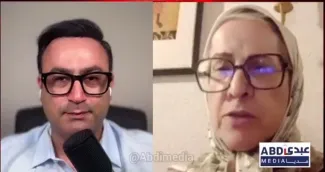
Complete audio file of Abdi Media's conversation with Dr. Elaheh Koulaei, Professor of Regional Studies at the University of Tehran

![الهه کولایی: نمیتوانیم از روسها انتظار داشته باشیم که در [سیاستها خود] شرایط ما را درک و رعایت بکنند](/sites/default/files/styles/max_325x325/public/1404-03/abdi-medyas-conversation-with-elahe-kolaei_0.jpg.webp?itok=lXA5KvYG)
Take less than a minute, register and share your opinion under this post.
Insulting or inciting messages will be deleted.
Sign Up