
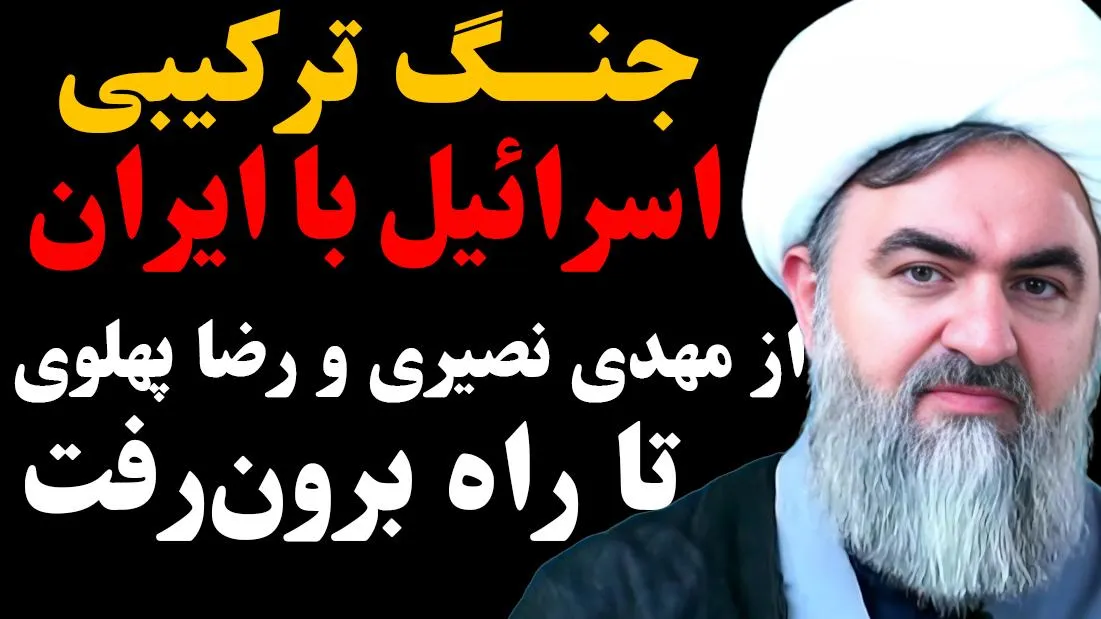
Has the war ended? Or have we just entered its main phase? When the enemy no longer approaches from the border but strikes from other directions, how, who, and where does it collapse? Amidst fire and diplomacy, in a land that still smells of gunpowder, a fundamental question lies before us: How can one stand without being destroyed? How can one fight without being a warmonger?
Abdi Media: If you are looking for a media outlet that is not afraid to tell the truth, you have come to the right place. If you are a person of reflection, challenge, and crossing the boundaries of official narratives, this is your place. Please subscribe to the Abdi Media YouTube channel right now. If you ring the bell, you will receive notifications and be informed of new interviews, and you can support independent media. Ways of financial support are also provided in the caption and description.
As you are surely aware, in recent days I spoke about the topic of the Israel-Iran war and this country's aggression against Iranian territory. Our world is no longer a place to be shaken by cannons and tanks; in an era where information has taken the place of bullets and war has plunged into a sheath of silence and media, what is the truth? Has the war ended? Or have we just entered its main phase? When the enemy no longer approaches from the border but strikes from other directions, how, who, and where does it collapse? Amidst fire and diplomacy, in a land that still smells of gunpowder, a fundamental question lies before us: How can one stand without being destroyed? How can one fight without being a warmonger?
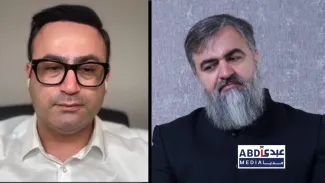
In this program, I have a guest with whose voice and face you are certainly familiar and whose interviews you have surely followed. Hojjat-ol-Islam Mohammad-Taqi Akbarnejad is my guest tonight, and I have the honor of conversing with him so that we may talk about war, information, nuclear facilities, tension, and negotiation, and I hope this conversation helps you gain a better vision regarding the events ahead. This interview is being recorded on Monday, June 29. We went through an ominous war, and the people of Iran experienced it. To begin with, I want to have a general overview from you on these 12 days; certainly, these 12 days are the generator of events that occurred between Iran and Israel years ago. I want to ask you initially about the generalities of the incidents and events.
Hojjat-ol-Islam Mohammad-Taqi Akbarnejad: I am a pragmatic person, and my goal in this conversation is for us to think about how we can present a solution to the people and the political system to exit this difficult situation we are facing. Before I enter the main discussions, I will state a necessary and very important introduction and then continue the discussion. We must be mindful that we are in wartime conditions. In a state of war, media work is different. Analysts must be careful not to say words that dishearten the people, not to make comments that discourage the military forces, and not to put the country in a position of weakness, even from a psychological standpoint, because you know that being psychologically charged and strong is very important. For this reason, the truth is that in this session, I am not looking to return to blaming the Islamic Republic, bashing it, or humiliating it; I do not agree with these approaches under these circumstances.
Whichever analysis you saw or heard from me, I still stand by those same analyses and those policies that I expressed regarding the Islamic Republic—that the system's policy from day one was a tension-creating policy, and what we find ourselves in today is actually the result of those same policies. Instead of putting the country on the path of progress, it placed it on the path of tension, and this tension had to manifest itself somewhere, and now it has shown itself. Of course, it has manifested in different forms across various periods; at one time it was in the form of sanctions, and now it has shown itself in the form of war. I accept all these statements I made, and I consider what has happened to be a completely organic and natural result of those same policies, and the same critiques I previously had regarding the system's performance stand in their place. Nonetheless, we must note that we are in wartime conditions; we must be careful.
I emphasize this notice to everyone working in the social and political sphere, to those who write, and to those in the media: we must be very careful. I even say this to the revolutionary forces, to those who are supporters of the Islamic Republic: be careful not to speak in a way that fans the flames of war, thereby causing—God forbid—more harm to the people. In traditions, it is mentioned that there are individuals on the Day of Judgment who, when given their scroll of deeds, look and see manslaughter written in their scroll. You know that manslaughter is among the things about which God Almighty has specified that He becomes wrathful. This person turns pale and says, "Whatever wrong I might have done, I did not kill anyone; this sin is very heavy." God Almighty tells him, "It is true you did not kill anyone directly, but you said a word, and that word circulated and circulated, creating the groundwork for a killing." Therefore, it makes no difference: whether those who consider themselves revolutionary and supporters of the Islamic Republic, or the opponents of the Islamic Republic, or the one who has a turban and beard like me, or the one wearing a tie—we have one homeland, one nation, and if we love our own people and our motherland, we must be very careful not to speak in a way that inflicts more damage on this oppressed nation. I say this from the bottom of my heart; our people are sufficiently tired and wounded. We must think about healing this, put personal interests aside, and only think about how to take a stance, how to speak, and how to analyze in a way that brings the most benefit to our country and our people, ensures that the miseries of this nation are reduced, and—God forbid—prevents the scope of the war from expanding further.
One thing is important and we cannot avoid addressing it, and that is: why basically did Israel attack our beloved Iran at this juncture? Did Israel threaten us just today? Israel has threatened us with military attack for decades, as you know better than I do, but why did it do so at this juncture? I do not want to dissect anyone or blame and reproach, but the reality is that I believe the performance of the Islamic Republic was one of the factors that caused us to be in this position today. Aside from the policy of tension that we had outside the borders, and the maternal, primary policy of the Islamic Republic which was the elimination of Israel and the rescue of Palestine—which caused extensive tensions for Iran—it is not just about Israel. You know Israel is part of the body of America and Europe, and this caused us to enter into tension with the Western world. Apart from this, this issue caused a neglect of internal affairs; meaning that the policy of tension leaked into the interior as well, and the economy of this country and the people were no longer placed as the top priority, cultural matters were not prioritized, and political matters related to the inside of the country were not prioritized. This caused the people to gradually become alienated from the system, and see, the further we go forward, the more we witness a drop in the popular base of the system. For a system to be able to stand on its feet, it must either lean on a strong external element—for instance, a superpower backing it that it relies upon—or it must possess a strong social base, meaning it must lean on its own people.
The Islamic Republic fought the world for 8 years but was not defeated; 8 years, not 12 days. It was truly a painful and difficult war. In that war, nearly 300,000 people were killed—some of the best of this country became martyrs—but the people endured because they stood behind the system, and the system was not exposed to destruction. But today, the reality is that the situation is not like that. At that time, in the presidential elections, sometimes up to 90% of the people participated; in the first round of the presidential election, we reached 40%, and in the parliamentary elections we were again at 40%, and these mean that the system has lost its political backyard inside the country. Put yourself in Israel's position; it is a blood enemy.
Abdi Media: Of course, I never like to put myself in Israel's position.
Hojjat-ol-Islam Mohammad-Taqi Akbarnejad: God forbid. Look at the issue from that stance, that you have a blood enemy; look from that stance toward Iran. When you look from this position, you see that the country is in a distressed state economically, the people are desperate, sanctions have broken the spine of the country's economy, and because of the strictness it maintained internally—because it did not prioritize its own nation—the emotional relationship of the people with the system has been severed; it is severed for a vast segment of the people. This is the best position to enter a battle. In the October 7 issue that started, which the system also supported, you see that after its occurrence, they practically destroyed Hamas, Hezbollah suffered serious damages, and Syria exited Iran's grasp—meaning these proxies were eliminated, and we were left along with it, and that too with these people who are not behind the system as before and are trapped in heavy inflationary, cultural, and social anomalies. Well, this provides the best opportunity for the enemy; he becomes hopeful. I mean, we should truly mourn that Netanyahu records a program for the Iranian people and sympathizes with them; we all know they are lies. He recorded the exact same programs for the people of Gaza as well, but we saw the output. In the 12-day war, we saw the level of Netanyahu's honesty; that they struck the prison, and recently I saw it caused 70 deaths. Well, it is a very heavy number. Were they military personnel? Was it a military base? These have placed us in this position today. This introduction was necessary so we could use it for the exit path.
Abdi Media: These 12 days were strange. Many individuals expressed opinions, including one who used to wear the same clothes as you, though he has taken off his clothes now; I mean Mr. Hojjat-ol-Islam val-Moslemeen Mehdi Nassiri. In some of his remarks, he practically said Israel had the right to attack; he did not consider Israel the initiator of the attacks or the initiator of the war, and in a way, he stood on Israel's side. I want to know your opinion, and from your perspective, whether the slogans we all know—the slogans of eliminating Israel, its destruction, and the countdown—can these create a justification for Israel saying, "I started a preemptive war"? What is your opinion?
Hojjat-ol-Islam Mohammad-Taqi Akbarnejad: I wish you had not mentioned names; my heart broke when I heard this remark. I say it truly, my heart broke that an Iranian—regardless of whether I know him or do not know him, whether he was a cleric or an academic, it is not important—an Iranian comes and says to a bloodthirsty enemy whose hand is plunged up to the elbow in the blood of the oppressed, and truly when I see Netanyahu, Shemr involuntarily manifests for me, I see him as if with this background and record, we say that he had the right to attack our country. This, in my opinion, is not open to conversation; meaning it has absolutely no value to take the discussion in this direction. If you deem it appropriate, let us address serious matters.
Abdi Media: I want to know your own viewpoint, even though it is clear, but in any case, I think if you state it or provide more explanation, it will be more interesting for us. Whether a discourse within the Islamic Republic gives Israel this right to attack Iran—do you agree? What is your opinion?
Hojjat-ol-Islam Mohammad-Taqi Akbarnejad: What does that even mean? I will give a historical example. In the Iran-Russia war 150 or 200 years ago during the time of Fath-Ali Shah, at that juncture, we lost a lot of land and many parts of Iran in the Treaty of Gulistan. We did not content ourselves with that position; we said we must equip again, fight, and take those lands back. The second move was a mistake because it was not based on our realities, in the words of the late Farahani, who, when everyone said "let's attack," was sitting in a corner and not speaking. Fath-Ali Shah said, "You say something." He said, "How many crores is the tax we collect?" He had said, "One crore." He said, "How many crores of tax do the Russians collect?" He had said, "One hundred crores." He said, "Whichever way I think, a country whose tax is one crore should not engage with a country that collects one hundred crores in taxes."
It is true that war was a mistake and we should not have done that, but it does not mean the Russians had the right to encroach and come to impose a Treaty of Turkmenchay upon us. Yes, in the position of rationality, you say: it is true a thief has hit your house, but look, think about this—if you continue to stand against this thief, he might take your life; do not do this.
In traditions, Imam Baqir says: If a highwayman strikes me and I do not see the ability to defend myself, I do not engage with him; I do not endanger my life for the sake of my wealth. It is true he takes my wealth; if I do not have the ability for a face-off, why should I sacrifice my life? Meaning, this rationality is one discussion; whether he has a right is another discussion. Yes, in the issue of the second Iran-Russia war, rationality was not employed; an idealistic entry was made, but it does not mean it created a right for the other side. The issue of the Zionists and us is like this: the Islamic Republic has confronted the issue irrationally; it does not want to accept that Israel is not the first oppressor and will not be the last. If we are meant to exhume graves, we must first grab the Russians by the collar; we must grab Britain by the collar for separating Afghanistan from us. The fact that the Islamic Republic confronts the Israel issue unrealistically and idealistically is not a reason that he is right; he is false, his very existence is false. If it is meant—I do not like these expressions, but if it is meant—to apply "illegitimate" to a country, it is that very Israel that has displaced another nation; a part of them live in misery in Yemen, a part in Lebanon, a part in Egypt and other places. This country's nature is this. The Islamic Republic, in the principle of saying "I want you not to exist," this statement is a correct statement, but it is irrational, like the issue of the second treaty. The fact that it acted irrationally does not mean that he has a right; a right belongs to the one who sits in the position of truth. He is false, his existence is false. In addition, to the same level that the Islamic Republic had threatened him, he should have threatened Iran, not higher. We were never entered into a direct war with Israel; basically, I consider this path a turning path. Let us enter the main discussion of what we must do now.
Abdi Media: I would like you to evaluate the current situation. You mentioned that the war is not over yet. If you have an evaluation, please share it.
Hojjat-ol-Islam Mohammad-Taqi Akbarnejad: It is a good question. I believe the war is not over; rather, we are in a very dangerous situation, and it is a false direction to give peace of mind to the people by saying, "People, the war is over." No, the reality is that we must tell the people, and the people must know, that we are located in a very dangerous phase of the war. Especially since our war is an information war, not a military war. In an information war, a ceasefire is very dangerous because the opposite party might strike heavy information blows against you during this very period and completely bring you down, thereby creating the groundwork, from this position of weakness, for a full-scale war that would practically make the equation one-sided.
The truth is that in our current position, I fear an information war more than anything else, and I believe that even if the Islamic Republic has not been defeated in a military war, it was outmaneuvered in the information war, and this is a heavy tragedy. It might not be expedient to address this topic further, but I consider this situation a dangerous one. However, how we must confront this situation is the main question that, if you deem appropriate, I would like to address.
Abdi Media: If you agree, let us continue this very topic because my questions are along this exact line.
Hojjat-ol-Islam Mohammad-Taqi Akbarnejad: It is very important that when we want to present a solution, we have a correct understanding of the realities, neither looking at issues optimistically nor out of hatred and malice; these all distort reality. Truth is what exists outside; whether you and I want it or not. For instance, suppose I have an illness; whether I comfort myself or, for example, be pessimistic, it is a reality. Reality does not change with your desire or mine. For this reason, those who can understand reality correctly are the ones who empty themselves of love and hatred. I see some people, like some of the friends you named, whose occasional hatred of the Islamic Republic puts them in a position where they cannot analyze issues correctly. They alter the scale of issues, like a person whose eye is damaged and sees issues further away than they are, or closer, or larger, or smaller; this balance is disrupted. We must be very careful that these loves and hatreds do not cause damage. Regarding the two or three proposed paths I want to mention, some who are well-wishers—I have seen many of those who offer this proposal, which in my opinion might not be correct, but they are very compassionate and noble people—say we must not put the country in danger; let us go and settle with Europe and America, even if we surrender. Some have even told me as a proposal, let us say, "Mr. Europe, what do you want from us? You had 4 proposals; we accept all 4 blindly, let us end this matter." One view is to surrender, settle whatever they say, finish it, and save the country from this serious danger in which it finds itself.
Another option is the exact opposite: that we must speak with Israel using the language of war, because Israel is exactly like a rabid, unleashed dog that only understands the language of the club. This is not someone you can talk to, and if you want to negotiate now under these conditions where they have attacked you, it means losing. We must enter a military mindset, upgrade our military readiness, and fight; for instance, negotiation makes absolutely no sense under these conditions. Diplomacy showed it does not work; we were talking to them, and they used this opportunity to strike us. In the case of the JCPOA, we negotiated and took a blow, and therefore negotiation is a futile thing. We must stand on our own feet, lean on domestic capabilities, and speak to Israel and America with the language of power and the language of missiles. This is also an analysis.
There is also an analysis that comes to my mind, and I state it honestly—hoping that we can utilize the input of both you, the viewers, and the elites so that these viewpoints can be completed. The reality is that we have a language of speech—this very few-gram tongue that moves in all our mouths; we have a language of behavior, not body language. The language of behavior means the things we do. Body language is also a language and shows a series of realities, but in my belief, stronger than both of these languages is the language of behavior: the actions we have taken. For example, I say someone tells you, "I love you very much, I am always thinking of you," but year after year they do not call you even once to ask how you are doing. Their physical and body language says they love you very much, but their language of behavior—not calling you year after year to ask how you are—shows you do not matter to them at all and they do not think about you; these are cheap compliments. What America, Europe, and Israel say—for example, you saw now Trump has truly become a disgrace for America, a president who constantly talks, his words constantly change, every day he says something, every day he says something regarding Iran, once he says something good, once something bad, or Netanyahu every other day records a program and sympathizes with the Iranian people—these are one discussion, and another discussion is the history and performance of governments.
I want to tell the people that we must consider a few points together. First) No matter what mistake the Islamic Republic has made until now, fine; I still stand by my previous criticisms, but right now we are involved in a war—meaning we are caught. God forbid, one of your loved ones—you had told them a hundred times that they should not drive poorly, now they have done it and had an accident and are currently in the hospital. What should we do for them now? Should we go there and constantly beat them over the head asking why they did this? Or no, should we look for medicine and a doctor for them? So first of all, let us factor in the wartime conditions.
Second) Regarding the countries that are currently facing us and with whom there is a discussion of negotiation: my point is not that we should not negotiate; in fact, I agree with negotiation. I will state a few points, listen patiently, and that final output is what matters. None of them, in the claim they make, want what is good for us or are trustworthy; they are truly not sincere. Look at their performance. Even if Netanyahu writes a "sacrificed for you" letter to us every day, tweets "Nation of Iran, I go to sleep with my love for you," look at his performance. These countries are built upon blood—meaning Israel is a country, the only country, that is built upon blood, and this country has no qualms about destroying a nation in order to destroy Hamas. Up until this moment that I am speaking with you, they have killed about 57,000 civilians; they have turned the country into a cemetery, they have turned Gaza into a cemetery. They have no qualms; meaning if it is necessary to kill one million Iranians to topple the Islamic Republic, I swear by God they will do it. I will bring you witness: these sanctions they imposed in these past decades, especially since 2012–2013—whom did these sanctions wound? Whom did they harm? Their goal was to weaken the system, but by means of these sanctions, did the tables of the system's officials become smaller? Did those officials who wanted to send their children abroad face dollar and liquidity problems, or was it you and I who got caught? It was that mass of people who every year had to witness a horrific and unbridled increase in inflation, prices going up, being ashamed in front of their wives and children, daughters staying at home, sons unable to take a wife, unable to work. Who got wounded? They did not give us the medicines that were for rare patients, and these patients withered away. If they consider it necessary to tear the people to pieces and bring them to desperation to topple the system, let us be mindful.
Is England not one of the worst-recorded countries in our history? During the time of Mohammad Shah, under pressure from the British, they entered the Dez River, their ships came inside, and they said, "Either you withdraw from Afghanistan or we take the country," and Mohammad Shah was forced to dispossess Afghanistan and give it up. The Russians... look at America. Even France itself, it might cross our minds less; during the time of Fath-Ali Shah, at that same time when Iran was engaged with the Russians, did Napoleon not sign a treaty with Iran to equip the Iranian army—both in terms of military skills and in terms of artillery, that they would equip them—but then they went and signed with the Russians and abandoned us in the middle of the war, and those heavy miseries befell us? Their language of behavior is this—meaning there is absolutely no credibility to them. It is not at all the case that they say a word and then stand by it. Did this not happen in Libya? Libya cooperated; they loaded the entire nuclear facilities system onto ships and took it away. Then what happened? These same European countries—their planes bombarded Libya. Let us be mindful that we are dealing with such creatures. I emphasize, this statement of mine does not mean we should not negotiate, not shake hands, not sit behind the table; I do not mean that at all.
Abdi Media: The remark that Netanyahu made, and other parties have also said, is that "we target the sensitive centers, the centers of suppression"—this was Mr. Netanyahu's claim—"the way opens up," and they seemed to be waiting for the people to come to the streets to overthrow the Islamic Republic. I think this can be somewhat elaborated and analyzed within a part of your remarks.
Hojjat-ol-Islam Mohammad-Taqi Akbarnejad: It is exactly like that. They had built ammunition depots inside our country—all these micro-drones, weapons. Meaning their idea is to pit the nation against one another; meaning when the central government becomes weakened, then civil war happens exactly. Suddenly you see doors of houses open; in each neighborhood, a house opens, a lot of weapons come out, and the people start killing and slaughtering each other, and once the balance is disrupted, be certain they will not show mercy to any of our infrastructure. Unfortunately, I forgot the name of that American general who had said Iranians must be destroyed—meaning they have a genetic problem. I want to say let us be mindful; this statement I made does not mean at all that we should not talk.
Abdi Media: You do not see that claim as realistic. I understand you do not see it that way, but do you want to specify that Netanyahu has no intention of liberating the people from the Islamic Republic? That this goal is not being pursued?
Hojjat-ol-Islam Mohammad-Taqi Akbarnejad: These things are laughable. Basically, all governments are like this; it is not just Israel, though Israel is more blatantly so. For the sake of their own national interests, if necessary, they will reduce this country to absolute misery. Why go so far, Mr. Abdi? When America entered Iraq, was the analysis not that they were producing nuclear weapons and we want to stop them? Do you remember how hard they tried during that period—
Abdi Media: Weapons of mass destruction.
Hojjat-ol-Islam Mohammad-Taqi Akbarnejad: —to convince everyone that they have weapons of mass destruction, we must go and take them, and then we will very easily overthrow Saddam, another government will come to power, and it is finished? On paper, this is exactly what it was. That war did not even last more than a month, but in the Iraq war up until this very day since it started, how many people have been killed? The statistics are truly horrific; meaning the lowest statistic I heard in this space is around one million people, and we have even occasionally heard heavier statistics. Because we do not have access to places that can confirm it, one cannot state all the figures. But did Iraq truly become prosperous? Meaning the way we thought on paper—that yes, we will come and remove Saddam, Saddam is a brutal dictator, we will remove him, then suppose we form a democratic government and everything is finished—no, it is not like that. Out of it emerges ISIS, out of it emerges a thousand sectarianisms, out of it emerges the Yamani, out of it comes all this slaughter. I want to say let us not look at issues this way. If we Iranians are meant not to show mercy to each other—let us say the Islamic Republic did not show mercy to its own people—do you think Netanyahu will show mercy to our people? Again, for example, I say if France made this statement, perhaps it was worth thinking about it for one percent; but right before your eyes, Israel's very existence has been for the displacement of a nation. Look at what they brought upon the people in Sabra and Shatila. Then right before our eyes in these past two years, look at what they brought upon the people of Gaza. Then he says he wants to be your savior? The liberation that is meant to happen at the hands of Israel—I prefer prison and captivity to it, because I believe these are deception and plots.
If I say there is absolutely no trust in them, absolutely no credibility to their words, I do not mean at all that we should not talk and converse with them. I am speaking exactly like someone who says, "When you go to the market, keep your wits about you; in the market, there are many who want to foist a commodity upon you, or if you possess a commodity, to take it away from you for nothing." If you say do not trust here, the meaning is not that you should not go to the market; its meaning is that you should go to the market with full alertness. Do not trust, do not value their words, look for your own guarantees, stand on your own feet, and move forward with power. Do not trust, do not lean on their words, get your own guarantees. There is a time when you speak with someone, for example, and they say, "You transact based on trust"; another time you say, "Do not trust, take a guarantee"—serious guarantees so that if for any reason tomorrow they did not want to act upon it, you can activate them. This is what I mean; I do not mean that we should not converse. Many people mention these breaches of promise and these complications and conclude that therefore we should look toward not conversing with them, not negotiating, it is of no use. No, I do not draw such a conclusion at all.
The third point among these axes I am mentioning is also a point, and it too is a very important issue, and that is: one day the Islamic Republic, to exit from this deadlock in which it is trapped and in which it has trapped the nation—regardless of the fact that I stated my position toward Israel, but now I am speaking about the Islamic Republic itself—must one day resolve its issue with America and Israel. Meaning my sympathetic question, when I refer to my own heart—I call God to witness that I find nothing in it except goodwill and sympathy toward the people of Iran; I call God to witness, He is aware of the secrets of our heart, I have no malice or resentment toward those who even oppressed me, and I seek forgiveness from God for all those who oppressed me, whether personally or non-personally, and I wish them success. Without any love or hatred, and my view is purely toward the people—that these people have been tormented, this country is wounded; I analyze from this angle and say: how far do you want to go forward with this steering hand? How far do you think it is possible to go like this? Even if you are right or whatever, ultimately you are seeing that this steering hand you came with has brought the economic situation, the country's national currency, the cultural, and the educational situation to this point. The nation has become rebellious and fed up.
You see this device in my hand; its weight is certainly not more than 150 grams. If I want to hold it for just this long, I do not get uncomfortable. If I am meant to hold it for an hour, I truly become frustrated and my arm grows tired. If I am meant to hold it for 24 hours, it becomes torture. You know that one of the worst tortures is when they seat a person in one place, and a drop of water falls from the ceiling onto the person's head with a constant rhythm. At first, the person says, "This is nothing," but after some time, they go mad. This becomes a torture.
How many years must this nation endure these inflations? I am a tenant myself; from a few months remaining until the end of my lease, I truly have the stress of what amount he is going to add to the rent this year, and I know that many of our people have this same condition. Just last night, a gentleman—since I have telephone contacts—had sent a message on WhatsApp. He was a strong, athletic young man who was a worker. He said, "I am a bazaar merchant; previously our bazaar was stagnant as it was, and when this war happened, we became completely paralyzed." How far do you want to go forward like this? How can one go forward? Even if you are right, ultimately shouldn't the front of truth possess realism or not?
I do not consider it right; I do not consider the system's policies right, as I have said before. But we assume—we say you are right, whatever you said, whatever interpretation you had of religion is correct. But ultimately, a religion that does not want to pay attention to the surrounding realities of the people cannot live within the people. A reading that wants to ignore the people and content itself with a minority of the people cannot manage society. You are the custodian of a society and a nation of 90 million people, not 5 million individuals.
Abdi Media: Your speech carries both your explicit criticisms and the fact that you were arrested by the Islamic Republic because of the remarks you made, faced restrictions, and went to prison. These remarks we hear from you today are from a person who, in any case, was harmed by the nature of the ruling system—meaning if you make these remarks somewhere, these harms you suffered must be taken into account. For me, it is very noteworthy from this perspective.
Hojjat-ol-Islam Mohammad-Taqi Akbarnejad: I only think of the nation; I only think of Iran, and I believe we must do whatever is necessary for Iran. We must put our personal issues aside—meaning if today, in any way, I see the solution to rescuing the people in, let's suppose, providing assistance to the system, I will not hesitate. What matters to me is that these people's condition must get better. I want to say: Mr. System, even if you are absolutely right, ultimately how far can you go forward with this nation in this situation and with this inflation? Should this nation wait for America to be destroyed? Should this nation wait for global arrogance to be destroyed? Bring a period of history where global arrogance did not exist; the Quran itself speaks of arrogant oppressors like Nimrod and Pharaoh... they have always existed. Is Israel the first and last of them? Should this nation wait, according to your promise, for 25 years and endure this backbreaking inflation so that Israel can be destroyed? Look, think about it—I mean, I am saying these words to you sympathetically—how far? My point is that you must resolve this issue, not with tied hands and not without dignity, but through those rational methods that you yourselves must find, not necessarily what I say. Your experience is greater; you have sympathetic experts who can place a path before you.
I want to say this, to state it clearly and plainly: our main issue with the Western world right now is not the nuclear issue. This is an completely false direction. Our main issue with the Western world is not the nuclear issue at all, nor is it even missiles. Our main issue is our opposition to America and especially Israel. Israel is part of the body of America and Europe, for whatever reason. You placed your hand on this and specified: "I want to eliminate you."
Abdi Media: Mr. Khomeini also said, "Palestine is a part of the body of Islam."
Hojjat-ol-Islam Mohammad-Taqi Akbarnejad: Yes, they say Israel is part of their body, and we said it this way too. You brought up the topic of the axis of Israel; this very Mr. Ayatollah Khamenei specified the 25-year countdown discussion for the elimination of Israel and prayers in Jerusalem. As long as you maintain this policy, you will have these sanctions, you will have missile problems; if you want to move toward technologies that in some way endanger Israel's security, you will have these problems. Paradoxes exist. You cannot say, "I am an enemy of Israel, I am an enemy of America, I have serious problems with Europe," but at the same time want to enter the most sensitive and tension-inducing industry in the world, which is the nuclear industry. Have Japan or India not become nuclear-armed in recent decades? Why did no one prevent them? Why is it that even though the IAEA NPT has acknowledged that Iran has not gone in that direction, they still attack us? Because we threatened. My point is that a negotiation in which this issue is not seen will not yield results; we saw this in the JCPOA as well. This is why I discuss this.
Abdi Media: These out-of-place threats... meaning sometimes I heard a remark from an eminent person who said, "Be careful with your exports and imports"—meaning what you hear and what you express. What has been expressed and what has now been obtained seems to be a red tongue that gives the green head to the wind. There were statements, there were words that in any case provided an excuse; this red tongue is currently a major part of the problems.
Hojjat-ol-Islam Mohammad-Taqi Akbarnejad: Do you know what makes my heart ache? I was in an educated gathering a few days ago; some were not very religious. There you said you have an extra-religious view. For me, who possesses an intra-religious view, the burning in my heart is greater, because when I look at religion, this is not the method. For 250 years, the Imams practiced Taqiyyah (pious dissimulation). The Ahl al-Bayt stood against the movements of the likes of Zayd, Muhammad Nafs al-Zakiyya, Hussein ibn Ali of Fakh, and others; they stood explicitly. Basically, Taqiyyah was the slogan of the prophets—meaning to behave rationally, to confront sensibly, to look at actual capability, and not to act idealistically.
Imam Hussein, who is the crowning glory of this story, tried until the very last moment to prevent the war. He did not consider it realistic; he would say, "How can a person who has 70 people stand against a caliphate and an empire?" Until the last moment, when even Omar bin Saad accepted. Imam Hussein said, "Give me a choice: either I go and personally pledge allegiance to Yazid, or I go to live in a corner of this country." At one point, he even said, "I will exit Yazid's country." Omar bin Saad became happy and wrote a letter to Ibn Ziyad saying, "Praise be to God, this issue is resolved." Ibn Ziyad also became happy and accepted that we should leave Hussein with a choice—either he pledges allegiance or he lives in a corner. Shemr intervened in the middle of this and incited Ibn Ziyad. I want to say that even Imam Hussein, when he sees he does not possess a sensible capability to fight, wants to reach a compromise. This is not bad. Did Prophet Moses not compromise with Pharaoh there for twenty years? Did Prophet Abraham not compromise with Nimrod? I want to say this is not a new thing; history and religions have always been this way. The discussion is to look at realities: with which economic capability do we want to continue this path again? Let us talk from the ground.
Abdi Media: You spoke of the uprising of Imam Hussein (AS), because many people right now only see this—meaning they take a portion of the Quran, a portion of the verse, and say, "The great philosophy of the killing of the King of Religion is that a red death is better than a disgraceful life." But they do not see this part of it—that as you stated, Hussein ibn Ali was not looking for war, and basically the philosophy of the uprising or the philosophy of the Ashura movement did not lie in this; it ended up here—meaning this very thing you stated. These are things that have turned into what cultural commentators call a mental default for many individuals, and they make decisions with it, and it turns into them making emotional decisions. They speak emotional words, bragging... meaning a lot of the talk is bragging. They think this belongs in those same Eulogies (Maddahi), in those same excitements that—as the saying goes—Hussein-like excitement takes over, and they say words and do not know that to the foreign party, it is not just words. They say, "You said it, you must settle the account."
Hojjat-ol-Islam Mohammad-Taqi Akbarnejad: We basically think everything is a religious gathering (Hey'at). It is a country; you are the rulers, you are the custodians of a nation's life affairs. You are responsible in front of 90 million humans. You are responsible in front of that mother who is ashamed before her child. You are responsible in front of the father who wishes for death because at night he cannot return to his wife and children. That daughter who has stayed at the mother and father's house and has gotten depressed—you are responsible. On the Day of Judgment, you must answer for these. If you could have done something so that even since thirty years ago this war would not happen, you are responsible before God for every single drop of these bloods that have been spilled. Why do you underestimate these? This is my point. I say you want to manage a country, so you must keep your wits about you. This too is an issue that the Islamic Republic must resolve. Pay attention, my meaning by resolving—let me give this notice—is not that today, for example, we should say, "O world, we made a mistake regarding Israel, we made a mistake regarding America, we even did wrong, we will not make these mistakes anymore." This is the most wrong path.
One thing that makes me very sad is that I see in analyses—whether occasionally from the people or even from some of the elites—issues are looked at so simplistically that astonishment takes over me. Has maturity over these years become this? We took all these blows, yet in the end we analyze in such a superficial way, thinking, "Settle it," thinking the issue ends that easily? Or for example, we think that today the Islamic Republic goes and another one comes, and then everything becomes right, becomes roses and nightingales? Or for instance, suppose this very today we turn to America and say, "We did wrong, forgive us, we no longer have a problem with Israel." No. I believe it is like a driver who has now brought their speed to 160 on the road and is going, and then suddenly they reach a U-turn and realize they came the wrong path. If, at this speed of 160, they put their foot on the brake to turn back from this U-turn that is a hundred meters ahead, be certain the car will flip over. Today, if you explicitly say, "We made a mistake in relation to Israel, we made a mistake in relation to America"—I said these are very daring; they are worse than what you think. If they sense weakness in you, they will not let go. An example of it is that as soon as Israel sensed weakness in the system, it attacked. This is a reality.
Therefore, I do not mean that we should put our hands up today; I mean that we should change this strategy. We must understand that we came the wrong way, we must accept it, and even if we do not say it—if we do not consider it expedient to say it—let us say that we will change our performance gradually. In one hundred meters, you cannot bring down a speed of 160 kilometers, but you can think about the next U-turn or the next underpass, and slowly change lanes. Pull from the speed lane to the center, pull from the center to the side lane, and bring the speed down from 160 to 120 and so on down, until the next exit that provides you with the possibility of exiting allows you to turn back very easily and safely. The world understands this—that your speed changed. Let your rhetoric change through diplomatic methods. In this country, we have so many educated and seasoned diplomats; let us invite them, and they will help. This is my belief, that our elites will exercise nobility if they see honesty. On that day, we should not strike the system; we must say, "This decision of yours is correct," embrace it, and turn it back slowly so we can exit this situation. So I do not want to say all at once, but this macro and strategic strategy of the system must change, and even if its pulse is just given to the West—for instance, suppose Iran joins the FATF, their minds would become at ease and they would say, "We do not want to provide military support to the opponents of Israel and America, and we have no problem; it is also good for our own internal financial transparency and preventing corruption to monitor it."
Let quiet steps begin slowly, and let this peace be transmitted to the world. On the other side, I believe one of the things the Islamic Republic must do now is—even if, for example, I say I wrote a letter to the Leadership during these very days of war and recommended to him very politely that now is the time for you to release political prisoners so that national cohesion against the enemy is strengthened. For whatever reason, they might basically say, "In military conditions, it is not expedient," and they might say such and such words; I say basically you are right, it does not matter. Right now, give a promise to the people: "Nation, endure; once the war is over, we will release political prisoners." This is a pulse to the society; it makes the society hopeful, and the society understands that the system intends to transfer its strategic policy from creating tension to controlling tension, and it wants to trust the elites of the society. Then it can also remain itself. But if it does not trust the elites of society and national cohesion is destroyed, nothing more can be done. Do not look at the fact that the nation endured for twelve days; they might not endure for 120 days. Meaning, the system must create a change in its own strategic policies if it wants to remain. Let me speak to it in the language of the system itself: if you truly believe that preserving the system is among the most obligatory of obligations, consider preserving the system more obligatory than eliminating Israel. It is not in Iran's dignity to place itself on par with Israel. In terms of width, you know Israel is one seventy-fifth of Iran; the trees of Enqelab Square have a longer lifespan than Israel, but this country's antiquity returns to several thousand years ago. The first known human civilizations were in this soil. You made this equal to Israel—either you or I—is this in your dignity?
They say before a wise sage, they were praising someone as being extraordinarily wise and rational. Then they were walking and this wise sage saw two people fighting. They turned around and said, "One of them is that same rational man we told you about." He stated a beautiful remark; he said, "If this man were rational, he would not get into a collar-grabbing match with a thug at the corner of the street." If you are wise, you should basically not place a country and a deeply rooted nation like Iran, like this nation, on the floor and par with Israel. Where did this political rationality of the Ahl al-Bayt go? Did Imam Reza not state, "Do not bring a good to others whose harm to yourselves is greater"? With these actions of yours, which benefit did you bring to the Palestinian nation? Even assuming you want to bring it, you are losing your own country, you lost your nation, your elites are fleeing from your country—the main assets of a country are the elites, who have left—when do you want to come to your senses? You must change this procedure so that at least you act upon that very slogan of yours: you said one can sacrifice the Imam of the Time to preserve the system. Meaning, has the elimination of Israel become more important to you than the life of the Imam of the Time? Are you willing to sacrifice it? But you are not willing to sacrifice that? Well, let it go. You should not engage in a collar-grabbing match with Israel; it is not in the dignity of this nation, you, and civilization. Let it go, let it go magnanimously; we do not consider Israel a number to be engaged with if it snaps at our heels today.
Both in the internal sphere with composure and in the external sphere, the system must change its strategic policies. If it changes these, national cohesion is not a slogan. Let me tell you something that has remained in my heart: the worst national cohesion is a cohesion that is fixed by war—meaning that right now the gentlemen take pride that, "Yes, the war and Israel's attack caused the people to become more cohesive." This is the worst form of cohesion. The people must love each other, see a system as their own servant, find their own values in a soil, find their own freedom, and find the space to be themselves in this soil to love it—not because now since we are being destroyed, we should hold each other's hands. This is the worst form of cohesion, and it will not be sustainable either. These warnings I state are out of sympathy, not out of malice. I want to say: you want to remain? In the name of God, the way to remain is this. Whether you want it or not, the hair of the system has been woven into the hair of the nation; these are not separate from each other.
Let me state one more point. I wonder now—for instance, suppose regarding the nuclear discussion, let me first state my position: I deeply believe that this country must possess the most advanced technologies in the world. Truly, Iranian talent, Iranian capacity, and Iranian civilization are in no way inferior to Japan. We should have been in that position; I say it without exaggeration, it is my heartfelt belief that we are worthy of that status. We have fallen behind. My question is... so my position became clear, we have no problem with the country becoming nuclear-armed, that we should be among the world's drivers in the discussion of nuclear energy, these are our rights. It is true, nuclear energy is truly the undeniable right of our people, but where are the priorities going?
Priorities... I had recorded a program, perhaps some of your audience have seen it, where I said that the system has a problem from the very first day it was formed: that it places its hand on tension-inducing issues in everything. In social matters, it only focuses on the hijab issue, which creates tension. In industry, it is very interesting: we have clung to the nuclear industry in such a way and made this matter an issue of sacred honor for ourselves, as if if it doesn't exist, we have lost everything. Our identity has become nuclear energy; we defend nuclear energy in such a way as if, for example, we have developed our other industries, our other industries have been fixed and placed at an international level, and we only lagged behind in this single one, and we want to pull this one up too, but the world is blocking us.
My dear friend, you who are, thank God, not backing down from your tension-creating policy in relation to Israel and America, on the other hand you have a thousand other industries with which the people are concretely involved on a daily basis. Right today, our people are not involved with the nuclear issue; what percentage of our electricity is supplied by nuclear energy? But this nation is involved every day with the automobile industry. One of the industries with which the nation's nerves are intensely shattered is this very automobile industry. On these very roads of this country, this nation has given more casualties than the casualties of Palestine and... these very roads, either because the road wasn't good or the car wasn't right, or because the ruling sovereignty did not instill the driving culture correctly, which is one of the duties of governments. I want to say: Mr. Islamic Republic, your heart bleeds for the nation, you say "I want to progress the country," in the name of God, there are all these industries left on the ground with which the people are involved every day. The offices are dysfunctional, the people suffer in the offices, the banks are like this, then the system of various industries including car manufacturing, which I said a lot takes the nation's lives—fix them. Become an automobile brand in the world today, no one will have anything to do with you. If you build the best laptops in the world right now, no one will have anything to do with you. You abandoned all of these and placed your hand... My point to the Islamic Republic is this: Mr. Islamic Republic, until you resolve your issue with the West, and as long as you consider yourself the savior of the human race and say "I will be in opposition to you, I will not stop fighting until Israel is eliminated," at least until you resolve this issue, forget about the nuclear aspect. Because for the sake of the nuclear program and the progress of the nuclear industry, you imposed heavy sanctions on this nation; you were forced to impose an expensive security system for the country's nuclear costs. What happened in the end? For twenty years this nation has been sanctioned because of these stories, and after that, see, they fired 4 missiles and paralyzed our assets again. You may say it is not completely destroyed—that's fine, but ultimately it suffered damage. These are the assets of this nation; this nation endured a lot of sanctions for the sake of these, and should it end up like this in the end?! Give up on this for now; for now, even if tactically, say "I have other industries, I will resolve them, let me attend a little to national cohesion, reduce the pressure of sanctions." Of course, I do not mean at all—let me correct it again—to say unilaterally, "World, we have put nuclear energy aside." No, get concessions for this; it doesn't matter, seek advice from diplomats, get concessions for this, but do not be willing for this country to be placed in dangerous security conditions again for the sake of this matter and have war imposed upon it. You are responsible before God for the blood that is spilled; you acted recklessly.
Abdi Media: There are a few topics that were very interesting and published in cyberspace; one was also the discussion of plans that were published. For instance, during the onset of the war, we witnessed that Mr. Reza Pahlavi officially issued a declaration and invited the people to come to the streets and help with a regime change and such matters. I want to know your opinion regarding these remarks, and in your view, what is the outlook toward him? From your perspective.
Hojjat-ol-Islam Mohammad-Taqi Akbarnejad: The reality of it is that I am sorry for the Islamic Republic, which has acted in such a way that now the people take refuge from it in the likes of Mr. Reza Pahlavi. They are repeating the exact same mistake of 1979—meaning that back then, they were tired of Mohammad Reza Pahlavi, it did not matter to them who would come, they would say "just as long as Mohammad Reza leaves, it's enough; whatever happens after him will be better." In that logic, you do not think about who wants to come, what plan they possess or do not possess, how much capability they have, whether they can manage crises or add to them. Even back then, our elites made a mistake, just as some of them are making a mistake now. Some of our intellectual elites did not accept the clergy, they did not accept the Marja'iyyah (the religious authority), but they would say, "We cannot stand up against the Shah, we do not have that background, but the Marja'iyyah possesses that capacity. Let Mr. Khomeini make a revolution, then he will do his own work in Qom, and we will take over the work, and that's it." Meaning they looked at the matter so simplistically. I look now and see that some of the elites who have inclined toward him say the exact same thing; they say, "We who are the opposition cannot stand against the system, and even if it's just due to the harassment from the system, the people are gathered around him; let him come, then we will take over the work and manage affairs." Here, no one cares how much political work experience he possesses, how much management capacity he has, whether he can manage a war-torn country—a country that might have become involved in a civil war—or if he cannot. Just as long as it's not the Islamic Republic, just as long as it's not the mullahs. This is the worst analysis. I believe this is a more unforgivable sin than the sin of those we accuse in the 1979 revolution, because with that experience, which was the first experience of religious government, they came to support the Marja'iyyah, and at its head was a religious authority. In a traditional society, you know the Marja'iyyah was very important; do not look at that period with the lens of today's Iran. But after all these experiences, after all this information, after this experience of the modern world, for us to want to return to a monarchy again, return to these stories again, and to someone whose performance no fair-minded, intelligent human can defend—cannot defend him himself, separate from his fathers. The logic that Mr. Reza Pahlavi possesses right now—I say it honestly and out of sympathy—is this logic: "The pot that does not boil for me, let a dog's head boil in it." Exactly, the logic is this. He says, "Either this Iran or Iranian is a place where I come to rule and gain power, or it is meant to burn? Well, let it burn to hell." Didn't he say "I am free, and I am not willing to endanger my own freedom for the freedom of others"? His life shows exactly this; his family matters show this. All these fortunes they took from the country—when were they accountable? When did they come to say, for example, suppose tens of billions of dollars of this country's money that they exited from the country at various times—where are these? Let them clarify it. I want to say this logic is this, otherwise, why would this man humiliate himself to go, for instance, and beg this and that person to attack my country, knowing that when you attack a country, when you attack a system, the people will pay the highest toll? In Gaza, you see how many from Hamas were killed and how many of the people were killed. Right now in our own country, see how many military personnel were killed and how many of the people were killed, and if this continues, what guarantee exists that it won't be dragged into a civil war? Israel showed that it has now created an ammunition depot inside the houses of this country; it is enough for the central government to be weakened—see how the people will kill each other in the streets. These things do not matter to them; what matters to them is that they themselves reach some bread and butter. If it doesn't happen, what value does it have if this turns to ashes? Someone who loves the people, the pain and suffering of the people becomes important to them.
Abdi Media: In your opinion, can the monarchy return to Iran? Because many say the monarchy was good—those who support it.
Hojjat-ol-Islam Mohammad-Taqi Akbarnejad: If you think it is appropriate, I would be grateful if we could leave this discussion at this point.
Abdi Media: I want to ask you about the fatwas that were questioned today by Mr. Makarem. What role can these fatwas play, what impact can they have on modern society, and how much functionality do they possess in today's society?
Hojjat-ol-Islam Mohammad-Taqi Akbarnejad: The reality of it is that, in my opinion, these fatwas have lost their functionality and are not very useful. I do not want to say they shouldn't be issued; perhaps from a certain perspective, they are occasionally necessary for the purpose of bragging (battlefield chanting)—bragging in the middle of a battlefield is necessary—but I do not see its impact as very serious. This is because our society is neither traditional in that sense, nor interested in the Marja'iyyah (religious authority) in that sense, nor interested in the clergy in that sense. This is the reality. For this reason, these have more of an internal domestic consumption than real external and national effects. If you would just allow me, I would like to have a summary of all my remarks.
Note: Listen without filters on Castbox.
Abdi Media: A topic has been brought up—whether it's satire, superstition, or something else, you can guide us better. There was a segment of discussion where some claimed Israel utilized an army of Jinn, suggesting that this level of intelligence penetration involved supernatural techniques. Can any weight be given to these claims?
Hojjat-ol-Islam Mohammad-Taqi Akbarnejad: The reality of it is that while Jewish traditions have a long-standing history regarding interactions with the Jinn and using such occult matters, using this now to justify our own intelligence failures provides a convenient excuse to cover up those shortcomings. I view these claims as a sideshow; I have no reason to deny it, just as I have no evidence to confirm it.
But I am certain of one thing: even if it exists, it is a peripheral matter being used to justify failure. It is a way of saying, "This wasn't normal; it was an uncontrollable event, not a flaw in our performance." It is a justification for our own weakness. This isn't the first time; we have seen this repeatedly in the Islamic Republic—invoking God, the Prophet, and everything else just to justify its own inefficiencies.
To summarize, my view is that we should neither surrender nor look at things simplistically. We shouldn't be so naive as to think that if we just put our hands up and agree to whatever they say, they will easily drop the matter. Nor do I believe that war is the only solution.
Now that the war has begun, initiated by a rabid, unleashed dog like Israel—which has launched a brutal assault and is unlikely to stop anytime soon—I believe we must strongly maintain two fronts simultaneously:
1. The Battlefield Front
On this front, the rhetoric must be that of battlefield chanting (Rajaz). It must remain powerful. The tone of our leaders, elders, and military commanders must not falter; they must speak with absolute strength against the enemy and maximize their readiness under the current conditions. They must operate under the assumption that the enemy intends to completely destroy this country, and we must defend our identity, our nation, and our people with all our might. Israel is an entity that only understands the language of force; if your voice trembles before it, rest assured it will strike a harder blow.
Military commanders should take heed of Commander of the Faithful Imam Ali's words to his son Muhammad ibn al-Hanafiyyah during the Battle of Jamāl when the arrows were raining down:
"Lend your skull to God. Even if the mountains shake, do not falter. Stand firm."
2. The Diplomatic Front
Alongside military strength, diplomacy must do its job. In this sphere, we must implement the strategic shifts I mentioned earlier—sending positive signals to the world showing that our macro-strategy is evolving toward tension-control, and advancing negotiations.
However, this does not mean negotiating while actively taking hits. I believe negotiating in the midst of fighting, while the other side is striking you, is a losing strategy. It is humiliating and detrimental. Until our situation with Israel reaches a resolution, it is not the time for formal talks. We can signal strategic shifts—such as the FATF transparency measures—but negotiation is off the table right now. In fact, the parliament's decision regarding the NPT is a good, instructive stance. It makes no sense to abide by the NPT, have them confirm your compliance, and still get struck over the very same issue. Now is the time for strength, not trembling.
Abdi Media: We have had numerous programs, and a segment of the public always brings this up: there was a time Mr. Khomeini stated that even if our fathers wanted this government, we do not want it today. What should those who have objections, who do not want the Islamic Republic but still define themselves within the framework of Iran, do?
Hojjat-ol-Islam Mohammad-Taqi Akbarnejad: You seem intent on addressing every single question in this one session! If you agree, I think this sufficed for a session centered on the war. Let this topic be an excuse for us to converse another time.
Abdi Media: So we will hold this topic and leave it open.
Hojjat-ol-Islam Mohammad-Taqi Akbarnejad: It is a very good question indeed.
Abdi Media: There are individuals who still feel a deep sense of patriotism inside Iran, who oppose the war, but state that the Islamic Republic is not their ideal government and demand fundamental changes. They, too, have rights as citizens.
Hojjat-ol-Islam Mohammad-Taqi Akbarnejad: I agree it is a very important question. Precisely because of its importance, God willing, we should dedicate a separate session to it.
Abdi Media: The points you raised were deeply compelling, especially coming from a cleric who has faced restrictions, threats, and even imprisonment within the Islamic Republic, yet still emphasizes the proper conduct and defense of our military forces. Your perspective clearly outlines your stance and was highly noteworthy to me. Thank you for your time.
And to our viewers who watched this conversation up to this moment, thank you very much. I hope this was useful and succeeded in clarifying the viewpoints of Mr. Akbarnejad, perhaps resolving some of the ambiguities you might have had.
Hojjat-ol-Islam Mohammad-Taqi Akbarnejad: I thank you as well for providing this platform for dialogue. May you be successful and steadfast.
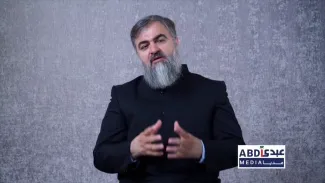
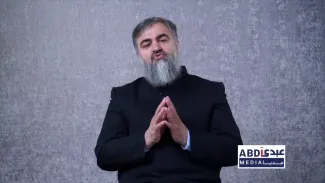
Full audio of the conversation between Abdi Media and Hojjat al-Islam wal-Muslimin Mohammad Taghi Akbarnejad, a lecturer at the Qom Seminary.
Take less than a minute, register and share your opinion under this post.
Insulting or inciting messages will be deleted.
Sign Up