Abdimedia Youtube
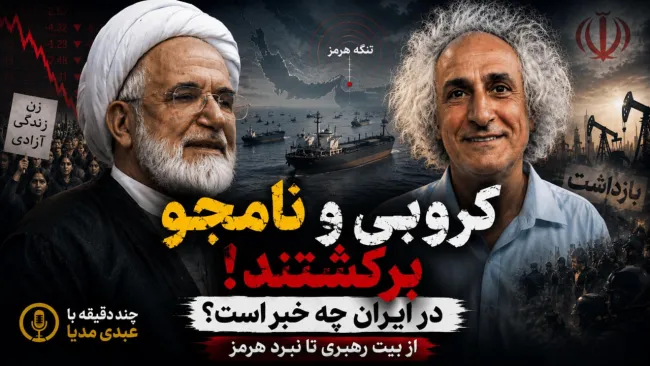
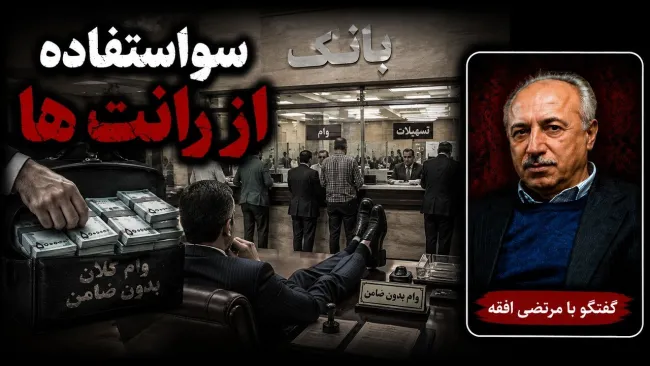
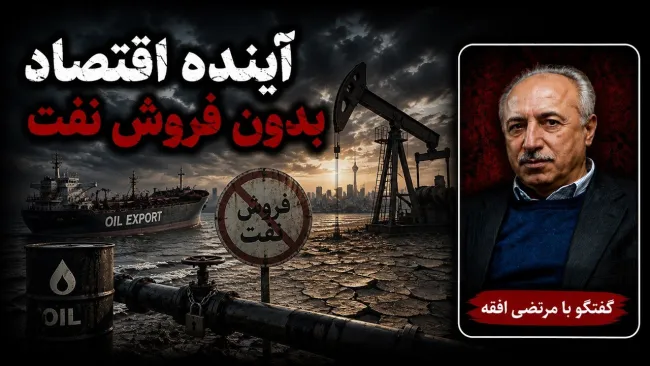
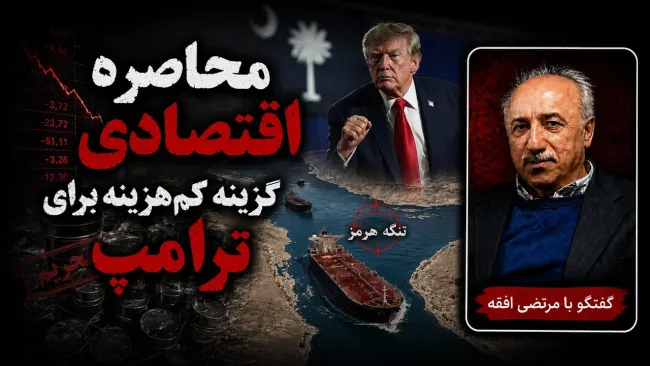
Seyyed Morteza Afghah: Trump, having not succeeded in military operations, has resorted to a lower-cost military operation.
We are not in a good economic situation, and if these threats become more serious, it is natural that the pressures will also increase.
Read more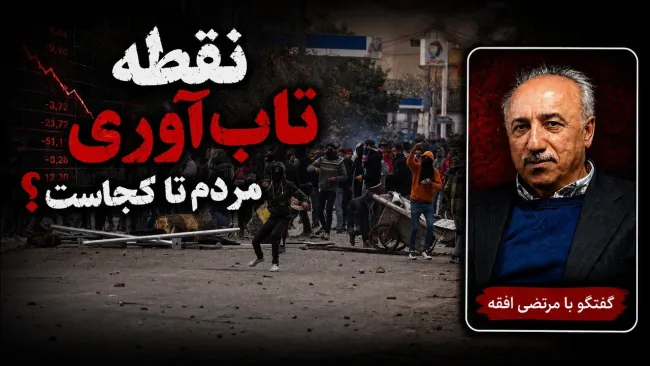
Seyyed Morteza Afghah: The people's resilience threshold is linked to the government.
For now, the middle class is getting poorer, but if this trend continues, the middle class may disappear.
Read more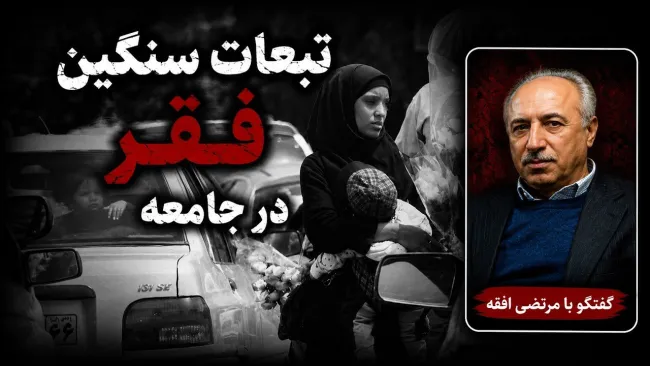
Seyyed Morteza Afghah: The danger of poverty is a serious risk that carries many political and social consequences.
The average society's tolerance has its limits, and the government should not allow individuals to reach that level of moral decline.
Read more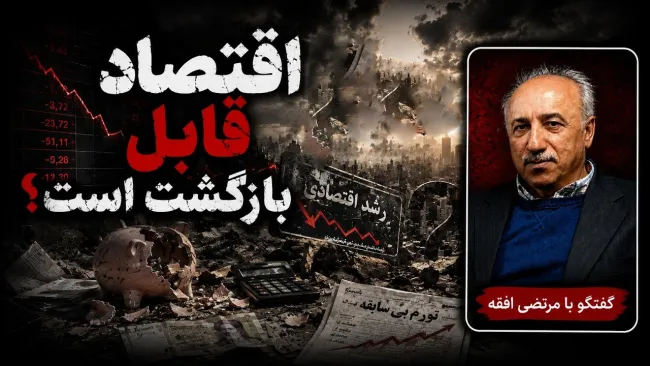
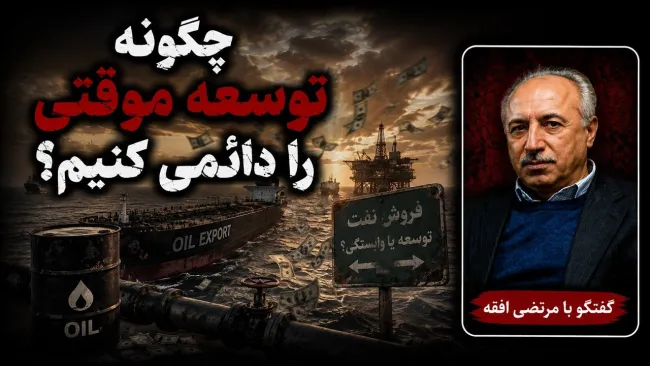
Seyyed Morteza Afghah: The 200,000-toman dollar is currently the psychological impact of Trump's threats; the current dollar rate was not unexpected and was predictable.
Following a decline in oil sales due to intensified sanctions, the curtain has been lifted.
Read more
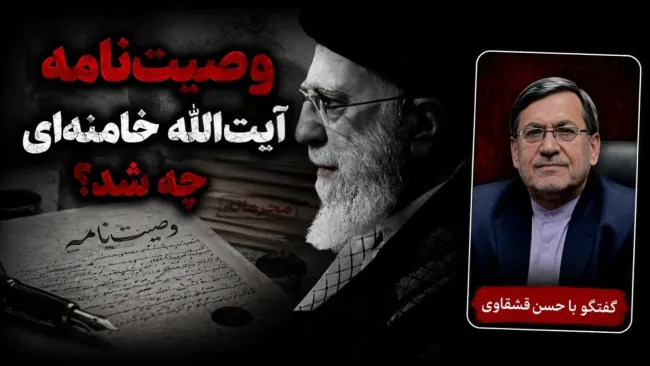
Hassan Ghashghavi's explanations regarding the will of Ayatollah Khamenei.
The security conditions are such, and parliamentary sessions are held with various protocols.
Read more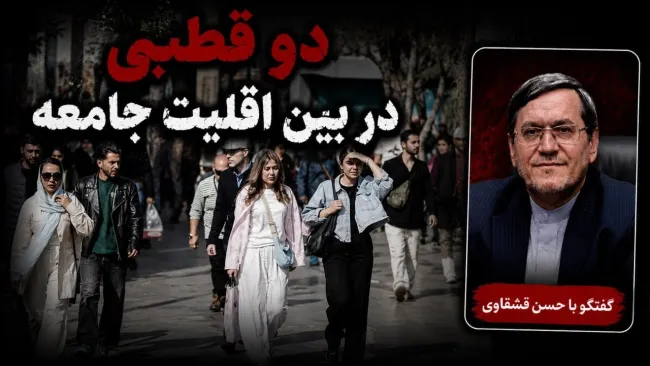
Hassan Ghashghavi: There is a polarization in our society, but it exists among a minority in the country.
The majority of the military and judicial personnel earn no more than 20 to 30 million.
Read more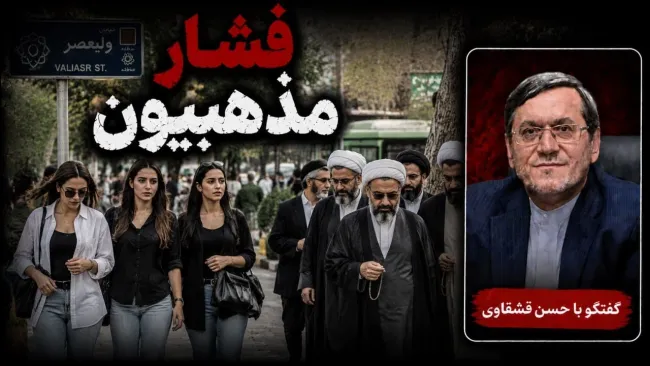
Hassan Ghashghavi: We believe in freedom of expression, but only to the extent that it does not lead to violation of norms.
The pressure is now greater from the religious side.
Read more
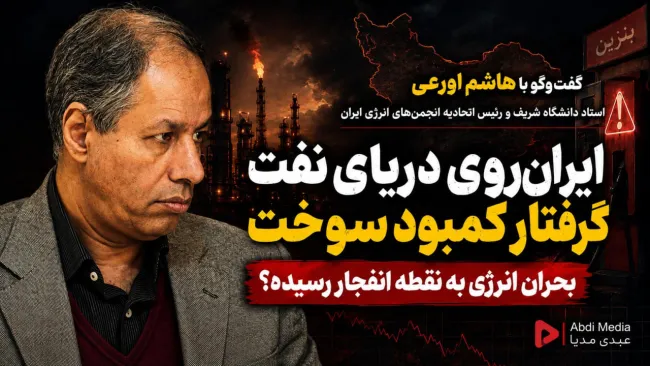
Iran is sitting on a sea of oil, yet trapped in a fuel shortage; has the energy crisis reached a breaking point?
A conversation with Dr. Seyyed Hashem Oraei, professor at Sharif University and head of the Union of Iran's Energy Associations, is now on the Abdi Media YouTube channel.
Read more
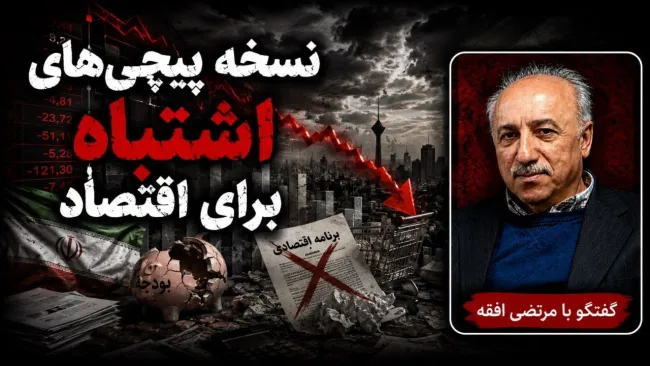
Seyyed Morteza Afghah: Economic reforms have been carried out since the time of Mr. Rafsanjani, but the result has been worse.
You cannot prescribe a solution for the economy in a "vacuum."
Read more
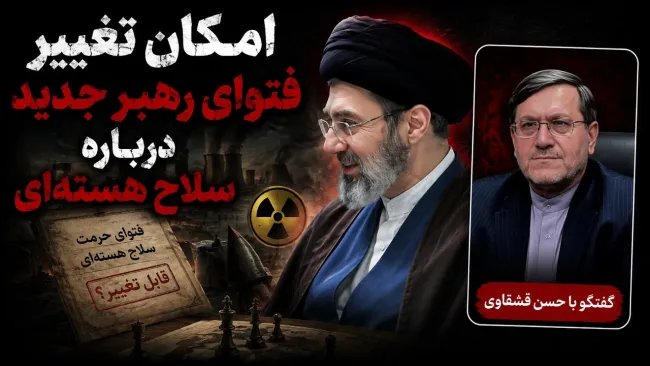
Hassan Ghashghavi: From a religious perspective, it is possible for the new leader's fatwa on nuclear weapons to change
For the future policy of the Islamic Republic in this regard to be determined, the opinion of the current Leader must be clarified .
Read more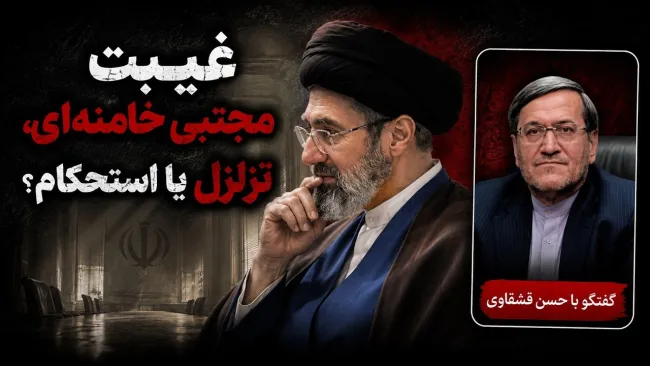
Hassan Ghashghavi: Imam Mahdi has been absent for 1,200 years, but do we, as religious people, neglect obedience to the command of the Master?
If the Leader is not present in person but everyone is so obedient to his command, this should logically indicate the cohesion of the system.
Read more
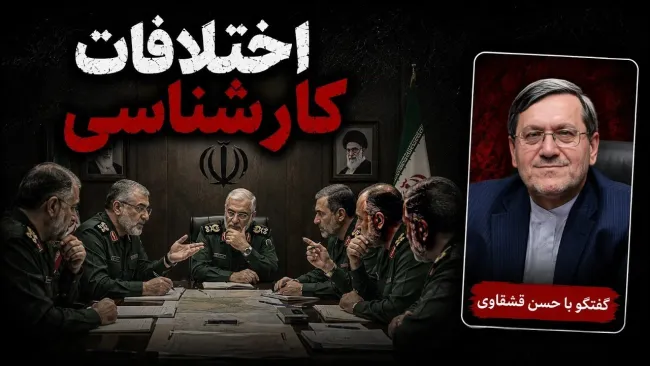
Hassan Ghashghavi: Regarding the Strait of Hormuz issue, there can be differences of opinion within the IRGC at the expert level.
In this one-year war, not even one of our diplomats became a refugee.
Read more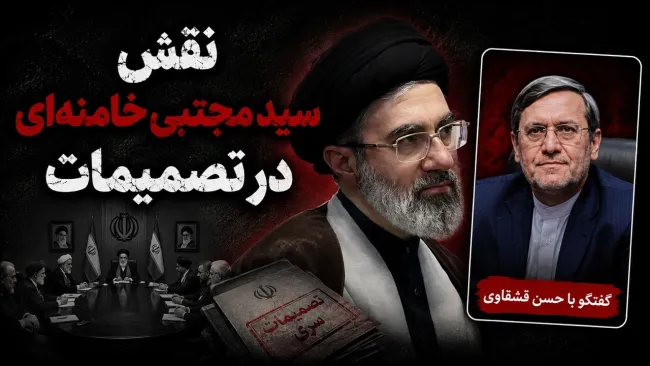
Hassan Ghashghavi: The Leader is in full health and has complete oversight of everything.
From the very first poll, the overwhelming majority of hearts turned towards His Holiness Ayatollah Seyyed Mojtaba Khamenei.
Read more
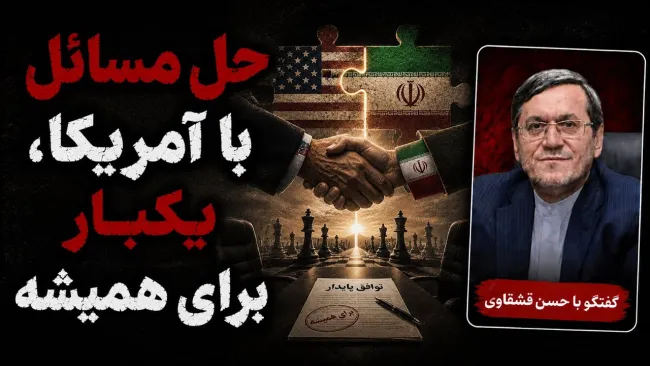
Hassan Ghashghavi: Death once, mourning once; this time we want to end these issues with the US for good.
Iran has never had economic problems with American companies.
Read more
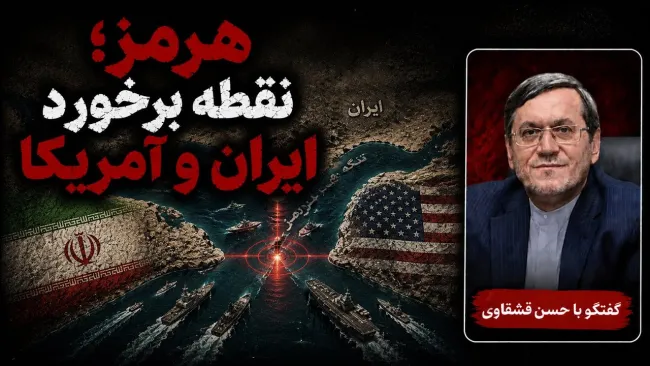
Hassan Ghashghavi: Determining a corridor for the Strait of Hormuz is our natural right.
As the negotiations with Oman were progressing well, the US threatened to bomb them
Read more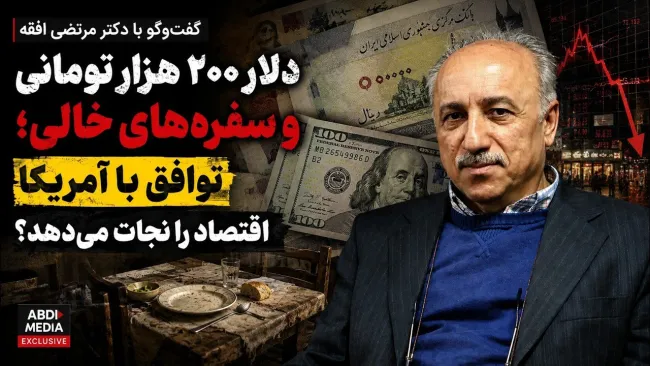
See | The 200,000-toman dollar and empty tables; can an agreement with the US save the economy? A conversation with Dr. Seyyed Morteza Afghah.
From the YouTube channel of Abdi Media
Read more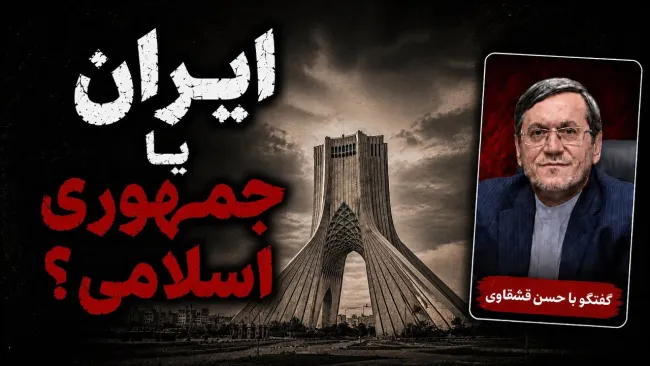
Hassan Ghashghavi: We cannot use the Islamic Republic instead of Iran and justify all the actions of Israel and the United States.
No country is willing to compromise even an inch of its national sovereignty.
Read more
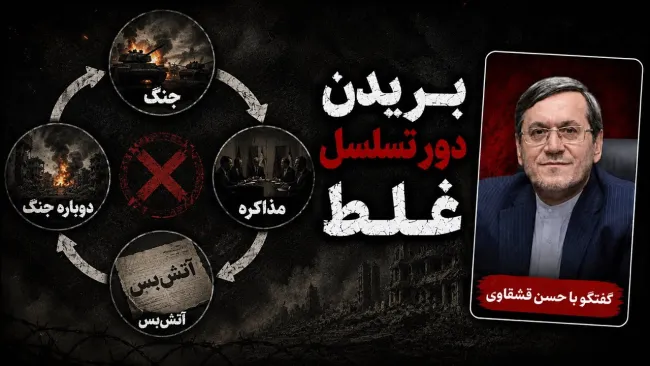
Hassan Ghashghavi: The vicious cycle of "war, negotiation, ceasefire, and again war, negotiation..." must be broken.
Sanctions always put a great deal of pressure on the vulnerable segments of the population.
Read more
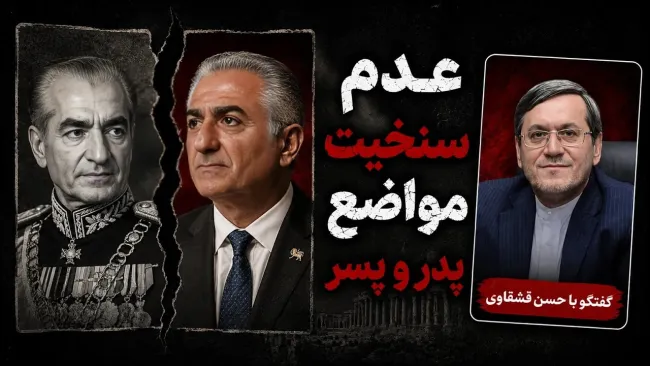
Hassan Ghashghavi: The Shah's son and supporters of the monarchy have no affinity with the positions of Mohammad Reza.
Even during the Shah's time, he had declared that the Strait of Hormuz is not international.
Read more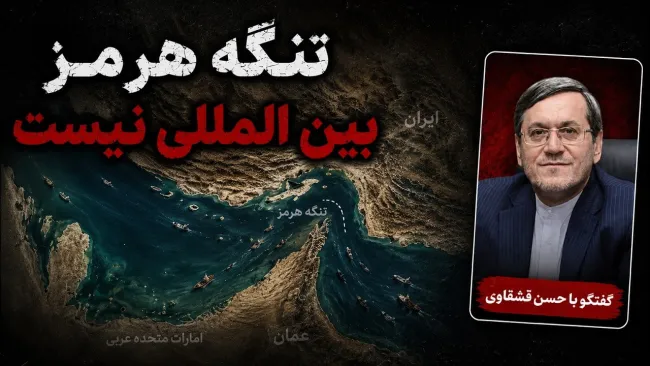
Hassan Ghashghavi: The Strait of Hormuz is not an international strait
If it is determined which side has violated the Islamabad Memorandum of Understanding, the future situation will become clearer.
Read more
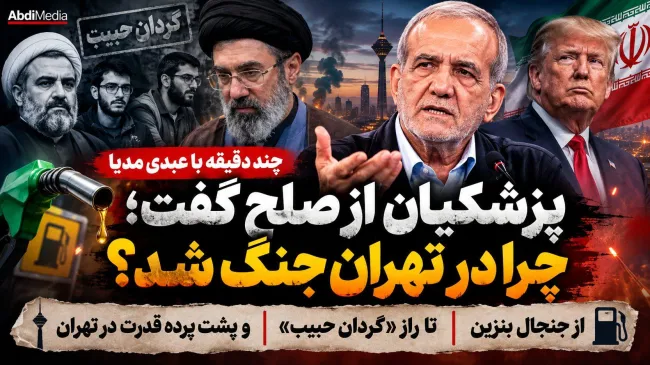
Tonight on Abdi Media | Pezeshkian spoke of peace; why did war break out in Tehran? From gasoline to the secret of the "Habib Battalion" – a few minutes with Abdi Media.
21:10 Iran time.
Read more
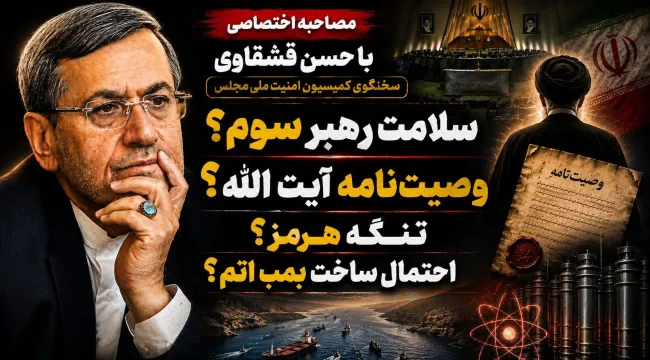
Right now on Abdi Media | From the health of the third leader and Ayatollah's will to the Strait of Hormuz and the possibility of building an atomic bomb, in an exclusive interview with Hassan Ghashghavi,
the spokesperson for the National Security and Foreign Policy Commission of the Majlis. Watch from Abdi Media's YouTube channel
Read more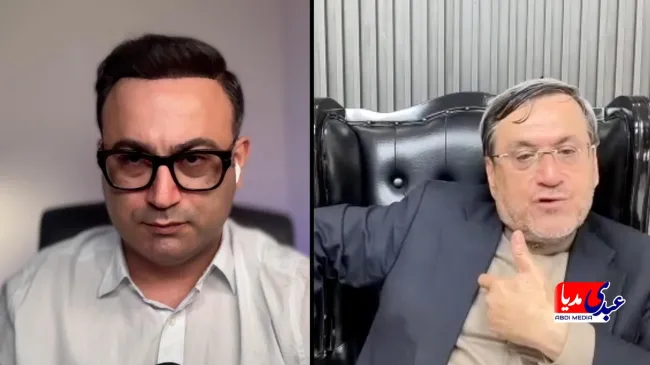
Ghashghavi: From a religious perspective, it is possible for the new leader's fatwa on nuclear weapons to change.
From a jurisprudential and religious perspective, it is possible that the fatwa of Ayatollah Seyyed Mojtaba Khamenei regarding nuclear weapons may differ from the fatwa of the previous Leader of the Islamic Republic.
Read more
Tonight on Abdi Media | From the health of the third leader and Ayatollah's will to the Strait of Hormuz and the possibility of building an atomic bomb
In an exclusive interview with Hassan Ghashghavi, the spokesperson for the National Security and Foreign Policy Commission of the Majlis, tonight at 10:10 PM Iran time on the Abdi Media YouTube channel.
Read more

The Role of Russia in the Iran-U.S. Nuclear Agreement" with the presence of Dr. Elaheh Koulaei, Professor of Regional Studies at the University of Tehran
In this dark theater of power, the roles are not pre-written, but the life and death of nations are determined in every unspoken dialogue. Every smile behind the glass table may conceal a shadow of betrayal, and the one who remains silent may be more dangerous than the one who shouts. Here, the truth lies not in what they say, but in what they do not say.
Read more
See | The Inevitable Future of the Islamic Republic; From Protesters to Power Transfer; A Conversation with Faezeh Hashemi
Is it possible to escape the future? This is a very important question: is there any escape from the future or not? History is neither sleep nor fantasy; it is a stubborn reality that sometimes shows its face in the mirror of popular protests, sometimes in negotiations behind closed doors, and sometimes in the shadow of the comings and goings of leaders and their successors. The Islamic Republic, after nearly half a century, now seems to me to be standing in a purgatory between continuity and transition.
Read more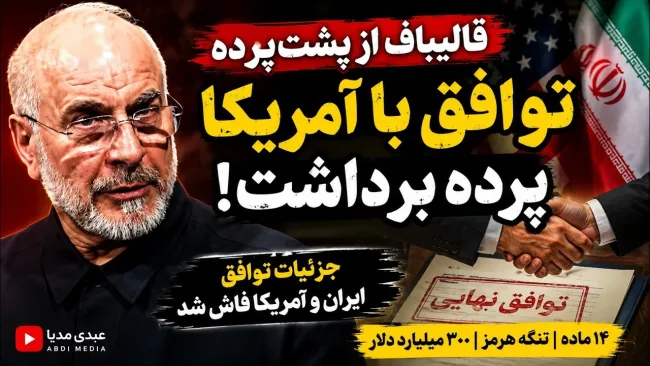
See | Ghalibaf reveals details of the Iran-U.S. agreement | The Strait of Hormuz, $300 billion, and the end of the war
Watch it on the Abdi Media YouTube channel.
Read more
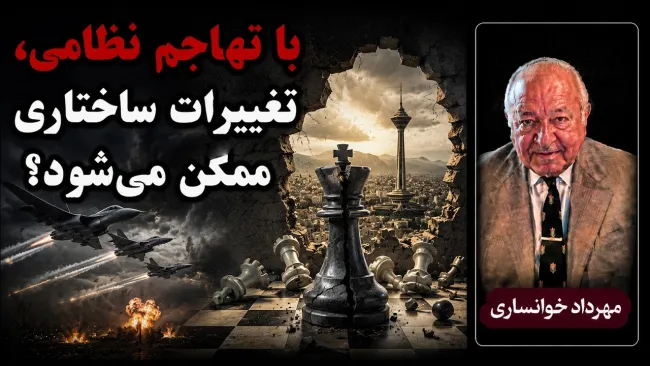
Mehrdad Khansari: Mr. Pahlavi is not on the verge of occupying Iran or establishing a monarchy.
Such actions take time, and we must maintain our credibility.
Read more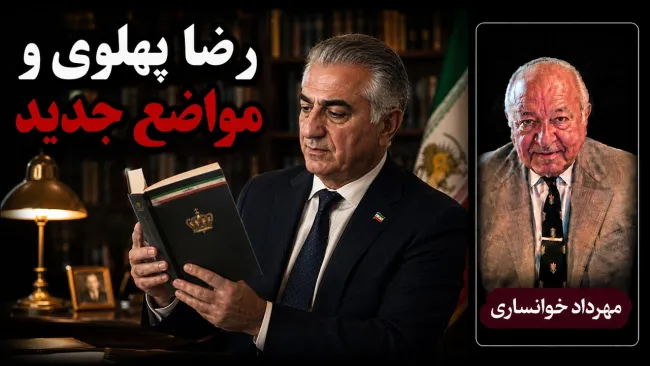
Mehrdad Khansari: Personally, I cannot support the positions that have been announced by him.
As a fighter Iranian, I do not want him to get involved in issues that are beyond control or that contradict the position of a constitutional monarch.
Read more
Mehrdad Khansari: The program that Reza Pahlavi announced today for the transitional period is inconsistent with his previous principles.
During the years when I was alongside Reza Pahlavi, he was a democratic individual and did not fight for the restoration of the "monarchy".
Read more
Mehrdad Khansari: In the current situation, I do not see any alternative as practical in the short term.
The Islamic Republic is not on the verge of collapse.
Read more
Mehrdad Khansari: The issue for which an agreement must be reached is the replacement of the sovereignty of Velayat (Guardianship of the Jurist) with the sovereignty of the people.
The sidelining of Ayatollah Khamenei has "discredited" (made ambiguous or tainted) the concept of Velayat (Guardianship of the Jurist).
Read more
Mehrdad Khansari: Those who came with Khomeini and seized power diminished over time, and only 15-20 percent of them remain.
All the levers of power are in the hands of this 15-20 percent, and they run the country.
Read more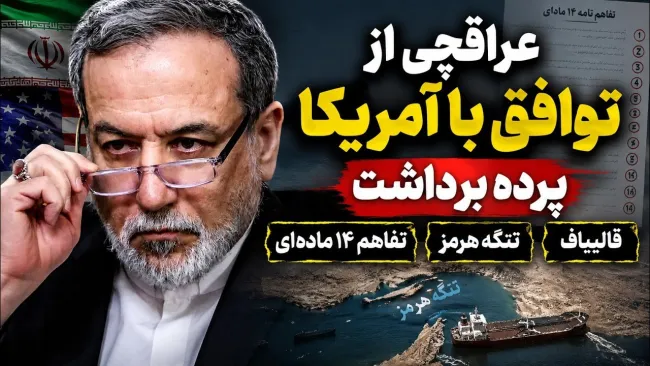
Watch | Araqchi Reveals Details of the Agreement with the US; Ghalibaf, the Strait of Hormuz and the 14-Point Memorandum
Read more
Mehrdad Khansari: In a situation that is neither war nor peace, the Islamic Republic is not more unstable.
Neither the Islamic Republic nor the US government wants to return to the battlefield.
Read more
Mehrdad Khansari: A foreign attack harms the work of constructive political forces and creates conditions where many people, for national reasons, stand behind the system.
The attack on Iran was against international law.
Read more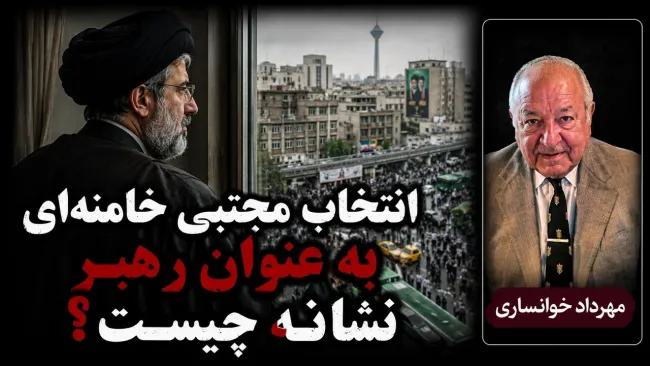
The selection of Mojtaba Khamenei as the leader of the Islamic Republic: what does it signify? An exclusive conversation with Mehrdad Khansari.
Mehrdad Khansari: The removal (or sidelining) of Ayatollah Khamenei has created a situation in which, if our nation is vigilant...
Read more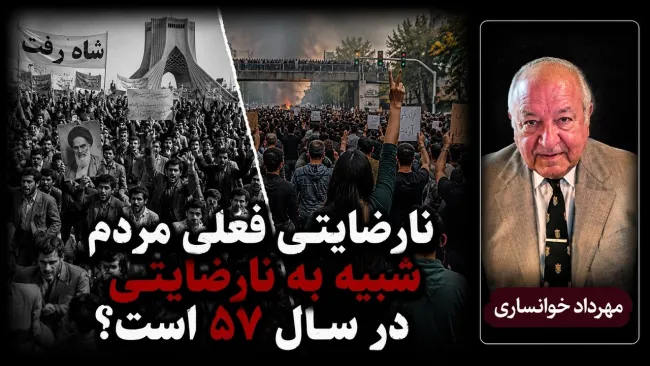
Is the current dissatisfaction of the people similar to the dissatisfaction of the people in 1979?
Mehrdad Khansari: The nature of the current dissatisfaction of the people is different from the past.
Read more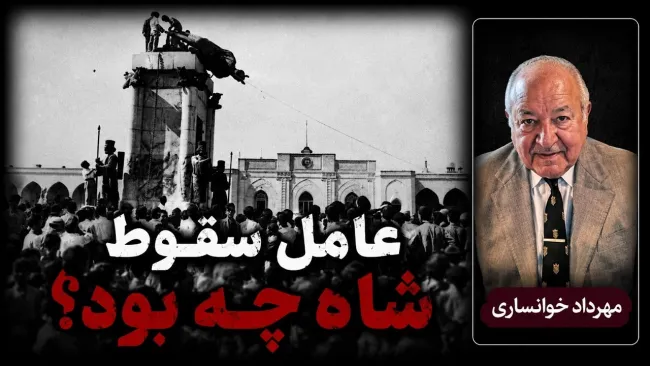
Mehrdad Khansari: The cause of the Shah's downfall was the dissatisfaction of the people.
The people wanted more political freedom, which was not available at that time.
Read more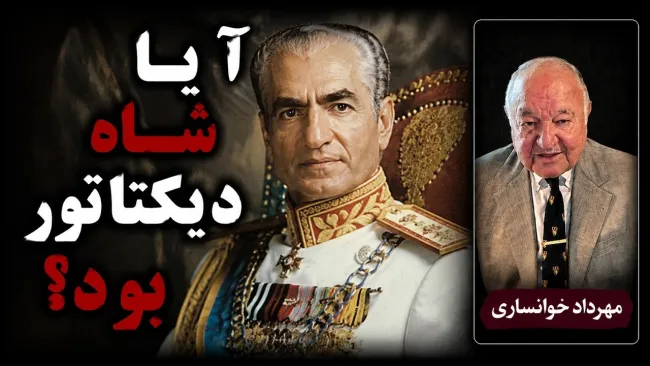
Mehrdad Khansari: The Shah was a dictator politically, but he was not a brutal dictator.
The Shah intervened in two areas: matters related to foreign policy and military matters and the defense of the country.
Read more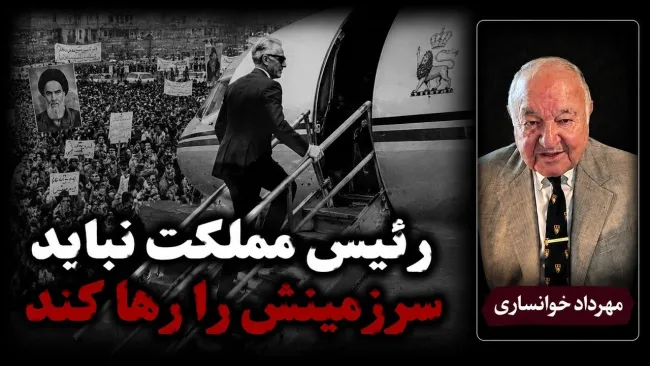
Mehrdad Khansari: One of the differences between the rule of the Shah and the current rule is that the head of the country should not abandon his land.
During the time of the Shah, dissatisfaction could be curbed by providing financial facilities to the people.
Read more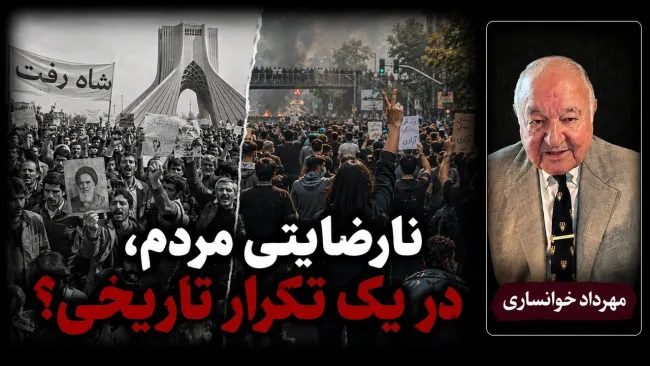
Is public dissatisfaction with the government a "historical repetition"? Exclusive interview with Mehrdad Khansari
Mehrdad Khansari: Our country, at the time when Mohammad Reza Shah came to the throne, was a poor country.
Read more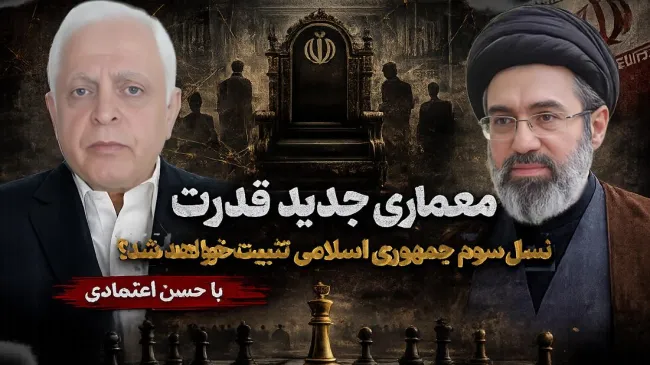
Mojtaba Khamenei and the New Architecture of Power; Will the Third Generation of the Islamic Republic Be Consolidated? A Conversation with Hassan Etemadi, Political Analyst.
It is very clear that the Islamic Republic is at one of the most sensitive historical junctures. Therefore, we are going to discuss an issue that is important for the future of Iran, and the topic of our conversation is the structure of power in Iran. We know that after the attacks that took place in recent months, and after the killing of Ayatollah Khamenei and the transfer of leadership in a very strange and extraordinary process to his son, Mojtaba Khamenei, many now believe that the Islamic Republic has entered its third generation. Although to this day, we have not seen any live voice, image, photo, or even a live signature from the new leader. Has Iran entered the era of a military-security government? And can the new architecture of power stabilize the Islamic Republic system and the nascent system of Mojtaba Khamenei, or will new crises arise?
Read more
What is the biggest weakness of the Islamic Republic? Exclusive interview with Mehrdad Khansari
Mehrdad Khansari: The biggest weakness of the Islamic Republic is the lack of development and the creation of public dissatisfaction.
Read more
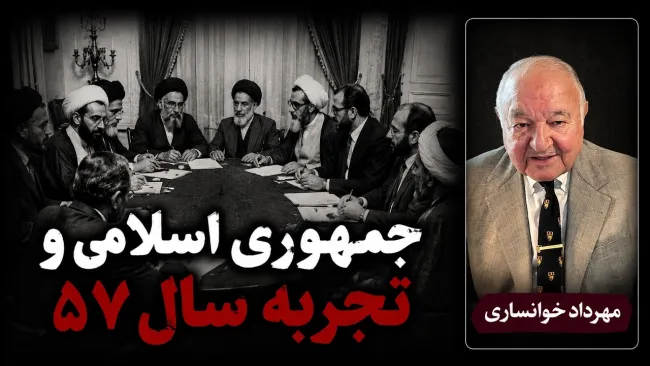
The Islamic Republic has made extensive use of the experiences of "1957".
The skill he had in construction, he did not have in "crisis management".
Read more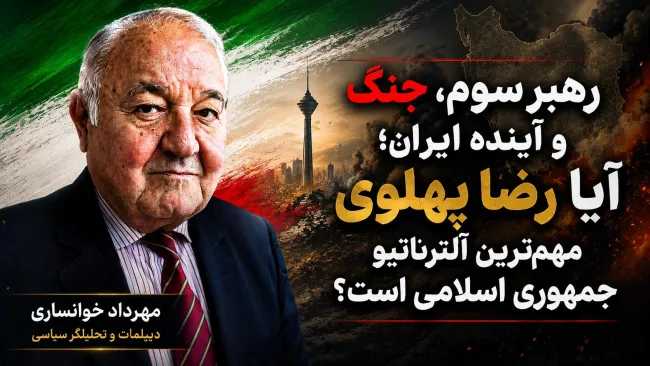
Watch | The Third Leader, War, and the Future of Iran; Is Reza Pahlavi the most important alternative to the Islamic Republic? In a conversation with Mehrdad Khansari, former diplomat and political analyst.
History is a testing ground for power, and in this testing ground, nations have repeatedly faced similar questions: when a political system enters a phase of erosion, or when for many it becomes conditional and reform is no longer enough, and for many the question arises as to when the survival of a government becomes its greatest issue, and more importantly, for many the question arises as to when the future separates from the past. Today, Iran is in one of the most sensitive periods of its contemporary history: the American and Israeli attack and the war that has changed the equations of the region, the killing of the second leader of the Islamic Republic, the emergence of the third leader of the Islamic Republic, changes in the balance of power within the establishment, the increasing role of security and military institutions, the intensification of political rifts, the current negotiations with the United States, and simultaneously, the return of the discussion of alternatives to the center of attention, and the return to a question that has loomed over Iranian politics for decades: Will the Islamic Republic pass through this historical turning point? If not, how will Iran's future be shaped?
Read more
Hossein Bayat: In such an emergency situation, there is no authorization for the government to become "self-satisfied" or "pleased with itself."
If the government continues its practice of raids, imprisonments, and house arrests, what we were worried about happening through a foreign attack will instead occur through "social collapse."
Read more
Hossein Bayat: Fundamental rights have always come into conflict with the ideological foundations of the Islamic Republic.
We are in an emergency situation in which the law is not observed.
Read more
Is the Islamic Republic in an "emergency" condition? Hossein Bayat responds.
Hossein Bayat: When the leader of the Islamic Republic is assassinated in the first second of the war, it means we are naturally in an emergency situation.
Read more
Hossein Bayat: Given the conditions in which the Islamic Republic finds itself, it cannot and does not want to be a defender of "fundamental rights."
The theoretical foundations of the Islamic Republic are fraught with conflict and contradiction.
Read more
Hossein Bayat: The discussion of "transition" is currently ruled out.
If there is to be a discussion of "transition," then the issue of "war" — which has already been defeated — must be raised again.
Read more
Shaghayegh Norouzi addressing Reza Pahlavi: You never understood what happened to your father and grandfather.
If you had understood, you wouldn't have relied one bit on foreign interference!
Read more
Shaghayegh Norouzi: The instrumental view of popular forces in both the current establishment and the opposition is similar to each other.
The binary of "people vs. government" is wrong and has led to war.
Read more
Shaghayegh Norouzi: I didn't think the current system's capability to fight in the war would be this much.
It cannot be said that those who are involved in the country's defense mechanism are necessarily the same people who suppressed the people in January
Read more
Watch | The Third Leader, War, and the Future of Iran; Is Reza Pahlavi the most important alternative to the Islamic Republic? In a conversation with Mehrdad Khansari, former diplomat and political analyst.
Watch on the Abdi Media YouTube channel.
Read more
Shaghayegh Norouzi: Right now, an authoritarian current has been created outside the borders of Iran.
Outside the country, the level of violence has risen so high that anyone who speaks "anti-war" cannot feel safe.
Read more
Shaghayegh Norouzi: A Significant Portion of the Iranian People Are Desperately Seeking a Way Out of the Current Situation
Under these circumstances, someone like Reza Pahlavi can become "sacralized."
Read more
Shaqayegh Norouzi: I Do Not View Reza Pahlavi's Movement as a Revolution
They Lack the Authenticity, Foundations, and Ideals of a Genuine Revolution
Read more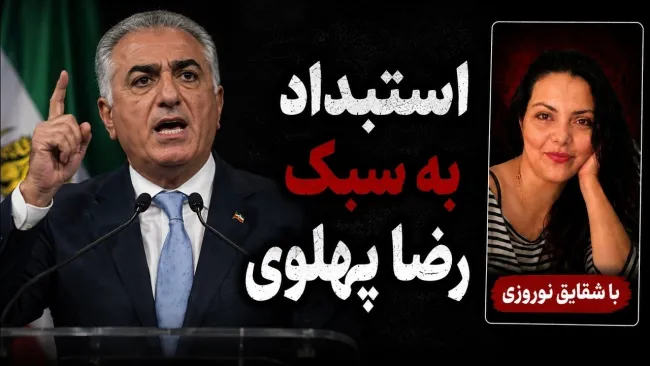
Shaqayegh Norouzi: Pahlavi Is Neither Aligned with His Father's Model of Governance Nor with the Ideals for Which the People Have Struggled
The Pahlavi model of governance is based on a paternalistic and patriarchal style of rule.
Read more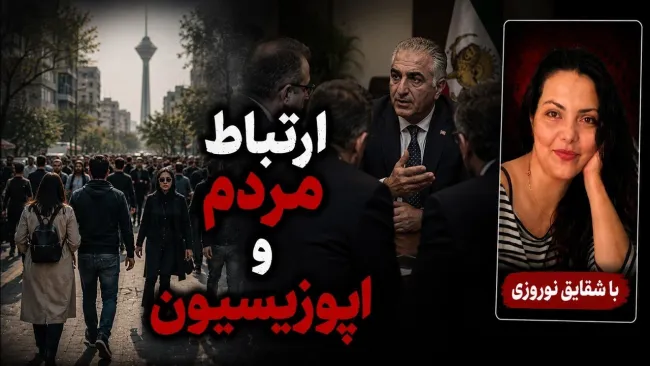
Shagaig Nowrozi: The opposition abroad has not protected a decent culture for Iran
Free speech lives in safety
Read more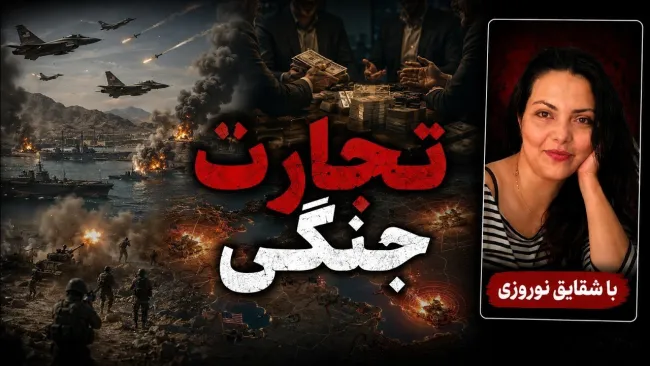
Shaghayegh Norouzi: The media carried out the war operation exceptionally well.
This entire affair of war is a "business."
Read more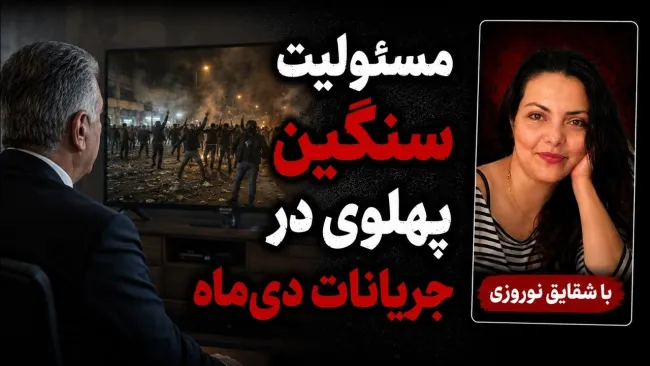
Shaghayegh Norouzi: Pahlavi bears significant responsibility for the events of the month of Dey because he knows the regime wrongfully fires upon protesters.
In no movement have we had such facilitation for the issue of mass killing.
Read more
Shaghayegh Norouzi: A Popular Uprising Turned Into a Bridge Between Two Wars
This creature and her entire campaign view the existence of the Iranian human through a consumerist lens.
Read more
Shaghayegh Norouzi: December was one of the most tragic events in Iran’s contemporary history.
In December, an additional layer was added to the government's repression, and that was due to the role played by Pahlavi.
Read more
Shaghayegh Norouzi: Repression inside the country has led some people to accept war as a path for change.
The "dead ends" were translated into "insoluble" issues for the people
Read more
Shaghayegh Norouzi: People who have experienced “discrimination” are more prone to being “protesters.”
We need people who can stand against the waves.
Shaghayegh Norouzi: The theory that we should ignore all our standards simply because we oppose a political system is incorrect.
The path ahead does not lead to liberation.
Mohsen Sazegara: Leadership by a single individual in our society is neither feasible nor desirable.
Individual leadership is not desirable because such an event occurred in the Islamic Revolution.
Read more
Watch | War against Iran and its effects on fundamental rights; does war justify the suspension of citizens’ constitutional rights? A conversation with Dr. Hossein Bayat.
From the YouTube channel of Abdi Media
Read more
Mohsen Sazegara: The performance of the leader of the 1979 Revolution and Reza Pahlavi cannot be compared with one another.
The strength of revolutions is proportional to the strength of their leaders.
Read more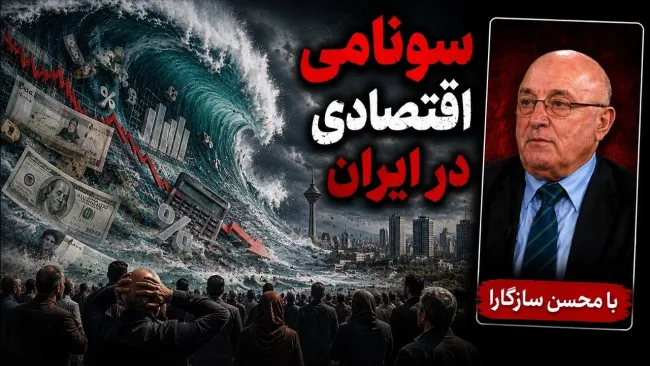
Mohsen Sazegara: A war involving someone as unpredictable as Trump will lead nowhere.
The waves of such a war are still on their way, and they will give rise to an “economic tsunami” in Iran.
Read more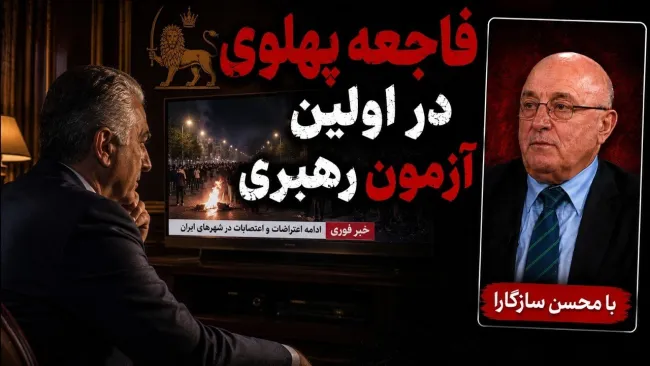
Mohsen Sazegara: Reza Pahlavi created a disaster in his first test of leadership.
Reza Pahlavi turned his back on the “New Covenant” that he had previously presented.
Read more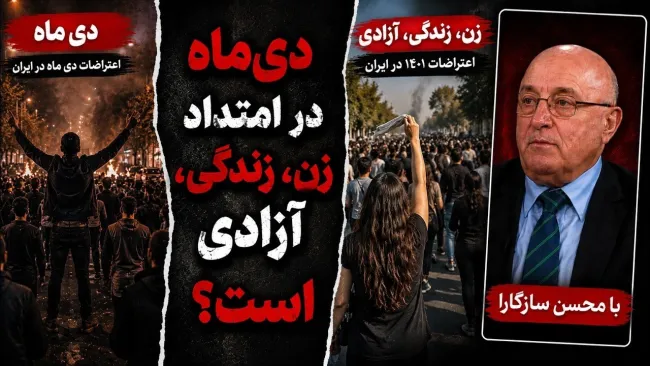
Mohsen Sazegara: December is not in continuation of “Woman, Life, Freedom.”
Given the course of events in the country, it is natural that this government has no choice but to leave.
Tonight | War against Iran and its effects on fundamental rights; does war justify the suspension of citizens’ constitutional rights? In conversation with Dr. Hossein Bayat.
Saturday at 22:00 Iran time.
Read more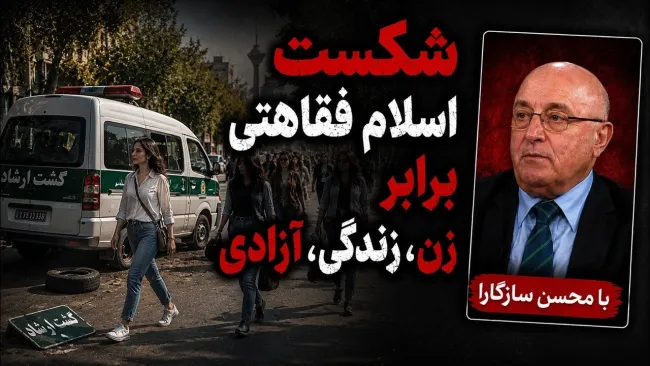
Mohsen Sazegara: The ideology of “jurisprudential Islam,” which is the structure of the government, has been defeated by the theory of “Woman, Life, Freedom.”
The Green Movement is the first movement in which people took to the streets for their civil rights without being called by the clergy.
Read more
The slogan “Woman, Life, Freedom” from the perspective of Mohsen Sazegara.
Mohsen Sazegara: The slogan “Woman, Life, Freedom” was a gift from our Kurdish compatriots, and this slogan is not accidental.
Read more
Mohsen Sazegara: The conditions in our society are revolutionary.
This revolution remained unfinished, but it achieved one of its demands, which is the issue of compulsory dress code and women’s rights.
Read more
Was the 1979 Revolution really a revolution? An exclusive interview with Mohsen Sazegara.
Mohsen Sazegara: Any process in which various segments of society, not just a single class, collectively enter the political arena and demand a change of government is a revolutionary process.
Mohsen Sazegara: Mohammad Reza Shah feared a religious uprising by clerics and therefore allowed them considerable freedom.
He created a suitable opportunity for religious opponents who were also ideologically equipped.
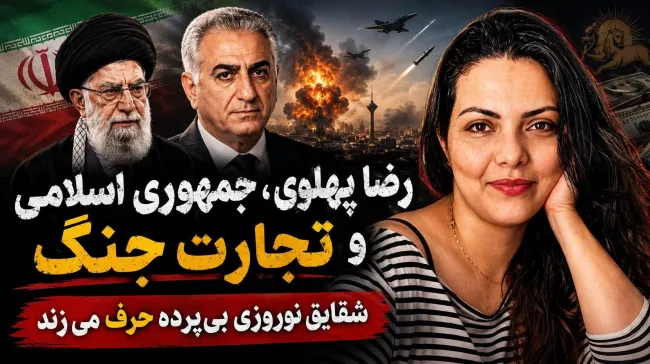
Reza Pahlavi, the Islamic Republic, and the business of war — Shaqayegh Norouzi speaks candidly.
From the Abdi Media YouTube channel.
Read more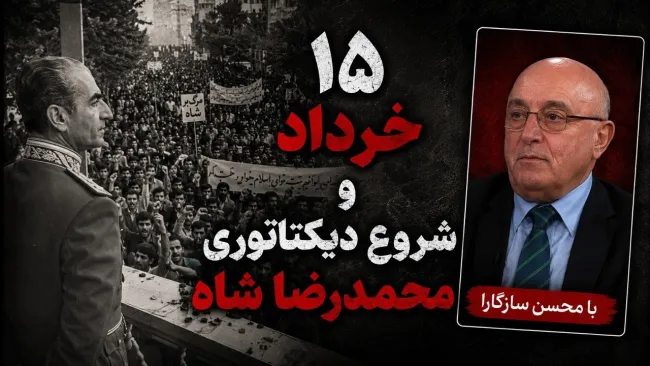
Mohsen Sazegara: Mohammad Reza Pahlavi became a military dictator from June 5 and was no longer that constitutional king
Mohammad Reza Pahlavi dissolved all the parties.
Read moreTonight | Reza Pahlavi, the Islamic Republic, and the War Trade: Shaghayegh Norouzi Speaks Frankly
Thursday at 20:30 Iran time on Abdi Media YouTube Channel
Read more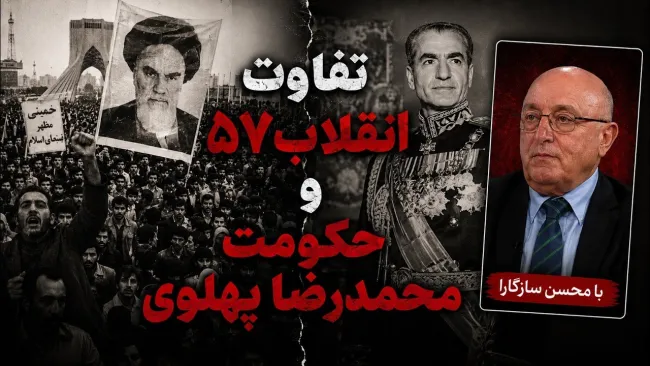
What was the difference between the 1979 Revolution model and Mohammad Reza Pahlavi’s government?
Mohsen Sazegara: There were two main disputes with the Shah; they said he was an American puppet and that he did not implement Islamic jurisprudential rulings.
Read more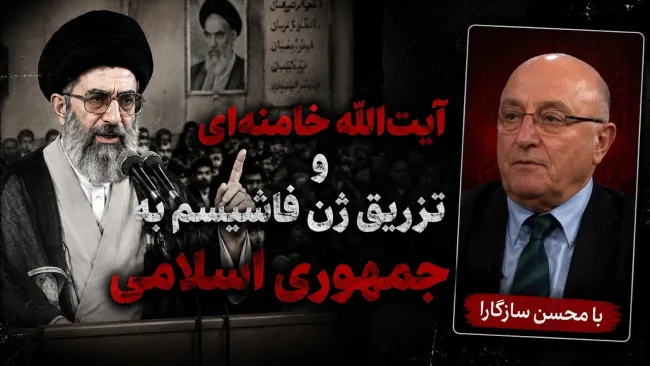
Mohsen Sazegara: Mr. Khomeini proposed a system in which a person called the “Supreme Jurist (Velayat-e Faqih)” has “god-like powers.”
I came to the conclusion that the problems of the Islamic Republic lie in clerical Islam (jurisprudential Islam).
Read more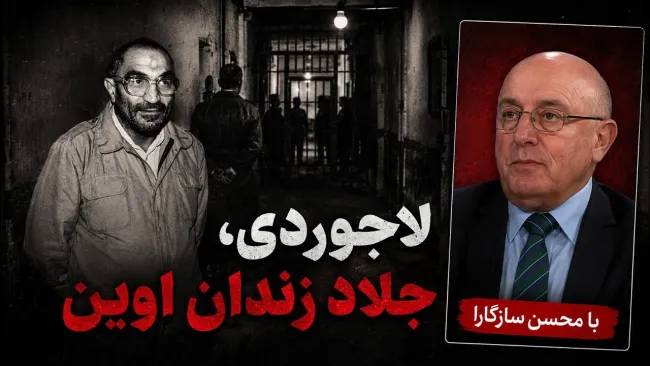
Mohsen Sazegara: The problems of the Islamic Republic system are inherent to its nature, and this theory is manifested in the constitution.
During my time in Evin Prison, I became aware of the rumors about Lajevardi being a “butcher.”
Read more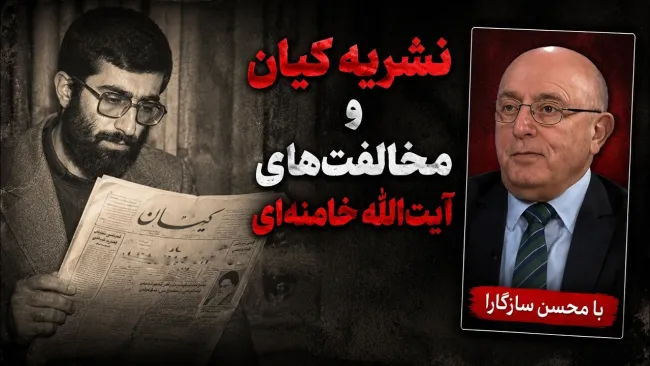
Mohsen Sazegara: The journal Kiyan was one of the most successful intellectual projects in the country and addressed the problem of religion and rationality.
Mr. Khamenei used to say that the magazine *Kiyan* was a “dinosaur egg” and that a monster would emerge from it.
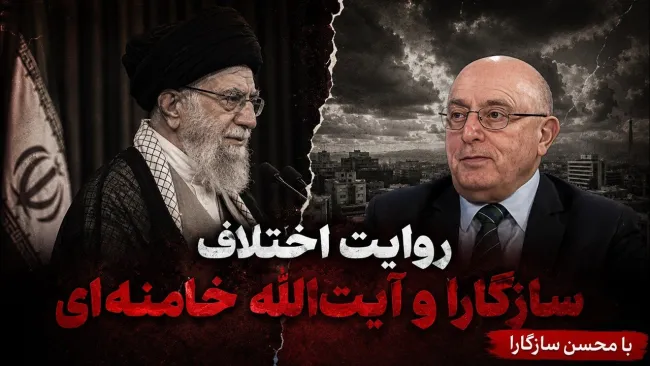
Where did the disagreements between Sazegara and Ayatollah Khamenei begin?
Mohsen Sazegara: I was working as an advisor at the Iran Data Processing Company; Mr. Khamenei issued an order from above that “so-and-so should no longer be there!”
Read more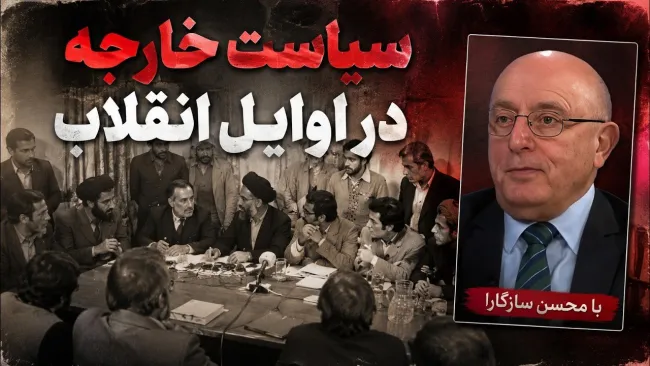
Mohsen Sazegara: I told Hashemi Rafsanjani that you no longer have any excuse for the people, and that you must provide peace and comfort.
The confrontation with the United States and Israel was the axis of the Islamic Republic’s foreign policy.
Read more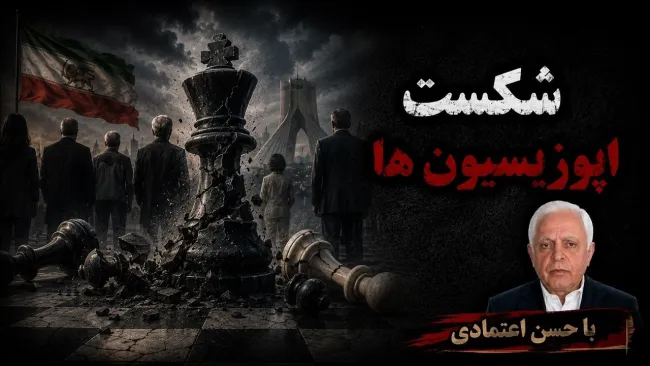
Hassan Etemadi: A large percentage of monarchists will become disillusioned, and the public will not trust them either.
The national, freedom-seeking, and pro-democracy opposition must have a national media outlet; otherwise, they will fall behind.
Read more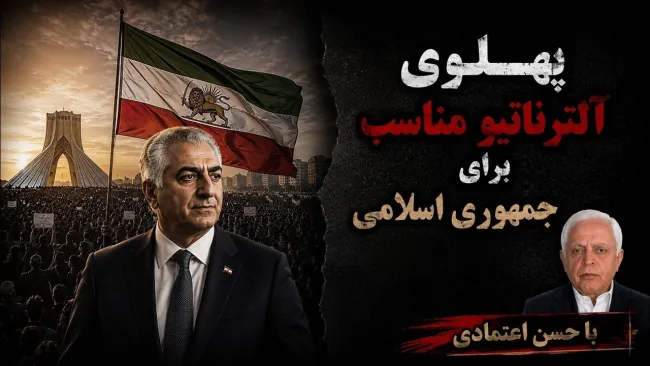
Hassan Etemadi: The Islamic Republic is trying to ensure that Reza Pahlavi remains the only opposition figure on the political stage.
During the events of December (the “Dey protests”), Reza Pahlavi played a significant role in helping the Islamic Republic deal with its opponents.
Read more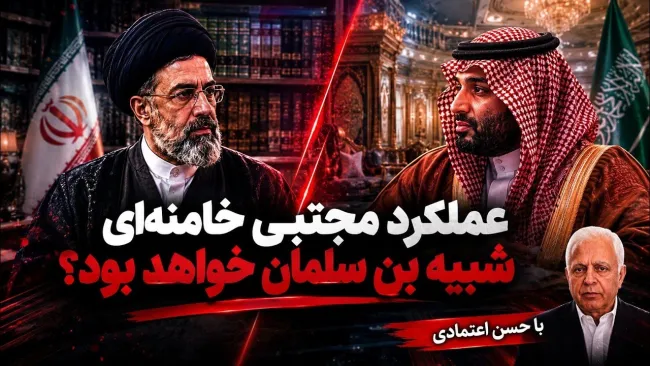
Hassan Etemadi: Mojtaba Khamenei may act in a manner similar to Mohammed bin Salman.
If the Islamic Republic wants to survive, only the word “Islamic” should remain in its name.
Read more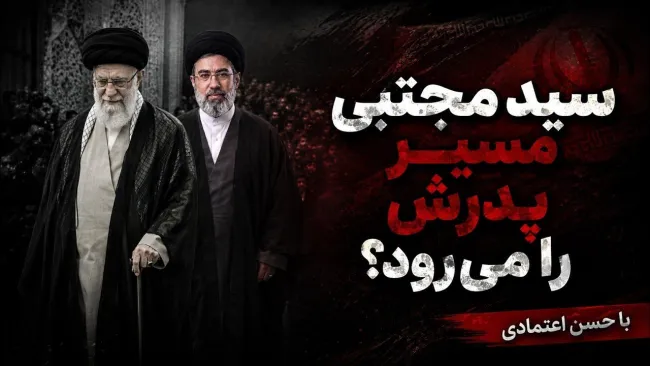
Hassan Etemadi: If Mojtaba Khamenei Does Not Follow His Father’s Path, He Will Not Be Able to Survive.
Mr. Mojtaba's situation must also be clarified. It needs to be addressed. People cannot live with an unseen leader.
Read more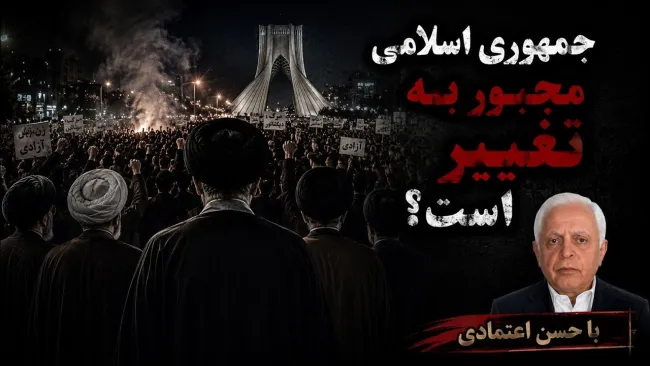
Hassan Etemadi: If the Clerics and the IRGC Do Not Change Their Colors, They Will Not Survive.
Religious governments always justify their political changes.
Read more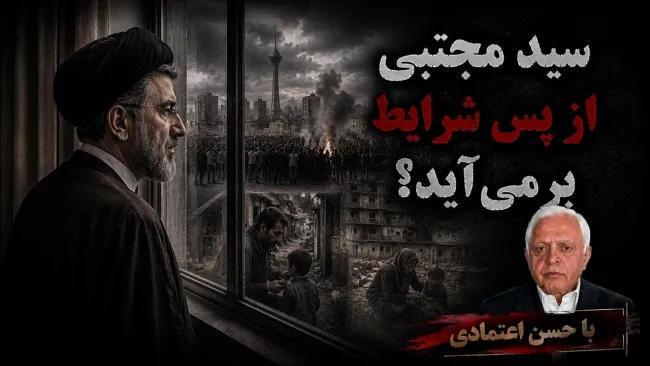
Hassan Etemadi: If a War Had Not Occurred, It Was Unlikely That Mojtaba Khamenei Would Become the Leader of the Islamic Republic.
It seems that even the reformists have come to accept Mojtaba’s leadership.
Read more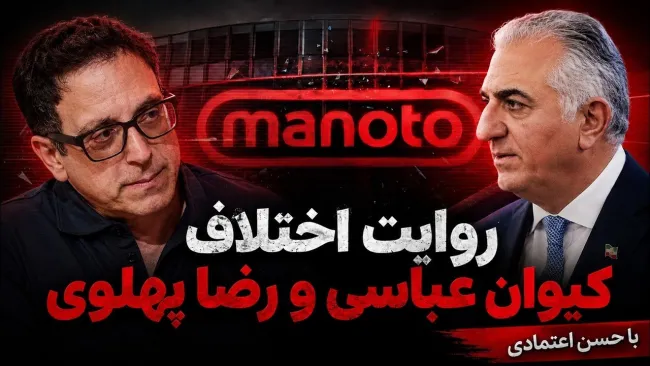
Hassan Etemadi: During the First Three Years of Manoto TV, Keyvan Abbasi Could Not Stand the Sight of Reza Pahlavi.
He changed his approach based on the will and request of the sponsors
Read more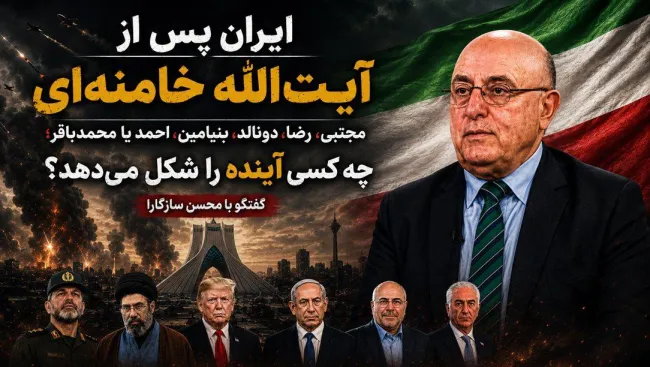
Watch | Iran After Ali Khamenei | Mojtaba, Reza, Donald, Benjamin, Ahmad, or Mohammad Bagher — who will shape the future? A conversation with Mohsen Sazegara, political analyst.
From Abdi Media's YouTube channel
Read more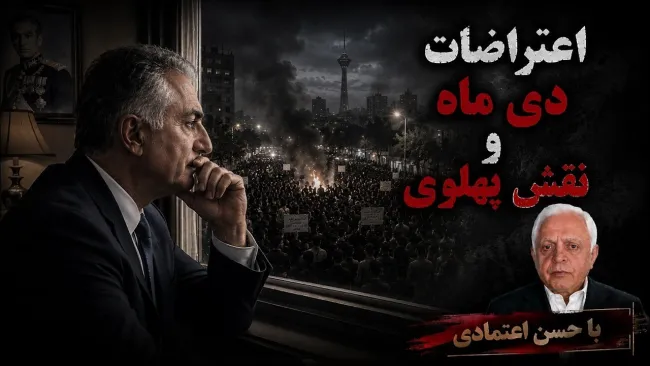
Hassan Etemadi: The events of January protests have no connection to the Pahlavi era.
Claiming that the Pahlavi era has ties to some members of the Revolutionary Guards is a joke.
Read more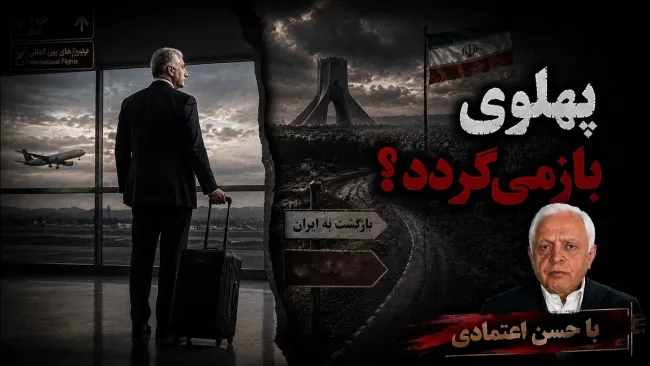
Hassan Etemadi: Pahlavi neither wants nor can return to Iran
There is no basis for their return
Read more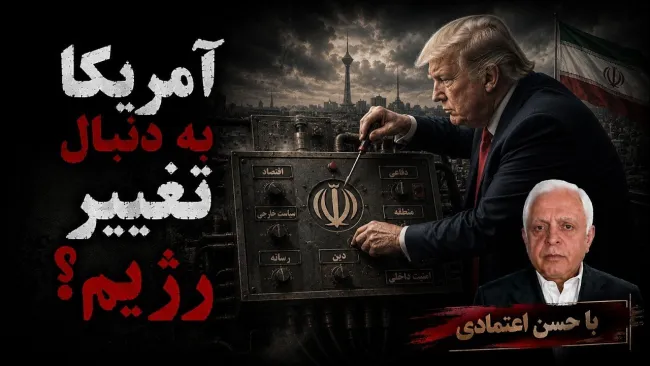
Hassan Etemadi: According to the experience and existing conditions, Pahlavi will not come to Iran
America never seeks regime change in Iran
Read more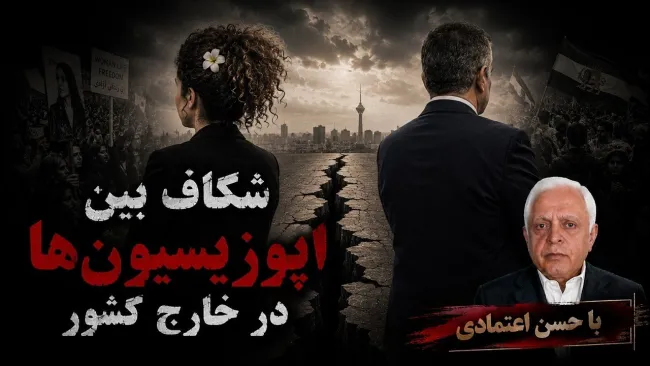
Hassan Etemadi: The war created several factions among the oppositions abroad
I don't think that the split and disagreement in the deep layers of the government will lead to collapse
Read more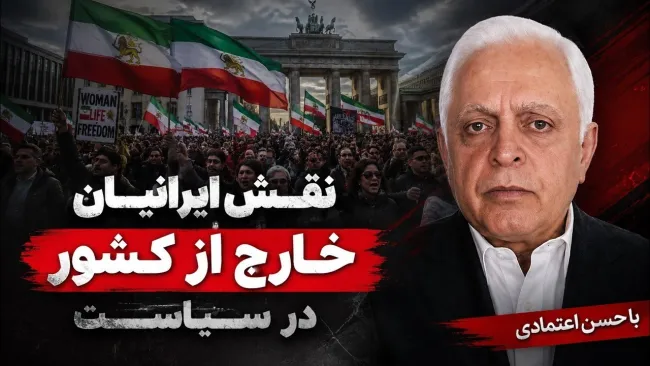
Hassan Etemadi: Serious revisions must be made regarding political issues.
If the policies of the Islamic Republic continue, some Iranians abroad will not remain silent.
Read more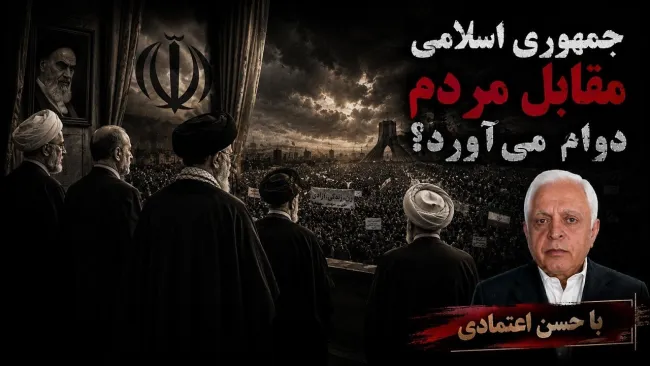
Hassan Etemadi: If the Islamic Republic wants to survive, it must gain the people’s consent; otherwise, it will not endure.
If they repeat their past actions, protests broader than those of “Deymah” (January protests) will occur in Iran.
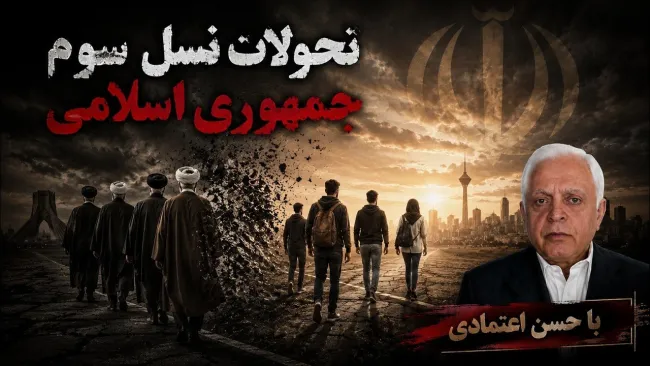
Will the third generation of the Islamic Republic bring about changes?
Hassan Etemadi: The children of senior officials mostly live outside Iran and have undergone many changes.
Read more

Hassan Etemadi stated that a segment of the Revolutionary Guards intends to adjust the current conditions in accordance with the preferences and inclinations of the younger generation.
They understand that it is not possible to govern a country based on a set of ideological and religious frameworks.
Read more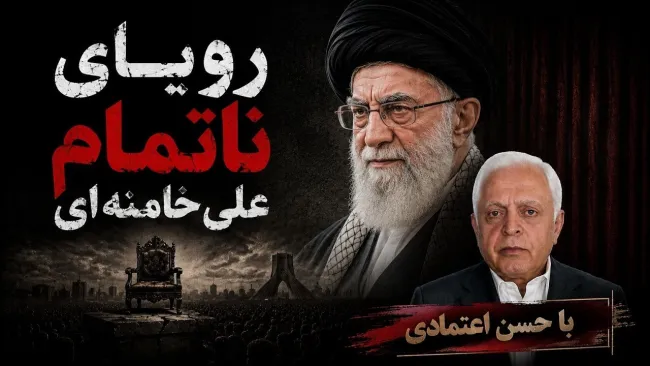
Did Ayatollah Khamenei achieve his goals during his rule?
Hassan Etmadi: The Islamic Republic has been successful in missile production activities
Read more
Succession Crisis in the Islamic Republic; End or Temporary?
Can a miracle create fundamental changes in the structure?
Read more
Hassan Etemadi: The Islamic Republic considered hereditary rule to be one of the flaws of the monarchy, yet they ended up doing the very same thing.
Hereditary rule is one of the hallmarks of authoritarian governments.
Read more
Hassan Etemadi: The 1979 Revolution Was a Political Revolution
A government came to power that paid no attention to cultural and social issues and was solely focused on gaining political power.
Read more
Tomorrow | Mojtaba Khamenei and the new architecture of power; Will the third generation of the Islamic Republic be consolidated? Conversation with Hasan Etemadi, political analyst
Saturday at 8:30 PM Tehran time from Abdi Media's YouTube channel
Read more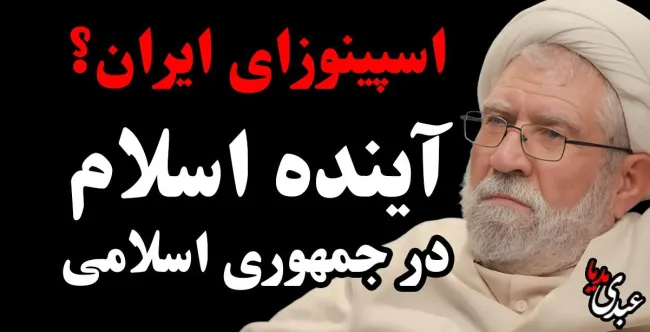
Watch: Spinoza of Iran? | The Future of Islam in the Islamic Republic featuring Haj Sheikh Abdolrahim Soleimani Ardastani
Researcher of religions, retired professor at Mofid University, and former member of the Assembly of Lecturers and Researchers of the Qom Seminary.
Read more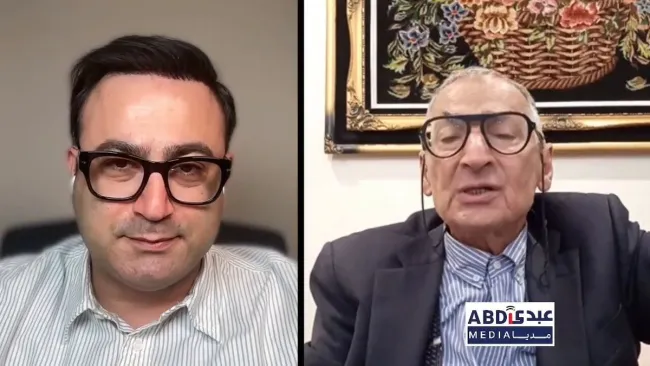
Zibakalam: The economy of the Islamic Republic of Iran is a corrupt and inefficient state economy.
Everything in the Islamic Republic is state-owned
Read more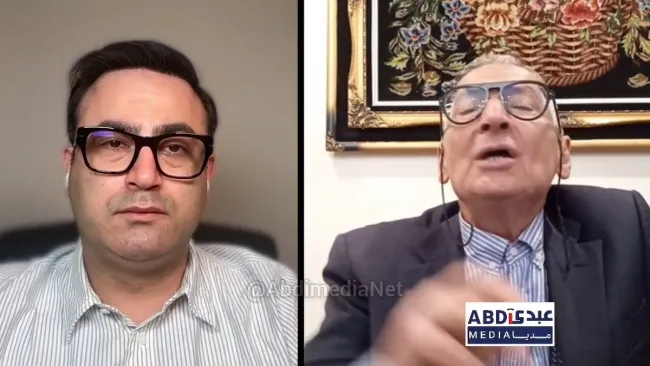
Zibakalam: You can in no way stop fuel smuggling.
Arab countries are sleeping on money (extremely wealthy), but even there, gasoline is 60–70 cents.
Read more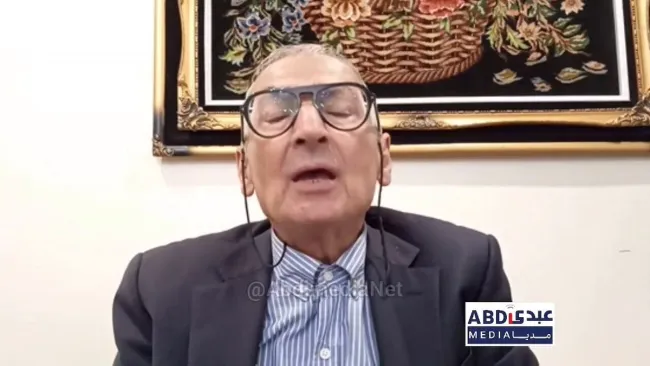
Zibakalam: The government of the Islamic Republic buys imported gasoline for 80-90 thousand Tomans per liter and sells it for 5 thousand Tomans!
The annual budget of Iran's Department of Environment is only 80 billion Rials
Read more
Zibakalam: In the past forty years, many dictatorial regimes have moved towards democracy.
Brazil, Argentina, Chile, Turkey, and Pakistan should not be compared with Norway.
Read more
Zibakalam: Velayat-e Faqih (Guardianship of the Islamic Jurist) has shown that it is completely incompatible with the principles and foundations of democracy.
I have not seen any authoritarian system throughout history that has endured.
Read more
Zibakalam: The establishment, generally, does not feel that it has a problem!
Showing the solution and settling the matter with the establishment (Nezam) is not important for him.
Read more
Zibakalam: In a society where over seventy percent have issues with the governance, an incident like the story of Mahsa could happen at any moment.
I have not seen a single person in the streets who supports the establishment
Read more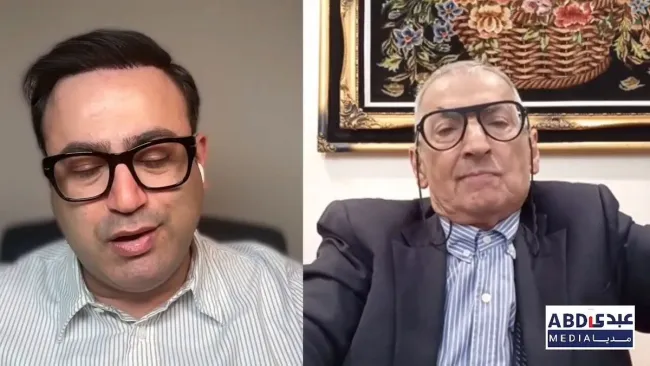
Zibakalam: The main reason for Tajzadeh remaining in prison is that he addressed the Leader personally.
Khatami, Mar'ashi, Aref, and... also do not dare to voice the things Tajzadeh says.
Read more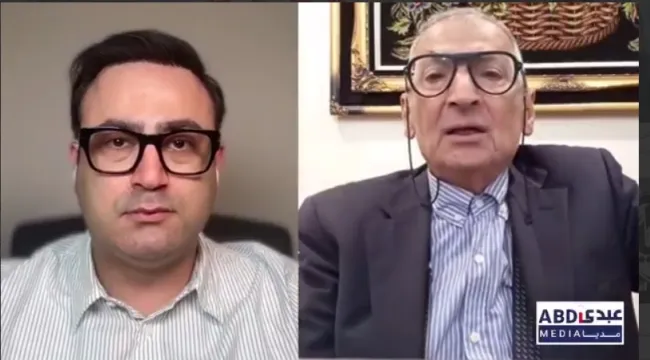
Sadegh Zibakalam's narrative of the memorial service for Mostafa Tajzadeh's brother
Zibakalam: The establishment and the officials were not very pleased with the welcome/reception (shown by) the people and the famous figures.
Read more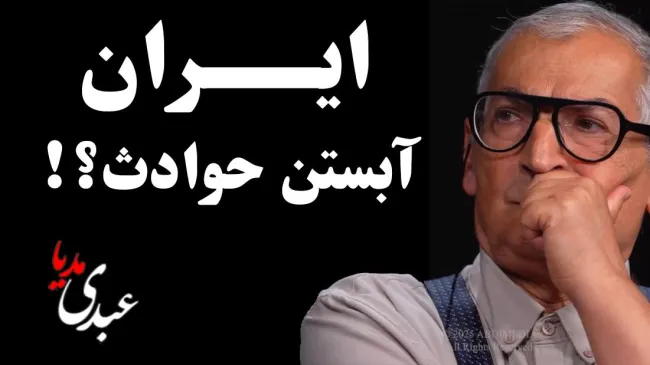
See: Iran pregnant with incidents?! With the presence of Dr. Sadegh Zibakalam, professor of political science at the university
Read moreLive Tonight / Iran Pregnant with Events?! With the presence of Dr. Sadegh Zibakalam, Professor of Political Science at the University
19:30 Iran time
Read more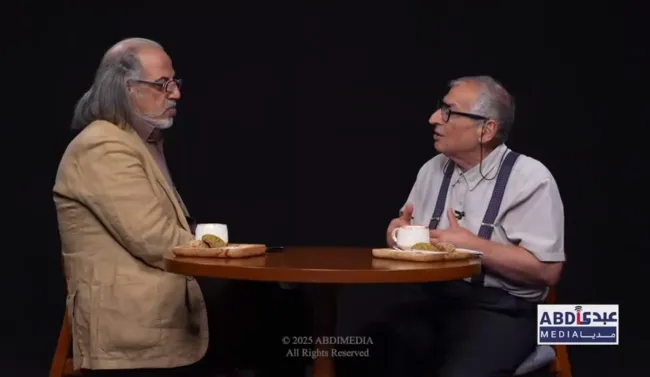
Tonight on Abdi Media: Simorgh | Intellectuals, Power, and the Deadlock of Republicism in Iran
Conversation between Mehdi Motaharnia and Sadegh Zibakalam
Read more
Tonight on Abdi Media: Water and Natural Resources Crisis
Conversation between Mohammad Darvish, environmental activist, and Ataullah Ebrahimi, head of the Soil Conservation and Watershed Management Research Institute
Read more
The future of monarchy in Iran: a candid conversation with Dr. Hatam Ghaderi, professor of political science at the university.
Monday at 13:00 Tehran time
Read more
The Future of the Monarchy in Iran: A Frank Conversation with Dr. Hatem Ghaderi, Professor of Political Science at the University of Tehran
Read more
Iran after the war, from the referendum to the regime's reaction. Abdi Media's exclusive interview with Ali Jannati.
Tonight at 22:00 Iran time
Read more
Sadegh Zibaklam: It was us who said from February 5, "We have to destroy Israel!"
The nuclear industry became the tool of the Islamic Republic to confront the West and arrogance
Morteza Alviri: People did not see Ayatollah Khomeini as an external agent
How the referendum is held after subversion is a unanswered question
Read more
Morteza Alviri: If Khamenei stops the referendum, there will be no other way than to collapse
The most desirable for me is to take over the referendum on Mr. Khamenei himself
Read more
Morteza Alaviri: Mir Hossein Mousavi does not find the source of pressure on the government in foreign factors.
If civil society takes shape, the path for demonstrations and marches will be paved.
Read more
Morteza Alviri: Mir Hossein Mousavi believes that changing the current constitution is the right of the people
He believes that the constitution must be formulated and voted in by the Constituent Assembly, whose members are elected by the people.
Read more
Morteza Alviri: Mir Hossein Mousavi's statement is the call for those who found out after the war.
Before the 6 -day war, the process of collapse was to collapse
Read more
Morteza Alviri: Mir Hossein Mousavi does not emphasize the type of future political system
Mr Mousavi says the referendum first should be carried out on changing the current constitution
Morteza Alviri's explicit remarks to Ayatollah Ali Khamenei
Morteza Alviri: I tell Mr. Khamenei to remove the American issue from foreign policy
Read more
Morteza Alviri: The way Mir Hossein Mousavi has drawn is a peaceful and violent way
I do not think subversive currents can strike the sovereignty
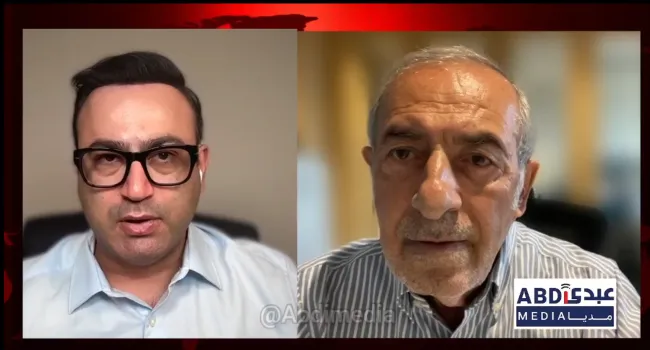
Morteza Elviri: Civil resistance must be formed
In many countries around the world, this process has taken place and the governments have finally gave up the referendum.
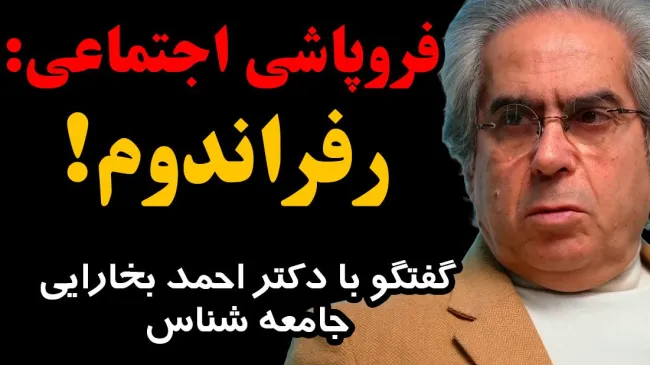
See | Social Collapse: Referendum!
With the presence of Dr. Ahmad Bukhari, sociologist, now on Abdi Media's YouTube channel
Read moreTonight Live | Social Collapse: Referendum!
With the presence of Dr. Ahmad Bukharaie, sociologist
Read more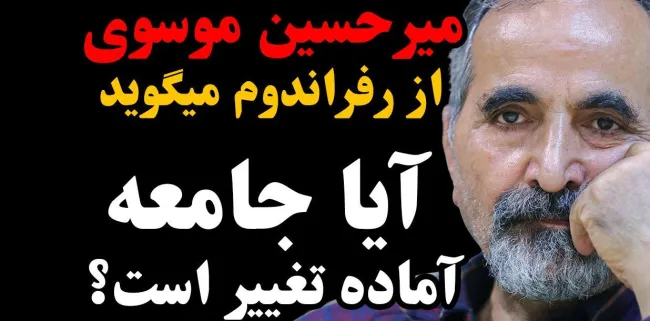
Watch | Mir Hossein Mousavi says about the referendum; Is society ready for change?
With the presence of Dr. Taghi Azad Aramaki, sociologist, now on Abdi Media's YouTube channel
Read more
Just two hours after the last note about the vast, multi-layered but hidden corruption of the Zawiya Financial Group, Abdi Media's fifth YouTube channel was taken down by a cyberattack.
The offspring of the main corruption masters of the Zawia financial group are terrified of YouTube by Abdi Media.
Read more
Now on Abdi Media: Future Iran and Constructions and Disruptions | Simorgh Program | Part Four | Part Two
Note: This episode of the program was produced before Israel attacked Iran.
Read moreTonight on Abdi Media: Future Iran and Constructions and Disruptions | Simorgh Program | Part Four | Part Two
Note: This episode of the program was produced before Israel attacked Iran.
Read more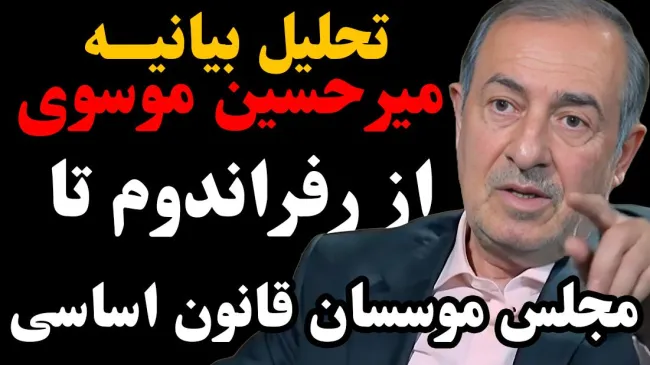
See | Analysis of Mir Hossein Mousavi's statement | From the referendum to the Constituent Assembly
Featuring Morteza Al-Wairi, the politician is now on Abdi Media's YouTube channel
Read moreTonight Live | Mir Hossein Mousavi Statement Analysis From the referendum to the constitutional constituency
With the presence of Morteza Alviri, the politician at 4:50 pm Iran time
Read more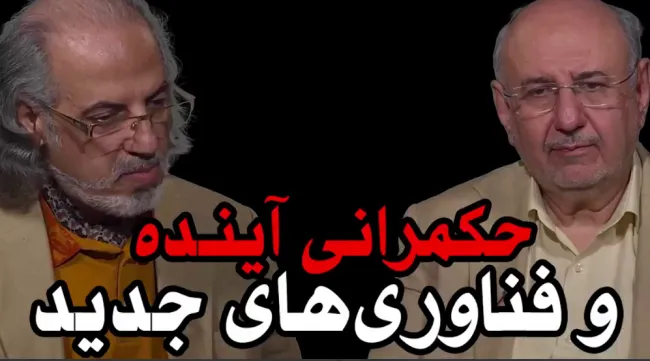
Now on Abdi Media: Future Governance and New Technologies | Simorgh Program | Part Four | Part One
Note: This season has been produced since the Israeli attack on Iran.
Read moreTonight on Abdi Media: Future Governance and New Technologies | Simorgh Program | Episode Four | Part One
Note: This episode of the program was produced before Israel attacked Iran.
Read more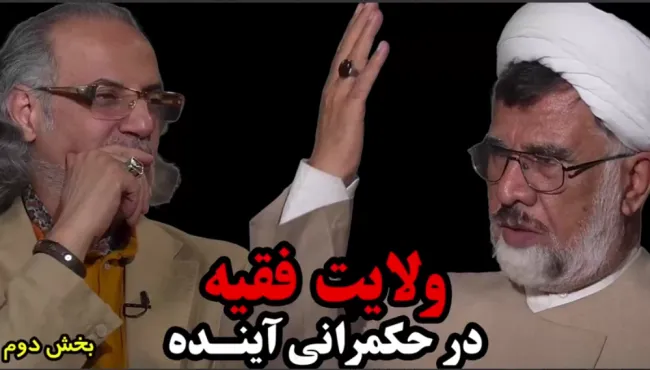
Now on Abdi Media: Velayat Faqih in Future Governance | Simorgh Program | Part Three | Part Two
Note: This episode of the program was produced before Israel attacked Iran.
Read moreTonight on Abdi Media: The Future of Governance; Religion, Hostage of the Government? | Simorgh Program | Part Three | Part Two
Note: This episode of the program was produced before Israel attacked Iran.
Read more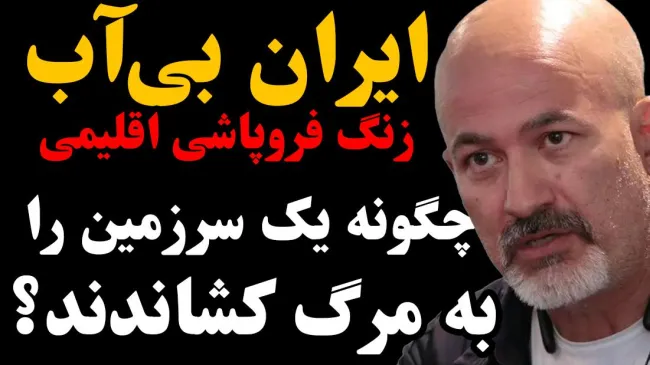
See | Iran without water; the alarm of climate collapse | How did they bring a land to death?
With the presence of Mohammad Darwish, a senior expert in environment, rangeland and watershed management, and environmental activist, now on Abdi Media's YouTube channel.
Read moreTonight Live / Iranless Iran; Climatic Climbing Ring How did they kill a land?
With the presence of Mohammad Darvish, a senior environmental, pasture and watershed and environmental activist
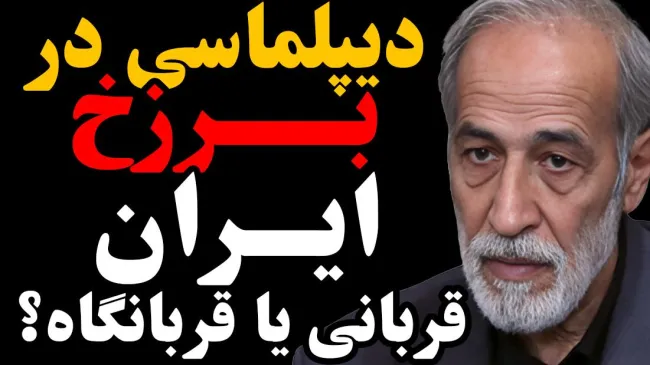
See /Diplomacy in Purgatory | Iran, victim or altar?
Former politician and diplomat and analyst of political and international issues are currently currently on YouTube Abdi Media.
Read moreTonight live / Headline "Diplomacy in Limbo | Iran, Victim or Sacrificial Altar?"
With the presence of Dr. Nasrullah Tajik, university professor, former politician, and diplomat.
Read more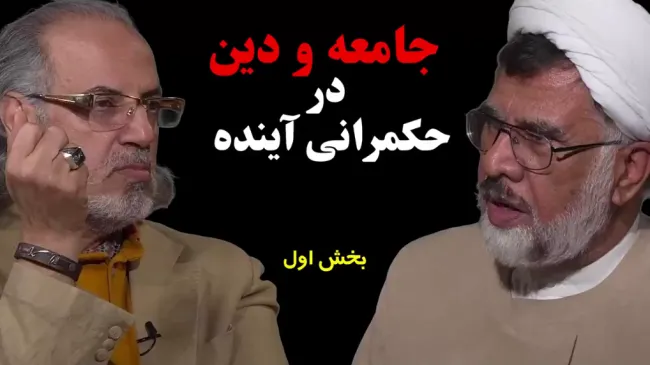
Tonight on Abdi Media: The Future of Governance; Religion, a Hostage of the Government? | Simorgh Program | Episode Three | Part One
With the presence of: Mohammad Taghi Fazel Meybodi
Read more
See | Iran under the razor Nuclear storm, hybrid threat and future national security
With the participation of Dr. Seyed Davood Aghaei, Professor of the Entire Department of Regional Studies, University of Tehran
Read moreLive tonight / Iran Under the Blade | Nuclear Storm, Combined Threat, and the Future of National Security
In the presence of Dr. Seyed Davood Aghaei, full professor of the Regional Studies Department at the University of Tehran.
Read more
35 minutes of breath-taking | The forbidden and deleted part of the controversial interview with Katherine Shakdam | Espionage and Mossad infiltration in Iran
Recording date: March 6, 2022
Read more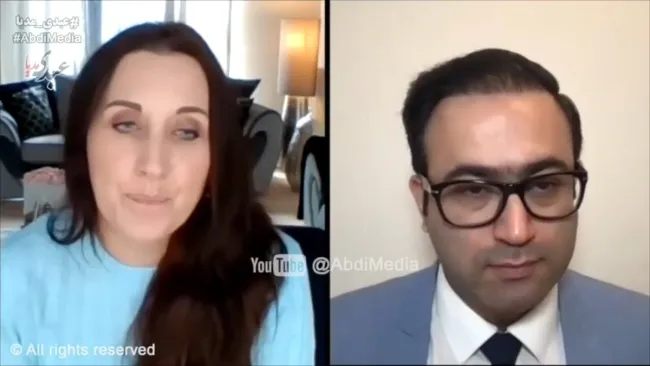
How does Mossad send Swallow to Iran?
Forbidden and eliminated part of the controversial interview by Catherine Black
Read more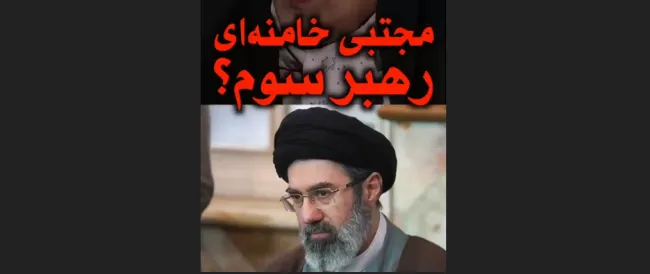
Next leader and future governance Simorgh Program | Part Two | Part II
Faezeh Hashemi: Look, I first remind me that I am not associated with the jurisprudence of the jurisprudence.
Read more
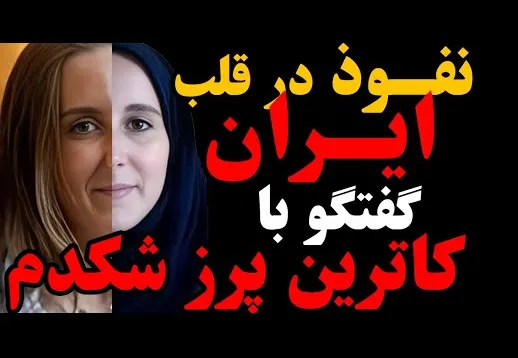
Influence in the heart of Iran Catherine Shukmam says in her most controversial conversation about spy, influence and sexual intercourse
Read more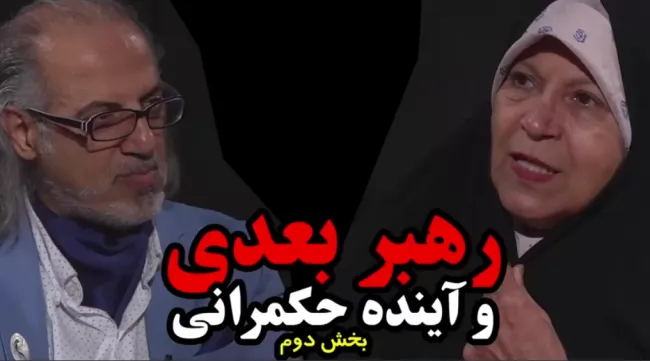
Right now on Abdi Media: The next leader and the future of governance | Simorgh program part two | second and final section
Note: This episode of the program was produced before Israel's attack on Iran.
Read moreTonight in Abdi Media: The next leader and the future of governance | Simorgh Program | Part Two | The second and last part
With the scientific and content collaboration of the Simorgh Future Research School
Read more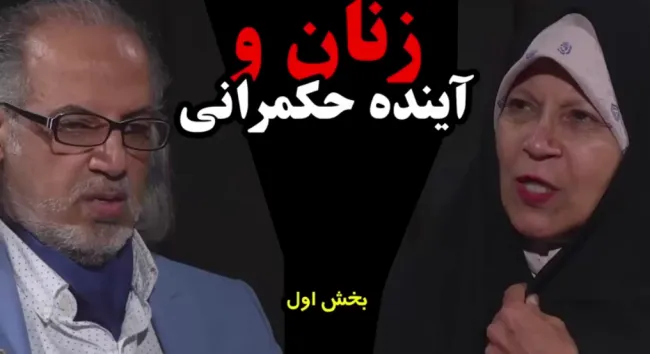
Now in Abdi Media: Women and the future of governance
Note: This season has been produced since the Israeli attack on Iran.
Read more
Thought-provoking words before the war: Mohammad Taqi Akbarnejad: Today, there is only one thing left that can bring us together. No longer can God, nor the Quran, nor Islam, nor religion bring people together. Only Iran can bind us all together.
A Controversial Conversation | Now on Abdi Media: The Leadership Succession Crisis, the Future of Governance and Jurisprudence - Part One - Part Two
Read more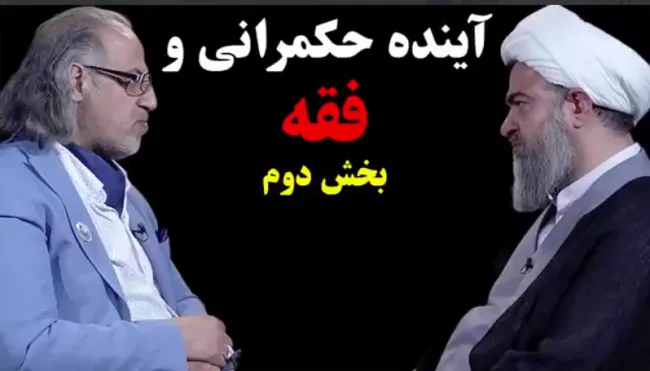
Now in Abdi Media: Crisis for Substitution of Leadership, Future of Governance and Jurisprudence - Part I - Part II -
Note: This season has been produced since the Israeli attack on Iran.
Read more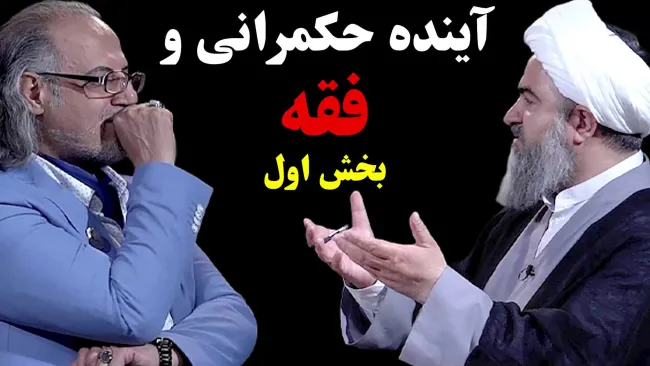
Now on Abdi Media: The Future of Governance and Jurisprudence Part One
This season of the program was produced before Israel attacked Iran.
Read more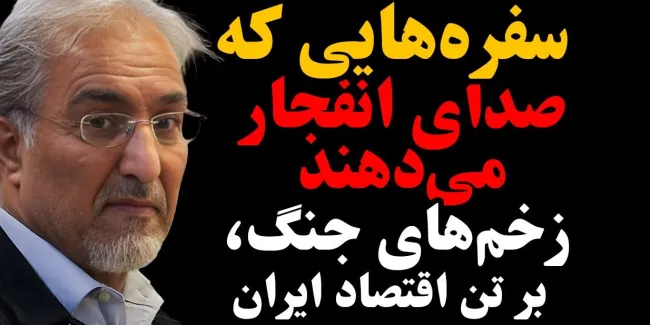
See | The tables that sound the explosion; Wounds of war on the Iranian economy
With the participation of Dr. Hossein Raghfar, economist and university professor, now on the YouTube Channel of Abdi Media
Read more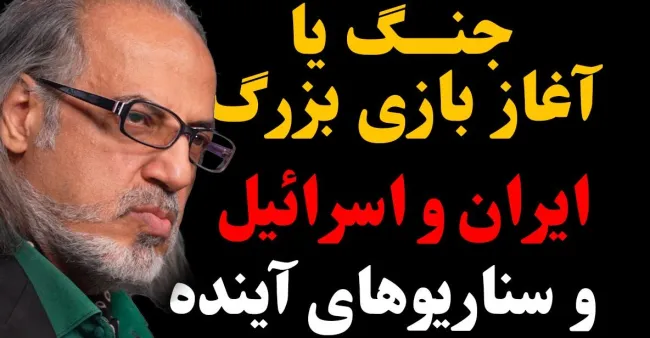
See | War or start the big game; Iran and Israel and future scenarios
Dr. Mehdi Motaharnia, Head of Simorgh Future Thinking, University and Political Future School now on YouTube Abdi Media Channel
Read more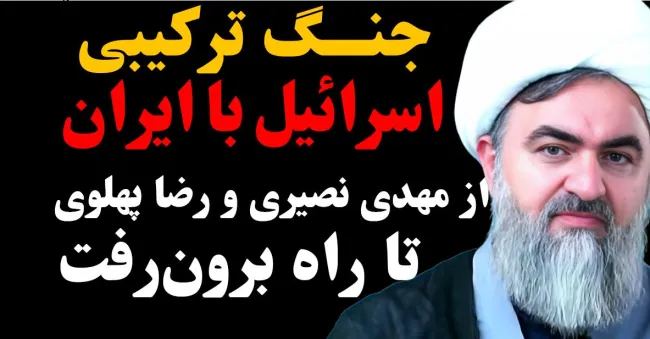
See | Israeli combined war with Iran; From Mehdi Nasiri and Reza Pahlavi to the way
With the presence of Hojatoleslam Mohammad Taqi Akbarnejad, a lecturer in Qom seminary, now on the YouTube Channel of Abdi Media
Read more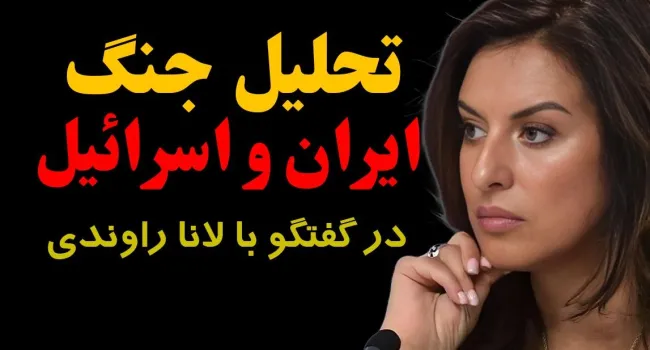
See | Analysis of the Iran -Israel War in a conversation with Professor Lana Ravandi Fada'i
Currently on the YouTube channel Abdi Media
Read more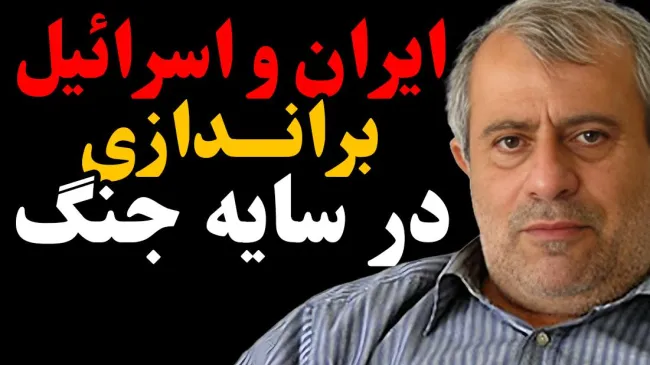
See | Iran and Israel, overthrowing the war in a conversation with Hassan Yousefi Eshkouri Religious Pajouh and author
Currently on the YouTube channel Abdi Media
Read more
See | Where will the developments in the Iran -Israeli war, Russia and the Arab world stand
Interview with Ruslan Soulimanov, a reporter, CBC presenter, former Dice senior correspondent in Cairo and Orientalist with Amir Chahaki, International Relations Analyst
Read more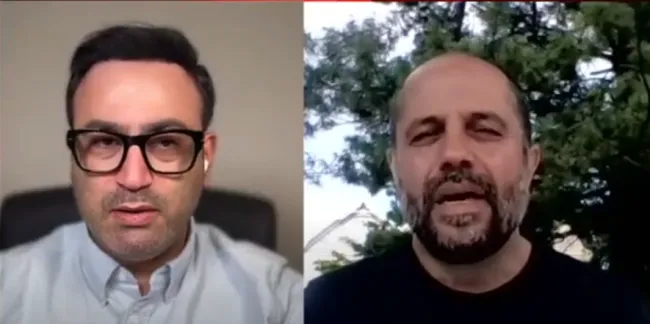
See | Developments of the Iran -Israel War Dialogue with Abdi Media Conversation with Republican political activist Ali Afshari
Currently on the YouTube channel Abdi Media
Read more
See | Developments of the Iran -Israel War, look at the status of nuclear facilities
Abdi Media Interview with Dr. Mehran Mostafavi
Read more
See | Developments of the Iran -Israel War with Ramin Parham
Currently on the YouTube channel Abdi Media
Read more
See | Russia's role in the Iran -Israel war
In a conversation with Amir Chahaki now on the YouTube Channel of Abdi Media
Read more
See | Scenarios ahead of the Israeli -Iran war
Dr. Mehdi Motaharnia, Head of Simorgh Future Thinking, University Stand and Political Future
Read more
See | Mossad's influence in Iran; Iran and Israel in the final battle with Taghi Rahmani, author and political activist
Currently on the YouTube channel Abdi Media
Read more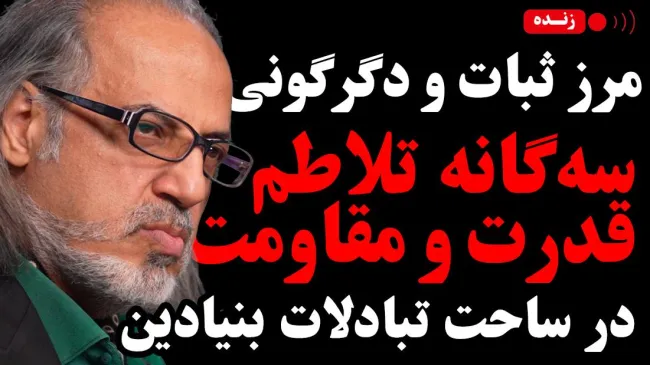
Tonight Live / The Border of Stability and Change: The Trilogy of Turbulence, Power, and Resistance in the Realm of Fundamental Exchanges
With the presence of Dr. Mehdi Mathehnya, president of the Simorgh Future Studies Institute, university professor, and political futurist.
Read more
See | Mohammad Soroosh Mohalati's unprecedented and harsh criticisms of Ayatollah Khamenei
Currently on the YouTube channel Abdi Media
Read moreSee | The Inescapable Future of the Islamic Republic; from Protesters to Transfer of Power
A conversation with Faezah Hashemi is now on the YouTube channel Abdi Media.
Read moreLive Tonight / The Inescapable Future of the Islamic Republic; From Protesting People to the Transfer of Power
With the presence of Fa'ezeh Hashemi
Read more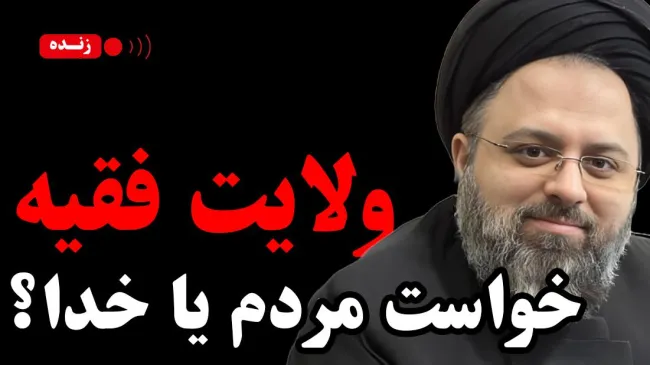
See | Velayat-e Faqih; the will of the people or God?
With the presence of Seyyed Mohammad Hossein Mirlohi, a researcher of Islamic knowledge and the Revolution, currently on the Abdi Media YouTube channel.
Read moreTonight Live / Guardianship of the Islamic Jurist; The Will of the People or God?
In the presence of Seyyed Mohammad Hossein Mirloohe, researcher of Islamic teachings and revolution.
Read more
See | From negotiations to protests? Iran on the path of immense turbulence
With the presence of Dr. Mehdi Mathernia, Head of the Simorgh Future Studies Research Institute, university professor, and political futurist, currently on Abdi Media's YouTube channel.
Read moreLive Tonight / From Negotiations to Protests? Iran in the Path of Tremendous Turmoil
With the presence of Dr. Mehdi Mathehnya, president of the Simorgh Future Studies Institute, university professor, and political futurist.
Read more
See | Filtering and governance of the cyberspace; Is control possible?
Conversation with Dr. Seyyed Abolhasan Firouzabadi
Read moreTonight / Filtering and Governance of the Virtual Space; Is Control Possible?
Conversation with Dr. Seyyed Abolhasan Firouzabadi
Read more
See | The mantle of absolute authority; lifelong, hereditary or a divine deposit?
With the presence of Seyyed Mohammad Hossein Mirlohi, a researcher of Islamic knowledge and the Revolution, currently on the Abdi Media YouTube channel.
Read moreTonight live / The mantle of absolute sovereignty; lifelong, hereditary, or divine trust?
With the presence of Seyyed Mohammad Hossein Mirloohi, a researcher of Islamic teachings and revolution.
Read more
See | Trump's dangerous dream for Tehran; an American nightmare or a big strategy?
With the presence of Dr. Mahdi Motaharnia, the head of the Simorgh Future Studies Institute, university professor, and political futurist, currently on Abdi Media's YouTube channel.
Read more
Live tonight / Trump's dangerous dream for Tehran; American nightmare or big strategy?
With the presence of Dr. Mehdi Mathehnya, president of the Simorgh Future Studies Institute, university professor, and political futurist.
Read more
See | Unpublished interview with Mir Hossein Mousavi about war and diplomacy | Released for the first time
Currently on the YouTube channel Abdi Media
Read more
See | Russia's role in the Iran-U.S. nuclear agreement
With the presence of Elaheh Koulai, professor of Regional Studies at the University of Tehran, currently on the Abdi Media YouTube channel.
Read more
See | Who gave the order to Ayatollah Khomeini on 22 Bahman?
Conversation with Gholamali Haddad Adel, a member of the Expediency Discernment Council, is now on the Abdi Media YouTube channel.
Read more
Live Tonight / "Russia's Role in the Iran-US Nuclear Deal"
In the presence of Dr. Elaheh Kolayi, Professor of Regional Studies, University of Tehran
Read more
Watch | Mohammad Reza Pahlavi's rare and shocking news conference on oil, inflation and economic issues
Currently on Abdul Media's YouTube channel.
Read more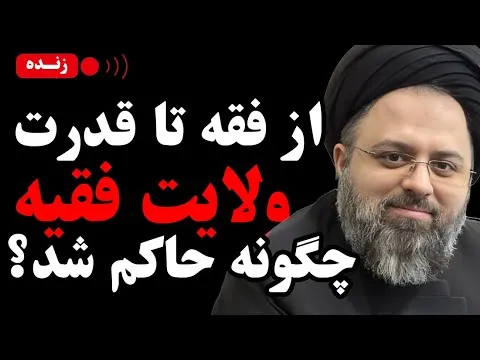
See | From jurisprudence to power; how did the rule of the jurist come to be?
With the presence of Seyed Mohammad Hossein Mirloohi, a researcher of Islamic knowledge and revolution, currently on the Abdi Media YouTube channel.
Read more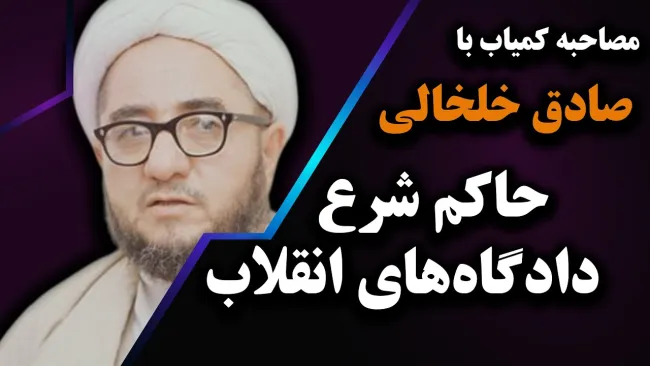
Watch | Rare interview with Sadegh Khalkhali; the Islamic judge of the Revolutionary Courts
Currently on the YouTube channel Abdi Media
Read more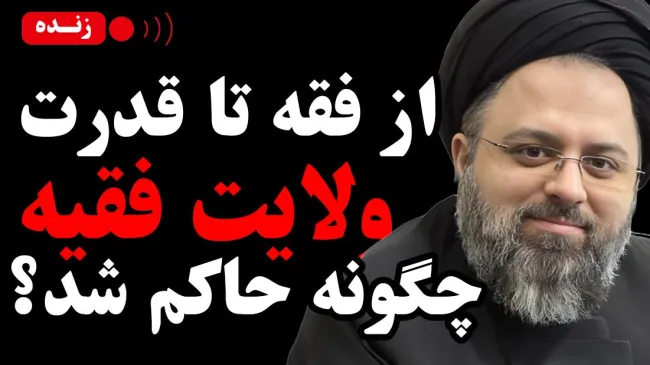
Live tonight / From jurisprudence to power; how did the rule of the jurist come to power?
In the presence of Seyyed Mohammad Hossein Mirloohe, researcher of Islamic teachings and revolution.
Read more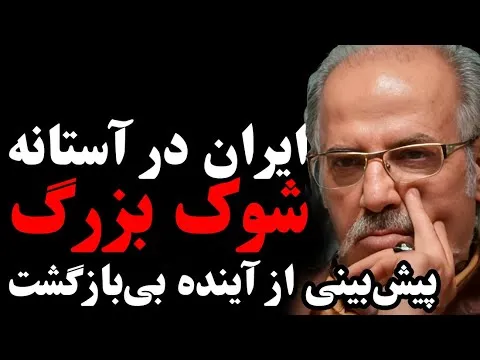
See | Iran on the verge of a great shock; a prediction of an irreversible future with Dr. Mehdi Motaharnia, head of the Simorgh Future Studies Center, university professor, and political futurist.
Currently on Abdul Media's YouTube channel.
Read moreMost Read
Popular reads across Abdi Media