
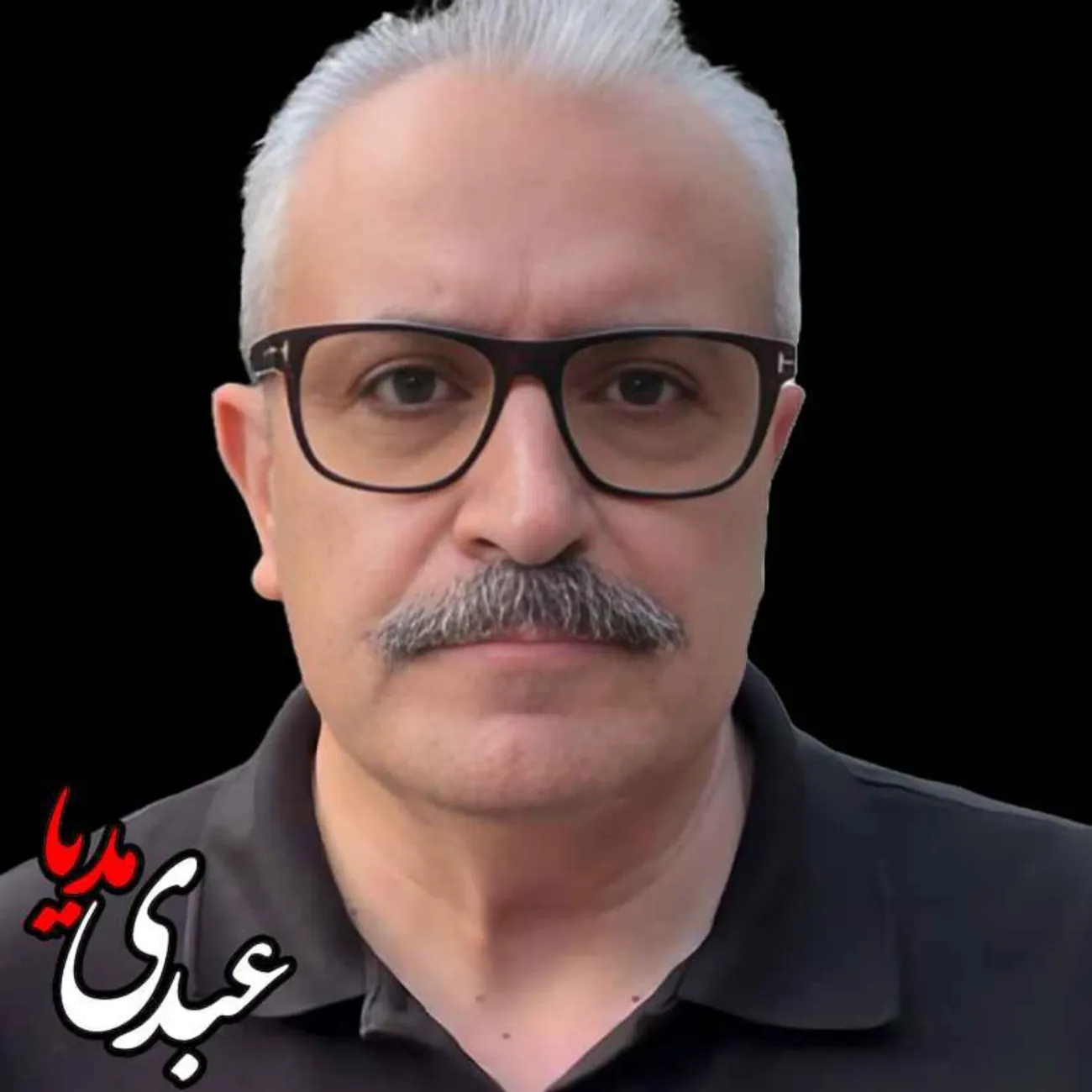
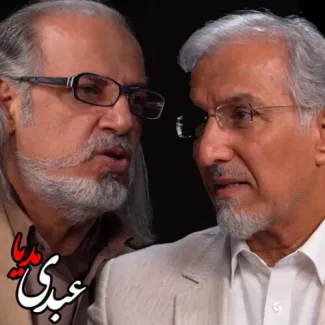
The water, which once was the life of the Iranian plateau and the glory of civilization, is now caught in the mismanagement, corruption and failed policies. The sources of Karun, Zayandehrood and Hirmand have become dry lines on paper, and the huge wetlands and lakes of Iran have become desert and desert centers. In this program, we will examine this crisis and the prospects for rebuilding this expensive heritage with Nick Kosar, an explicit water and environmental analyst.
The beginning of the water crisis; From the source to the dryness of the Iranian plateau
Abdi Media: The water of this essence of life, which was once the source of the Iranian plateau civilization, today was captured by Somay Management, corruption, political ambitions, and security and military interference, which turned into the branches of Karun, Zayandehrood and Hirmand into a line on paper? What happened when the 1,000 -year -old rituals of this Iranian engineering masterpiece became a cemetery of cracked tunnels? What happened when the Gavkhuni Wetland, Lake Urmia and Hamoon, which were once the habitat of thousands of animals, became the focus of deadly microbes? What happened to politicians, instead of responding to the land, called divine fate and shunned responsibility? What happened to the people of Khuzestan Karun's Diar with water tanker? What happened to Iran the land of rivers and electricity became one of the most thirsty lands in the world? What happened to my tonight's program. Tonight I don't need to introduce Nick Kosar Tonight Hosts one of the most explicit analysts in the field of water and environment in Iran. He is a journalist. If water is the basis of Iranian civilization today, we talk about the bankruptcy of the blue, should we consider this bankruptcy the end of a civilization or is there a hope for rebuilding?
NikAhang Kowsar: Before talking about blue bankruptcy, let's know what the water bankruptcy that Kaveh Madani wrote many years ago, when the debt exceeds the amount of assets, if the amount of water we promised is more than our inventory, we would go bankrupt. The creature is very damaged and we cannot promise more water, but we also promise to supply water this area for another part of the water for plumbing, the farmers want to harvest from the depths of water resources, the more the land is destroyed, the environment is not the environment. Three thousand years ago, and many of the places that became a converting to the central plateau of Iran were created with water and destruction.
That is, if we look at the simplest words in Farsi with A and B, one of the last letters of the bread is that we have turned the bread into a unrest and the destruction of the land, so with this blue bankruptcy, with the rejection of reality and the continuation of the status quo of other civilization, it is meaningless.
Water crisis; tension, bankruptcy, or mismanagement?
Abdi Media: Let's talk about the crisis. Many discussions are raised about the crisis. The officials who are in charge have made various statements. I basically think that any issue should be viewed from different angles; otherwise, we cannot accurately understand who is right. I will try to provide this information to the public. Is the subject of the crisis a product of climate change or a direct result of mismanagement or structural corruption? What is the result of this crisis?
NikAhang Kowsar: You cannot qualitatively assess a crisis; there are numbers for water tension, there are classifications for shortages, but there are no numbers for a crisis. In a crisis, a story is described, and using the word 'crisis' may mislead us. We have become numb to the word 'crisis'.
General Numbness Toward the Water Crisis
Abdi Media: Words have lost their function. So many jokes have been made about the crisis that its effect and sensitivity have faded.
Nikahang Kowsar: Exactly. It’s as if we’ve been vaccinated against the issue and its understanding. We are in a situation that we cannot easily get out of, our lives have become harder, and things are moving in a direction where we do not see a bright future ahead of us. What is clear to me is that some people realized this sooner, some later, based on evidence. I had the chance, since childhood, to be present alongside my father on water projects. Today, I even wrote a simple memory on Twitter—a text my father had given me to translate, so I would become more aware and engaged with the issue. But for reasons of my own, since I did not want to become an “alchemist’s child,” I was drawn toward another side of media and cultural work.
In Memory of the Father of Modern Aquifer Management
Abdi Media: While honoring his memory, I began this program in his name. He is among Iran’s treasures, one of those who worked hard for Iran. He is remembered as the father of modern aquifer management in Iran. His efforts are enduring, and it is my honor to speak with the son of that great man. It seems that we have also fallen short in commemorating the late Mr. Kowsar—wherever it is needed, you should remember him.
Nikahang Kowsar: When we returned from the United States to Iran in 1976, my father had received his PhD. He was teaching and researching. At the time of the Revolution, in order to avoid taking a governmental post and to continue his research, we left Tehran. I remember Dr. Izadi and Dr. Sheibani spoke with him about working within the structure of the Ministry of Agriculture, hoping he would later receive a higher position. But he fled from that, because he believed he had studied and researched in order to serve, and service, for him, was not tied to holding a post.
We lived in Nourabad Mamasani, in an area called Jounagan, 15 kilometers south of Nourabad, and in the surrounding villages. They carried out a flood-control project—preventing destructive floods and allowing the water to be absorbed into underground aquifers. This was a continuation of what our ancestors had done for thousands of years in “bandsars” (traditional floodwater harvesting systems), but modeled and integrated with newer scientific methods, like those used in Australia, creating a new framework.
This framework made it possible, in different parts of Iran, wherever there were coarse alluvial deposits and floods, to manage part of the flood—while considering environmental water rights—and replenish groundwater aquifers. This was contrary to what happened after land reforms, when groundwater exploitation with motor-pump wells accelerated, and many qanats dried up. His vision and intention were to save groundwater resources.
I remember the discussions at the time, and I would learn the calculations made by engineers and the teams involved. But I always wondered: why were officials creating obstacles for this research project? Wasn’t it in their interest?
In 1983, my father was practically dismissed—they cut off his salary. At the age of 47, he suffered a minor stroke. A blue pickup truck in Shiraz hit him, and he almost died. Some people think these things were accidental, but I don’t believe they were. He was on a path that was contrary to what we know as the structure of the Ministry of Energy and the “water mafia.” The term “water mafia” wasn’t widely heard then, but it took shape more after 1989.
In 1988, my father received a text—if I recall correctly, it was sent by Mr. Engineer Karbassi from FAO in Rome. He gave me a copy to translate. Using specialized books and dictionaries, I tried to produce an accurate translation. When the translation was complete and my father edited it, I later realized the purpose was to inform the country’s officials about the matter. He also wanted to draw me into it, so I could contribute to the service he was pursuing.
In November 1988, during a cabinet meeting, he explained to Mir-Hossein Mousavi and the ministers that, based on research in that document, from 1988 to 2000, certain climatic conditions should be expected in the Middle East, and afterward, how Middle Eastern countries would face the new climate realities. He had proposed that instead of focusing on dam construction, groundwater aquifers across different regions should be strengthened, to gain control over water resources, recharge supplies, and guide agriculture toward reduced water consumption.
The report emphasized that in Iran, areas receiving 250 mm of rainfall per year were suitable only for light grazing, not agriculture. He pointed out that, even in such areas, with proper water resource management, agriculture adapted to climate conditions could still be feasible. From that time, he told the governing managers that we must take climate change seriously.
When Akbar Hashemi Rafsanjani became president in 1989, policy shifted toward dam construction. The Khatam al-Anbiya Headquarters, part of the Revolutionary Guards, which had been frustrated at the end of the war but had engineering branches, found a path to contribute to “reconstruction” by entering various activities. Those who had once climbed the walls of the U.S. Embassy—engineers under Mr. Mousavi Khoeiniha—founded the Water and Power Development Company of Iran.
Many might assume the Revolutionary Guards had no common interests with the left-wing faction of the Islamic Republic, but the dam construction boom from 1989 onward proves they were good partners. At that time, consulting firms—for instance, Astan Quds Razavi and the Ministry of Energy—“married,” and their “child” was Mahab Ghods, while other consulting firms partnered with contractors. Projects that had been shelved or even rejected before the Revolution were suddenly revived, fast-tracked, and approved—without environmental, social, economic, or cultural heritage assessments. One dam inauguration after another followed. They were designed in such a way that Rafsanjani would always be present with scissors and ribbon for the photo-op. As my late father used to say, “a dam is a photogenic element,” and leaders of the Islamic Republic loved to be photographed next to them.
This disease of unchecked dam construction without environmental assessment continued and even intensified under President Khatami’s administration (1997–2005).
Dam Construction: Between Development and Threats to Water Resources
Abdi Media: Dam construction is a huge business. It requires vast equipment—both in terms of infrastructure and facilities. How much is the estimated cost of building a dam? What is the financial volume of a dam project?
Nikahang Kowsar: It’s not just about dam construction—inter-basin water transfer is also at issue. Inter-basin transfer means that you build a reservoir or dam, and then, due to elevation differences, move the water from point A to point B. The method of ancient Greece was to build reservoirs in highlands and create aqueduct systems that transported water to cities. In southeastern Rome, there is a park called the “Park of Aqueducts,” where modern aqueducts have been built.
The interesting point is that aqueduct systems are expensive and ultimately unsustainable. Qanats, however—sometimes seen as underground aqueducts—have proven to be very sustainable, as they are adapted to the region’s climate and soil conditions. Of course, qanats belong to a time when water consumption was far less than today. That means we needed advances within frameworks appropriate for the present.
Dam construction itself has multiple phases. Dr. Madani and other experts can explain phases from zero to five—some even add a last phase: the phase of destruction. Ultimately, before building a dam, the first step must be to examine water resources in the basin. What happens downstream once the river is dammed? You block a river’s natural flow—sometimes to create a larger reservoir, or to regulate flow throughout the year, or even to create a recreational lake.
For example, when the Shah of Iran went to Las Vegas in 1949, after his initial gambling, he gambled bigger by visiting Hoover Dam. He fell in love with the system: a dam built on the Colorado River that generated electricity, developed desert areas, and transferred water across basins into California. This allowed water-scarce areas to develop and populations to grow. When the Shah returned to Iran, then came Truman’s Point Four Program and other initiatives—American and international institutions, including the IMF, stepped in to help. The Shah wanted dams of his own: Dez Dam, Manjil Dam, Karaj Dam, Latian Dam, and so on.
They say a “big rock means you won’t hit it,” but a “big dam means you’ll definitely build it.” You can’t really put a fixed price on building a dam—it depends on the type of dam, geology of the region, tunneling needed to divert water, excavation for the foundation, whether it’s concrete, single-arch, or double-arch.
Unfortunately, the dams built in Iran have helped bankrupt us. The problem was that there were no accurate calculations about where they should be built. Factors such as evaporation rates, geology, water seepage, and leakage were not properly considered. People don’t know how much leakage there is from the Karkheh Dam—caused by miscalculations.
Dams are created at different costs, but usually the evaluation that takes place until the dam is made of computing costs, the price of some dams is above a billion dollars, but the exact figure due to the dollar's price fluctuations was part of the processes with special subsidies, but we cannot know the exact figure, Al -Malm has been taken over $ 3 billion. Some of the money in the context of Khatam's camp actually gave many projects to smaller contractors, but we do not know, but based on discussions and investigations a few years ago, we wrote a lot of money from Shahram Khani and Kambiz Ghafouri to the United Nations. You know.
Corruption, Power, and Money in Water Management
Abdi Media: When money and military institutions are involved, water, electricity, and the health system are also in the picture. Wherever there is money, there is power alongside it. And surely these two cannot exist together unless the third—corruption—is also present. This is natural: money, power, and corruption stick together. From a human rights perspective, let’s also talk about water. A crisis does not emerge overnight. A crisis, as such, is the product of many years. I ask you to speak about water as a human right. Has Iran’s water rights been respected in different regions?
Nikahang Kowsar: That’s a very good question, and I thank you for it. When the Universal Declaration of Human Rights was drafted and later adopted, in order to give it binding force, two important covenants were written and signed by different countries and UN members: the International Covenant on Civil and Political Rights, and then the International Covenant on Economic, Social, and Cultural Rights. Over time, based on the provisions of the latter, water and sanitation were recognized as human rights. After years of negotiations, when Ban Ki-moon was UN Secretary-General, in 2010 the right to water was officially defined as a human right. UN member states are obligated to provide safe and sufficient water to their people without discrimination.
The painful reality in our country is that discrimination exists. You can see that if the people of Tehran are thirsty, water will be transferred to the city by force if necessary, from other basins. But if the people of Sistan and Baluchistan—in the Dashtiari region—are thirsty, not only does the government ignore them, but much of the population in other parts of the country is also indifferent to their rights. In Qeyzaniyeh, a region that from the perspective of the oil industry is one of the wealthiest in Iran, from the perspective of water it is one of the poorest. There is also the phenomenon of water theft, carried out by human “water thieves”—taking water from one basin and transferring it to another, usually to entities with greater political, economic, financial, and lobbying power.
In 1951, and afterward, water from a Karun River spring was diverted toward the Zayandeh Rud. Many did not believe this would negatively affect the source. But with climate change, reduced snowfall, higher temperatures, greater evaporation, population growth, increased water demand, and the expanded transfer system to the Zayandeh Rud, major conflicts emerged between the people of the Karun basin and those of the Zayandeh Rud basin. We have mostly heard of this issue in the context of Chaharmahal and Isfahan. But I want to emphasize: we must look at this issue basin by basin, because watershed boundaries are natural, not man-made, not drawn on maps by political equations.
When the Ottoman Empire collapsed and the British and French divided territories, it was based on political arrangements. But in reality, if a drop of water in this side of Kouhrang flows toward the Karun, on the other side it flows to the Zayandeh Rud—the ridge determines the boundary. What happened was that the share of water that should have reached the Karun basin was diverted to the Zayandeh Rud, and as the population grew, relative abundance led many to believe they could expand agriculture. Industry developed, tourism flourished, and the Zayandeh Rud basin became one of the Middle East’s most important tourist centers.
But we must remember: water acts like a magnet for population, and so the population increased. During the Iran-Iraq War, many people from Khuzestan migrated to Isfahan. People who once belonged to the Karun basin moved to the Zayandeh Rud side. Gradually, the balance that had existed was disrupted. They said again: take more water.
Another issue was Yazd. They saw their water resources were limited, and for growth and development, they needed more. So in 1983, Mr. Khatami approached Prime Minister Mir-Hossein Mousavi. Later, Khatami’s father lobbied. Mr. Bitaraf, who after climbing the walls of the U.S. Embassy later held various posts and eventually became governor of Yazd, conducted negotiations with the governor and officials of Isfahan. Everyone agreed: a share of the Zayandeh Rud should be given to Yazd. It seems Ayatollah Taheri also financially supported this project. But the people of Isfahan were never asked for their opinion. And when water was diverted from the Karun basin to the Zayandeh Rud, were the people asked? No. So in practice, the country’s leaders don’t count the people—except when they need their votes in elections.
Corruption and Rent-Seeking in Water Management
Abdi Media: The assumption is that people don’t have the right analysis.
Nikahang Kowsar: The story is that decisions are made top-down, based on interests or what they think is right. Mr. Khatami and his team laid the groundwork during Mr. Hashemi Rafsanjani’s presidency. Mr. Bitaraf, who was in the Water and Power organization, helped make this plan feasible. And when Mr. Khatami became president, the project was practically implemented, and water theft took place.
There are multiple “water theft” projects. For example, in Rafsanjan, when friends and influential people planted pistachios and extracted enormous amounts of groundwater without any regulation, Mr. Rafsanjani did not prevent it—because they said: “Don’t worry. Once the water runs out, we’ll transfer water from the Karun basin, the Zagros, or the Vanak region to Kerman.” Reportedly, pipelines had already been prepared. Ardakanian, who later became Minister of Energy, assisted in the calculations. Every president tried to bring more resources to his own region. Mr. Ahmadinejad and Mr. Rouhani seriously pursued the idea of transferring water to Semnan. When Mr. Raisi became president, the issue of transferring desalinated water to Razavi Khorasan was raised. Keep in mind, rent-seeking and favoritism have always existed in our country—we’ve seen the most striking examples of this.
My emphasis is that people’s rights were violated. Projects were executed without considering the damages and harms they caused. This is where the concept of environmental justice comes in. We must consider that when a project is implemented, the risks, harms, negative impacts, and benefits should be distributed fairly. How is it that one region suffers damage while another enjoys the benefits?
For instance, when the Karun-3 Dam was built, around 10,000 people living within the reservoir area were forced to migrate, moving to the Dez or Izeh regions. But gradually, social crises emerged in Izeh. Look at when the rate of suicide in Izeh began to rise. Whenever nationwide protests take place, check which city has definitely seen casualties. Since 2017, if you compare different cities across Iran, Izeh’s name is always at the top.
When the Karun-3 Dam was built, there were heavy lobbies from the Water and Power establishment and also Mahab Ghods Consulting. What impacts did it have? For example, they argued it was to provide more water for sugarcane cultivation—yet sugarcane is a crop that requires extremely high rainfall, which Khuzestan does not have. The result? Massive amounts of water, after the cultivation process, re-entered the Karun River in a much saltier form, degrading the river’s quality.
Then came the Gotvand Dam. As early as the 1980s, experts from the consulting firm Halça warned that no structure should be built below the salt mountain—or, if one had to be built, the dam’s water level must not reach the salt deposits. But later, before the Revolution, foreign engineers proposed locations that, after the Revolution, became the selected sites. Why? Because at the time, the president insisted that any approved project had to be the “biggest” and the “longest.”
Criticism of Dam Construction Without Environmental Consideration
Abdi Media: It had to be done in such a way that it made noise.
Nikahang Kowsar: The so-called “construction era” (Sazandegi) practically inflicted this disaster on our country. The projects implemented then—my friends at Hamshahri newspaper were in charge of advertising them (I don’t mean Mr. Lili’az himself and his team)—were all justified by books portraying Mr. Rafsanjani as the new Amir Kabir. But the reality is this: no consideration was given to long-term impacts on the environment, society, or economy.
I don’t put the main blame for unsustainable development on social silence—I put it on the press. Because the media played a major role in misleading public opinion away from the truth. Even now, it still plays that role well.
Let me ask a question: take the Water and Power Resources Development Company (known as Ab va Niru). Who was its public relations director from 2004 to 2010? During his tenure, what dams were built? And how much were people actually informed about their consequences? I’ll leave this as a “20-questions” challenge.
The Media’s Role in Misleading Public Opinion
Abdi Media: Let’s start by naming him.
Nikahang Kowsar: His initials are “M.V.” When I asked veteran economic journalists recently for a research project about the role of the media, one told me: corruption among economic reporters and editorial desks contributed significantly to shaping the pro-dam and water-transfer discourse.
How much money, gift cards, or perks ministries handed out, I don’t know—the information is hard to obtain. But the fact remains. A few years ago, a well-known economic journalist admitted that when the PR head of Ab va Niru took them to the Karun-3 inauguration, he himself wrote three separate articles about it in his paper. I asked him directly: “How much did you pocket?” He stayed silent.
This is not just about human rights violations by the state structure; it’s about a network of people who collude for their own interests. We need a truth commission. I believe journalists, editors, section chiefs, ad managers—anyone who wrongly took money from public funds to justify environmental destruction—must now admit: “Yes, this was our mistake. This was our role.” Only then can we move forward.
Journalists Under Pressure and Threats
Abdi Media: You yourself are a journalist—you know very well that journalism in Iran is a truly oppressed profession, especially for those still working inside the country. I am familiar with the things you’ve said—I’ve witnessed them, and I confirm your words.
Nikahang Kowsar: So you don’t deny it.
Abdi Media: I can’t deny reality. But I must point out that many of our colleagues in Iran are indeed honest and clean-handed. Despite repeated offers to sell out to power, wealth, and influence, they have stood firm and continued to write sincerely.
Nikahang Kowsar: I confirm what you’re saying. I’ve spoken with people I knew were clean-handed—if they weren’t, I wouldn’t have been able to gather info about the corrupt ones. But let’s not forget: many corrupt media figures, even outside Iran, still keep up this distortion of reality.
The Penetration and Corruption of Opportunistic Journalists
Abdi Media: No doubt about it. Some kinds of “penetration” are opportunistic—people who willingly dance to the tune of corruption to become accomplices. Others gradually get drawn in. Money is the key driver behind many projects. Recently, I was investigating a shocking corruption case where even people posing as opposition figures defended the project—while Mehr News Agency (a pro-regime outlet) also defended it. Totally different political currents, yet united by money.
That’s how you know: money leaves fingerprints. Unfortunately, every profession suffers from such problems, especially in an economically devastated Iran. Poverty doesn’t justify corruption, but it explains the temptations. Still, I can swear that many journalists—despite heavy pressures, threats, and repeated offers by security agencies—have refused to sell their pens. They try bribery first, then intimidation, but some reporters remain unbought.
A Call for Truth in Journalism
Nikahang Kowsar: Please list for me all the critical articles written about dam-building and water management in the Iranian media since 1979. What resources were given to journalists to investigate and tell the truth? Maybe I’m wrong. But take Gotvand Dam—why did no one talk about the salt issue before 2010?
Abdi Media: Two possibilities. First, specialized journalism in Iran is very recent. If I want to count water reporters, they barely fill one hand. Second, back then people were swept along by the propaganda machine of state TV. When IRIB said a dam was being built, everyone thought it was a great national achievement.
Nikahang Kowsar: Reformist papers, Kayhan, and state TV—all spoke with one voice on water. Why should Reformist outlets and Revolutionary Guard outlets be aligned on something so harmful to the public good? The story is huge. Economic reporters were bused to dams. Even environmental reporters rarely had time or funding to cover it independently.
When I studied journalism, we were taught: if you visit a project, you should not rely on funding from the very company running it. You must go independently. Otherwise, you’re compromised. But in Iran, you had no choice—you were always a guest of the company.
My main beat was cartoons, not water. But I wrote about many issues. In 2001, I published several notes on water management. At Norooz newspaper, Saeed Lili’az was an editor for the reformist Participation Front. On the editorial board, there were people from Ab va Niru. I asked Lili’az to publish my critiques—he agreed at first. My first piece was published. My second one was also printed, but soon after, Khatami’s office called me asking for explanations: “Why is Nikahang, the cartoonist, writing about water?”
After the 2001 presidential election, I deliberately brought my father with me to a meeting with Khatami, in case he needed scientific explanations. But when my father began, I stopped him. I told Khatami directly: “Mr. President, your management ignores groundwater resources. You are from Ardakan, a desert town shaped by the qanat civilization. Yet you’re undermining that very legacy. This ‘water theft’ approach—moving water from one basin to another—will destroy us in 10–15 years. You can’t cheat with water.”
Khatami just smiled and said: “Mr. Bitaraf believes things are fine. Our average rainfall is 250 mm; if it’s 260, we consider it a wet year.” But for sustainable farming, you need at least 450 mm. Without that, you must adapt to local conditions. He just smiled again.
Later, when the Ministry of Energy sent a reply to my critiques, Abbas Abdi and the editorial board refused to publish it—because I had written a satirical verse: ‘When a thief comes with a lamp, he steals the best goods.’ Abbas Abdi couldn’t tolerate that. That very day, I packed my things and left Norooz.
They told me: “Why bother with this? Just draw your cartoons.” But I said: “Water matters more.” I’m not praising myself, but how many journalists do you know who quit a paper because they weren’t allowed to tell the truth about such an issue? There are some—but very few.
Abdi Media: Few, but they do exist.
Listen without filters on Castbox
Nikahang Kowsar: They are very few.
Abdi Media: I consider those few to be the honor of journalism.
Nikahang Kowsar: I don’t want to put a label on it. That’s why, when a media outlet abroad ignores the realities about water and the so-called “water mafia,” even censoring Trump’s remarks on the water mafia, how can I trust mainstream media? Some of their colleagues once worked with the Norooz newspaper; that’s painful. We, as journalists, have a duty toward the people. If we fall short, we must make up for it. I’m not saying punish anyone; I’m saying within the framework of human rights, if I, as a journalist, don’t tell the truth about the water situation—because the interests of Ab-Niroo, Mahab Ghods, and Khatam al-Anbiya are being served, so a small group can make more profit—that is environmental injustice within journalism, and we must be held accountable. What should we do? We must tell the truth and make amends. I don’t want anyone punished or fired. Newspapers like Sarmayeh, Donya-ye-Eqtesad, and so on—thank you for covering various issues—but why didn’t you tell the truth about Karun-3 in the ’70s, ’80s, and ’90s? Why didn’t you tell the truth about Karkheh and Gotvand? Why, when we see people in Khuzestan facing serious crises, do we only reflect part of the story without telling the whole truth, when it could be fully revealed—even within the framework of “Made in Iran” policies?
The role of Khatam al-Anbiya in the water crisis
Abdi Media: Can one write an article in Iran about Khatam al-Anbiya’s role in the water crisis—either confirming or rejecting it?
Nikahang Kowsar: Even Isa Kalantari, despite his immunities, doesn’t dare speak about Khatam, but he can speak about Mahab Ghods? Regarding Ab-Niroo, there are small contractors that work with Khatam in ways that sanctions don’t affect them. Because of certain sanctions, Khatam outsources the import of equipment needed for dam construction and water transfer to smaller companies. Those smaller companies aren’t sanctioned. Even some foreign companies—those in Canada and Europe—cooperate indirectly with sanctioned entities. Several people currently working in various companies are no longer directly tied to Ab-Niroo, but they play a key role in the Khersan water transfer project. Why is there no investigative article about people like Ali Zahmatkesh (who climbed the wall of the U.S. embassy), or Mr. Vafatabesh, or Naeimi Pour, or the rest of them? Writing about some of these things is difficult. But what can’t be written inside Iran, we have written abroad. In 2021, before the presidential election, I wrote an article on a website about the water mafia and the IRGC’s role. The term “water mafia” came from some of these writings. None of this was easily obtained—it takes a lot to write such things.
The speechwriter for Mr. Trump also used those terms very effectively. But when the phrase “water mafia” was mentioned twice in Mr. Trump’s speech in Riyadh, mainstream media remained silent several times—unless the social media teams, independent from their senior editors, happened to record it. Fortunately, I told the U.S. State Department about these cases, and interesting discussions took place. My duty as a journalist—whether I fall short or not—is to tell the truth in order to serve the people, so that they know the realities and can live better lives. When I align myself with the discourse of the Ministry of Energy and the discourse of the water mafia, that becomes a violation of human rights.
About Mahab Ghods, in these past few years, only a few pieces have been written. I wrote something about it in Ab News. A few days ago, a friend sent me an image saying that I should have been prosecuted and taken to court. I actually found that story intriguing—because colleagues from Mahab Ghods told us about the abuses of Mr. Naser Torkashdoost, who had a destructive role on Iran’s environment. Apparently, he had a stroke; I hope he lives long enough so that one day a truth commission can use his information.
How is it that Mr. Naser Torkashdoost had his eldest son in Canada? His second son and daughter-in-law were also in Canada, but for some reason returned to Iran. Despite Canada being aware of such connections, they didn’t bother him, and Mr. Torkashdoost traveled even though his company was on the sanctions list. Many people who became wealthy in Iran through dam construction are now living and investing in many different countries. I hope they always have good lives, but they should explain: how much do you need to earn in order to be able to buy a house in Canada so comfortably? I lived in Canada for years—I know the situation. There are many questions.
British Properties in Vancouver is one of the most expensive areas in Canada. I went to a café there with someone, and I saw many wealthy hijab-wearing women. It was fascinating to me—as if they had just walked out of Boutique Elahieh in Tehran.
The Water Mafia and Hidden Connections
Abdi Media: In his recent remarks, Mr. Pezeshkian explicitly said that many people want to pretend there is no problem, but “by God, we do have a problem.” One of his characteristics is that he doesn’t hold back and says things openly. I see that as a strength—his frankness matters. Do you think the water mafia still profits heavily? Do crises continue to create big financial opportunities for them? Do you still see the mafia’s dominance in the current crisis, or do you believe it has become such a disaster that they’ve stepped aside, saying “whatever you do, someone else must fix it”? What do you think?
Nikahang Kowsar: Right now, the mafia is very active. Take the water transfer from Taleghan Dam to Tehran—who do you think carries it out? Ab-Niroo and its affiliated contractors. That means instead of finding rational solutions to reduce consumption when Tehran faces water shortages due to its huge population and high usage, we just transfer water from somewhere else. Consider this.
Dr. Hojjat Mianabadi recently, in an interview alongside another professor, emphasized that water consumption by coolers in Iran is estimated at 600 million cubic meters—some say over 1 billion cubic meters. If the leakage in Tehran’s water pipeline system is truly between 25% and 30%, then there is no need to bring water from elsewhere—just fix the pipelines. But when the corrupt system remains in place, money continues to flow to others, creating injustice.
Across the country, they are desalinating and transferring water from the Persian Gulf and the Sea of Oman at high cost, but only in very small amounts to cover shortages. Meanwhile, in those very regions, water problems could be reduced through wastewater treatment, water recycling, and saving water in agriculture, industry, and drinking.
I remember my father, when the science of aquifer management expanded, and much research was done. Universities reached out to him. In 1997, when the International Conference on Rainwater Harvesting Systems was held in Tehran, from 1995 to 1997 I was publishing his bilingual journal. We sat with university professors, interviewed various people including Dr. Kalantari, and even went to his office. When he saw me, he thought I was there to draw his caricature.
Based on our knowledge, we know the underground capacity for storing water in Iran is vast. We also know that in about 15 million hectares, if aquifer projects were properly implemented—even while giving nature its share of water, without negative ecological impact, unlike dam building and water transfer—we could store 42 billion cubic meters annually underground, even with today’s very low rainfall. That would cover much of the water deficit.
Not long ago, Mr. Isa Bozorgzadeh, who played a major role in large projects and is now the spokesperson of the water industry, said—very arrogantly—that from legal and illegal wells, about 15 billion cubic meters of over-extraction occurs annually. If total groundwater reserves are 500 billion cubic meters, with half being saline, that leaves us with 250 billion cubic meters of fresh water. The natural annual recharge of aquifers is 19 billion cubic meters. If our extraction exceeds that, deficits accumulate. Deficits lead to land subsidence, and subsidence means the collapse of civilization—farewell, and mass migration.
Put all this together: bankruptcy upon bankruptcy. That’s why Isfahan has reached a point where some warn that by 2030 (1409 SH) its aquifers will be completely dry—a shining jewel of civilization destroyed. When there wasn’t enough water in summer, why didn’t they announce the scale of over-extraction? They only said some wells were handed over to the Ministry of Energy. Over-extraction equals land subsidence; land subsidence equals destruction.
The Islamic Republic, along with many who knew but still went along, is destroying this land. And the questioning—which is your duty and mine—hasn’t been done enough. The biggest challenge for Iran’s future is, as foreigners put it, an “existential crisis.” If there is no water, what will we do?
Abdi Media: At one point, the environment was considered a luxury concept. Today, even as other crises such as economic crises, war, and so on have increased, it still remains a priority in perspective. Perhaps nature sometimes slaps our faces with a shock, as if to say: even if there is war and an economic crisis, you still don’t have water to wash your hands or take a bath.
Nikahang Kowsar: Chamber pot.
An Attempt to Address the Crisis
Abdi Media: These issues are realities; we cannot escape from reality. What I am seeking is whether we can see any pulse or signal that someone with responsibility—regardless of the political system, I don’t care about that—someone who has this authority, someone steering this ship who has been making holes in it until now, has now realized that it is leaking and sinking. Is there any attempt for him to at least put his hand over the hole or repair it? I am not an expert in the specialized field of water.
Nikahang Kowsar: Let’s review the evidence and draw a chart. In 1988, the groundwater deficit was almost negligible—some say we didn’t even have one. Before the revolution, we were already familiar with “forbidden plains”—areas declared off-limits once water extraction exceeded natural recharge of aquifers. The documents exist from the Planning Organization at the time; Rafsanjan is one example. Since then, where has this chart gone? In which direction have water consumption and population moved? In which direction have land subsidence and ground sinking gone? In which direction has the water deficit gone? Did agriculture ever become logical, or was the main slogan “self-sufficiency at any cost”? Did we succeed in making the issue rational? Or even now, while the Ministry of Energy says we have water shortages, the Minister of Agriculture talks about new agricultural projects. Do you expect, in a critical situation where someone says “I am dying,” that we can buy Ray-Ban sunglasses just to look stylish? Once you are underground, what good are the sunglasses? Let’s face reality without ceremony. Without a change in perspective toward water structures—toward sustainable development thinking, environmental justice thinking, and population consumption management—we cannot move forward. We have not regulated household water consumption, we have not taught our children to save.
In our house in Shiraz, in the bathroom we had a basin to stand in so water would not be wasted. We used organic and natural detergents so that if we watered the garden, it would not be harmed. Extra water was poured into the toilet tank. Some people were unhappy with this system, but my father insisted this is how it should be. He wanted at least not to be complicit in the crime of destroying water, even urban water.
When South Africa, between 2015 and 2018, faced the issue of water shortage and the “Day Zero” threat, people reduced their daily consumption to about 50 liters. In Tehran, if we try to bring it down from 250, many will protest. In 2023, two years ago, I went to Cape Town for a conference. In the hotel bathroom it was written: “Please shower for two minutes.” Then they recommended: if unnecessary, don’t flush the toilet; if necessary, then flush. Tell people in different areas if they are willing to live under such conditions. Ultimately, when there is no water, what should we do? You can’t even fill a chamber pot with water. When the chamber pot has no water, how do you want to plan for the future of Iran? Those who claim they have plans for the future lack this mindset. In many regions of the country, if there is no water, what will we do? Well, no problem—we hand over control to some country on the Mediterranean. With all these well-known professors and experts in Iran and abroad, should we outsource the work to another country?
Abdi Media: Two thousand hectares were established during my father’s time.
Nikahang Kowsar: The more interesting point is that a small hard-shelled beetle called the dung beetle proved to be one of the most important helpers to humans by creating holes in the ground, allowing water to be absorbed during floods. Even when the mud had dried and some canals had not yet been dredged, these dung beetles saved the day. Instead of structural solutions, we should turn to nature-based solutions and make environmental impact assessments mandatory. If a project lacks an environmental assessment, it should not be implemented. Consider that the environmental assessments that are conducted, when looking at the benefit-to-cost ratio, often show that the benefit is less than the cost, with most projects in Iran falling below one. The interesting part about aquifer recharge is that the benefit-to-cost ratio is extremely high. In areas where it was implemented, reverse migration was observed. In Garbigan, someone who had gone to the UAE returned and expanded agriculture there. Wealth in many rural areas can be measured by the number of pickup trucks and spouses; reverse migration is possible in many regions. Due to poor policies before the revolution, Article 4 was limited, and later land reforms caused many farmers to move to city outskirts. After the revolution, the depletion of groundwater emptied many villages. Now, look at the outskirts of Tehran, Isfahan, Shiraz, Mashhad, and many large cities—these were once important farmers. The government, through its policies, has often violated human dignity. There is a need for a human dignity movement based on restoring the environment and water resources. I believe the most important solution is to restore human dignity through logical methods to many of those who lived on the margins and are actually key to reviving lost lands with rational solutions across the country. Otherwise, as Dr. Isa Kalantari said, in many parts of the country, there will be no residents left, and many areas will be completely lost. With climate change, many areas of Iran will unfortunately become uninhabitable in the future.
The Future of Water in Iran
Abdi Media: If you were to point out the reason for the crisis linearly, what would you say? Give one sentence about the future of water in Iran.
Nikahang Kowsar: You also spoke with Dr. Madani, who has been a teacher to many of us directly or indirectly. What is necessary is to understand that the water issue is not simple or linear; it is a complex issue. Water resource management is not linear either. As he said, we must look at it through the lens of complex systems, as the components and actors are constantly changing. To reach a more rational point, we must first accept that we are bankrupt. To move from bankruptcy to a relatively balanced state, we must not act in ways that only guarantee the interests of the water mafia. We must participate and be responsible in water decision-making. Denying responsibility and blaming an individual or entity is wrong. The water management structure in our country has not been democratic; decision-making and policy-making were not democratic but based on short-term interests, vote-seeking, and wealth accumulation. We must save our land according to its conditions. If we believe this land is for our children, many sell their homes in Tehran and other cities to emigrate. If I had personal security in 2003, I would not have left Iran. I make no concessions: those with personal security and the ability to help improve conditions should consider their impact. Dr. Madani, my father, and others intended to make a difference. When cancer was taking my father’s life, he was interrogated. He decided not to undergo chemotherapy because it was unacceptable to him that in a country where he had served, given his life and family without amassing wealth, he would be treated harshly—because he opposed the Tang-e-Sorkh Dam and wrote to senior officials that the population could not reach 150 million. Agriculture cannot continue under this logic. There are people who love the land and want to help. If people recognize their true servants, conditions will improve, and they will not be influenced by media chaos. Media is a very good tool for conveying reality, but when it becomes propaganda, it imposes a narrative that affects lives. The dominant narrative of the Ministry of Energy and the water mafia was to build more dams, transfer more water, and supply more water, instead of preserving water resources, saving the environment, protecting the land, and improving it for the future, we moved toward destroying it. While I disagree with many Israeli policymakers, during my two visits to Israel, I was impressed by areas that were dry before 1940 and later became green. If satellites had existed before the 1950s, we could have compared. Despite my disagreements with Israeli government policies, I salute Israeli water managers concerned about the environment. Many Israeli water managers previously prioritized linear policies over environmental concerns, but now they do. And as Shimon Tal said, you should not copy us blindly; study the methods, learn from mistakes. But if you think another country will solve our problems, that is just a propaganda arena.
For the future of Iran, we need intelligence and to learn from those who prioritize the environment, take assessments seriously, and implement nature-based methods for the country. We need governance—that is, a good governance structure for water. I hope Dr. Madani has addressed this issue, and within management, we also need good management. Without changes in governance structure, management, and a collective perspective that values every drop of water, nothing good will happen, because the climate is not kind to us when we have not been kind to ourselves.
The Necessity of Changing Perspective and Modern Water Governance
Abdi Media: Dr. Madani also pointed out that we must accept that we have taken the wrong path, acknowledge our bankruptcy, raise our hands, and speak honestly with the people. Without public participation, this path cannot be solved.
If the burden of people’s livelihoods is lifted from natural resources, especially water resources, is it possible to recover water and natural resources within a ten-year period?
Nikahang Kowsar: If the amount of water used for agriculture is regulated so that no one can exceed a specified amount, and many areas that have been irrigated over the past decades switch to dryland farming and suitable crops, we can be hopeful about solving problems. At the same time, groundwater aquifers must be replenished as much as possible. If we follow a comprehensive and regional plan, we can be hopeful that part of the problem will be reduced, land subsidence in many areas will be controlled, and some regions will become sustainable. Saying that these events will certainly happen ignores climatic, social, and political changes. We are in the era of the “snapback mechanism” issue, and we cannot ignore this. We should do our best to move forward and save what we can. We can be hopeful.
Abdi Media: With this system in place, will these problems be solved?
Nikahang Kowsar: Iraj Mirza answered this question: with these clerics, people have lost hope in the prosperity of property.
Abdi Media: How different is the state of Iran’s nature compared to the rest of the world?
Nikahang Kowsar: Over the years after World War II, humans ruthlessly developed areas; in some places, they were lucky that governments agreed to limit destruction. But some things are beyond human control. Fires can be natural phenomena, and without them, many forests would not regenerate over time. Fires were often started by people to gain more land. Rapid destruction combined with long-term recovery harms the environment.
For example, in the Amazon, forests were cleared to create pastures for more meat. The Persian Gulf, with many powerful desalination plants—especially in Saudi Arabia—increased water consumption, raising salinity levels because the average depth of the Gulf is thirty meters, it is warm, and evaporation is high. The additional brine, which Iran has also contributed to, has led to many species leaving or dying. The situation is worsening day by day, and if humans are not intelligent and aware, and do not prepare for new climatic conditions, the situation will be disastrous.
Abdi Media: Despite all the mistakes so far, is there a solution to get out of the current situation? We know the faults and mismanagement have been discussed many times. If, at the time, the responsible authorities knew a region was suffering from water scarcity, what could they have done instead of transferring water? Criticism alone does not solve the problem.
Nikahang Kowsar: The solution is not like in the case of Covid, where violet oil was used. The point is that I come from a family that has always sought solutions. My father found a way in desert regions to use limited floods to recharge aquifers and revive a region, creating reverse migration. As much as I criticize, I am involved in the work. Conferences were held outside Iran, and I suggested that if friends want to plan for Iran’s future, we should go to the dry, barren desert where there is no water or food, and see for ourselves how people survive these harsh conditions to propose solutions.
If it were up to me, I would gather all the so-called experts in a desert, give each a small shovel, a water canteen, and a little food, and see how they would get through the crisis. Crises are not solved with conferences, seminars, or talks—they are solved by understanding the conditions. Someone who has not experienced the thirst of people in Dashtiari does not know what thirst is. Someone who has not waited for a tanker that is delayed for days and has no water to drink does not understand the pain of a mother who cannot clean her child, unlike me who wastes a hundred liters of water a day.
It is true that we should not just complain. Those who protested different governmental methods—count for me, who among them protested and voiced their objections? My words are repetitive, but my colleagues’ statements make me happy. Eleven years ago, when we started Abangan with the late Parviz Kardan and colleagues, media coverage about water was about two minutes per month or a few lines on major news websites. Today, various media—even if they “cancel” me, whom I criticize—cannot cancel the discussion. My colleagues speak about water, but offering solutions is not enough; a shift toward sustainable development and accepting responsibility is needed.
Abdi Media: It was an honor for me to remember your father, who worked for years in the field of water. His name will always shine. Many have taken their hats off in respect; he does not need my introduction. If you want to discuss these parameters about water, Kowsar will shine alongside him. Final point:
Nikahang Kowsar: I am not a cheerful person; those who know me understand. But being cheerful or unpleasant has nothing to do with water. If you dislike me, do not ignore water—protect water resources. Do not take what is said in the media negatively; see what has been, what is, and what will be. Spend the time you use scrolling through Instagram for fun to learn about the ecological realities of our land. This is my greatest request. Support those who want to help you. Your servant is not someone who tells you what you like to hear but someone who warns you of reality so your child can have a better life. I hope we all quit the addiction to media narcotics.
Abdi Media: Most hopes are in the sky.
Nikahang Kowsar: The water jug (aftabeh) is an important element for saving water.
Abdi Media: It is not too late. Everyone must be made sensitive. We will try to create this awareness. Through this sensitivity, a change in perspective and attitude will occur, preventing the situation from worsening.
Full files of Abdi Media's interview with Nik Ahang Kowsar, journalist and analyst in the field of water and environment

Take less than a minute, register and share your opinion under this post.
Insulting or inciting messages will be deleted.
Sign Up