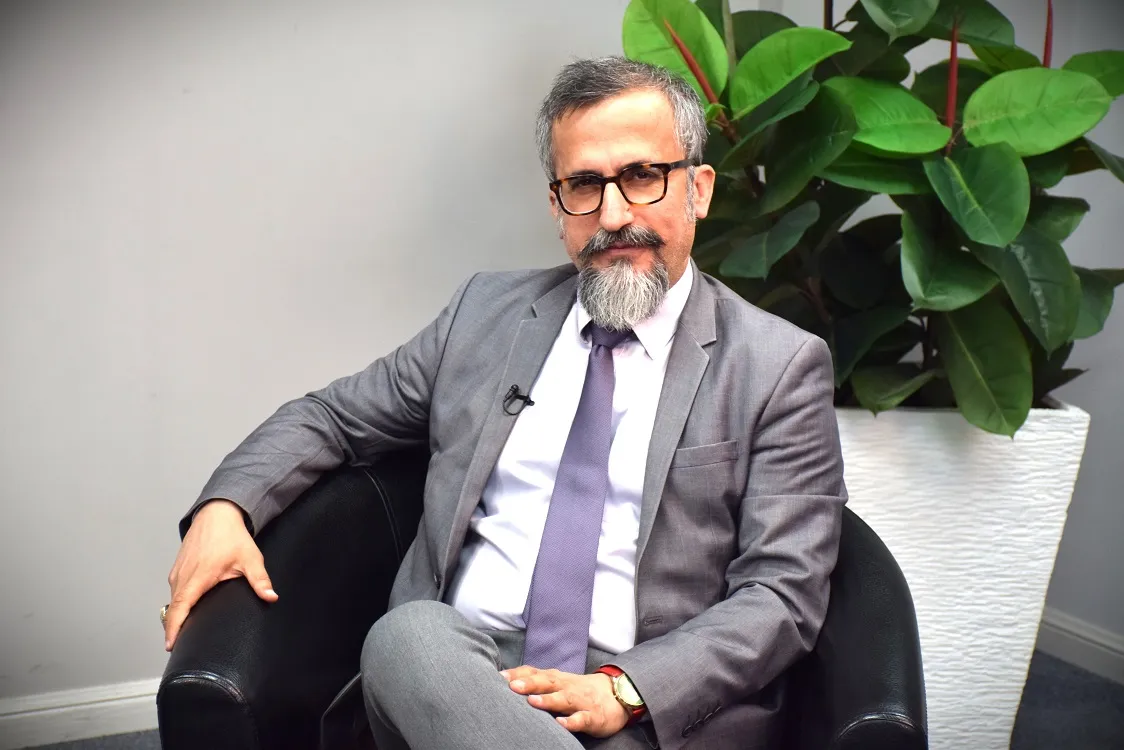
Three years after a revolution that promised "people's rule", Iran is still involved in multi -political, economic, social and cultural nodes; From the memory of the war that has remained in a group based on rent and monopoly, the class divide, and ideology that has become power. Now the key question is: Is the transition to democracy in Iran a vital necessity or a unattainable dream?
Reformists and the Opposition; Two Different Paths for Transition
Abdi Medya: 47 years have passed since the revolution that promised people’s rule, but today Iran is caught in a multi-layered knot of political, economic, social and cultural crises, a war whose memory still rings in the collective psyche, an economy that relies on rent and monopoly instead of competition and productivity, and class divides. On the other hand, ideology that has become power instead of mediation by society and its own power.
Let’s skip global analogies and talk only about Iran. The necessity of transition to democracy is considered a vital need, not a wish. Reform or transition from the existing structure is considered, if it can be reformed, why has it been so far? If transition is necessary, how? With a revolution? Coup? Foreign intervention?
What is your exact definition of transition to democracy in Iran? Where is the starting point? What is the first criterion for measuring progress?
Bayat: Our country is currently in a very special and specific situation. I believe that governance in Iran is in crisis. Regardless of what the motives and motivators were in governance, what the causes and factors were, after 47 years we are now witnessing that governance is in crisis and has complex and seemingly insoluble problems and issues. Naturally, we must talk about governance and present a solution to overcome the problems and issues that currently exist. Many political activists, whether those who are active inside Iran or those who comment on Iran's political, economic, social and cultural issues, each of them has addressed the issue of overcoming this crisis in one way or another based on personal, group and factional aspirations and motivations, which can be divided into two types: reformists and opposition. Reformists have nothing to do with the name reformism that is famous in the internal space of Iran. The opposition believes that reforms in Iran have reached a dead end and there is no way out of the crisis through peaceful and reformist methods and means, and that the Islamic Republic must be bypassed. Many of these people believe that the overthrow must be in a non-reformist form, meaning that the Islamic Republic is not willing to accept reformist methods and peaceful transitions, does not talk or negotiate, and does not change the methods of governance. Therefore, every possible means must be used, whether it is an uprising, rebellion, or revolution by the people, a coup, or war. We have witnessed that a part of the opposition actually supported the outbreak of war in Iran. During the 12-day war, the so-called royalist movement directly or indirectly supported the Israeli attack on Iran, and they believed that this attack would pave the way for a transition. They support the outbreak of serious unrest, rebellion, and revolution in Iran, and they have orders and propaganda, they are constantly planning in this regard, and they are trying in various ways to put the people on this path. Of course, at this point I do not intend to make a descriptive and prescriptive statement as to whether this method is right or wrong. Naturally, when we discuss the various dimensions of the transition to democracy and consider examples and comparisons between successful and unsuccessful transitions, those who are interested in this topic will naturally judge for themselves which form of transition in Iran is feasible and effective and will lead the country out of the current situation.
Transition to Democracy; The Only Successful Model of Governance?
The issue of transition to democracy is a very important issue, at least since World War II, when the third wave of transition to democracy spread throughout the world. The issue of democracy has become the main issue of human societies because the general assumption is that democracy is the only appropriate model or the only effective political model for governance and provides the basis for material and spiritual prosperity for individuals in different countries. Such people can point to and cite numerous examples and say that yes, democracy actually protects fundamental rights and freedoms and provides the possibility of material prosperity, happiness, and development. The political systems of democratic countries are accountable, have strong public oversight, and the possibility of corruption, corruption, discrimination, and injustice in the government and governance has decreased. This is why human societies believe that we should move towards democracy. In fact, most of the political systems in the world are currently democracies, regardless of a few specific countries. Of course, democracy is gradual. When we talk about democracy, it does not necessarily mean that democracy is a whole. The specific unit is absolute and this democracy is like this and this is not democracy, we witness different stages of democracy in different countries and all of them are categorized under democratic systems, of course, there are political systems that are democratic in appearance but are not democratic in practice.
Democracy and the historical experiences of the world
Abdi Medya: One of the most important discussions these days has become. Some said that monarchies like the monarchy in Europe act very democratically. Some believe that republics in countries like China and Iran are undemocratic. The discussion of the constitution comes after the issue of transition. Usually, the constitution is discussed after the transition, but some believe that there are chapters under the current constitution of the Islamic Republic that the practice, attention, and attention to those chapters and principles determine the conditions in such a way that there is no need to talk about a topic called transition today.
Bayat: What is certain is that human society has not been able to invent a more favorable and appropriate governance model than democracy. Undoubtedly, democracy has certain flaws and problems. Democratic societies are not utopias. It is not that there are no flaws and problems in these societies. What is important is that in the position of The practice of such political systems has been better than other forms of governance that human societies have experienced throughout history, and they have been more effective and appropriate for the people. They have provided the material and spiritual well-being of the people in a more appropriate manner. The state and political power have been controlled in such political systems. The fundamental problem of humanity throughout history has been tyranny. After states and governments took full control, they adopted the method of tyranny, and in practice, individual rights and freedoms were slaughtered for the lust of kings and rulers. With this democracy, this concern has been resolved to a significant extent. For this reason, the waves of democracy have swept over the past hundred years and democracy has become the dominant political system. For this reason, we talk about the transition to democracy, which means passing from an inefficient political system that may or may not be authoritarian, but at the same time, this political system did not have the possibility of realizing the reformist and fundamental ideals and goals and the rights and freedoms of the people. For this reason, I believe that democracy is a necessary condition for the development of democracy. The general consensus is that this system must be moved beyond, so the transition to democracy means a transition from an inefficient system that has effectively suspended public rights and freedoms and is plagued by corruption, waste, inefficiency, and ineffectiveness. We must move from this political system to a system that does not have these problems and dilemmas, but the fundamental question is why and how this happens. We are all interested in moving from an authoritarian system, a totalitarian system, closed, that violates political rights and freedoms, and joining and transferring to a democratic system, but does this wish, ideal, and motivation really happen easily in practice and on the ground of reality? Aren't there numerous dilemmas and problems ahead of him? I think it will not be easy or convenient in any way. As we clearly see in examining the first, second, and third waves of democracy, democratic transitions have been met with waves of return. The authoritarian system collapsed in the process and a democratic system was established, but this democratic system was unable to survive and led to the establishment of a more violent and powerful authoritarian system.
Therefore, it is necessary to talk about the methods of transition and its origin to democracy. I think that most of the dear people who talk about the transition to democracy do not have a clear analysis of the political, legal and economic conditions of the country, the causes and factors that underlie the transition or the obstacles that exist and do not allow the country to transition, everyone is interested in passing through the Islamic Republic, everyone believes that the Islamic Republic is a system that is not compatible with the national interests and future of Iran in its survival. The longer it lasts, the greater the negative effects and consequences will be created for Iran. But the issue of how the stages will occur and what its consequences are has been neglected.
The first stage is the stage of the collapse of the political system. When we talk about collapse, some people think that the political system is ruling the country with strength and power today and tonight, and tomorrow morning, suddenly the political system does not exist and another political system takes power. This is not at all the case. The collapse of the political system is possible in cases where it occurs with minimal damage and violence. Similar examples have been seen in Poland, Portugal, and Brazil. It may be accompanied by violence and conflict. Naturally, it is necessary to plan for the collapse stage, to examine the various components and dimensions, because collapse is when conflict occurs between different political currents. When the central power is weakened, the opposition's decentralized political currents, which themselves have different dimensions and forms, enter the field and want to seize power and control and move the country in the direction they believe is right. This collapse may last for years. The established political system has practically disappeared, but an organized and centralized central power has not been created. The country is in crisis. Civil war is possible. Insecurity occurs at this stage. Therefore, the collapse stage is important. Let's examine how collapse occurs. How collapse has occurred in different countries. We must try and compare what it would be like if a collapse occurred in Iran.
Transitional stages after collapse
Abdi Medya: Even if we encounter a collapse that stems from collapse, do you consider it the product of a gradual process that led to a coup?
Bayat: Without a doubt, in any case, the background and context for each of the events such as revolution, war, coup, is the compromise of the elites. Suppose in a political model, it is possible for the political elites to conclude that the continuation of this process and this way of governing is not desirable and we must change the command and move in a different direction. In any case, there is a set of different causes and factors that cause these events to occur.
The stage after the collapse is the stage of establishing the democratic political system. How will the democratic political system be established? In what format and with what process? This is an issue that political movements should pay close attention to. The next stage is the stabilization stage. As long as these two stages, namely the collapse and establishment of a democratic political system, have not been completed, we cannot talk about the stabilization of a democratic political system. Most of those who are currently dreaming and selling dreams in the talks all say that today, if the Islamic Republic goes, tomorrow a powerful and stable democratic political system will be established and we can solve all these issues and problems in a short period of time. I think this is not the case and this is selling dreams. We must present the reality to the people.
Understanding exactly what is happening in Iran is a very important issue. We must have an acceptable understanding of the structure of the political system. How the structure of the political system has faced reforms in its 47-year history and how political movements have acted in their relations with each other and what the priorities of the political system have been during the process of governance will help us a lot to understand the appropriate way to transition to democracy. A governing system that is comfortable with dialogue, negotiation, and inter-party interaction and welcomes it. A political system that respects civil liberties relatively has less conflict with civil society. Naturally, the door to dialogue and compromise among political elites is more open for a peaceful transition. The more dominant and closed this political system is in this regard, the more difficult and dangerous the transition from above will be. Then we will turn to other methods of transition such as coups, wars, and revolutions. We must understand the political system of the Islamic Republic well. As a lawyer, I am more interested in looking at the issue from this perspective.
Why do people fall for dream selling?
Abdi Media: You spoke correctly about dream selling. One thing I always emphasize at Abdi Media is that I do not sell dreams at Abdi Media. Sometimes this bitter language may bother you because the truth is not inherently very sweet, that perhaps many people like to present their dreams and become more familiar with dream selling. As a person who has mastered the law and lived in the Iranian atmosphere, why do people buy this dream? Why are people willing to buy this dream and at least find relief with this dream? It is like a spiritual summary and a corpse that they are willing to enjoy, but when this false corpse falls, the pain of the corpse remains.
Bayat: The simplest reason that can be listed is that the masses of people are very impatient and impatient. When you talk about a person, you mean a person who lives for many years and then will leave this mortal world. This person and person would like to experience and enjoy reforms, prosperity, security and freedom during his life and youth. If the person we are referring to is an Iranian person, this is how they look at the issue. When you say that we are going to wait for more years that the reforms are gradual, the impact will occur over time, this person and person will react negatively. He does not show interest in theoretical discussions and gradual methods. In the past 119 years since the Constitutional Revolution, despite the fact that groups, organizations, guilds, organizations, parties, etc. have been recognized in both the Constitutional Constitution and the Constitution of the Islamic Republic, and their freedoms have been considered at least in terms of expression, they have not been able to organize and integrate. Public demands within the organizations of parties, groups, and organizations have not been able to find a place to manifest and emerge. This is still the demand of the masses, this is still the voice of the masses that is heard. It is still these masses that are raising their protests on the streets. It is still these masses that are more or less exerting pressure on the political system and forcing reforms and changes that are not implemented with serious and democratic reformist motivation. Therefore, dream-selling responds. When the masses experience problems, dilemmas, difficulties, and misery, naturally someone sells them dreams, presents them with a utopia, and says that if this happens and they demonstrate in the streets, we will immediately witness serious developments. Naturally, They welcome it. I think the main reason for selling dreams is that the masses welcome it. Anyone who speaks more sharply, more radically and more strongly against the Islamic Republic and curses more and says more bad and wrong things, accuses more of corruption, ruin and inefficiency, they get more attention. If someone wants to present a picture of reality and a picture of what might happen, they face opposition. Even I may be accused of defending the status quo right now and after the end of the conversation. Selling dreams is welcomed. This is the reality.
Challenges of Transition and Its Problems
Abdi Medya: I will step out of the inner turmoil, the crises, stress and family concerns that exist within Iranian society. In a crisis environment, it is not possible to have a close look. When we have a binocular view of our own environment and examine other nations without opening our eyes to the truth and not looking at society carefully, perhaps the changes and transitions will not lead us to the desired result. This will be a challenge. If we do not have an aware nation, in any model of governance, republic, democracy, in any case, the nation must be confronted in some way and accepted or not accepted. What is being raised today that there was no revolution in 1979 is different from the existing reality. Some do not want to accept it, but history cannot be changed with rhetoric. If we want to pass through it or have a transition, we must understand it and provide the minimum requirements in society. This is not how we can make a transition because no matter how many times you make a transition, it will be the same. Explain the forms of transition
Bayat: When you talk about transition to democracy, most of the discussion is descriptive and a small part is prescriptive. There is a history of one hundred or so years of democratic transitions, in fact two hundred years. If we consider the first wave, which is from 1826 onwards, we can say that the discussion of transition to forms of democracy has been going on for two hundred years. The important part of transition to democracy is description. You should not be captured by ideological discussions or factional political discussions. The opposition has come to the conclusion that the Islamic Republic must be abandoned. The opposition inside the country talks about a referendum, the opposition outside the country talks about a violent and revolutionary overthrow. People should demonstrate in the streets. Satellite networks like Man and Tu, Iran International and the like do not offer a solution to the people. They only say that the only solution is to demonstrate in the streets. Some say no, we should hold a referendum. Those who talk about a referendum understand this. It is not a matter of the established political system not accepting the referendum issue. Since the time of Mr. Khatami in 1997, the discussion of reforms and referendums has been more or less on the agenda until now, when the political system is still standing and not going to hold a referendum at all. For this reason, a paradigm shift must occur. Instead of constantly discussing how to hold the Islamic Republic accountable, we must look at the arena and stage of the show, at the historical process of developments in Iran, see where the developments started and where they ended, and observe the process of governance in the Islamic Republic. Will this Islamic Republic be overthrown? Will it be reformed? Will it self-destruct? Will it collapse? Part of this is descriptive. You cannot suggest that I am seeing these events happening. When we talk about transitions, part of it is related to these cases. That is, you present a picture of reality. If the picture is clear and clear, people can adapt themselves to that situation based on the clear, clear, and realistic picture that an enlightened thinker, political and social activist presents. When you say that the country is in a situation where revolution is the only solution, you are actually leading people to the streets. When you say that the main solution is compromise among political elites, which I do not discount, you have put the people on a different path. When you talk about structural reforms, you are putting the people on a different path. In each of these issues that are raised, ultimately the people are the main decision makers. The people will judge and will act on that basis.
The discussion of the problems of transition to democracy is raised here. The first discussion is the origin of the transition. Where does the origin of the transition come from? Is it from above? Or is it from below? I mean, political elites from above come to the conclusion that reforms must be made and they go to hold free elections, for example, institutionalized oversight is put aside, or from below, which is likely to happen on the street and change the fate. There is also a part related to outside Iran, such as coups and wars. Do you remember when George Bush was about to invade Iraq, he gave a speech and said that we have brought democracy to the Iraqi people, a democracy that was achieved through gun barrels and cannonballs? The next topic is the method of transition, which we should note that is less discussed in an academic and separate manner. The method of transition may be a compromise, and it is possible that war, civil strife, and revolution may occur. The extent of political change is also a very important issue in the transition, and what form and outcome the state of political movements within the country will take. The country's internal political changes are possible in three forms. At one time, the ruling group is in power. The ruling group reaches a conclusion of gradual policy changes and reforms. At one time, the ruling group itself changes. This group and the political movement that currently holds power cede power to a rival political movement, for example, the reformist movement. At one time, the structure, rules, and constitution change. In this case, the entire political system finds another dominant one. Which of these transition methods is more likely to be realized in Iran? It depends on various factors. The first reason is the unity or fragmentation of the groups that make up the ruling political system. For 47 years, the ruling political system has been in the hands of two major movements in the country: the fundamentalists and the reformists, who have more or less periodically shifted power and ruled. Have these groups had any disagreements during these 47 years? Looking at the 47-year history, it seems that there have been differences of opinion, but due to the strategic and ideological unity that existed between the left and right currents, these differences have become less apparent. However, the further we go, the difference between these two political currents, their strategic and ideological unity, has become fractured and split. One political current believes that we should establish our relationship with America, that we should put aside anti-Israelism, and that our foreign policy should be based on compromise, negotiation, and interaction; another political current powerfully says that we should continue the same process we have been on so far.
The next important point in the transition is the level of strength and organization of the opposition groups in civil society. Civil society has never been strong in Iran. Before and after the 1979 revolution, the ruling political systems have always tried to weaken civil society in various ways. Now that we are in 1404, we do not have a strong civil society. We do not have independent parties, organizations, guilds, groups, and organizations that have manifestos, statutes, or influence. It is political movements that drive the political system. The orientation and level of resistance of the armed forces is the next important issue. What is the general orientation of the armed forces in Iran? Where do they stand in this conflict? Are they on the side of the people? Are they on the side of the government? This is an important issue. Is the clergy standing with the people? No, it is on the side of the government, and as an explanation of the official ideology, by examining these cases, you feel that the transition to democracy can change its direction under the influence of these several factors. There has been a difference in the style of governance among the political elites within the government, but we do not observe the organization and strength of civil society. On the other hand, the armed forces stand by the ruling political system. When we do not have a strong civil society, I am not saying that it does not exist. Especially recently, in the last one or two decades, a virtual civil society has been formed with cyberspace and social networks, but we are still a long way from reaching that stage of a real civil society. Despite all the discussions we have raised, ultimately, compromise between the elites, negotiation, and dialogue between the political elites within the government, of course, provided that the pressure of public opinion remains, is considered the most important factor for the transition.
Resistance of the government against the transition
Abdi Medya: Is the government that is now riding on its donkey and holding power a precedent or is there a model that says, "Dear people, I heard the voice of your revolution?" Usually, the voice of revolution is heard when everything is lost, that is, the rulers speak to the people in despair when it is truly time for despair. Is such a government willing to accept something called a transition?
Bayat: No political system says, "My yogurt is sour," no political system says, "I am inefficient," no political system says, "The system is systematically and structurally corrupt, discriminatory, and unjust."
Ideology and Divine Legitimacy of the System
Abdi Medya: An ideological system that considers itself to be right considers the system to be a divine deposit
Bayat: When the main basis of the legitimacy of a political system is divine will, it believes that if I am, it is because of divine will and will, the leader and ruler is the deputy of the Imam of the Time and takes legitimacy from him and he must be, the causes must be forever and in the constitution it is declared impossible to change him, this political system does not accept mistakes and admit inefficiency so easily. It does not say that I am inefficient and ready to hand over, throughout history, no political system in the modern era has been like this that said I am ready to hand over, well, who is my replacement? I offer both hands, you have not witnessed any political system that has acted like this.
The bottom line is that causes and factors occur over time, some of which are related to domestic issues and some to foreign issues. These things put pressure on the political system and force it to retreat, make concessions, and negotiate. We can consider the last two presidential elections. In the previous period, during the life of the late Mr. Raisi, the Guardian Council refused to give any concessions to the reformists. The elections were held with the same quality, and Mr. Raisi also achieved the presidency. But in the last year and a half, the political atmosphere of society has progressed to a point where the political system has reached the conclusion of giving points. Of course, this point does not mean a change in the overall policy of the electoral system. But he said, for now, I must give this point. We must allow the reformists to be present, the country will get out of this current situation, the people will welcome them and participate in the elections, the international legitimacy of the system will improve, because sanctions are putting pressure on the external political legitimacy of the political system. The political system gives points. The problem is that it is not just this point that will achieve the transition. A set of causes, factors, and variables will push the political system over time in such a way that the reforms will not have a Syrian, superficial, and temporary aspect, but will have a permanent and effective aspect, in a way that will create the basis for consensus. The consensus that Mr. Pezizkian intends cannot be considered a consensus because it is not effective and does not stem from the inherent will of the political system for change. This is not a consensus. A consensus or compromise of the elites or interaction, bargaining, and negotiation of the political elites within the government is when they hear the voice of the people and understand the social realities. It seems that we are still far from that stage. We are still far from that stage until the political system decides to make concessions. After the 12-day war, we thought that now was the time for the political system to make concessions. The most important thing that happened after the 12-day war, in my opinion, happened in the Secretariat of the Supreme National Security Council, when Mr. Larijani was elected as a veteran fundamentalist political force who had been removed from the political arena for a period, and now they have come to the conclusion that he should return.
Tactical scoring or real transition?
Abdi Media: I think it is the art of the Islamic Republic that the appointment of Ali Larijani is if we do not forget who he was and what he did, Mr. Larijani is my fellow citizen. I gave him some advice on the Abdi Media channel, but if we do not forget who he was and what his political aspirations were, today I saw an interview with Hossein Marashi who advised him not to be partisan in the sense of partisanship. It is very strange that we think that now there is a change in policy. It seems that each person in different sectors and areas of the Islamic Republic is playing their own role at the moment. This scene that is ongoing, everyone is playing their own role at the moment, depending on the role, they may leave the scene, and be added to the scene the next moment. The main actors are in their places. This advice from Hossein Marashi to Larijani was to be national, not partisan, meaning that he too is returning to his own historical mental background.
The Reform Front issued a statement that was widely discussed and attracted attention. They put forward 11 demands in this statement, including declaring a general amnesty, lifting the detention of Engineer Mousavi and Zahra Rahnavard, lifting Khatami's political restrictions, releasing political prisoners of conscience and civil activists, and ending the repression of reformist critics to rebuild national trust and repair the gap between the nation and the government.
The first paragraph of this statement is interpreted as supporters of the Islamic Republic and the hard core of power saying that it is an Israeli statement and they cannot stand it. During the elections, the Reforms made a big gamble. I interpreted this issue as the Reforms' historical gamble, and it seems that the Reforms faction spent what was its own historical reserve and brought it behind Dr. Pezhakian. I think it is the artistry and mastery of the intelligence and security institutions of the Islamic Republic that was able to turn the convergence among the opposition to the Islamic Republic into divergence after the various protests of the women of freedom. At a critical moment, it seems that it came to the aid of the Islamic Republic as an aide and legionnaire. If there had been convergence among the opposition before Masoud Pezzekian and we had faced that convergence of the opposition during the 12-day war, perhaps we would have been dealing with a different situation today. We cannot ignore these equations and interactions. How realistic is this statement?
Bayat: What is mentioned in this statement is a reality, and the way the political system pays attention to it and follows it and obeys it can pave the way for a transition from a crisis to a stable situation. At the same time, it confirms a set of hopes and aspirations and a utopia that political activists expect from the established political system. If a political system allows its critics and opponents to criticize it and act in opposition to it, this system is not an authoritarian system. If the political system provides the basis for holding free elections, elections in which all political currents are allowed to participate, it is no longer an authoritarian political system. It is not totalitarian.
The real limits of reforms
Abdi Medya: If the system wants to pay attention to what a political party says
Bayat: It is not possible for the political system to say all these expectations and the cases mentioned in this statement, politics, political murder, political conflicts that have occurred throughout history between the government and the people. The political system is doing its job properly. A political system that you have been fighting for 47 years and you expected to act on these cases, not to confine the opponent or critic, not to get involved in heated arguments and imprisonment, you did not come to a conclusion. You expect it to say, "Oh, my God, because you published this statement, I have come to this conclusion that the country's situation is critical and I have to do this." It is clear that it will not do this, because it cannot. The fundamental issue is that our understanding of the nature of power must be different. Power is not something that you can simply address and tell it to take these actions from now on and it will say, "Oh, my God." Power consists of micro-rings of power, islands of power, various political interactions and relationships within itself. These emotions and currents are the back and forth that ultimately lead the political system to accept reforms or resist them. You cannot advise it and it will turn a blind eye. Advice is fine. You can keep offering advice and solutions and expect attention. But giving advice is fruitless unless it is organized and effective in the exercise of power. When we talk about the need for compromise among political elites, we do not mean that political elites sit in a pool and a pond and talk to each other and reach different conclusions, or that they socialize in a hotel or restaurant and ultimately reach a suitable and different conclusion. No, this is not the case. Compromise among political elites is influenced by activism that occurs at smaller levels at the bottom and in the heart of society. Consider the case of the transition to democracy in Poland. In Poland, there was a powerful party system throughout the country that was able to organize demonstrations, conferences, and various events against the Communist Party and the Communist leader. This made it possible and forced him to negotiate and talk. The pressure that the powerful civil society puts on the government forces it to negotiate. Similarly, their leader agreed to hold relatively free elections with the idea that the outcome of these elections would be in his favor. However, in practice, this did not happen and the Solidarity movement slowly took power.
What role do the causes and influencing factors play? The Iranian Revolution, which won, was one of the most important reasons, regardless of the mass support, for the revolution, because a wide network of informal parties was formed in mosques, Husseiniyas, seminaries, and people's homes during the prayer recitation ceremonies, which planned and organized demonstrations against the established political system and contributed very seriously to the collapse of the second Pahlavi political system. Where does the clergy stand now? Throughout history, the clergy stood by the people. During the Qajar era, the clergy stood by the people on various occasions with the fatwas they issued. There are many examples of this presence in the tobacco case or the war against Russia and the like. Now, the clergy stands by the government, it is a tool to justify official power and official ideology. It did not stand by the people. I am not saying that it did not stand by the people in absolute terms. Overall, the clergy was absent from the transition to democracy. What role did the clergy play during the Constitutional Revolution? Can you ignore the role of Allameh Naini and Akhod Khorasani?
The Place of the Clergy in the Transition
Abdi Medya: Many believe that the clergy has lost its function? I absolutely do not agree with this statement. Iranian society is a religious society. Many issues are always related and intertwined with the institution of religion and are inseparable. When it comes to the transition, they have prepared a lamppost for each mullah, which can itself cause problems for the transition.
Bayat: That is absolutely true. First, let us keep in mind the fundamental point that no transition in Iran can take place without considering the place of the religious institution and the organized power of the religious institution within the fabric of various social layers. If we witness a transition that proceeds without this fact, it will certainly fail. Therefore, we must pay attention to this power. The reality is that the clergy institution has not stood aside from the transition. When you mention the religious institution as a great social, political, and even economic power, you cannot ignore the clergy in the transition process. The clergy must stand by the people and pave the way for facilitating the transition, providing the possibility of compromise between the political elites. This has not happened now, and naturally, as long as this has not happened, we will not have a peaceful and powerful transition. Transition occurs when there is a strong civil society, and parties, groups, organizations, and guilds have a worthy presence in the midst of social changes. Over the past 47 years, the Islamic Republic has made great efforts to prevent civil society from coming to life, so that society does not emerge from a particle-sized and atomic mass. As long as society is atomic, It takes direction, as long as it is a mass, it is excited, it easily takes to the streets and goes home with its will, but when the masses become a powerful social structure based on diversity and pluralism, they cannot be controlled so easily. The Islamic Republic has been successful in controlling and weakening civil society. When civil society does not exist, political elites say, "People, demonstrate in the streets," which means they return to the same old mentality of the relationship between power and the people. Power says, "People, demonstrate in the streets," and then says, "The job is done. I still have the power in my hands. Go home." Now, intellectuals, mainly those who advocate the violent overthrow and overthrow of the Islamic Republic, have the only solution: when they say, "People, demonstrate in the streets," it means that civil society does not exist. Different social classes are not as aligned as they should be with the idea of transitioning to democracy. Naturally, the political system remains powerful when it sees that the arena is empty of serious competition. And when you say, "People, demonstrate in the streets," it means that I have also accepted that we have nothing in our hands. What happens after we are on the streets? None of these people who argue in this regard answer the question: if people demonstrate in the streets, what guarantee is there that the replacement political system will necessarily be democratic? In many cases, in unsuccessful transitions, the masses have taken control of the streets for a long time, chaos has arisen, the democratic political system that was established because the masses took control of the political space has been overthrown, another political system with an authoritarian nature has been replaced, or even the previous political system has returned.
Transition in Iran: The Real Picture, Not the Wishes
A major part of the transition in Iran is descriptive, it has no solution. You cannot necessarily say that if this happens, we will reach a peaceful transition. We must depict the scene, put the pieces of the puzzle together so that the viewer can get a picture of the current situation in Iran. What will ultimately happen to this political system that we all wish would change its methods and attitudes, become wise, and return to the people? One part is related to our wishes. We say, God willing, they will be burned to the ground. We can express these wishes in intimate gatherings, but the reality is something else. Now that the central power is weakening, what happens to Iran is important. Iran is not in the middle of Europe. If Iran were in the middle of Europe, we would say that a civil war would not happen because the interests of the great European powers would not allow Iran to become insecure. If Iran were in the heart of America and its states, we would feel at ease, nothing bad would happen, but Iran is in the middle of the Middle East and the most complicated global geopolitical situation.
Abdi Medya: It's a fight
Bayat: It's not like we have the will for revolution and transition, revolution and transition will happen, without considering the interests and ambitions of foreign political systems of neighboring countries, it is important to present the correct picture of the situation and organize political and social activism under the influence of the correct picture. Political activists inside the country more or less hope that the day will come when the Islamic Republic will be overthrown, they hope that they will become wise; political activists only issue warnings and statements, but there is no real operational political activism, I am talking about the reform front. During the presidential election, this front said that if our candidate is not present, we will not participate in the elections. It was an effective activism. They forced the political system to accept the reformist candidate. Of course, some believe that the whole issue was a conspiracy. When I talk about elite compromise and negotiation and agreement between political elites, it is because it has minimal damage. Other methods of transition are both damaging and unpredictable, but elite compromise is both predictable and occurs with minimal damage. We are facing this problem in Iran and abroad, where they only say, God willing, Israel will attack and the Islamic Republic will fall. We will also attend with greetings and prayers. Their image of reality is caricatured and childish. It is as if Israel attacks, the political system will immediately fall, and nothing will happen in the country. Everything is in its place. Mr. X also boards a plane, people roll out the red carpet, he will attend the presidential palace and govern the country. This view is really not correct. Mr. Pahlavi was ready, his image of reality is caricatured, he said, I am ready to take power, he thought the Islamic Republic has been overthrown, is it over? You destroyed 20-30 military, security and intelligence centers, the system has been overthrown? The system will not be overthrown that easily. Now the reality is that they say the system is finished, it will be gone in a year or two, no one is afraid. On what basis is the analysis expressed? You have to present a fact. When you set a timeline, this timeline should be based on completely tangible, observable and analyzable statements.
My suggestion is that in the discussions we will have, instead of focusing on the transition in the Islamic Republic, we should focus on the transition itself and compare successful and unsuccessful transitions, especially since World War II. What percentage of these revolutions came out of rebellion, war and coup? How many percent were the products of elite compromise? Is it possible for a group of thinkers to be demanding, demanding and eager for change but not benefiting from the experiences of human society? Two transitions have occurred in Iran over the past 120 years: the transition from the authoritarian Qajar monarchy to a democratic system that ultimately led to the tyranny of Reza Khan, and the transition from the tyranny of the Pahlavi II monarchy to the Islamic Republic. These are the cases before us. We must examine the transitions to see why they were unsuccessful.
Abdi Medya: My feeling is that without understanding these developments and studying these revolutions and people's actions, it will not be possible to reduce the issue to the fact that people revolted in 1979. This is reducing the issue.
Bayat: It is a distortion of reality that they say that the revolt of 1979 means that people at that time did not have the necessary understanding and consciousness, they were under the influence of illusions, propaganda and emotional outbursts, and fate was decided elsewhere. The people also played the role of facilitators. In practice, reality has been distorted. In this case, another event would have happened unjustly.
Historical forgetting and its impact on the people and the opposition.
Abdi Medya: It seems that security action is psychological because if we call a protest uprising of the people a revolution and that uprising does not lead to a victory, the opposite of victory is defeat. The people repeatedly fail the uprisings and lead them to the point that we can no longer take action, it leads people to passivity. This Psychological techniques and social management and community management are used very carefully when the truth is not told. If we study the examples of events that happened in the opposition, they are not complicated, we must gather our memory and be careful. A person named Sardar Madhi was at one point the number one in the opposition media. He was known as a diamond who spoke to the US Congress in order to present a plan for overthrow. Madhi appeared on various television channels, after he returns and states that he was a project to infiltrate the opposition, the diamond documentary was made to deceive, then he is convicted again and then in a strange way from This world is going. These are specific examples that are before us. We are facing a model where someone from within this system does such and such a thing. I feel like it is a scene where the actors behind the scenes are changing this scene like puppets at every moment and dressing him up in the way they want and every time a wave is created, people move with that wave. Weak short-term memory, historical memory that has been changed due to the problems and weakness of the current government and many say that it was a utopia, in fact become factors that help and stop the transition if it does happen. External shocks always form in times of crisis when the central and established government becomes weak, perhaps its legitimacy drops to the lowest possible level. We are witnessing military conflict. Do these external shocks help the transition or are they an obstacle to the transition?
Bayat: The essence of power is to strive for survival in any form and under any title, so the methods that political power uses for survival are directly proportional to the degree of democracy, transparency, and accountability. Democratic political systems use all kinds of methods to survive and sustain power and to secure national and governmental interests. No matter how much a system with powerful parties and individual and social freedoms tries to crystallize inside the country, it acts in the opposite way abroad and in order to secure its interests, like bombing Iran's nuclear facilities and then saying, "I did a good job," or supporting Israel's attack on Iran and saying, "I did a good job." Abu Qaryab prison is exposed. We should not be surprised by the performance of power. Political power should act like this and it does. It has no excuses. It wants to remain. The political issue is how people and political movements react to this performance. People of different unorganized layers are naturally influenced by propaganda. These people are not organizations, parties, or groups. They are influenced by such games. But we expect political parties and movements not to be like this. We expect them not to be deceived by such games, to present a rational response that is appropriate to the social conditions of the country. Our problem is that political movements inside the country also do not have a clear image and are more or less dependent on power. The survival of this structure and organization is compatible with their interests. When someone today says, Reforms, referendums, and holding free elections are talked about. Tomorrow he will be president, a member of parliament, or a minister. This person cannot follow the reform process because he belongs to a political movement with a general idealistic mentality. He does not consider it his duty to say, "I have said these words, but in practice I must act within this framework." He is not a member of a party. This party is not a party that will take over parliamentary seats. Therefore, he says that today he is on the side of the people, but in the future he will be on the side of the authoritarian movement. You would think that the governor of Mazandaran belongs to reforms. He came and said that he does not believe in chastity and veiling. As long as the people are hungry, this statement was very important. Then the attacks began and he practically said, "I was wrong. Hijab and chastity are my red line. You cannot play with my red line." He changed his mind 180 degrees because the reform movement has not found an identity within an organized structure. This is why the political system can take shape.
Listen without filter in Castbox
Field examples and elite compromise
Abdi Medya: The governor's speeches reminded me of forced confessions, confessions that made the judicial security system questionable. Every time we have doubts about a defendant, even if he is real, we should have doubts. These television confessions that were broadcast once, the documentary about the assassination of nuclear scientists, other incidents that the Islamic Republic itself later apologized for, or the issue of the serial murder case, etc. really turn the story into a joke. The governor did not say that he did not believe in the hijab and chastity, he said that it is not the time to enforce the law when people have livelihood problems. He correctly pointed out the issue, because it was interpreted that way, he was forced to take a more radical reaction and show that he must show his practical commitment.
Bayat: The reason is that he wants to stay in power. When we talk about elite compromise, it does not mean that we agree on all the details and generalities. Elite compromise means that two powerful political currents or two powerful political parties, each of which has a part of the power of governance, challenge each other and say that it can no longer continue. When we can no longer continue, in practice, if necessary, it will leave power or face power. But within the Islamic Republic, the two major political currents do not face each other.
Abdi Madia: The reason is that I was also in the position of Mr. Governor. I did some research and I thought I had reached this conclusion. Mr. Governor, say no. My point is that if you do not want to dismiss me, maybe many would have agreed, but what will happen to him? A person who is sitting in the position of governor knows about the trial, and then there are pressure groups. The most prominent example is Bani Sadr and Qotbzadeh. They should immediately reverse their vote and take their place. Ali Larijani, who is currently the secretary of the Supreme National Security Council, was disqualified in the previous election because he blew the whistle before the referee, started early advertising, and had maneuvers, and the power structure did not allow him to participate in the election.
Bayat: What do these issues indicate?
Abdi Medya: It indicates that the power structure is placing individuals on a path that is not their true selves
Bayat: We should pay attention to the issue of elite compromise because we believe that the most peaceful form of transition from the current crisis is for the political elite and senior officials of the political system to come to the conclusion that this cannot continue. This incident that you described indicates that power is not balanced in the elite and political institutions of governance in Iran. When you talk about transition, you first examine what the structure of this political governance is like? How is power divided? Are elected institutions powerful or appointed institutions? Are appointed institutions accountable or not? In which part of the power structure is wealth hidden? There is no balance between the different parts of political governance, which is why the reformist movement that sometimes takes power within a part of the governing institution does not have an impact. The incident you described indicates that that part is still extremely powerful and is able to direct, channel, and control political flows without needing to be accountable to the people. This is a very important issue.
The Challenge of Survival and Change in the Islamic Republic
Abdi Madia: When was the last time you went to a judicial authority?
Bayat: I am a lawyer. I am present in a judicial authority every day.
Abdi Madia: If you enter a judicial institution and a court, whether you have the same tie or not, the way you are treated is different. If your appearance is different, the treatment will be different. A female candidate for a ministry cannot be in a ministerial position if she does not wear a headscarf. There are details in the structure for the transition. What will happen if they say tomorrow that there is no Islamic Republic and everything is free? A compulsion that has become a habit does not change easily
Bayat: All these discussions, objections and problems that we raise in the public sphere in the actions of individuals and political movements and intellectuals and in the political actions of power, you and I must answer one question: Will the Islamic Republic continue in this situation? Will the Islamic Republic survive? I believe no, it will undoubtedly not continue like this. Just as the Islamic Republic has shed its skin and continuously deviated from its initial idealism over the past 47 years, has approached political issues more pragmatically, and has also retreated when expediency demands, the Islamic Republic of today is different from the Islamic Republic of 1981 when the hijab was made compulsory and was enforced with force and power, and the public accepted the issue.
Possible downfall and paths to transition to democracy
Abdi Medya: Can he touch a girl?
Bayat: Now, expediency does not require such a situation, but it does not mean that the Islamic Republic has become so weak and feeble that it will not restore the previous status quo if the circumstances require it. It has the desire and motivation. The issue is that the Islamic Republic cannot continue with this situation, it knows it itself, and its occasional expediency political actions indicate a belief in this fact. However, the issue is that the Islamic Republic, which cannot continue with this situation and is predictable to move on the downward slope, should be watched, pushed, facilitated, and allowed to fall as soon as possible into the valley of decay and destruction, or should we express a different reaction? The type of reaction depends on the issue you are considering, which is what our image of transition is. I believe that the option of revolution is not a suitable option for the transition to democracy, because two historical precedents in a very unstable region militarily We are a security force that does not accept revolution under any circumstances. A military coup, whether led from within or from without, does not seem to be a suitable option for the transition to democracy. War is also like this: war has never brought democracy to any country, and it will not bring it to Iran. Should we look at what will happen? How will political forces ultimately act? Who will prevail over the other? The answer to one part is yes and the other part is no. The transition to democracy occurs under the influence of numerous causes and factors that we cannot stand in front of. A series of events, causes, and factors make the transition happen. It is like an apple on a tree that must go through various stages of completion and evolution. It falls exactly the second it arrives. The transition is also in this situation. However, as an intellectual, journalist, and political commentator, you must portray reality in such a way that the path of the transition to democracy does not deviate in such a way that it ultimately results in the repetition of history. I believe that what has happened so far in the political system is based on imagination, hopes and desires rather than reality. The political system has been severely weakened. Cross-cutting crises, political, economic, social, cultural, environmental and security, have overwhelmed this political system. However, this political system has not yet shown even the slightest signs of collapse. When you wake up in the morning, the courts, police stations, hospitals, registry offices, etc. are doing their job with strength and power. There is money, the government still has the possibility to at least run the country and pay salaries. Therefore, when we are dealing with this political system and situation, talking about transition is a very important issue, which aspects of the transition are considered and how do you guide people in that direction.
As a lawyer, I have a descriptive approach, I try to portray the situation, when you have a realistic picture of what is happening, the reaction will be realistic and rational, we must portray the current situation in Iran, for this to happen, it is useful to look at the political structure and internal norms, the next step is to compare successful and unsuccessful transitions by mentioning the details, when you portray the signs and elements that make up successful and unsuccessful transitions, you help the viewer and listener to reach a correct and real understanding of the transition, what is the understanding of the transition in Iran is a caricature, it is like the emergence of the Imam of the Time, we pray every day for him to appear, we do not know when he will appear, the fall of the Islamic Republic is like praying for the emergence of the Imam of the Time for some people, we do not know when it will be, but we hope that it will be today or tomorrow, this thinking is wrong. The question is, is the transition from the Islamic Republic correct or is the transition of the Islamic Republic to democracy correct? The basic discussion is that we should transition from the Islamic Republic to a democracy. The main issue is that sometimes the ruling political system itself transitions to democracy, it accepts reality and the necessary reforms occur. It accepts that it must have a different structure and definition of governance. Is this method more desirable? Or should we say, God willing, we must transition from the Islamic Republic at any cost.
Abdi Medya: I believe that when the issue is expressed and people's eyes are opened and informed, they can make more beautiful and accurate decisions. It is the people who ultimately decide when to demonstrate in the streets or not? Whom to be behind? What kind of thinking to support? People in the streets moved the boundaries of some restrictions such as the hijab. People decided. The accepted law is something that the entire people agree on. Something that the majority of people do not accept has no legal validity, such as the discussion of satellite, video, password, etc., which was holding hands. Why should the governance system determine the task? Is the sovereignty on the path of weakening that has been going on? Will the weakening continue? Does the Islamic Republic have the ability to revive and achieve normal government?
Bayat: I believe that the Islamic Republic has shown that it has this capability. If you look back over the past 47 years, the Islamic Republic has been at critical junctures, but it has used this capacity and capability to adapt itself to new conditions. Of course, this adaptation was pragmatic and based on the highest interests of the system. The issue of preserving the system is one of obligations, not in line with national interests. Over time, the Islamic Republic has not only been depreciated, but also has crystallized capacities for permanence. The issue is to guide this political structure with this 47-year-old experimental capacity in a direction that prioritizes national interests.
Means of Survival, Possible Collapse, and the Necessity of Changing the Governance Model
Abdi Madia: Can it maintain the status quo?
Bayat: I think this situation cannot continue, the trend and situation are getting worse. The Islamic Republic has prepared various political tools for survival, at least in the regional and global dimensions. According to the Islamic Republic, Iran's nuclear program was a deterrent tool. It always thought that by playing with the grain of the nuclear program and by obscuring the main motives of the nuclear program, it could force the West to make concessions and cooperate. However, the bombing of Iran's nuclear facilities showed that one cannot rely too much on the nuclear program. The survival tools in the Islamic Republic were not democratic tools, they were not based on social capital and national support. They were based on military, law enforcement and security power. The Islamic Republic has lost these powers both in terms of security and in terms of security, and is under tremendous pressure from various dimensions. The powers have 5 main tasks: 1- Ensuring order, 2- Ensuring security, 3- Welfare, 4- Justice, and 5- Freedom. The Islamic Republic used to say long ago that if you don't have prosperity, there is no justice and no freedom, at least there is security. Now, the 12-day war has shown that security and public order can collapse at any moment. Therefore, the governance model must change, and if this doesn't happen, its collapse and downfall are imminent. Which political system has survived without considering the will, will, public demands, and internal and external social realities? The Islamic Republic is no exception to this rule. If we help present a correct picture of the realities, we will also help senior officials in the political system to make the right decisions. I give the political system some credit. It cannot immediately respond to all public demands, because it is worried that if free elections are to be held immediately, political prisoners will be released immediately, public freedoms will be expanded to the maximum extent, and if I recognize it, nothing of myself will remain. It is considering the experience of the Pahlavi regime in 1977. They must accept that the situation will change, I believe they have received this message, but how they digest and digest this message in their own political digestive system and react is in the future.
Abdi Madia: Time is a good teacher, it will show us what will happen, and this time will judge us all severely and mercilessly
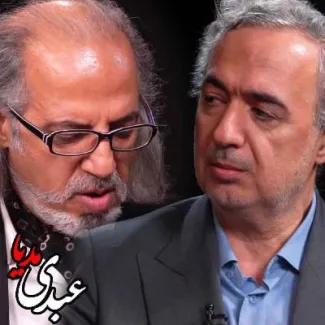
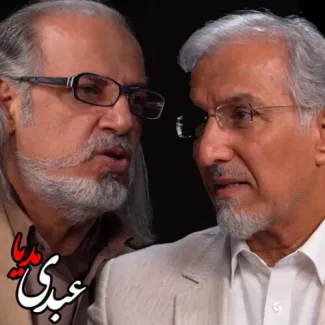
Full file of Abdi Media's conversation with Dr. Hossein Bayat, lawyer and board member of the Iranian Constitutional Rights Association

Take less than a minute, register and share your opinion under this post.
Insulting or inciting messages will be deleted.
Sign Up