The monarchy in Iran was not just a form of government, part of our historical and cultural identity. But why did it collapse and is it possible to return? Can it stand by democracy like some countries or is it permanently entrusted to history?
Monarchy; An end -of -historical or institutional tradition?
Abdi Media: The questions that have been in the minds of the Iranians for years and have not yet answered a definite answer, not to repeat stereotypes, but to fracture the hidden layers of history, politics and thought, as the butterfly, seek light. The monarchy in Iran was not just a government system, and for thousands of years, the kings of the empires and national symbols continued, but why did it collapse? Was the revolution in 1977 just a political change or the end of a long -standing tradition? Most importantly, was this the end of the eternal end or the beginning of its reflection? Tonight I am looking for the answer to this question. What is the future of monarchy in Iran? Can the monarchy be revived in Iran as it has been able to stand by democracy in some countries, such as Britain and Spain? Or the monarchy in Iran has been entrusted to the archive of history and its return will be nothing more than a bitter illusion.
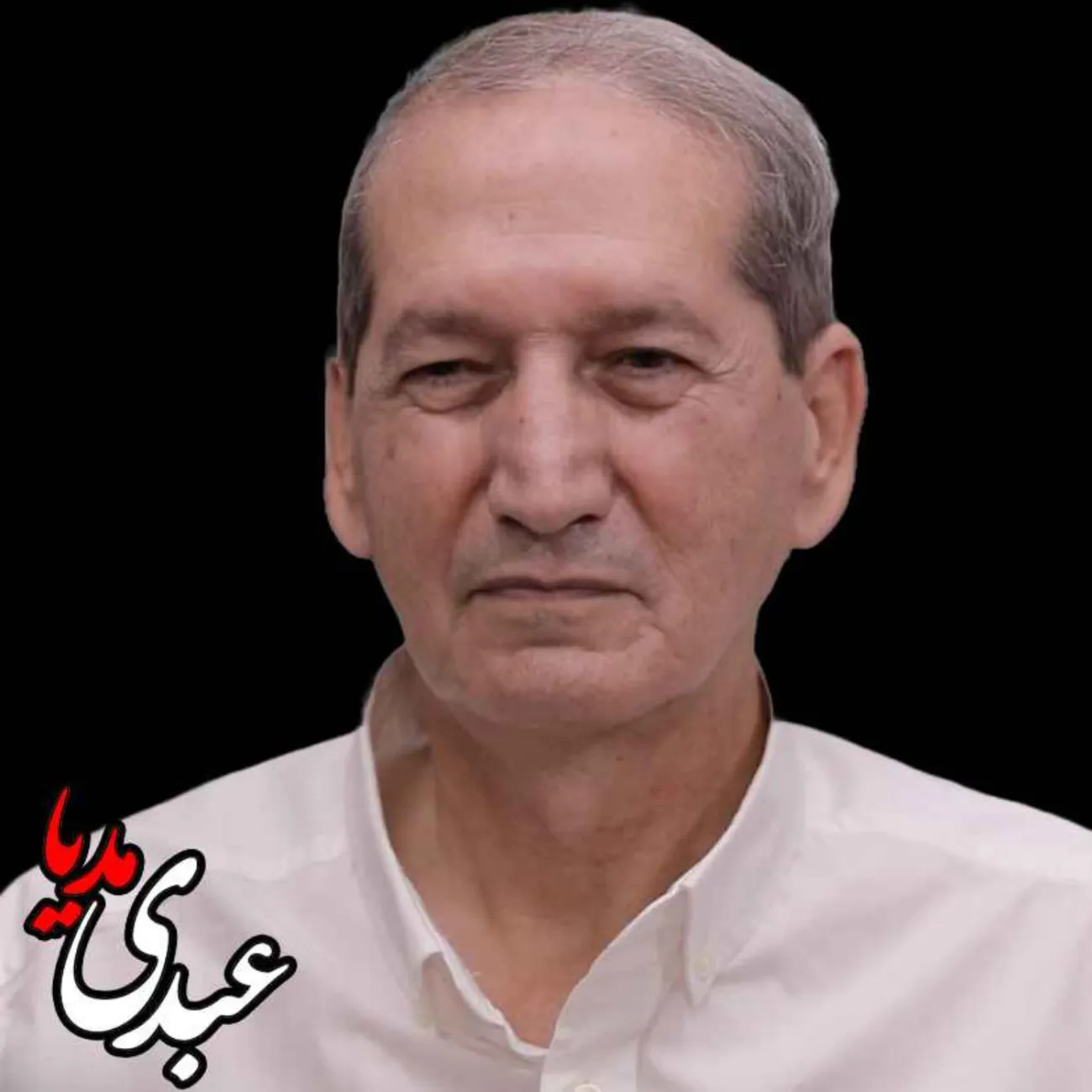
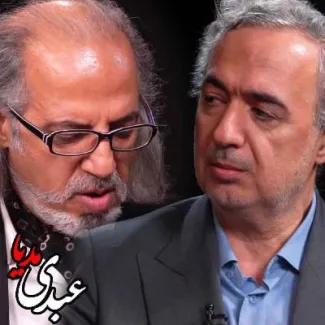
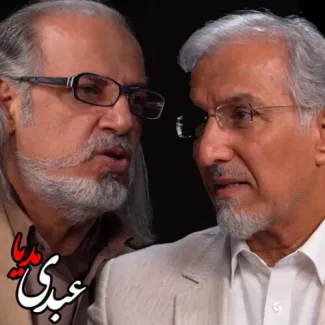
Tonight's guest I do not need to introduce Dr. Hatam Qaderi, a thinker who has been thinking about the issue of Iran's legitimacy and the future of Iran for many years with a philosophical and political view of Iran's legitimacy and the future of this program is an opportunity for serious, unrestrained and deep dialogue about one of the fundamental questions of contemporary history? You've been thinking about the legitimacy and crises of power in Iran for many years. If we want to begin without prejudice, we should be the reign in Iran as an end to the tradition, or the institution that is still able to return and defer in the political future of the country?
Qaderi: I remember this is extremely difficult and sensitive, it may hurt many, but it is a good measure of how we think of important issues, we talk about them and expose these conversations to others. On the monarchy, the monarchy is not just a political system or rule, or not, the monarchy was a system that was intertwined with the culture of our semantic and life horizon, since we have been dealing with the monarchy and its various examples that today remember the kingdom. When the first things that came to history when Darius took power with his friends, one of the six people said whether democracy was appropriate to Iran, as if it were in Athens or Greece that day, they were not appropriate, and it was assumed that what was suitable for Iran was the monarchy or king or kingdom, or king or kingdom. It was a large part of the traditional world when I say it was a natural system. Power is more interactive and managerial power is not a commandment of command. If we look at the monarchy in Iran, it is rooted in Iran, and in my opinion, the monarchy I have used many times is one of the two most important bio -bodies that we call the Islamic Republic, which means that the monarchists may be in the discussion of the Islamic Republic. And it takes the responsibility of the community, I call it a bio -name, where people are not going to interfere with their affairs, if they have the sidelines and subordinates of the main power elsewhere.
Before Islam, when you look at the Sassanid system, some of the classic texts of that era indicate that religion and government are together, meaning that they have to work together, some classic texts were in this regard. After Islam, especially in the lands that returned to Iran and the sphere of Iran, the monarchy was the two institutions that continued the lives of the people until 1977, and then the monarchy appeared to be dismissed or dismissed from power, but what the monarchy did was see its reproduction in the Islamic Republic. That is why if this reproduction has still been our critical components, the monarchy in the future of Iran may have the future, but whatever the components we are discussing and rejecting, then the monarchy, and in this sense, another branch of the provincial system, which is the institution of religion, can be a collection of power in Iran.
I will explain the components of whether they are alive or not and how we can make the monarchy on the basis of those components.
Historical roots of monarchy legitimacy in Iran
Abdi Media: What gives legitimacy to the monarchy?
Qaderi: What in the past was that Iran is assumed that monarchy and religion, or in one sense, are two components that connect the sky and the earth, when you look at the letter of the Tanzah, they say that the monarchy supports religion, and that religion is to be a dual relationship between them and a dual relationship between them. The monarchs and the monarchy were revived again in Iran. In some places, the institution of religion was more powerful. It was assumed that there were two arms that could form Iran's socio -economic and cultural system. It was not possible when you consider the Farazadi in pre -Islamic or then to the approval of religion. It is assumed that the monarchy is not relevant, but I believe that the discourse that the reign in Iran had in Iran until Iran had even the second Pahlavi era was still reproduced. Let's not forget this, even when the revolution was on the verge of the revolution, some thinkers and thinkers were looking for an Islamic monarchy.
The Relationship Between Monarchy and Religion: Coexistence or Competition?
Abdi Media: Do you believe that one did not legitimize the other? At different times, their roles switched—sometimes the monarchy gave legitimacy to religion, and sometimes religion gave legitimacy to the monarchy. From my observations, recently in England, when the King intended to crown himself, he derived legitimacy from religion, and he was addressed as a kind of supreme authority for Muslims worldwide. Do you mean that at other times religion drew legitimacy from the monarchy?
Ghadiri: No, I am talking about the institution of religion and the institution of monarchy. Historically, these two institutions were intertwined, but when it comes to specific politicians, power-holders, or religious figures, one could dominate the other depending on the distribution and exercise of power. For instance, Shah Sultan Hussein in the Safavid era tried to act religiously; sometimes a king would crown himself without needing the religious institution. We must distinguish the institution of religion from the institution of monarchy, which symbolizes governance, from specific individuals who hold power. The behavior varies: Nader Shah acted one way, Shah Ismail another, the Sassanid period was different, Reza Shah different, and Mohammad Reza Shah different. Separating the institution from its manifestations gives a clearer perspective.
Why Was Monarchy the Dominant Form of Power in Iran for Centuries?
Abdi Media: Why was monarchy the dominant form of power in Iran for centuries? Was it historical necessity because the powerful held the reins, or is there another philosophical reason?
Ghadiri: Studies, some translated into Persian, suggest that the formation of government in a broad sense and its relation to powerful individuals evolved over time. Early humans were not necessarily seeking governance; they mostly sought to manage their own affairs and maintain order. Over time, humans felt the need for leaders. Some assumed leadership for various reasons, and both the institution and the government—mainly the monarchy—facilitated this.
The idea that humans could govern themselves through dialogue was rare. Examples existed in ancient Greece, later affected by Alexander and the Romans, where city-states had a form of kingship, though not as we understand monarchy today. During the Renaissance, city-states emerged where monarchy was less central. In Iran, however, monarchy remained significant until 1978-79, and even today has relevance. This reflects how humans manage affairs, engage in dialogue, and turn to symbolic centers of power that connect heaven and earth—a mix of intellectual, cultural, and historical factors.
The modern era questioned monarchy. I distinguish between modernity as technological innovation (modernization) and modernism as a foundation for art and lifestyle. As Iran entered this era, the foundations represented by monarchy or religion were challenged. New governance methods emerged; individualism and personal autonomy gained attention. Even if modestly said, the focus on individual rights and property meant no one could arbitrarily seize your assets. With Europe’s industrialization, literary salons, and other developments, the traditional roles of monarchy and religion declined or were questioned.
In Iran, Mohammad Reza Shah tried to promote modernization, as did his father, Reza Shah. Each step of modernization initially reinforced monarchy as the driver of innovation. Yet it gradually created social expectations and groupings that began to operate independently from monarchy or, later, religion. These changes reshaped human life fundamentally. Monarchy in Iran insisted it could continue this role, or that in the Islamic Republic, it could sideline global and local changes or assert dominance—but this proved impossible.
Kingdom vs. Monarchy; Difference in Word or in Essence?
Abdi Media: The point you made at the beginning is interesting. Let’s clarify at least the distinction between “kingdom” and “monarchy,” since you mentioned there is a difference.
Ghadari: The distinction today is mostly emphasized by those who want to revive kingship in Iran. This distinction appears in two ways:
The word “Pādshāh” (King) is very Iranian and resonates with the Persian language, while “Saltanat” (Monarchy) is Arabic and derives from the word for domination.
In the context of the Constitutional Revolution, many supporters of kingship define it according to constitutional limits, not according to the old traditional monarchy. In theory, the Constitutional Revolution aimed first for justice against oppression and corruption, and then to control power. My point to my fellow constitutionalists is that the movement was about limiting power, not about establishing kingship or monarchy arbitrarily.
In Iran, people were familiar with kingship or monarchy. Some knew about republics, but the societal framework was aligned with traditional institutions. For example, when the transfer of the throne from the Qajars to the Pahlavis happened, some supporters of Reza Shah wanted only him to rule, with successors elected each time, rather than by inheritance. Prominent supporters, like Solayman Mirza, discussed this, but just like the republic didn’t take hold, this idea also failed because it was unfamiliar to the Iranian mindset.
Abdi Media: We were more inclined toward monarchy, having a sultan or a ruling power who would make decisions. This preference reveals how intertwined monarchy has been with our culture.
Ghadari: Exactly. That’s why, if we want to discuss the future of monarchy or kingship in Iran, we need to enter this discussion—leaving historical debates aside.
Political Culture of Iranians; The Need for a Single Leader
Abdi Media: This culture is deeply ingrained. Throughout history, Iranians have tended to follow a single guiding individual. As you said, the concept of “Wali-‘Amr” exists both in monarchy and in the Islamic Republic. They share similarities and differences, and I’d like you to expand on this.
Ghadari: My focus in university was political philosophy—I taught both the political system in Islam and that of ancient Greece, especially Plato and Socrates, as well as contemporary Iran. I always told my students: in Iran, an interesting pattern emerges.
When we discuss philosophy, we refer to Plato’s philosopher-king.
When we discuss religion, we refer to the Imam.
When we discuss governance, we refer to the Shah or Sultan.
All three share a common aspect: the individual represents both heaven and earth. This mindset was embedded in the political geography of Iran.
I don’t mean to say this was innate or unchangeable as in the West. In religion, a single person—an Imam, leader, or guide—sits at the top, and followers gather beneath them. In Iran, this centralization around a single figure was particularly strong.
If we consider the institutions of religion or monarchy—or both—they concentrated power in one person. Unlike other countries: in Russia, the Tsar could punish an aristocrat, but at most, they were sent to manage land. In Iran, however, a king could seize property, wealth, and estates from one person and give them to another.
This structure was shaped by several factors: geographical vulnerability, constant invasions from Central Asia and other regions, and even during the Arab period from the southeast.
Marx’s theories also apply here—particularly regarding irrigation systems. Unlike Europe, where water management was different, in Iran irrigation was central to life and economy. This necessitated a centralized government. Combined with geographical vulnerability, our shift to Shi’a Islam, and other historical factors, these elements created a highly centralized system embodied in a single ruler. Over time, modernization and modernity challenged this system and led to its fragmentation.
Reproduction of monarchy discourse in the Islamic Republic
Abdi Media: Today, the same characteristic in Iranians has continued and extends, do you think Iranians need to have a leader or sultan or ruler? Is it because the Iranian society may have always sought a supernatural and sacred force that had previously been searching for the king and then in a person like the Vice -Imam of the time or the divorced jurisprudence or the jurisprudent, what was in Iran that this demand or demand was always under the shadow of a but today?
Qaderi: I mentioned geopolitical geographical and geographical direction. If we go back to today's discussion, what happened to what happened to the reign in 1977, but in the case of reproduction we continued the same discourse in another formulation, but we had the same discourse, even more intense and radical, compare the constitution with the Islamic Republic's constitution. We have given a person's authority to mean when we were leaving the slogan of freedom of independence or we think we are being released from a monarchy, we resorted to another formation of the same discourse, but this time it was assumed that we had turned to a good father and gave him all the power, the age, the age, the authority, Reproduced.
The discourse that was produced was sharply faded like snowy that was under the hot summer sun because what had already begun with the same modernization of civilization we thought we could get rid of the problems by changing our formulation more severely, we thought if we could change the formation of the economy. The discussion of the relationship between Iran and the US and Israel, but basically and the foundation was elsewhere. The new culture and film and literature came to mind.
I sometimes give a example that this example of my friends and supporters of the kingdom and the royal and monarchy is the art that does not hurt a person with an example of both sides; It is said that people were annoyed by the king of their time. They felt that they were oppressed. People would not pay attention to the jurisprudence, he is finally a piety, justice and religion, religion runs and was firm, they went to the jurisprudence. After a while they saw the same as the first system, and Attar. That is why we have increased our crisis. Two forms in Iran come to terms with the kingdom or monarchy I both argue that the kingdom means the constitution, that is, a system that, if well, becomes like Switzerland, England and Spain. Is it possible in Iran? Is it realized? The second species, or the second, is that it is neither a king nor a monarch in Iran, although its name is the king, but the king is expected to rule the country, nor is it a symbol of the country, the difference is that the former is a symbol of government administration.
Are the Pahlavi royal models return?
Abdi Media: As before
Qaderi: Yes, I think that neither Reza Shah's model in Iran is capable of returning, nor Mohammad Reza Shah's model in Iran is capable of returning..
Abdi Media: Neither the Shah nor the Sheikh is a discourse that is heard these days, but no matter what they want now is the monarchy, and the biological discussion you mentioned you believe that the bio -life has changed in Iranian society, even if the king is present, whether the monarchy or the monarchy has changed.
Qaderi: Not that completely changed, but we have undergone serious changes, we have gone out of the province in a sense, if you want to imagine Iranian society is a broad social veins. Some have gone out earlier. The length of these thirty years mobilized and consumed and mobilized and consumed more to stay in power and establish its domination, not to run the country. We have been gradually expanding for decades, which is a few friends, something that some friends do not want to pay attention to, if they pay attention, they will be rapidly rejected if we consider the atmosphere of the years before the revolution and even the early revolution, we were almost a single sound, a large slab or one or two big slabs in the intellectual and political atmosphere. This multiple voices may think of the tiredness of the Sheikh or the Velayat -e Faqih or the Islamic Republic that they can temporarily return to the previous format, but the truth is that the few sounds that have begun in the community are not a few voices that can be given to you, that is, no force in my opinion. I was present, assuming that neither the monarchy nor the kingdom is a republic of Islam and secular because we are not yet ready to be mocked and laughing, the parties that form the powers that are formed, the slogans that do not need, and no good, and no good. We cannot refer to the kingdom of Reza Pahlavi
The impossibility of returning to constitutional monarchy represented by Reza PahlaviAbadi Media: There is no possibility of returning to a constitutional monarchy represented by Reza Pahlavi.Ghadari: I will explain. People, meaning supporters of the monarchy, have a lot of demands but are not willing to obey because the individual has formed in Iran. We have become familiar with cultural modernism through various forms such as film, theater, literature, and different matters. Now, the nature of global technology does not allow individuals to return. Some Iranians are struggling; we have fallen into a pit that can always be dangerous for us, but it could potentially also lead to a leap forward. However, in my opinion, if these individuals can build bridges, rethink, and understand what elements we are facing — and these elements are not answered by the monarchic system nor by the system of Velayat-e Faqih, which is completely obvious — then the situation will be different. I believe that even a republic will not temporarily achieve this.
Social and political transition from the Islamic Republic
Abdi Media: It is important for me to know that people who are looking for change say that we do not want the Islamic Republic, in various conversations I have heard your opinion on the transition from the Islamic Republic and the current situation, if you would like to refer to many people and intellectuals and experts believe that we are in the current Islamic Republic or that the current Islamic Republic is not in the form of a transition or transition. It is the opinion of many intellectuals that I follow. But for me, it is very important for me to seek more serious transitions to make another type of government or discuss discussions such as referendum, or the kind of government to turn the Islamic Republic into a republic of Iran or to Iran. Has grown individualism, but still people are looking for a leader even to change
Qaderi: Those who make the transition are looking for a leader. I am not able to judge each individual if I do it, but I believe that there is still no full farewell to a farewell, even among those who are transactive, we have not been able to live in a wide range of words, It could not have passed some of its existence in a scene, it is not easy to say that we saw a movie or a book or got in the car, what happened to it, we could not say that the whole of the community was out and those who believe in the province are in the minority. Earlier we could have started and covered the crisis, but we thought we could do something by changing the political system. That is, if the second Pahlavi had the opportunity for governments to have more authority, power and authority that he would not be absolute in all his work; The intellectuals allowed the crisis to move at this level. At that time, we had a society where there was a crisis but it did not revolutionize and gradually out of the province's policy, but the problem was that everyone in Iran came to power reinforced the province, Reza Shah reinforced the same time when Mohammad Reza Shah was able to reinforce others. The continuation is the same.
We need the conditions we can give ourselves the opportunity to put it in the design I have always said is not to rush to the flag.
Listen without a filter in the cosbox
Suppose the transition is re -held and the constitution and referendum are held to say that we want the system so people are not ready, so I think people are damaged. In my own opinion, friends who use my referendum do not want to pay that. There will be no obedience from the monarchy, there will be no obedience, and now see what happened in Munich, even here, even without taking power, problems and gaps and fissures. I am told that I am weak and I have no will to do so. Whoever wants to crystallize the ruler and a good father in the statement attributes himself to others. A coalition that was carried out a few years ago by Mahsa Amini was a strange coalition until I heard that the coalition is not a coalition that an athlete or actor together without any synthesis is not just a coalition, but there is no problem with the opposition. The king who wants to be like Ahmad Shah in Iran was the only constitutional king of Ahmad Shah immediately beside him.
The legitimacy of the kingdom in Iran and the role of military and security power
Abdi Media: The kingdom in Iran was actually recognized as to show the power of his sword, or to have Reza Shah's boots, or to have a sword, or to have a weapon and a jailed key. You recognized him about Reza Pahlavi, who could not see what we could have in this 46 years. Let's hold power to hold free elections and referendum. Anyone who takes his share of the cake of power.
Qaderi: It is not possible to believe it to be very simple to look at those around them. Look at their comments and comments. The one who makes the transition in Iran is not alone. Immediately gathering, that is, it has its own problems. This problem is formed here. Neither Reza Khan's boots nor Reza Khan's boots can rule in Iran, so I said that because we have entered other spaces and these other spaces do not allow this to happen, the group that I say between groups and social veins does not do so. Someone has the power to say that I do it, even if he wants to do it himself.
I really think Mr. Reza Pahlavi if you ask him to say let us live.
The Necessity of Determination and Will of Great Kings to Preserve Their Rule
Abdi Media: Becoming a king requires determination. If someone wants to be a king, they either need to have the resolve of Reza Khan—the determination and belief that allowed him to stand, fight, and face challenges, which is well-documented in history—or it must be hereditary, placing someone in the right position, like Mohammad Reza Shah. Do you think the character we see in Reza Pahlavi today could allow him to become a king? Even if he wants it, he says, “Let me live my life,” which aligns with my impression. But from a journalist’s perspective, does he have the traits necessary to be made into a king?
Ghadari: Honestly, some may be disappointed. I’m sorry, but I can’t do anything about it. Many know I don’t use a mobile phone, so I don’t see the insulting or flattering comments. I have said before that the model of Reza Shah cannot be recreated in Iran—it cannot be embodied in someone else, nor is the time suitable. Some people overlook the original problems, shifting from one arrangement to another without addressing the core issues.
The original challenges are rooted in traditional structures, and without connecting to a new framework and forming a proper bridge, it’s impossible. My view is that Reza Pahlavi does not have this capability. Recently, I heard his spouse said she is exhausted and no longer wants to pursue this. This isn’t like Reza Shah’s fatigue—he would take breaks, but the military would still enforce the rules. The society couldn’t function without his authority.
In my view, if a symbolic new institution had been established in Iran, Reza Pahlavi could have been a good king. But the problem is that Iran cannot sustain a symbolic monarchy. Those who believe it can happen are mistaken because the conflicts and divergences in Iran are severe. National consensus is required; you cannot entrust the monarchy to a single person without bridging these divides. Using force, as in Reza Shah’s era, is impossible today—and it is not in him either. The best approach would have been for him to invite other opposition forces to form a council, a consultative body without exclusive control, to build trust, create bridges, and demonstrate commitment to the people alongside the Islamic Republic. Currently, the social media space is highly fragmented, which exacerbates the problem. Reza Pahlavi alone cannot turn divergence into convergence, nor is the environment ready for it.
Analysis of Elections and the Role of Pezeshkian
Abdi Media: In the previous election, when Mr. Pezeshkian became president, I wrote that it might have been one of the governance and intelligence artistry moves orchestrated by Ayatollah Khamenei. He managed to turn the convergence that emerged during the Mahsa Amini protests into divergence, which is what I hear you mention too. Some say the current opposition is the Islamic Republic’s biggest opportunity, as there are always people seeking change and leadership. How do you see the transition? Can the legacy of monarchy, through someone like Reza Pahlavi, still function to unify the opposition, or should we consider the monarchy’s role over?
Ghadari: I’m not sure Pezeshkian’s rise was solely Khamenei’s cleverness. My belief is that the people organizing think tanks and monitoring public opinion were able to anticipate outcomes. There was also a strong succession dispute within the regime at that time. Pezeshkian himself didn’t initiate this. His relatively low vote count, which I believe was engineered, highlighted the existing divergence among those who did not vote. What Khamenei wanted in 1400 (2021/22) indeed occurred.
Opposition Divergence as an Opportunity for the Islamic Republic
Abdi Media: Someone like Mr. Karroubi issued a statement urging people to participate in the election. The returning reformists also said, “Vote.” If the engineering you mentioned hadn’t been in place, it might have prevented even greater divergence. Many participated, like Javad Zarif, but they didn’t gain any real power.
Ghadari: I agree. At that time, when I spoke with some friends who were trying to open windows of opportunity, the debate was intense. One or two nights before the election, I warned that boycotting would have consequences. They didn’t listen, thinking they could manage. I used an analogy: we are not just hypothetical grains of millet to make all this noise. Looking at Iran a year later, we see the outcomes.
Abdi Media: They gambled.
Ghadari: They did everything. We, as Iranians, tend to avoid facing difficulties directly, jumping from one position to another. It’s partly due to our inherent cautiousness. Sometimes we act with great energy, protesting on the streets, but generally, we are cautious. The main point of your question is whether it’s possible to unite the opposition under a single figure in Iran. My answer: Mr. Reza Pahlavi could only be part of the opposition, and even then, not by openly promoting monarchy or kingship.
The divergence in Iran is so severe that it has brought us to the edge of a cliff. People are still fighting over flags and factions. In social media, this temporary fragmentation may even benefit the Islamic Republic. Some supporters, especially younger ones aged 14–15, aren’t politically active; they just want to live their lives. Others are so exhausted and resentful toward the regime that they only wish for its removal, regardless of who comes next. Some even joke about becoming a U.S. state just to live peacefully.
This fragmentation makes it impossible to form even a minimal consensus or coexistence. Even historically, kings like Reza Shah and Mohammad Reza Shah needed foreign support carefully, but a foreign-backed Reza Shah today wouldn’t gain legitimacy. High ambitions coupled with inherent lack of credibility create a difficult dilemma for him.
The Islamic Republic has acted carefully to avoid mobilizing widespread internal opposition while maintaining limited external enemies. For meaningful change to happen, either the regime’s approach must drastically change, or the regime itself must change—a transition. But this is fraught with uncertainty: the oligarchy in power could retaliate, creating instability. Iran’s social and political fractures are deep, which complicates any opposition strategy.
Possibility of Monarchy Returning to Iran
Abdi Media: So, one simple question: do you think monarchy could return to Iran?
Ghadari: It might be possible, but it won’t last. External forces or internal pressures could temporarily reinstate it, but the notion of a full, functioning monarchy in Iran’s future is unrealistic. If we can’t even sustain a weak republic, a monarchy would likely devolve into oligarchy, potentially with semi-militarized structures influenced by foreign powers.
Abdi Media: So what scenario do you foresee if monarchy returns? Would it reproduce despotism, and how long could it last? What happens if it fails?
Ghadari: Monarchy, like other forms of governance, could theoretically reappear through coup attempts, mass uprisings, wars, or leadership deaths. But stability is lost; governance models in Iran lack the legitimacy and appeal to unite people. Even if Reza Pahlavi says, “I am not a despot,” others may force centralization upon him. Could a strong, centralized government centered on one or two individuals exist in Iran today? I believe not. The last truly powerful ruler using ideology and authority to govern Iran long-term was Ayatollah Khamenei. Reza Pahlavi would face repeated conflicts, step aside, and deal with serious challenges, leading to recurring crises.
Dark Political Climate and Competing Theories
Abdi Media: The atmosphere, as the younger generation calls it, has become dark and bitter. I don’t see a bright path for Iranian society. Given the calculations you mentioned, I see Iran’s future as very difficult and bleak. The fate of the monarchy is clear, and upcoming issues are well-defined. Do you think that the theory opposing Reza Pahlavi and those advocating for monarchy—namely, those inside Iran who seek some form of republic, a referendum, or constitutional reform—could gain more strength and richness? Could it attract more supporters? Since people want to move beyond the ruler’s dominance, doesn’t this “alternative” option have more appeal, and could it save Iran?
Ghadari: From my perspective, it’s not dark; it’s difficult. We have to accept that after about 200 years of engagement and confrontation with the West, and more than a century since the Constitutional Revolution, there is now a significant gap. Our work is hard. If we perceive hard work as “dark,” that reflects our past expectations—thinking someone will come and fix everything or leaving things to fate.
I believe that regardless of the generation—whether Gen Z or another—the task is difficult, but achievable. Why assume we must move forward in comfort and ease? Observing society now, even if any government were fully committed, it would take many years to reform some key infrastructures. If a government can build consensus among the people and reduce widespread despair, it could unite millions of Iranians—both inside and outside the country. It could manage the internet, advance women’s freedoms, establish appropriate economic agreements, etc. But creating a unified and dignified Iran, where people live proudly without hesitation, requires substantial action.
Regarding a republic: it’s not enough to simply have a faction’s vote or claim legitimacy from ballot boxes. We are far from that today. Those advocating for a republic need prominent, charismatic figures whom people can connect with and follow. Just proclaiming “republic” doesn’t solve problems. A true republic requires appropriate concepts and institutions—not just the word “republic”—and it must foster both consensus and capable actors. Only then can a republic function. And if achieved, there will be many devoted patriots working for the nation.
The Role of Power Structures in Limiting Reforms
Abdi Media: The assumption was that the path would be open for monarchists and republicans alike, allowing them to act freely. But we did not consider the current leadership and its supporters—those who control the instruments of power, the military, and the keys to prisons and government institutions. The commander still gives orders, and others obey. These structures, despite all challenges, continue to function. How does this affect those seeking regime change, reforms, or transitions? We haven’t discussed this factor, which can act as a major obstacle.
Ghadari: My view is that Ayatollah Khamenei, particularly with his extensive, long-lasting, and ideologically grounded power in Iran, is the last of his kind. Even among themselves, the current rulers of the Islamic Republic no longer possess real authority. Authority, in this sense, is the ability to foster consensus and shared vision—so that people can participate in a common dream or see their own vision recognized within the framework. Coercion might exist—that is, we cannot act freely—but even then, there is no shared vision or horizon.
In other words, politically, Khamenei is nearing the end of his power. I’ve mentioned this before: it’s like someone has crossed most of a stage, and only a small piece remains. If an event occurs—war, chaos, death—then the real consequences will unfold. Right now, even if someone had authority, they would need a plan to govern society, and that plan would have to be reasonably accepted. Without a plan or at least partial legitimacy, one has no real credibility. People may temporarily control the streets, but that does not translate into governance. The weakening of central authority is clearly visible among the core rulers.
Abdi Media: Someone in such a position—would they be willing, given the realities of society today, to share power?
Ghadari: Absolutely not. For years, those who pinned their hopes on him said, “Let’s make some adjustments to the JCPOA,” for example, and I said it’s impossible. I have two or three reasons: First, his character and personality. In the Velayat-e Faqih system, you must understand—here, they always say, “You are the man of the time.” A halo of power and sanctity forms, and it’s not easy to bypass. Only those whose power is worldly can share it. Those who see their power as divine or consider themselves as having a mission are not willing to share. At best, they exert pressure, suggest “negotiate with the U.S.,” and then reject the outcome, essentially preventing any real change.
Under Khamenei, no genuine rotation or sharing of power occurs. For example, if there’s a discussion about warning women in public spaces, they feel it could escalate into a major incident. The Supreme National Security Council might say, “We cannot handle this,” meaning compliance is forced, not voluntary reform. I emphasize: he speaks first and last, but he does not say everything.
Scenarios for the Future and the Possibility of War
Abdi Media: What is the scenario after him in Iran?
Ghadari: I’ll speak broadly: one scenario is war. If war occurs, meaning a change of governance, I am not a prophet, but I believe that the policies Iran has chosen inevitably create conditions that may encounter serious challenges. For over 40 years, Iran has promoted hostility toward Israel and the U.S., and even suggested eradicating Israel and opposing Arab countries. These policies have made the region insecure. Now, with nuclear energy, missiles, and other reckless actions, some might feel that Iran’s situation must be “resolved.”
Another scenario could involve domestic unrest, not like 1401 (2022), but arising from poverty, energy issues, or repression, triggering incidents. For instance, if women cannot freely appear in public spaces because of fear of chaos, as Medicalian (probably a reference to the politician) said, “I cannot.”
The third scenario is if war does not occur: either Khamenei is persuaded or, after natural death, an oligarchy takes power. But the oligarchy is fragmented; to the extent I can assess, it is not capable, unless behind-the-scenes figures emerge at the right time.
Probability of a Coup and Systemic Crisis
Abdi Media: How likely is it that those within the regime might feel the situation is out of control and decide to remove Khamenei?
Ghadari: I consider any palace coup possible—this is a traditional way of speaking. I believe any palace coup is plausible.
Abdi Media: Could they bring him “Qahveh Qajari” (a metaphorical historical reference, probably implying an assassination or removal)?
Ghadari: I don’t know. But I maintain that any palace coup is possible. He himself occasionally senses the conditions; everything is possible in Iran. Stability has left the regime and the rulers, and social cohesion is gone.
Succession and Power Consensus
Abdi Media: Regarding this oligarchy, do you think the successor to Ayatollah Khamenei could take any real steps forward? Given the social conditions and the requirement for the Assembly of Experts to approve him, what scenario might unfold?
Ghadari: If this had happened a bit earlier, we might have had an “Iranian version of Ibn Salmanism,” but I think that probability is very low—someone stepping in successfully. Whoever comes must achieve a consensus among power holders, convince the IRGC, manage pressure groups within the regime and the population, and gain acceptance from foreign actors. At the same time, they must swiftly remove the hardline core around Khamenei. We need a personality capable of creating consensus across the military, the elite, the oligarchy, parts of the population, and foreign actors. Does such a figure exist?
Role of the People in Preventing War
Abdi Media: Since the territorial integrity of Iran is important to the people, you mentioned the scenario of war. But you cannot speak to the people with mere wishes—you can offer hope, but you cannot sell dreams. This is a period of “selling dreams,” which has many buyers: at least people like and feel happy when dreams are expressed. But leaving aside dream-selling—which is far from your approach—if the people want to preserve Iran, they should avoid war. As you said, people are tired and not seeking more conflict or tension. What path lies ahead for the people?
Ghadari: War is not in the hands of the people. If there were a strong, clearly defined opposition with solid social support, perhaps they could prevent war. But since we don’t have that, war is not controlled by the people—the interests and calculations of others determine what happens. My point is: if people want to take on a difficult task, they will not simply fall into a passive life, living carelessly because they are “tired.” I have mentioned this idea multiple times, including in recent discussions. I think the best scenario for us is extremely difficult—I do not want to sell dreams.
Idea of a Historical Leap for Iran’s Future
Abdi Media: Would you like to share this idea?
Ghadari: If a leap occurs, that would be the best case—it would historically propel us to a new stage. Otherwise, the conditions are not very good or bright, whether it’s a republic, a temporary monarchy, or an oligarchy. Even if the name is a republic or differs from the Islamic Republic under an oligarchy, the conditions remain different.
Closing Remarks
Abdi Media: Any final comments?
Ghadari: My method is not to add anything extra. I believe a conversation is usually lively and dynamic. But I can offer a possible suggestion: once this conversation is published, you can observe the reactions and criticisms. If you see that it has the capacity for another dialogue, we can have a follow-up discussion together.
Full files of Abdi Media conversation with Dr. Hatam Ghaderi, Professor of Political Science at University

Take less than a minute, register and share your opinion under this post.
Insulting or inciting messages will be deleted.
Sign Up