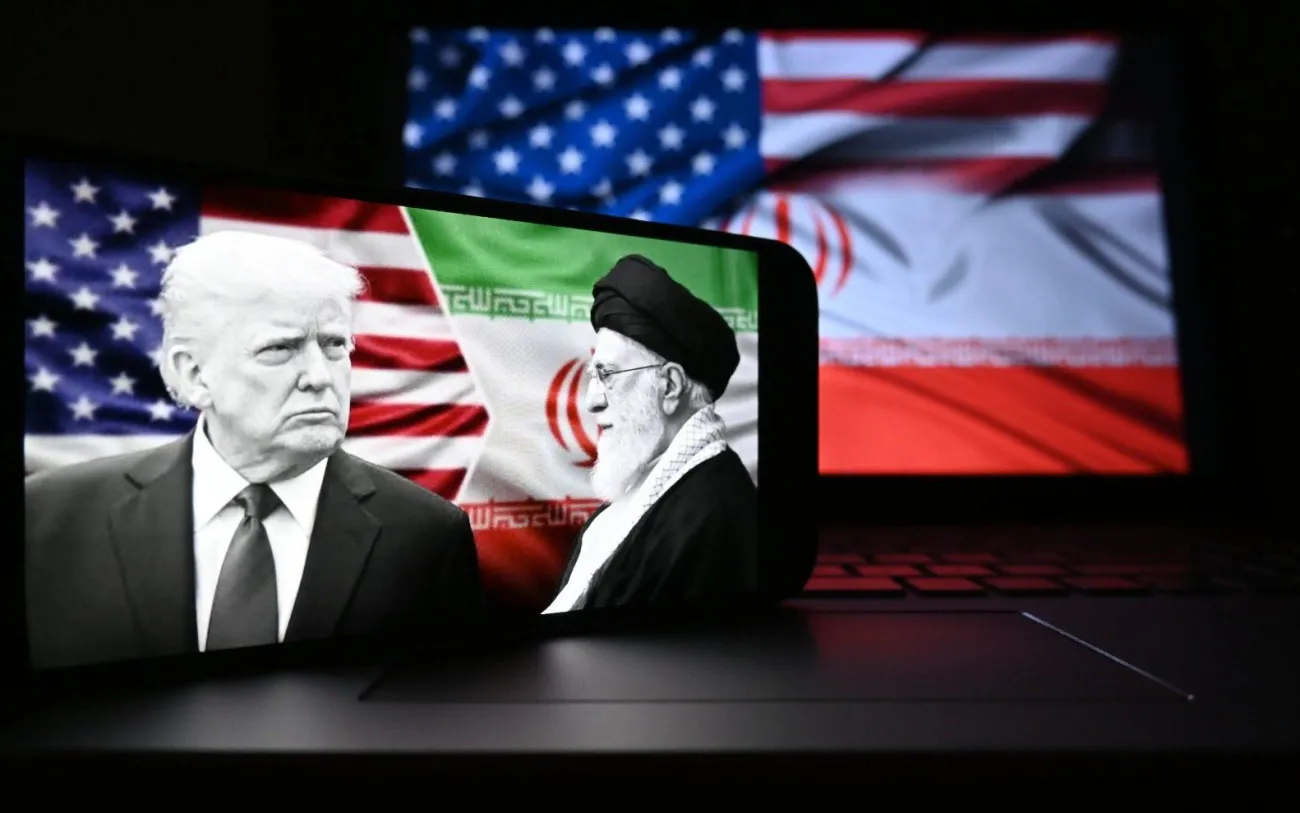
While Iran Street remains restless, security pressure has intensified, and at the same time, hidden diplomatic channels remain active; the intersection of protest, repression, and deal-making once again raises the question of how much democracy matters in the politics of power.
It seems that with the increase in field pressure and the elevation of the security response from 'public security' to 'national security and regime survival,' along with intensive diplomatic activities—from secret negotiations to visible visits, including the presence of the Omani Foreign Minister in Tehran today—the scale and volume of street gatherings have decreased; a relative decrease, not a complete halt.
Review of videos and field evidence shows that up to this stage, the IRGC and the army, as classic military forces, have not entered urban confrontations in their official uniforms and openly. This deliberate absence has, in practice, kept the protests at a 'law enforcement–security' level.has kept and prevented it from being labeled as a "military conflict".
This tactic implies that if there is an attack by protesters on military or security centers in the scenario of escalation of the crisis, then the entry of military forces will be justified not in the form of "protest control", but in the context of "legitimate defense of vital centers". This is the tested model that was used in the 1401 protests.
It should not be forgotten that at the height of the "Women, Life, Freedom" protests, the United States, while publicly supporting the protesters and taking strong political positions, was simultaneously engaged in secret, intelligence and security negotiations with the Islamic Republic; Negotiations that eventually led to the release of some prisoners and the release of a part of Iran's blocked financial resources, although the then American government later tried to downplay or deny the role and dimensions of this agreement.
The role of the Oman government at that time, especially in Mehr 1401, was decisive; A role that shows signs of reproduction even today and cannot be considered merely accidental or ceremonial.
Realism requires accepting that a very large amount of people came to the streets and scenes were created that were unprecedented or even unique in terms of boldness, geographical scope, and the type of slogans. Form of protest, type of organization, and crossing linesThe previous red ones were and still carry serious messages.
But this is not the whole truth and one-sided analysis leads to calculation error.
On the other hand, according to its historical experience, the Islamic Republic defends the "integrity of the power structure" with all its security, intelligence and hard capacities. The security levels have not yet reached the final point, and the history of behavior shows that if an existential threat is detected, the use of the most violent tactics will not be far from expected.
The meaningful silence of the government institutions, the President Masoud Mezikian and his first deputy, is more than a sign of ignorance, it can be a confirmation of handing over the decision-making field to non-governmental security institutions. This situation reinforces the scenario of a creeping movement towards a kind of "military government"; A situation whose miniature example was reflected earlier in the statements of Sardar Hossein Yekta, a member of the Central Council of Ammar Camp, in the Islamic Republic of Iran Radio and Television. Although martial law was not officially announced, public warnings about the absence of citizens from the streets, from the only media available to the public, practicallyIt had a similar function.Interrupting the internet and blocking communication has helped in the short term to control the field and curb the free flow of information. Therefore, it is unlikely that we will see a stable return of the Internet and free communication in the coming days; Unless there is a significant change in the political or security balance.
The possibility of a military conflict or foreign attack is still one of the serious scenarios on the table; However, if such an event occurs, its "type", "scope" and "level" will be decisive, from a limited and deterrent action to a costly and regional scenario.
What is happening in Iran today is neither the end of protests nor the establishment of stability; The street is still alive and the presence of people continues, although with ups and downs. The temporary reduction or dispersion of gatherings does not mean social withdrawal, but more than anything, it reflects security pressure, disconnection of communication and change of field tactics.
At the same time, it should be accepted with a realistic view that the political-security environment of the country is prone to any deal, settlement and agreement behind the scenes; both domestically and regionally and internationally. Previous experiences have shown that street protests do not necessarily hinder high-level talks and deals, but sometimes become a lever to accelerate them, and the role of the "Foreign Intelligence Organization and Movements" of the Ministry of Intelligence and other intelligence-diplomatic institutions cannot be ignored.In the meantime, the role of the United States and Donald Trump is key. Trump has repeatedly shown that he puts his political, security and economic interests before any other principle of democracy and human rights; Not only with Iran, but also with the traditional allies of America. His behavioral evidence shows that if a deal is deemed "beneficial," verbal support for protests or democratic values can simply be ignored, as has often been the case so far.
Therefore, the simultaneity of the restless street with the quiet negotiation rooms is neither a contradiction nor an exception; Rather, it is part of the recurring pattern of politics towards Iran. The street boils over, security pressure mounts, and at the same time, overt or covert security negotiation channels remain open.
Iran's society today stands at a point where its future path can lean in one of these three directions:
1) transaction above and crisis management,
2) Intensification of repression by relying on security spending and news isolation.
3) or an unpredictable event that suddenly disrupts the existing equations.
What is certain is that neither the street has been removed from the equation, nor has transaction-oriented politics been removed from the agenda of the main actors. The future will be the result of the interaction of these two fields; A field that is still open and not closed and the actors of all sides are working hard and Iran is experiencing its busiest historical days in the last half century regarding the deal.
Note that the Internet and communication flow are still severely disrupted or interrupted. Obviously, analysis without complete data is always accompanied by errors; However, sometimes it is necessary to write so that some patterns and historical experiences are not removed from the collective memory.
Take less than a minute, register and share your opinion under this post.
Insulting or inciting messages will be deleted.
Sign Up