
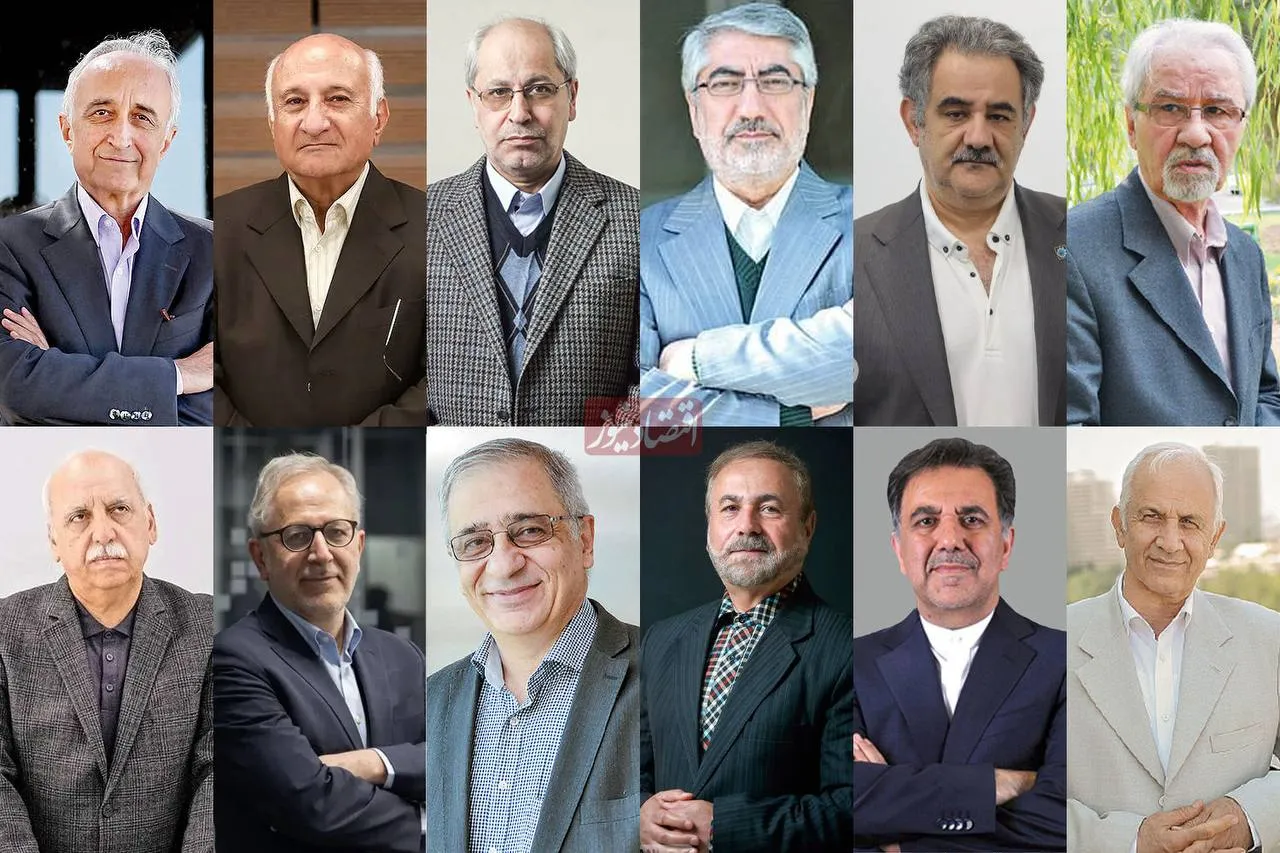
A group of professors, researchers, and activists in the fields of economics and social sciences, in an open letter addressed to the President, emphasized the necessity of implementing economic reforms, while stressing that...
English Translation
A group of professors, researchers, and activists in the fields of economics and social sciences, in an open letter addressed to the President of our country, while emphasizing the necessity of implementing economic reforms, have stressed that: "Support infrastructures and minimal compensatory mechanisms must be designed in such a way that the pressure of price reforms on low-income groups is minimized, without leading to the return of costly and inefficient past policies."
In another section of this letter, which has been signed by 180 prominent figures, referring to the necessity of reforming energy carrier prices, it states: "Just as a segment of the people in these difficult conditions is forced to bear a greater share of the cost, the government must also show courage and reduce or eliminate costly, ineffective, and socially unproductive budget items. The reform of gasoline and other energy carrier prices, if it is to lead to justice, must be accompanied by a simultaneous reform of the expenditure side of the governance budget."
Among the signatories of this letter, the names of well-known figures such as Masoud Nili, Seyed Mohammad Tabibian, Mousa Ghaninezhad, Mohammad Mehdi Behkish, Hassan Dargahi, Davoud Souri, Masoud Roghani Zanjani, Mohammad Sattarifar, Tahmasb Mazaheri, Valiollah Seif, Hossein Abdeh Tabrizi, Pirouz Hanachi, Abbas Akhoundi, Alinaghi Mashayekhi, Farhad Nili, and Akbar Komijani are visible.
The text of the letter from a group of professors, researchers, and activists in the fields of economics and social sciences addressed to Masoud Pezeshkian, the President, is as follows:
Honorable President, Dr. Masoud Pezeshkian
With greetings and respect,
We initially draw Your Excellency's attention to this historical point that before the Constitutional Revolution, the government's finance consisted of receiving resources from the people through oppression and injustice and dividing a large portion of it among a number of beneficiaries. As the names of many individuals were registered in the finance ledgers who received "salaries" without having done any work. One of the wishes of the mujahidin and activists of the Constitutional Movement was to put the country's public finance affairs in order.
This wish is not only explicitly stated in the Constitutional Law but is also clearly recorded in the preamble to the first budget presented to the Constitutional Assembly that "the budget is no longer about collecting and distributing resources, but about observing fairness, justice, and rationality in collecting revenue without damage and spending it for the public good." If we abandon and forget this ideal, we have unfairly not only disregarded the achievement of the mujahidin of the Constitutional era but have also ignored the right of the Iranian nation, who are the true owners of public resources.
We, the signatories of this letter, a group of professors, researchers, and activists in the fields of economics and social sciences, emphasize this common principle that justice in the allocation of public resources is one of the necessary conditions for overcoming the country's current difficult circumstances.
While accepting the necessity of implementing economic reforms, we stress that the implementation of these reforms must be accompanied by balancing the budget and reducing inefficient expenditures. Support infrastructures and minimal compensatory mechanisms must be designed in such a way that the pressure of price reforms on low-income groups is minimized, without leading to the return of costly and inefficient past policies.
It is clear that achieving such a standard in the current livelihood conditions of the people is an extremely difficult task. Although it is necessary not to forget the principle of reform, the cost of this approach should not be placed solely on the shoulders of the people, and it is essential that other sectors of governance also be effectively involved in bearing the burden of this transformation and other existing difficult problems, and that an efficient, transparent, and evaluable arrangement be provided and announced for this matter.
In conditions where a segment of society is forced to make greater payments, it is natural and legitimate to raise this question regarding economic reforms:
"Where exactly will the resources obtained be spent?"
Mr. President,
Your Excellency has repeatedly emphasized the necessity of an operational budget, eliminating non-performing items, and economizing on expenses that have no corresponding value for the people. Now is the time for this approach to be implemented and its results seen in practice.
Just as a segment of the people in these difficult conditions is forced to bear a greater share of the cost, the government must also show courage and reduce or eliminate costly, ineffective, and socially unproductive budget items. The reform of gasoline and other energy carrier prices, if it is to lead to justice, must be accompanied by a simultaneous reform of the expenditure side of the governance budget. The people must see:
Which costs have been reduced;
Which budget items have been eliminated;
And how the new revenues are being spent for the benefit of public goods like education, health and medical treatment, public transport, and similar items.
If part of these resources is consumed to reduce the budget deficit, it is completely understandable; but alongside this, the elimination of superfluous and non-productive costs must also be made transparent and implemented. The people have the right to know which useless burdens the government has lifted from their shoulders alongside increasing revenue.
This is "not only" an economic demand; it is also an ethical and national demand.
Mr. President,
Today, the government must show that it pursues justice and efficiency simultaneously. We, the signatories of this letter, agree on a common request: "Make the budget just and transparent," and as a starting point, implement the following in next year's budget:
1- Eliminate without compromise the budget of institutions that have no role or position in providing public services and whose benefit from public resources is unclear. People are living in very difficult conditions, and as it appears, the outlook does not promise improvement either. In such circumstances, what is the justification for allocating a budget to activities and institutions unrelated to national interests? Courageously eliminate expenses that have no tangible benefit for the people, and let the people see that economic reforms are not achieved only by imposing new costs on them.
2- Make the budget completely transparent. Turn the government treasury into a glass room where everything that enters and everything that is paid out is clearly visible to all citizens. The continuous publication of reports on eliminated, downsized items, and the manner of spending resources obtained from reforms will increase public trust and enable the people's participation in enduring the burden of reforms.
3- Resolutely reduce the budget of organizations and institutions existing in the governance system whose services bear no proportion to the massive amounts allocated.
Today, the country needs justice, honesty, transparency, and balance in budgetary policymaking more than ever. If the people are to endure greater hardship, they must be assured that the government and the ruling establishment accept the same degree of reform difficulty.
With respect,.
Kourosh Ahmadi - Ehsan Asadi - Behrang Asadi - Saeid Eslami Bidgoli - Farhad Esmaeilzadeh - Hossein Asgharpoor - Mir Mehdi Esfahani - Ali Ashraf Afkhami - Valiollah Afkhamirad - Morteza Alviri - Sara Emamgholipour - Behrooz Omidali - Saeed Amini - Gholamreza Ansari - Bahman Ahmadi Amoee - Ghasem Ansari Renani - Hashem Oraee - Mahmood Owlad - Seyed Javad Iranianfard - Abbas Akhoundi - Mohammad Reza Arasti - Seyed Javad Aghajari - Allah Mohammad Aghaei - Ali Aghaei - Javad Amareh - Abdol Majid Ahangari - Ali Baghano - Mohammad Taghi Banki - Mohammad Hossein Bahrani - Alireza Bakhtiari - Tayyebeh Bakhtiarian - Lotfali Bakhshi - Rasoul Baradaran Hassanzadeh - Mohammad Ali Barkhordari - Albert Baghziean - Davoud Behboudi - Mohammad Bagher Beheshti - Mohammad Mehdi Behkish - Behzad Bahmannejad - Mehrdad Parsamanesh - Amir Pourianasab - Ahmad Pooyanfar - Mehrdad Taki - Mehdi Takyeh - Hamid Tonekaboni - Mehdi Tanhamoafi - Mehrnaz Teimourian - Afshin Javid - Pouya Jabal Ameli - Seyed Hossein Jalali - Nahid Jahani - Masoud Hajalilou - Ali Akbar Hasani - Amir Hosseini - Mohammad Hosseini - Seyed Mohammad Hosseini - Farzin Haghparast - Mehdi Haghighi Kaffash - Pirouz Hanachi - Mohammad Saeed Heidari - Seyed Mohammad Ali Khatami Firouzabadi - Amir Hossein Khaleghi - Hadi Khaniki - Vali Khodadadi - Rouhollah Khodarahmi - Azadeh Khorrami Moghaddam - Behzad Khosravi - Yadollah Dadgar - Kaveh Derakhshan - Hassan Dargahi - Ahmad Doost Hosseini - Ali Mohammad Doost Hosseini - Firooz Rad - Masoumeh Rajabi - Ashkan Rahimi - Ahmad Rezaei - Behrooz Rezaeimanesh - Karim Razavi - Hassan Rafiei - Masoud Roghani Zanjani - Seddigh Raeisi - Navid Raeisi - Maryam Zareian - Fayyaz Zahed - Abbas Zarkoub - Shahriar Zarooki - Mohammad Hossein Zeinalian - Ali Sayeh Miri - Mehrdad Sepahvand - Mohammad Sattarifar - Seyed Hossein Serajzadeh - Ali Sarzaeem - Mohammad Reza Saadi - Ali Asghar Saeedi - Amir Behdad Salami - Gholamreza Salami - Javad Soltanzadeh - Roya Soltani - Davoud Souri - Valiollah Seif - Hassan Ali Sinaei - Mahmood Sharepour - Omid Sharifi - Mohammad Hossein Sharifzadegan - Vahid Shaghaghi - Naser Shams - Mehdi Sheikhzadeh Marand - Mostafa Sadegh - Mohammad Reza Sadeghi Moghaddam - Ali Sadeghi Hamedani - Sholaleh Sahhafi - Ebrahim Sahhafi - Bahram Salavati - Saeed Samadi - Mohammad Taheri - Hassan Taaee - Seyed Mohammad Tabibian - Ali Tatari - Javad Tahmasbi - Mohsen Zarifian - Ebrahim Abbasi - Saeed Abbasian - Mohammad Reza Abdolrahimi - Leila Abdollahzadeh Ramehormozi - Abbas Abdshahi - Amir Reza Abdoli - Hossein Abdeh Tabrizi - Meysam Arabzadeh - Ahmad Azizi - Mohammad Alinezhad - Mohammad Gharavi - Mousa Ghaninezhad - Alinaghi Mashayekhi - Nematollah Fazeli - Farshad Fatemi Ardestani - Asghar Fakhrieh Kashan - Reza Farahani - Gholamali Farjadi - Pouya Firoozi - Kamran Feyzi - Esmaeil Ghaderi - Farid Ghadiri - Abolfazl Ghandchi - Mohammad Ghoochan - Seyed Behzad Kazemi - Morteza Kazemi - Ali Kajbaf - Nader Karimi - Zahra Karimi Moghari - Abolfazl Kazazi - Gholamreza Keshavarz Haddad - Davoud Keshavarzian - Akbar Komijani - Ali Mohammad Kimiagari - Ali Lotfi - Mohammad Mehdi Lotfi Heravi - Afshin Motaghi - Ali Mohaghar - Parviz Mohammadzadeh - Seyed Mojtaba Mahmoudzadeh - Vahid Mahmoudi - Ali Mahmoudi - Gholamali Mostalipar - Tahmasb Mazaheri - Hossein Moghadam - Mehrdad Maghsoodlou - Behrooz Maleki - Mani Motameni - Mir Taher Mousavi - Majid Mir Eskandari - Ali Mirzakhani - Mehdi Mirzaei - Seyed Ahmad Miri - Nima Namdari - Masoud Nili - Farhad Nili - Behrooz Hadi Zonooz - Seyed Abbas Hashemi - Abolghasem Hashemi - Kourosh Homayounpour - Hassan Varmzyar
Take less than a minute, register and share your opinion under this post.
Insulting or inciting messages will be deleted.
Sign Up