
With the approval of the Executive Regulations for Combating and Preventing Money Laundering and Terrorist Financing Crimes in the Council of Ministers, an important step towards updating
With the approval of the Executive Regulations for Combating and Preventing Money Laundering and Terrorist Financing Crimes in the Council of Ministers, an important step was taken to update the regulations and strengthen the country's legal and regulatory mechanisms to prevent and fight economic corruption, especially new crimes.
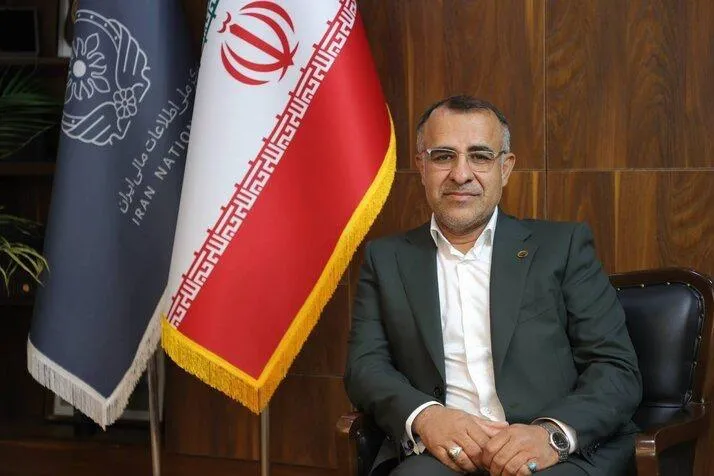
Hadi Khani, Deputy Minister of Economy and Secretary of the Supreme Council for the Prevention of Money Laundering Crimes and Financing of Terrorism, announced this news and said: Since the last amendment of the regulations in 2018, there were challenges and ambiguities in the implementation of the previous regulations. Also, with the emergence of complex and new ways of committing crimes, the necessity of a serious review of the regulations was felt.
He pointed to the process of preparing this regulation and said: From September 1403, the joint expert work between the Ministry of Justice, the Financial Information Center of the Ministry of Economic Affairs and Finance, the judiciary and other responsible institutions began, and during 18 specialized meetings and spent more than 3,600 hours of expert work, the opinions and suggestions of the executive bodies were obtained, and with the approval of the regulations in the Supreme Council for the Prevention and Combating of Money Laundering and Terrorism Financing, this regulation was approved by the head of the judiciary and its cabinet finally approved.
Referring to the technical and specialized features of the new regulations, the head of the financial information center said: In the drafting process, a detailed legal and expert work was done, based on the experiences of leading countries, and the challenges identified in the implementation of the previous version were technically and operationally resolved in the new text.
Risk-oriented approach and focus on financial institutions
The Deputy Minister of Economy said about the salient features of this regulation: the global anti-money laundering system has moved based on a risk-oriented approach and optimal resource management; In this regard, the new regulations have been developed with the same approach, focusing on financial institutions and sensitive economic areas.
The head of the Financial Information Center pointed out that the institutions subject to the regulation include a wide range of institutions including banks, capital market institutions and insurance as well as virtual asset service providers, exchanges, Qarz Al-Hasna funds, payment service providers and payment assistants, leasing companies, etc., he said: In the new reforms, the priorities are based on the national needs of the reorganization and the regulatory resources are directed in a targeted manner, while in The previous regulations, overshadowing the effectiveness of the anti-money laundering system in all areas, had overshadowed the policy.
Strengthening the monitoring system and implementation guarantee
Khani stated that in the new version of the regulation, the system of monitoring of the covered persons, including financial institutions and non-financial businesses, has been technically redesigned, and clarified that: structural weaknesses in effective monitoring, the lack of guarantee of deterrent executions and market entry controls have been eliminated, and detailed regulations have been provided for the method of monitoring, the powers of the custodian institutions, and punitive and corrective mechanisms.
Organization and financial transparency of non-profit institutions
The Secretary of the Supreme Council for the Prevention of Money Laundering Crimes and Financing of Terrorism mentioned organizing the financial status of non-profit organizations and NGOs as one of the important strengths of this resolution and said: In recent years, cases of abuse of some charities and NGO institutions for money laundering and even financing of illegal activities were identified, and in the new regulation, while emphasizing the facilitation of legitimate activities and honoring the valuable services of these institutions to the society, the issuance of activity licenses, the transparency of the institutions The management and finance of these institutions were organized under the responsibility of the Ministry of Interior, and this Ministry has been obliged to design and implement the "Comprehensive System of Social Partnerships" with the cooperation of other relevant authorities.
Entering the field of virtual assets
The Deputy Minister of Economy announced the legal definition of virtual property in the new regulations for the first time and added: In this regulation, in addition to defining the concept of virtual property, relevant service providers were also classified and included in anti-money laundering regulations by adapting international experiences. Thus, cryptocurrency exchanges and similar platforms, like other financial institutions, will be required to comply with legal requirements.
Education and public culture
In another part of his speech, the head of the Financial Information Center, referring to the importance of education and culture building in the new regulation, stated: All educational and research institutions affiliated to the executive bodies, including the Central Bank's Monetary and Banking Research Institute and the Research Institute of Economic Affairs, are required to conduct training courses and expand specialized research in the field of combating money laundering and terrorist financing.
He added: Also, the Broadcasting Organization and the Ministry of Culture and Islamic Guidance are obliged to produce multimedia products to explain the harmful effects of these crimes and promote public awareness.
According to this official, in this regard, financial institutions and regulatory bodies should spend at least two percent of their credits related to education, media productions and social responsibility under the guidance of the Financial Information Center for the development of public culture and education in the field of preventing money laundering and terrorism financing.
Inclusion of non-financial businesses
According to the announcement of the head of the Financial Information Center, all non-financial professions and jobs, including consultants and brokers of real estate and automobile transactions, goldsmiths and sellers of precious metals and precious stones, sellers of antiques and fine works of art, notaries and office assistants, independent accountants, official auditors and auditing institutions, as well as lawyers and legal experts, will be subject to the new regulations.
The approval of the amendment to the "Executive Regulations of the Additional Article 14 of the Anti-Money Laundering Law" approved in October 2018 is a serious step towards improving the efficiency of the country's legal and regulatory system and adapting it to the latest technical standards for combating new financial crimes.




Take less than a minute, register and share your opinion under this post.
Insulting or inciting messages will be deleted.
Sign Up