
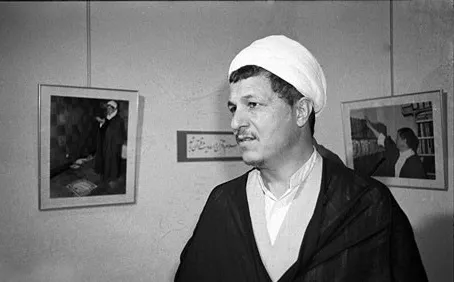
Today as well, I spent most of my time at noon and in the afternoon meeting with government officials and prominent figures. I discussed the issues concerning Kosovo and Russia with Dr. [Ali Akbar] Velayati, [Adviser to the Leader for International Affairs].
Today as well, I spent most of my time at noon and in the afternoon meeting with government officials and prominent figures. I discussed the issues concerning Kosovo and Russia with Dr. [Ali Akbar] Velayati, [Adviser to the Leader for International Affairs]. More was expected of Russia, that it would make greater use of its military power to defend Serbia, Russia’s long-standing ally. Mr. [Yevgeny] Primakov, Prime Minister of Russia, had gone to Belgrade and held talks with Mr. Slobodan Milošević, [President of Yugoslavia], expressing optimism that the problem could be resolved politically. He then took the outcome to Germany, and it was announced that Yugoslavia was prepared, provided the air attacks were halted, to negotiate with the West over the terms of Kosovo’s autonomy. But the United States quickly stated that the Serbian proposal was unacceptable and that Yugoslavia must accept, without conditions, the resolutions of the Rambouillet conference, restore the autonomy that Kosovo had previously enjoyed but that had recently been revoked, and withdraw its forces from Kosovo.
I spoke with Mr. [Mohammad Ali] Abtahi, Mr. Khatami’s Chief of Staff, about the reasons for the cancellation of the trip to France. He said that negotiations by Mr. [Alireza] Moeiri, our ambassador in Paris, had reached an impasse because of the presence of wine at the reception. The French had stated categorically that they could not accept the removal of wine from Mr. Khatami’s reception. Mr. [Federico] Mayor, Director-General of UNESCO, intervened on the pretext of the speech that Mr. Khatami was scheduled to deliver at UNESCO, in an attempt to resolve the matter, but he too was unsuccessful. In addition, the French had brought the issue into the media, and we saw that if we did not officially announce the cancellation sooner, we would suffer losses. Therefore, we took the initiative in announcing the cancellation of the trip at the scheduled time, while preserving the principle of making the trip at an appropriate time. France is also expected to make a similar announcement.
Mr. [Mohammad Ali] Abtahi, [Chief of Staff to the President], and many of his fellow left-wingers criticized, during this meeting, the Friday sermon delivered by Mr. [Mohammad] Yazdi, [Head of the Judiciary], saying that he had spoken in a harsh tone, with threats and intimidation, and that instead of adopting a friendly and conciliatory approach, he had spoken of arrests, prosecution, and punishment. They were particularly concerned about the Ministry of Culture and Islamic Guidance and the newspapers, and many of them were also worried that Mr. [Gholamhossein] Karbaschi would be arrested after the New Year holidays. They appealed to me for help in easing the country’s political atmosphere. Mr. [Eshaq] Jahangiri said that Mr. [Morteza] Moqtadaei had formally told Mr. [Mohsen] Nourbakhsh that Mr. Karbaschi’s appellate sentence would be enforced.
Dr. [Hassan] Habibi, [First Vice President], gave an account of the work of the arbitration group and the problem they still had concerning the rejection of some candidates who had won votes. We also discussed the general policies of the Third Development Plan and the proposal that government resolutions be brought to the [Expediency Discernment] Council for review.
Mr. [Mohammad Bagher] Navisi, Head of the Office of Mr. [Ali Akbar] Nateq [Nouri, Speaker of Parliament], spoke about his discussions with Messrs. Nateq and [Mehdi] Karroubi, and said that both of them, as well as many other political figures, expected me to intervene to help resolve the problems and disputes. He said that Mr. Karroubi acknowledged that Mr. Khatami’s government had not been successful and, given the distribution of votes, was concerned about the problems that could arise from the councils becoming active. Mr. [Seyyed Mohsen] Yahyavi, [representative for Tehran], was briefed on the state of the elections, and it was explained that the quality of oversight, the ill-considered statements by Mr. [Ali] Movahedi-Savoji, [representative for Tehran], and others, as well as the retreats they had made, had worked to the detriment of their own faction.
Mr. [Masoud] Nili, Deputy Head of the Plan and Budget Organization, said that it had not been possible to pay the teachers’ New Year bonus during the final days of the year, and that with permission from the Leader, 60 billion tomans had been newly borrowed from the Central Bank. This was despite the fact that Mr. Khatami’s government ostensibly opposed such permissions that went beyond the law. Dr. [Hassan] Habibi, [First Vice President and member of the Guardian Council], also said that the regulations for the Council Elections Law, which had been approved by the government, were considered unconstitutional by the Guardian Council. They had wanted to invalidate them a few days before the elections, and he himself had raised the issue with the Leader. The Leader had instructed the Guardian Council to refrain from doing so, because it would result in the cancellation of the election program and would create turmoil. Here too, the government had acted contrary to its stated commitment to the Constitution.
I told Mr. [Ataollah] Mohajerani, [Minister of Culture and Islamic Guidance], who had come with a group of ministers, that I saw the opposition to him as being very widespread and that it would be advisable for him to think of ways to prevent more extreme measures. Mr. Ali Khatami, Head of the [President’s] Special Inspection Office, and his managers came. They gave a report on how the office operated and asked for advice. I told them to consult with Mohsen, who had been Head of the President’s Special Inspection Office for eight years, and then come back for further discussions. Faezeh called from Tangra [in Golestan Province] and reported by telephone that she and her companions were safe.
Take less than a minute, register and share your opinion under this post.
Insulting or inciting messages will be deleted.
Sign Up