
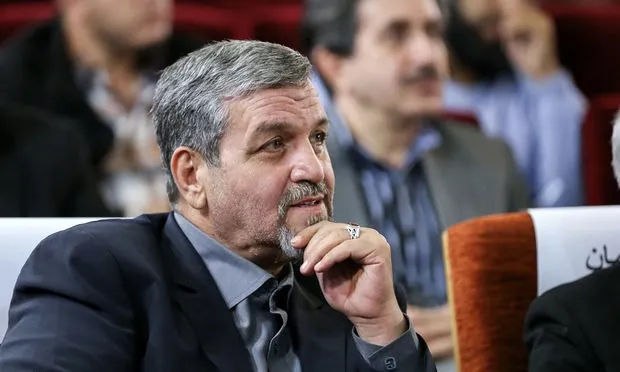
Mostafa Kavakebian (born March 18, 1963, in Semnan) is a prominent Reformist politician, the enduring Secretary-General of the Democracy Party of Iran, President of the Popular Coalition of Reforms, and Managing Editor of the influential daily newspaper Mardomsalari. With a combined record across parliamentary, party, press, and theoretical spheres, he is considered one of the most enduring figures of the Reformist movement in the post-May 23 era. Having completed his education at Imam Sadiq University, he began his political activity in the 1990s as the head of Mohammad Khatami's campaign headquarters in Semnan. Following the May 23 victory, he founded the "Defenders of the May 23 Message" group, which later transformed into the Democracy Party—an organization whose secretary-generalship Kavakebian has retained to this day.
Here is the complete English translation of your provided biographical text on Mostafa Kavakebian:
Mostafa Kavakebian (born March 18, 1963, in Semnan), prominent Iranian Reformist politician, enduring Secretary-General of the Democracy Party of Iran, current President of the Popular Coalition of Reforms, former Member of Parliament for Semnan and Mehdishahr in the 8th Islamic Consultative Assembly (2008–2012), former Member of Parliament for Tehran, Rey, Shemiranat, Eslamshahr, and Pardis in the 10th Islamic Consultative Assembly (2016–2020), former member of the Imam's Line Fraction in the 8th Parliament, founder and managing editor of the widely cited Mardomsalari newspaper (one of the most prominent newspapers of the post-revolutionary Reformist movement), license holder and managing editor of the local newspaper Payam-e Ostan-e Semnan since 1992, current Chairman of the Central Council of the Press House of Semnan Province, current Chairman of the National Press House, prominent university professor and lecturer, distinguished alumnus of Imam Sadiq University, former Vice President of the Central Council of the Islamic Iran Solidarity Party, former member of the Leadership Council and Executive Deputy Secretary-General of the Islamic Iran Solidarity Party, founder and leader of the widely cited group "Defenders of the May 23 Message" in 1997 (which formed the foundation of the Democracy Party), widely covered candidate in the 9th presidential election in 2005 under the slogan "Deepening Democracy through a Service Government," widely covered disqualified candidate in the 11th presidential election in 2013 and the 12th presidential election in 2017, author of prominent works on the fundamentals of religious democracy and Velayat-e Faqih including the widely cited books Fundamentals of Democracy in the Guardianship of the Islamic Jurist System (1990) and Obstacles to Democracy in Iran (2007), widely covered critical figure during Masoud Pezeshkian's 14th administration with explicit statements regarding the non-Reformist nature of this government, and at the same time one of the most widely cited, prominent, and distinct combined parliamentary–party–press Reformist figures of post-revolutionary Iran over the past three decades, stands among the core figures of religious democracy discourse and provincial–national Reformism.
Mostafa Kavakebian—whose unique trajectory spans a prominent cultural-family background in Semnan (one of the most prominent cultural-historical cities of northern Iran), a distinguished academic path at Imam Sadiq University (one of post-revolutionary Iran's most prominent combined seminary-academic institutions), the initiation of prominent university and media activities in the 1980s and 1990s, assuming the management of the widely cited publication Namad (organ of Shahed University), serving as editor-in-chief of the widely cited weekly Tadbir and Hambastegi (organ of the Iran Solidarity Party), joining the Islamic Iran Solidarity Party in the 1990s and rising through its ranks to hold positions on the Supreme Council, Leadership Council, and as Executive Deputy to the Secretary-General (which gained widespread coverage from 1999), representing the Solidarity Party in the Election Coordination Headquarters of the May 23 Front (where he played an enduring role in coordinating 18 political groups and parties for the 6th parliamentary election), serving as head of Mohammad Khatami's campaign headquarters in Semnan during the 1996–1997 presidential election (which formed the foundation of his enduring Reformist identity), founding the prominent group "Defenders of the May 23 Message" following the historic victory of May 23, 1997 alongside members of Khatami's campaign headquarters in Semnan, securing an official activity license from the Ministry of Interior as one of the earliest May 23 political parties, transforming this entity into the "Democracy Party" at its first congress (one of the most prominent post-revolutionary Iranian Reformist parties), holding the enduring role of Secretary-General of the Democracy Party from its inception to the present (representing one of the longest party leadership tenures in post-revolutionary Iran), managing the widely cited daily newspaper Mardomsalari (a leading Reformist newspaper), maintaining membership in the Reformist Front Coordination Council since its founding, co-founding the House of Parties of Iran and serving on its first Central Council, running for president in 2005 under the banner "Deepening Democracy through a Service Government" (which met with disqualification), securing victory in the 8th parliamentary election in 2008 representing Semnan and Mehdishahr, joining the Imam's Line Fraction in the 8th Parliament, facing disqualification by the Guardian Council in the 11th presidential election in 2013, actively supporting Hassan Rouhani's candidacy following that disqualification (delivering campaign speeches in Semnan and Firuzkuh), securing victory in the 10th parliamentary election in 2016 representing Tehran, Rey, Shemiranat, Eslamshahr, and Pardis (marking the transition of his parliamentary base from Semnan to Tehran), facing disqualification once again by the Guardian Council in the 12th presidential election in 2017, continuing his ongoing discourse–party–press activities in the modern era (including widely reported statements such as "No one can say the 14th government is Reformist," which formed the core of his critical stance on Pezeshkian's administration), and finally, taking high-profile stances on sensitive issues such as "Catherine Perez-Shakdam" and the alleged "Letter from Pezeshkian to Bin Salman" (which rank among his most controversial recent positions)—has established himself as one of the most enduring and widely discussed combined parliamentary–party–press Reformist figures of post-revolutionary Iran.
The significance of Mostafa Kavakebian in the historical and political landscape of contemporary Iran can be examined through several key dimensions. First, his enduring tenure as Secretary-General of the Democracy Party of Iran—representing one of the longest party leadership tenures among post-revolutionary Reformist parties—is a notable aspect of his organizational persistence. Second, serving as a two-term Member of Parliament across two distinct constituencies—representing Semnan (8th Parliament) and Tehran (10th Parliament)—highlights his parliamentary adaptability. Third, his role as managing editor of the widely cited Mardomsalari newspaper establishes him as a key architect of post-revolutionary Reformist media. Fourth, serving as President of the Popular Coalition of Reforms highlights his organizational role within broad coalition politics. Fifth, his theoretical contributions to religious democracy and its obstacles—reflected in his widely cited publications—represent a significant aspect of his intellectual legacy.
Important Note: Mostafa Kavakebian's record and performance are viewed through sharply contrasting lenses within Persian-language political and media circles. In Reformist discourse, he is recognized as the "Secretary-General of the Democracy Party," "Managing Editor of Mardomsalari," and "President of the Popular Coalition of Reforms." Among progressive Reformist critics, his controversial positions on sensitive national topics have drawn sharp scrutiny. In Principalist discourse, his statements regarding "Catherine Perez-Shakdam" and the alleged "Letter from Pezeshkian to Bin Salman" have been criticized as "spreading baseless speculation"—a Ministry of Foreign Affairs spokesperson remarked in response to Kavakebian's claims: "Insisting on spreading baseless speculation and raising claims whose inaccuracy has been explicitly declared serves no purpose in advancing national interests." This profile presents accounts published in primary Persian-language media and historical sources with an analytical and neutral stance.
Early Life and Family Background
Mostafa Kavakebian was born on March 18, 1963, in Semnan—one of the most prominent cultural and historical cities of northern Iran.
Semnan Heritage
According to published reports: "Mostafa Kavakebian was born on March 18, 1963, in Semnan." His Semnan roots formed the bedrock of his enduring social and political base in Semnan Province, which culminated in his first parliamentary term representing this constituency in the 8th Parliament.
Family
According to published reports: "Kavakebian is married and has been for many years." Mostafa Kavakebian is married and has children.
Education
Mostafa Kavakebian followed a distinguished academic path at Imam Sadiq University.
According to published reports: "Kavakebian studied at Imam Sadiq University." Imam Sadiq University stands among the most prominent combined seminary-academic institutions of post-revolutionary Iran and serves as the alma mater for many prominent political and intellectual figures in the Islamic Republic.
Early Media and Party Career (1990s)
The most widely reported early chapter of Kavakebian's career involved assuming prominent media and party leadership roles throughout the 1990s.
Editorship of Hambastegi Weekly
According to published reports: "Kavakebian previously served as editor-in-chief of the weekly Hambastegi (organ of the Islamic Iran Solidarity Party) and managing editor of Namad publication (organ of Shahed University)."
Managing Editor of Payam-e Ostan-e Semnan
According to published reports: "Kavakebian is the license holder and managing editor of the local daily newspaper Payam-e Ostan-e Semnan, which has been in continuous publication since 1992." This publication ranks among the most prominent regional newspapers in Semnan Province.
Islamic Iran Solidarity Party
Kavakebian's most prominent early party involvement was with the Islamic Iran Solidarity Party.
According to published reports: "With his entry and strong presence in the Islamic Iran Solidarity Party, Kavakebian rapidly rose through the party hierarchy. At the party's first national congress in 1999, he was elected to the Supreme Council, and subsequently chosen by the Supreme Council as a member of the Leadership Council and Executive Deputy Secretary-General, engaging in extensive political work."
Representation in the May 23 Front Coordination Committee
According to published reports: "Kavakebian made special efforts as the representative of his party in the Election Coordination Committee of the May 23 Front to foster coordination among 18 political groups and parties for the 6th parliamentary election."
Head of Khatami's Campaign in Semnan (1996–1997)
A central chapter in Kavakebian's Reformist career was serving as head of Mohammad Khatami's presidential campaign headquarters in Semnan during the 1996–1997 election.
According to published reports: "Kavakebian became head of Mr. Mohammad Khatami's campaign headquarters in Semnan." This role laid the foundation for his enduring Reformist political identity.
Founding of the Democracy Party (1997)
A pivotal historic chapter in Kavakebian's party career was founding the Democracy Party of Iran following the historic Reformist victory of May 23, 1997.
Defenders of the May 23 Message
According to published reports: "Following May 23 of that year, he proceeded to establish the 'Defenders of the May 23 Message' group, whose initial members comprised former staff from Khatami's campaign headquarters across various cities in Semnan Province."
Early Post-1997 Political Parties
According to published reports: "This group was among the first post-May 23 political entities to receive an official activity permit and license from the Ministry of Interior."
Transformation into the Democracy Party
According to published reports: "At its first party congress, the entity adopted the name Democracy Party." This party became one of post-revolutionary Iran's leading Reformist organizations, with Kavakebian serving continuously as its Secretary-General.
Managing Editor of Mardomsalari
A major highlight of Kavakebian's media career was becoming managing editor of the widely cited daily newspaper Mardomsalari—the official organ of the Democracy Party.
According to published reports: "Mostafa Kavakebian is the managing editor of the daily newspaper Mardomsalari." This publication stands among the most prominent Reformist daily newspapers in post-revolutionary Iran.
Electoral and Parliamentary Career
2005 Presidential Candidacy
Kavakebian's initial presidential bid occurred during the 9th presidential election in 2005.
According to published reports: "Kavakebian registered for the 2005 presidential election under the banner 'Deepening Democracy through a Service Government.'" This candidacy—which met with disqualification—helped shape his national profile.
8th Parliament Representative from Semnan (2008–2012)
Kavakebian secured election to the 8th Islamic Consultative Assembly in 2008 representing the Semnan and Mehdishahr constituency.
According to published reports: "Kavakebian served as the representative for the Semnan and Mehdishahr electoral district during the 8th term of the Islamic Consultative Assembly."
Member of the Imam's Line Fraction
According to published reports: "Kavakebian was a member of the Imam's Line Fraction in the 8th Parliament." This fraction was the primary Reformist parliamentary bloc during that term.
Disqualification in the 2013 Presidential Election
Kavakebian registered for the 11th presidential election in 2013 following an official party resolution, but his candidacy was not approved by the Guardian Council.
Support for Hassan Rouhani
According to published reports: "Following the official endorsement of Hassan Rouhani by the Democracy Party, Kavakebian traveled to Semnan and Firuzkuh during the campaign period to deliver speeches and publicly voice support for Rouhani."
10th Parliament Representative from Tehran (2016–2020)
A major milestone in Kavakebian's parliamentary career was his election to the 10th Islamic Consultative Assembly on February 26, 2016, representing the constituency of Tehran, Rey, Shemiranat, Eslamshahr, and Pardis.
According to published reports: "Kavakebian served as a representative for Tehran, Rey, Shemiranat, Eslamshahr, and Pardis in the 10th Parliament." This victory marked the successful transition of his parliamentary base from Semnan to Tehran as part of the Reformist "List of Hope."
Disqualification in the 2017 Presidential Election
Kavakebian registered for the 12th presidential election in 2017, but his qualifications were once again not approved by the Guardian Council.
President of the Popular Coalition of Reforms
According to published reports: "Kavakebian serves as the President of the Popular Coalition of Reforms." This position represents a key leadership role within Reformist coalition structures.
Recent High-Profile Positions During the Pezeshkian Administration
Criticism of Pezeshkian's Administration
According to published reports: "Kavakebian, Secretary-General of the Democracy Party, explicitly stated in public remarks: 'No one can say the 14th administration is Reformist,' emphasizing that 'there is not a single minister who explicitly declares themselves to be Reformist.'" This statement represents one of the most widely cited Reformist critiques of Masoud Pezeshkian's government.
Remarks on Catherine Perez-Shakdam
According to published reports: "The former MP stated: 'I was told not to speak about Catherine Shakdam anymore; even at the time, if it were real, it should not have been raised publicly.'"
Allegations Regarding a Letter to Bin Salman
According to published reports: "Baghaei's response to Mostafa Kavakebian's claim / What was the subject of Pezeshkian's letter to Bin Salman? The Foreign Ministry Spokesperson stated: Insisting on spreading baseless speculation and raising claims whose inaccuracy has been explicitly declared serves no purpose in advancing national interests."
Critique of Academic and Student Engagement
According to published reports: "Mostafa Kavakebian, former MP and Reformist figure, in evaluating the political atmosphere of universities, noted a mutual divergence between the academic community and government officials, stating that students do not even know when elections are scheduled to take place."
Major Works and Publications
Mostafa Kavakebian has authored several influential works on the theoretical foundations of religious democracy and Velayat-e Faqih:
Fundamentals of Democracy in the Guardianship of the Islamic Jurist System (Mabani-ye Demokrasi dar Nezam-e Velayat-e Faqih) — Islamic Propagation Organization, 1990.
Fundamentals of Legitimacy in the Guardianship of the Islamic Jurist System (Mabani-ye Mashru'iyat dar Nezam-e Velayat-e Faqih) — Institute for Compilation and Publication of Imam Khomeini's Works, 1999.
Seven Drops (Haft Qatreh) — Pazineh Publications, 2002.
Discourse of Freedom and Democracy in Electoral Laws from the Inception to the Present (Goftman-e Azadi va Mardomsalari dar Qavanin-e Entekhabati) — Pazineh Publications, 2004.
Obstacles to Democracy in Iran (Mavane'-e Mardomsalari dar Iran) — Pazineh Publications, 2007.
These publications represent significant theoretical research into religious democracy within post-revolutionary Reformist discourse.
Political and Philosophical Framework
Mostafa Kavakebian's political framework is defined by several core principles:
Religious Democracy (Mardomsalari-ye Dini): A framework that seeks to align commitment to the Islamic Republic and Velayat-e Faqih with democratic governance, multi-party competition, and press freedom.
Theoretical Synthesis: Conducting scholarly research into democratic principles within the Velayat-e Faqih governance model.
Provincial–National Reformism: Bridging regional political bases (Semnan) with national legislative representation (Tehran).
Persistent Institutional Critique: Maintaining a critical stance toward successive administrations, including his recent critiques of Pezeshkian's cabinet composition.
Political and Professional Networks
Reformist Leadership: Maintained long-standing ties with figures such as Mohammad Khatami (having served as his campaign chief in Semnan), Akbar Hashemi Rafsanjani, Hassan Rouhani, and Masoud Pezeshkian.
Solidarity Party Network: Built early party networks alongside leadership figures in the Islamic Iran Solidarity Party during his tenure as Executive Deputy Secretary-General.
Democracy Party Structure: Maintains close ties with the central council and organizational members of the Democracy Party of Iran.
Reformist Front and House of Parties: Collaborates with senior Reformist leaders within the Reformist Front (such as Azar Mansouri and Mohsen Armin) and the House of Parties of Iran.
Reformist Press Network: Works closely with senior press figures and journalists across the Reformist media landscape.
Frequently Asked Questions (FAQ)
Who is Mostafa Kavakebian?
Mostafa Kavakebian (born March 18, 1963, in Semnan) is a prominent Iranian Reformist politician, Secretary-General of the Democracy Party of Iran, President of the Popular Coalition of Reforms, former MP for Semnan (8th Parliament) and Tehran (10th Parliament), and Managing Editor of the newspaper Mardomsalari.
What is Kavakebian's educational background?
Kavakebian is a distinguished alumnus of Imam Sadiq University, holding advanced degrees in Political Science, including a Ph.D. from Tarbiat Modares University.
What are Kavakebian's most prominent past positions?
Key positions include: Head of Mohammad Khatami's campaign in Semnan (1996–1997), founder of "Defenders of the May 23 Message" (1997), Secretary-General of the Democracy Party (since inception), Managing Editor of Mardomsalari, MP for Semnan (2008–2012), MP for Tehran (2016–2020), and President of the Popular Coalition of Reforms.
How was the Democracy Party founded?
Following the May 23, 1997 election, Kavakebian established the "Defenders of the May 23 Message" using Khatami's campaign organization in Semnan. It was among the first post-1997 groups to receive an official permit from the Ministry of Interior, officially adopting the name "Democracy Party" at its first congress.
What was his role in the Islamic Iran Solidarity Party?
In the late 1990s, Kavakebian served as a member of the Supreme Council, Leadership Council, and Executive Deputy Secretary-General of the Islamic Iran Solidarity Party, as well as editor-in-chief of its organ, Hambastegi.
How many times has he run for President?
Kavakebian registered for the presidency in 2005, 2013, and 2017. His candidacy was not approved by the Guardian Council in 2013 and 2017.
Which constituencies did he represent in Parliament?
He represented Semnan and Mehdishahr in the 8th Parliament (2008–2012) and Tehran, Rey, Shemiranat, Eslamshahr, and Pardis in the 10th Parliament (2016–2020).
What is the newspaper Mardomsalari?
Mardomsalari is a daily newspaper managed by Mostafa Kavakebian that serves as the official organ of the Democracy Party of Iran and a leading publication within the Reformist press.
What are his major published books?
Major titles include Fundamentals of Democracy in the Guardianship of the Islamic Jurist System (1990), Fundamentals of Legitimacy in the Guardianship of the Islamic Jurist System (1999), Seven Drops (2002), Discourse of Freedom and Democracy in Electoral Laws (2004), and Obstacles to Democracy in Iran (2007).
What is his stance on Masoud Pezeshkian's administration?
Kavakebian has taken an explicitly critical stance, stating that "No one can say the 14th administration is Reformist" and noting the absence of explicitly declared Reformist ministers in the cabinet.
What was his claim regarding Pezeshkian's alleged letter to Bin Salman?
Kavakebian raised claims regarding a letter sent by Pezeshkian to Saudi Crown Prince Mohammed bin Salman, which prompted a response from the Ministry of Foreign Affairs dismissing the assertion as "baseless speculation."
What were his remarks regarding Catherine Perez-Shakdam?
Kavakebian publicly noted that he was advised to refrain from discussing the Catherine Perez-Shakdam affair, adding that even if authentic, the issue should not have been publicized at the time.
What has he stated regarding university students and elections?
Kavakebian pointed to a growing divide between university students and government officials, observing that many students were unaware of upcoming parliamentary election dates.
What defines his political and philosophical framework?
His core framework centers on religious democracy (Mardomsalari-ye Dini), synthesizing democratic mechanisms with Velayat-e Faqih, bridging regional and national Reformist politics, and maintaining active participation across parliamentary, party, and press domains.
Take less than a minute, register and share your opinion under this post.
Insulting or inciting messages will be deleted.
Sign Up