
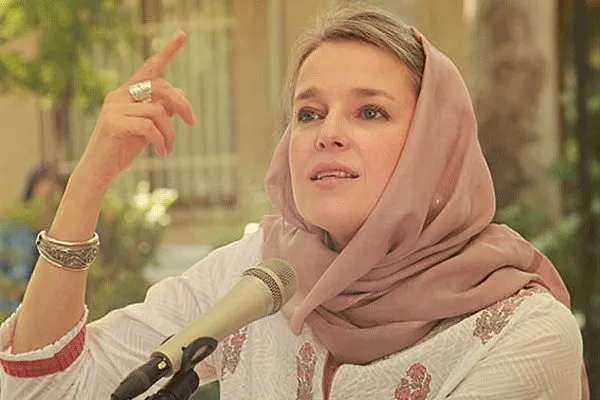
Dr. Lili Anvar, associate professor and head of the Persian language and literature department at the National Institute of Oriental Languages and Civilizations (INALCO) in Paris, a widely acclaimed translator of prominent Persian poets into French, and a researcher of Sufi literature, is one of the most prominent figures in Persian-language Iranology active in France. As the daughter of Manouchehr Anvar, she has become one of the main architects of the connection between classical Persian literature and the French-speaking audience. Her acclaimed translation of Attar's "Mantiq al-Tayr" (with Michael Barry and based on the Shafiei Kadkani edition) won the World Book Award of the Islamic Republic of Iran. Anvar, who hosts a weekly program on France Culture radio and collaborates with the monthly magazine "Le Monde des Religions," has stated in one of her notable positions: "If it weren't for Attar, there would be no Rumi either."
Who is Lili Anvar?
Dr. Lili Anvar (born May 28, 1967, in Tehran) is an associate professor, the head of the Persian language and literature department at the National Institute of Oriental Languages and Civilizations (INALCO) in Paris, a widely acclaimed translator of prominent Persian poets into French, a researcher of Persian Sufi literature, and a media expert on France Culture radio. She is one of the most prominent figures in Persian-language Iranology active in France and one of the most widely recognized architects of the connection between classical Persian literature and the French-speaking audience. Anvar, with a unique path—from a distinguished family background as the daughter of Manouchehr Anvar, to her early education at the French School of Razi in Tehran until the age of 13, to her emigration to France during the Iran-Iraq war to continue her studies, to her rare triple academic background, to her faculty membership at INALCO and promotion to head of the Persian language and literature department, and finally, to her production of a series of prominent translations of classical Persian works into French—has become one of the most cited figures in French-language Iranology. Anvar, in addition to her academic activities, with a sustained presence in prominent French media and a highly visible presence in poetry reading sessions of mystical poetry with musical accompaniment, is among the most prominent voices introducing Persian Sufi literature to the French-speaking audience.
The importance of Lili Anvar in Iran's contemporary intellectual-literary sphere can be examined from several angles. First, her unique family background as the daughter of Manouchehr Anvar, a figure who is among the most prominent translators, announcers, and theater directors of contemporary Iran. Second, her rare and distinctive triple academic background, reflected in her studies in three literary traditions with high academic degrees, making her one of the most widely recognized figures in Persian-Western literary translation. Third, her pioneering position as the head of the Persian language and literature department at INALCO, forming the foundation of her sustained international academic credibility. Fourth, her pioneering contribution to translating prominent works of Persian Sufi literature into French, especially her widely acclaimed translation of Attar's "Mantiq al-Tayr" with Michael Barry, which was among the winners of the World Book Award. Fifth, her exceptional ability to combine academic research, literary translation, media activity, and Sufi poetry recitation, making her one of the few multifaceted figures active in the French-language Iranology sphere.
Anvar, in one of her notable positions, has stated: "If it weren't for Attar, there would be no Rumi either. Studying most of Attar's works is important for understanding Rumi." In another notable position, she has stated that "the translation of Khayyam's and Rumi's poems into English is not translation but adaptation" and that "these poets have been introduced to the world through a misunderstanding."
Life and Background
Lili Anvar was born on May 28, 1967, in Tehran. Born in the mid-1960s, Anvar belongs to a generation that, in adolescence, coincided with the events of the 1979 Islamic Revolution and the beginning of the Iran-Iraq war—experiences that formed the foundation of her later path.
Family: The Legacy of Manouchehr Anvar
The central aspect of Lili Anvar's cultural-intellectual background is her family connection to Manouchehr Anvar.
Manouchehr Anvar is among the most prominent cultural-translation figures of contemporary Iran. Throughout his intellectual-cultural career, he was a translator, announcer, writer, and prominent theater director; for a long time, he was an editor at Franklin Publications; and he was known for his strong management of the Tehran Film Festival press conferences with exceptional mastery of simultaneous English-Persian translation.
This family background formed the foundation of Lili Anvar's inclination toward literature and cultural-translation activities.
Childhood and Love for Rumi
Lili Anvar, in one of her personal narratives, states: "During the revolution and after that, during the war, for a while I studied at home through correspondence with France. My only weekly entertainment at that time was the poetry reading gatherings I attended with my father. At that age, I didn't understand much of the poems, but it was then that I fell in love with Persian poetry, especially Rumi, and with all my childishness, I told my father that I loved this poet more than anyone else."
This childhood experience—in which her love for Rumi was formed in the atmosphere of her father's poetry reading sessions—formed the foundation of her later expertise in Persian Sufi literature.
School Years
Anvar studied at the French School of Razi in Tehran until the age of 13. This school, which was among the most prominent centers of French education in pre-revolution Tehran, formed the foundation of her fundamental mastery of the French language.
Emigration to France
According to published accounts: "I was in Iran until the age of 15 and studied at the French School of Razi. During the war, since there was no longer a French school in Iran, my parents decided it would be better for me to continue my studies in France." This emigration, which took place in the mid-1980s and in the tense atmosphere of the Iran-Iraq war, formed the foundation of her later academic path in France.
Education
Lili Anvar's educational path is one of the most prolific and multifaceted academic paths among Persian-language Iranology figures in the diaspora.
French Literature and English Literature
According to Anvar's own account: "I went to France, first studying French literature and then English literature."
Aggregation in English Literature
Anvar received the university professorship degree (agrégation) in English from the École Normale Supérieure de Lyon—one of the most prestigious academic degrees in France, indicating a high level of expertise in the field of university education.
Her specialization at this stage was "the translation of Persian works into English"—including "the history, reasons, methods, and techniques of these translations and what they teach us about English literature."
PhD in Persian Literature from the Sorbonne
According to Anvar's own account: "Finally, because I felt it was a shame for a person to know nothing about their own country's literature, I enrolled in Persian literature at the Sorbonne." Anvar eventually succeeded in obtaining a PhD in Persian literature from the Sorbonne University in Paris.
This triple academic background—French literature, English literature, and Persian literature—formed the foundation of her distinctive expertise in bridging the three Western and Persian literary traditions.
Listen | Persian Language, Global Influences, and the Position of Women in Mystical Literature: Lili Anvar's Words on "Persiana Talk"

Academic Activity at INALCO
The central chapter of Anvar's academic career is her membership in the faculty of the National Institute of Oriental Languages and Civilizations (INALCO) in Paris.
About INALCO
The National Institute of Oriental Languages and Civilizations—known as INALCO—is among the most prestigious centers of Oriental studies in France and one of the world's most prominent centers of Iranology. This institute, based in Paris, is among the most prominent centers for training regional experts in France.
Associate Professor Rank
Anvar serves as an associate professor at INALCO—one of the most prestigious academic ranks in the French university system.
Head of the Persian Language and Literature Department
Anvar is the head of the Persian language and literature department at INALCO—a position that places her among the most prominent academic figures in French Iranology. This department, which is among the oldest and most prestigious centers for teaching Persian language and literature in the West, forms the foundation for training several generations of prominent French Iranologists.
Teaching Approach
According to published accounts: "Lili Anvar uses texts by contemporary women writers in teaching Persian." This approach, which bridges language learning with familiarity with contemporary Persian women's literature, is a sign of her distinctive sensitivity to gender issues in literary education.
Notable Works (Translations)
Among Lili Anvar's most important translations are:
Translation of Attar's "Mantiq al-Tayr" into French
Anvar's most widely acclaimed translation is Attar's "Mantiq al-Tayr" into French, carried out in collaboration with Michael Barry. This translation, based on the edition by Dr. Mohammad Reza Shafiei Kadkani, was among the winners of the World Book Award.
According to Anvar's description of this translation: "Attar constructed his Mantiq al-Tayr very precisely, like a symphony. In fact, this book is music, and you know where it begins and where it ends."
Translation of Rumi's "Ney Nameh"
Another of Anvar's notable translations is Rumi's "Ney Nameh" into French, which is among the most widely discussed French translations of this masterpiece of Sufi poetry.
Translation of "Paroles de Vérité"
In 2014, Anvar translated a book under the title "Paroles de Vérité" (Words of Truth) into French, published by Éditions Albin Michel in Paris—one of the most prestigious French publishers.
Other Translations
Anvar has also translated works of Shams Tabrizi, Attar, Nezami, and several contemporary authors into English and French. Several works in French on Persian literature and poetry have also been published by her.
Media Activity
The central chapter of Anvar's media career is her sustained presence in prominent French media.
France Culture Radio
Anvar has a weekly program on France Culture radio—one of the most prominent cultural-academic radios in the world. In this program, she addresses spiritual and mystical issues.
Le Monde des religions Monthly Magazine
Anvar has a column in the monthly magazine "Le Monde des religions," in which she analyzes important global spiritual texts. This publication is among the most prominent specialized magazines in French-language religious-spiritual studies.
The Fourth Edition of the Kamran Djam Annual Lectures
One of the most notable chapters of Anvar's speaking career was the fourth edition of the Kamran Djam Annual Lectures, held in February 2016 over two consecutive days.
The lecture topic was "Poetry as the Language of Passion." In this lecture, Anvar traced Majnun's quest in the wilderness of exile and his suffering as a lover-poet through a comparative analysis of "Layla and Majnun" by Nezami and Jami, comparing them with references from great figures such as Ahmad Ghazali, Attar, Rumi, Sa'di, and several other poets and Sufi masters, shedding light on more aspects of this love epic.
Recitation of Sufi Poetry
Another distinctive feature of Anvar's career is her design and execution of poetry reading sessions of mystical poetry with musical accompaniment.
According to published accounts: "Ms. Anvar has designed poetry reading sessions of mystical poetry with musical accompaniment and appears as a reciter in them. This aspect of her activity reflects her father." This legacy from Manouchehr Anvar, who was among the most prominent announcers and reciters of contemporary Iran, is one of the notable aspects of her cultural-family connection.
Listen | From Translating Attar to the Position of Persian Literature in France: A Conversation with Lili Anvar

Views and Intellectual Framework
Throughout her academic-translation career, Lili Anvar has formulated a distinctive intellectual framework.
Bridging the Three Literary Traditions
Anvar's most central intellectual framework is bridging the Persian, French, and English literary traditions—a framework in which a researcher with a triple academic background plays a role in translating and interpreting Persian Sufi literature for a Western audience.
Critique of Previous English Translations
One of Anvar's notable positions is her critique of previous English translations of Khayyam's and Rumi's works. In her view, "the translation of Khayyam's and Rumi's poems into English is not translation but adaptation" and "these poets have been introduced to the world through a misunderstanding."
The Intellectual Connection Between Attar and Rumi
Anvar's notable theoretical position is that "if it weren't for Attar, there would be no Rumi either. Studying most of Attar's works is important for understanding Rumi." This framework, which highlights the intellectual connection between the two most prominent figures of Persian Sufi literature, is one of the notable aspects of her approach to Sufi literature.
Attar as a Literary Composer
In one of her notable analytical positions, Anvar compared Attar's Mantiq al-Tayr to a musical symphony: "Attar constructed his Mantiq al-Tayr very precisely, like a symphony. In fact, this book is music, and you know where it begins and where it ends."
The Musicality of Poetry
Another feature of Anvar's intellectual framework is her emphasis on the musicality of Persian poetry as its primary attraction: "Musicality comes first and is what initially attracts a person, and then meaning is added."
The Role of Women in Spiritual Literature
One of the notable aspects of Anvar's views is her attention to the role of women in Persian spiritual literature. In one of her widely discussed lectures titled "The Simorgh Was a Woman," Anvar addressed this distinctive theoretical framework. She also uses texts by contemporary women writers in teaching Persian.
Connections with Figures and Currents
Lili Anvar is situated within a network of intellectual-literary connections with prominent figures in Iranology, literary translation, and Sufi literature.
The Legacy of Her Father (Manouchehr Anvar)
Anvar's most central intellectual connection is with the legacy of Manouchehr Anvar—her father, a prominent translator, announcer, writer, and theater director of Iran—which formed the foundation of her literary-cultural identity.
Collaboration with Michael Barry
Anvar's second notable academic connection is with Michael Barry—a prominent Franco-American Iranologist—with whom she collaborated on the widely discussed translation of Attar's "Mantiq al-Tayr," a collaboration that was recognized with the World Book Award.
Shafiei Kadkani
At the intellectual-academic level, her relationship with Dr. Mohammad Reza Shafiei Kadkani—the most prominent contemporary editor of Persian Sufi works—is one of the notable aspects of her academic network.
Ostad Elahi
At the philosophy-mysticism level, her relationship with the legacy of Ostad Elahi—whose notable work she translated into French—forms her mystical network.
Prominent Figures of Sufi Literature
At the literary heritage level, Anvar's intellectual relationship with prominent figures such as Rumi, Shams Tabrizi, Attar Neyshaburi, Nezami Ganjavi, Jami, Ahmad Ghazali, and Sa'di—who are reflected in her various translation and research works—forms her literary heritage network.
Prominent French Media
At the media level, Anvar's sustained relationship with France Culture radio and the monthly magazine "Le Monde des religions" forms her media communications network.
Prominent French Publishers
At the publishing level, Anvar's relationship with Éditions Albin Michel—one of the most prestigious French publishers—which has published her notable translated works, is one of the notable aspects of her publishing network.
Conclusion
Lili Anvar is one of the most widely discussed and multifaceted figures in Persian-language Iranology active in France. With a unique combination of a distinguished family background as the daughter of Manouchehr Anvar, early education at the French School of Razi in Tehran, emigration to France during the Iran-Iraq war, a rare triple academic background, faculty membership and promotion to head of the Persian language and literature department at INALCO, the production of a series of notable translations of classical Persian works into French, sustained media presence on France Culture radio, regular collaboration with the monthly magazine "Le Monde des religions," a highly visible presence in poetry reading sessions of mystical poetry as a reciter, and finally, her sustained role as one of the most prominent voices introducing Persian Sufi literature to the French-speaking audience, she occupies a unique position in the intellectual-academic structure of French-language Iranology.
Lili Anvar's distinguishing feature, on the first level, is her exceptional ability to bridge the three Persian, French, and English literary traditions—an ability in which a researcher with a triple academic background plays a role in translating and interpreting Persian Sufi literature for a Western audience. On the second level, her pioneering contribution to translating prominent works of Persian Sufi literature into French—especially Attar's "Mantiq al-Tayr," which won the World Book Award—is one of her most widely discussed legacies. On the third level, her distinctive ability to combine academic research, literary translation, media activity, and Sufi poetry recitation—formed through her legacy from her father—is one of the notable aspects of her multidimensional identity.
From an analytical perspective, Lili Anvar's position exemplifies the phenomenon of the "university professor-translator-researcher-reciper-tradition heir" in the contemporary Iranian diaspora—a phenomenon in which an academic researcher with a distinguished family-academic background, over decades, plays a sustained role in various academic, translation, media, and cultural arenas. This pattern, which has other examples among Persian-language Iranologists in the diaspora, has found a special reflection in Anvar through her rare triple academic background and her pioneering contribution to translating Attar's "Mantiq al-Tayr."
What is clear from today's perspective is that the topics Anvar has addressed in her works and positions—from bridging Persian-French-English literary traditions, translating prominent works of Persian Sufi literature, critiquing previous English translations, the intellectual connection between Attar and Rumi, the musicality of Persian poetry, the role of women in spiritual literature, and introducing global spiritual texts to the French-speaking audience—remain among the most debated topics in contemporary French-language Iranology discourse. In a situation where Iranian society is in one of its most tense identity-cultural periods—particularly after the 2022 uprising, the 12-day Iran-Israel war in June 2025, and increasing identity challenges—Anvar's academic-analytical voice, with a combination of prominent international academic credibility, distinctive expertise in bridging Iranian and Western cultures, and a pioneering contribution to introducing Persian Sufi literature to the French-speaking audience, is one of the main references for this discourse in French-language media-academic space.
Frequently Asked Questions
Who is Lili Anvar?
Dr. Lili Anvar (born May 28, 1967, in Tehran) is an associate professor, the head of the Persian language and literature department at the National Institute of Oriental Languages and Civilizations (INALCO) in Paris, a widely acclaimed translator of prominent Persian poets into French, a researcher of Persian Sufi literature, and a media expert on France Culture radio. She is one of the most prominent figures in Persian-language Iranology active in France.
Who is Lili Anvar's father?
Lili Anvar's father is Manouchehr Anvar—a prominent translator, announcer, writer, and theater director of Iran—who was among the editors of Franklin Publications in the 1960s and was known for his strong management of the Tehran Film Festival press conferences with exceptional mastery of simultaneous English-Persian translation.
What is Lili Anvar's educational background?
Anvar has a rare triple academic background: she first studied French literature, then English literature in France and received the agrégation in English from the École Normale Supérieure de Lyon. She then obtained a PhD in Persian literature from the Sorbonne University in Paris.
What is INALCO?
The National Institute of Oriental Languages and Civilizations—known as INALCO—is among the most prestigious centers of Oriental studies in France and one of the world's most prominent centers of Iranology. This institute, based in Paris, is among the most prominent centers for training regional experts in France.
What is Lili Anvar's most important translation?
Anvar's most widely discussed translation is Attar's "Mantiq al-Tayr" into French, carried out in collaboration with Michael Barry and based on the edition by Dr. Mohammad Reza Shafiei Kadkani. This translation was among the winners of the World Book Award.
What works of Rumi has she translated?
Anvar produced a translation of Rumi's "Ney Nameh" into French—a translation that is among the most widely discussed French translations of this masterpiece of Sufi poetry and has been the subject of specialized academic articles.
What is the book "Paroles de Vérité"?
In 2014, Anvar translated a book under the title "Paroles de Vérité" into French, published by Éditions Albin Michel—one of the most prestigious French publishers.
What is Anvar's media activity in France?
Anvar has a weekly program on France Culture radio, where she addresses spiritual and mystical issues. She also has a column in the monthly magazine "Le Monde des religions," in which she analyzes important global spiritual texts.
What is Anvar's view on English translations of Khayyam and Rumi?
In one of her notable positions, Anvar stated that "the translation of Khayyam's and Rumi's poems into English is not translation but adaptation" and that "these poets have been introduced to the world through a misunderstanding."
What is Anvar's view on the intellectual connection between Attar and Rumi?
In one of her notable analytical positions, Anvar stated: "If it weren't for Attar, there would be no Rumi either. Studying most of Attar's works is important for understanding Rumi." She also described Attar's Mantiq al-Tayr as "constructed very precisely, like a symphony."
Is Lili Anvar still active?
Yes, Lili Anvar, as an associate professor and head of the Persian language and literature department at INALCO, remains active in the academic-media arena. Her consistent presence in French media programs, commemorative conferences for prominent Persian poets, widely discussed lectures in international academic circles, the publication of new translation works, and the performance of poetry reading sessions of mystical poetry as a reciter are signs of her sustained activity. Her analytical positions on Persian Sufi literature, the translation of prominent Persian works into French, the intellectual connection between Attar and Rumi, and the introduction of global spiritual texts continue to receive widespread coverage in French-language and Persian-language media-academic space.
Take less than a minute, register and share your opinion under this post.
Insulting or inciting messages will be deleted.
Sign Up