
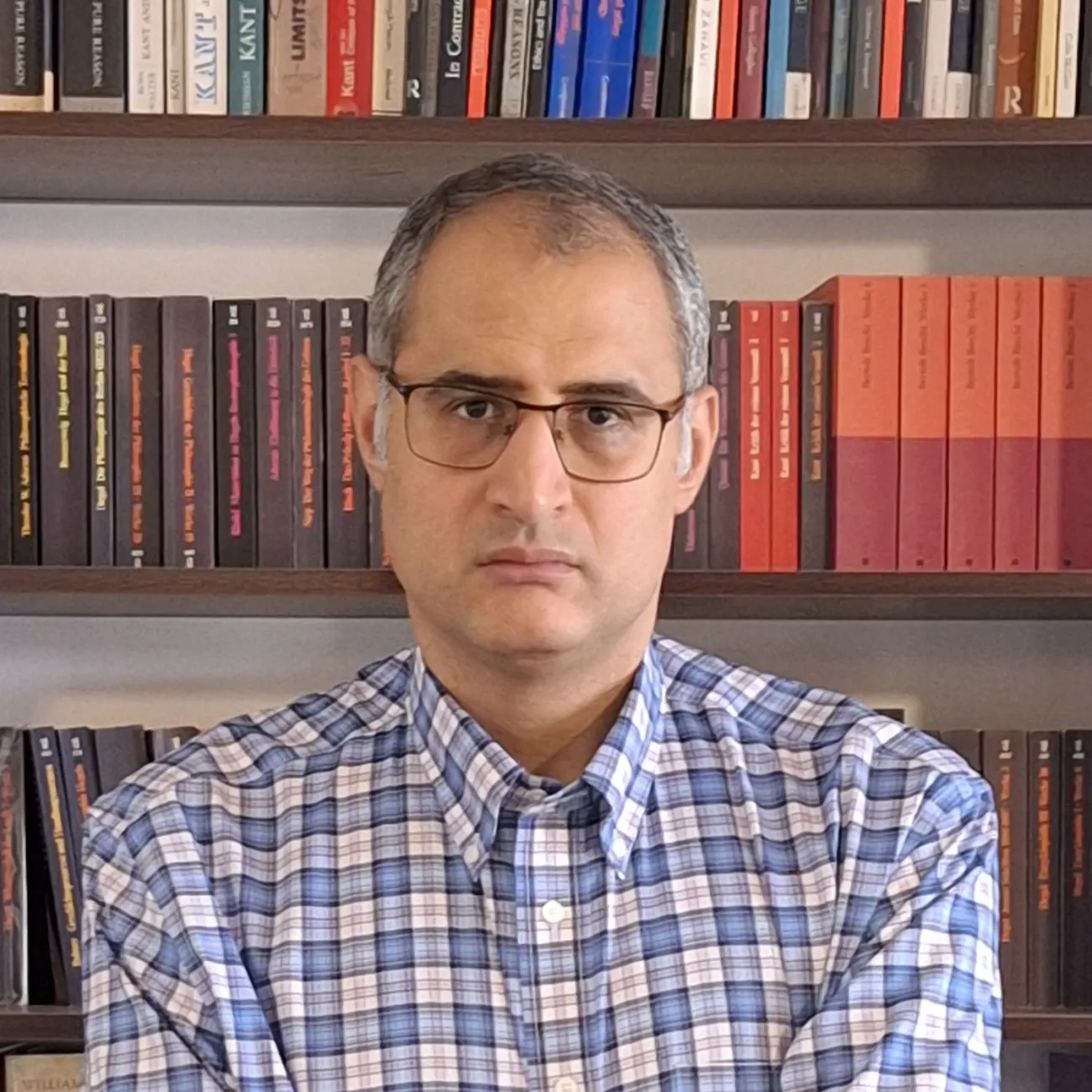
Dr. Arash Abazari is an Iranian philosopher and assistant professor of philosophy at Bilkent University in Turkey. He specializes in nineteenth-century German philosophy, particularly the philosophy of Hegel, and is one of the most prominent representatives of a younger generation of Iranian continental-critical philosophers in the international academic sphere.
Following a distinctive academic path from medicine to philosophy—earning an M.D. from Tehran University of Medical Sciences, a master’s degree from the University of Essex in the United Kingdom, and a Ph.D. in philosophy from Johns Hopkins University in the United States—Abazari gained recognition with the publication of his book Hegel’s Ontology of Power: The Structure of Social Domination in Capitalism by Cambridge University Press in 2020. The book came to be regarded as one of the notable works of the new generation of Hegel scholarship and was the subject of a special “Author Meets Critique” panel in Hegel Bulletin. He has consequently become one of the most widely cited Persian-speaking scholars in continental philosophy.
Abazari has received Alexander von Humboldt and ACLS/Mellon fellowships. In February 2022, he, along with Mohammad Fazeli, ceased to be affiliated with Sharif University of Technology. He currently teaches and conducts research at Bilkent University in Turkey.
Who Is Arash Abazari?
Dr. Arash Abazari is an Iranian philosopher, an assistant professor of philosophy at Bilkent University in Turkey, and a specialist in nineteenth-century German philosophy—particularly Hegel—as well as in political and social philosophy. He is regarded as one of the most prominent representatives of a younger generation of Iranian continental and critical philosophers in the international academic sphere, and as one of the most widely cited contemporary Persian-speaking scholars of continental philosophy over the past two decades.
Abazari has followed a distinctive academic path: beginning with medical training—he earned an M.D. from Tehran University of Medical Sciences—he later shifted to philosophy, receiving a master’s degree from the University of Essex in England and a Ph.D. in philosophy from Johns Hopkins University in 2017. His doctoral dissertation, Hegel’s Logic of Essence and the Ontology of Power in Capitalism, was supervised by Dean Moyar, with prominent scholars including Terry Pinkard, Eckart Förster, Yitzhak Melamed, and Hent de Vries serving as advisers.
His widely discussed book, Hegel’s Ontology of Power: The Structure of Social Domination in Capitalism, was published by Cambridge University Press in 2020. It has been regarded as one of the notable works of the new generation of critical Hegel scholarship, and a special “Author Meets Critique” panel devoted to the book was held in Hegel Bulletin in 2022.
After holding academic positions at institutions including Emory University in the United States, the Institute for Research in Fundamental Sciences (IPM), and the Philosophy of Science Department at Sharif University of Technology, Abazari joined Bilkent University in Turkey. His academic career has also included fellowships such as the Alexander von Humboldt Fellowship, which he held from 2022 to 2024, and the ACLS/Mellon Fellowship, held from 2015 to 2016.
In February 2022, Abazari’s collaboration with Sharif University of Technology was terminated, in a case that attracted considerable attention and prompted widespread reactions among students and academics. The termination occurred at roughly the same time as Mohammad Fazeli’s departure from Shahid Beheshti University.
Abazari’s intellectual framework is distinguished by a reading of Hegel through the category of “the logic of essence,” in opposition to dominant liberal interpretations that tend to focus on Hegel’s Philosophy of Right and the Logic of the Concept. He rereads Hegel through the critical resources of Marx and Adorno, locating the foundation of Hegel’s social critique in the section on the logic of essence in the Science of Logic. His current research project focuses on Georg Lukács’s theory of emancipatory politics.
Significance and Intellectual Contribution
Arash Abazari’s importance in Iran’s contemporary intellectual and academic sphere can be considered from several perspectives.
First is his prominent contribution to international Hegel scholarship, reflected in the publication of his book by Cambridge University Press and the special “Author Meets Critique” panel devoted to it in Hegel Bulletin.
Second is his distinctive interpretation of Hegel through the “logic of essence.” Rather than adopting dominant liberal readings of Hegel, which emphasize the Philosophy of Right and the Logic of the Concept, Abazari seeks the foundations of Hegel’s social critique in the logic of essence developed in the Science of Logic. This approach is considered one of the distinctive innovations of a newer generation of critical Hegel scholars.
Third is his unusual academic transition from medicine to philosophy, which makes him one of the relatively few Iranian philosophers with a background in medical education.
Fourth is his international academic background, combining study at leading Iranian, British, and American institutions with prestigious fellowships such as the Alexander von Humboldt and ACLS/Mellon fellowships.
Fifth is the widely discussed termination of his collaboration with Sharif University of Technology in February 2022, which became one of the most frequently cited cases involving the dismissal or termination of collaboration with critical academics during the administration of President Ebrahim Raisi and was accompanied by extensive student and academic reactions.
Sixth is his continuing contribution to the development of Persian-language continental and critical philosophy through his teaching at Sharif University, research at IPM, and translations and scholarly writings.
In one of his notable theoretical positions, Abazari has argued that “social domination under capitalism is achieved through the illusion of equality and freedom” and that “the fundamental basis of domination in capitalism is the totality of capitalist social relations.” These claims formulate a Hegelian-Marxist framework for understanding domination under capitalism.
Education
Abazari’s academic trajectory is one of the most distinctive among Iranian philosophers, particularly because of his transition from medicine to philosophy.
Medical Degree from Tehran University of Medical Sciences
Abazari initially earned a Doctor of Medicine degree from Tehran University of Medical Sciences, one of Iran’s leading medical universities. This early scientific and empirical training formed the foundation of his intellectual development before his transition to philosophy.
Master’s Degree from the University of Essex
After changing fields, Abazari earned a master’s degree in philosophy from the University of Essex in England. Essex is recognized as an important center for continental philosophy and political and social philosophy in Britain, and his studies there helped establish his later specialization in the continental tradition.
Ph.D. from Johns Hopkins University, 2017
The central stage of Abazari’s advanced academic training was his Ph.D. in philosophy from Johns Hopkins University in the United States, which he completed in 2017. His doctoral studies at Johns Hopkins formed an important basis for his international academic profile in continental and critical philosophy.
Doctoral Dissertation and Supervisors
Abazari’s doctoral dissertation was titled Hegel’s Logic of Essence and the Ontology of Power in Capitalism. It was supervised by Dean Moyar, a prominent American Hegel scholar. The dissertation advisers included Terry Pinkard, Eckart Förster, Yitzhak Melamed, and Hent de Vries, all influential figures in contemporary continental philosophy and the history of German philosophy.
This academic background provided the foundation for Abazari’s later international reputation in Hegel studies.
Academic Career
After completing his doctorate, Abazari worked at a number of prominent academic institutions.
Emory University
Abazari was affiliated with Emory University in the United States, one of the major research universities in the southeastern United States.
Institute for Research in Fundamental Sciences
After returning to Iran, he worked as a senior researcher at the Institute for Research in Fundamental Sciences (IPM), one of Iran’s leading research institutions in the natural sciences, cognitive sciences, and philosophy.
Philosophy of Science Department, Sharif University of Technology
A central period of Abazari’s academic career in Iran was his teaching in the Philosophy of Science Department at Sharif University of Technology. He taught in the department until 2021.
Bilkent University, Turkey
After his collaboration with Sharif University ended, Abazari joined Bilkent University in Ankara, Turkey, where he became an assistant professor of philosophy. Bilkent University is regarded as one of Turkey’s leading private universities and is his current academic base.
Major Works
Hegel’s Ontology of Power
Abazari’s best-known work is Hegel’s Ontology of Power: The Structure of Social Domination in Capitalism, published by Cambridge University Press in 2020. The book is 218 pages long and bears ISBN 978-1-108-83486-5.
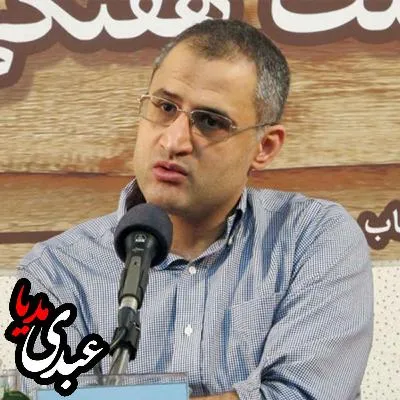
Listen: “Hegel and Multiple Modernities” — Dr. Arash Abazari
The Book’s Theoretical Framework
This book is considered one of the most prominent works of the new generation of critical Hegel scholarship worldwide. According to the publisher:
“Recent attempts to revive Hegel’s social and political philosophy have been limited in two ways: first, by focusing on Hegel’s Philosophy of Right; and second, by adopting a broadly liberal interpretive framework. Against this tendency, Arash Abazari shows that the true location of Hegel’s critical social theory must be sought in his ontology—particularly in the ‘Logic of Essence’ in the Science of Logic. Drawing on the ideas of Marx and Adorno, Abazari brings to light the latent critical significance of Hegel’s logic.”
Major Reviews and Discussions
The book received considerable attention in leading international philosophy journals:
A special “Author Meets Critique” panel in Hegel Bulletin (2022, vol. 43, no. 2, pp. 291–304), one of the world’s leading specialist journals in Hegel studies
A review in Owl of Minerva by Allegra De Laurentiis (2022)
A review in Agora Journal for Metafysisk Spekulasjon by Sjur Sandvik Strøm (2022)
A review in The Philosophical Quarterly by Nahum Brown (2022)
A review in Philosophy in Review by Shahriar Khosravi (2024)
Short reviews by Brian O’Connor and Todd Hedrick
Abazari’s widely discussed response to his critics in the same issue of Hegel Bulletin
Major International Articles
Among Abazari’s most important publications are:
“Hegel’s Logic of Schein as the Ideology of Equality and Freedom in Capitalism” (Hegel Bulletin)
“Reading the Philosophy of Right in Light of the Logic: Hegel on the Possibility of Multiple Modernities,” in Hegel’s Philosophy of Right, published by Routledge in 2022 and edited by Dean Moyar, Kate P. Walsh, and Sebastian Rand
“Response to the Critics of Hegel’s Ontology of Power” (Hegel Bulletin, 2022)
“Marx and Poverty,” in The Routledge Handbook of Poverty and Philosophy (2023)
“Political Action and Hope for Socialism: A Kantian Perspective” (Politisches Handeln und Hoffnung auf den Sozialismus: eine kantische Perspektive), Deutsche Zeitschrift für Philosophie (2024, vol. 72, no. 4)
“The Limits of Capital: The Roots of Marx’s Theory in Hegel’s Logic,” forthcoming in The Metaphysics of Capital, published by Bloomsbury
“Is the Social Building Block Dyadic or Triadic? Fichte versus Simmel,” forthcoming in Fichte and Critical Theory, published by Routledge
“Fichte and the Social Constitution of the Subject,” University of Tabriz, 2021
Translated Works
Abazari has also worked as a translator. His translations include:
Friedrich Dürrenmatt: The Meteor, Stranitzky and the National Hero, by Friedrich Dürrenmatt, translated by Arash Abazari, Cheshmeh Publishing, 2009
Major International Fellowships
Throughout his academic career, Abazari has received several prominent international fellowships.
Alexander von Humboldt Fellowship
Abazari held an Alexander von Humboldt Fellowship from 2022 to 2024. The fellowship is among Germany’s most prestigious research fellowships and is awarded annually to leading researchers from around the world. It is considered one of his most notable international academic achievements.
ACLS/Mellon Fellowship
Abazari also held an ACLS/Mellon Fellowship from 2015 to 2016, one of the most prestigious fellowships awarded by the American Council of Learned Societies.
The Case of the Termination of His Collaboration with Sharif University
February 2022
The most widely discussed episode in Abazari’s academic and legal experience in Iran was the termination of his collaboration with Sharif University of Technology in February 2022.
Background
On 21 January 2022, academic activists and several Iranian media outlets reported the termination of the collaboration of two prominent professors with Shahid Beheshti University and Sharif University of Technology: Mohammad Fazeli, a sociologist and assistant professor at Shahid Beheshti University, and Arash Abazari, a philosophy professor at Sharif University of Technology. The coincidence was regarded as evidence of a broader process of academic purges under the Raisi administration.
Stated Reasons
According to published reports, Sharif Newspaper—the university newspaper’s Twitter account—quoted Ebrahim Azadegan, head of the Philosophy of Science Department at Sharif University of Technology, as saying:
“The Ministry of Science, Research and Technology has rejected Mr. Abazari’s qualifications.”
Azadegan also stated:
“The Ministry of Science had opposed the recruitment of Arash Abazari from the beginning.”
Sharif University’s Official Response
In an official statement, the public-relations office of Sharif University of Technology denied reports that Abazari had been dismissed and announced:
“Abazari did not have an employment relationship with Sharif University, and the process of his recruitment did not reach a positive conclusion in accordance with the legal procedures of the Ministry of Science.”
Widespread Reactions
The case prompted extensive reactions among students and academics:
Journalist Saba Azarpeik wrote on Twitter: “The political purge of university professors has begun!”
The Islamic Association of Students at Sharif University of Technology launched a student campaign calling for Abazari’s return. In a statement, it wrote:
“The sad news of the removal of Dr. Arash Abazari, a professor of philosophy of science at Sharif University of Technology, has deeply affected members of the Sharif community, particularly those who admired him. During his several years at Sharif University, many students and professors from different faculties benefited from his lectures, classes, and academic guidance.”
Sharif Newspaper continued to follow the case in an article titled “Still for Abazari.”
Intellectual Framework
Throughout his philosophical and intellectual career, Arash Abazari has developed a distinctive theoretical framework.
Reading Hegel through the Logic of Essence
The central feature of Abazari’s framework is his reading of Hegel through the “Logic of Essence,” rather than through the “Logic of the Concept.” In his view, dominant liberal interpretations of Hegel—which focus on the Philosophy of Right and the Logic of the Concept—overlook the foundations of Hegel’s social critique.
Linking Hegel with Marx and Adorno
A distinctive feature of Abazari’s approach is his attempt to connect Hegel, Marx, and Adorno. Within this framework, Hegel’s Logic of Essence is presented as the foundation for a Marxist and Frankfurt School–oriented social and economic critique of capitalism.
A Hegelian-Marxist Critique of Capitalism
Abazari’s central analytical position is his critique of capitalism from a Hegelian-Marxist perspective. In his view:
“Social domination under capitalism is achieved through the illusion of equality and freedom.”
“Relations of opposition constitute the foundation of capitalism’s apparent pluralism.”
“The fundamental basis of domination is the totality of capitalist social relations.”
Applying Philosophy to the Understanding of Contemporary Society
A distinctive feature of Abazari’s approach is his use of nineteenth-century German philosophy—particularly Hegel, Fichte, and Kant—to understand contemporary society. In his major works, concepts from German philosophy are employed to analyze domination, inequality, and power under contemporary capitalism.
Current Project: Lukács’s Theory of Emancipatory Politics
Abazari’s current research project examines the nature of political action from the perspective of the German philosophical tradition. Within this framework, he is working on a monograph about Georg Lukács’s theory of emancipatory politics—a project that is considered one of the notable projects of the new generation of Persian-language critical theory.
Research Areas
Abazari’s main research areas include:
Nineteenth-century German philosophy
Hegel’s philosophy, especially Hegel’s logic
Kant’s philosophy
Fichte’s philosophy
Marx’s philosophy
The Frankfurt School, particularly Adorno
Georg Lukács’s philosophy, as part of his current project
Political and social philosophy
Critical theory
Continental philosophy
Connections with Major Figures and Intellectual Currents
Arash Abazari is situated within a network of academic connections involving prominent Persian-speaking and international figures in continental and critical philosophy.
Close Network: Mohammad Fazeli
Abazari’s most significant symbolic connection in the Iranian intellectual sphere is with Mohammad Fazeli, a prominent Iranian sociologist who was removed from Shahid Beheshti University at approximately the same time as Abazari. This coincidence formed the basis of their symbolic association within discussions criticizing academic purges.
Doctoral Supervisors and Advisers at Johns Hopkins
At the international academic level, Abazari’s relationship with Dean Moyar, Terry Pinkard, Eckart Förster, Yitzhak Melamed, and Hent de Vries—his dissertation supervisor and advisers—forms part of his close international academic network.
Bilkent University
At the level of his current academic work, his relationship with the Philosophy Department at Bilkent University and with prominent figures in Turkish continental philosophy constitutes his present institutional network.
The International Network of Hegel Scholars
At the international level, Abazari’s connections with prominent Hegel scholars—including Brian O’Connor, Todd Hedrick, Allegra De Laurentiis, Sjur Sandvik Strøm, Nahum Brown, and Shahriar Khosravi, who have reviewed or discussed his book—form part of his broader international network.
Students at Sharif University
Within Iran, Abazari has maintained a lasting relationship with a generation of students at Sharif University of Technology who studied with him during his years of teaching in the Philosophy of Science Department. This network was particularly visible in the “Still for Abazari” campaign following the termination of his collaboration with Sharif University.
Conclusion
Arash Abazari is one of the most widely discussed and, at the same time, most frequently cited figures among the new generation of Iranian continental and critical philosophers in the international academic sphere. His distinctive position is based on a combination of several features: an unusual academic transition from medicine to philosophy—an M.D. from Tehran University of Medical Sciences, a master’s degree in philosophy from the University of Essex, and a Ph.D. in philosophy from Johns Hopkins University in 2017 under the supervision of Dean Moyar; the publication of his widely discussed book Hegel’s Ontology of Power: The Structure of Social Domination in Capitalism by Cambridge University Press in 2020; a sustained academic presence at prominent international and Iranian institutions, including Emory University, the Institute for Research in Fundamental Sciences, the Philosophy of Science Department at Sharif University of Technology, and ultimately Bilkent University in Turkey; prestigious international fellowships, including the Alexander von Humboldt Fellowship from 2022 to 2024 and the ACLS/Mellon Fellowship from 2015 to 2016; numerous publications in respected international venues, including Hegel Bulletin, Deutsche Zeitschrift für Philosophie, and edited volumes published by Routledge and Bloomsbury; the widely discussed termination of his collaboration with Sharif University in February 2022, which occurred at approximately the same time as Mohammad Fazeli’s departure from Shahid Beheshti University; and his subsequent appointment as an assistant professor at Bilkent University.
Together, these elements have given him a distinctive position in the intellectual and academic structure of contemporary Persian-language continental philosophy.
At the first level, Abazari’s distinctive feature is his pioneering role in an innovative interpretation of Hegel based on the Logic of Essence. This reading, developed in opposition to the dominant liberal tradition in Hegel scholarship, offers a distinctive theoretical framework for understanding Hegel critically. This position is relatively unusual among younger Iranian philosophers and is accompanied by considerable international academic recognition.
At the second level, his transition from medicine to philosophy—which makes him one of the few Iranian philosophers with a medical background—is an important aspect of his multidimensional intellectual identity.
At the third level, his exceptional ability to bridge Iranian, British, American, and Turkish academic traditions, as reflected in his educational and professional trajectory, is another notable feature of his academic profile.
From an analytical perspective, Abazari’s position exemplifies the phenomenon of the “young, international, critical, exiled philosopher” in contemporary Iran. This phenomenon describes an academic researcher with a strong international background who plays a sustained role, over many years, in research, teaching, and intellectual discourse, but who ultimately works at institutions outside Iran as a result of domestic pressures. Although this pattern can also be observed among other young Iranian philosophers, in Abazari’s case it has been particularly visible because of the international reception of his Cambridge University Press book and his prominent position in contemporary Hegel scholarship.
What is clear today is that the subjects addressed in Abazari’s works and positions—including a critical reading of Hegel through the Logic of Essence, a Hegelian-Marxist critique of capitalism, the illusion of equality and freedom under capitalism, relations of opposition in capitalist pluralism, Lukács’s theory of emancipatory politics, Fichte and the social constitution of the subject, and Marx and poverty—remain among the most debated topics in contemporary continental and critical philosophy.
At a time when Iran’s intellectual climate is undergoing one of its most turbulent periods—particularly following the 2022 uprising, the twelve-day Iran-Israel war in June 2025, and the continuing wave of academic purges—Abazari’s philosophical voice, combining international academic recognition, a distinctive theoretical framework, and a sustained critical stance, is regarded as one of the principal reference points in this discussion within the Persian-language media and academic sphere of the diaspora.
Frequently Asked Questions
Who is Arash Abazari?
Arash Abazari is an Iranian philosopher and assistant professor of philosophy at Bilkent University in Turkey. He specializes in nineteenth-century German philosophy, particularly Hegel, as well as political and social philosophy. He is considered one of the most prominent representatives of the new generation of Iranian continental and critical philosophers in the international academic sphere.
What is Arash Abazari’s educational background?
Abazari followed an unusual academic path. He initially earned a Doctor of Medicine degree from Tehran University of Medical Sciences. He then received a master’s degree in philosophy from the University of Essex in England and, in 2017, a Ph.D. in philosophy from Johns Hopkins University in the United States. His dissertation supervisor was Dean Moyar.
What is Abazari’s most important book?
Abazari’s most widely discussed work is Hegel’s Ontology of Power: The Structure of Social Domination in Capitalism, published by Cambridge University Press in 2020. The book is considered one of the notable works of the new generation of critical Hegel scholarship, and a special “Author Meets Critique” panel was devoted to it in Hegel Bulletin in 2022.
What is the theoretical framework of Abazari’s book?
In the book, Abazari argues that:
“The true location of Hegel’s critical social theory must be sought in his ontology—particularly in the Logic of Essence in the Science of Logic.”
This argument is advanced in opposition to dominant liberal interpretations that focus on Hegel’s Philosophy of Right. Drawing on Marx and Adorno, Abazari argues that social domination under capitalism is achieved through the illusion of equality and freedom.
What are Abazari’s research areas?
His major research areas include nineteenth-century German philosophy; Hegel, especially Hegel’s logic; Kant; Fichte; Marx; the Frankfurt School, particularly Adorno; Georg Lukács; political and social philosophy; and critical theory.
What international fellowships has Abazari received?
Abazari held an Alexander von Humboldt Fellowship from 2022 to 2024 and an ACLS/Mellon Fellowship from 2015 to 2016.
Why was Abazari removed from Sharif University?
In February 2022, at approximately the same time that Shahid Beheshti University ended its collaboration with Mohammad Fazeli, Sharif University of Technology ended its collaboration with Arash Abazari. According to Ebrahim Azadegan, head of Sharif University’s Philosophy of Science Department, “the Ministry of Science, Research and Technology rejected Abazari’s qualifications,” and “the Ministry of Science had opposed his recruitment from the beginning.” Sharif University’s official response was that Abazari had not held an employment relationship with the university and that the recruitment process had not reached a positive conclusion.
What were the reactions to the termination?
The case prompted widespread reactions among students and academics. The Islamic Association of Students at Sharif University launched a campaign calling for his return. Sharif Newspaper followed up on the matter in an article titled “Still for Abazari.” Journalist Saba Azarpeik wrote: “The political purge of university professors has begun!”
What is Bilkent University?
Bilkent University, where Abazari is an assistant professor of philosophy, is one of Turkey’s leading private universities and is located in Ankara. It is currently Abazari’s primary academic institution.
What is Abazari’s current research project?
Abazari’s current research examines the nature of political action from the perspective of the German philosophical tradition. As part of this project, he is working on a monograph concerning Georg Lukács’s theory of emancipatory politics.
Which academic institutions did Abazari previously work with?
Abazari has worked at several prominent academic institutions, including Emory University in the United States, the Institute for Research in Fundamental Sciences in Iran, and the Philosophy of Science Department at Sharif University of Technology, where he worked until 2021.
Is Arash Abazari still active?
Yes. As an assistant professor of philosophy at Bilkent University in Turkey and one of the most prominent members of the new generation of Iranian philosophers in the international academic sphere, Abazari remains active in research and teaching.
His continued publication of articles in respected international journals, including Hegel Bulletin and Deutsche Zeitschrift für Philosophie, his work on a new monograph about Georg Lukács’s theory of emancipatory politics, and his lectures in international academic forums all indicate his ongoing scholarly activity. His philosophical positions concerning the critical interpretation of Hegel, a Hegelian-Marxist critique of capitalism, and critical theory continue to receive considerable attention in Persian-language and international academic and media circles.

Take less than a minute, register and share your opinion under this post.
Insulting or inciting messages will be deleted.
Sign Up