
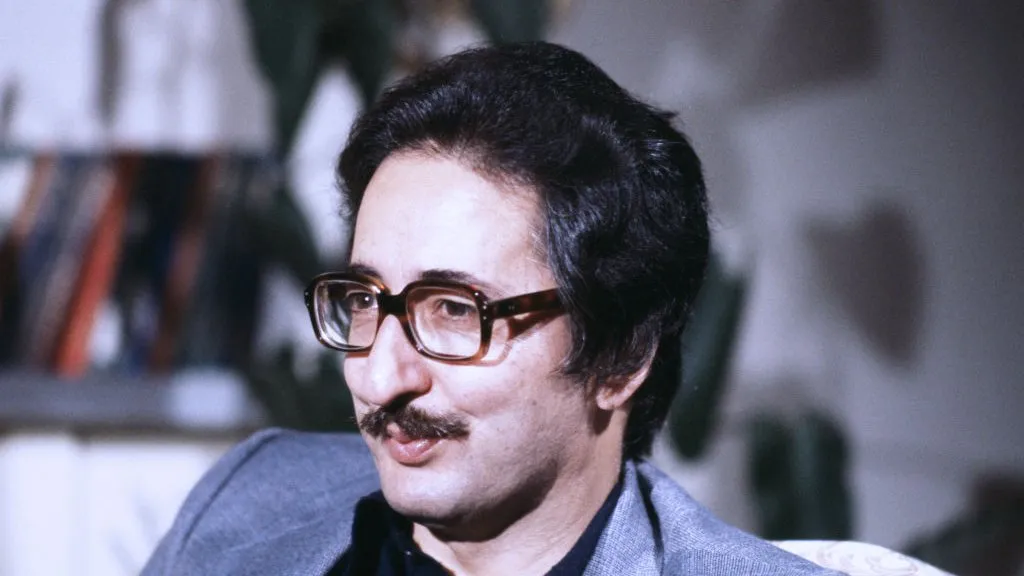
In this article on Abdi Media, we examine the life, education, political activities, presidency, conflicts with the establishment, dismissal, and years of exile of Abolhassan Bani-Sadr.
How did Abolhassan Bani-Sadr, the first president of Iran, come to power and why was he dismissed?
Abolhassan Bani-Sadr was the first president of the Islamic Republic of Iran and one of the most important political figures in the initial years following the 1979 revolution. Considered a close associate of Ruhollah Khomeini during his stay in France, he rapidly became one of the country's most popular political personalities after the victory of the revolution and won a decisive majority in Iran's first presidential election. However, his presidency lasted only 17 months and ultimately led to his removal from power, going into hiding, and departure from Iran.
In this article, we examine the life, education, political activities, presidency, conflicts with the establishment, dismissal, and years of exile of Abolhassan Bani-Sadr.
The Birth and Early Life of Abolhassan Bani-Sadr
Abolhassan Bani-Sadr was born on March 23, 1933, in the village of Baghcheh in the Hamadan region. He grew up in a religious family, and his father, Seyyed Nasrallah Bani-Sadr, was a well-known cleric in Hamadan.
Bani-Sadr completed his education in Hamadan and Tehran, becoming interested in political and social issues during his teenage years. The political climate of the 1950s and the oil nationalization movement had a significant impact on his views, drawing him closer to nationalist ideologies.
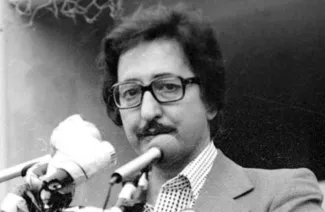
Studying at the University of Tehran and Emigration to France
Bani-Sadr entered the University of Tehran after completing his secondary education and studied economics and social sciences. During his student years, he was heavily involved in political activism and was close to nationalist movements.
Following the events of June 5, 1963, and the escalation of political pressure, Bani-Sadr left Iran for France. He settled in Paris and continued his studies in the field of economics.
During his years in France, Bani-Sadr became a well-known activist in the opposition against the Pahlavi regime and collaborated with various political groups opposed to the Shah.
Accompanying Ruhollah Khomeini in Neauphle-le-Château
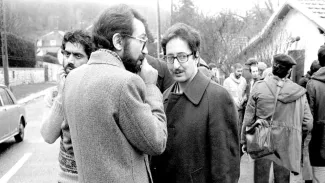
In 1978, following Ruhollah Khomeini's relocation to Neauphle-le-Château on the outskirts of Paris, Bani-Sadr joined his inner circle.
Alongside individuals like Sadegh Ghotbzadeh and Ebrahim Yazdi, he worked closely in communicating with foreign media and played an important role in conveying the messages of the Islamic Revolution to global public opinion.
This proximity to Khomeini caused Bani-Sadr's name to become more prominent than before on the eve of the revolution, making him one of the well-known figures of the Islamic Republic after the victory of the revolution.
Return to Iran After the Revolution
Bani-Sadr returned to Iran on February 1, 1979, alongside Ruhollah Khomeini.
Following his return, he rapidly gained popularity among a segment of society through numerous speeches regarding Islamic economics and the future of the Islamic Republic. A prominent media presence and Khomeini's support further strengthened his political position.
In the first months after the revolution, Bani-Sadr became a member of the Council of the Islamic Revolution and played a role in the country's major decision-making processes.
Victory in Iran's First Presidential Election
Iran's first presidential election was held on January 25, 1980.
Abolhassan Bani-Sadr won the election by obtaining more than 10 million votes and approximately 76 percent of the vote, securing the title of the first president of the Islamic Republic of Iran.
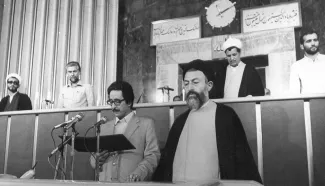
He officially began his tenure on February 4, 1980, and shortly thereafter, was also appointed as the commander-in-chief of the armed forces by Khomeini.
This victory demonstrated that Bani-Sadr enjoyed significant popularity among segments of society at that juncture.
Conflicts with the Islamic Republic Party
Despite the victory in the elections, Bani Sadr soon entered into conflict with the main forces of the government.
His most important political rival was the Islamic Republic Party, in which figures such as Mohammad Beheshti, Akbar Hashemi Rafsanjani, Ali Khamenei, and Mohammad Javad Bahonar played a pivotal role.
The most important points of difference
Election of the Prime Minister
Bani Sadr wanted to choose a prime minister aligned with him, but the parliament opposed his options and finally Mohammad Ali Rajaei became the prime minister.
Managing the Iran-Iraq war
With the outbreak of the war in September 1980, disputes regarding the management of the war escalated. Bani-Sadr relied more heavily on the role of the regular army, whereas the Islamic Revolutionary Guard Corps (IRGC) and revolutionary forces demanded a broader role on the battlefield.
Political and ideological differences
Differences over the way of running the country, power structure and internal policies caused the gap between the president and the Islamic Republic Party to deepen day by day.
Closer Ties with the Mojahedin-e Khalq Organization (MEK)
In the last months of being in power, Bani Sadr approached the People's Mojahedin Khalq organization.
From the perspective of his opponents, this collaboration was an attempt to establish a political front against the ruling forces. The growing closeness between Bani-Sadr and the Mojahedin-e Khalq became one of the most critical factors in intensifying the political crisis in 1981.
Bani Sadr's removal from the command of the general forces
In June 1981, the country's political situation reached a critical breaking point.
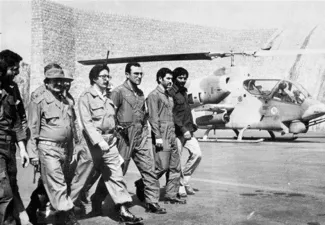
On June 10, 1981, Ruhollah Khomeini issued a decree dismissing Bani-Sadr from his position as commander-in-chief of the armed forces. This decision effectively marked the beginning of the end for his presence within the power structure.
Political incompetence and removal from the presidency
Following his dismissal from the position of commander-in-chief, the Islamic Consultative Assembly began reviewing a motion for the political incompetence of the president.
On June 21, 1981, the parliament voted by an overwhelming majority in favor of Bani-Sadr's political incompetence, and one day later, his official dismissal decree was issued by Khomeini.
This is considered the first and, to date, the only instance of a president being dismissed in the history of the Islamic Republic of Iran.
Banisadr's escape from Iran
After being dismissed, Banisadr lived in hiding for a while.
On July 29, 1981, he left Iran with Massoud Rajavi on a military plane and went to France.
Banisadr's departure from Iran is considered one of the most famous political escapes in the history of the Islamic Republic and received widespread coverage in domestic and international media.
The years of exile in France
After entering France, Banisadr initially cooperated with the People's Mojahedin and participated in the formation of the National Council of Resistance.
This cooperation did not last long, and in 1983 (1362 in the Iranian calendar), he left this council due to political disagreements.
In the following years, Banisadr engaged in publishing articles, books, and the magazine 'Islamic Revolution in Exile' and was recognized as a critic of the Islamic Republic.
The death of Abolhassan Banisadr
Abul Hasan Bani Sadr died on 17 Mehr 1400 equal to 9 October 2021 at the age of 88 in Paris.
He spent the last years of his life in France and was involved in political and media activities until his death.
Summary table of biography of Abul Hasan Bani Sadr
| title | Information |
|---|---|
| full name | Abul Hasan Bani Sadr |
| date of birth | April |
| place of birth | Hamadan |
| education | economy |
| side | The first president of the Islamic Republic of Iran |
| The beginning of the presidency | February 4, 1980 |
| The end of the presidency | June 22, 1981 |
| reason for dismissal | The vote of political insufficiency of the parliament |
| Date of departure from Iran | July 29, 1981 |
| Accommodation after departure | France |
| Date of death | October 9, 2021 |
Frequently asked questions
Who was Abul Hasan Bani Sadr?
Abolhassan Bani-Sadr was the first president of the Islamic Republic of Iran, who served in this position between 1980 and 1981.
Why was Bani Sadr dismissed?
Due to the escalation of political differences with the main institutions of power, the Islamic Council voted for his political inadequacy and removed him from the presidency.
How did Bani Sadr leave Iran?
In July 1981, he left Iran for France aboard a military aircraft alongside Massoud Rajavi.
Bani Sadr lived in which country?
After leaving Iran, he lived in France until the end of his life.
When did Bani Sadr die?
Abolhassan Bani-Sadr passed away on October 9, 2021, in Paris.
Take less than a minute, register and share your opinion under this post.
Insulting or inciting messages will be deleted.
Sign Up