
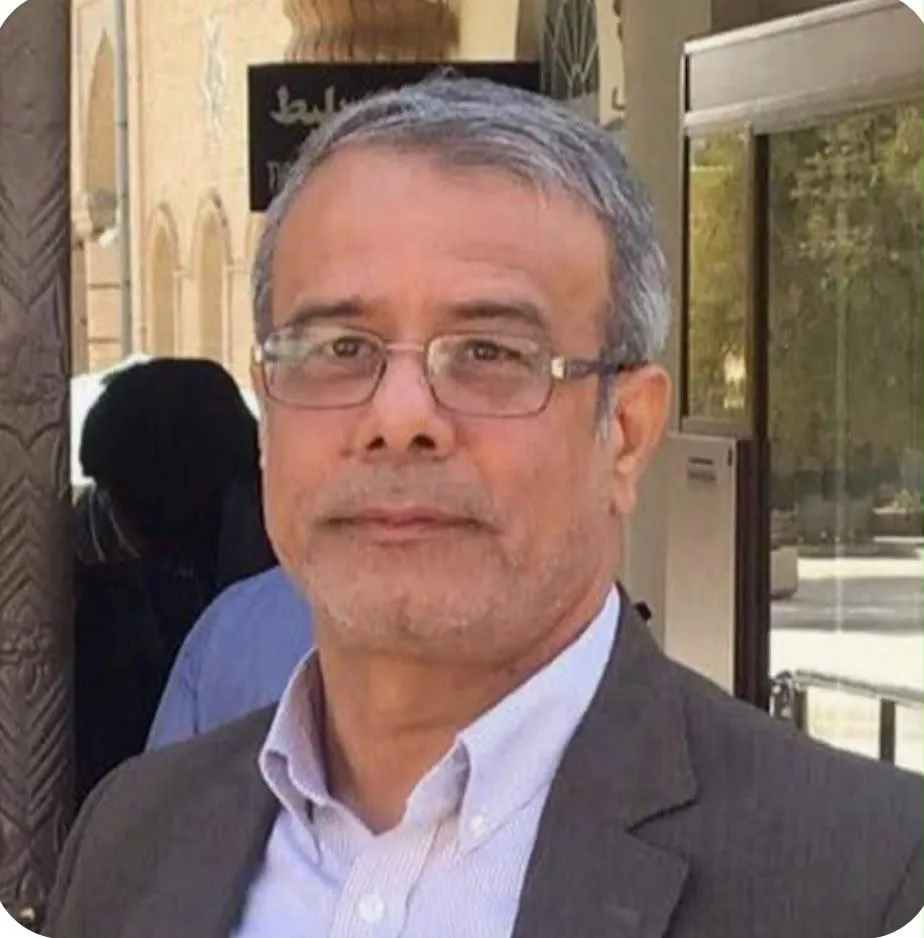
Life must be approached with a "Janus-faced" attitude. A look at the past and a look at the future.
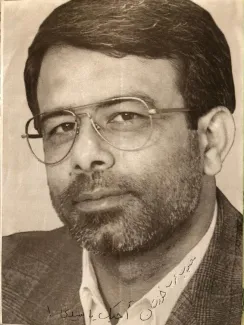
Memoirs and Experience-Narrative of Mohammad Kianoush-Rad, Representative of the Sixth Term of the Islamic Consultative Assembly
"The harvest of my life is no more than three words.
I was raw, I became cooked, I burned."
Maturity and burning are stations that are not easily reached by anyone. This belongs to the great ones of the age and the saints.
But I, after passing the age of sixty, still find myself raw. In speaking and writing my memoirs, perhaps a point or a word may come up that is of use to someone.
Life must be approached with a "Janus-faced" attitude. A look at the past and a look at the future.
Life is not a photograph. Life is like a film and a story, and everyone has their own story.
In this narrative, I have tried not to recreate the past. That is, not to see the past with today's standards, but to say honestly what the feeling and atmosphere of those days was, and to observe fairness in my judgments.
It is right that in these memoirs, I also speak of the mistakes and errors and intellectual changes I have had in life.
When I remember those who once walked smiling and hopeful, steadfast and proud, and today are like a candle in the wind, extinguished and silent, and there is no memory of them either, I tremble.
Another word, as Abolfazl Beyhaqi said, "My life has reached sixty-five and it must go in this effect. In the history I write, I will not say a word that leads to prejudice and bigotry, and the readers of this work will say, shame on this old man."
In the book of Muhammad it is said: "The life of this world is but play and amusement and adornment and boasting among yourselves and rivalry in wealth and children. It is like rain whose growth astonishes the farmers. Then it dries up and you see it yellow and then it becomes chaff."
"A while we were children and became masters,
A while we were masters and became happy,
Listen to the end of the story, what came to us:
We came from dust and became dust."
**Childhood and Carefreeness**
The house in which I was born, meaning my grandfather's house, was a large but crowded house. My grandfather had ten children, eight sons and two daughters. "I came into the world without my own will."
Later I understood that in this turning wheel, not everything will go according to our wish and will. So "when the eternal lot was cast without our presence, if it is not a little according to your satisfaction, do not complain."
My father was the third child of the family. Our house was on Ferdowsi Street, between the Jassem Masoudi Hosseiniyeh and the house that is known today as the Mapar house.
Jassem Masoudi was a capitalist and the representative of American cars in Khuzestan. His witticisms were famous among the people. Because of his humorous traits, people made up stories and remembered him. In humor and jest (regardless of its sometimes negative aspects), one can pay attention to its positive aspects, namely laughter and cheerfulness. Humor and wittiness reduce many of the harshnesses and even nervous tensions in society. People were happy. They talked and laughed. No one was offended either.
In our neighborhood there were also Sabians. We children were frightened of approaching the Sabians (Sabaeans). They said they stole children and made ice cream with children's blood on their festival. This lie and slander was also said about the Jews.
Later I understood that this kind of baseless rumor and lie is a kind of defensive system and discourse for identity-building and cultural separation.
The Sabians were a harmless, kind people, and of course they mostly lived in a kind of isolation and seclusion from the people. Their connections with the people were mostly in the business of goldsmithing. Gold enameling was an art that in those days was exclusively in the hands of the Sabians.
The period of childhood is a period of play, amusement, and carefreeness. Not knowing and not understanding is full of carefreeness. Not knowing and not understanding is a great blessing.
A great one has said: I like children. They play with soil, they build and destroy, they cry, they do not save anything, and they fight without resentment.
Bibi used to tell me stories. Bibi was my maternal grandmother. Martyr Zahra Madeh Khaksar. Bibi repeatedly told me a repeated story. The only story I remember from her was the story of Malek Mohammad and Malek Jamshid.
Each time she added a branch and leaf to it. I do not remember the details of the story. The gist of the story was, "...a tired man was sleeping under the shade of a tree. Two pigeons were sitting on top of the tree and talking to each other. The man was hearing their words. The first said to the second: What news from the city you came from? The second said: Do you not know the news? War has broken out between Malek Mohammad and Malek Jamshid. Malek Jamshid fled and Malek Mohammad was victorious."
In childhood, Bibi's narration was merely a repeated story. Today I understand the great secret of the story. Bibi, like all traditional families, was a "boy-lover." She had made a charm for me that had a bell. She had tied it to my foot so that I would not get lost.
To be continued.
Take less than a minute, register and share your opinion under this post.
Insulting or inciting messages will be deleted.
Sign Up