
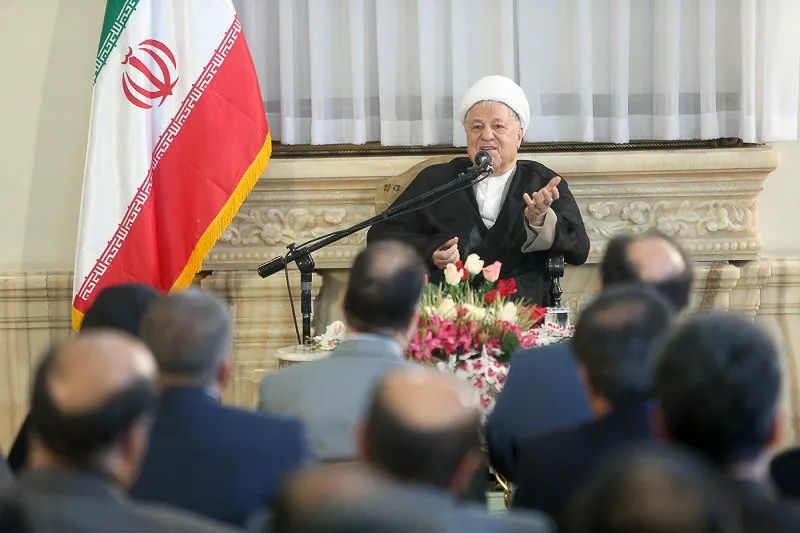
I woke up at four thirty in the morning and did not sleep again. After the prayer, I read the report of the negotiations of the heads of the military and law enforcement of the previous regime in 1978 after the peak of the struggle, who are in despair and cannot find a solution. At seven in the morning, we headed towards Jolfa. Dr. [Isa] Kalantari,
I woke up at four-thirty in the morning and did not sleep again. After the prayer, I read the report of the negotiations of the military and law enforcement chiefs of the former regime in the year 1357 [1978–79] after the peak of the struggle, who had become desperate and could not find a solution.
At seven in the morning we set off toward Jolfa. Dr. [Isa] Kalantari, [Minister of Agriculture], also joined us. On the way we visited the Shiblu Plain development project. Two years ago I inaugurated its pumping station. This time we visited the fields that the war veterans' cooperative has taken—1,300 hectares of land—and has allocated part to oilseed cultivation, and also the settlement they are building there for housing 4,000 nomads. The villagers of Shiblu also gathered and had requests; including getting housing in the nomads' settlement and a discount on the water rate.
We went to see the Aras Dam. This dam was built before the Revolution with the participation of the Soviets. The people of the Aras settlement who had come to welcome us wanted the provision of agricultural water and employment. We continued along the bank of the Aras. Part of the newly built road is dirt, and many vehicles from Azerbaijan pass over it to take goods to Nakhchivan.
We visited a border post. Then we saw the very old St. Stepanos Church, which was built on the bank of the Aras in the third century AH and is one of the three important ancient Armenian churches. [Mr. Neshan Topouzyan], the Caliph-General of the Armenians of Azerbaijan, and [Mr. Vartan Vartanian], their representative in the parliament, and a group of Armenian notables had also come. They gave explanations and we visited the various sections. The Cultural Heritage [Organization] is engaged in repairing the damage. Previously, during the Qajar era, it was rebuilt by Abbas Mirza. It has a water spring and some old trees. They presented me with two plaques from the Supreme Council of the Armenian Caliphate of Iran.
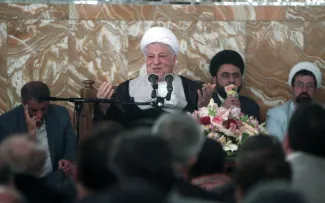
We went to Jolfa. The people of Hadi Shahr [= Gargar], the center of Jolfa, gave a warm welcome. I gave a speech at the Musalla. After the Friday Prayer Imam's remarks, they thanked me for making it a county and establishing the special economic zone and the border market, and appealed for employment and the improvement of water.
From there we went to the Jolfa customs. I visited the various sections; it is very large—about 500 hectares—with suitable warehouses. At the time when the Soviet railway to Iran was active, this place was very prosperous and Jolfa developed through this route, and now with the cutting of the railway because of the Karabakh war it has lost its prosperity. A small number of trains enter from Tabriz or Nakhchivan. The goods entering from Armenia are also brought to this customs for clearance.
I visited the border market and talked with our own shopkeepers and the people of Nakhchivan. We visited the great bridge of the railway over the Aras. The bridge is suspended and without pillars. Then we went on the wooden bridge. The head of the customs of Azerbaijan came and asked me to visit the town of Jolfa of Nakhchivan; I agreed. He got into my car and we went to the town, which is behind the customs and beside the Aras. We toured the town's streets. It is very quiet and desolate and ruined. Although it has a population of 20 thousand, it was quiet. The shops were empty and were selling only a few Iranian goods. He requested that we allow more people from Azerbaijan to enter Iran for trade. I gave him a Bahar Azadi coin as a gift.
We set off toward the city of Tabriz. On the way, Mr. [Yahya] Mohammadzadeh, the new Governor-General [of East Azerbaijan], gave a report on the situation of East Azerbaijan and also spoke of the decline in the popular influence of Mr. [Mohsen Mojtahed] Shabestari, [the Friday Prayer Imam of Tabriz]. At four-thirty in the afternoon we reached Tabriz Airport. Mr. Shabestari and some of the province's officials had come to welcome and see us off. I gave a short interview and we immediately flew toward Tehran.
At five in the afternoon I reached home. A group of relatives were gathered. We had ash reshteh with them in the courtyard of the house. I watched the Iran–Qatar football match; we won three to zero and took first place in the group in the world [qualifiers]. From the computer, I read the reports of the past two days. The issue of the contract of the French company Total [in the South Pars region] is still drawing attention.
Take less than a minute, register and share your opinion under this post.
Insulting or inciting messages will be deleted.
Sign Up