
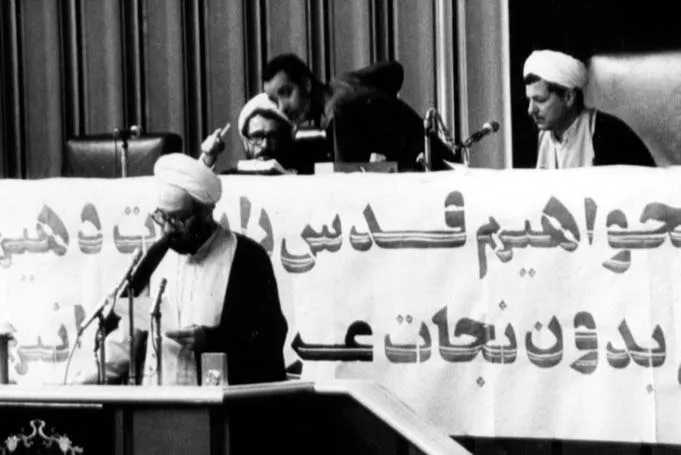
In the morning, after prayer, I did not sleep and read the reports related to my trip and the status of the existing plans in the visit program. At seven o'clock, I headed towards the IRGC barracks and participated in the joint morning assembly of the armed forces. Salute and welcome by General Qassem Soleimani, the senior military officer of the region, and a speech
In the morning, after the prayer, I did not sleep and read the reports related to my trip and the status of the projects in the visit program. At seven I headed toward the IRGC garrison and participated in the joint morning parade of the armed forces. The parade and welcome by Sardar Qasem Soleimani, the senior military commander of the region, and my encouraging speech and explanations about the role of the armed forces and their sincere relations with the people were carried out.
We flew by helicopters toward Zabol. Mr. Forouzesh, the Minister of Construction Jihad, gave explanations on the way. From the Zabol-Khorasan three-way, toward Zabol, they are carrying out the desertification control and watershed management project. From the air, we saw the scenery of seedling planting, mulch spraying, and seed scattering, which is done for the purpose of developing animal husbandry and obtaining fodder and injecting water into the poor or nitrate underground tables.
We visited the "Burnt City," which is an ancient city, from the air. We landed at the intersection point of the drainage canals of the Zabol lands. They gave explanations; the drainage project of about forty thousand hectares of the Zabol lands that have become saline and alkaline, and the project to complete the modern irrigation network that was started before the revolution. There is disagreement over whether the networks should be implemented underground or open; the first cost is heavy, the drainage water of six thousand hectares that is transferred by pump is very much. We tasted a little; it is bitter and salty, but it gradually gets better. They say it may be suitable for fish farming and pistachios and so on. Mr. Hosseini, the representative of Zabol, opposes the project in its current state and offers a simple local solution that is not logical. He opposes the Chah-e Nimeh Fourth project and also the wastewater project under implementation in Zabol.
We took a helicopter tour over the Hamun Lake, which has dried up, but Hamun-e Sabari has water and is improving. From the air, we saw the projects for grouping the Hamuns and rivers, which are very many and necessary for protecting the region.
We landed in the rural residential complex of Ali Akbar. The people gave a warm welcome. I walked a long distance among the people. The Revolutionary Guards were worried. We went into the house of a Basij freed prisoner. He had four children; an interesting welcome was read by his daughter and son. After the devastating flood, they have merged seventy percent of one hundred and thirty villages into 29 residential complexes, which is a good thing, and the houses have been mostly built, but are not yet complete. Several poor women, reciting poems in the local language in my praise, raised complaints. I spoke to the people from the back of a pickup truck.
We visited a carpet weaving workshop with seventy carpet looms that the Construction Jihad had set up in that complex. They said for each carpet loom on which two people work, thirty thousand tomans are invested. It was decided to encourage the policy of promoting this work for the revival of the Sistan carpet industry and the resolution of the unemployment problem.
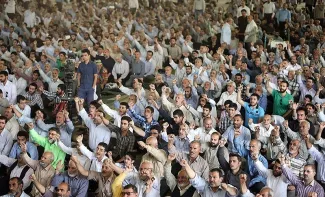
We flew toward the city of Zabol. The people gave an astonishing welcome. It was warmer than everywhere. They sacrificed more than a thousand cows and sheep and camels; it is strange. Despite the extraordinary crowding in the streets, the stadium too was full of people. Due to the pressure of the people's emotions, the Friday prayer leader could not continue his speech. The journalists' platform collapsed due to the crowding, and the special place for the guests and dignitaries was occupied.
They interrupted the anthem of the two groups of girls and boys and did not leave a place for the swordsmen's display, and I was forced to speak with fervor and excitement in order to be in control of my speech. I became tired. I praised the people of Zabol warmly and explained the policies of creating employment and developing carpet weaving, controlling and storing water, and draining the lands.
Then we visited the implementation quality of the city's wastewater project. It is very huge and difficult. Thick pipes are buried in the deep swampy ground. Then I visited the protective dams of the city around the city to prevent flooding. There too Mr. Hosseini expressed opposition. He is a simple, well-meaning person.
From there we went to the industrial estate. We saw and inaugurated two newly established spinning and weaving factories. The CEO of one of them is a female engineer. From there we went beside the Chah-e Nimeh wells for the groundbreaking of the Chah-e Nimeh Fourth, which stores seven hundred million cubic meters of water. Three sides of the place have natural walls, and one side with a short fourteen-kilometer dam, to prevent water penetration, will be walled with a cement curtain. Here too Mr. Hosseini opposed.
The helicopters took us to the site of the implementation of the huge centralized irrigation project of 850 villages and then flew toward Zahedan so as not to be caught by sunset. Mr. Forouzesh and the Construction Jihad managers gave explanations. It is an important and costly project, but in one place it solves the drinking water problem of all the villages of Zabol. They get water from the Chah-e Nimeh. There too they gave explanations of the Zabol flood program. The weather and winds of Zabol are effective for the rapid growth of fish.
From there we went to the recreational and research camp of the Faculty of Agriculture on the other shore of the Chah-e Nimeh wells. They have made a thousand hectares of land its area and planted thirty hectares with trees.
We headed toward the airport. On the way, we passed through the city of Zahak and Zabol, and along the route, the villagers had gatherings everywhere and we responded to their feelings. We reached the airport with a lot of delay. We prayed and flew by plane toward Zahedan.
From the airport we went straight to the University of Sistan and Baluchestan. It is very extensive. In several cities, it has more than ten thousand students. First we saw a high school affiliated with the university that was for the poor. Dozens of schools in the province are run on a boarding basis at the government's expense. They also provide the students' food and housing. I spoke with the students; they were very satisfied.
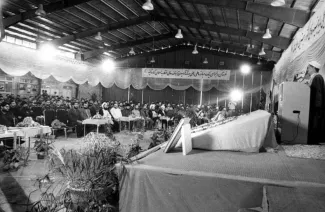
In the auditorium, due to the large number of those present, there was little space. The students outside expressed unhappiness about the lack of space. Mr. Habibollah Dahmardeh, the university president, and the Director General of Education gave good reports on the astonishing development of education in the province and raised the requests. I gave a detailed speech and explained the plan and the successes.
For the inauguration of the medical laboratories, we went to the Islamic Azad University; it is interesting. They asked for help. The university president gave good remarks. In the provincial administrative council, Mr. Vajihollah Aghataqi, the acting governor, and Masoud Roghani Zanjani, the head of the Plan and Budget Organization, gave reports and I gave a long speech explaining the policies and encouraging. I was awake until one-thirty in the morning. I took a bath and slept tired and exhausted.

Take less than a minute, register and share your opinion under this post.
Insulting or inciting messages will be deleted.
Sign Up