
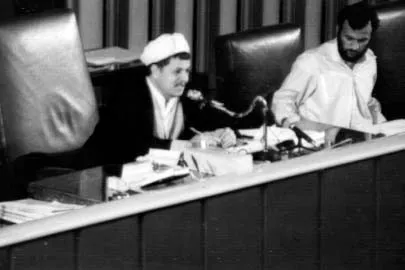
An open session was held, and the preparations for conducting the by-election were completed. Completing Parliament is necessary; the Ministry of Interior must make haste.
An open session was held, and the preparations for conducting the by-election were completed. Completing Parliament is necessary; the Ministry of Interior must make haste.
A group of representatives from Gilan Province—Messrs. Ramazani, Yosefi, Naseri, Ansari, and Farzpour—came by prior appointment and [raised] points, the most important of which were: moderating the approach toward the counter-revolution, such as the Mujahedin-e Khalq and others, and not being harsh toward them; and providing more resources to those loyal to the Islamic Republic but opposed to the government, such as Peyman's supporters, opponents in Parliament, liberals, and the Freedom Movement (Nehzat-e Azadi). They called for replacing the head of the IRGC (Sepah), the Revolutionary Prosecutor, and the Governor of Gilan.
I told them that the policy of the counter-revolution is to create tension and spark confrontation; if we give them concessions at any stage, they take a step forward and create confrontation. If the minority wishes to enjoy all the resources of the majority in offices, institutions, and propaganda outlets, it must be bound not to use these resources against the ruling majority. Currently, the minority's method is to present itself as a partner and stakeholder in the revolution's achievements, while blaming shortcomings on the majority and placing itself in the position of critic and claimant—and [the minority] wants to use the majority's resources for this very purpose. It was agreed that the discussion would continue further and that boundaries for rights would be defined.
A seminary student from Nigeria who had studied in Qom and was preparing to return to Nigeria came. He suggested Iranian assistance in propagating Shi'ism and the Iranian Revolution in Nigeria. It was agreed that he would establish contact with the Office of [Islamic] Propaganda Coordination.
Afterward, we held a Presidium meeting, and next week's schedule for Parliament was drawn up. Mr. Mokhlesi, Ayatollah Taleghani's son-in-law, came. The Minister of Industries had dismissed him from his job; I agreed to look into it.
At night, I attended a meeting of the Clergy Department of the Islamic Republican Party. Mr. Beheshti delivered a speech, and I answered the gentlemen's questions. The opposition of reactionary clerics to the revolution, provocations regarding Shia and Sunni relations, and the opposition of Mr. Moftizadeh were reviewed. A red alert was declared, but status soon returned to normal and nothing happened.
Take less than a minute, register and share your opinion under this post.
Insulting or inciting messages will be deleted.
Sign Up