
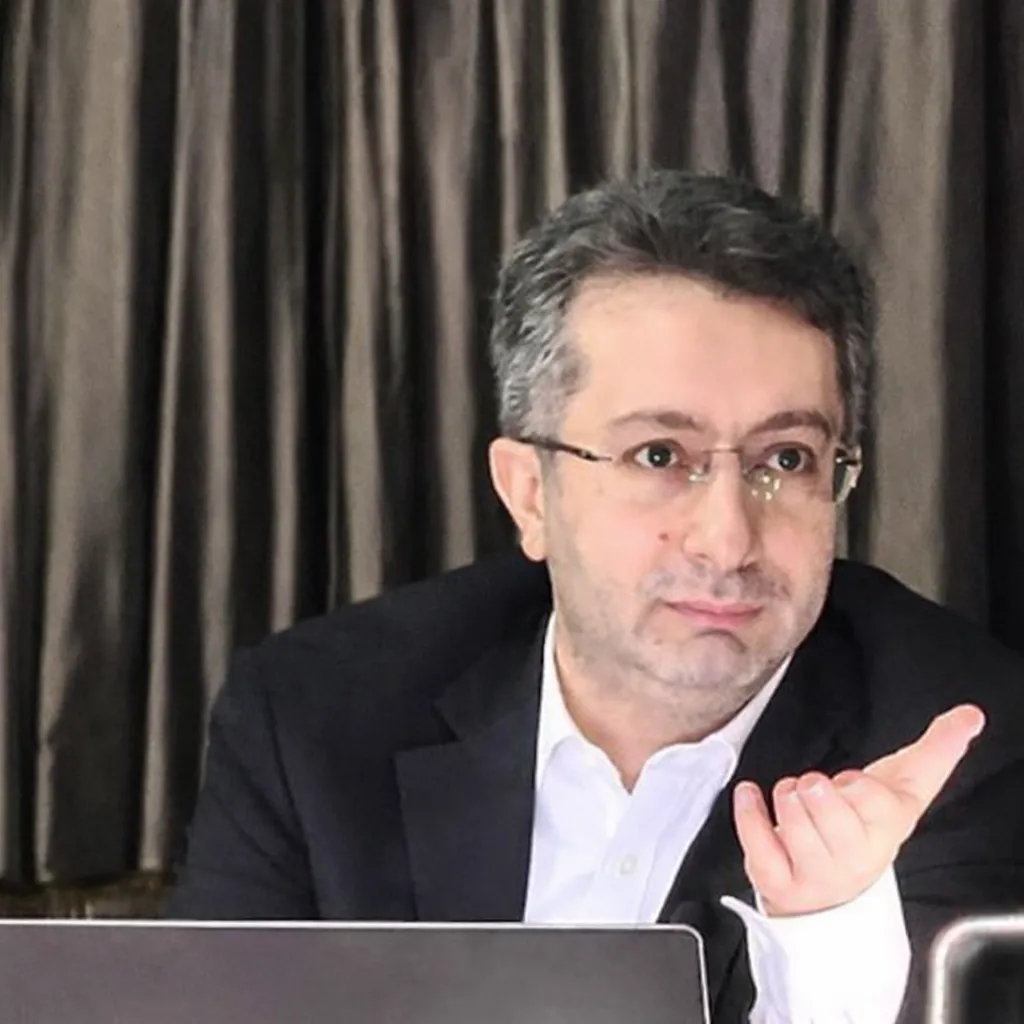
Mostafa Daneshgar is a scholar of religion, political analyst, public speaker, and one of the critical voices of the Islamic Republic among the younger generation of Iranian analysts. He was born in January 1982 (Dey 1360) in the city of Qom. He is considered a distinctive figure at the intersection of two fields: religious-historical studies (with a focus on early Islamic history, Shiism, and critical reinterpretations of religious concepts) and contemporary Iranian political analysis.
In recent years, through regular appearances in Persian-language media outside Iran—including Voice of America (VOA), Euronews Persian, analytical networks, and talk shows—he has become a well-known voice in criticizing the intellectual foundations and political structure of the Islamic Republic, particularly the institution of Velayat-e Faqih (Guardianship of the Islamic Jurist).
Who is Mostafa Daneshgar?
Mostafa Daneshgar is a religious researcher, political analyst, speaker, and one of the critics of the Islamic Republic among the younger generation of Iranian analysts. Born in January 1981 in the city of Qom, he is a distinctive figure at the intersection of two fields: religious-historical studies (with a focus on early Islamic history, Shiism, and the critical reinterpretation of religious concepts) and contemporary Iranian political analysis. In recent years, through his consistent presence in Persian-language media outside Iran — including Voice of America, Euronews Persian, analytical networks, and talk-based programs — he has become one of the well-known voices in criticizing the intellectual foundations and political structure of the Islamic Republic, particularly the institution of Velayat-e Faqih (Guardianship of the Jurist).
The significance of Daneshgar in Iran’s intellectual and political sphere can be examined from several perspectives. First, he represents a “native critic,” someone who emerged from within Iran’s religious-seminary environment (born in Qom and trained in classical religious education) and later developed a fundamental critique of the ideological foundations of the religious state. This background gives his critiques a different weight and character compared to purely secular critics. Second, his focus on reinterpreting early Islamic history and concepts such as Ashura, religious reformism, and Shiite authority is an attempt to present an alternative reading of religious tradition that contrasts with the official state interpretation. Third, his active media presence — especially after recent social uprisings in Iran — has made him one of the more widely followed analysts among those interested in the intersection of religion, politics, and Iran’s future.
Daneshgar, who has a technical background in electrical engineering, gradually shifted his intellectual path toward religious research and political analysis. He now works as an independent researcher and speaker, active in media outlets and cultural-religious forums among Iranian communities abroad.
Life and Background
Mostafa Daneshgar was born in January 1981 in Qom — the most important theological and seminary center in Iran. Growing up in Qom within a religious environment was one of the key factors shaping his early intellectual and religious orientation. He completed his primary and middle school education in Qom and Isfahan, both of which are major cultural and religious cities in Iran.
This background — growing up in the religious environment of Qom and Isfahan — alongside his later academic studies, formed the foundation upon which Daneshgar later developed his critical reinterpretation of religious and ideological concepts. His familiarity with early Islamic historical sources, Arabic language, and classical religious texts originates from this early intellectual environment.
Education
Daneshgar’s academic path is a dual combination of engineering and religious-humanities studies, which is one of the distinctive features of his profile.
In formal university education, his main field of study is electrical engineering. According to available sources, he pursued his graduate studies in the United States (in Detroit) and continued up to the PhD level in electrical engineering. This technical background differentiates him from many religious scholars and political analysts.
Alongside this formal path, Daneshgar independently pursued classical Islamic and religious studies. His deep interest in religious topics led him to engage with seminary-level learning and intensive study of foundational Islamic texts. He studied early Islamic history, the Quran, and developed proficiency in Arabic and English. This combination of technical expertise and self-directed religious scholarship enabled him to adopt a non-traditional approach to religious research.
Research and Religious Speaking Activities
One of Daneshgar’s main areas of activity is research and public speaking on religion, Islamic history, and Shiism. Over the years, he has delivered lectures and written analyses in Persian, Arabic, and English, significantly expanding his audience reach.
One of his notable projects in this field was a series of lectures titled “Reformism in the Mirror of Ashura.” During the first ten nights of Muharram 1440 AH (September 15–20, 2018), he delivered six consecutive lectures at the Islamic and Cultural Center of Northern California. In these talks, he reinterpreted the event of Ashura through the lens of religious reformism. These lectures were later published on Telegram channels and YouTube and became a clear example of his critical reinterpretation of religious tradition.
His main research themes include early Islamic history, the event of Ashura and Imam Hussein’s uprising, the concept of religious reformism, and in recent years, the issue of Shiite religious authority and its relationship to the institution of Velayat-e Faqih. In several talks and writings, he has examined the historical development of religious seminaries, the evolution of clerical authority, and the possibility of moving beyond Velayat-e Faqih based on Shiite historical tradition.
Political Analysis Activities
In addition to his religious research, Daneshgar has become an active political analyst in recent years. He regularly appears in Persian-language media outside Iran and provides analysis on Iranian domestic politics, regional developments, and international relations.
He has collaborated with various media outlets, including Voice of America Persian, Euronews Persian, the news-analysis website Mellioun Iran, and talk programs such as “Talangor.” His analyses cover a wide range of topics, including Iranian presidential elections, leadership succession scenarios, regional developments, Iran–U.S. negotiations, and the role of women in Iran’s social movements.
One of his key analytical focuses is the issue of leadership succession in the Islamic Republic and its possible scenarios — a topic of major importance in Iran’s political future and one of his specialized areas of commentary.
Views and Positions
Throughout his years of activity, Mostafa Daneshgar has articulated clear and explicit intellectual and political positions that place him among the fundamental critics of the ideological and political structure of the Islamic Republic.
Critique of the Institution of Velayat-e Faqih
Daneshgar’s central intellectual position is his critique of the institution of Velayat-e Faqih (Guardianship of the Islamic Jurist). Drawing on his religious and historical knowledge, he argues that the current form of Velayat-e Faqih is incompatible with the historical tradition of Shiism and the institution of Shiite clerical authority (Marja’iyyat). In lectures and writings such as “Shiite Authority and the Transition Beyond Velayat-e Faqih,” he has re-examined the historical evolution of clerical authority and the possibility of moving beyond a political system based on Velayat-e Faqih. Because this critique emerges from within religious tradition and relies on seminary-based knowledge, it differs significantly in nature from secular critiques.
“Dismantling of the Republic”
In his political analyses, Daneshgar argues that what has taken place in Iran in recent years can be described as the “dismantling of republicanism” and a shift toward the concentration of power in the office of the Supreme Leader and a personalized form of governance. He maintains that the republican elements of the system have gradually been weakened, and that the structure has moved toward greater political monism. This interpretation is one of the consistent pillars of his political thought.
“Intellectual Renaissance” in Iranian Society
One of Daneshgar’s notable viewpoints is his belief in the emergence of an “intellectual renaissance” within Iranian society. In his analysis of recent social developments—particularly the role of younger generations and women—he argues that Iranian society is undergoing a deep intellectual and cultural transformation, the long-term consequences of which go far beyond short-term political changes.
View on the Future of the System and the Impossibility of Internal Change
In his assessments of the possibility of reform or transformation within the system, Daneshgar adopts a pessimistic view regarding the system’s capacity for internal change. In analytical series such as “Seven Reasons Why We Will Not See Change from the Leader of the Islamic Republic,” he argues that, due to structural and ideological constraints, expecting fundamental change from the leadership is unrealistic. In another instance, he has stated that, in his view, the international community should “say goodbye” to the Islamic Republic.
Connections with Figures and Currents
Mostafa Daneshgar is active within the Iranian diaspora’s intellectual and media sphere and is connected to a network of media outlets and cultural-religious institutions. On the religious-cultural level, his collaboration with the Islamic and Cultural Center of Northern California (ICCNC)—a center known for its engagement with modernist religious thought among Iranian-Americans—represents one of his key institutional links in religious activity.
On the media level, Daneshgar has worked with several Persian-language outlets, including Voice of America Persian, Euronews Persian, and the Mellioun Iran website (associated with the nationalist-republican political current). His presence on Abdi Media, managed by Abdullah Abdi, is another dimension of his media engagement, where his analytical interviews on topics such as presidential elections and leadership succession are published.
From an intellectual standpoint, Daneshgar operates in the space between critical religious reformism and oppositional political analysis—a position that distinguishes him both from purely secular opposition currents and from traditional religious establishments.
Conclusion
Mostafa Daneshgar is a distinctive figure among the new generation of Iranian religious researchers and political analysts who combines technical expertise in engineering, traditional religious knowledge, and active political analysis. His intellectual trajectory—from growing up in the religious environment of Qom, to studying electrical engineering, acquiring classical religious knowledge, and eventually becoming a fundamental critic of Velayat-e Faqih—illustrates the profile of an “internal critic” who emerges from within religious tradition and ultimately challenges its official interpretation.
A defining feature of Daneshgar’s work is his ability to connect historical-religious reinterpretation (particularly early Islamic history, Ashura, and Shiite authority) with contemporary Iranian political analysis. This integration gives his critiques a distinctive depth and character. Another key feature is his fluency in Persian, Arabic, and English, which has significantly expanded his audience and influence.
From an analytical perspective, Daneshgar’s position reflects the phenomenon of “critical religious reformism” among a new generation of Iranian thinkers—an intellectual current that seeks to critique the structure of religious governance from within religious discourse itself and to propose alternative interpretations of the relationship between religion and power. This approach places him at the intersection of debates about the future of religion, politics, and governance in Iran.
What is clear from today’s perspective is that the issues Daneshgar focuses on—including the relationship between Shiite clerical authority and Velayat-e Faqih, the future of republicanism in Iran’s political system, leadership succession scenarios, and Iran’s broader intellectual and cultural transformation—are among the most important topics of discussion in contemporary Iranian political and intellectual discourse. His work, regardless of agreement or disagreement with his positions, forms part of the broader conversation about the future of religion and politics in Iran.
Frequently Asked Questions
Who is Mostafa Daneshgar and what is his expertise?
Mostafa Daneshgar (born January 1981 in Qom) is an Iranian religious researcher, political analyst, and speaker. He holds an academic background in electrical engineering but has also pursued classical religious studies and research in early Islamic history and Shiism. In recent years, he has become a prominent critic of the Islamic Republic, particularly the institution of Velayat-e Faqih.
What is his educational background?
His main academic field is electrical engineering, and according to available sources, he completed his doctoral studies in the United States (Detroit). Alongside this, he has acquired religious knowledge through seminary engagement and independent study of Islamic texts, the Quran, and Arabic language.
What is his view on Velayat-e Faqih?
His central intellectual position is critical of Velayat-e Faqih. He argues that its current form is inconsistent with Shiite historical tradition and the institution of clerical authority, and he advocates moving beyond it based on a historical reinterpretation of Shiism.
Which media outlets has he worked with?
He has collaborated with Voice of America Persian, Euronews Persian, the Mellioun Iran website, the analytical program “Talangor,” and Abdi Media. He has also delivered lectures at the Islamic and Cultural Center of Northern California.
What is the “Reformism in the Mirror of Ashura” series?
It is a series of six lectures delivered during the first ten nights of Muharram 1440 AH (September 2018) at the Islamic and Cultural Center of Northern California, in which he reinterpreted the event of Ashura through the lens of religious reformism.
What does he mean by “dismantling of the Republic”?
He argues that Iran has been experiencing a gradual weakening of republican institutions and a shift toward centralized power in the office of the Supreme Leader, which he describes as the “dismantling of republicanism.”
What is his view on Iran’s future?
He believes Iranian society is undergoing an intellectual and cultural renaissance, especially driven by youth and women, but he is skeptical about the possibility of meaningful internal reform from within the current system.
Is he still active?
Yes. He remains active as a researcher and analyst, regularly appearing in Persian-language media and online platforms, discussing Iranian politics, leadership succession, and broader regional developments.
Take less than a minute, register and share your opinion under this post.
Insulting or inciting messages will be deleted.
Sign Up