
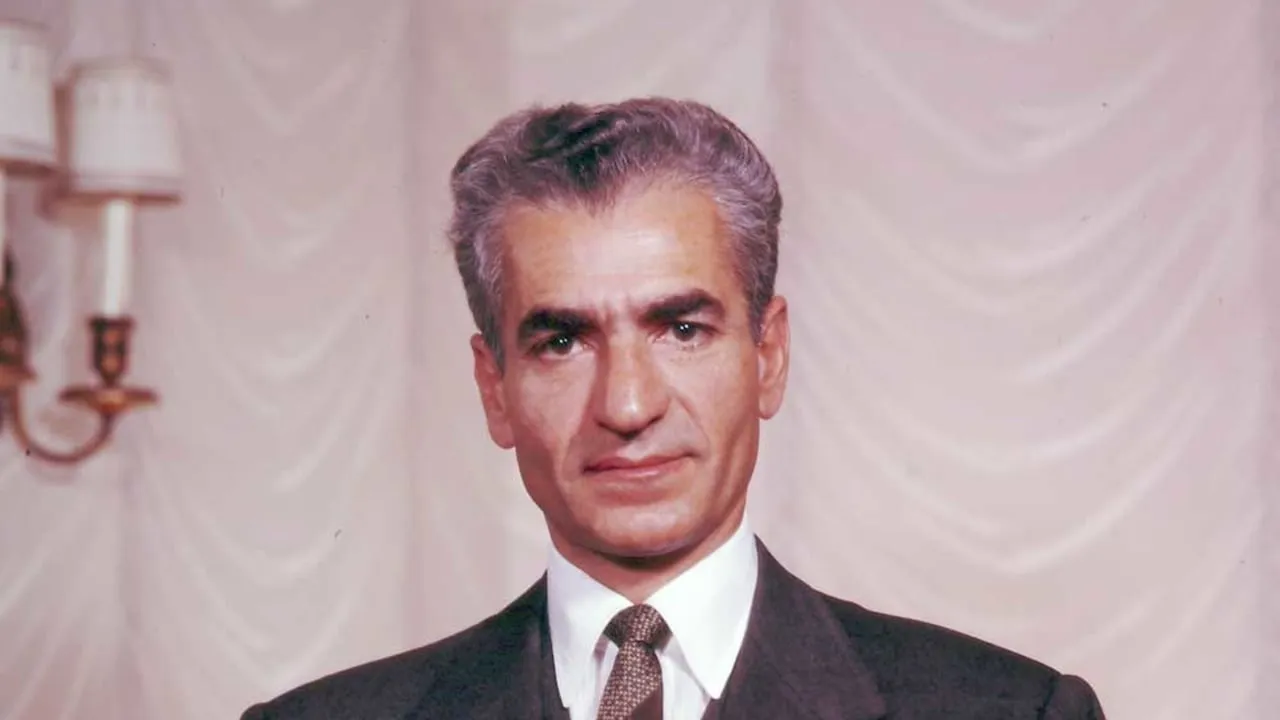
Mohammad Reza Pahlavi, the second and last monarch of the Pahlavi dynasty and the final Shah of Iran, ruled the country for nearly four decades—from September 1941 to February 1979. His reign began during a turbulent period marked by the Allied occupation of Iran in World War II, and it ended with one of the most significant revolutions of the twentieth century: the Iranian Revolution of 1979.
Who Was Mohammad Reza Shah Pahlavi?
Mohammad Reza Pahlavi, the second and last monarch of the Pahlavi dynasty and the final Shah of Iran, ruled the country for nearly four decades—from September 1941 to February 1979. His reign began during a turbulent period coinciding with the Allied occupation of Iran during World War II, and it ended with one of the most significant revolutions of the twentieth century, the Iranian Revolution of 1979. His rule is recorded in modern Iranian history as an era of profound social, economic, and political transformation—changes that shifted Iran from a traditional economy to one heavily dependent on oil revenues and dramatically reshaped the country's urban landscape.
Mohammad Reza Pahlavi’s historical significance in Iranian politics stems from a series of major policy initiatives: rapid infrastructure modernization, structural changes in women’s rights, expansion of public education, land reform, and, at the same time, the increasing concentration of power within the monarchy. Internationally, he transformed Iran into one of the United States’ key strategic allies in the Middle East and the Western bloc, played an active role in OPEC, and during the 1970s developed Iran’s military into one of the most advanced armed forces in the region. Nevertheless, political repression, class-based grievances, the growing alienation of much of the clergy and intellectual community from the government, and the rapid pace of reforms without corresponding political development ultimately contributed to the collapse of his rule.
After leaving Iran in January 1979, Mohammad Reza Pahlavi spent a period of exile in several countries, including Egypt, Morocco, the Bahamas, Mexico, the United States, and Panama. He eventually died of cancer in Cairo in July 1980 and was buried in Cairo’s Al-Rifa’i Mosque. His political record and legacy remain among the most debated subjects for historians, political analysts, and public opinion in Iran and around the world—a subject that continues to acquire new dimensions over time.

The official portrait of Mohammad Reza Shah Pahlavi, the second and last king of the Pahlavi dynasty
Life and background
Mohammad Reza Pahlavi was born on 26 October 1919 in Tehran. He was the eldest son of Reza Khan Mirpanj—who later became known as Reza Shah Pahlavi after founding the Pahlavi dynasty—and Tadj ol-Molouk Ayromlou. Mohammad Reza had a twin sister, Ashraf Pahlavi, who in later decades became one of the most influential unofficial political figures at the royal court. His other siblings, including Shams, Ali Reza, Gholam Reza, Abdol Reza, Ahmad Reza, Mahmoud Reza, Fatemeh, and Hamid Reza, each played roles within the family and ceremonial structure of the Pahlavi monarchy.
Mohammad Reza’s childhood coincided with his father’s rapid rise in Iran’s military and political spheres. In 1925, following the formal end of the Qajar dynasty and the coronation of Reza Shah, Mohammad Reza, then six years old, was designated Crown Prince of Iran. From that point onward, he was educated under the supervision of special tutors and raised in an environment distinct from that of the other children of the royal court.
Education and residence in Switzerland
Mohammad Reza began his primary education in Tehran at the “Military School,” which had been established specifically for the Crown Prince and a select group of his peers. In 1931, Reza Shah sent his eldest son, along with a small group of companions, to Switzerland to familiarize him with Western culture and educational systems. Mohammad Reza attended the prestigious boarding school Le Rosey near Geneva, one of Europe’s most renowned schools. This period played an important role in his mastery of the French language, exposure to European culture, and adoption of an aristocratic Western lifestyle, all of which later influenced his modernist outlook.
He returned to Iran in 1936 and enrolled in the Tehran Military Academy. His military training continued under the supervision of senior army commanders of the time, and after graduation he began serving as an officer within the country’s military structure. This military background later had a direct influence on his understanding of the role of Commander-in-Chief and on his relationship with the armed forces.
Familiarity with the power structure
In the final years of the 1930s, the young Crown Prince gradually began attending official ceremonies, military inspections, and provincial trips alongside his father. During this period, despite his young age, he witnessed Reza Shah’s authoritarian style of governance, top-down modernization policies, the establishment of the national railway system, judicial and administrative reforms, and the forced unveiling policy. These direct experiences shaped his perception of “modernization from above”—a perspective that later became clearly reflected in his own policies during his reign as monarch.
The beginning of the reign and the era of consolidation of power
Mohammad Reza Pahlavi’s rise to the highest political position in Iran occurred suddenly and in the context of an international crisis. In September 1941, Allied forces—Britain from the south and the Soviet Union from the north—occupied Iran. The official Allied justification was the presence of German experts in Iran and concerns about Reza Shah’s alignment with Nazi Germany; however, the main strategic reason was to secure a supply route through the Persian Gulf for transporting weapons to the Soviet Eastern Front in the war against Hitler’s Germany. This occupation shattered Reza Shah’s authority, and on 16 September 1941 he was forced to abdicate in favor of his son.
The oath of the kingdom and the early years
On 17 September 1941, Mohammad Reza Pahlavi took the oath of office in the Majles (Iranian Parliament) and was formally recognized as the Shah of Iran. The early years of his reign are considered one of the most difficult periods in modern Iranian history. The young Shah lacked both his father’s authority and a strong institutional foundation; the country was under foreign occupation, the treasury was empty, and the political atmosphere—recently opened after years of repression under Reza Shah—was becoming increasingly active.
The parliament had gained strength, newly emerging political parties such as the Tudeh Party were becoming active, and experienced prime ministers including Mohammad-Ali Foroughi, Ali Soheili, Ahmad Qavam, and Mohammad Sa’ed successively held power.
During this period, the Azerbaijan and Kurdistan crises of 1945–1946—marked by the establishment of autonomous governments with Soviet backing—became one of the first major tests of his rule. The withdrawal of Soviet forces and the collapse of these autonomous governments in December 1946, under the political leadership of Prime Minister Ahmad Qavam, is regarded as one of the notable achievements of this era, although the Shah’s personal role in these events remains a subject of debate among historians.
The National Movement for the Oil Industry and the 1953 Coup
The most important political event of this phase of Mohammad Reza Pahlavi’s reign was the nationalization of the oil industry movement led by Mohammad Mosaddegh. In March 1951, following the parliamentary approval of the oil nationalization law and Mosaddegh’s appointment as prime minister in April 1951, Iran entered into direct confrontation with Britain. The struggle between the Shah and the prime minister over authority—especially control of the armed forces—ultimately led to one of the most significant events in modern Iranian history.
In August 1953, under Operation “Ajax,” coordinated by the Central Intelligence Agency (CIA) and Britain’s MI6, an initial attempt to remove Mosaddegh failed, and the Shah temporarily left the country for Baghdad and then Rome. However, on 19 August 1953 (28 Mordad 1332), through coordinated actions involving segments of the military, street groups, and opponents of Mosaddegh, his government was overthrown and the Shah returned to Iran. Declassified documents later released by the CIA and the U.S. government confirmed the involvement of these agencies in the operation. This event marked a turning point in Mohammad Reza Pahlavi’s rule; after 1953, his approach gradually shifted from constitutional monarchy toward the concentration of power in the institution of the monarchy, and Iran’s relationship with the United States entered a new phase.
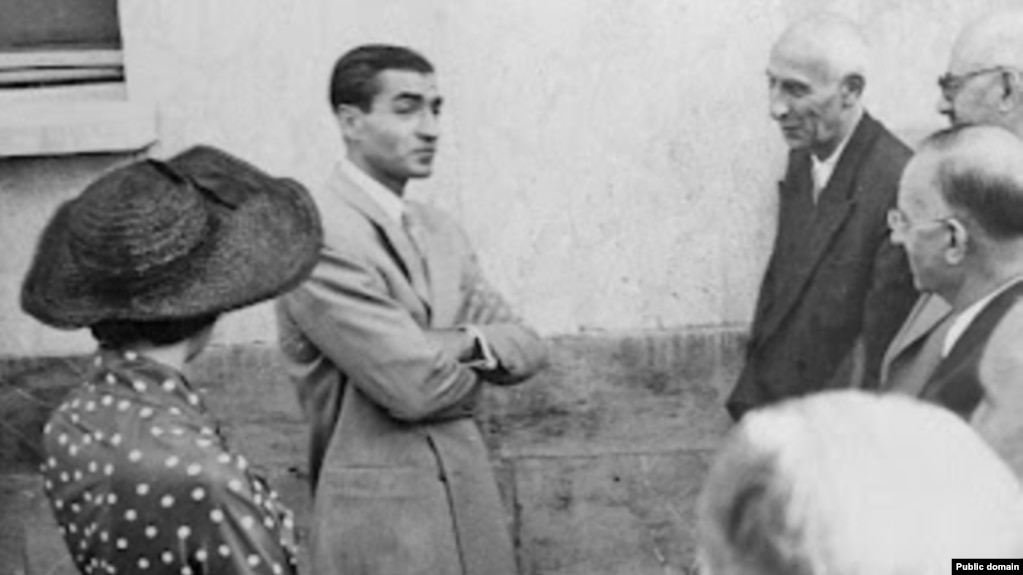
A meeting between the Shah and Mosaddegh at a time when their relations had not yet deteriorated due to the events of 28 February 1953.
Main responsibilities and positions
Although Mohammad Reza Pahlavi’s official titles throughout his political career were first “Crown Prince” and later “Shahanshah” (King of Kings), his actual functions and level of authority varied across different periods:
He was Crown Prince of Iran from 1925 to September 1941. From 17 September 1941 to 16 January 1979, he served as Shah of Iran and Commander-in-Chief of the Armed Forces. During the 1960s and 1970s, he also functioned as the de facto head of the Supreme Economic Council and the High Council for Planning and Budget. In 1967, the title “Aryamehr” was officially granted to him by the parliament. In 1967, his formal coronation was held at Golestan Palace, during which Farah Pahlavi was crowned as Shahbanu of Iran—marking the first official coronation of a queen in modern Iranian history. In 1975, with the establishment of the Rastakhiz Party, a one-party system was effectively instituted in Iran, and the Shah also became the leader of this party.
Political, intellectual, and economic role
Mohammad Reza Pahlavi’s political role can be divided into two distinct periods: before and after 19 August 1953 (28 Mordad 1332).
In the first period, he largely functioned as a constitutional monarch and a supervisory figure over state affairs. However, in the second period—especially from the early 1960s onward—he moved toward the full centralization of power and became directly involved in policymaking.
White Revolution
One of Mohammad Reza Pahlavi’s most important structural initiatives was the so-called “White Revolution” or “Revolution of the Shah and the People,” which was put to a referendum on 26 January 1963. This package of reforms initially included six principles and was later expanded to nineteen over the following years. Its main components included land reform and the redistribution of land to peasants, nationalization of forests and pastures, the sale of shares in state-owned factories, profit-sharing for industrial workers, granting women the right to vote, and the establishment of literacy, health, and development corps (the Literacy Corps, Health Corps, and Reconstruction and Development Corps).
These reforms fundamentally transformed Iran’s social structure. Land reform broke the economic and social power of traditional large landowners and created a new class of smallholder farmers. However, due to insufficient land distribution and a lack of supporting infrastructure, it led to a large wave of rural migration to major cities—especially Tehran. This phenomenon, which later contributed to the rise of urban slums and became one of the social foundations of the 1979 Revolution, was one of the unintended consequences of the White Revolution.
The granting of voting rights to women in the same referendum faced opposition from a segment of Shia clerics led by Ayatollah Ruhollah Khomeini. The protests of this movement eventually led to the events of 5 June 1963, which were met with military suppression and the arrest of Khomeini, followed by his exile in November 1964. This marked the beginning of a sustained confrontation between the traditional religious establishment and the monarchy in the two decades leading up to the revolution.
The 2,500-year celebrations of the Persian monarchy
In October 1971, Mohammad Reza Pahlavi, as part of redefining national identity based on ancient Iranian heritage and presenting Iran as a modern power with deep historical roots, held grand ceremonies at Pasargadae and Persepolis. These celebrations, marking 2,500 years of the Iranian monarchy and attended by dozens of heads of state, kings, and senior foreign officials, received extensive international attention. However, the high costs—estimated by various sources to be between 100 and 300 million US dollars at the time—sparked widespread domestic criticism. Religious critics, leftists, and even some moderate intellectuals viewed the celebrations as a symbol of the regime’s growing detachment from Iran’s social realities. At the same time, Ayatollah Khomeini issued a strongly worded statement from Najaf against the event, which resonated widely among opposition groups.

A view of the 2,500-year celebration of the Persian monarchy held in October 1971.
Change of the official calendar system
In March 1976, Mohammad Reza Pahlavi decided to change the official basis of Iran’s calendar from the Hijri calendar (based on the migration of the Prophet Muhammad) to the Shahanshahi calendar (based on the beginning of the reign of Cyrus the Great). Under this system, the year 1976 became 2535 in the imperial calendar.
This decision—taken on the eve of the month of Ramadan—faced widespread opposition from religious groups and even discontent among some of the Shah’s close associates. Eventually, in September 1978, amid widespread protests, the government was forced to revert to the Solar Hijri calendar. This event is regarded as a clear example of the monarchy’s growing distance from the cultural and religious sensitivities of Iranian society.
Positions in foreign policy
The relationship with the United States and the Western bloc
After the 1953 coup (19 August 1953), Iran gradually became one of the closest allies of the United States in the Middle East. In 1955, Iran joined the Baghdad Pact—later renamed CENTO. During the administrations of Richard Nixon and Gerald Ford, and following the announcement of the “Nixon Doctrine” in 1969, Iran was designated as the key pillar of regional security in the Persian Gulf and gained access to the most advanced American weaponry, including F-14 Tomcat fighter jets. This position, often referred to as the “policeman of the region,” later became a point of criticism among opponents of the Pahlavi government.
However, relations between the Shah and the administration of Jimmy Carter, who came to power in 1977, became increasingly tense. The Carter administration’s emphasis on human rights indirectly pressured the Pahlavi government to open up the political space. This limited liberalization, which began in 1977, unexpectedly contributed to the expansion of public protests.
Relations with Israel and the Arab world
Mohammad Reza Pahlavi adopted a realist approach in his foreign policy. In 1950, Iran de facto recognized Israel, and in the following decades extensive commercial, oil, and intelligence relations developed between the two countries—relations that never reached the level of full diplomatic ties or embassies. At the same time, the Shah sought to expand relations with Arab countries as well. During the era of Anwar Sadat, Iran–Egypt relations became very warm, to the extent that Sadat was one of the few leaders who warmly hosted the Shah during his exile in Egypt after the revolution.
Relations between Iran and Iraq during Mohammad Reza Pahlavi’s reign were highly tense, particularly over the Shatt al-Arab (Arvand Rud) border dispute. These tensions were temporarily eased in 1975 with the signing of the Algiers Agreement between the Shah and Saddam Hussein—who was then Iraq’s vice president. Under this agreement, the border in the Shatt al-Arab was shifted to the thalweg line (the midpoint of the waterway), while Iraq in return abandoned its support for Kurdish insurgents in northern Iraq, whom the Shah had been backing.
Economy and role in OPEC
Mohammad Reza Pahlavi was one of the main advocates of increasing oil prices within OPEC in the early 1970s. Following the October 1973 Arab–Israeli War and the subsequent oil embargo, oil prices quadrupled in a short period. Iran’s substantial oil revenues between 1973 and 1977 enabled the Shah to launch extensive industrial, military, and infrastructure programs. The establishment of large industrial complexes, expansion of universities, development of roads and railways, and large-scale arms purchases were all financed through these revenues.
However, the sudden injection of such a large volume of capital into an economy that lacked the infrastructure to absorb it led to severe inflation, rising housing costs, shortages of essential goods, and growing urban dissatisfaction. Economic experts, including some close to the court, had already warned at the time about the excessive pace of these development programs—warnings that were largely ignored.
Margins and criticisms
The record of Mohammad Reza Pahlavi's government, alongside its achievements, was also accompanied by deep structural challenges. These challenges remain among the main points of discussion between his critics and supporters.
SAVAK and political blockage
The National Organization for Intelligence and Security (SAVAK) was established in 1957 with the support of American and Israeli advisors, with the official aim of countering espionage and sabotage. However, over the following two decades, the organization became the main instrument for suppressing political opposition and for monitoring universities, media, and cultural activists. Reports by Amnesty International and the International Commission of Jurists in the 1970s criticized the state of political freedoms in Iran, including allegations of torture of political prisoners and the use of closed military tribunals.
In March 1975, the establishment of the single-party system known as the “Rastakhiz” Party and the practical requirement for all Iranians to join it marked the peak of this political closure. At the same time, the Shah declared that anyone who did not join the party could obtain a passport and leave the country—statements that received wide domestic and international attention.
The Cinema Rex fire in Abadan
On 19 August 1978, in one of the most tragic events of the revolutionary year, the Cinema Rex in Abadan was set on fire, resulting in the death of more than 400 people. The tragedy was initially attributed by opposition groups to SAVAK and sparked a massive wave of public anger against the government, becoming a turning point in accelerating the revolution. In later years and in post-revolution trials, the direct perpetrators of the fire were identified and prosecuted among radical religious groups; however, the political impact of the event in August 1978 had already significantly weakened the Pahlavi government.
17 Shahrivar Massacre (Black Friday)
On Friday, 8 September 1978, following the declaration of martial law in Tehran and several other cities, a large gathering of protesters in Jaleh Square (now Shohada Square) was met with gunfire from military forces. The exact number of casualties remains disputed: official government figures at the time reported 88 deaths, while opposition estimates ranged from several hundred to several thousand. Later historical research, including studies published in Iran after the revolution, confirmed a figure close to 80–90 deaths. This event, known as “Black Friday,” marked a point of no return in the breakdown between the government and society.
Departure from the Country and Final Months
With protests expanding throughout the fall of 1978, and amid the Shah’s diagnosis of lymphatic cancer—a condition that had been concealed for years from the public and even many officials—he left Iran on 16 January 1979 with Empress Farah for Egypt. Before his departure, Shapour Bakhtiar was appointed prime minister to manage the transition of power; however, with the return of Ayatollah Khomeini on 1 February 1979 and the final victory of the revolution on 11 February 1979, the Pahlavi monarchy formally ended.
Mohammad Reza Pahlavi then traveled from Egypt to Morocco, the Bahamas, Mexico, the United States (for medical treatment in New York), and Panama. His entry into the United States in November 1979 was one of the main triggers of the U.S. embassy takeover in Tehran and the beginning of the hostage crisis. Eventually, in April 1980, Anwar Sadat once again hosted him in Egypt, where Mohammad Reza Pahlavi spent the final months of his life in Cairo. He died on 27 July 1980 at the age of 60 due to complications from cancer and was buried in Cairo’s Al-Rifa’i Mosque.
Works and Books
Mohammad Reza Pahlavi published several books during his reign and exile, reflecting his evolving views. The most important include Mission for My Country (1961), his first official book outlining his views on Iranian history, monarchy, and development; The White Revolution (1967), focusing on the ideological and practical foundations of the 1960s reforms; Toward the Great Civilization (1976), presenting an ambitious vision of Iran as a future global power; and Answer to History (1980), his final work written in exile and published after his death. This last book, written in French, presents his personal account of the revolution, foreign influence, and the reasons for the collapse of the Pahlavi government.
Relations with Other Figures and Movements
Key figures during Mohammad Reza Pahlavi’s era included prime ministers such as Mohammad Mosaddegh, Ahmad Qavam, Hossein Ala’, Manouchehr Eghbal, Asadollah Alam, Amir-Abbas Hoveyda (the longest-serving prime minister with 13 years in office), and Jamshid Amouzegar. Among royal court figures, Asadollah Alam, as Minister of the Royal Court and one of the Shah’s closest advisors, held a unique position; his diaries, published after the revolution, are among the most important sources for understanding the final years of the monarchy.
In the military, figures such as General Fereydoun Jam, General Gholam Reza Azhari, General Abbas Gharabaghi, and General Nematollah Nassiri (head of SAVAK) were influential commanders. On the opposition side, Ayatollah Khomeini was the main revolutionary leader, along with figures such as Ayatollah Mahmoud Taleghani, Ayatollah Kazem Shariatmadari, Dr. Ali Shariati, Mehdi Bazargan, Karim Sanjabi, and groups such as the People’s Mojahedin Organization and the Fedayeen-e Khalq.
Internationally, the Shah maintained strategic relations with U.S. presidents from Dwight Eisenhower to Jimmy Carter, Queen Elizabeth II, Charles de Gaulle, Valéry Giscard d’Estaing, Helmut Schmidt, Richard Nixon, and Henry Kissinger, as well as regional leaders such as Anwar Sadat, King Faisal of Saudi Arabia, and King Hussein of Jordan.
Marriages and Children
Mohammad Reza Pahlavi was married three times. His first marriage was in 1939 to Fawzia Fuad of Egypt, sister of King Farouk. This marriage produced Princess Shahnaz Pahlavi and ended in divorce in 1948. In 1951, he married Soraya Esfandiary-Bakhtiari, which ended in divorce in 1958 due to the absence of children, receiving wide international media attention. His third and final marriage was in December 1959 to Farah Diba, who was crowned Empress of Iran in 1967. This marriage produced four children: Reza Pahlavi (born 1960), Farahnaz Pahlavi (born 1963), Ali Reza Pahlavi (1966–2011), and Leila Pahlavi (1970–2001).
Conclusion
Mohammad Reza Pahlavi remains one of the most complex and influential figures in modern Iranian history. His legacy combines tangible achievements in infrastructure modernization, education expansion, regional geopolitical influence, and economic development with political repression, rising inequality, social dislocation, and growing detachment from large segments of society in his final years.
Supporters argue that the development programs of the 1960s and 1970s placed Iran on a path toward becoming a major regional economic power, while critics emphasize the lack of political development, concentration of power, and failure to engage with key social and religious forces.
Historically, the fall of the Pahlavi monarchy is understood not as the result of a single cause, but as the outcome of a complex interplay of economic, social, cultural, religious, and international factors. As such, the study of this period remains essential not only for understanding modern Iranian history, but also for interpreting many of the structural questions that continue to shape Iran today.

Mohammad Reza Shah Pahlavi and Farah Diba at the airport during their departure from Iran in 1979.
Frequently Asked Questions
In what year and where was Mohammad Reza Shah Pahlavi born?
Mohammad Reza Pahlavi was born on 26 October 1919 in Tehran. He was the eldest son of Reza Shah Pahlavi and Tadj ol-Molouk Ayromlou, and he had a twin sister named Ashraf Pahlavi.
In what year and where did Mohammad Reza Shah Pahlavi die?
He died on 27 July 1980 at the age of 60 in Cairo, Egypt, due to complications from lymphoma. He was buried in the Al-Rifa’i Mosque in Cairo.
Who were Mohammad Reza Pahlavi’s wives?
He was married three times: first to Fawzia Pahlavi (sister of King Farouk of Egypt), with whom he had Princess Shahnaz; then to Soraya Esfandiary-Bakhtiari; and finally to Farah Diba, who was crowned Empress of Iran and had four children with him.
Why did Mohammad Reza Pahlavi’s government fall?
Several factors contributed to the collapse of his government: severe political repression and lack of freedom of speech, inflation and social inequality caused by mismanagement of oil revenues, rapid cultural modernization that did not align with traditional society, alienation from the clergy, the organization of religious networks and mosques, the leadership role of Ayatollah Khomeini, and the government’s weak response to protests in its final months.
What was the White Revolution and what were its consequences?
The White Revolution was a package of reforms put to a referendum in February 1963, including land reform, women’s suffrage, nationalization of forests, profit-sharing for workers, and the establishment of literacy and health corps. These reforms weakened traditional landowners and improved education and women’s status, but also led to mass rural migration to cities and increased tensions with parts of the clergy, including the events of 5 June 1963.
What was SAVAK’s role during Mohammad Reza Pahlavi’s reign?
The National Organization for Intelligence and Security (SAVAK) was established in 1957. Although its official purpose was counter-espionage and sabotage prevention, it became the main tool for suppressing political opposition and controlling universities and the media. Amnesty International and the International Commission of Jurists criticized its record of torture and political imprisonment in the 1970s.
Was the 1953 coup a turning point in Mohammad Reza Pahlavi’s rule?
Yes. Documents released by the CIA and the U.S. government confirmed the involvement of the CIA and British intelligence in the overthrow of Mohammad Mossadegh’s government. After this event, Mohammad Reza Pahlavi gradually shifted from constitutional monarchy toward centralized monarchical rule, and Iran’s strategic dependence on the United States increased.
Which books were published under Mohammad Reza Pahlavi’s name?
His major works include Mission for My Country (1961), The White Revolution (1967), Toward the Great Civilization (1976), and Answer to History (1980), his final book written in exile during the last months of his life.
Take less than a minute, register and share your opinion under this post.
Insulting or inciting messages will be deleted.
Sign Up