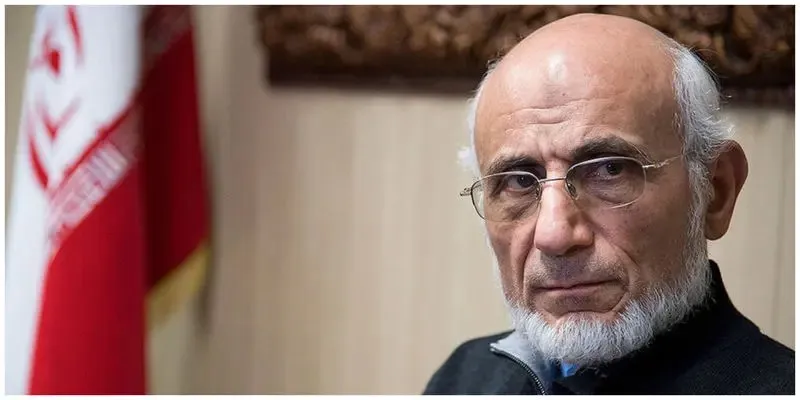
Seyyed Mostafa Mir-Salim is one of the veteran, key, and at the same time controversial figures in the political and executive history of the Islamic Republic of River Iran. Known as a religious technocrat and a specialist in mechanical engineering, he has held sensitive managerial positions since the early years following the 1979 Revolution, including serving as the Minister of Culture and Islamic Guidance, holding membership in the Expediency Discernment Council, and serving as a Member of Parliament.
Seyyed Mostafa Mir-Salim is one of the veteran, key, and at the same time controversial figures in the political and executive history of the Islamic Republic of Iran. Known as a religious technocrat and a mechanical engineering specialist, he has held sensitive managerial positions since the early years following the 1979 Revolution, including serving as the Minister of Culture and Islamic Guidance, holding membership in the Expediency Discernment Council, and serving as a Member of Parliament.
As one of the main pillars of the Islamic Motalefeh Party, Mir-Salim represents the traditional right faction and classic principlism. In recent years, due to his specific economic stances, fierce defense of the domestic automotive industry, and controversial media statements, he has come under the spotlight and faced public scrutiny more than ever before.
Childhood, family background and education in France
Seyyed Mostafa Mir-Salim was born in June 1947 in Tehran. He grew up in a family with a deeply religious background and, after completing his high school education at Tehran's Alborz High School, moved to France to pursue higher education in technical fields.
Academic education and technical expertise
Mirslim, unlike many politicians of his generation, has advanced technical education from prestigious European universities:
- *Master's degree in Mechanical Engineering** from the University of Poitiers, France (1970)
*Specialization in Internal Combustion Engine Engineering** from the École Nationale Supérieure du Pétrole et des Moteurs (ENSPM), France (1972) - Upon returning to Iran, he joined the faculty of Tehran Polytechnic (Amirkabir University of Technology) and began his academic and research activities in the field of diesel engines and automotive engineering.
Entering the field of politics and initial responsibilities after the revolution
With the ignition of the sparks of the revolution, Mir-Salim joined the religious and revolutionary movements. Due to his technical expertise and religious commitment, he was invited into the country's managerial structure immediately following the 1979 Revolution.
From the Ministry of Interior to the Prime Minister Nomination
Mir-Salim was appointed as the political deputy to the Minister of Interior in 1979 and was executionally responsible for holding both the regime change referendum and the first presidential election. In 1980, Abolhassan Banisadr introduced him to parliament as a nominee for Prime Minister; however, the first parliament did not approve his premiership, and Mohammad-Ali Rajai ultimately took the position. Later, during the presidency of Ayatollah Khamenei, he served as the head of the Presidential Administration.
Tenure at the Ministry of Culture and Islamic Guidance
One of the most important and influential periods in Mir-Salim's administrative career was his tenure as the Minister of Culture and Islamic Guidance in the second administration of Akbar Hashemi Rafsanjani (between 1994 and 1997).
Strict Cultural Policies and Severe Restrictions
Mir-Salim's tenure as minister is known for the implementation of highly conservative and restrictive cultural policies. Taking office after the period of cultural openness under Mohammad Khatami at the ministry, he quickly shifted the track of press and cinema policies. During his term, censorship and oversight over books, publications, and cinematic films increased drastically, drawing widespread criticism from artists and intellectuals. Mir-Salim believed that these measures were essential to counter what was termed the "Western cultural onslaught."
Presence in the Expediency Discernment Council and the Islamic Consultative Assembly
Following the end of the Hashemi administration, Mir-Salim was appointed as a member of the Expediency Discernment Council by the decree of Iran's leader; a position in which he was reinstated for several consecutive terms and served as the chairman of its Infrastructure and Production Commission.
Entering the 11th Parliament
After years of away from the electoral scene, Mir-Salim ran as a candidate for the 11th parliamentary elections from the Tehran electoral district in 2020 and entered parliament by being placed on the principlist coalition list. His presence in parliament was accompanied by fierce stances in support of the cyberspace protection plans (Siyanat) and strong opposition to foreign car imports.
Participation in the 2017 Presidential Election
Mostafa Mir-Salim participated as the official candidate of the Islamic Motalefeh Party in the 12th presidential election in 2017. The televised debates that year introduced a new face of him to society. His catchphrases and questions directed at Hassan Rouhani (such as the phrase "Mr. Rouhani, what do you say to this?") became source material for humor and content creation on social media for a long time. He ultimately finished in third place in the election, securing around 470,000 votes.
Controversial Stances; From the Automotive Industry to His Son's Case
In recent years, Mir-Salim's name has been tied to numerous controversies rather than his past record, which has impacted his social popularity.
Full-Throated Defense of Domestic Automaking and the Land Cruiser Controversy
As the designer of the first national engine, Mir-Salim has always maintained a fanatical defense of the domestic automotive industry and has strongly opposed the import of foreign cars. His controversial television interview, in which he claimed that "there is no difference between a Peugeot 206 and a Toyota Land Cruiser," brought a wave of criticism and mockery across the media and among the general public. Furthermore, his being spotted with an expensive luxury foreign brand wristwatch and American Reebok sneakers on the parliament floor created a deep contradiction with his slogans regarding supporting domestic products.
The Arrest of His Son on Charges of Collaborating with the Monafeqin
In 2022, it was revealed that his son, Mahdi Mir-Salim, had been arrested and sentenced to 5 years in prison on charges of collaborating with and leaking information to the People's Mujahedin Organization (Monafeqin). The handling of his son's case, along with his parole or leaves, once again sparked criticism regarding the existence of discrimination in dealing with the children of officials (Aghazadehs).
Conclusion
Seyyed Mostafa Mir-Salim is a prime example of the first generation of technocrats loyal to the traditional ideals of the Islamic Revolution. His career is a mixture of scientific expertise in the field of engines and mechanics, strict management in the cultural arena, and extreme protectionist economic stances. Although he considers himself a reformer of the country's industry and economy, late in his political career, due to his specific rhetoric and stances detached from the economic realities of society, he became one of the main symbols of the gap between traditional officials and the new generation.
Frequently Asked Questions
What is Mostafa Mir-Salim's field of study and main expertise? He holds a Master's degree in mechanical engineering and a specialization in internal combustion engines from France, and has worked for years as a professor at Amirkabir University and a designer of the national engine.
What was the story behind the arrest of Mostafa Mir-Salim's son? His son, Mahdi Mir-Salim, was arrested in 2019 on charges of communication with and delivering information to the People's Mujahedin Organization (Monafeqin) and was sentenced to 5 years in prison, where Mir-Salim's stances defending his son's innocence or claiming he was deceived caused significant controversy.
Why did Mir-Salim's stances on cars become so controversial? As a fierce opponent of foreign car imports, he claimed in a live debate that the Peugeot 206 has no structural difference compared to a Toyota Land Cruiser, an opinion that met with widespread negative reactions from the public.
Take less than a minute, register and share your opinion under this post.
Insulting or inciting messages will be deleted.
Sign Up