
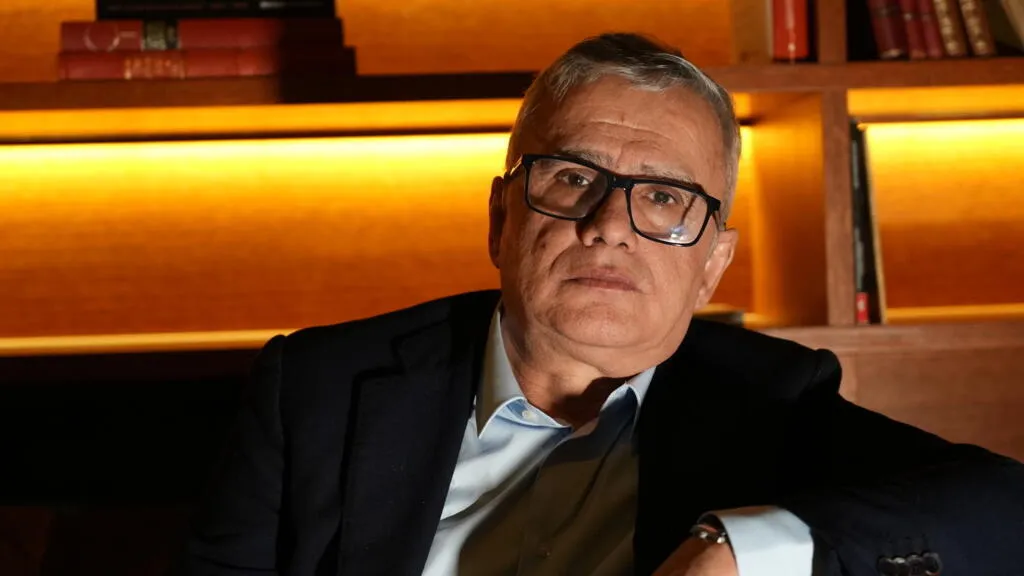
Taghi Rahmani is a journalist, author, religious researcher, political activist, a long-time political prisoner, a prominent member of the Council of National-Religious Activists, a former advisor to Mehdi Karroubi, and the husband of Narges Mohammadi. He is one of the most widely discussed figures in the discourse of religious-nationalist intellectualism in the diaspora and has one of the longest prison records among post-revolutionary Persian-speaking political activists. With over 16 years of imprisonment in the prisons of the Islamic Republic—from his first arrest in 1981 on charges of membership in the "Pishrovan" group inspired by the ideas of Ali Shariati, to his arrest on February 10, 2011, following Karroubi and Mousavi's call for protests on February 14—he left Iran in February 2012 and now lives in Paris with his two children. In 2006, Rahmani received the Hellman Award from Human Rights Watch, and after the awarding of the 2023 Nobel Peace Prize to his wife, he became one of the most widely discussed voices informing about Narges Mohammadi's situation and the "Woman, Life, Freedom" movement.
Who is Taghi Rahmani?
Taghi Rahmani (born November 13, 1959, in Takestan, Qazvin province) is a journalist, author, religious researcher, political activist, a long-time political prisoner, a prominent member of the Council of National-Religious Activists, a former advisor to Mehdi Karroubi, the husband of Narges Mohammadi, and one of the most widely discussed figures in the discourse of religious-nationalist intellectualism in the diaspora. He is among the most cited analysts of contemporary Iranian issues and has one of the longest prison records among post-revolutionary Persian-speaking political activists. Rahmani, with a unique path—from his Takestan-Qazvini origins, to spending his childhood and high school in the same region and entering the University of Tabriz at the same time as the 1979 Islamic Revolution, to joining the "Pishrovan" group, to his first arrest in 1981 and a 3-year prison sentence, to a series of multiple arrests over three decades, to his sustained membership in the Council of National-Religious Activists, to his marriage in 1999 to Narges Mohammadi, to receiving the Hellman/Hammett Award from Human Rights Watch in 2006, to serving as an advisor to Mehdi Karroubi in the 2009 presidential election and his arrest on February 10, 2011, and finally, to his historic exit from Iran in February 2012 through the western regions of the country and his sustained life in Paris with his two children—has become one of the most widely discussed figures in the discourse of Persian-language religious-nationalist intellectualism in the diaspora.
The importance of Taghi Rahmani in Iran's contemporary intellectual-political sphere can be examined from several angles. First, his exceptional experience of over 16 years in prison in the Islamic Republic—which places him among the few Persian-speaking political activists with such a long prison record and makes him a symbol of endurance in the national-religious discourse. Second, his prominent position as the husband of Narges Mohammadi—a prominent human rights activist and winner of the 2023 Nobel Peace Prize—which makes him one of the most widely discussed "husband-spokespersons" of figures in the Persian-speaking human rights movement. Third, his prominent legacy from the tradition of Dr. Ali Shariati—reflected through his early activity in the "Pishrovan" group and his sustained membership in the Council of National-Religious Activists. Fourth, his widely discussed background as an advisor to Mehdi Karroubi in the 2009 election—which places him among the prominent figures of the Green Movement reformist camp. Fifth, his sustained role from Paris as one of the most widely discussed analytical-informational voices on Narges Mohammadi's situation, human rights in Iran, and the structural challenges of the Islamic Republic—which has been widely reflected over the past 14 years.
Rahmani, in one of his widely discussed positions after the awarding of the 2023 Nobel Peace Prize to Narges Mohammadi, stated: "Narges Mohammadi's prize belongs to the Mahsa movement and all democracy fighters for Iran." This position, which highlights the connection between the Nobel Prize and the broader "Woman, Life, Freedom" movement, is one of his most widely discussed analytical frameworks in the past two years.
Life and Background
Taghi Rahmani was born on November 13, 1959, in the city of Takestan—a city in Qazvin province. Some sources list Qazvin as his birthplace, but Persian Wikipedia identifies Takestan as his precise birthplace.
Born at the end of the 1950s, Rahmani belongs to a generation that, in adolescence, coincided with the tense events of the 1970s—the era of the rise of Dr. Ali Shariati's discourse and other religious-political intellectuals—and, in young adulthood, on the eve of the Islamic Revolution, began his academic and political activities.
Childhood and Early Education
According to published accounts, Rahmani "spent his childhood and high school education in the same region"—a sign of his sustained cultural-social background in the Qazvin region.
Entering the University of Tabriz Simultaneously with the Revolution
According to academic sources: "Taghi Rahmani entered the University of Tabriz at the same time as the Islamic Revolution in Iran." This notable timing, in which a rural-urban young man entered a prominent university in northwestern Iran on the eve of major political changes, formed the foundation of his later political-intellectual path.
Beginning of Political Activity in the 1980s
The central chapter of the beginning of Rahmani's political career was his activity in Shia-revolutionary critic currents in the 1980s.
Joining the "Pishrovan" Group
After the victory of the Islamic Revolution, Rahmani joined the "Pishrovan" group—a group inspired by the ideas of Dr. Ali Shariati that was among the prominent Shia-revolutionary currents of the second generation of the revolution. This group published the underground newspaper "Pishrovan," and Rahmani was among its writers.
First Arrest (1981)
In 1981, Rahmani experienced his first arrest. His charge was "membership in a group influenced by the ideas of Ali Shariati." His first sentence was 3 years in prison.
Long Prison Period in the 1980s
According to published reports, Rahmani "experienced his longest prison period in the 1980s"—an experience that formed the foundation of his widely discussed recognition as a sustained political prisoner.
Continuing Political-Intellectual Activity
After his release from the prisons of the 1980s, Rahmani continued his sustained activity in the national-religious movement.
Membership in the Council of National-Religious Activists
Rahmani became a prominent member of the Council of National-Religious Activists—the most prominent post-revolutionary critical religious intellectual discursive-political organization, which included prominent figures such as Hoda Saber, Reza Alijani, Hassan Yousefi Eshkevari, and others.
Journalism Activity
As a journalist, Rahmani worked in prominent publications of the national-religious movement and, in the 1990s and 2000s, was among the most prominent writers of this movement.
Marriage to Narges Mohammadi (1999)
The most widely discussed chapter of Rahmani's personal-professional life was his marriage to Narges Mohammadi in 1999.
About Narges Mohammadi
Narges Mohammadi was a prominent human rights activist, vice president and spokesperson of the Defenders of Human Rights Center, a former member of the Supreme Council for Policy-Making of Reformist Consolidation of Unity, and the future winner of the 2023 Nobel Peace Prize. In 2022, BBC named her one of the 100 most inspiring and influential women in the world.
Two Twin Children
The result of Rahmani and Mohammadi's marriage was two twin children, Ali and Kiana, who now live with their father in Paris.
Long Prison Experience
Throughout his political-intellectual career, Rahmani has spent over 16 years of his life in the prisons of the Islamic Republic—one of the longest prison experiences among post-revolutionary Persian-speaking political activists.
Multiple Arrests
Among Rahmani's most important arrests are:
First arrest in 1981: 3 years in prison for "membership in a group influenced by the ideas of Ali Shariati."
Multiple arrests in the 1980s: his longest prison period.
Arrests in the 1990s and 2000s: following his national-religious activities.
Arrest in 2009: shortly after the 2009 presidential election—release after a short period.
Arrest on February 10, 2011: at his home—just a few days after Mehdi Karroubi and Mir-Hossein Mousavi called for protests on February 14 in support of the uprisings in Egypt and Tunisia.
Release on Bail of 150 Million Tomans (May 2011)
After his arrest on February 10, 2011, Rahmani was released from prison in May 2011 after posting bail of 150 million tomans.
Receiving the Hellman Award (2006)
The most widely discussed chapter of Rahmani's international recognition was his receipt of the Hellman/Hammett Award from Human Rights Watch in 2006.
The Hellman Award, named after Lillian Hellman and Dashiell Hammett, is given to writers and journalists who have played a sustained role in defending freedom of expression. This award, which is among the most prominent international awards for freedom of expression, is one of Rahmani's most widely discussed international achievements.
Advisor to Mehdi Karroubi in the 2009 Election
The central chapter of Rahmani's political-electoral career was his role as an advisor to Mehdi Karroubi in the 2009 presidential election. This advisory role, which took place in the tense atmosphere of the 2009 election and the subsequent events of the Green Movement, formed the foundation of his lasting connection with Iran's reformist-protest movement.
Arrest After Karroubi-Mousavi's Support for the February 14 Protests
According to a Radio Farda report: "Taghi Rahmani was arrested just a few days after Mehdi Karroubi and Mir-Hossein Mousavi, two opposition leaders in Iran, called for a protest in support of the uprisings in Egypt and Tunisia on February 14."
Exit from Iran (February 2012)
The most widely discussed chapter of Rahmani's life transformation was his exit from Iran in February 2012 through the western regions of the country.
Reasons for Emigration
According to Rahmani himself regarding this decision: "There were many supporters and opponents of my departure. I spoke with many. Those who supported my leaving or coming had reasons similar to mine. Some, out of greater kindness, expressed the danger to my life inside, but the main reasons were these: your imprisonment is certain. In prison, you will not be as useful as you will be outside."
This emigration, in which Rahmani left Iran with his two twin children while his wife remained in Iran, is one of the most widely discussed family separations caused by political activity in contemporary Iran.
Life in Paris
Rahmani currently lives in Paris with his two children. This residence forms the foundation of his extensive activity in Persian-language diaspora media.
Sustained Role as Husband-Spokesperson for Narges Mohammadi
The most widely discussed chapter of Rahmani's post-emigration career is his sustained role as the husband-spokesperson for Narges Mohammadi.
Informing About Mohammadi's Successive Sentences
From Paris, Rahmani became one of the most widely discussed voices informing about Narges Mohammadi's successive sentences. For example, in one of his widely discussed tweets, he stated: "Narges Mohammadi has been sentenced to 8 years and 2 months in prison, 74 lashes, two years of exile from Tehran, two years of prohibition from activity in institutions and parties, and two years of prohibition from presence and activity on social media and interviews."
Role During the 2023 Nobel Peace Prize
With the awarding of the 2023 Nobel Peace Prize to Narges Mohammadi while she was in prison, Rahmani became one of the most widely discussed figures in the global discourse surrounding this prize. In one of his widely discussed positions, he stated: "Narges Mohammadi's prize belongs to the Mahsa movement and all democracy fighters for Iran." This position formed the foundation of the connection between the Nobel Prize and the "Woman, Life, Freedom" movement.
Works and Research Activity
Throughout his intellectual-intellectual career, Rahmani has published numerous works.
Notable Articles
According to the prominent database ensani.ir, over 39 scientific-research articles by Taghi Rahmani have been published in the fields of religious intellectualism, national-religious discourse, Shariati studies, and human rights.
Notable Research Areas
Among Rahmani's most important research areas are:
Shariati studies
Religious intellectualism
Islamic Protestantism
The national-religious movement
Human rights
Civil society
The legacy of Dr. Ali Shariati
Intellectual Framework
Throughout his intellectual-political career, Taghi Rahmani has formulated a distinctive intellectual framework.
See: Mossad's Influence in Iran; Iran and Israel in the Final Battle / Abdi Media's Conversation with Taghi Rahmani, Activist and Political Analyst
Hear without filter in the cassette box
Legacy of Ali Shariati
Rahmani's most central intellectual framework is his legacy from Dr. Ali Shariati. This legacy, reflected through his early activity in the "Pishrovan" group and his sustained membership in the Council of National-Religious Activists, formed the foundation of his intellectual-political identity.
Critical Religious Intellectualism
Rahmani is among the most prominent figures of critical religious intellectualism—a current in which the legacy of Ali Shariati, critique of the Islamic Republic's structure, and defense of civil society and human rights are interconnected.
Defense of Human Rights
A distinguishing feature of Rahmani's intellectual framework is his sustained defense of human rights. This framework, closely linked to his wife Narges Mohammadi's activities, is one of the notable aspects of his identity in the diaspora.
Critique of the Islamic Republic's Structure
In his Paris period, Rahmani has become one of the most widely discussed voices critical of the Islamic Republic's structure—a position that, combined with his personal experience of long years of imprisonment and separation from his wife, has taken on special depth.
Connections with Figures and Currents
Taghi Rahmani is situated within a network of intellectual-political connections with prominent figures of the national-religious movement and Persian-language religious intellectualism.
Narges Mohammadi
Rahmani's most central life-professional connection is with Narges Mohammadi.
The Council of National-Religious Activists Circle
At the movement level, Rahmani's relationship with prominent national-religious figures such as Hoda Saber, Reza Alijani, Hassan Yousefi Eshkevari, and other prominent figures forms his close political-intellectual network.
Mehdi Karroubi
At the political-reformist level, Rahmani's relationship with Mehdi Karroubi forms his close political network.
The Legacy of Ali Shariati
At the intellectual level, Rahmani's relationship with the legacy of Ali Shariati forms his intellectual heritage network.
Prominent International Human Rights Organizations
At the international level, Rahmani's relationship with prominent organizations such as Human Rights Watch forms his international human rights network.
Prominent Persian-Language Diaspora Media
At the media level, Rahmani's sustained relationship with Iran International, Radio Farda, BBC Persian, and other prominent Persian-language diaspora media forms his widely discussed media communications network.
Conclusion
Taghi Rahmani is one of the most widely discussed figures in the discourse of Persian-language religious-nationalist intellectualism in the diaspora and has one of the longest prison records among post-revolutionary political activists. With a unique combination of his Takestan-Qazvini origins, entering the University of Tabriz at the same time as the 1979 Islamic Revolution, joining the "Pishrovan" group inspired by Dr. Ali Shariati and writing for the underground newspaper "Pishrovan," his first arrest in 1981 and a 3-year prison sentence, spending over 16 years in the prisons of the Islamic Republic, sustained membership in the Council of National-Religious Activists, his marriage in 1999 to Narges Mohammadi, the birth of his twin children, receiving the Hellman Award from Human Rights Watch in 2006, serving as an advisor to Mehdi Karroubi in the 2009 election, his arrest on February 10, 2011, his release in May 2011 on bail of 150 million tomans, his historic exit from Iran in February 2012, his sustained life in Paris, the production of over 39 scientific-research articles on Shariati studies and religious intellectualism, and finally, his sustained role as the most widely discussed husband-spokesperson for Narges Mohammadi during her successive imprisonments and after the awarding of the 2023 Nobel Peace Prize, he occupies a unique position in the intellectual-political structure of the Persian-language religious-nationalist intellectual movement.
Rahmani's distinguishing feature, on the first level, is his exceptional experience of over 16 years in prison in the Islamic Republic—an experience that is relatively rare among post-revolutionary Persian-speaking political activists and makes him a symbol of endurance in the national-religious discourse. On the second level, his prominent family connection with Narges Mohammadi—which places him among the most widely discussed "husband-spokespersons" of figures in the Persian-speaking human rights movement—is one of the notable aspects of his media-legal character. On the third level, his prominent legacy from the tradition of Dr. Ali Shariati and his sustained membership in the Council of National-Religious Activists—which form the foundation of his sustained intellectual-political identity—is one of the notable aspects of his intellectual framework.
From an analytical perspective, Rahmani's position exemplifies the phenomenon of the "revolutionary-sustained prisoner-religious intellectual-political advisor-exile-spokesperson husband" in contemporary Iran—a phenomenon in which a figure with a complex revolutionary-prison-intellectual background, over decades, plays a sustained role in various political, intellectual, family, and diaspora media arenas. This pattern, which has other examples among prominent figures of the national-religious movement, has found a special reflection in Rahmani through his connection with Narges Mohammadi and his approximately 16 years of imprisonment.
What is clear from today's perspective is that the topics Rahmani has addressed in his works and positions—from Shariati studies, religious intellectualism, Islamic Protestantism, the national-religious movement, human rights, defense of women's rights, critique of the Islamic Republic's structure, and informing about Narges Mohammadi's successive sentences—remain among the most debated topics in contemporary Persian-language intellectual-political discourse. In a situation where Iran is in one of its most tense periods of religious-political-human rights discourse—particularly after the 2022 uprising, the awarding of the 2023 Nobel Peace Prize to Narges Mohammadi, the 12-day Iran-Israel war in June 2025, and increasing identity-political challenges—Rahmani's analytical-legal voice, with a combination of sustained prison experience, a symbolic connection with his wife, and courageous persistence in expressing his positions, is one of the main references for this discourse in Persian-language diaspora media-analytical space.
Frequently Asked Questions
Who is Taghi Rahmani?
Taghi Rahmani (born November 13, 1959, in Takestan, Qazvin province) is a journalist, author, religious researcher, political activist, a long-time political prisoner, a prominent member of the Council of National-Religious Activists, a former advisor to Mehdi Karroubi, the husband of Narges Mohammadi, and one of the most widely discussed figures in the discourse of religious-nationalist intellectualism in the diaspora.
Who is Taghi Rahmani's wife?
Taghi Rahmani's wife is Narges Mohammadi—a prominent human rights activist, vice president and spokesperson of the Defenders of Human Rights Center, and winner of the 2023 Nobel Peace Prize. They married in 1999 and have two twin children, Ali and Kiana.
How long was he in prison?
Taghi Rahmani spent over 16 years of his life in the prisons of the Islamic Republic—one of the longest prison experiences among post-revolutionary Persian-speaking political activists. His first arrest was in 1981 on charges of "membership in a group influenced by the ideas of Ali Shariati."
Why was Rahmani arrested?
Rahmani's first arrest in 1981 was for his activity in the "Pishrovan" group and writing for the underground newspaper "Pishrovan." His multiple arrests continued in subsequent decades, including his arrest on February 10, 2011, just a few days after Mehdi Karroubi and Mir-Hossein Mousavi's call for protests on February 14.
What was the Hellman Award?
In 2006, Rahmani received the Hellman/Hammett Award from Human Rights Watch. This award is given to writers and journalists who have played a sustained role in defending freedom of expression.
When did he emigrate to France?
Rahmani left Iran in February 2012 through the western regions of the country and now lives in Paris with his two children. According to him, one of the reasons for his emigration was: "Your imprisonment is certain. In prison, you will not be as useful as you will be outside."
What was Rahmani's role as an advisor to Karroubi?
Rahmani was among the advisors and members of Mehdi Karroubi's campaign in the 2009 presidential election.
What is Rahmani's intellectual framework?
Rahmani's most central intellectual framework is his legacy from Dr. Ali Shariati, critical religious intellectualism, sustained defense of human rights, and critique of the Islamic Republic's structure.
What was Rahmani's role after Narges Mohammadi's Nobel Peace Prize?
After the awarding of the 2023 Nobel Peace Prize to Narges Mohammadi, Rahmani became one of the most widely discussed figures in the global discourse surrounding this prize. In one of his widely discussed positions, he stated: "Narges Mohammadi's prize belongs to the Mahsa movement and all democracy fighters for Iran."
How long has he been separated from his wife?
Taghi Rahmani has lived in Paris with his two twin children since February 2012—over 14 years—while Narges Mohammadi has remained in Iran and has been imprisoned several times. This sustained separation is one of the most widely discussed family separations caused by political activity in contemporary Iran.
Is Taghi Rahmani still active?
Yes, Taghi Rahmani, as one of the most widely discussed Persian-language diaspora analysts and the husband-spokesperson of Narges Mohammadi, remains active in journalism-analysis-human rights. His consistent presence in prominent Persian-language diaspora media, continuous informing about Narges Mohammadi's sentences, the production of analytical articles on human rights issues in Iran, and his role in the global discourse surrounding the 2023 Nobel Peace Prize and the Woman, Life, Freedom movement are signs of his sustained activity. His analytical positions on Iran's socio-political uprisings, the challenges of the Islamic Republic's structure, the 12-day Iran-Israel war in June 2025, women's rights, and the future of Persian-language religious intellectualism continue to receive widespread coverage in Persian-language media.
Take less than a minute, register and share your opinion under this post.
Insulting or inciting messages will be deleted.
Sign Up