
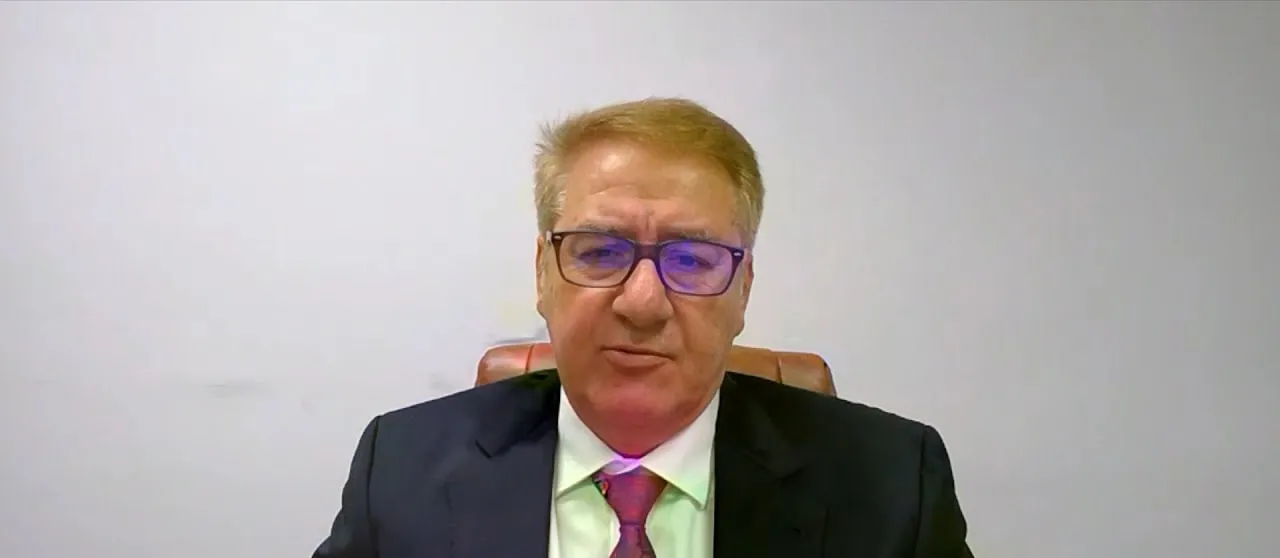
Who Is Shahram Kholdi?
Dr. Shahram Kholdi is a historian, researcher of Middle Eastern history and international relations, a professor at the University of Waterloo in Canada, and one of the leading academic analysts of Iranian affairs in Persian-language media outside Iran. With a particular specialization in the fields of “memory politics” and the “historiography of the 1979 Revolution,” Kholdi is considered one of the most distinctive figures among the new generation of Iranian-born historians in the West. Drawing on his academic expertise in the contemporary history of Iran and the Middle East, his active presence in Persian-language media, and his widely discussed analytical writings on social media, he has become a prominent reference point for understanding the intersection of history, memory, and politics in contemporary Iran.
Importance and Academic Influence
The significance of Shahram Kholdi within the Iranian intellectual and academic landscape can be examined from several perspectives. First, his doctoral dissertation at the University of Manchester (2011), titled The Politics of Memory in the Islamic Republic of Iran and the Historiography of the 1979 Revolution, is one of the few systematic academic studies exploring how official and competing narratives of the Islamic Revolution have been constructed. This theoretical and historical project lies at the intersection of history, collective memory, and politics.
Second, Kholdi’s diverse areas of expertise—including memory politics, the historiography of the revolution, oil history, the Constitutional Revolution, international relations, and the history of civil society—have positioned him among analysts capable of interpreting current events within the broader framework of modern Iranian history.
Third, his extensive presence across various Persian-language media outlets—including Iran International, Epoch Times Persian, Abdi Media, and numerous interview and discussion programs—along with his significant social media following (approximately 81,000 followers on Instagram), has made him a familiar figure for audiences interested in the analysis of Iranian and Middle Eastern affairs.
Collaboration with Abdi Media
Kholdi is also a frequent guest and contributor to Abdi Media (Abdimedia), a platform where his analytical discussions on topics such as Iran–Israel tensions, the role of Benjamin Netanyahu, regional geopolitical scenarios, and the historical interpretation of current events are regularly published.
Life and Background
Publicly available information regarding Shahram Kholdi’s exact date of birth and early life remains limited, a characteristic that is fairly common among Iranian-born academics whose primary focus is scholarly work. What can be gathered from available accounts is that, before pursuing graduate studies abroad, Kholdi was involved in research related to water law, agriculture, and associated fields in Iran. This background later influenced one of his major research interests: the historical evolution of water management in Iran.
This early experience places Kholdi among a relatively small group of historians who have devoted serious attention to the long-term history of resource management—particularly water management—across the Iranian Plateau, from the era of the Medes to the present day. The subject has gained increasing importance in recent years due to Iran’s escalating water crisis.
Education
Shahram Kholdi pursued his higher education in the United Kingdom and Canada, ultimately earning a Ph.D. in Middle Eastern History from the University of Manchester in 2011. The University of Manchester is widely recognized as one of the leading British institutions in the humanities.
His doctoral dissertation, The Politics of Memory in the Islamic Republic of Iran and the Historiography of the 1979 Revolution, explored how official and unofficial narratives of the 1979 Revolution were constructed, reconstructed, and transformed over subsequent decades, and how these narratives contributed to political legitimacy, contestation, and discourse formation within the Islamic Republic. Situated within the academic field of Memory Studies, the dissertation is regarded as a significant contribution to understanding the relationship between history, collective memory, and politics in modern Iran. Following the completion of his doctorate, Kholdi worked on preparing the dissertation for publication as a book.
Prior to completing his Ph.D., Kholdi received a Graduate Teaching Fellowship at the University of Manchester from 2005 to 2008, an experience that marked the beginning of his academic teaching career.
Academic Career
After earning his doctorate, Shahram Kholdi continued his academic career in Canada. For a period, he taught at the University of Western Ontario, where student evaluations on platforms such as Rate My Professors described his courses on Iranian history as highly successful and engaging.
He currently serves as a faculty member in the Department of History at the University of Waterloo, one of Canada’s leading universities. At Waterloo, he teaches a range of courses, including:
- HIST 230 — Introduction to the Middle East
- HIST 311 — International Relations, 1890–1951
- PSCI 257 — Introduction to Middle East Politics
This combination of courses reflects the breadth of Kholdi’s expertise, encompassing both Middle Eastern history and the history of international relations.
Teaching Style
According to student evaluations, Kholdi’s teaching style emphasizes critical thinking, close engagement with students, and a commitment to exploring complex and challenging subjects with intellectual honesty. In one notable testimonial, a former student stated that their understanding of Iranian history and politics—particularly in light of recent developments in Iran—was profoundly shaped by Kholdi’s courses and mentorship.
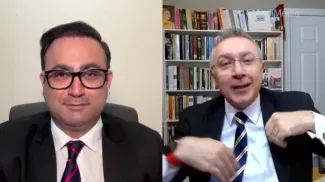
Shahram Kholdi, Middle East affairs analyst, in conversation with Abdi Media
Research Fields
In his academic and media profiles, Shahram Kholodi introduces several interconnected fields of research:
First, the Politics of Memory and the Historiography of the 1979 Revolution: The subject of his doctoral dissertation, this field examines how competing discourses regarding the revolution—ranging from the official narrative of the Islamic Republic to the narratives of critics and various factions of the opposition—have taken shape, and how collective memory is utilized as a tool in political conflicts.
Second, Oil History: Kholodi has historically examined the role of oil in the politics and economy of Iran and the Middle East, from the pre-nationalization era of the oil industry to contemporary times.
Third, the History of International Relations: Focusing on the period from 1890 to 1951 and extending into the contemporary era, this field allows him to analyze current events in Iran and the Middle East within a historical framework of international relations.
Fourth, the History of the Iranian Constitutional Revolution and Civil Society: A field in which Kholodi addresses the roots of the formation of modern institutions, the rule of law, and civil society in Iran.
Fifth, the History of the Evolution of Water Management in Iran: A topic linked to his prior research background in Iran regarding legal issues of water and agriculture. In an expert interview with Ab News, Kholodi reviewed the history of water management in the Iranian plateau from the Median Kingdom in the Zagros region to the era of the Islamic Republic, analyzing the evolution of institutions, laws, and managerial approaches in this domain.
Media Activity
Shahram Kholodi is one of the most frequently featured Iranian-born analysts in diaspora Persian-language media. His media presence has expanded significantly over recent years, making him a familiar authority for audiences interested in the historical-political analysis of Iranian affairs.
The primary platforms for Kholodi's media activities include:
Iran International: Where Kholodi regularly appears in discussions and analyses concerning topics such as Israeli policies, Netanyahu's role, Iran-US tensions, and regional scenarios.
Epoch Times Persian: Where, as an international relations analyst, Kholodi provides insights into macro-level topics such as the roles of China and Russia in global conflicts and the geopolitical landscape.
Abdi Media: Where Kholodi is one of the permanent guests, having published numerous analytical interviews about Iran and Israel, war and peace scenarios, and historical analyses of current daily events.
Social Media: Particularly Instagram (under the username
@menaresearcher, with around 81,000 followers) and Threads, through which Kholodi regularly shares analyses, short notes, and daily reactions to ongoing events with a broader audience.
In addition to these, Kholodi regularly participates in conferences, academic panels, and YouTube talk shows, where he addresses current issues regarding Iran, the Middle East, and international politics.
Perspectives and Analyses
Throughout his years of activity, Shahram Kholodi has formulated a distinct analytical framework in which long-term history and structural context are employed as key tools for understanding current events.
Analysis of Israeli Policies and Netanyahu's Role
One of the consistent focal points of Kholodi's analyses is Israeli politics and the role of Benjamin Netanyahu within it. In his view, Israel's actions in recent tensions with Iran cannot be reduced to a single personality or a brief period; rather, they must be analyzed within the framework of Israel's long-term security strategies. Kholodi noted in one of his analyses that in published studies on Israel's international security over the past 30 years, Netanyahu has been a constant element in all of them; therefore, Kholodi believes it is "highly simplistic to try to reduce Israel's actions to a single personality."
At the same time, in his assessment of Netanyahu's performance, Kholodi has pointed out his "incompetence" in managing certain dimensions of the conflict with Hamas commanders—an evaluation showing that his analysis of this figure is not one-dimensional.
Analysis of Israel's "Strategic Matrices"
One of Kholodi's widely reflected analyses is his description of "scenario matrices" in Israel's security strategy. In his view, the Israelis "have designed matrices in which the appropriate response to event 'X' is predetermined," thereby examining all possible contingencies in advance. According to Kholodi, these matrices account not only for the reactions of the Islamic Republic, but also for those of the United States and European nations.Critique of the Islamic Republic's Foreign Policy
Kholodi is a serious critic of the Islamic Republic's foreign policy and its legacy since the inception of the regime. In one of his analyses, he argued that "since its formation, by taking American diplomats hostage, conducting activities contrary to international principles in the region, and supporting terrorist groups, the Islamic Republic has always faced a crisis of mistrust from the United States, regardless of which administration is in power in Washington."
Furthermore, in analyzing the relationship between the Islamic Republic and the Trump administration, he has warned against potential "misperceptions": "The danger that the Islamic Republic must avoid is assuming that because the United States avoids war, it is incapable of a decisive response. Such misperceptions have brought about catastrophes for the Iranian people in the past."
The Role of China and Russia
In his analyses, Kholodi has also addressed the role of China and Russia in the global order. In interviews with The Epoch Times and other media outlets, he has presented a critical narrative regarding the role of these two powers in backing the Islamic Republic.
A Historical Perspective on Water Management
In the field of the history of water management in Iran, Kholodi argues that examining water governance in Iran without considering what water managers have done over thousands of years is "irrational." In his analysis, he traces the history of water management on the Iranian plateau back to prehistoric times, pointing to the role of the Median Kingdom in the Zagros region and the northwestern and western drainage basins as the starting point of a long tradition.
Affiliations with Figures and Currents
Throughout his years of activity, Shahram Kholodi has been connected to a network of intellectual-analytical institutions and media. At the academic level, his relationships with the University of Waterloo (his current institution) and the University of Manchester (where he earned his PhD) comprise his primary ties. He is also a member of the Association for Iranian Studies (AIS), which is the most prominent international academic institution for Iranology.
At the media level, his ongoing collaboration with Iran International, The Epoch Times Persian, and Abdi Media is a well-known facet of his work. Domain-wise, Kholodi positions himself in the space between academia and the media—namely as an "academic intellectual-analyst"—a position in which scholarly expertise becomes a tool for the public analysis of current events.
Conclusion
Dr. Shahram Kholodi is a distinctive figure among the new generation of Iranian-born historians active in Western universities. He occupies a unique position through a combination of deep academic expertise in the contemporary history of Iran and the Middle East, a prominent media presence, and the ability to bridge long-term historical analysis with current events. His career—spanning a research background in the legal aspects of water in Iran, doctoral studies at the University of Manchester, teaching positions at Western University and the University of Waterloo, and active engagement in Persian-language media—presents the portrait of a "historian-analyst" who has consistently intervened in public discourse at the intersection of academia and the media.
Kholodi's defining characteristic, on the first level, is his expertise in relatively less-explored areas such as the "politics of memory" and the "historiography of the revolution"; fields in which his approach to the 1979 Revolution treats it not as a frozen event of the past, but as a living, continuously reconstructed narrative. On the second level, his ability to synthesize multiple specialized fields—from the history of oil and the Constitutional Revolution to international relations and the history of water management—lends an unusual breadth and depth to his analyses.
From an analytical standpoint, Kholodi’s role exemplifies the growing significance of the "media historian-analyst" in the diaspora Iranian discourse—a phenomenon where academic historians, drawing upon their expertise, become a primary reference point for the general public to comprehend contemporary developments. At a time when the fast-paced events of Iran and the Middle East—from nuclear tensions to regional conflicts—demand historically contextualized analysis, the role of figures like Kholodi takes on particular importance.
What remains clear from today's perspective is that the topics Kholodi focuses on in his research and commentary—ranging from the relationship between collective memory and politics in the Islamic Republic to the analysis of Israeli security strategies, Iran's relations with the West, and the long-term history of resource management in Iran—are among the most vital subjects of debate in the intellectual and political discourse of Iranians. As Iran and the region navigate one of the most volatile periods in their contemporary history, Shahram Kholodi’s academic-analytical voice, with its rare blend of historical expertise and media engagement, will remain an enduring part of this conversation.
Frequently Asked Questions (FAQs)
Who is Shahram Kholodi and what is his specialization? Dr. Shahram Kholodi is a historian, researcher of Middle Eastern history and international relations, and a faculty member in the Department of History at the University of Waterloo, Canada. His specialized fields include the politics of memory, the historiography of the 1979 Revolution, oil history, the history of international relations, the history of the Constitutional Revolution and civil society, and the history of the evolution of water management in Iran.
What is Shahram Kholodi’s educational background? Shahram Kholodi received his PhD in Middle Eastern History in 2011 from the University of Manchester, UK. His doctoral dissertation was titled "The Politics of Memory in the Islamic Republic of Iran and the Historiography of the 1979 Revolution." He also received a graduate teaching fellowship at the University of Manchester from 2005 to 2008. He completed his higher education in the United Kingdom and Canada.
Where does Shahram Kholodi teach? Shahram Kholodi is currently a faculty member in the Department of History at the University of Waterloo in Canada, where he teaches courses such as Introduction to the Middle East, International Relations 1890–1951, and Introduction to Middle East Politics. He previously taught at Western University (University of Western Ontario).
What is Shahram Kholodi’s doctoral dissertation about? Kholodi's dissertation, titled "The Politics of Memory in the Islamic Republic of Iran and the Historiography of the 1979 Revolution," examines how official and competing narratives of the 1979 Revolution were constructed, reconstructed, and transformed over the decades, and what role these narratives have played in political legitimization and discourse-building within the Islamic Republic. In recent years, he has been preparing this dissertation for publication as a book.
In which media outlets is Shahram Kholodi active? Kholodi regularly appears on Iran International, The Epoch Times Persian, Abdi Media, and several YouTube talk shows. He is also active on social media, particularly Instagram (under the username @menaresearcher, with around 81,000 followers), where he regularly shares his analyses and commentaries with a broader audience.
What is Shahram Kholodi’s perspective on Israeli policies? Kholodi believes that Israel's actions in recent conflicts cannot be reduced to a single personality or a brief timeframe; rather, they must be analyzed within the framework of Israel's long-term security strategies. He views Israel as possessing "scenario matrices" in which the appropriate response to every plausible contingency is anticipated. At the same time, in evaluating Netanyahu, he has pointed out his "incompetence" in managing certain dimensions of the conflict with Hamas.
What is Shahram Kholodi’s perspective on the Islamic Republic's foreign policy? Kholodi is a severe critic of the Islamic Republic's foreign policy. He believes that from its inception (marked by the hostage-taking of American diplomats, regional actions, and support for terrorist groups), the regime has consistently faced a crisis of mistrust from the United States, regardless of the administration in Washington. He has also warned against the Islamic Republic's "misperception" regarding the US's purported unreadiness to deliver a decisive response.
Is Shahram Kholodi still active? Yes, Shahram Kholodi is concurrently active in both academic and media spheres. In academia, he is engaged in teaching and research as a faculty member in the Department of History at the University of Waterloo. In the media sphere, he regularly publishes his analyses on current developments in Iran, the Middle East, and international politics across Persian-language media outlets and social networks, making him one of the most visible academic analysts among diaspora Iranians.
Take less than a minute, register and share your opinion under this post.
Insulting or inciting messages will be deleted.
Sign Up