
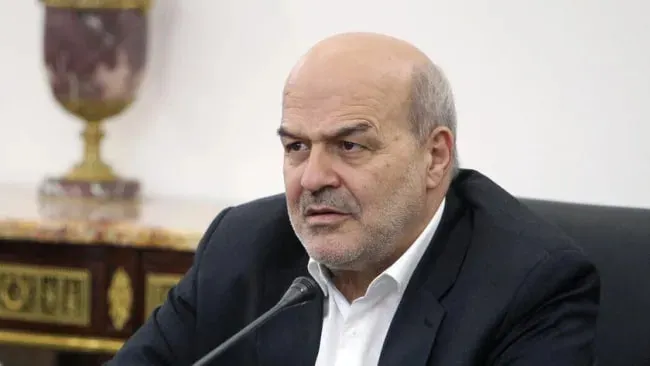
Isa Kalantari is an Iranian politician, executive manager, agricultural researcher, and a prominent figure within the reformist and technocratic political camp of Iran. Born in 1952 in the city of Marand (East Azerbaijan Province), he is one of the most experienced senior officials of the Islamic Republic in the fields of agriculture and environmental policy.
Over a career spanning nearly four decades, Kalantari’s record has been shaped by a combination of long-term ministerial roles, leadership of research and professional institutions, and ultimately a controversial assignment that permanently tied his name to the fate of Lake Urmia.
Who is Isa Kalantari?
Isa Kalantari is an Iranian politician, executive manager, agricultural researcher, and a prominent figure within Iran’s reformist and technocratic political camp. Born in 1952 in the city of Marand (East Azerbaijan Province), he is one of the most experienced senior officials of the Islamic Republic in the fields of agriculture and environmental affairs. Over a career spanning nearly four decades, his record has been shaped by long-term ministerial responsibilities, leadership of research and professional institutions, and ultimately a controversial assignment that permanently linked his name to the fate of Lake Urmia.
The importance of Kalantari in Iran’s executive and political landscape can be examined from several angles. First, he is one of the longest-serving ministers of agriculture in the history of the Islamic Republic, having led this key sector during the post–Iran-Iraq War reconstruction era under Akbar Hashemi Rafsanjani’s governments. Second, he is a founding member of the Executives of Construction Party and the secretary-general of “House of Farmers” (Khaneh-ye Keshavarz), a position that placed him among the leading technocratic and centrist figures in Iran. Third—and perhaps the most controversial aspect of his career—he served as secretary of the “Lake Urmia Restoration Task Force” from 2013 to 2022, a mission that began with clear promises to restore the lake but in practice coincided with its continued environmental deterioration, turning it into one of the most debated environmental issues in Iran.
Kalantari also served in the 12th administration of President Hassan Rouhani as Vice President and Head of the Department of Environment. Although he currently holds no official government position, he remains active as an expert and commentator on agriculture, water resources, and environmental issues, and his frank and sometimes controversial views continue to receive wide attention in Iranian media and policy debates.
Life and Background
Isa Kalantari was born in 1952 in Marand, East Azerbaijan Province. The northwestern region of Iran, his birthplace, is one of the country’s important agricultural areas, and this early connection to an agricultural environment later influenced his professional orientation.
His academic education was entirely focused on agriculture and crop sciences. Between 1971 and 1975, he studied Agronomy and Plant Breeding at the Faculty of Agriculture of the University of Urmia. He then continued his studies in the United States, earning a master’s degree in Crop Physiology from the University of Nebraska. Later, between 1978 and 1981, he obtained a PhD in Plant Physiology and Crop Biochemistry from Iowa State University.
His graduate studies in the United States coincided with the 1979 Iranian Revolution and the early years of the Islamic Republic. After completing his education, he returned to Iran in the early 1980s, at a time when the country was facing the Iran–Iraq War and the challenge of rebuilding its scientific and administrative institutions. His academic expertise in plant physiology and biochemistry became a key foundation for his later executive responsibilities.
Early Career and Research Institutions
After returning to Iran, Kalantari held several positions in agricultural research and scientific institutions.
He served as head of the Institute for Plant Breeding and Seed Production Research—one of Iran’s most important agricultural research centers, responsible for crop improvement, seed production, and enhancing agricultural productivity.
He also headed the Agricultural Research, Education and Extension Organization, the largest research and educational body in Iran’s agricultural sector.
This experience at the top of major research institutions, combined with his academic background, paved the way for his appointment to the highest executive position in the sector: the Ministry of Agriculture.
Tenure as Minister of Agriculture
A turning point in Kalantari’s executive career was his appointment as Minister of Agriculture in the first and second governments of Akbar Hashemi Rafsanjani. He managed Iran’s agricultural sector for an extended period during the post-war reconstruction era, when the government focused on economic rebuilding and expanding agricultural production.
During this period, key policies such as achieving self-sufficiency in staple crops like wheat, expanding irrigation systems, mechanizing agriculture, and strengthening research and extension institutions were central to his ministry’s agenda. The slogan of wheat self-sufficiency, which later became a strategic national goal, was actively pursued during his tenure.
His term as minister ended with a major structural change in 2000, when the Ministries of Agriculture and Jihad of Construction were merged to form the new Ministry of Agriculture Jihad during the presidency of Mohammad Khatami.
Establishment of Keshavarz House and Professional–Political Activities
After stepping down from the Ministry, Isa Kalantari shifted toward professional and political activities in the agricultural sector. In 2002, he founded the “Keshavarz House” as a professional–political organization representing the agricultural sector and became its secretary-general, a position he held for many years. The Keshavarz House is known in Iran’s political sphere as an organization close to the reformist and moderate currents, playing a role both in defending farmers’ professional interests and in political and electoral activities.
Kalantari is also one of the founding members of the Executives of Construction Party of Iran, a political party established in 1996 by a group of ministers and managers from Akbar Hashemi Rafsanjani’s administration. In Iran’s political spectrum, this party is considered centrist and technocratic. This position placed Kalantari among the prominent figures of the moderate and centrist political camp.
In addition to these roles, his career also includes the following:
Advisor to the Head of the Expediency Discernment Council during the presidency of Akbar Hashemi Rafsanjani
Head of the National Olympic Committee of Iran
These roles reflect the diversity of his professional activities over the years.
Secretariat of the Lake Urmia Restoration Task Force
The most controversial and challenging chapter of Kalantari’s career is his role in the Lake Urmia restoration project. Lake Urmia, once the largest inland lake in Iran and one of the largest saltwater lakes in the Middle East, has in recent decades faced a severe drying trend due to a combination of factors, including extensive dam construction, unsustainable agricultural expansion, excessive water extraction, droughts, and climate change.
Start of the Mission in the Rouhani Administration
With the election of Hassan Rouhani as president, the restoration of Lake Urmia became one of the government’s key environmental priorities and campaign promises. On January 22, 2014, the then Minister of Energy, Hamid Chitchian, announced the formation of the “Lake Urmia Restoration Task Force,” with Isa Kalantari appointed as its secretary to design and implement solutions for restoring the lake. During this period, Kalantari also served as advisor to the First Vice President in water, agriculture, and environmental affairs.
The task force, in cooperation with universities and international organizations (including the United Nations Development Programme), designed a comprehensive restoration plan. This plan included water transfer projects, reducing agricultural water consumption in the basin, reforming cropping patterns, river dredging, and water supply projects. The estimated cost of the plan was around 5 billion US dollars.
Promises and Outcome
During his tenure, Kalantari made explicit promises regarding the restoration of Lake Urmia and at one point stated that, with full implementation of the master plan, the lake would be restored by around 2023. In one of his well-known remarks, he even warned that “without restoring Lake Urmia, no government in Iran can survive,” highlighting the strategic importance of the issue.
However, in practice, the restoration process faced serious challenges. Despite the completion of major infrastructure projects and significant financial investment, repeated droughts, continued water extraction in the basin, and implementation constraints prevented the achievement of restoration goals. In 2022 and 2023, instead of recovery, reports indicated severe drying and one of the most critical conditions in the lake’s history. This turned the project into one of Iran’s most controversial environmental cases, with widespread criticism directed at Kalantari and the restoration task force.
End of Mission and Criticism
Kalantari was removed from his position as head of the Lake Urmia Restoration Task Force in July 2022. In the final years of his tenure and afterward, environmental activists, experts, and public opinion sharply criticized the performance of the task force. Critics, including environmental advocate Mohammad Darvish, argued that the project focused too heavily on engineering and water transfer solutions while neglecting the root cause of the crisis—excessive agricultural water consumption and the need for fundamental reform in cropping patterns and alternative livelihoods.
In response, Kalantari attributed the failure to budget limitations and structural constraints, arguing that an uneven distribution of resources—most of which were allocated to the Ministry of Energy—was a major obstacle. He also traced the roots of the crisis to flawed historical approaches to “sustainable development” and the long-standing neglect of environmental considerations in policymaking.
Presidency of the Department of Environment
During the twelfth administration of Hassan Rouhani (from 2017), Kalantari was appointed Vice President and Head of the Department of Environment, while also retaining his role as secretary of the Lake Urmia Restoration Task Force.
His tenure coincided with multiple environmental challenges, including nationwide water crises, dust storms, air pollution in major cities, wetland and lake degradation, and wildlife protection issues. During this period, Kalantari repeatedly warned about the worsening environmental situation in Iran and often presented a highly alarming picture of the country’s ecological future—statements that also drew criticism at times.
With the end of Rouhani’s administration in 2021 and the start of Ebrahim Raisi’s presidency, Kalantari’s official governmental roles came to an end.
Views and Positions
Isa Kalantari has expressed explicit and sometimes controversial views in recent years regarding water, agriculture, and environmental issues.
Water crisis as an existential threat: His central argument is that Iran’s water crisis represents an existential threat to the country’s future. He has repeatedly warned that continued water consumption patterns could lead to large-scale migration and even threaten the viability of life in parts of Iran.
Criticism of past development policies: Kalantari believes that Iran’s environmental crisis stems from decades of flawed development policies in which the concept of sustainable development and environmental considerations were ignored, and the environment was treated as an “extra cost.”
Criticism of water management: He has repeatedly criticized Iran’s water governance system, particularly the Ministry of Energy, accusing it of inefficient and misguided management of water resources.
Political positions: Kalantari is aligned with the reformist and moderate political spectrum. As a founding member of the Executives of Construction Party and secretary-general of the Keshavarz House, he has been active in centrist political currents.
Documentary: “See | The Maze of Revolution – Interview with Isa Kalantari”
An interview that led to legal prosecution and a prison sentence for him.
Controversies and Criticism
Kalantari’s career, especially regarding Lake Urmia, has been accompanied by widespread controversy. The main criticism concerns the gap between his promises to restore the lake and the actual outcome of the project. Critics argue that despite massive expenditures and years of effort, Lake Urmia not only was not restored but reached one of the worst conditions in its history.
Environmental activists such as Mohammad Darvish have called for his resignation from the restoration task force, arguing that the project focused excessively on engineering and structural solutions rather than reducing agricultural water consumption and reforming cropping patterns. In contrast, Kalantari and his supporters attribute the failure to financial limitations, repeated droughts, and lack of cooperation among institutions.
Some of his statements—often strongly worded and alarmist—have also been criticized for lacking sufficient scientific backing or practical solutions. His supporters, however, consider this frankness a sign of courage in addressing environmental realities.
Relations with Figures and Political Currents
Kalantari’s name is associated with several political and institutional networks:
Hashemi Rafsanjani and the Executives of Construction circle: He served as Minister of Agriculture under Rafsanjani and later as his advisor in the Expediency Council.
Government relations: During Rouhani’s presidency, he held key environmental and water management positions and collaborated with officials such as Hamid Chitchian in the Lake Urmia project.
Environmental activists: His relationship with figures such as Mohammad Darvish has been complex, shifting between cooperation and criticism.
Conclusion
Isa Kalantari is one of the prominent technocratic managers of the Islamic Republic of Iran, whose career combines decades of executive success in agriculture with highly controversial environmental responsibilities. His path—from academic training in the United States to senior governmental positions, founding professional associations, and leading environmental crises—reflects the trajectory of a technocrat deeply embedded in Iran’s policy-making system.
His defining feature on one level is his strong technical expertise in agriculture. On another level, however, his name has become inseparably linked to one of Iran’s most critical environmental crises: the fate of Lake Urmia.
From an analytical perspective, his career illustrates the complexity of environmental governance in Iran, where structural constraints, long-term policy failures, and competing interests make crisis resolution extremely difficult. Regardless of criticism, Kalantari’s warnings about water scarcity, wetland degradation, and agricultural reform remain part of Iran’s ongoing national debate on environmental sustainability.
Take less than a minute, register and share your opinion under this post.
Insulting or inciting messages will be deleted.
Sign Up