
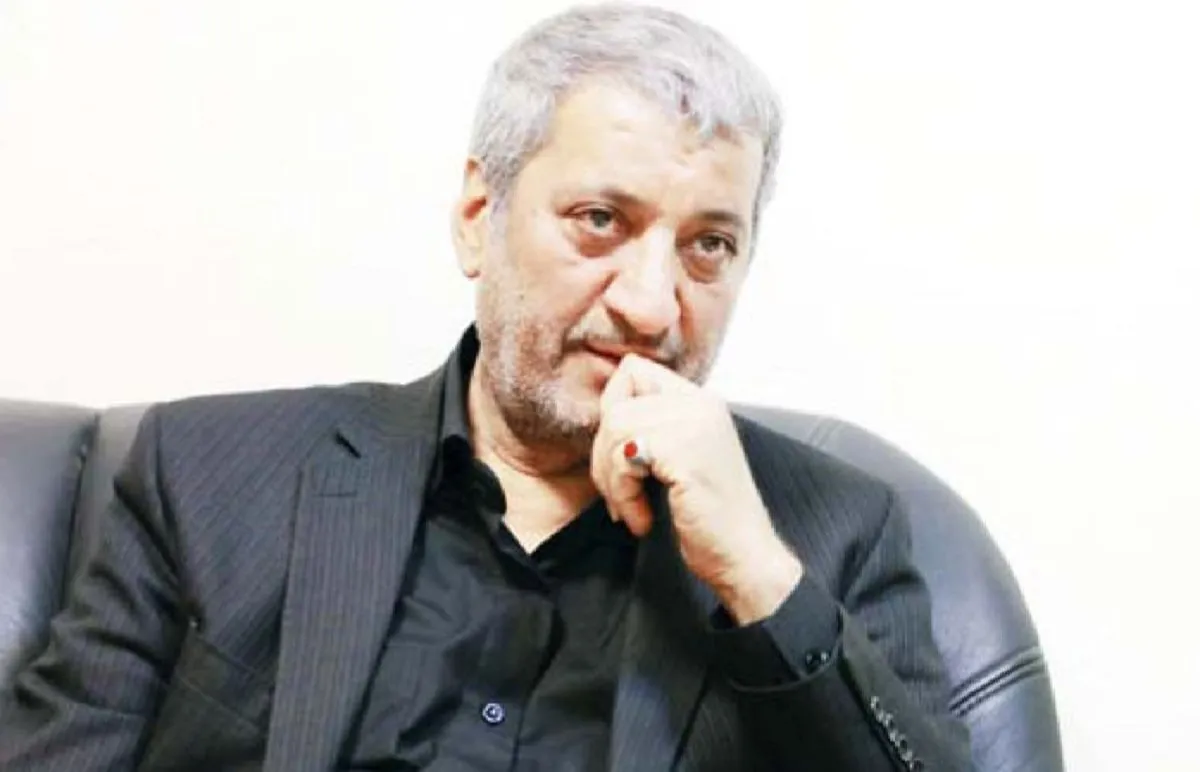
Gholamali Rajaei, a politician, social activist, university professor, and researcher of contemporary Iranian history, born in 1957 in the city of Dezful, is one of the prominent figures of the centrist and moderate reformist current in Iran’s contemporary political landscape. His name in Iranian political literature is primarily known as the “advisor to Ayatollah Akbar Hashemi Rafsanjani in the final years of his life,” a position that made him a first-hand narrator of the views, memories, and analyses of one of the key figures in modern Iranian history.
Who is Gholamali Rajaei?
Gholamali Rajaei, a politician, social activist, university professor, and researcher of contemporary Iranian history, born in 1957 in Dezful, is one of the prominent figures of the centrist and moderate reformist current in Iran’s contemporary political sphere. In Iranian political literature, his name is primarily associated with his role as the “advisor to Ayatollah Akbar Hashemi Rafsanjani during the final years of his life,” a position that made him a first-hand narrator of the views, memories, and analyses of one of the key figures in modern Iranian history.
The significance of Gholamali Rajaei in Iran’s political-intellectual sphere can be examined from several angles. First, his continuous presence in Rafsanjani’s office during the last five years of the Ayatollah’s life allowed him to record unique accounts, conversations, and memories that were later published in books such as “In the Mirror” and “The Final Years.” Second, as a regular political commentator in various media outlets—including Ensaf News, Jamaran, Etemad Online, and other reformist platforms—he is considered a reference voice for articulating the centrist reformist perspective on current political events. Third, his experience in urban governance as media advisor to Pirouz Hanachi, then mayor of Tehran, and his candidacy in the 2017 Tehran City Council elections indicate his practical involvement in urban politics in recent years.
Continue below:
The Clear Shadow of Politics and Elections/Conversation with Dr. Gholam Ali Rajaei, Advisor to Akbar Hashemi Rafsanjani and Political Activist
During his career, Rajaei has maintained a combination of three distinct roles: an academic researcher and university lecturer in contemporary history, a political and social activist, and a narrator and interpreter of Akbar Hashemi Rafsanjani’s legacy. This combination has given him a distinctive position in Iran’s discursive and intellectual sphere.
Life and Background
Gholamali Rajaei was born in 1957 in the city of Dezful, one of the historical and ancient cities in Iran’s Khuzestan Province. Dezful, which became a frontline and heavily damaged city during the Iran–Iraq War, had a traditional-religious social structure and a vibrant cultural atmosphere during Rajaei’s childhood and adolescence. These geographic and cultural roots have influenced his perspective on Iranian affairs, particularly his connection to religious-revolutionary discourse.
Rajaei’s academic education is in the field of history. He completed his studies up to the doctoral level in history at Tarbiat Modares University—an institution that, during the 1980s and 1990s, became one of the main centers for training humanities scholars in Iran. His academic specialization in contemporary history has played a fundamental role in shaping his research-based approach to the Iranian Revolution, its key figures, and the historical analysis of Iran’s political developments.
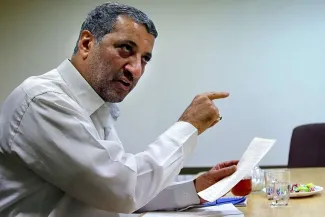
Gholamali Rajaei is a university professor and a researcher of contemporary history.
Start of professional activity and university teaching
Rajaei pursued his professional career simultaneously in two fields: university teaching and political/media activity. In the academic sphere, he has taught at the University of Tehran, Islamic Azad University, the Research Institute for Islamic Revolution, and the Imam Khomeini Research Institute, at both undergraduate and graduate levels. His main areas of teaching and research are contemporary Iranian history, the history of the Islamic Revolution, and influential figures in this historical process.
Alongside these activities, Rajaei gradually became one of the intellectual and political associates within the circle surrounding Ayatollah Akbar Hashemi Rafsanjani. This connection, which initially began through collaboration on research and historiography projects, later evolved into an official advisory role.
Role as advisor to Ayatollah Hashemi Rafsanjani
A turning point in Rajaei’s intellectual and political career was his sustained presence alongside Akbar Hashemi Rafsanjani during the final years of the latter’s life. According to Rajaei himself, he served as an advisor in Rafsanjani’s office for the last five years of his life—roughly from 2012 to January 2017, when Rafsanjani passed away.
This period coincided with one of the most complex phases of Rafsanjani’s political life, after his defeat in the 2005 presidential election and amid the highly tense post-2009 political atmosphere. As head of the Expediency Discernment Council, Rafsanjani was navigating sensitive political developments during this time.
During these years, Rajaei was a direct witness to Rafsanjani’s conversations, analyses, and perspectives on key political events in Iran. The result of this experience has been reflected in several published works, which serve as important references for understanding Rafsanjani’s views in the final years of his life.
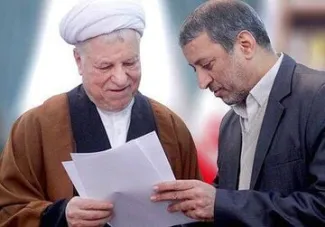
Gholamali Rajaei alongside Ayatollah Akbar Hashemi Rafsanjani
Views published about Hashemi Rafsanjani
Gholamali Rajaei has, in various interviews and writings after the death of Akbar Hashemi Rafsanjani, presented notable accounts of Rafsanjani’s views. These include the following:
- A gradual shift in Rafsanjani’s positions in his later years toward a more “people-oriented” approach, and a distancing from some of his earlier stances during his presidency.
- His emphasis on a “moderation approach” as his main intellectual legacy, arguing that “moderation comes from religion, and Shiism is a religion of moderation.”
- Rafsanjani’s prediction regarding Hassan Rouhani’s second presidential term, suggesting that Rouhani should complete the unfinished projects of his first term during the second.
- His consistent belief in the necessity of dialogue with the United States and resolving regional tensions—a view that, according to Rajaei’s account, had existed since his time as Speaker of Parliament in the 1980s.
- His emphasis on regional alliances, particularly with Saudi Arabia.
Gholam Ali Rajaei, Akbar Hashemi Rafsanjani's adviser, says a little about the unsaid (read disqualification) of Akbar Hashemi Rafsanjani and the messages of the Guardian Council
Speculation about the cause of Hashemi Rafsanjani’s death
One of Rajai’s most sensitive positions after the death of Hashemi Rafsanjani on January 8, 2017, was his comments about the cause of the death. In an interview with Ensaf News, Rajai stated that he believes “something happened, and that event was not a natural death or a heart attack.” At the same time, he emphasized that he is not in a position to provide security-related analysis and does not have precise information on the matter, but he believes that an event beyond a natural death occurred.
These remarks, which received wide attention in the discourse surrounding Rafsanjani’s death, are considered one of Rajai’s controversial statements. In official accounts, the cause of Rafsanjani’s death was declared to be a heart attack in a swimming pool—a narrative that was mostly confirmed by members of Rafsanjani’s family, although some of his children and close associates later raised questions about aspects of the incident.
Activity in the urban political sphere
In recent years, in addition to his research and media activities, Rajai has also entered urban politics.
Candidacy in the 2017 Tehran City Council election
In the fifth Tehran City Council election, held on May 29, 2017, simultaneously with the 12th presidential election, Rajai registered as a candidate on the Tehran electoral list and his qualification was approved. Although he ultimately did not succeed in entering the Tehran City Council, this candidacy marked his first serious participation in an electoral political process.
This election, which resulted in the victory of the “Hope” list led by reformists and supporters of President Rouhani, turned the Tehran City Council into one of the most influential city councils in the post-revolution era and paved the way for the selection of Mohammad-Ali Najafi and later Pirouz Hanachi as mayors of Tehran during the fifth council term.
Media advisory role for Pirouz Hanachi
After Pirouz Hanachi was appointed mayor of Tehran in December 2018 (following the resignation of Mohammad-Ali Najafi), Rajai was appointed as the mayor’s media advisor. In this role, he was involved in managing media relations for Tehran Municipality, interacting with the press, and shaping urban narratives during Hanachi’s tenure.
Hanachi’s mayoralty, which lasted until 2021, faced several major challenges, including the COVID-19 pandemic and its impact on urban policies, financial and budgetary constraints in the municipality, and the 2021 city council election, which led to the victory of conservative factions and a major shift in Tehran’s governance structure. With the change of mayor and the appointment of Alireza Zakani in September 2021, Rajai’s role as media advisor ended.
Political views and positions
Throughout his career, Gholamali Rajai has consistently aligned with moderate reformist and pro-moderation discourse.
Criticism of radical currents
In multiple articles and interviews, Rajai has warned against “radical” and “extremist” behavior in Iran’s political sphere. In one interview, he stated that “radical behavior has become so concerning that the system must take measures to prevent its continuation,” referring to cases such as the assassination attempt on Saeed Hajjarian as consequences of radicalization.
Position toward Mahmoud Ahmadinejad and his supporters
In recent years, Rajai has taken a strong stance against supporters of Mahmoud Ahmadinejad. In an interview with Etemad Online, he stated that this group “is seeking to challenge the system” and that their request for public gatherings should be accepted so that “their level of popular support becomes clear.”
View on Ebrahim Raisi’s government
During the presidency of Ebrahim Raisi, Rajai became one of the government’s sharp critics. In November 2022, amid economic dissatisfaction and widespread protests, he suggested that if Raisi is “truly concerned about the country and wants to serve it, he should announce the end of his term and resign from the presidency.” This was one of the strongest criticisms made by a moderate reformist figure against Raisi’s administration.
View on national media
In several articles, Rajai has strongly criticized Iran’s national broadcasting organization (IRIB). In a widely circulated comment following the Metropol building collapse in Abadan in June 2022, he stated that “IRIB poured salt on the wounds of the people; at a time when many were helping Abadan, this spirit should have been strengthened, but it was not.” His criticism centers on the idea that state media, instead of acting as a bridge between the government and the people, has at times deepened divisions.
Criticism of the electoral system and Guardian Council
As a reformist political activist, Rajai has repeatedly criticized the role of the Guardian Council in disqualifying large numbers of reformist candidates. In one interview, he stated that “the main competitor of reformists in elections is not conservatives, but the Guardian Council,” a view widely echoed among moderate reformist circles.
Works and books
During his academic and political career, Rajai has published several books and research works, mainly focused on contemporary history, Islamic Revolution figures, and interviews with prominent personalities.
His most important works include:
“In the Mirror: Four frank and intimate conversations with Ayatollah Hashemi Rafsanjani” (2016) published by Kavir Publications. This 184-page book is based on four oral interviews with Rafsanjani, covering his family background, youth, migration to Qom, daily routines, and lesser-known aspects of his personal and political life.
“The Final Years”, which contains Rajai’s memories of the last five years of his close association with Rafsanjani. In its introduction, Rajai states that he witnessed many events firsthand that he believed should be recorded in the historical narrative of the Islamic Republic.
It is worth noting that the controversial book “Hashemi Without Retouching” is often mistakenly attributed to Rajai, but it was written by Sadegh Zibakalam and Farshteh-Sadat Etefaghfar.
Relations with figures and political groups
Rajai has been connected to a network of political and religious figures, particularly those close to Hashemi Rafsanjani and his family, including Mohammad Hashemi, Faezah Hashemi, Mehdi Hashemi, Yasser Hashemi, and Mohsen Hashemi.
Politically, he has ties with members of the Executives of Construction Party and moderate reformist circles, including Gholamhossein Karbaschi, Mohammad Atrianfar, and Mohammad Quchani. He has also expressed support for the administrations of Hassan Rouhani.
He has been in contact with moderate clerical figures such as Ayatollah Mousavi Bojnourdi and Mohammad Mousavi Khoeiniha, as well as political activists close to Mohammad Khatami and Hassan Khomeini.
In Tehran’s municipal sphere, his collaboration with Pirouz Hanachi and Mohsen Hashemi (as head of the city council during the fifth term) was among his most significant administrative experiences.
Take less than a minute, register and share your opinion under this post.
Insulting or inciting messages will be deleted.
Sign Up