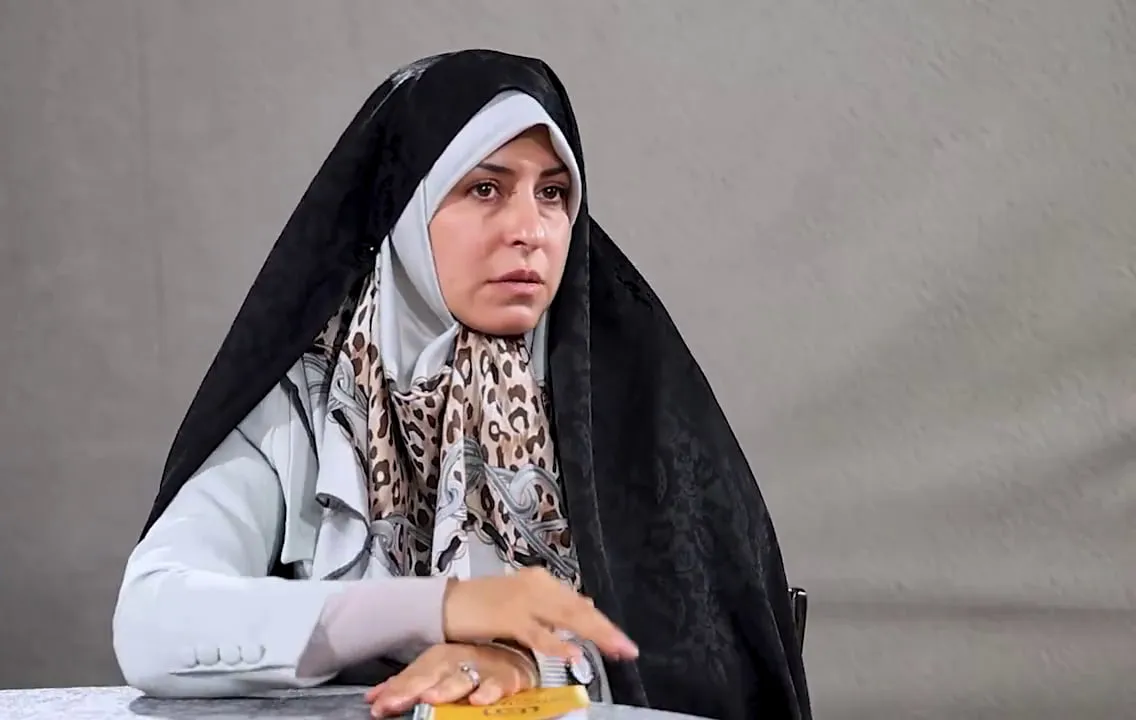
Fatemeh Shojaei is a women's studies expert, an activist in the fields of women and family affairs, and one of the critics of Western feminism and the women’s policies pursued by moderate and reformist governments in Iran. She is regarded as a prominent figure within the discourse of the “religious-revolutionary woman” among the newer generation of women’s rights and social activists.
Lawsuit and Acquittal Ruling
Following this media controversy, three former women’s affairs deputies of reformist governments—Zahra Shojaei, Shahindokht Molaverdi, and Masoumeh Ebtekar—filed a legal complaint against Fatemeh Shojaei and the program “Jahan Ara.” The complaint, according to published reports, included accusations such as insult and dissemination of false information, and was considered one of the legal cases linked to ideological disputes in the field of women’s issues.
Ultimately, in August 2022, the court ruled to dismiss the complaint filed by the three former women’s affairs deputies and acquitted Fatemeh Shojaei. This ruling was widely reflected in media close to the اصولگرا (Principlist/conservative) camp, including the Kayhan newspaper, under the headline: “Acquittal of Fatemeh Shojaei in the lawsuit filed by three former women’s affairs deputies of reformist governments.”
This case is considered one of the key examples of ideological disputes in contemporary Iranian women’s discourse—a conflict in which two different interpretations of “women’s rights” were directly confronted: one based on equality rights and feminism, and the other based on a religious-Islamic framework.
Views and Positions
Throughout her media activity, Fatemeh Shojaei has developed a clear intellectual framework that can be summarized in several key axes.
Criticism of Women’s Policies in Moderate and Reformist Governments
Shojaei’s central position is her criticism of women’s policies in post-war governments—particularly those of Hashemi Rafsanjani (Executives of Construction), Khatami (Reformists), and Rouhani (Moderation). In her view, these administrations’ approaches to women’s issues were largely influenced by Western feminist discourse and deviated from what she considers the authentic religious-revolutionary framework. This stance is clearly reflected in her criticisms of Zahra Shojaei, Shahindokht Molaverdi, and Masoumeh Ebtekar.
Defense of the Religious-Revolutionary Framework in Women’s Issues
In contrast, Shojaei defends a framework in which women’s rights are not defined as equal rights in all aspects with men, but rather as rights aligned with the “nature of women” and their “role in family and society.” Within this framework, the rights and duties of women across three domains—individual, family, and social—are formulated based on religious teachings and the views of Ayatollah Khomeini and Ayatollah Khamenei.
Views on the Bill for Protecting Women’s Dignity
In one of her positions, Shojaei addressed the “Bill for Protecting Women’s Dignity”—a draft that has been under review in Parliament, the government, and the judiciary for more than 12 years. She stated that the prolonged uncertainty surrounding this bill, along with its repeated amendments, is one of the factors behind the lack of support for female candidates in elections. This stance reflects her commitment to pursuing women’s legal and rights-based demands within the framework of the system, while still maintaining distance from reformist positions.
Request to Include Women in Pezeshkian’s Government
In one of her more recent positions, Shojaei, in an interview with Abdi Media, called on Masoud Pezeshkian (the 14th president of Iran) to appoint women to at least nine high-level positions, including ministerial posts. She stated that in every province there are between 3 to 10 elite women and across the country between 90 to 300 women who are qualified for ministerial roles. Her request emphasized that there should be no gender-based distinction between men and women, and that appointments should be based on meritocracy. This position indicates that Shojaei, despite her religious-revolutionary outlook, supports the active participation of women in executive government positions.
Elections and Women: What Are the Real Demands of Women?- In conversation with Ms. Fatemeh Shojaei, women's and family activist
Criticism of Mohammad Javad Zarif
In one of her widely discussed positions, Shojaei sharply criticized Mohammad Javad Zarif, the foreign minister of the Rouhani administration. In her view, Zarif’s approach was “directly contrary to the criteria of the Supreme Leader.” Shojaei argued that “Mr. Rouhani took many actions that were significantly misaligned with the policies and statements of the Leader,” and that “Mr. Zarif had no right to act without taking Mr. Khamenei’s guidelines into account, yet in practice he did so.”
This stance places Shojaei among critics of the Rouhani administration and its foreign policy, and reflects her alignment with the official discourse of the Islamic Republic in the field of foreign affairs.
Research and Academic Activity
In addition to her media activity, Fatemeh Shojaei has also been active in academic research. According to reports published on Iranian academic platforms (such as Civilica), she has participated in several scientific conferences and presented multiple papers. These include:
- “Professional Ethics of Legal Advocacy from the Perspective of Human Rights Teachings” at the First National Conference on Law and Political Science (2017)
- “Phenomenology of Violence from the Perspective of Cultural Security” at the Fifth International Conference on Social Studies, Law, and Popular Culture (2021)
- “The Role of the 1980 Convention on Certain Conventional Weapons in the International Humanitarian Law System” at the Sixteenth International Conference on Law and Judicial Sciences (2023)
- “Review of the Principle of Exhaustion of Domestic Remedies in International Developments” at the Eleventh International Conference on Political Science (2023)
This research record suggests that Shojaei’s academic interests extend beyond women’s issues to include law, international humanitarian law, and cultural security. However, depending on whether these publications belong to the same Fatemeh Shojaei or another individual with a similar name, this record may reflect a broader range of academic activity.
Media and Online Presence
Shojaei is active across multiple Persian-language media outlets, and her frequent appearances on networks aligned with conservative and revolutionary currents are a notable feature of her public profile.
Her primary official media platform has been IRIB’s Ofogh TV, especially the program “Jahan Ara.” In addition, Abdi Media is another platform where Shojaei has appeared in analytical interviews discussing topics such as “elections and women: what are women’s real demands?” and offering recommendations to the government of Masoud Pezeshkian.
In the digital space, Shojaei maintains a presence on Iran’s religious-revolutionary messaging platforms—especially Eitaa—where she runs a personal channel. There, she shares notes, analyses, and intellectual reflections with her audience. The content of this channel is mainly focused on religious themes, historical-religious topics (including references to early Islamic history and the events of Karbala), and women-related issues.
Connections with Figures and Political Currents
Fatemeh Shojaei is politically and intellectually aligned with the Principlist and revolutionary current in Iran—a stream that, in women’s issues, emphasizes a discourse grounded in religious teachings and the leadership’s viewpoints. In terms of discourse, she stands in contrast to prominent reformist women’s figures such as Zahra Shojaei, Shahindokht Molaverdi, Masoumeh Ebtekar, Fatemeh Rakeei, and other reformist women activists.
Her strongest media affiliation is with Ofogh TV and the program “Jahan Ara.” She has also participated in interviews with Abdi Media, a semi-independent platform.
It is important to note that Fatemeh Shojaei should not be confused with Zahra Shojaei (a reformist women’s activist, former vice president for women’s affairs in the Khatami administration, and head of the Reformist Women’s Association, born 1956). Despite the similarity in names, they belong to opposing political and ideological camps in Iran’s women’s discourse and even faced each other in a televised confrontation on “Jahan Ara.”
Conclusion
Fatemeh Shojaei is one of the distinctive figures of the “religious-revolutionary women’s discourse” in contemporary Iran. Through a combination of academic training in women’s studies, active media presence, and outspoken criticism of reformist women’s policies, she has established a recognizable position in Iran’s public intellectual space. Her career—including her controversial appearances on “Jahan Ara” in February 2022, her involvement in a high-profile lawsuit later leading to her acquittal in August 2022, and her continued media and online activity—presents the profile of an activist-critic in the field of women’s issues.
Her defining feature is, first, her willingness to publicly and directly challenge prominent reformist women’s figures, even in the face of legal action, and second, her attempt to link a religious-Islamic framework with contemporary women’s demands, including advocating for increased female participation in executive government positions.
From an analytical perspective, Shojaei represents one pole within Iran’s broader women’s discourse—a field characterized by competing interpretations ranging from feminism and reformist approaches to religious-revolutionary and non-reformist currents. This plurality reflects the complexity of women’s issues in contemporary Iran and the absence of a single dominant narrative.
What is clear is that Shojaei, regardless of agreement or disagreement with her views, has become an active voice within Iran’s religious-revolutionary discourse on women. In a society undergoing significant transformation in women-related domains—from family law to socio-economic participation—her critical perspective remains part of the ongoing public debate.
Frequently Asked Questions
Who is Fatemeh Shojaei?
Fatemeh Shojaei is a women’s studies expert and women’s and family affairs activist in Iran who approaches women’s issues through a religious-intellectual framework based on the views of Ayatollah Khomeini and Ayatollah Khamenei. She is known for her criticism of women-related policies in moderate and reformist governments.
What distinguishes her from Zahra Shojaei?
Despite sharing a surname, they are two different figures on opposite sides of Iran’s women’s discourse. Zahra Shojaei is a reformist women’s activist and former vice president for women’s affairs in the Khatami administration, while Fatemeh Shojaei is a religious-revolutionary critic of reformist women’s policies.
What was the Jahan Ara controversy?
In February 2022, Fatemeh Shojaei appeared on the Jahan Ara program on Ofogh TV, where she criticized women’s policies in reformist and moderate governments. The debate escalated, leading to a tense live broadcast in which two former officials left the studio in protest.
What happened in the lawsuit against her?
Following the controversy, three former women’s affairs deputies filed a lawsuit against her and the program. In August 2022, the court dismissed the case and acquitted her.
What is her view on women in government?
She supports the inclusion of women in high-level government positions and has called for appointing women to at least nine ministerial-level posts, emphasizing merit-based selection.
What is her stance on women’s rights?
She defines women’s rights within a religious framework, emphasizing compatibility with women’s nature and their roles in family and society rather than strict equality with men.
What is her view on Mohammad Javad Zarif?
She is a critic of him and argues that his foreign policy approach was inconsistent with the Supreme Leader’s guidelines.
Is she still active?
Yes, she remains active in media, academic discussions, and online platforms, frequently commenting on women’s issues, politics, and social topics.
Take less than a minute, register and share your opinion under this post.
Insulting or inciting messages will be deleted.
Sign Up