
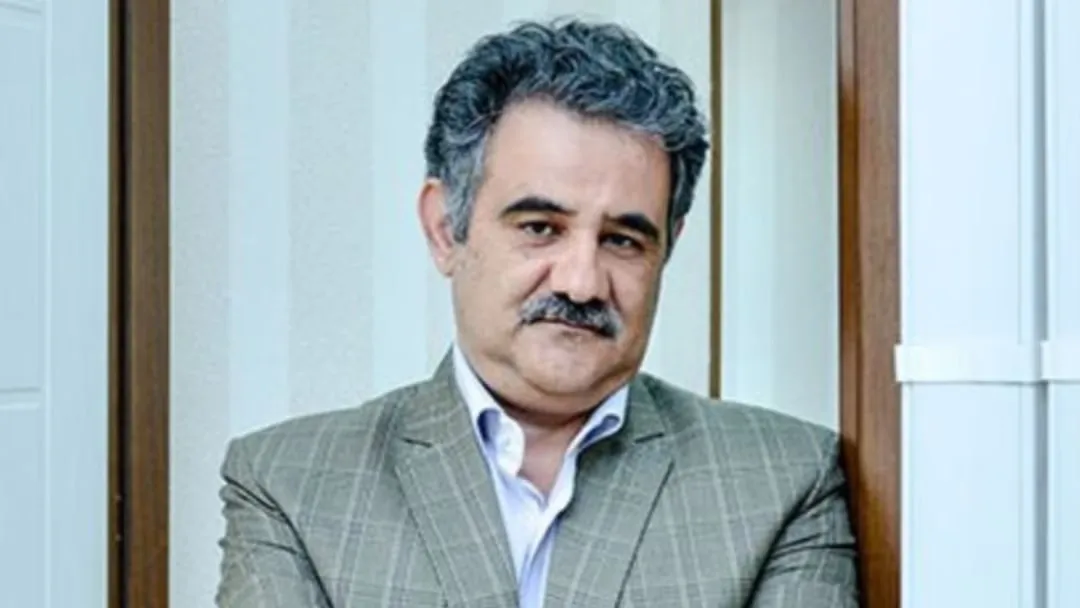
Davood Souri—a prominent economist, senior poverty-studies researcher, and former professor of economics at Sharif University of Technology—is one of the most respected technocratic and academic figures analyzing Iran's macroeconomy. Holding a specialized doctorate in econometrics from Virginia Tech University in the United States, he is widely recognized as a primary academic authority on inflation, inequality, and income distribution structures within Iran. His widespread professional respect was underscored during his highly publicized detention in 2022, which prompted an unprecedented coalition of 345 Iranian economists from all ideological spectrums to mobilize in his defense. This comprehensive profile analyzes his academic and research career alongside the release of an exclusive, new interview addressing the economic doctrine of the fourteenth administration, titled "From Promise to Action: The Pezeshkian Cabinet and Economic Challenges."
Who is Davood Souri?
Dr. Davood Souri—a prominent economist, poverty-studies researcher, and former professor of economics at Sharif University of Technology—is one of the most widely respected figures among the mid-generation of Iranian economists. Specializing in macroeconomics, monetary economics, financial markets, econometrics, and income distribution, Souri bridges the gap between rigorous academic methodology and pressing social advocacy. Over nearly three decades of academic and research activity, his data-driven insights have made him a primary scientific authority on inflation, structural inequality, and poverty lines in Iran.
The significance of Davood Souri within Iran’s economic landscape can be examined through several lenses. First, his strong academic foundation—backed by a PhD in economics from Virginia Tech—coupled with a rich catalog of quantitative research, places him at the forefront of Iran's academic economists. Second, his peerless reputation in poverty and income distribution studies is highly recognized; renowned economist Dr. Mohammad Tabibian famously described him as "the country's best economist in the field of poverty and distribution" and "one of the finest econometricians in the nation." Third, his highly publicized detention in November 2022 sparked an unprecedented mobilization across the academic community, uniting 345 Iranian economists from sharply contrasting ideological schools (from free-market liberals to institutionalists) in a collective demand for his release.
While maintaining an objective, data-driven academic profile, Souri has historically engaged with civil society, utilizing his economic expertise to write articles and analyze policies aimed at fostering informed public participation and promoting socio-economic reforms.
Early Life and Background
Documented details regarding Davood Souri’s exact date of birth and early upbringing remain limited in open media sources, as the public focus has rested strictly on his scientific contributions rather than personal publicity.
A notable aspect of his background, highlighted by his long-time colleague Mohammad Tabibian, is his service during the Iran-Iraq War. Tabibian noted that he has known Souri for nearly thirty years, recalling how Souri would visit him during military leaves from the front lines to discuss his deep interest in economic theory. This unique formative background—blending battlefield experience with a developing passion for macroeconomics—sets him apart from later generations of academic economists in Iran.
Higher Education
The definitive cornerstone of Souri’s academic credentials is his PhD in Economics from Virginia Polytechnic Institute and State University (Virginia Tech) in the United States. Known for its rigorous technical, engineering, and quantitative sciences, Virginia Tech provided Souri with a robust training in modern economic methodology, advanced econometrics, and quantitative modeling. This technical expertise heavily shaped the rigorous empirical framework he later applied to analyzing Iran's complex economic data.
Academic and Research Career
Upon returning to Iran, Souri joined the faculty of the Department of Economics at Sharif University of Technology—the nation's premier technical institution—where he played an influential role in training a new cohort of quantitative economists.
Beyond his tenure at Sharif University, Souri’s professional portfolio includes:
The Iranian Banking Institute: An elite educational and research institution affiliated with the Central Bank of Iran (CBI), where he contributed to research on monetary policy and banking systems.
The Poverty and Income Distribution Study Group: A specialized research collective where he executed his most definitive empirical studies regarding poverty metrics, household welfare, and structural inequality in Iran.
Specialized Fields of Research and Prominent Works
Throughout his career, Souri has made significant contributions to several core branches of economics:
Macroeconomics and Monetary Economics
Souri has written extensively on monetary markets, central banking policies, and the behavior of money demand in inflationary environments. He pioneered innovative models linking monetary expansions directly to poverty indicators. His notable papers in this domain include "Money Demand and Income Distribution" and "Long-Term Demand for Money, Poverty, and Macroeconomic Policies."
Analysis of Inflation in Iran
Unpacking the structural drivers of systemic inflation in Iran remains one of Souri's most heavily cited areas of study. His landmark research paper, "The Roots of Inflation in the Iranian Economy," serves as a foundational reference text for understanding the structural, fiscal, and monetary imbalances that fuel domestic inflation.
Poverty Metrics and Income Distribution
This field represents the cornerstone of Souri's professional legacy. Utilizing advanced econometrics, his research challenged several conventional narratives. For instance, he examined the structural impacts of official Rial devaluations on poverty, arguing that because a significant portion of low-income populations is concentrated in rural agricultural and traditional sectors, currency depreciation can sometimes yield localized poverty-reducing dynamics depending on trade balances. He has consistently advocated for increasing human capital (such as education and specialized literacy) as the most sustainable mechanism for structural poverty reduction.
Financial Market Spillover Dynamics
Souri has also applied multivariate dynamic modeling to the Tehran Stock Exchange (TSE). His paper, "Investigating the Existence of Contagion Among Corporate Stocks in the Tehran Stock Exchange Using a Multivariate Dynamic Model," remains a prominent contribution to local capital market literature.
The November 2022 Detention and Academic Mobilization
A major turning point in Souri's public profile occurred when he was detained at his home by security forces on the evening of Monday, October 31, 2022 (9th of Aban, 1401 SH). This took place during the widespread civil unrest following the death of Mahsa Amini, a period marked by the systemic detentions of prominent academic, cultural, and media figures.
Context of the Arrest
During the arrest, security operatives confiscated Souri's personal laptop and mobile devices, transferring him to Evin Prison. Judicial authorities did not issue a formal, specific indictment. Observers noted that Souri had no formal political affiliations or history of activism; his public expressions were confined entirely to evaluating current economic events on his personal X (formerly Twitter) account. His detention was widely interpreted as an escalatory measure against independent academic voices. It closely coincided with the arrest of Mohammad Molanouri, a doctoral economics student at Sharif University and an analyst for the financial media outlet EcoIran.
The Coalition of 345 Economists
The arrest triggered an immediate response across the Iranian economic community. Over 345 prominent economists, industrial leaders, and financial journalists signed a joint declaration titled "Release the Researcher of Poverty and Inequality."
The petition represented a rare display of complete consensus across fiercely divided ideological factions. Notable signatories included:
Mousa Ghaninejad & Mohammad Tabibian: Prominent free-market, classical economists.
Farshad Momeni & Abbas Shakeri: Leading structuralist and institutional economists.
Mohsen Renani: A well-known development economist.
Masoud Nili: Former senior economic advisor to the government.
Hashem Pesaran: World-renowned econometrician and professor emeritus at the University of Cambridge.
Mohammad Sattarifar & Masoud Roghani Zanjani: Former heads of the state Plan and Budget Organization.
This collective mobilization underscored Souri's universal professional standing, proving that his scientific integrity transcended deep-seated factional debates. Following this intense domestic and international pressure from the academic community, Souri was released on bail after approximately 20 days, around November 20, 2022.
Key Economic Stances and Philosophy
Souri’s economic philosophy is defined by a commitment to empirical scientific logic, social welfare, and economic liberty:
Critique of Disjointed Policymaking: Souri is an outspoken critic of the chronic absence of a coherent, long-term economic doctrine within successive Iranian administrations. He famously argued that "governments from the outset have lacked any coherent, deliberate policy for managing the macroeconomy," viewing temporary economic fixes as fundamentally flawed.
Defense of Consumer Choice and Markets: He is broadly recognized as a defender of economic freedom and consumer choice. He advocates for reducing inefficient state intervention, removing mandatory price-setting mechanisms, and allowing market dynamics to determine value, aligning him conceptually with market-oriented economic thought.
Structural Focus on Poverty Reduction: Despite his pro-market alignments, Souri rejects laissez-faire indifference toward vulnerable classes. He maintains that rampant inflation and economic mismanagement have systematically eroded the middle class, warning that "the sheer volume of the population falling into poverty is creating unprecedented systemic social crises."
Emphasis on Data Over Narrative: True to his training in econometrics, Souri prioritizes quantitative data, statistical verification, and mathematical modeling over ideological narratives when evaluating fiscal or monetary policies.
Institutional Connections and Network
Souri is central to an elite network of Iranian academics and financial specialists. His deep connection to the intellectual circle of the University of Tehran and Sharif University anchors his academic standing. His professional alignment with institutional figures like Mohammad Tabibian, alongside his research footprints within the Central Bank’s Banking Institute, demonstrates his integration into both academic and state-adjacent policy research centers. The diverse ideological makeup of the 345 economists who defended him stands as permanent evidence of his broad network of respect within the country’s intellectual history.
Conclusion
Dr. Davood Souri occupies a distinct space in contemporary Iranian economics as a dedicated "civil economist"—an academic who translates complex quantitative modeling into accessible public advocacy for poverty reduction and structural reform. His trajectory, carrying him from wartime experience to advanced econometric training at Virginia Tech, lecturing at Sharif University, and pioneering structural research on the roots of inflation, reflects a lifetime dedicated to empirical economic clarity.
Souri's defining attribute is his universal scientific authority, which successfully bridges the deep ideological divides within Iran’s economic community. His 2022 detention demonstrated the vulnerabilities faced by independent academics in polarized environments, while simultaneously showcasing the capacity of the scientific community to unite in defense of its peerless experts. As Iran continues to confront severe stagflationary pressures, currency volatility, and widening wealth gaps, Dr. Davood Souri's data-backed critiques and methodologies remain vital reference points for macro-policy evaluations and structural economic discourse.
Frequently Asked Questions (FAQs)
Who is Davood Souri and what is his primary specialty? Dr. Davood Souri is a prominent Iranian economist and former professor of economics at Sharif University of Technology. His core specialties include econometrics, macroeconomics, monetary policy, and specialized empirical research into poverty metrics and income distribution.
Where did Davood Souri receive his education? Souri earned his PhD in Economics from Virginia Tech (Virginia Polytechnic Institute and State University) in the United States, providing him with a strong foundation in modern quantitative economics and econometric modeling.
What are Dr. Souri's most influential research works? His most notable scientific papers include "The Roots of Inflation in the Iranian Economy" (a foundational reference on domestic structural inflation), "Money Demand and Income Distribution," and "Long-Term Demand for Money, Poverty, and Macroeconomic Policies."
What institutions has he been affiliated with in Iran? Souri has served as a faculty member at Sharif University of Technology, a senior researcher and educator at the Higher Institute of Banking (affiliated with the Central Bank of Iran), and a primary lead within the Poverty and Income Distribution Study Group.
Why was Davood Souri arrested in November 2022? Souri was detained at his home on October 31, 2022, amid a broader wave of arrests targeting prominent academic and cultural figures during the social unrest following the death of Mahsa Amini. He had no history of organized political activism; his arrest was widely linked to his objective economic commentaries and observations posted on his personal X (Twitter) account.
How did the economic community react to his detention? His arrest prompted an unprecedented collective protest. Over 345 leading Iranian economists, corporate executives, and financial journalists signed a joint petition demanding his release. The coalition was uniquely diverse, bringing together ideological opponents ranging from classical liberals like Mousa Ghaninejad to prominent institutionalists like Farshad Momeni and global econometricians like Hashem Pesaran. He was released on bail roughly 20 days later.
What is Davood Souri's core perspective on the Iranian economy? Souri argues that consecutive administrations in Iran have fundamentally lacked a coherent, scientifically sound macroeconomic doctrine, relying instead on erratic interventions and mandatory pricing. He advocates for free-market choice and reduced state interference, while simultaneously using empirical data to warn against the structural dangers of rising poverty and the erosion of the middle class due to inflation.
Take less than a minute, register and share your opinion under this post.
Insulting or inciting messages will be deleted.
Sign Up