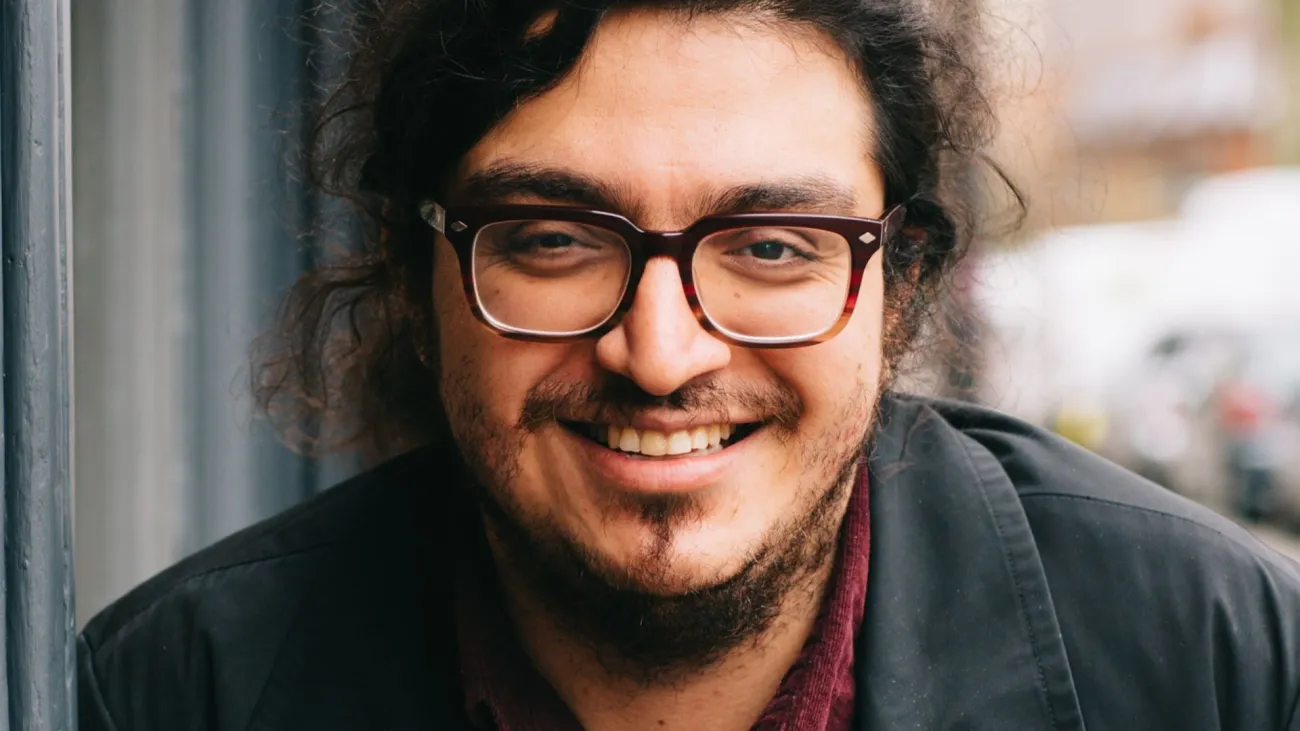
Arash Azizi—an Iranian-American historian, author, journalist, and translator—is a postdoctoral associate and lecturer at Yale University. Having earned his PhD in History and Middle Eastern Studies from New York University (NYU), he serves as a contributing writer for The Atlantic. In addition to his background in media production with Persian-language networks, Azizi has authored two books in English: The Shadow Commander (a biography of Qasem Soleimani) and What Iranians Want (an examination of the Woman, Life, Freedom movement). This article explores his academic record, published works, and analytical perspectives.
Who is Arash Azizi?
Arash Azizi, born in 1987, is an Iranian-American historian, author, journalist, and translator who stands as one of the most prolific and widely recognized figures among the new generation of diaspora Iranian historians and analysts on the international stage. Combining a rigorous academic pedigree from one of America's elite universities with extensive journalistic experience in Persian-language media and the publication of two highly impactful books on contemporary Iran—with his works translated into 18 languages—Azizi has established himself as a primary Western reference for decoding developments in Iran.
Azizi’s significance within the global intellectual and media landscape is anchored in several key dimensions:
Academic Foundations: He earned his PhD in History and Middle Eastern Studies from New York University (NYU) in 2023, defending a dissertation focused on the communist movement in the Middle East during the global Cold War, positioning him within a prestigious tradition of modern historical scholarship.
Biographical and Strategic Analysis: His debut book, The Shadow Commander: Soleimani, the US, and Iran's Global Ambitions, published in 2020, was one of the earliest and most authoritative global volumes examining Qasem Soleimani and the Quds Force, turning Azizi into an international reference on Iran's regional architecture.
Documenting Contemporary Resistance: His sophomore book, What Iranians Want: Women, Life, Freedom, published in 2024, stood out as one of the first serious, comprehensive accounts analyzing the mass movement that followed the death of Mahsa Amini and tracing the evolution of modern resistance in Iran.
Currently, Azizi serves as a postdoctoral associate and lecturer at Yale University and a contributing writer for The Atlantic, one of America's most respected analytical magazines. He is also currently authoring his third book, which explores the relationship between Iran and Israel, for the major publishing imprint PublicAffairs (a member of the Hachette Book Group / Basic Books). His commentary routinely appears across a vast spectrum of elite global outlets, including The New York Times, The Washington Post, The Wall Street Journal, The New York Review of Books, Newsweek, The Guardian, Vanity Fair, Foreign Policy, Al Jazeera, Haaretz, and the BBC.
For Persian-speaking audiences, Azizi’s name remains notably tied to his past tenure as a prominent news anchor for the "Room 100" (Otagh-e Khabar) program on Manoto TV, which was one of the most widely watched diaspora Persian-language broadcasters.
Life and Background
Arash Azizi was born in Iran in 1987, entering a generational cohort that witnessed the final years of the Iran-Iraq War and spent childhood under the Reconstruction administration of Akbar Hashemi Rafsanjani, followed by the Reform era of Mohammad Khatami. This generational upbringing heavily informs Azizi's historical perspective on contemporary Iran, particularly regarding the socio-political evolutions of the post-revolutionary era.
Azizi eventually emigrated from Iran, settling in the United States, primarily living in Boston and New York City. This geopolitical relocation initiated a professional trajectory that evolved from broadcast journalism within Persian media into high-level academic scholarship within the American university ecosystem.
Education
The definitive milestone in Azizi’s academic pathway was obtaining his PhD in History and Middle Eastern Studies from New York University (NYU) in 2023. As an institution, NYU is globally recognized as a premier center for Middle Eastern and regional studies.
Azizi's doctoral dissertation focused on the communist movement in the Middle East during the global Cold War. Situated at the intersection of political history, intellectual history, and regional studies, his research examined transnational networks connecting Iran and the Arab world during the Cold War era. This deep archival and historical investigation equipped Azizi with a robust academic foundation for interpreting the modern geopolitical and ideological complexities of the region.
Academic Trajectory
Upon completing his doctorate, Azizi joined the ranks of active scholars and lecturers across some of the most prestigious academic institutions in the United States. Throughout his academic career, he has held appointments and taught courses across six distinct universities: NYU, Yale University, Boston University, Clemson University, Stanford University, and the University of Oklahoma.
For a period, Azizi served as a Senior Lecturer within the departments of Political Science and History at Clemson University. He is currently a Postdoctoral Associate and Lecturer at Yale University, a member of the elite Ivy League.
Beyond his formal faculty appointments, Azizi has been invited as a guest lecturer at dozens of prominent global universities and research institutes. These guest appearances include Oxford, the University of Chicago, Columbia, Brown, the University of Pennsylvania, UCLA, George Washington University, the University of Texas at Austin, the University of Delaware, the University at Albany, the University of Toronto, the National University of Singapore, the American University of Beirut (AUB), Tel Aviv University, the Hebrew University of Jerusalem, and Ca' Foscari University of Venice in Italy.
This exceptionally broad network of global institutions underscores Azizi's academic standing early in his postdoctoral career. Furthermore, he is a Fellow at the Center for Middle East and Global Order (CMEG) and serves on the board of directors for the Nonviolent Initiative for Democracy.
Broadcast Journalism: The Manoto TV Chapter
Prior to fully committing to a full-time academic career, Azizi was a highly visible figure in Persian-language journalism. The most prominent chapter of this period was his role as a news presenter and anchor for the "Room 100" (Otagh-e Khabar) news program on Manoto TV.
Broadcasting from London beginning in 2010, Manoto TV grew into one of the most watched satellite networks among Iranian audiences, and its flagship news show became a primary source of current affairs information. Azizi’s years anchoring the program, before transitioning into intensive postgraduate research, made him a familiar face to millions of Persian-speaking viewers globally.
Contributions to English-Language Media
Following his pivot to specialized research and authorship, Azizi has become one of the most prolific English-language commentators on Iranian affairs. In recent years, he has maintained a regular presence as a contributing writer for The Atlantic, an intellectual pillar of American media with a legacy spanning more than 165 years.
Azizi's bylines span a comprehensive array of world-class publications: The New York Times, The New York Review of Books, The Washington Post, The Wall Street Journal, Foreign Policy, Liberties, Newsweek, New Lines Magazine, Haaretz, The Daily Beast, the Toronto Star, Jacobin, The Guardian, Vanity Fair, The Nation, the Atlantic Council, Al Jazeera, IranWire, and Al-Monitor. This diverse journalistic footprint showcases an exceptional media reach.
The core axes of Azizi's commentary focus on Iranian domestic politics, Iran's relations with the West and Israel, the modern history of the Middle East, Iran's regional proxy networks, domestic social movements, and Iranian cinema.
Major Publications
The Shadow Commander: Soleimani, the US, and Iran's Global Ambitions (2020)
The true turning point in Azizi's writing career came in late 2020 with the release of his first book, The Shadow Commander: Soleimani, the US, and Iran's Global Ambitions, published by Oneworld Publications (London).
Hitting the market less than a year after Qasem Soleimani, the commander of the Quds Force, was assassinated in a US drone strike at Baghdad Airport on January 3, 2020, the book stood as one of the first comprehensive, English-language analytical biographies of this figure and the broader regional architecture of the Islamic Republic.
Drawing on an extensive array of Persian, Arabic, and English sources, The Shadow Commander charts Soleimani's life, strategic doctrine, and the regional ambitions of the Quds Force. The volume became a core reference text for understanding Iran’s footprint across Syria, Iraq, Yemen, and Lebanon, and was widely highlighted by global media as an essential read on modern Iran. Its subsequent translation into multiple languages solidified Azizi's position as an international expert on the subject.
What Iranians Want: Women, Life, Freedom (2024)
Azizi’s second major volume, What Iranians Want: Women, Life, Freedom, was released by Oneworld Publications in 2024, quickly becoming one of the most widely discussed English-language accounts of the mass uprising triggered by the death of Mahsa (Jina) Amini.
Framed as an essential early account of Iran's new revolutionary wave, the book contextualizes the "Woman, Life, Freedom" movement—which erupted in September 2022—within the deep historical landscape of post-1979 resistance. Azizi demonstrates that from the very dawn of the Islamic Republic in 1979, the flame of popular resistance had never been extinguished, pointing to historical precedents ranging from major strikes in Kurdistan to early, localized anti-hijab protests.
The central thesis of the book posits:
"The regime of Ayatollah Khamenei is built on sand. They might suppress the protesters today with blood, but tomorrow Iranians will rise again to claim their freedom."
The book garnered widespread critical acclaim. The Guardian characterized it as "a document of real optimism," while Kirkus Reviews lauded it as "a brave and unsettling book."
Forthcoming Third Project: Iran and Israel
Azizi is currently working on his third major book project, set to be published by PublicAffairs (an imprint of Perseus Books / Basic Books). The volume tackles the historical and contemporary relations between Iran and Israel—one of the most fraught and volatile geopolitical dynamics of the modern era, which has taken on heightened significance following the direct military confrontations between the two states from 2023 onward.
Translation Work
In tandem with his original authorship, Azizi has maintained a prolific footprint as a translator, having translated approximately a dozen books published both inside Iran and internationally. Frequently focusing on history, politics, and the social sciences, his extensive translation portfolio serves as an enduring intellectual bridge to the Persian-language intellectual sphere.
Perspectives and Analytical Stances
Throughout his intellectual and journalistic output, Arash Azizi has articulated a coherent analytical framework built on several foundational concepts:
Emphasis on Sustained Popular Resistance
The core thesis of Azizi's contemporary work is the continuity of Iranian resistance against the Islamic Republic. In his view—most explicitly detailed in his second book—the "Woman, Life, Freedom" movement was not an isolated or spontaneous anomaly, but rather the continuation of an unbroken historical trajectory of dissent dating back to the earliest years of the revolution.
The Predictability of Regime Collapse
Azizi consistently argues that the Islamic Republic is structurally unsustainable over the long term. Viewing the current establishment as "built on sand," he maintains that the regime lacks the long-term durability to withstand the cumulative, multi-generational weight of Iranian civil resistance.
Centering Women in Social Movements
Azizi places exceptional emphasis on the foundational role of women as the primary drivers of social change in Iran, tracing this dynamic across several decades rather than treating it as a modern development. He posits that Iranian women, through their daily, persistent defiance of discriminatory legal frameworks and state-mandated restrictions, function as the primary engine of socio-cultural transformation within the country.
A Multifaceted View of Foreign Policy
In the realm of international relations, Azizi advocates for a nuanced, non-rhetorical view of Iranian foreign policy. While his work on Soleimani details the aggressive and destabilizing contours of Iran's regional proxy strategy, his broader contemporary commentary looks at the structural complexities governing Iran's interactions with Israel, the United States, and regional powers, aiming for balanced historical context over simplified slogans.
Blending Historical Inquiry with Current Affairs
A defining characteristic of Azizi's analytical style is his systematic anchoring of breaking news within long-term historical developments. As a trained historian, he interprets current political events through the lens of long-term structural changes, deliberately avoiding context-free, short-term reactive analysis.
Conclusion
Dr. Arash Azizi represents one of the most prominent and industrious figures among the new generation of international diaspora Iranian historians. He occupies a unique position bridging elite American academic structures (holding an NYU PhD and teaching at Ivy League Yale) with deep media engagement across global news networks. His expansive portfolio—comprising an anchor background at Manoto TV, teaching positions across six prominent US universities (including Yale and Stanford), a contributing writer role at The Atlantic, and two major books—presents the portrait of a multi-dimensional "historian-journalist-analyst" who has established a global voice on Iranian affairs.
What stands out in Azizi's profile is the sheer volume and velocity of his output; achieving a doctorate from NYU, publishing two widely translated books, securing a regular column at The Atlantic, and teaching across six notable American higher education institutions all within his late thirties constitutes a highly distinct record among his peers. This allows him to seamlessly blend academic rigor with accessible, fast-paced journalism, creating a hybrid style that makes complex historical context accessible to global audiences.
Analytically, Azizi represents the modern "global scholar-commentator." Armed with bilingual archival access and Western academic training, he serves as a primary interpreter of modern Iran for the international community, injecting a deeply informed, critical perspective into the absolute highest tiers of global media and publishing houses. As the critical issues he tracks—Iran's regional strategy, domestic human rights movements, the escalating brinkmanship with Israel, and the future of Iranian democracy—remain at the center of international geopolitics, Azizi's analytical voice continues to expand in relevance.
Frequently Asked Questions (FAQs)
Who is Arash Azizi and what is his area of expertise? Dr. Arash Azizi (born 1987) is an Iranian-American historian, author, journalist, and translator. His areas of specialization include modern Iranian history, Middle Eastern studies, Iran's regional foreign relations, Iranian social movements, and the history of communist networks in the Middle East. He is also a contributing writer for The Atlantic.
What is Arash Azizi’s educational background? Azizi earned his PhD in History and Middle Eastern Studies from New York University (NYU) in 2023. His doctoral dissertation examined the transnational dynamics of the communist movement in the Middle East during the global Cold War.
Where does Arash Azizi teach? Azizi is currently a Postdoctoral Associate and Lecturer at Yale University. Over his career, he has accumulated teaching experience and academic appointments across six prominent American universities: NYU, Yale, Boston University, Clemson University (where he was a Senior Lecturer), Stanford University, and the University of Oklahoma.
What are Arash Azizi’s most notable books? Azizi has authored two primary books: The Shadow Commander: Soleimani, the US, and Iran's Global Ambitions (Oneworld, 2020), which focuses on Qasem Soleimani and the Quds Force, and What Iranians Want: Women, Life, Freedom (Oneworld, 2024), which chronicles the modern history of resistance leading to the Mahsa Amini protests. His writings have been translated into 18 languages. He is currently writing a third book on Iran-Israel relations for PublicAffairs.
Which media outlets does Arash Azizi write for? Azizi is a regular contributing writer for The Atlantic. His analytical articles and essays have also appeared widely in The New York Times, The New York Review of Books, The Washington Post, The Wall Street Journal, Foreign Policy, Newsweek, The Guardian, Vanity Fair, Al Jazeera, Haaretz, the BBC, and the Atlantic Council.
What was Arash Azizi’s connection to Manoto TV? Before dedicating himself fully to academic scholarship and book authorship, Azizi was a well-known broadcast journalist and news presenter for the flagship "Room 100" (Otagh-e Khabar) news program on the Persian-language satellite network Manoto TV, making him a highly recognizable face to diaspora Persian audiences.
What is Arash Azizi’s outlook on the future of Iran? Azizi’s core thesis centers on the structural frailty of the Islamic Republic and the historical continuity of popular dissent. He posits that the current regime is fundamentally "built on sand" and lacks the long-term resilience to indefinitely withstand the sustained, deeply rooted resistance of the Iranian populace. He considers women to be the central vanguard of this ongoing transformation.
Is Arash Azizi still actively publishing? Yes, Arash Azizi remains exceptionally active across both academic and media spheres. He simultaneously balance his roles as a postdoctoral lecturer at Yale, a contributing writer for The Atlantic, a frequent essayist for global news organizations, and an author currently drafting his forthcoming book on the history of Iran-Israel relations.
Take less than a minute, register and share your opinion under this post.
Insulting or inciting messages will be deleted.
Sign Up