
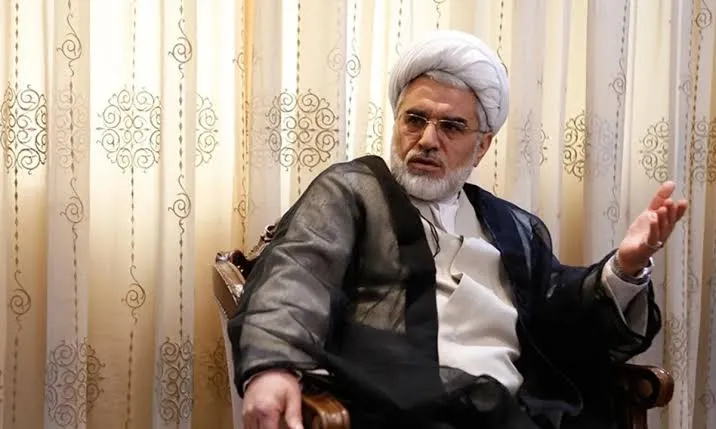
Abdollah Nuri Hosseinabadi is a Shia cleric and prominent Iranian reformist politician, a former Minister of Interior for two terms (the fifth administration of Hashemi Rafsanjani and the seventh administration of Seyyed Mohammad Khatami), a former representative of the second parliament from Isfahan and the fifth parliament from Tehran, a member of the first Islamic City Council of Tehran, the former managing director of the widely discussed newspaper "Khordad," a widely discussed figure tried by the Special Court for the Clergy in 1999 and imprisoned until 2002, and the author of the widely discussed book "Shokaran-e Eslah" (a collection of notable defense statements in the Special Court for the Clergy). He is one of the most widely discussed, prominent, and courageous clerical-political reformist figures of post-revolutionary Iran over the past four decades. Known as the "Sheikh of Reform," during his tenure as Minister of Interior in Hashemi's government, he was the architect of the integration of the police, gendarmerie, and revolutionary committees to create the Law Enforcement Forces. He was impeached by the fifth parliament on June 21, 1998, with 137 votes in favor. On April 12, 2025, after the end of his 14-year house arrest, he met with Mehdi Karroubi.
Who is Abdollah Nouri?
Abdollah Nouri Hosseinabadi (born 1950 in Isfahan) is a Shia cleric and prominent Iranian reformist politician, a central figure of the traditional left and then reformist camp in Iran's post-revolutionary power structure. He is the former Minister of Interior for two widely discussed terms (the fifth administration of Akbar Hashemi Rafsanjani from 1989 to 1993 and the seventh administration of Seyyed Mohammad Khatami from August 1997 to June 21, 1998), a former representative of the second parliament from Isfahan and the fifth parliament from Tehran, a member of the first Islamic City Council of Tehran (1999-2003), a former member of the Expediency Discernment Council from 1989 to 2000, a former representative of Ayatollah Seyyed Ruhollah Khomeini in the Construction Jihad and the Islamic Revolutionary Guard Corps, a former supervisor of the Supreme Judicial Council elections by decree of Ayatollah Khomeini, a former Vice President of Khatami after his widely discussed impeachment on June 21, 1998 (on the day of the Iran-U.S. football match in the 1998 World Cup), the former managing director of the widely discussed newspaper "Khordad" (one of the most prominent newspapers of the progressive reformist movement), a widely discussed figure tried by the Special Court for the Clergy in 1999, for which he received a five-year prison sentence and was imprisoned until 2002, the author of the widely discussed book "Shokaran-e Eslah" (a collection of notable defense statements in the Special Court for the Clergy), a widely discussed figure barred from registering for the sixth parliamentary elections due to his detention in the Special Court case, and at the same time one of the most widely discussed, prominent, and courageous clerical-political reformist figures of post-revolutionary Iran. He is one of the central figures of the clerical-reformist discourse of the Islamic Republic of Iran over the past four decades. In Persian-language media discourse, he is also known by the widely used title "Sheikh-e Eslahat" (Sheikh of Reform).
Hojjat al-Islam Abdollah Nouri, with a unique path—from a distinguished family-clerical background in Isfahan, known by the family name "Hosseinabadi," to pursuing a distinguished seminary education that reached the level of "Kharej Fiqh and Osul," to beginning his revolutionary activities in the 1970s, to taking on prominent early post-revolutionary positions as Ayatollah Khomeini's representative in the Construction Jihad and the Islamic Revolutionary Guard Corps, to taking on the position of supervisor of the Supreme Judicial Council elections by decree of Ayatollah Khomeini, to his notable representation of Isfahan in the second term of the Islamic Consultative Assembly, to taking on the Ministry of Interior in the fifth administration of Akbar Hashemi Rafsanjani from 1989 to 1993, during which the notable integration of the police, gendarmerie, and revolutionary committees and the creation of the Law Enforcement Forces of the Islamic Republic of Iran took place, to facing notable pressure from the right-wing faction in Hashemi's second administration, which led to his resignation along with Seyyed Mohammad Khatami, to the notable quote by Ali Akbar Nategh-Nouri, to his notable representation of Tehran in the fifth term of the Islamic Consultative Assembly from 1995, to his notable return to the Ministry of Interior in the seventh administration of Seyyed Mohammad Khatami after the victory of the Second of Khordad in 1997, to his tenure of only nine months in this position, which ended with his notable impeachment on June 21, 1998, by the principlist fifth parliament, to taking on the position of Vice President of Khatami after the impeachment, to his notable victory in the first Islamic City Council elections of Tehran and his membership in the first council, to taking on the managing directorship of the newspaper "Khordad," to his notable trial in the Special Court for the Clergy in 1999, for which he received a five-year prison sentence, to being barred from registering for the sixth parliamentary elections in 1999, to his imprisonment in Evin Prison for 5 years, to his limited presence in the political-intellectual discourse during the Rouhani, Raisi, and Pezeshkian administrations, and finally, to his notable meeting with Mehdi Karroubi on April 12, 2025, after the end of his 14-year house arrest—which is among the most widely discussed meetings of the Pezeshkian administration period—he has become one of the most enduring and widely discussed clerical-political reformist figures of post-revolutionary Iran.
The importance of Hojjat al-Islam Abdollah Nouri in Iran's contemporary historical-political sphere can be examined from several angles. First, his two terms as Minister of Interior in the widely discussed administrations of Hashemi and Khatami—as a figure who is among the most prominent Ministers of Interior of post-revolutionary Iran—is one of the notable aspects of his career. Second, his role as the architect of the creation of the Law Enforcement Forces of the Islamic Republic—as the main architect of the notable integration of the police, gendarmerie, and revolutionary committees—is one of the notable aspects of his executive legacy. Third, his role as the widely discussed impeached figure of the reform movement—as the first minister of the reform government to be impeached by the principlist fifth parliament—is one of the notable aspects of his controversial legacy. Fourth, his trial by the Special Court for the Clergy and his 5-year imprisonment—as a figure who is among the most prominent clerical political prisoners of post-revolutionary Iran—is one of the notable aspects of his moral-political endurance. Fifth, his role as the author of the widely discussed book "Shokaran-e Eslah"—as one of the most prominent defense-intellectual texts of post-revolutionary reformism—is one of the notable aspects of his intellectual-legal role.
Important Note: Hojjat al-Islam Abdollah Nouri's career and performance are met with different views in the Persian-language media-political space. In the discourse of progressive reformist supporters, he is known as the "Sheikh of Reform," the "courageous Minister of Interior," and a "modernist cleric." In the discourse of prominent critics from the principlist faction, his performance in defending the Khordad newspaper and his modernist religious views have been criticized as "insulting sanctities." In the discourse of traditional clerics, his jurisprudential-intellectual framework is controversial. Ali Akbar Nategh-Nouri has said in his memoirs: "We do not accept that Mr. Abdollah Nouri thinks like a velayati." This profile presents the narrative published in prominent Persian-language media-historical sources with an analytical-neutral position; the final assessment of his character and career is left to the readers.
Life and Family Background
Hojjat al-Islam Abdollah Nouri Hosseinabadi was born in 1950 in Isfahan province. The family name "Hosseinabadi" refers to his family roots in the city of Hosseinabad in Isfahan province.
Spouse: Fatemeh Seddighian
According to published reports: "His wife, Fatemeh Seddighian, is a former owner of Rasht Electric." This family-economic connection formed the foundation of his close family-social network.
Martyr Brother: Alireza Nouri
The most prominent family figure of Abdollah Nouri is his brother, Alireza Nouri—a surgeon and representative of the sixth parliament from Tehran. According to published reports: "His brother, Alireza Nouri, a surgeon, registered for the elections and entered the parliament with 1,343,000 votes as the third person from the Tehran constituency."
Alireza Nouri later passed away, and Abdollah Nouri is known as the father of Martyr Nouri—which formed the foundation of his requests for release in the post-prison period.
Education
Hojjat al-Islam Abdollah Nouri has a distinguished seminary educational path:
Seminary education at the level of "Kharej Fiqh and Osul"—the highest level of Shia seminary education.
This distinguished seminary background formed the foundation of his lasting clerical-jurisprudential identity.
Early Post-Revolutionary Path (1979-1989)
The most notable chapter of the beginning of Nouri's post-revolutionary career was taking on prominent institutional positions as Ayatollah Khomeini's representative.
Representative of Ayatollah Khomeini in the Construction Jihad
According to published reports: "Nouri was the representative of Seyyed Ruhollah Khomeini in the Construction Jihad."
Representative of Ayatollah Khomeini in the IRGC
Nouri was also the representative of Ayatollah Khomeini in the Islamic Revolutionary Guard Corps.
Supervisor of the Supreme Judicial Council Elections
According to published reports: "Nouri was also appointed by Khomeini as the supervisor of the Supreme Judicial Council elections."
Representation of the Second Parliament from Isfahan (1984-1988)
According to published reports: "Abdollah Nouri was the representative of Isfahan in the second parliament."
Ministry of Interior in Hashemi Rafsanjani's Government (1989-1993)
The central early chapter of Nouri's ministerial career was taking on the Ministry of Interior in the fifth administration of Akbar Hashemi Rafsanjani from 1989 to 1993.
Architect of the Creation of the Law Enforcement Forces
The most notable achievement of Nouri's ministerial tenure was the notable integration of the police, gendarmerie, and revolutionary committees and the creation of the Law Enforcement Forces of the Islamic Republic of Iran. According to published reports: "The integration of the police, gendarmerie, and revolutionary committees and the creation of the Law Enforcement Forces was among the actions taken during his ministerial tenure."
This action is among the most notable structural-security transformations of post-revolutionary Iran.
Resignation Along with Khatami
According to published reports: "He was forced to resign from the Ministry of Interior along with Mohammad Khatami due to pressure from the right-wing faction." This simultaneous resignation of two ministers is among the most widely discussed political events of Hashemi's second administration.
Membership in the Expediency Discernment Council
According to published reports: "He was a member of the Expediency Discernment Council from 1989 to 2000."
Representation of the Fifth Parliament from Tehran (1995-1999)
The most notable subsequent parliamentary chapter of Nouri's career was his representation of Tehran in the fifth term of the Islamic Consultative Assembly.
According to published reports: "He participated in the fifth parliamentary elections in 1995 and entered the parliament from Tehran."
Notable Protest in Vote Counting
According to published reports: "In this election, the counting of some votes written as 'Nouri' for 'Nategh-Nouri' caused protests and led Faezeh Hashemi to give the top of the list to Nategh, but it did not prevent Nouri's entry."
This protest is among the most widely discussed events of the fifth parliamentary elections.
Return to the Ministry of Interior in Khatami's Government (August 1997 - June 21, 1998)
The central historical-destiny chapter of Nouri's career was his notable return to the Ministry of Interior in the seventh administration of Seyyed Mohammad Khatami after the victory of the Second of Khordad in 1997.
Key Figure of the Reform Government
According to published reports: "After Mohammad Khatami's victory in the presidential election on May 23, 1997, Nouri again took over the Ministry of Interior. He was considered one of the key figures of Khatami's reformist government."
Challenge with the Law Enforcement Forces
According to published reports: "Since Seyyed Ali Khamenei took control of the Law Enforcement Forces after its formation and the Minister of Interior, despite being responsible for the country's security, had no supervision or control over the Law Enforcement Forces, he refused to accept responsibility for the security of the OIC summit held in Tehran in the fall of 1997." This position is among the most widely discussed notable positions in defense of the authority of the Ministry of Interior.
Notable Impeachment on June 21, 1998
The central destiny-shaping event of Nouri's career was his notable impeachment on June 21, 1998, by the principlist fifth parliament.
According to published reports: "The reason for Nouri's impeachment was stated as 'creating tension in society instead of creating security, dismissals and appointments, defense of Karbaschi, security problems in Najafabad and borders,' but it was clear to everyone that Nouri was being impeached for his efforts for the country's political development. The main designer of this impeachment in the parliament was Mohammad Reza Bahonar, who was being directed from above to overthrow Nouri."
Result of the Impeachment
According to published reports: "Finally, on June 21, 1998, on the day when the public attention of the Iranian people was focused on the football match between the national teams of Iran and the United States, Abdollah Nouri was forced to leave the Ministry of Interior with 137 votes in favor of impeachment against 117 votes against."
This impeachment, which took place on the widely discussed day of the historic Iran-U.S. football match in the 1998 World Cup in France, is among the most notable impeachments in post-revolutionary Iranian history.
Vice President of Khatami
After the impeachment, in retaliation, Mohammad Khatami appointed Nouri as his political advisor in a decree. According to published reports: "Although Mohammad Khatami, in retaliation for this impeachment, appointed Nouri as his political advisor, in reality this was the last government position of Abdollah Nouri in the Islamic Republic."
Membership in the Islamic City Council of Tehran (1999-2003)
The most notable chapter of Nouri's council career was his notable victory in the first Islamic City Council elections of Tehran on February 26, 1999. This council is among the most prominent elected reformist institutions.
Managing Directorship of the "Khordad" Newspaper
The central chapter of Nouri's media career was taking on the managing directorship of the widely discussed newspaper "Khordad." This newspaper was among the most prominent newspapers of the progressive reformist movement.
According to published reports: "This newspaper was strongly criticized by conservatives who opposed the presentation of modernist views in religious fields, and ultimately Nouri was summoned to the Special Court for the Clergy for presenting views in his newspaper that offered a different image of Islam than what traditional conservatives presented."
Plaintiffs
According to published reports: "Rafat Bayat and Mohammad Reza Naqdi were the individual plaintiffs of Khordad, and the legal plaintiffs of this newspaper were the 'Public Prosecutor, the Headquarters for the Revival of Enjoining Good and Forbidding Evil, the Intelligence Protection of the Law Enforcement Forces, the Student Basij, and the students of the Iravani Seminary.'"
Notable Trial in the Special Court for the Clergy (1999)
The central historical-destiny chapter of Nouri's career was his notable trial in the Special Court for the Clergy in 1999.
Charges
According to published reports: "[Nouri] was summoned to the Special Court for the Clergy and after several trial sessions and defenses, based on charges such as insulting sanctities, disseminating falsehood, and acting against national security."
Notable Defense Sessions
According to published reports, Nouri said in the court sessions: "Today, a cleric as a prosecutor accuses another cleric of insult, slander, disseminating falsehood, and enmity with religion."
The Widely Discussed Book "Shokaran-e Eslah"
According to published reports: "'Shokaran-e Eslah' is the complete text of the defenses of Hojjat al-Islam Abdollah Nouri, the managing director of the closed-down newspaper Khordad, in the Special Court for the Clergy, published with the verdict of the Special Court for the Clergy."
This book is among the most prominent defense-intellectual texts of post-revolutionary reformism.
Five-Year Prison Sentence
Following this trial, Nouri received a five-year prison sentence. He remained in prison until 2002.
Barred from the Sixth Parliamentary Elections
According to published reports: "During the course of the trial, despite being in detention and not yet convicted, the court prevented him from registering for the sixth parliamentary elections." This prevention is among the most controversial electoral events of the sixth parliament.
Post-Prison Period (2002 to Present)
The most notable post-prison chapter of Nouri's career was his limited exit from active political activity. In this period, Nouri was active to a limited extent in the contemporary political-intellectual discourse of Iran.
Notable Recent Positions
The most notable recent discursive chapter of Nouri's career has been his positions on ending house arrest and national unity.
Support for Ending House Arrest
According to published reports: "Hojjat al-Islam Abdollah Nouri, the Minister of Interior of the reform government, said: 'Certainly, ending the house arrest and restrictions on Mr. Karroubi, Mr. Mousavi, Ms. Rahnavard, and Mr. Khatami will strengthen national unity.'"
Notable Meeting with Mehdi Karroubi After the End of House Arrest
According to published reports on April 12, 2025: "After the end of Karroubi's 14-year house arrest, Abdollah Nouri visited Mehdi Karroubi at his home. In this meeting, Abdollah Nouri expressed his satisfaction with the end of his old friend's house arrest and wished him health and greater influence in the social and political space of the country to defend the rights of the people."
This meeting is among the most widely discussed meetings of the Pezeshkian administration period.
Defense of the People
According to published reports, Abdollah Nouri said: "For people who do not have bread for dinner, concerns such as ending house arrest are less important, and no one expects someone who has several unemployed young people at home to prioritize ending house arrest."
Intellectual-Political Framework
Throughout his long clerical-political career, Hojjat al-Islam Abdollah Nouri has formulated a distinctive intellectual-political framework.
Modernist-Reformist Islam
Nouri's most central intellectual framework is modernist-reformist Islam—a framework that, while maintaining commitment to the Islamic Republic system, emphasizes an intellectual rereading of jurisprudence, political development, and religious democracy.
Political Development
A distinguishing feature of Nouri's framework is his sustained emphasis on political development—reflected in his tenure as Minister of Interior in the reform government—which is one of the notable aspects of his discourse.
Press Freedom
Another distinguishing feature of Nouri's framework is his sustained defense of press freedom—reflected in his managing directorship of the "Khordad" newspaper—which is one of the notable aspects of his legacy.
National Unity
A sustained feature of Nouri's framework in the recent period is his emphasis on national unity and ending house arrest—reflected in his contemporary discourse—which is one of the notable aspects of his contemporary discourse.
Defense of People's Rights
Another distinguishing feature of Nouri's framework is his defense of people's rights—reflected in his contemporary discourse on socio-economic priorities—which is one of the notable aspects of his view.
Connections with Figures and Currents
Hojjat al-Islam Abdollah Nouri is situated within a widely discussed network of clerical-political connections with prominent figures of the Islamic Republic of Iran.
Prominent Reformist Leaders
Nouri's most central political network includes Seyyed Mohammad Khatami, Akbar Hashemi Rafsanjani, Mehdi Karroubi, Mir-Hossein Mousavi, Zahra Rahnavard, and Hassan Rouhani.
Prominent Progressive Reformist Figures
At the level of the progressive reformist structure, Nouri's notable relationships with Saeed Hajjarian, Mostafa Tajzadeh, Mostafa Moin, Mohammad Reza Khatami, Ata'ollah Mohajerani, and other prominent figures of the Participation Front and the Mojahedin of the Islamic Revolution formed his lasting progressive reformist network.
Lasting Challenges
On the other hand, Nouri's challenging relationships with Ali Akbar Nategh-Nouri, Mohammad Reza Bahonar, Mohammad Reza Naqdi, and Rafat Bayat formed his lasting controversial challenge network.
Gholamhossein Karbaschi
At the level of moderate reformism, Nouri's notable relationship with Gholamhossein Karbaschi formed his lasting moderate reformist network.
Conclusion
Take less than a minute, register and share your opinion under this post.
Insulting or inciting messages will be deleted.
Sign Up