
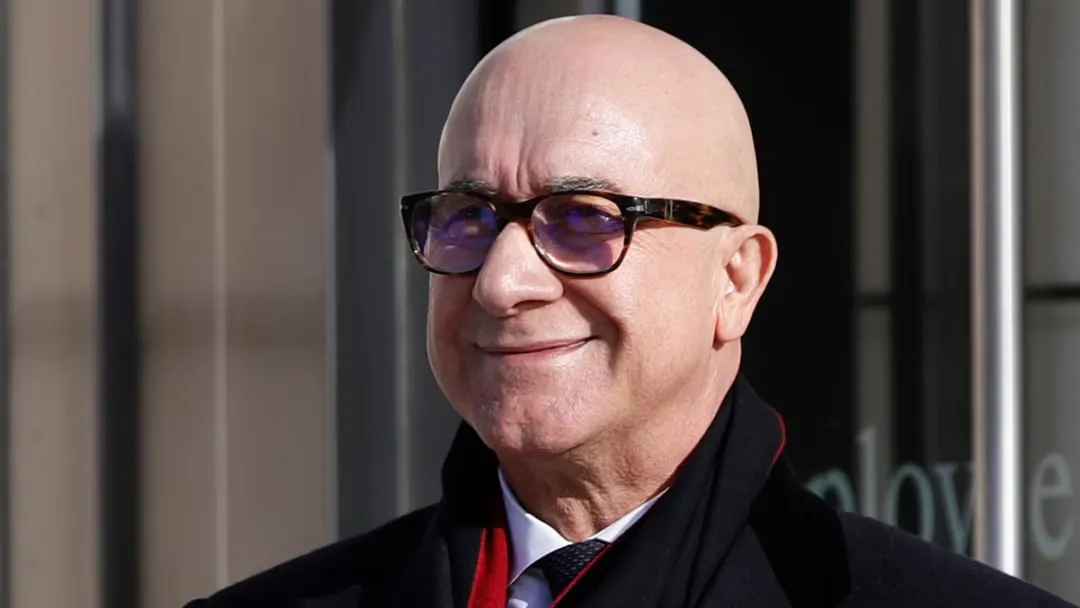
Bijan Rafiei-Kian (known as Bijan Kian), an Iranian-American businessman and entrepreneur, a former U.S. federal government official and a former member of the board of the Export-Import Bank of the United States (EXIM Bank), was born on January 15, 1952 (Dey 25, 1330) in Tehran. He is one of the most well-known Iranian-American figures in U.S. politics and business over the past two decades.
Who is Bijan Rafiei-Kian?
Bijan Rafiei-Kian (known as Bijan Kian), an Iranian-American businessman and entrepreneur, a former U.S. federal government official and former member of the Board of the Export-Import Bank of the United States (EXIM Bank), was born on January 15, 1952 (Dey 25, 1330) in Tehran. He is one of the most well-known Iranian-American figures in U.S. politics and business over the past two decades. Kian’s name in the American political-legal sphere is primarily associated with two key elements: first, his role as a Republican-appointed official in the administration of George W. Bush; and second, and far more prominently, his role as a business partner of General Michael Flynn (Donald Trump’s short-lived National Security Advisor) and the complex, years-long legal case that followed.
The significance of Bijan Kian in the U.S. political and legal landscape can be examined from several angles. First, he is one of the few Iranian-Americans to have reached senior federal government positions (serving on the EXIM Bank board with Senate confirmation). Second, his legal case—emerging from Robert Mueller’s investigation into Russian interference in the 2016 U.S. election—became one of the most controversial cases linked to Trump’s inner circle, going through a complex trajectory of conviction, acquittal, reinstatement of the conviction, and ultimately full dismissal of charges. Third, the case became an important example of the application of the U.S. Foreign Agents Registration Act (FARA) and the difficulties of proving allegations of acting as an unregistered foreign agent.
A key and up-to-date point regarding Kian’s legal status is that, contrary to older narratives, his case ultimately ended in his favor. On September 11, 2023, the U.S. Department of Justice, after a five-year legal battle, fully dismissed the charges against Kian “with prejudice,” meaning they cannot be refiled. The court subsequently closed the indictment, formally ending the case.
Life and Background
Bijan Rafiei-Kian was born on January 15, 1952, in Tehran. He spent his early life and part of his education in pre-revolution Iran.
He earned his bachelor’s degree from the Tehran Industrial College. He later moved to the United Kingdom, where he received a Diploma in Management Studies from the University of Brighton. This technical and managerial academic background formed the foundation of his later career in business and commerce.
In the following decades, Kian immigrated to the United States and became active as an Iranian-American businessman involved in investment and advisory roles. Politically, he was aligned with the U.S. Republican Party.
Service on the U.S. Export-Import Bank
A turning point in Kian’s public career was his appointment to the Board of Directors of the Export-Import Bank of the United States (EXIM Bank), the official export credit agency of the U.S. federal government, responsible for facilitating and guaranteeing American exports abroad.
He was nominated by President George W. Bush and confirmed by the U.S. Senate (in 2006, according to available sources). This Senate-confirmed position placed him among senior federal officials and marked one of the highest governmental roles ever held by an Iranian-American at the time.
Partnership with Michael Flynn and the Flynn Group
The most controversial and consequential chapter of Kian’s career was his business partnership with retired General Michael T. Flynn, former head of the Defense Intelligence Agency (DIA) and later briefly Trump’s National Security Advisor.
Kian served as a senior executive and vice chairman of Flynn Intel Group, a consulting firm founded by Flynn after his military career.
Turkey-related lobbying campaign
In 2016, the Flynn Group signed a contract worth approximately $600,000 to conduct a lobbying campaign aimed at discrediting Fethullah Gülen, a Turkish cleric living in the United States whom President Recep Tayyip Erdoğan accused of orchestrating the failed 2016 coup attempt in Turkey.
As part of this campaign, Flynn published an article in November 2016—shortly before joining Trump’s presidential transition team—comparing Gülen to Ayatollah Khomeini. Prosecutors later alleged that this campaign had been secretly directed and funded by the Turkish government.
Transition to the Trump administration
Following Donald Trump’s election victory in November 2016, Flynn joined the presidential transition team as the most senior national security figure from the campaign, and Kian also became part of that transition team alongside him.
However, Flynn’s tenure in government was extremely short; he resigned less than a month after being appointed National Security Advisor due to revelations about his contacts with the Russian ambassador.
Criminal Case
Kian’s legal case became one of the most complex prosecutions stemming from the Mueller investigation into Russian interference in the 2016 U.S. election.
Indictment and trial (2018–2019)
In December 2018, Kian was arrested and charged with conspiracy and acting as an unregistered foreign agent in violation of FARA (Foreign Agents Registration Act). Prosecutors alleged that he had secretly acted on behalf of the Turkish government in the Gülen lobbying campaign.
During the federal trial in the Eastern District of Virginia, the prosecution’s case faced challenges, particularly after they chose not to call Michael Flynn as a witness. Nevertheless, in July 2019, a jury in Alexandria convicted Kian on both counts after less than six hours of deliberation.
Judicial acquittal (September 2019)
The case did not end there. On September 25, 2019, Judge Anthony Trenga overturned the jury’s verdict and issued a judgment of acquittal, stating that there was insufficient evidence to prove Kian acted under the direction of the Turkish government. The judge also conditionally ordered a retrial.
Appeal and reinstatement of conviction (March 2021)
The prosecution appealed, and in March 2021, the Fourth Circuit Court of Appeals reinstated the jury’s conviction and overturned the district court’s acquittal.
Final dismissal of charges (September 2023)
In 2023, after further legal developments, the U.S. Department of Justice concluded that continuing the prosecution was not in the public interest. On September 11, 2023, it formally moved to dismiss all charges “with prejudice” under Federal Rule of Criminal Procedure 48(a), meaning the case could not be brought again. The court approved the motion and officially closed the case.
Thus, after a five-year legal battle—including a jury trial and multiple appeals—the case was fully and permanently resolved in Kian’s favor.
Key Connections
Bijan Kian’s name is closely linked to Michael Flynn, his business partner and former National Security Advisor. He was also appointed to the EXIM Bank board by George W. Bush and confirmed by the Senate, tying him to the formal Republican and federal government structure.
His legal case connected him to figures such as Turkish businessman Kamil Ekim Alptekin, Judge Anthony Trenga, and Special Counsel Robert Mueller’s broader investigation into Trump’s circle. The case also intersected with the geopolitical dispute between the United States and Turkey regarding the extradition of Fethullah Gülen.
Conclusion
Bijan Rafiei-Kian is a prominent Iranian-American figure whose career spans business, government service, and high-profile political controversy in the United States. His trajectory—from Tehran to senior U.S. federal office, and later into one of the most politically sensitive legal cases of the Trump era—illustrates a complex intersection of immigration, politics, intelligence-linked lobbying, and federal criminal law.
A defining feature of his case is its unusual legal trajectory: jury conviction, judicial acquittal, appellate reversal, and final dismissal of charges by the Department of Justice. This makes it a notable example in discussions of U.S. federal criminal procedure and the enforcement of FARA laws.
Ultimately, his case—now fully closed in his favor—has become part of the broader historical record of the Trump-era investigations and U.S. political-legal controversies of that period.
Take less than a minute, register and share your opinion under this post.
Insulting or inciting messages will be deleted.
Sign Up