
I'm sure the agreement of foreign governments was behind this going
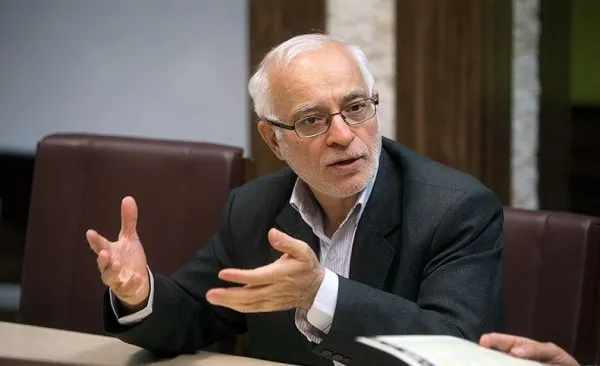
Hassan Beheshtipour, professor of international relations, tells "A Few Seconds" about the developments in Syria:
It doesn't matter which country Bashar al-Assad took refuge in, the important thing is that his government finally fell. Assad should have returned to the people just as ISIS was suppressed. Because anyone who separates from their people is forced to rely on a foreign force, and that is a great lesson of history for all of us.
I am sure the agreement of the foreign governments was behind this departure, because he left the country without conflict and easily. Iran was not fighting for Assad in Syria, it was fighting for resistance against Israel. The term defenders of the shrine justified this policy that Iran said that I have formed resistance groups against the Zionist enemy, and instead of fighting against Israel on my own soil before ISIS or any enemy wants to enter Iran's soil, I will strike it in that country.
Syria played a very decisive role in the axis of resistance and was the bridge between Iran and the resistance. If Iran supported Assad, it was because Assad had a policy aligned with Iran against the Zionist regime, and if a government contrary to Assad's method comes to power in Damascus, it will cut off Iran's line of communication with Hezbollah and the resistance.
The mistake was that we invested in a government that didn't rely on its own people and relied on foreign power. Powers are accustomed to understanding each other and to sacrifice their allies where their interests require.
Turkey was not an ally of Syria, but when it saw that Hezbollah had been hit, Iran was directly involved with Israel, Russia was also involved in Ukraine, and the situation in the region was against Assad, it was opportunistic.
For several years, Turkey had organized forces in Idlib, the northern province of Syria, which borders Turkey, and had equipped and prepared all these people, and was looking for an opportunity, and now it took advantage of this opportunity and entered the field.
Dividing Syria is to the detriment of Turkey, and Turkey is not looking for such a thing and there is no evidence of this. Turkey wants its pro-government in Damascus to power, and Turkey has territorial claims to Aleppo and Hama because of the same Ottomanism.
Of course, this historical claim does not mean that Turkey wants to divide now; the argument is that Aleppo and Hama were both centers of Brotherhood influence and centers of commerce. Aleppo is on the north-south trade route and is a large and influential city. In addition, about three million refugees now living in Turkey and Turkey has worked on them are interested in coming to Aleppo province in addition to Idlib.
The Islamic Republic of Iran must work with the ruling government in Damascus and has no choice but to do so, so Iran will not seek to act against the government based in Damascus because it is more interested in maintaining its base in Syria. Iran should say that we respect the will of the Syrian people and that we will cooperate with any government that comes to power with the support of the Syrian people.


Take less than a minute, register and share your opinion under this post.
Insulting or inciting messages will be deleted.
Sign Up