
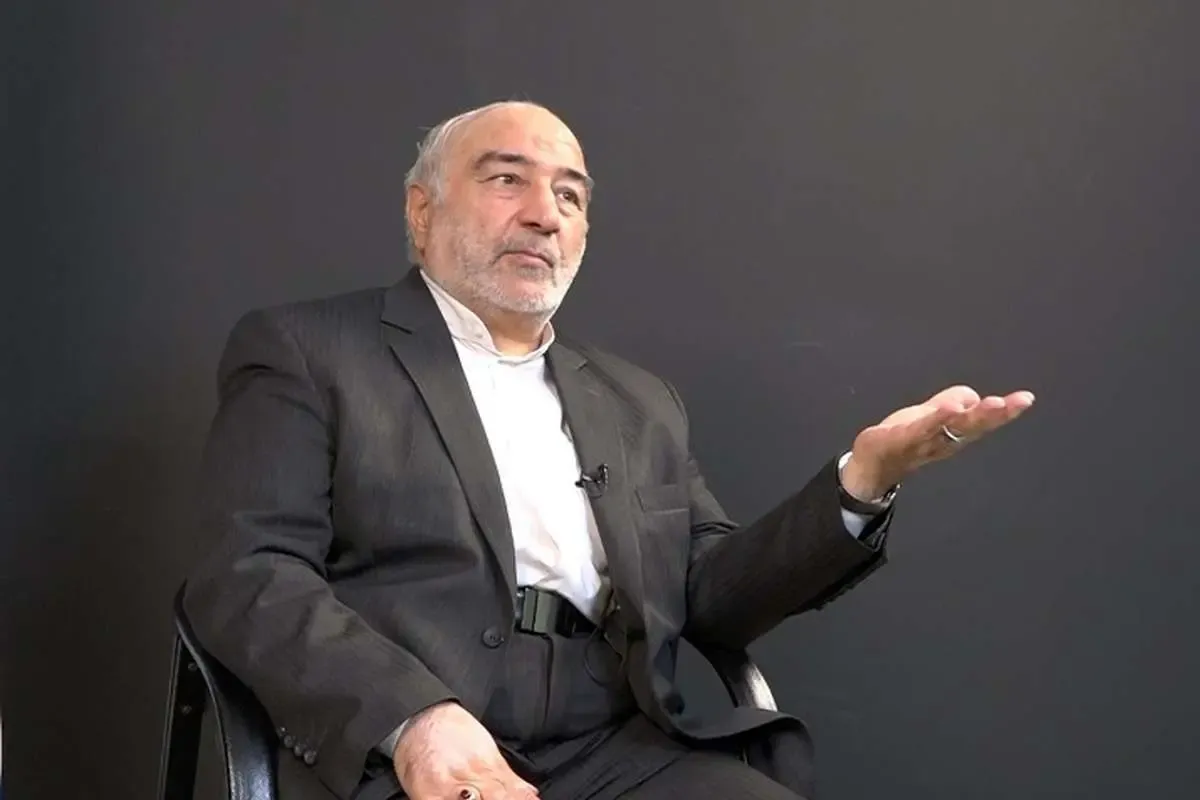
Important segments from the memoirs of Javad Mansouri, the first Commander-in-Chief of the IRGC, former Deputy Foreign Minister, and former Ambassador of the Islamic Republic to Pakistan.
Important segments from the memoirs of Javad Mansouri, the first Commander-in-Chief of the IRGC, former Deputy Foreign Minister, and former Ambassador of the Islamic Republic to Pakistan.
Volume 2, Pages 156 to 161
In late 1990, following Iraq's defeat in the war against Western countries and the United States, Iraqi opposition groups and movements saw a suitable opportunity to launch a movement to topple Saddam.
First, because Iraq was under a total blockade and immense problems had arisen for the people, they had become ready to revolt against Saddam, who was responsible for starting two devastating wars. The Iraqi army had nearly disintegrated, and many regional countries were also interested in Saddam's downfall. Opposition groups in Iraq immediately set to work, and Iran provided sufficient support for this uprising.
Unfortunately, due to poor and sometimes incorrect intelligence, relevant Iranian officials made major mistakes in this matter. News regarding the weakness of the Iraqi government was highly exaggerated. Every time we turned on the radio and heard news related to internal Iraqi affairs, we imagined that Saddam's government would fall within the next 24 hours. News reports even claimed that opposition forces had reached Baghdad and were near Saddam's palace, or that part of the Iraqi Republican Guard had joined the opposition.
But suddenly, the tide turned. Strangely, Saddam remained in power, and the opposition was suppressed. A massive massacre took place in Baghdad, Najaf, and Samarra. One section of the Iraqi army was sent south to suppress the Shias, and another section—accompanied by the forces of the Mojahedin-e Khalq Organization (MEK)—was dispatched to northern Iraq to suppress the Kurds.
The Shias of southern Iraq had no choice but to take refuge in the deserts and the marshes of the Hawizeh (Hoor) region; they went there with great difficulty, and many were killed. Other Shias fled to Saudi Arabia, Jordan, and Kuwait; a small number managed to reach Iran. The massacre that had begun in Kurdistan created the impression that Saddam’s plan was to eliminate the Kurdish race in Iraq. The Iraqi regime had launched extensive propaganda in this regard. The Kurds, fearing a repetition of the Halabja events in Iraqi Kurdistan, were searching for a safe haven.
Misassessment of Developments in Iraq
The point in the Iraqi events that was important for us and can serve as a lesson is that the relevant military, intelligence, and propaganda officials showed immaturity and inaccuracy in analyzing the situation in Iraq, and this inaccuracy harmed us. Propaganda claiming that Saddam would soon be toppled led a number of Iranian forces to enter Iraqi territory to help the people. However, the situation was different from what these individuals imagined; as a result, many of them were killed or captured (and Iraq refused to even provide us with the names of the prisoners and denied the existence of such individuals altogether).
This false assessment, which caused exaggerated news to be published, was not unrelated to the events of the war. During the eight-year war, we also had this problem. Some gentlemen would say, for example, that we have such and such facilities and forces, Saddam has become weak, the Iraqi army has no morale, they have no weapons, etc. They portrayed the situation in a way that suggested continuing the war was in our favor. Two weeks before accepting the ceasefire, it was said that we would enter Baghdad in six to eight months and topple Saddam's government, but two or three weeks later it became clear that we were in a situation where there was no choice but to accept the ceasefire!
"Regardless of inexperience, one of our problems is that we usually do not confront wrongdoers. If someone provides a false report, we do not reprimand or punish them. The result of this approach is that people have no concern about giving false reports."
If victory is achieved, they present themselves as heroes; if defeat occurs, they say others were to blame (projection).



Take less than a minute, register and share your opinion under this post.
Insulting or inciting messages will be deleted.
Sign Up