The beginning of a new wave of popular protests in Iran and potential scenarios:
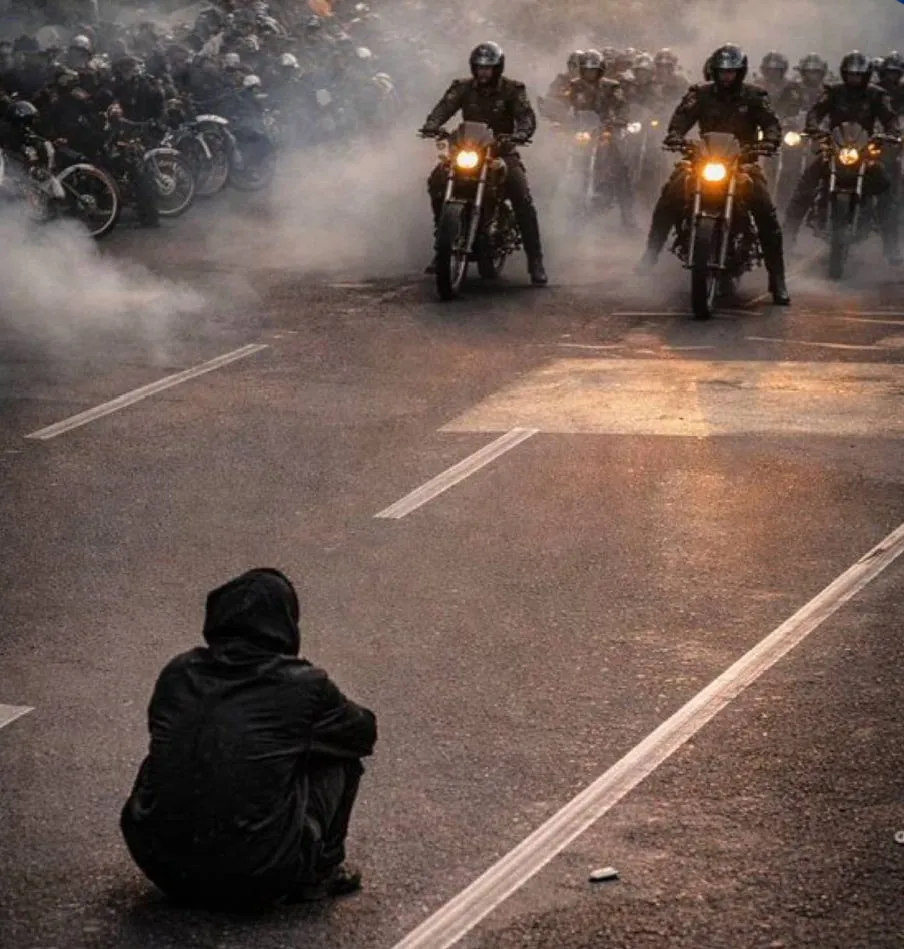
As repeatedly predicted in previous analyses, Iranian society—primarily due to economic and social factors—has entered a new phase of widespread unrest.
Amir Dabiri-Mehr
As repeatedly predicted in previous analyses, Iranian society is prepared for protests and demonstrations, primarily due to economic and social reasons. The high level of dissatisfaction with the performance of sovereign institutions can easily be observed in cyberspace and on social media. However, the issue is that dissatisfaction in the virtual space does not significantly worry the leadership and senior managers. But as soon as a pretext arises for a portion of the dissatisfied and protesting population to pour from cyberspace onto the streets, the leadership becomes deeply concerned and thinks about containing these protests, lest they become more widespread, spread to other cities, transform from trade and livelihood protests into a social movement, and eventually take on a revolutionary tone for regime change.
This year, this concern has increased twofold given the occurrence of the 12-day war by Israel and the US against the Islamic Republic. It is said that the designers of the 12-day war expected that by attacking military and law enforcement centers, they would pave the way for street protests by the people of Tehran and create the prerequisites for the collapse of the Islamic Republic. However, with the anger and opposition of the majority of the Iranian people toward the Israeli military attack, this did not happen. Yet, in recent weeks, with the unprecedented rise of gold and the dollar in Iran and the government's inaction regarding this issue, public concern over the devaluation of the national currency rose. With the price of gold coins in Iran crossing the 150 million Toman mark and the dollar exceeding 140,000 Tomans last Saturday, this public concern shifted to protests by a segment of Tehran's market activists. Sellers of goods whose prices depend on the dollar went on strike on Sunday, and the following day, these protests found media coverage in cities such as Tehran, Hamedan, Qeshm, and Malard near Tehran. Media and social media networks opposed to the Islamic Republic abroad exaggerated these protests in two ways: first, by showing their scale and pervasiveness as greater than reality, and second, by interpreting trade protests against currency hikes as opposition to the Islamic Republic system. Although it cannot be denied that naturally, a segment of the protesters has always wanted and continues to want regime change in Iran.
The protests of the last few days have coincided with several other important events that could lead to unpredictable developments. These events include:
The meeting between Netanyahu and Trump in the US and the emphasis by both American and Israeli officials on the possibility of a renewed attack on Iran's nuclear and missile facilities.
The acceptance of the resignation of the Governor of the Central Bank of Iran, who many believe played a significant role in the recent price hikes due to mismanagement and the inability to return over 116 billion dollars in export revenues over the past 7 years.
The unprecedented opposition of the Iranian Parliament to the general outlines of the budget bill because the supportive aspects for the people's livelihoods are faint in it.
Given the above, several scenarios for the new protests in Iran are imaginable, the probability of each depending on the following 4 important variables:
The behavior of the protesters.
The government's decisions in Iran to calm society.
The manner in which security and law enforcement agencies handle the protests.
The positions and policies of foreign countries, especially the US, Europe, and particularly Israel.
The potential scenarios are:
Scenario 1: Given the prominent economic and livelihood nature of these protests, if the government can show through measures that it has control over the situation, can contain the price hikes, and adopts empathy and leniency in dealing with protesters while avoiding violence, these protests will subside and take a peaceful form within the framework of group and trade demands. The President's order to the Minister of Interior to dialogue with the protesters is evaluated as an appropriate step in this direction. (It is necessary to mention that contrary to the claims of opponents of the Islamic Republic who interpret any protest in Iran as a political revolution, from a political science perspective, protests in Iran do not have all the characteristics of political revolutions and do not rise above the level of a social movement—like the "Woman, Life, Freedom" movement in 2022, the explanation of which requires a separate space.)
Scenario 2: If the government is unwilling or unable to control the prices of currency and gold and respond to the demands of the protesting people with tangible decisions, these protests will continue until the protesters achieve their demands. They might subside for a few days but will resurface under another pretext and could even expand and become radicalized given the level of dissatisfaction and the anger of some people toward the country's policies. In this scenario, agencies responsible for order and security, learning from past experiences, will avoid any violence and focus solely on containing and calming the protests. State-affiliated media, by fairly reflecting the protests, will also avoid portraying them as political or showing the protesters as dependent on foreign countries. In the past, both power-affiliated media and relevant security and law enforcement agencies did not perform successfully in this regard.
Scenario 3 and 4: The third and fourth scenarios will be shaped by the government's confrontation with the protests. If the government interprets the protests as a kind of soft subversion and state-affiliated media publish a revolutionary narrative of it, and security and law enforcement agencies treat the protesters like enemies and an enemy fifth column, not only will the protests not calm down, but they will intensify and be drawn into violence. In the most optimistic case, the government will stifle the protests by applying extensive and severe repression. However, it seems that in this case, the fourth scenario will emerge.
Scenario 4: The most pessimistic scenario imaginable is the intervention of foreign countries, especially Israel, in Iran's internal protests and diverting them from peaceful trade protests toward general and violent riots against the political structure of the country, the Islamic Republic system, and Ayatollah Khamenei. In this case, there is the possibility of both renewed military conflict and even the assassination of the leadership, as well as the intervention of agents and groups affiliated with Mossad in street protests. On Monday night, a Persian account affiliated with Mossad wrote that it stands with protesters who want to overthrow the Islamic Republic. The fourth scenario has no precedent in the history of protest movements in Iran and, given the stated points and existing evidence, its probability of occurring is high if the protests become violent. Accordingly, both the President and the Speaker of Parliament warned that in the event of another Israeli attack, Iran's response will be harsh and unpredictable. Therefore, in summary, it can be said that for now, the ball is in the Islamic Republic's court to prevent the protests from becoming violent and potential Israeli intervention by avoiding violence in dealing with the protests and providing a tangible and practical response to the demands of the dissatisfied people.