19 August 19531953
The coup d'état of August 19; the fall of Mossadegh's government and the return of the Shah.
August 19; The Day Iran's History Split in Two
Some days on a country's calendar are not just dates; they are wounds, a rift, a border between "before" and "after." August 19, 1953, is one of those days. The day tanks poured into the streets of Tehran, the legitimate government fell, and Iran's history changed direction for decades. But the story of August 19 does not end that same morning. This day, in the decades that followed, both before and after the revolution, had its meaning and significance change many times.
Before the Revolution: When the Coup Crushed the Law
Early Morning, When the Tanks Arrived
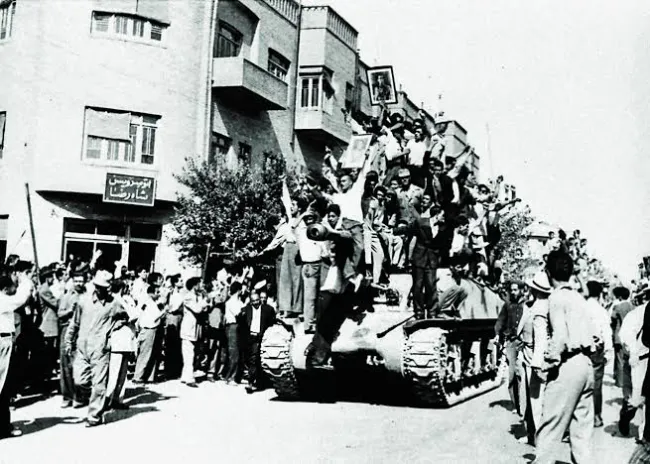
At around 5 or 6 in the morning on August 19, 1953, the first tanks and trucks carrying military forces moved from the surrounding garrisons toward the city center of Tehran. These forces were mostly from the Imperial Guard and armored units, directly directed by the court and the coup plotters. The plan was to first seize radio and telecommunications stations to prevent news of the coup from leaking out. Then, they would attack Mossadegh's house and arrest him. Finally, they would take control of Tehran's main squares to prevent people from reacting.
Mossadegh's House, Siege and Resistance
Around 8 or 9 in the morning, military forces reached Mossadegh's house on Kakh Street (now Imam Khomeini Street). Mossadegh, who had known since the night before that the danger was serious, had ordered a number of guards and loyal forces to defend the house. When the tanks arrived, the clash began. Some of the house guards resisted until the last moment. Reports say dozens were killed and wounded in this clash, both from the attacking forces and the defenders of the house. Mossadegh, when he saw that resistance was no longer useful, surrendered. But even after his arrest, they would not allow news of his arrest to be released for hours, because the coup plotters wanted to first ensure everything was under control.
Hired Thugs: "Shah or Death!"
One of the most shocking details of August 19 was the role of hired thugs. The coup plotters had, from several days before, gathered groups of thugs and knife-wielders from the Tehran bazaar with money and promises of positions, to take to the streets on the day of the coup and chant: "Shah or Death!", "Mossadegh is a traitor!", "Death to Communism!"
These thugs, on the morning of August 19, along with military forces, poured into the streets, forced shops to close, overturned cars, and beat anyone they considered a supporter of Mossadegh. Some reports even say some of these thugs had been released from prisons to participate in the coup. A woman named "Pari Bolandeh" from the southern neighborhoods of Tehran was one of the famous figures of those days. She, with a group of men and women from the neighborhood, chanted in the streets and invited people to support the Shah. Years later, some said she worked for CIA money; some said no, she just did it for money and promises of position.
Tehran Radio: "The Coup Succeeded!"
Around 11 or 12 noon, when control of Tehran was almost completely in the hands of the coup forces, Tehran Radio broadcast this message: "Dr. Mossadegh's government has fallen. The army has taken control of the country."
This message was repeated many times. And in those same hours, newspapers that had been prepared in advance for this day were distributed in the streets with headlines like: "Traitor Mossadegh Arrested", "Shah Victorious", "Communism Defeated." Interestingly, some of these newspapers had been typed and printed several days in advance; meaning the coup plotters already knew what headlines they would run, even before they were sure the coup would succeed.
American Money, English Blueprint
Years later, when the coup documents were declassified, it became clear how much money and planning was behind this coup. The CIA spent about $100,000 (equivalent to several million dollars today) to execute the coup. This money was used to buy agents, street thugs, journalists, and even some members of parliament.
Britain, whose oil interests had been jeopardized by the nationalization of the oil industry, designed the overall coup plan through its intelligence agency (MI6) and coordinated with the US. Inside Iran, some political, military, and even clerical figures cooperated with the coup plotters. Some for money, some for power, and some out of fear. Ayatollah Kashani, who had supported Mossadegh until a few months earlier, remained silent in the days before the coup, and some reports even say he coordinated with the coup plotters. Shaban Jafari, known as "Shaban the Brainless," one of the famous thugs of Tehran, said years later in his memoirs: "We were gathered with money and promises of position to take to the streets on the day of the coup."
Afternoon: Executions, Arrests, Escapes
When the coup succeeded, the next phase began; the purge. On the same day, August 19, and the following days, dozens of Mossadegh supporters, from ministers and parliamentarians to journalists and political activists, were arrested. Hossein Fatemi, the foreign minister of Mossadegh's government, was executed a few months later. Mossadegh himself, after three years in prison, lived under house arrest until the end of his life. And many members of the Tudeh Party were forced to flee and lived in exile for years.
After the Revolution: When August 19 Became a Symbol
After the 1979 revolution, August 19 gradually became a symbol: the symbol of the day democracy was crushed by a coup. But this symbol, in different decades, had its meaning and significance change.
The 1980s and 1990s: August 19, Only in Political Circles
In the 1980s and 1990s, August 19 was mostly remembered in political and academic circles, not on the official calendar. The new government, which had itself come to power through revolution, did not want to talk too much about the coup, because it feared people would compare the coup of August 19 with some of the new government's own decisions. In these years, August 19 was only recalled in opposition newspapers and political circles. And as the anniversary of the coup approached, discussions about August 19 increased.
The 2000s and 2010s: August 19, in Cyberspace
In the 2000s and 2010s, with the expansion of cyberspace and independent media, August 19 was gradually becoming a public symbol: the symbol of the day democracy was crushed by a coup. In these years, as the anniversary of the coup approached, discussions about August 19 increased. Some considered this day the day of "saving Iran from communism"; others, the day of "the fall of democracy." But among all these views, one thing was common: August 19 is the day Iran's history changed direction.
2022 to 2027: August 19, in the Mirror of Protests
In recent years, with the nationwide protests of 2022 and their widespread suppression, August 19 was once again becoming a symbol: the symbol of the day history changed direction. In these years, as the anniversary of the coup approached, discussions about August 19 increased. Some considered this day the day of "saving Iran from communism"; others, the day of "the fall of democracy." But among all these views, one thing was common: August 19 is the day Iran's history changed direction.