
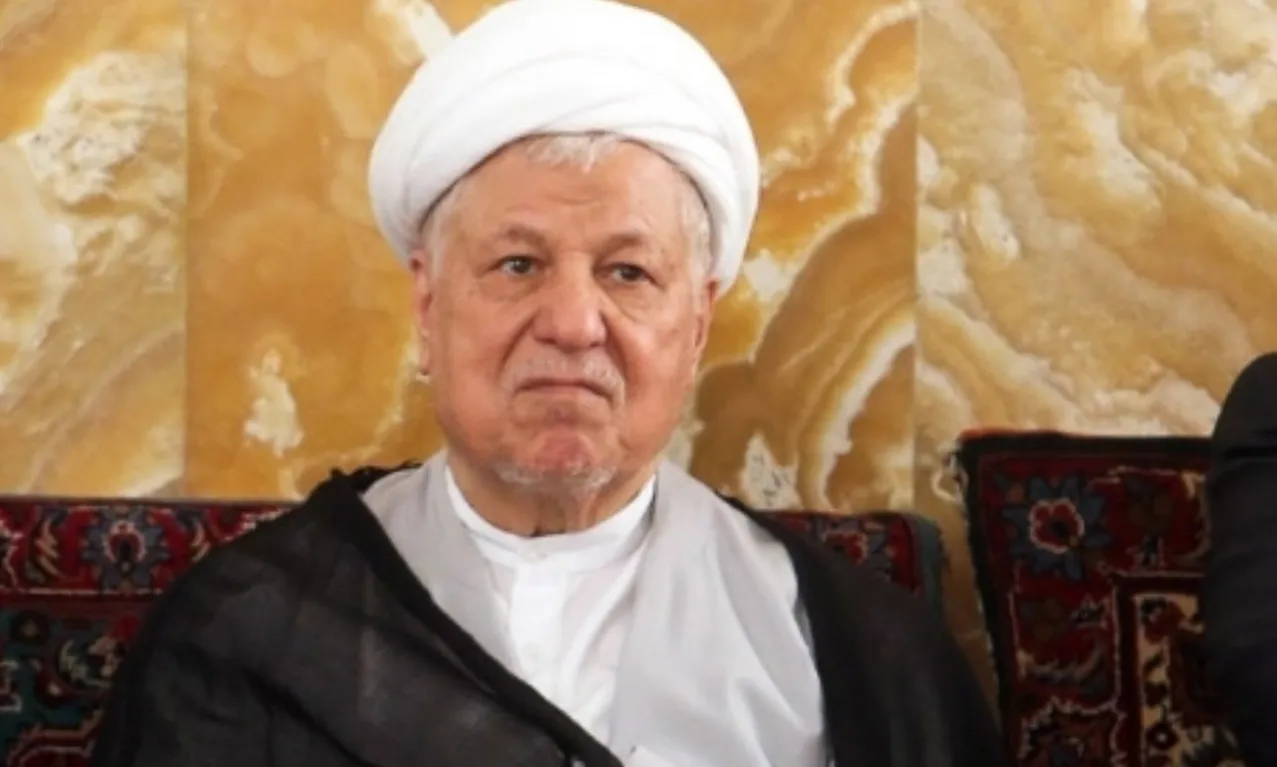
I told Mr. Dr. Aref to pay the foreign currency share of the Islamic Azad University.
Mr. Aghazadeh's explanations about the continuation of work at the heavy water production and enrichment centers, which have recently been the subject of American propaganda blackmail. I told Mr. Dr. Aref to pay the foreign currency share of the Islamic Azad University. Mr. Tabasi is dissatisfied with the Judiciary and also criticized this style of fighting economic corruption, which is merely rhetorical and causes the weakening of the system and the gloating of enemies.
Full Daily Note:
At 8:00 AM, the Infrastructure Commission [of the Expediency Discernment Council] held a meeting. They discussed support and subsidies for agriculture, and its general policy was determined.
At 9:30 AM, the Council's session began. The request for interpretation by the Prosecutor General [of the country] regarding heroin—whether impure heroin is covered by the law or not—took a lot of time, and finally it was decided that the disagreement among judges should be resolved through the uniformity of judicial procedure.
Mr. [Gholamreza] Aghazadeh, [Head of the Atomic Energy Organization], came. He gave explanations about the continuation of the heavy water production and enrichment centers, which have recently been the subject of American propaganda blackmail. He asked me to visit. In the past, I had not agreed to visit to avoid sensitizing the enemies.
I told Mr. Dr. [Mohammad Reza] Aref, [First Vice President], to pay the foreign currency share of the Islamic Azad University.
The discussion on resolving the dispute between the Guardian Council and the Parliament regarding selection/vetting remained unfinished.
We had the usual [lunch] meeting after the Council session [attended by Messrs. Vaezt-Tabasi, Ahmad Jannati, Mohammad Yazdi, Dorri Najafabadi, Movahedi Kermani, and Nategh Nouri]. Mr. Tabasi is dissatisfied with the Judiciary; because [in the Al-Makasib case related to his son, Nasser], even after the verdict and payment of the bank's [Bank Melli Iran] debt, they have again announced Nasser's trial, and he also criticized this style of fighting economic corruption, which is merely rhetorical and causes the weakening of the system and the gloating of enemies.
The bad open letter by [Ghasem] Sholeh Sa'di to the Leader was brought up, which is full of insults, and the Leader's leniency towards these counter-revolutionary movements was also criticized.
There was also a discussion about the Future Institute's opinion poll case and about the council and parliamentary elections and the government's new bills.
It was decided that I would go to Mashhad on the occasion of the birth anniversary of Imam Reza (AS) for pilgrimage, the inauguration of a cultural foundation, and the congress of Basij engineers.
The acceptance of 10 Eastern European countries into the European Union, which will take effect from 2004 and entails an annual aid of $40 billion to them to raise their standard, is noteworthy. Kofi Annan, [UN Secretary-General], called it a magnificent historical event and, at the same time, expressed regret over the non-resolution of the Cyprus issue, which he had proposed.
Widespread demonstrations of tens of thousands [anti-war] against the US were held in each of [the countries] France, Denmark, Italy, and South Korea, in protest against the warmongering policy and judicial interference in South Korea.
The US accusation against Iran regarding the nuclear weapons program and the appropriate response of the International [Atomic Energy] Agency to the US are noteworthy.

Take less than a minute, register and share your opinion under this post.
Insulting or inciting messages will be deleted.
Sign Up