
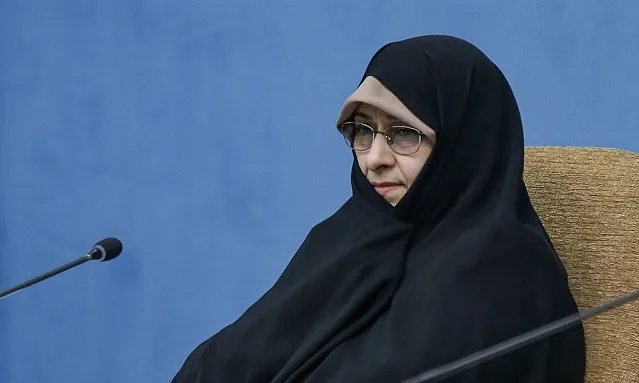
Dr. Sayyideh Zahra Shojaei, a prominent Iranian reformist politician, women's rights activist, former advisor to the President, and head of the Center for Women's Participation Affairs during the two presidential terms of Mohammad Khatami (1997–2005), was one of the first post-revolutionary Iranian women to serve in the cabinet alongside Masoumeh Ebtekar. A former professor at the University of Tehran and Alzahra University, and a high-profile candidate in the 2021 presidential election, she stood among the most influential female political and academic figures in Iranian reformist politics over the past four decades.
Dr. Sayyideh Zahra Shojaei: Comprehensive Biography of the Reformist Politician, Academic, and Women's Rights Advocate
Dr. Sayyideh Zahra Shojaei (born 1956 in Tehran – died March 26, 2024, due to cancer) was a prominent Iranian reformist politician, leading political-social women's activist, former presidential advisor, and former head of the Center for Women's Participation Affairs during Mohammad Khatami's two presidential terms (1997–2005). The daughter of Hojjatoleslam Sayyid Ali Shojaei, she was among the first post-revolutionary Iranian women—alongside Masoumeh Ebtekar—to join the cabinet. She was a former professor at the University of Tehran and Alzahra University, former advisor to the Minister of Interior and head of the Interior Ministry's Women's Affairs Commissions (1991–1992) under Abdollah Nouri in Akbar Hashemi Rafsanjani's administration, former representative of the Minister of Education in the Presidential Bureau for Women's Affairs (1992–1997), former head of the Women's Cultural-Social Council of the Supreme Council of the Cultural Revolution (1990–1992), and a 17-year member of the council (1988–2005). She was also the founder and former head of the Women's Affairs Commission of the Qom Governorate Social Council in the 1980s, a former member of the Welcoming Committee for Ayatollah Khomeini on February 1, 1979, and a high-profile candidate in the 13th presidential election in 2021 who registered to protest the Guardian Council's interpretation of "political man" (rajul-e siyasi) in the Constitution (ultimately disqualified alongside Azam Taleghani). Furthermore, she served as former president of the Reformist Women's Assembly, member of the Reformist Women's Party Coalition since 2018, managing editor of the specialized quarterly Reyhaneh (2002), advisor to the Director-General of Applied Research at the University of Tehran (2005–2010), director of Tehran University Press in 2008, member of the Strategic Council of the National Library and Archives of Iran since 2019, and member of the World Assembly of Ahl al-Bayt General Assembly.
Holding a PhD in Political Science from the University of Tehran and a PhD in Strategic Management from the Supreme National Defense University (1998) with a dissertation titled "The Role of Women in National Development and Providing an Optimal Strategy in the Islamic Republic of Iran," she was married to Morad-Ali Tavanafar (a cleric and former Tehran University law student whom she married in 1977) and had two daughters. She authored influential books including Ghods-e Iran: Introducing Select Women of Iran (co-authored with Simin Ahmadi), The Book of Tomorrow's Women, and the Reyhaneh Collection. Over the past four decades, she stood as one of the most prominent, distinct, and high-profile female political-academic reformist figures in post-revolutionary Iran, representing a pivotal voice in contemporary reformist-feminist discourse.
Her journey extended from a prominent clerical family background in Tehran to her marriage to Morad-Ali Tavanafar in 1977 while studying political science at university, her participation in the Khomeini Welcoming Committee in 1979, her academic track completing bachelor's and master's degrees in political science (with a master's thesis on "Women's Political Participation in Iran: A Comparison Before and After the Islamic Revolution"), and doctorate degrees from Tehran University and the Supreme National Defense University. Her administrative career began with establishing the Women's Affairs Commission in Qom in the 1980s, followed by her 17-year tenure representing the Ministry of Education on the Women's Cultural-Social Council (1988–2005), where she headed the council from 1990 to 1992. Under Interior Minister Abdollah Nouri (1991–1992), she managed the ministry's women's commissions and proposed establishing the Center for Women's Participation Affairs (first headed by Shahla Habibi).
Following Mohammad Khatami's presidential victory in May 1997, she requested cabinet representation for women. Khatami accepted, stating his intention to work with all schools of thought regarding women's rights without fringe politics. She served as Presidential Advisor and Head of the Center for Women's Participation Affairs for eight consecutive years (1997–2005). During her tenure, the center's budget grew from 90 million tomans at the start of Khatami's presidency to 89 billion tomans by its end—a 988-fold expansion. She represented the center on top policy bodies including the Supreme Council for the Environment, Supreme Council for Employment, Health Council, Supreme Council for Iranian Expatriates, Youth Council, and two key government cabinet commissions (Cultural and Social).
Following the reformist administration, she returned to academia, teaching at Tarbiat Modares University in the master's program for Women's Studies (focusing on women's socio-political rights), teaching courses on the origins of the revolution and Islamic history at the University of Tehran (2005–2009), serving as advisor to the university's director of applied research (2005–2010), and directing Tehran University Press in 2008. She later contributed to the 100-day women's program drafting committee for the 11th government in 2013, joined the Baran Foundation Women's Commission in 2014, and served on the advisory committee for the Sixth Development Plan at the Vice Presidency for Women's Affairs in 2016.
In the 2021 presidential election, she registered as a candidate alongside Azam Taleghani to challenge the Guardian Council's restrictive reading of rajul-e siyasi. Though the Guardian Council spokesperson claimed no candidate was rejected based on gender, both were disqualified. On January 31, 2022, she and Shahindokht Molaverdi famously walked off the live television broadcast Jahan Ara on Ofogh TV following repeated interruptions, unscheduled phone-in commentary, and hostility from host Amir-Hossein Thabati, subsequently taking legal action against the critics and channel. She passed away on March 26, 2024, after battling cancer, prompting widespread tributes, including a condolence message from Mohammad Reza Aref describing her as a "cultured and pious lady."
The historical and political significance of Dr. Sayyideh Zahra Shojaei in contemporary Iran can be examined through five main dimensions:
Architect of Reform-Era Women's Policy: Serving 8 years as Presidential Advisor and Head of the Center for Women's Participation Affairs under Khatami.
Pioneer of Female Cabinet Governance: Being among the first post-revolutionary female cabinet members alongside Masoumeh Ebtekar.
Challenger of Constitutional Gender Restrictions: Her protest candidacy in 2021 demanding constitutional recognition of women's political leadership.
Academic Pioneer in Women's Studies: Her long-standing teaching legacy at Tehran, Alzahra, and Tarbiat Modares universities.
Institutional Culture Builder: Her 17-year tenure and leadership on the Women's Cultural-Social Council.
Analytical Perspective: Media and political discourse around Shojaei reflects varied viewpoints across the political spectrum. Among reformists and women's rights advocates, she is regarded as a pioneering female cabinet member, the architect of Khatami's women's affairs infrastructure, and an institutional reformer. Critics within principalist media scrutinized her tenure at the Center for Women's Participation Affairs regarding policy directions on early marriage, social harms, and international engagements. Media observers focused on her live walkout from Jahan Ara as a defining moment of protest against state media conduct, while some internal commentators within women's movements debated the symbolic nature of female political appointments. Overall, her four-decade career represents a distinct model of a reformist woman leader navigating cultural, executive, academic, and electoral spheres in post-revolutionary Iran.
Early Life and Family Background
Dr. Sayyideh Zahra Shojaei was born in 1956 in Tehran.
Father: Sayyid Ali Shojaei
A core element of her personal background was her clerical lineage as the daughter of Hojjatoleslam Sayyid Ali Shojaei. Published records note: "Zahra Shojaei, daughter of Sayyid Ali (born 1956, died March 26, 2024)... She belonged to a clerical family."
Husband: Morad-Ali Tavanafar
In 1977, she married Morad-Ali Tavanafar, a law student at the University of Tehran who was active in pre-revolutionary student circles and later entered the clergy. Shojaei noted in an interview: "He became a cleric. We were university peers; he studied law at the University of Tehran while I studied political science."
Children
The marriage produced two daughters.
Passing (March 26, 2024)
Shojaei passed away on Tuesday, March 26, 2024, following a prolonged struggle with cancer, marking a solemn moment among contemporary reformist political figures.
Academic Background
Dr. Shojaei pursued an extensive academic track in political science and strategic management:
Bachelor's & Master's Degrees in Political Science: Earned from the University of Tehran. Her Master's thesis was titled "Women's Political Participation in Iran: A Comparison Before and After the Islamic Revolution."
PhD in Political Science: Awarded by the University of Tehran; she subsequently taught at both Tehran and Alzahra universities.
PhD in Strategic Management (1998): Awarded by the Supreme National Defense University. Her doctoral dissertation was titled "The Role of Women in National Development and Providing an Optimal Strategy in the Islamic Republic of Iran."
Early Career in Women's Affairs
Welcoming Committee for Ayatollah Khomeini (1979): Participated as a member of the reception committee on February 1, 1979.
Qom Governorate Social Council (1980s): Founded and chaired the Women's Affairs Commission in the Qom Governorate Social Council.
Women's Cultural-Social Council (1988–2005): Served 17 consecutive years as the Ministry of Education's representative on the Supreme Council of the Cultural Revolution's Women's Cultural-Social Council, heading the council from 1990 to 1992.
Ministry of Interior Advisor (1991–1992): Served as advisor to Interior Minister Abdollah Nouri and directed the ministry's women's commissions under Hashemi Rafsanjani's administration. During this period, she proposed creating the Center for Women's Participation Affairs, which was initially established with Shahla Habibi as its head.
Presidential Bureau for Women's Affairs (1992–1997): Represented the Minister of Education in the bureau and established the Women's Affairs Bureau inside the Ministry of Education.
Presidential Advisor and Cabinet Tenure (1997–2005)
Following Mohammad Khatami's election victory in May 1997, Shojaei requested formal cabinet inclusion for the head of women's affairs. Khatami agreed, making her Presidential Advisor and Head of the Center for Women's Participation Affairs for two full terms (1997–2005).
Budget Expansion: Under her administration, the budget allocated to the Center for Women's Participation Affairs expanded from 90 million tomans in 1997 (when it depended on general presidential office funding) to 89 billion tomans by 2005—a 988-fold increase.
Institutional Integration: She sat on top executive bodies, including the Supreme Council for the Environment, Supreme Council for Employment, Health Council, Supreme Council for Expatriates, Youth Council, and the cabinet's Cultural and Social Commissions.
Media & Commemorative Roles: Served as managing editor of the specialized journal Reyhaneh (2002) and chaired the women's committees for the Khomeini Centenary (1999) and the Year of Imam Ali Commemoration (2000).
Post-Reform Era: Academic and Political Activity
University Teaching: Joined the faculty at the University of Tehran (teaching the Origins of the Revolution and Islamic History from 2005 to 2009) and taught socio-political rights of women in the master's program at Tarbiat Modares University.
Academic Administration: Served as advisor to the Director-General of Applied Research at Tehran University (2005–2010) and directed Tehran University Press in 2008.
Policy Advisory Roles: Joined the 100-day women's policy drafting team for the Rouhani administration in 2013, the Baran Foundation Women's Commission in 2014, the Sixth Development Plan Advisory Committee in 2016, and the Strategic Council of the National Library and Archives in 2019.
Party Leadership: Served as President of the Reformist Women's Assembly and joined the Reformist Women's Party Coalition in 2018.
2021 Presidential Candidacy and Public Controversies
Protest Candidate for the 2021 Election
In 2021, Shojaei registered as a presidential candidate to challenge the Guardian Council's historical disqualification of female candidates under the constitutional term rajul-e siyasi ("political man"). Though Guardian Council spokespersons stated women were not disqualified solely due to gender, both Shojaei and co-applicant Azam Taleghani were excluded from the final candidate list.
Jahan Ara Television Walkout (January 31, 2022)
Shojaei and former Vice President Shahindokht Molaverdi appeared on Ofogh TV's live program Jahan Ara to discuss women's policy history and respond to critics. Following unscheduled telephone interventions, persistent interruptions, and hostility from host Amir-Hossein Thabati, both guests walked off the live set in protest and subsequently filed a legal complaint against the broadcaster and program critics.
Major Publications
Ghods-e Iran: Introducing Select Women of Iran (co-authored with Simin Ahmadi)
The Book of Tomorrow's Women (collection of essays and speeches on cultural development, social and political participation, and gender and development)
Reyhaneh Collection
Reyhaneh Quarterly (as Managing Editor)
Condolence Message from Mohammad Reza Aref
Following her death in March 2024, Mohammad Reza Aref, head of the Hope of Iran Foundation, issued a public condolence statement:
"The cultured and pious lady, Dr. Zahra Shojaei, passed away and joined the Almighty after a long struggle with illness. Her passing caused deep grief... She possessed profound intellectual clarity and served as a natural, accepted pillar among prominent reformist women. I recall Mr. Khatami calling me in the first months of his presidency, handing me the decree for Mrs. Zahra Shojaei as Presidential Advisor on Women's Affairs, and asking to prepare it."
Political and Intellectual Framework
Reformist Feminism: Maintained commitment to the Islamic Republic's legal frame while pushing for women's socio-political rights, public representation, and institutional participation.
Focus on Political Rights: Advocated for women's right to run for the highest elected offices, reflected in her academic research and 2021 protest candidacy.
Institutional Capacity Building: Focused on expanding government budgets, creating specialized municipal and ministerial women's bureaus, and building formal administrative structures for gender policy.
Key Political Relationships
Mohammad Khatami: Served 8 years as his presidential advisor and women's affairs chief.
Akbar Hashemi Rafsanjani & Abdollah Nouri: Served as advisor in Nouri's Interior Ministry under Rafsanjani's administration.
Masoumeh Ebtekar: Co-pioneered female cabinet representation in post-revolutionary Iran.
Shahindokht Molaverdi & Azam Taleghani: Collaborated on gender policy advocacy, constitutional protests, and joint public actions.
Mohammad Reza Aref: Maintained long-standing organizational links within reformist coalitions.
Frequently Asked Questions
Who was Dr. Sayyideh Zahra Shojaei?
Dr. Sayyideh Zahra Shojaei (1956–2024) was a leading Iranian reformist politician, women's rights advocate, university professor, former Presidential Advisor, and head of the Center for Women's Participation Affairs under President Mohammad Khatami (1997–2005). She was one of the first post-revolutionary women in the Iranian cabinet alongside Masoumeh Ebtekar.
What was her educational background?
She held a bachelor's and master's degree in Political Science from the University of Tehran, a PhD in Political Science from the University of Tehran, and a PhD in Strategic Management from the Supreme National Defense University (1998).
What was her family background?
She was born into a clerical family as the daughter of Sayyid Ali Shojaei. In 1977, she married Morad-Ali Tavanafar, a law student who later became a cleric, with whom she had two daughters.
How did she join Khatami's cabinet?
In 1997, following Mohammad Khatami's election, Shojaei requested that the head of women's affairs be included in cabinet meetings. Khatami agreed, appointing her Presidential Advisor and Head of the Center for Women's Participation Affairs.
How much did the Center's budget grow under her leadership?
The Center's budget grew from 90 million tomans in 1997 to 89 billion tomans by the end of Khatami's second term in 2005.
Why did she register for the 2021 presidential election?
She registered to protest the Guardian Council's interpretation of the constitutional term rajul-e siyasi ("political man"), demanding legal recognition of women's right to run for president. She was ultimately disqualified.
What was the Jahan Ara television incident?
On January 31, 2022, Shojaei and Shahindokht Molaverdi walked off the live set of Jahan Ara on Ofogh TV in protest over host hostility, lack of time allocation, and unannounced phone commentary by critics.
When did she pass away?
She passed away on March 26, 2024, due to cancer.
What were her primary published works?
Her major publications include Ghods-e Iran: Introducing Select Women of Iran, The Book of Tomorrow's Women, and the Reyhaneh Collection.
Take less than a minute, register and share your opinion under this post.
Insulting or inciting messages will be deleted.
Sign Up