
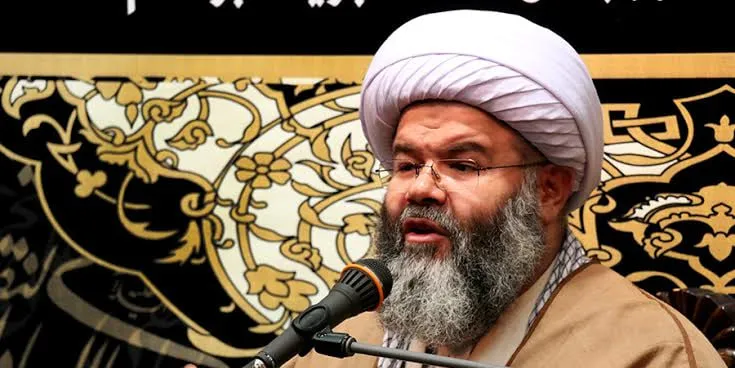
Sheikh Masoud Taj Langroudi—a religious orator, seminary lecturer, and Islamic scholar—is one of the well-known religious speakers and media-prominent preachers active across the religious congregations (heeyats) of Tehran and Gilan Province. His analytical preaching style combines traditional oratory within the capital's prominent mosques (such as the Hemmat Mosque in Tajrish) with a critical, pathology-focused critique of religious innovations and historical fabrications (such as the phenomenon of the Solar Ashura). This distinct analytical framework has established him as a reference expert within the country's religious media landscape. Moving beyond standard oratory, Taj Langroudi focuses on early Islamic history and methodologically addressing ideological and doctrinal doubts to provide a philosophical exposition of religious events.
Who is Masoud Taj Langroudi?
Hojjat-al-Islam val-Moslemin Sheikh Masoud Taj Langroudi—a religious orator, preacher, seminary lecturer, and Islamic scholar—is a recognized speaker across the religious congregations (heeyats) of Tehran and an active lecturer in major mosques and religious centers in Iran. Attributed by his surname to the historic city of Langroud in the Gilan Province, Taj Langroudi has established a prominent dual presence over the years: conducting traditional pulpit preaching (menbar) in major religious centers and serving as an analytical media expert on early Islamic history, theology, and the pathology of religious customs.
The significance of Taj Langroudi within contemporary Iranian religious circles can be examined through several key dimensions. First, his formal seminary training, reflected in his clerical title of Hojjat-al-Islam val-Moslemin, lends doctrinal and academic weight to his lectures and theological commentaries. Second, his frequent contributions as an expert analyst to prominent Iranian news agencies—such as the Mehr News Agency and KhabarOnline—have made him a regular source for public discussions regarding the history of Islam, the household of Prophet Muhammad (the Ahl al-Bayt), and the legacy of Ashura. Third, his deep familiarity with the diverse socio-cultural ecosystem of religious congregations in Tehran allows him to offer a balanced, pathologically focused critique of religious innovations, fabrications, and superstitions without resorting to polarization.
A notable example of his analytical approach was his widely cited media commentary regarding the phenomenon of the "Solar Ashura"—a modern trend in some Tehran congregations that attempts to align the lunar date of Ashura with its solar calendar equivalent in October 680 CE. He has also gained recognition for his recurring, long-standing addresses at the weekly Nudba Prayer (Do'a-ye Nudba) ceremonies in Astaneh-ye Ashrafiyeh, Gilan.
Early Life and Background
Formal biographical details regarding the exact birth date and early upbringing of Hojjat-al-Islam Masoud Taj Langroudi remain limited in open media sources. This is common among Iranian religious preachers who are primarily recognized through their public sermons and media commentaries rather than personal biographies.
His surname, "Taj Langroudi," firmly points to his familial roots in Langroud, a culturally and religiously active city in eastern Gilan Province that has historically produced several prominent Shia jurists and revolutionary clerics. His continuous involvement in major religious events in the Gilan region, running parallel to his extensive preaching schedule in the capital, underscores his enduring geographical and cultural connection to his home province.
Seminary and Educational Background
Holding the title of Hojjat-al-Islam val-Moslemin—one of the standard formal ranks within the Shia clerical hierarchy—Taj Langroudi completed his advanced theological education within the traditional Islamic seminaries (Hawza). The prefix Sheikh is traditionally used in the seminary context to denote a non-Sayyid cleric who has acquired substantial mastery over jurisprudence, Islamic history, and theology.
In addition to his responsibilities as a public orator, Taj Langroudi serves as a seminary lecturer, placing him among the active group of contemporary clerics who combine public missionary work with the formal training and education of the next generation of seminary students (tollab).
Oratory and Public Preaching Portfolios
The primary focus of Taj Langroudi's career is public religious speaking, which spans across diverse geographical and institutional settings:
Tehran Religious Congregations: Recognized as an expert well-versed in the internal dynamics and subcultures of the capital's various heeyats, he possesses a direct understanding of how religious practices evolve among urban youth and traditional circles.
Hemmat Mosque in Tajrish: He serves as a recurring speaker at the prominent Jameh Hemmat Mosque located in the Tajrish neighborhood of northern Tehran, which is recognized as one of the capital's most socio-politically active mosques.
Astaneh-ye Ashrafiyeh Friday Ceremonies: He maintains a stable preaching platform in the historic religious city of Astaneh-ye Ashrafiyeh in Gilan. His Friday morning Nudba Prayer sermons are regularly recorded, broadcast, and picked up by national religious media outlets.
Key Stances and Lecture Themes
Taj Langroudi’s public discourse focuses on providing rational and structured explanations for historical religious events while remaining highly attentive to modern social dynamics:
Historical Role of the Ahl al-Bayt (Focus on Hazrat Zaynab)
A recurring theme in his sermons is the analytical deconstruction of early Islamic history. In a prominent sermon delivered in Astaneh-ye Ashrafiyeh, Taj Langroudi analyzed the pivotal leadership role assumed by Hazrat Zaynab following the tragedy of Ashura. He articulated that during the period when Imam Sajjad (the fourth Shia Imam) was incapacitated by severe illness and faced immediate execution by the Umayyad state, Hazrat Zaynab effectively assumed the leadership of the captive household to shield the lineage of the Imamate. He argued that her roaring sermons in Kufa and Damascus were executed from a position of divinely inspired infallibility (Ismah), noting that numerous traditional scholars place her degree of spiritual purity at the absolute pinnacle of infallibility outside the primary Fourteen Infallibles.
Critique of "Solar Ashura" and Religious Innovations
Taj Langroudi has used his media presence to address controversial deviations within religious rituals. When addressing the controversial "Solar Ashura" calculations popularized by certain contemporary urban factions, he adopted a measured and institutional stance: while he cautioned against the potential risks of altering traditional remembrance formats, he carefully advised that “the actions of these groups should not be harshly classified as outright religious heresy (Bid'ah).”
His primary concern regarding the formal institutionalization of such initiatives was socio-political; he warned that rewriting long-standing traditional religious titles into secular solar terms could inadvertently provide pretexts for critics and hostile forces to undermine the structural integrity and historical continuity of traditional Shia mourning customs.
Balanced Media Expert
Rather than adopting polarizing or inflammatory rhetoric, Taj Langroudi is utilized by mainstream media outlets as a stabilizing, traditionalist voice capable of addressing modern socio-religious doubts with standard academic logic.
Networks and Intellectual Alignment
Positioned within the active circle of public-facing clerics in Tehran and the north, Taj Langroudi aligns broadly with the traditional-traditionalist and institutional religious structures of the Islamic Republic. His professional circle and institutional presence place him alongside contemporary mainstream menbari figures (such as Panahian, Rafiei, Hosseini Qomi, and Aali) who dominate public religious broadcasting, state-supported forums, and prominent municipal mosques. Concurrently, his strong network within the religious infrastructure of Gilan cements his role as an important bridge between regional religious foundations and the administrative capital.
Conclusion
Hojjat-al-Islam Masoud Taj Langroudi stands as a prominent representative of the "preacher-analyst" cohort within contemporary Iranian religious life. By combining formal seminary lecturing with a highly scannable media profile across major outlets like Mehr and KhabarOnline, he has moved beyond the boundaries of traditional localized preaching.
His defining attribute is his ability to critically assess modern deviations in religious rituals—as evidenced by his balanced, analytical handling of the "Solar Ashura" debate—while maintaining a strict adherence to classical Shia historical doctrines. As religious practices in urban centers continue to shift under the influence of new cultural styles, media trends, and experimental rituals, Taj Langroudi’s structured approach serves as an influential voice seeking to preserve the structural authenticity of religious traditions through intellectual and historical clarity.
Frequently Asked Questions (FAQs)
Who is Hojjat-al-Islam Masoud Taj Langroudi? Hojjat-al-Islam val-Moslemin Sheikh Masoud Taj Langroudi is an Iranian religious orator, preacher, seminary lecturer, and Islamic scholar. He is recognized as a prominent speaker in Tehran’s religious congregations and serves as a regular media expert on Islamic history and theological matters.
Where does Taj Langroudi regularly preach? His major preaching platforms include the prominent Jameh Hemmat Mosque in the Tajrish district of northern Tehran, alongside various active religious congregations in the capital. He also maintains a permanent preaching presence during the Friday morning Nudba Prayer ceremonies in Astaneh-ye Ashrafiyeh, Gilan.
What is his birthplace and regional background? His surname indicates his ancestral roots in the historic city of Langroud in eastern Gilan Province. His active schedule in the shrines and religious ceremonies of Gilan, alongside his work in Tehran, reflects a strong, ongoing connection to his native province.
What is his stance on the "Solar Ashura" phenomenon? In his interviews with KhabarOnline, Taj Langroudi took a measured approach. While warning against the long-term societal complications of the practice, he advised against immediately labeling these calculations as a strict religious heresy (Bid'ah). He warned that formally altering the traditional title of Ashura into different calendar metrics could give unnecessary leverage to external critics of Shia traditions.
What was his notable theological discourse regarding Hazrat Zaynab? In an address delivered in Gilan, Taj Langroudi analyzed how Hazrat Zaynab systematically took charge of guiding the household of the Prophet and preserving the line of the Shia Imamate at a time when Imam Sajjad's life was explicitly threatened. He emphasized that her historic sermons were rooted in a supreme degree of structural infallibility (Ismah).
Is Masoud Taj Langroudi still active? Yes. He continues to actively lecture in traditional and state-adjacent religious settings across Tehran and Gilan, while regularly contributing as an expert commentator on early Islamic history and modern religious pathology to mainstream Iranian media.
Take less than a minute, register and share your opinion under this post.
Insulting or inciting messages will be deleted.
Sign Up