
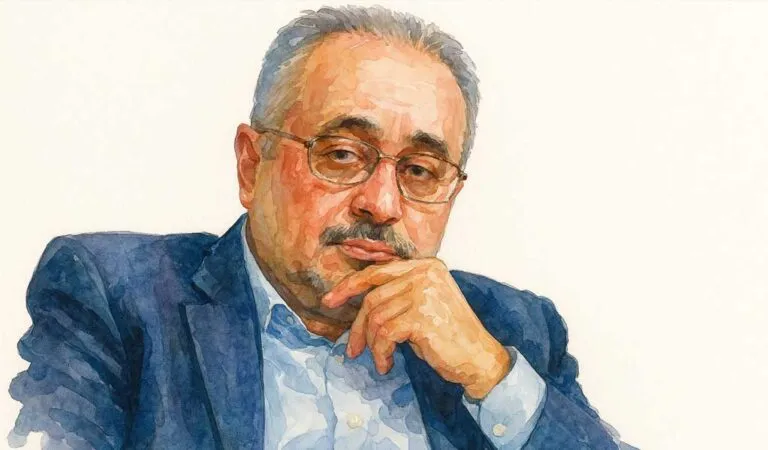
Sirous Nasseri, a former diplomat, oil industry businessman, and one of the high-profile figures of the Islamic Republic of Iran's diplomatic-economic apparatus over the past three decades, served as Iran's permanent representative to the United Nations Office in Geneva from 1986, and later became a member of the Iranian team negotiating UN Security Council Resolution 598. In the administration of Seyed Mohammad Khatami, he was a senior member of Iran's nuclear negotiating team (during Hassan Rouhani's tenure as secretary of the Supreme National Security Council) and served for a time as the spokesperson for this team. Nasseri, who was also vice chairman of the board of the oil company Kish Oriental, was tried and acquitted in 2005 on charges of receiving a $500,000 bribe, but in February 2016, an arrest warrant was issued for him on charges of "acting against national security." He currently holds Austrian citizenship and resides in England. Nasseri has also been an exclusive guest of Abdi Media, providing analysis on nuclear negotiations, the JCPOA, and the role of global powers toward Iran.
Who is Sirous Nasseri?
Sirous Nasseri, an oil industry businessman, former diplomat, and one of the high-profile and, at the same time, controversial figures of the Islamic Republic of Iran's diplomatic-economic apparatus over the past three decades, is one of those Iranian managers who stands at the intersection of nuclear diplomacy, oil trade, and high-profile legal cases. Nasseri, who served as Iran's permanent representative to the United Nations Office in Geneva from 1986, later became a member of the Iranian team negotiating UN Security Council Resolution 598, and a senior member of Iran's nuclear negotiating team in the administration of Seyed Mohammad Khatami (during Hassan Rouhani's tenure as secretary of the Supreme National Security Council), is considered one of Iran's most experienced diplomats in the field of multilateral relations and nuclear diplomacy.
The importance of Sirous Nasseri in Iran's diplomatic-economic sphere can be examined from several perspectives. First, his long background in multilateral diplomacy — from representing Iran in Geneva in the midst of the Iran-Iraq war, to playing a role in the negotiations of Resolution 598 which led to the end of the war, and then membership in Rouhani's nuclear team in the Khatami administration — made him one of the most well-known figures in the diplomacy of the Islamic Republic. Second, his role in the early period of Iran's nuclear file — especially as the spokesperson for Rouhani's nuclear team during a period of negotiations with three European countries (England, France, and Germany) that led to the Saadabad Agreement (autumn 2003) and the Brussels Agreement (March 2004) — places him among the early architects of Iran's nuclear diplomacy. Third, his high-profile legal cases — including an accusation of receiving a $500,000 bribe in oil contracts (from which he was acquitted), and subsequent charges of "acting against national security" which led to the issuance of an arrest warrant for him in February 2016 — place him among the most controversial figures in Iran's diplomatic apparatus over the past two decades.
Nasseri, who also has a high-profile background in the commercial-oil structure, was vice chairman of the board of the oil company "Kish Oriental" — a company that, during the Ahmadinejad administration, was involved in one of the most controversial cases in South Pars. Currently, according to published reports, Nasseri holds Austrian citizenship and resides in England.
Life and Background
Published information about Sirous Nasseri's exact date of birth, place of birth, and family background is limited in open media sources — a characteristic relatively common among veteran diplomats of the Islamic Republic. What is clear from published accounts is that Nasseri belongs to the first generation of post-revolutionary diplomats — a generation that became active in the nascent diplomatic structure of the Islamic Republic in the 1980s.
Regarding his family background, it is known that he has two sons named Babak and Siamak Nasseri — information mentioned in Iranian media in the context of his legal cases.
Beginning of Diplomatic Activity: Permanent Representation in Geneva (from 1986)
The starting point of Nasseri's diplomatic career was his appointment in 1986 as Iran's permanent representative to the United Nations Office in Geneva. This position is considered one of Iran's most sustained multilateral diplomatic posts at the United Nations.
The United Nations Office in Geneva, one of the four main UN headquarters (alongside New York, Vienna, and Nairobi), is considered among the most important centers of multilateral diplomacy in the world. Numerous UN institutions operate at this office — including the Human Rights Council, the International Labour Organization, the World Health Organization, the Conference on Disarmament, and the United Nations Conference on Trade and Development (UNCTAD).
Holding this position in 1986 — in the midst of the Iran-Iraq war and during a tense diplomatic period for Iran internationally — indicated the trust of Iran's diplomatic structure in Nasseri at that time.
Role in the Negotiations of UN Security Council Resolution 598
One of the notable aspects of Nasseri's diplomatic career was his membership in the Iranian team negotiating UN Security Council Resolution 598. Resolution 598, adopted by the UN Security Council on July 20, 1987, was a peace plan to end the Iran-Iraq war. This resolution was ultimately accepted by the Islamic Republic on July 18, 1988, and a month later, on August 20, 1988, a ceasefire was established between Iran and Iraq.
Playing a role in the negotiations of this resolution is considered one of the most sensitive and high-profile diplomatic missions in contemporary Iranian history — a mission that concluded with the official end of the eight-year Iran-Iraq war.
Role in Making Iran's Commitment to the NPT Permanent
One of the controversial aspects of Nasseri's diplomatic career during his time in Geneva was his role in making Iran's commitment to the Nuclear Non-Proliferation Treaty (NPT) permanent. In 1995, at the NPT Review Conference, a decision was made for the "indefinite extension" of this treaty, and Iran also went along with this decision.
Some experts and media outlets close to the current critical of the diplomatic apparatus (including Mashregh News) have interpreted Nasseri's role as the "starting point of pressure on Iran over the nuclear issue." This criticism, raised in the post-escalation atmosphere of Iran's nuclear file in the 2000s and 2010s, is considered one of the most enduring criticisms of Nasseri's diplomatic career — although supporters of the diplomacy of that period explain this decision within the framework of the overall interests of the Islamic Republic system.
Membership in Khatami Administration's Nuclear Negotiating Team
The most high-profile diplomatic chapter of Nasseri's career was his membership in Iran's nuclear negotiating team during Hassan Rouhani's tenure as secretary of the Supreme National Security Council (2003-2005). This period coincided with the official start of Iran's nuclear file and negotiations with three European countries (E3: England, France, and Germany).
During this period, in addition to being a member of the negotiating team, Nasseri also served for a time as the spokesperson for this team — a position that made him one of the well-known faces of Iran's nuclear diplomacy on the international stage.
The Saadabad and Brussels Agreements
Nasseri's period on the nuclear team coincided with two important agreements:
The Saadabad Agreement (November 2003): The first formal agreement between Iran and the three European countries, based on which Iran "voluntarily and temporarily" suspended uranium enrichment activities and signed the NPT Additional Protocol.
The Brussels Agreement (March 2004): The second agreement, in which the frameworks for cooperation between the two sides were established.
Nasseri's Later Analysis of the Negotiation Period
In an interview with IRNA in January 2014 — after years of silence — Nasseri described the Geneva Agreement (November 2013, the first nuclear agreement of the Rouhani administration with the P5+1) as a "great achievement" and "the result of 10 years of continuous planning and sustained effort by officials at various stages — Mr. Rouhani, Larijani, Jalili, and again Dr. Rouhani and his team."
In the same interview, referring to the fact that "the main party in the dispute in these negotiations should also declare, both verbally and in writing, that Iran will have enrichment," Nasseri called this a "very great achievement" that none of the negotiating parties had been willing to admit over the course of 10 years.
Commercial Activity: Kish Oriental Company
After the end of the nuclear negotiation period in the Khatami administration and the beginning of Mahmoud Ahmadinejad's administration, Nasseri turned to commercial activity. He became vice chairman of the board of the oil company "Kish Oriental" — a company active in the oil and gas industry, especially in South Pars projects.
The $500,000 Bribe Accusation (2005)
In 2005, Oriental Kish Company, of which Nasseri was vice chairman of the board, was accused of paying bribes to officials of the Ministry of Oil and taking responsibility for several phases of the South Pars project. Nasseri's specific accusation was receiving a bribe amounting to $500,000.
Trial and Acquittal
In the relevant court, the issue of Nasseri's half-million-dollar bribe — related to his bank account in Switzerland and a transfer to the former CEO of the airline and senior advisor of Pars Oil and Gas Company — was investigated, and Nasseri was acquitted of this charge. Oriental Kish Company was also acquitted by the court.
Despite the acquittal, following the raising of issues in the case, Nasseri took up residence in Vienna and refrained from traveling to Iran during the Ahmadinejad era — a decision that continued until 2013 (the end of the Ahmadinejad administration and the beginning of the Rouhani administration).
Nasseri's Own Account
In a notable interview with IRNA in January 2014, in response to the question "When did you return to Iran?" Nasseri stated: "I didn't need to have left Iran to come back. I never left Iran and was in Iran all these years. Of course, I have had short work trips." This position, which contradicts the accounts of critical media outlets, indicates Nasseri's effort to control the media narrative about himself.
Regarding the fate of Oriental Kish Company, Nasseri said: "Later, we transferred this company to one of the companies affiliated with the National Iranian Oil Company. In fact, it largely took on a state or semi-state form."
Removal from the Nuclear Negotiating Team (June 2015)
With the beginning of the Rouhani administration and a new phase of nuclear negotiations, Nasseri was active as one of the advisors to the nuclear negotiating team. But on June 16, 2015 — in the final days of the negotiations leading to the JCPOA — Pars News website reported the removal of two advisors to the nuclear negotiating team: Sirous Nasseri and Mohammad Reza Alborzi.
This removal, in the tense final atmosphere of the JCPOA negotiations, was considered one of the high-profile events of that period.
Zakani's Revelations and the Arrest Warrant (February 2016)
After his removal from the negotiating team, the media atmosphere against Nasseri intensified. Ali Zakani (then representative of Tehran in parliament, current mayor of Tehran) published revelations about Sirous Nasseri and Hossein Faridoun (brother of Hassan Rouhani). Subsequently, four members of parliament wrote a letter to the president on this matter, and related documents were submitted to the judiciary.
The result of these pressures, in February 2016, was the issuance of an arrest warrant for Sirous Nasseri on charges of "acting against national security." This charge, which in Iran's legal-judicial literature falls into the category of serious charges, was considered one of the most high-profile judicial cases related to former members of the nuclear team.
Formation of a New Judicial Case (October 2017)
In October 2017, Mehr News Agency reported the formation of a new judicial case for Sirous Nasseri and the issuance of an arrest warrant. According to this report: "Although Nasseri had been banned from leaving the country several times in recent years, it is heard that this individual is not currently in Iran and has fled."
Current Status
According to published reports, Sirous Nasseri currently holds Austrian citizenship and resides in England. This situation — in which a former diplomat with a long career in the structure of the Islamic Republic has left the country due to numerous legal cases — is considered one of the most high-profile examples of the phenomenon of "immigrant diplomats following legal cases" in contemporary Iran.
Views and Positions
Throughout his long career, Sirous Nasseri has formulated a clear professional-intellectual framework that can be traced in several axes.
Connection to the Rouhani Diplomatic Tradition
The most central strategic position of Nasseri is his connection to the diplomatic tradition of Hassan Rouhani — during whose tenure as secretary of the Supreme National Security Council, Nasseri was a senior member of his nuclear team. This connection was widely reflected in Nasseri's praise for the 2013 Geneva Agreement and Rouhani's sustained efforts.
Realistic View of Negotiations
In one of his notable analyses, Nasseri stated that "most parties, even those not directly involved in the dispute, were not willing to accept the issue of enrichment" — an indication of his realistic view of the dynamics of international negotiations.
Emphasis on Continuity of Efforts
In Nasseri's view, the 2013 Geneva Agreement is not understandable as a single event, but as "the result of 10 years of continuous planning." This position, in which Nasseri praises all secretaries of the Supreme National Security Council during the nuclear negotiation period (Rouhani, Larijani, Jalili, and again Rouhani), indicates his cross-factional view of the negotiation process.
Declaration of Withdrawal from Politics
After the experience of legal cases, in his notable interview with IRNA in January 2014, Nasseri stated: "That time was the only occasion I returned to the political scene out of insistence, and after that, I withdrew from this arena forever, and this decision of mine is final." He also stated that "I will certainly not enter this field again."
However, in subsequent years, with his removal from the team of nuclear advisors and then the issuance of judicial rulings, the space for his activity in Iran was completely closed.
Silence on Certain Questions
A distinguishing feature of Nasseri's media character is his sustained silence on certain sensitive questions. In the IRNA interview, in response to some questions about the nuclear negotiations of his period, he stated: "For the sake of the expediency and interests of the system, I continue to remain silent."
The Full Recording of Abdi Media's Interview with Sirous Nasseri, Former Negotiator
Listen to the full, unfiltered recording of Abdi Media's interview with Sirous Nasseri, former negotiator, on Castbox
Connections with Figures and Currents
Sirous Nasseri was situated within a network of political-executive connections with prominent figures of the Islamic Republic. At the diplomatic level, his relationship with Hassan Rouhani (during whose tenure as secretary of the Supreme National Security Council, Nasseri was a senior member of his nuclear team), Ali Larijani (the subsequent secretary of the Supreme National Security Council), Saeed Jalili (secretary of the Supreme National Security Council during the Ahmadinejad era), and Hossein Mousavian (his contemporary and colleague on the nuclear team in the Khatami period) were among his key connections.
At the Ministry of Foreign Affairs level, his relationship with Mohammad Reza Alborzi (former representative of Iran to the United Nations in Geneva, who was removed from the negotiation team along with him in 2015) and Mohammad Javad Zarif (Minister of Foreign Affairs in the Rouhani administration, who mentioned Nasseri in his book "Mr. Ambassador") were among his professional-political connections.
In judicial and media cases, Nasseri's name has appeared alongside Hossein Faridoun (Rouhani's brother), Saeed Emami (the late controversial intelligence official), and other figures in reports by critical media outlets. Ali Zakani, with his revelations, has been one of his main critics in the public sphere.
Conclusion
Sirous Nasseri is one of the most complex and, at the same time, controversial diplomatic-economic figures of the Islamic Republic over the past three decades. With a career spanning notable positions — from Iran's permanent representative to the UN in Geneva (from 1986), membership in the team negotiating Resolution 598, spokesperson and senior membership in the nuclear team of the Khatami administration, vice chairmanship of the board of Kish Oriental Company, to his removal from the nuclear team of the Rouhani administration in June 2015, the issuance of an arrest warrant in February 2016, and finally, the formation of a new judicial case in October 2017 — he is considered one of the most high-profile figures of Iran's diplomatic apparatus in recent years. His career — from activity in the formal diplomatic structure, presence in two periods of Iran's most important international negotiations (Resolution 598 and the E3 nuclear negotiations), commercial activity in one of the most high-profile companies in Iran's oil industry, and finally, leaving the country and residing in England with Austrian citizenship — presents a picture of a multidimensional "diplomat-businessman" with all its complexities and controversies.
Nasseri's distinguishing feature, at the first level, is his sustained connection to Hassan Rouhani's negotiation team — from the period of Rouhani's secretaryship of the Supreme National Security Council to the eleventh and twelfth administrations — a connection that ultimately, with his removal from the team of advisors in June 2015 and subsequent legal cases, ended in serious tension. At the second level, his simultaneous presence in both diplomatic and commercial-oil arenas — which is relatively rare among Iranian diplomats — is considered one of the notable aspects of his character; a characteristic that ultimately, in the 2005 bribery accusation case, became a weak point in his career.
From an analytical perspective, Nasseri's position exemplifies the phenomenon of the "immigrant diplomat-businessman following legal cases" in contemporary Iran — a phenomenon in which a figure with long experience in the formal structure of the system, following judicial-political tensions, ultimately leaves the country and resides abroad. This phenomenon, which has other examples among former Iranian diplomats (such as Hossein Mousavian, who resides in the United States), has found particular reflection in Nasseri with the complexity of his legal cases and oil-related controversies.
What is clear from today's perspective is that the issues reflected in Nasseri's career — from the nuclear diplomacy of the 2000s, his role in making the NPT permanent, South Pars oil cases, to subsequent accusations against former nuclear team members — remain among the most high-profile topics of discussion in contemporary Iran's foreign policy and nuclear diplomacy discourse. At a time when Iran's nuclear file remains one of the main challenges of the country's foreign policy, Nasseri's experience and narratives — as one of the few surviving members of the initial E3 nuclear negotiation team — remain part of the historical memory of Iran's nuclear diplomacy, although the sustained judicial controversies have completely closed the space for his public presence in Iran's public sphere.
Frequently Asked Questions
Who is Sirous Nasseri?
Sirous Nasseri is an oil industry businessman and former Iranian diplomat who served as Iran's permanent representative to the United Nations Office in Geneva from 1986. He was a member of the Iranian team negotiating UN Security Council Resolution 598, and in the administration of Seyed Mohammad Khatami, he was a senior member of Iran's nuclear negotiating team (during Hassan Rouhani's tenure as secretary of the Supreme National Security Council) and served for a time as the spokesperson for this team.
What was Nasseri's role in the negotiations of Resolution 598?
During his tenure as Iran's permanent representative in Geneva, Nasseri was a member of the Iranian team negotiating UN Security Council Resolution 598 — a resolution adopted by the Security Council on July 20, 1987, and ultimately accepted by Iran on July 18, 1988, leading to the end of the eight-year Iran-Iraq war.
What was Nasseri's role in the nuclear negotiations of the Khatami period?
During Hassan Rouhani's tenure as secretary of the Supreme National Security Council (2003-2005), Nasseri was a senior member of Iran's nuclear negotiating team with three European countries (England, France, and Germany) and served for a time as the spokesperson for this team. This period coincided with the Saadabad Agreement (November 2003) and the Brussels Agreement (March 2004).
What was the bribery accusation case against Nasseri?
In 2005, Nasseri, as vice chairman of the board of the oil company "Kish Oriental," faced an accusation of receiving a bribe amounting to $500,000 in oil contracts. This accusation was related to a transfer from Nasseri's Swiss account to the former CEO of the airline and senior advisor of Pars Oil and Gas Company. In the relevant court, Nasseri was acquitted of this charge, and Oriental Kish Company was also acquitted. However, during the Ahmadinejad era, Nasseri preferred to reside in Vienna and refrained from traveling to Iran.
Why was Nasseri removed from the Rouhani administration's negotiating team?
On June 16, 2015 — in the final days of the negotiations leading to the JCPOA — Pars News website reported the removal of two advisors to the nuclear negotiating team: Sirous Nasseri and Mohammad Reza Alborzi. This removal followed media-political pressures from circles critical of the Rouhani administration.
On what charges was Nasseri's arrest warrant issued?
After revelations by Ali Zakani (then representative of Tehran, current mayor) and a follow-up letter from four members of parliament to the president regarding Sirous Nasseri and Hossein Faridoun, in February 2016, an arrest warrant was issued for Sirous Nasseri on charges of "acting against national security." In October 2017, a new judicial case was formed against him, and an arrest warrant was issued.
What was Nasseri's role in making the NPT permanent?
In 1995, at the Nuclear Non-Proliferation Treaty (NPT) Review Conference, a decision was made for the "indefinite extension" of this treaty, and Iran also went along with this decision. Some experts and critical media outlets have interpreted Nasseri's role in these negotiations as the "starting point of pressure on Iran over the nuclear issue" — although supporters explain this decision within the framework of the overall interests of the Islamic Republic system.
Where does Nasseri reside?
According to reports published in Iranian media, Sirous Nasseri currently holds Austrian citizenship and resides in England. This situation arose following the formation of numerous legal cases against him and the issuance of an arrest warrant in 2017.
What is Nasseri's assessment of the 2013 Geneva Agreement?
In an interview with IRNA in January 2014, Nasseri described the Geneva Agreement (the first nuclear agreement of the Rouhani administration with the P5+1 in November 2013) as a "great achievement" and "the result of 10 years of continuous planning and sustained effort by officials at various stages." In a cross-factional approach, he also praised the efforts of Rouhani, Larijani, Jalili, and again Rouhani.
Take less than a minute, register and share your opinion under this post.
Insulting or inciting messages will be deleted.
Sign Up