
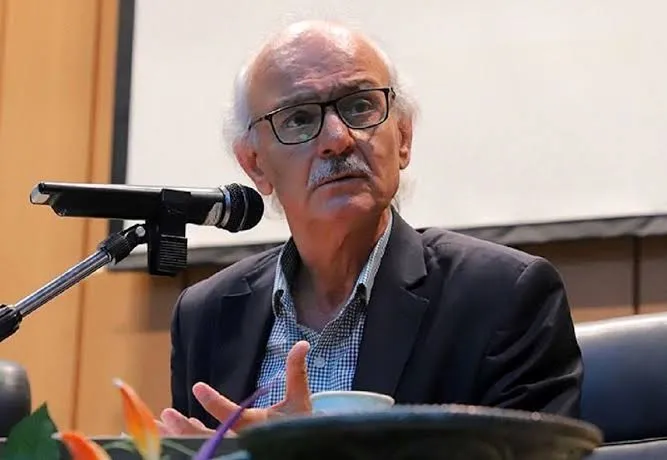
Seyyed Hashem Aghajari—professor at Tarbiat Modares University, historian, founding member of the Organization of the Mojahedin of the Islamic Revolution, and prominent theorist of "Islamic Protestantism"—is one of the most widely cited and controversial figures of contemporary Iranian religious intellectualism and Reformism. He rose to international prominence following his landmark lecture titled "Islamic Protestantism and Dr. Shariati" on June 19, 2002, in Hamadan, which led to him being sentenced to death on charges of "insulting the Prophet, denying the tenets of Islam, and blasphemy"; a verdict that was later overturned by the Supreme Court, reduced to five years' imprisonment, and resulted in his release on July 31, 2004. A founding member of the Organization of the Mojahedin of the Islamic Revolution, a disabled veteran of the Iran-Iraq War, and an intellectual disciple of Ali Shariati, Aghajari remains one of the most frequently cited voices in Iran's political-intellectual discourse through his recent lectures at the "Porsesh" Institute and his analytical stances on the future of Reformism.
Who is Seyyed Hashem Aghajari?
Seyyed Hashem Aghajari (or Aghajari; born in 1957 in Abadan) is a professor at Tarbiat Modares University, a prominent historian, a key theorist of "Islamic Protestantism," a founding member of the Organization of the Mojahedin of the Islamic Revolution of Iran, and one of the most widely discussed figures of contemporary Iranian religious-reformist intellectualism.
Aghajari’s trajectory—from his Abadan-Southern roots to his early membership in the Hojjatieh Society, his joining of the revolutionary movement, becoming a founding member of the Organization of the Mojahedin of the Islamic Revolution after 1979, serving in the Iran-Iraq War where he was disabled, earning a doctorate in history, serving on the faculty at Tarbiat Modares University, his high-profile case following his "Islamic Protestantism" speech in Hamadan in June 2002 (where he was sentenced to death before the verdict was overturned by the Supreme Court and reduced to 5 years' imprisonment prior to his release on July 31, 2004), and his ongoing teaching at the Porsesh Institute since 2018—has made him a central figure in contemporary Iranian intellectual thought.
His significance rests on several key pillars:
Formulation of "Islamic Protestantism": His landmark June 2002 speech in Hamadan commemorating Ali Shariati became one of the most debated intellectual events in recent Iranian history.
High-Profile Judicial Case: A major human rights and intellectual case involving a death sentence for apostasy and blasphemy that was ultimately overturned by the Supreme Court.
Political Role: His status as a founding member of the Organization of the Mojahedin of the Islamic Revolution alongside figures like Behzad Nabavi, Mohsen Armin, Mostafa Tajzadeh, and Abolfazl Ghadyani.
Academic Contribution: His long-standing focus on contemporary Iranian history at Tarbiat Modares University.
Critique of State Reformism: His critical stance on the political system, highlighted by his recent thesis: "Reforming Iran's current system is no longer possible. As the relationship between the system and the lifeworld becomes paradoxical, the work of state reformists grows more difficult. The closer they get to the system, the further they drift from the people, and vice versa."
Life and Background
Seyyed Hashem Aghajari was born in 1957 in Abadan. Raised in الخوزستان's major industrial oil center, he belongs to the generation that reached young adulthood around the 1979 Revolution and participated in shaping post-revolutionary institutions.
Hojjatieh Membership: In his youth, he joined the religious Hojjatieh Society, an experience detailed in his memoirs.
Academic Career: After earning a Ph.D. in History, he joined the faculty of Tarbiat Modares University. Over three decades, he mentored numerous graduate students in modern history.
Notable Thesis Advisories: European travelogues in Qajar Iran (2011) and comparative roots of Islamic feminism in Iran and Egypt (2015).
Iran-Iraq War Service: Aghajari was wounded during the Iran-Iraq War, suffering physical disability. This veteran background provided him with distinct moral standing among religious intellectuals.
Political & Intellectual Milestones
Mojahedin of the Islamic Revolution Organization
Aghajari was a founding member of the organization established after 1979 to unify smaller paramilitary groups, alongside Mohammad Salamati, Behzad Nabavi, Mohsen Armin, Mostafa Tajzadeh, and Mohsen Makhmalbaf.
The "Islamic Protestantism" Speech (June 19, 2002)
Delivered at Teacher Training University in Hamadan on the anniversary of Ali Shariati's death, his speech generated immediate controversy. Key arguments included:
Asserting that Muslims should not blindly emulate religious leaders.
Comparing conservative clerical authority to medieval Catholic Popes.
Viewing religious teachings through a historical and contextual lens.
Questioning the exclusive clerical authority over religious interpretation.
The speech was condemned by several Grand Ayatollahs, and cleric Mohammad-Taqi Mesbah-Yazdi called for his execution.
Judicial Case (2002–2004)
Verdict: Branch 14 of the Hamadan Court sentenced Aghajari to death, 8 years of internal exile, a 10-year teaching ban, and 74 lashes on November 7, 2002.
Overturn: Supreme Court Counselor Ayatollah Seyyed Mohammad Sajjadi Ata-Abadi reviewed the case and declared the death sentence illegal and un-Islamic.
Final Ruling: On July 10, 2004, the court reduced the sentence to 5 years (3 years mandatory, 2 suspended). Aghajari was released on bail on July 31, 2004.
Recent Activity
Summons: In May 2023, Aghajari was summoned again to the Revolutionary Court following a search of his home by intelligence agents.
Teaching: Since 2018, he has taught at the Porsesh Institute of Political-Economic Studies.
Major Works: From the Hojjatieh Society to the Organization of the Mojahedin of the Islamic Revolution: Memoirs of Dr. Seyyed Hashem Aghajari (1957–1979) (Akhtaran Publishing) and numerous scholarly articles in historical journals such as Mardom-Nameh.
Intellectual Framework
Islamic Protestantism: Advocating religious reform inspired by Ali Shariati to foster rational, modern Islamic thought.
Critique of Clerical Monopoly: Rejection of blind emulation (taqlid) and exclusive clerical rights over interpretation.
Historical Contextualization: Treating religious texts and traditions as historically embedded.
Systemic Critique: Viewing the state reformist paradigm as stuck in an irreconcilable paradox between state power and public demands.
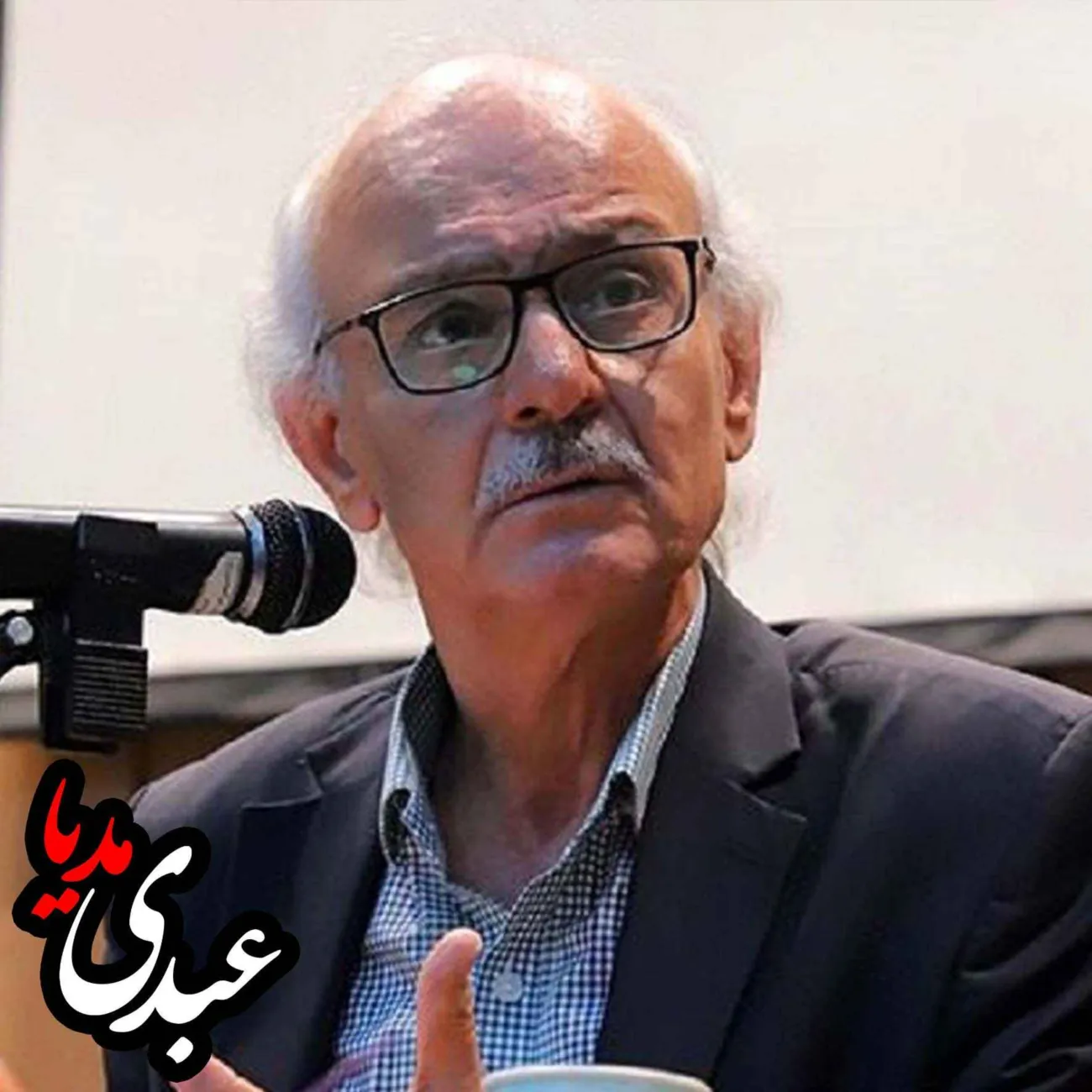
Summary
Seyyed Hashem Aghajari is one of the most widely cited and controversial figures of contemporary Iranian religious-reformist intellectualism. He occupies a unique position in Iran's political-intellectual structure through a distinct background: Southern roots in Abadan, youth membership in the Hojjatieh Society, joining the revolutionary movement as a founding member of the Organization of the Mojahedin of the Islamic Revolution of Iran, serving and sustaining injuries in the Iran-Iraq War, obtaining a Ph.D. in history, serving as a faculty member at Tarbiat Modares University, delivering the landmark "Islamic Protestantism" speech in Hamadan on June 19, 2002, and facing a high-profile judicial case (including an initial death sentence in Branch 14 of the Hamadan Court on charges of apostasy, blasphemy, and insulting the Prophet). Following the overturn of the death sentence by the Supreme Court with the involvement of Ayatollah Seyyed Mohammad Sajjadi Ata-Abadi, his sentence was reduced to 5 years' imprisonment in July 2004 leading to his release on July 31, 2004. He has since published his widely discussed memoirs From the Hojjatieh Society to the Organization of the Mojahedin of the Islamic Revolution, maintained continuous teaching at the Porsesh Institute for Political-Economic Studies since 2018, faced a summons to the Revolutionary Court in May 2023, and remained a prominent critical voice on the future of Reformism in Iran.
What sets Aghajari apart first is his pioneering role in formulating "Islamic Protestantism"—a framework inherited from Ali Shariati's tradition that came to a intense climax during his June 2002 Hamadan lecture. Second is his exceptional ability to synthesize distinct backgrounds—revolutionary activity, war veteran status, academic historiography, political party leadership, and religious intellectualism—making him a multifaceted figure in Persian political-intellectual discourse. Third is his resilience in analytical activity despite his severe judicial experience and former death sentence.
Analytically, Aghajari exemplifies the "revolutionary-war veteran-historian-religious intellectual-system critic" phenomenon in modern Iran, where a figure with a complex background plays a sustained role across academic, political, intellectual, and legal spheres over several decades.
His core themes—Islamic Protestantism, historical-cultural interpretation of Islam, critique of exclusive clerical authority, Shariati's legacy, critique of the Islamic Republic's structure, strategic dilemmas of the Reformist movement, and historiography of the Islamic Revolution—remain central to contemporary discourse. Amid shifting political dynamics and ongoing intellectual debate, Aghajari's analytical voice remains a major point of reference.
Frequently Asked Questions
Who is Seyyed Hashem Aghajari?
Seyyed Hashem Aghajari (born 1957 in Abadan) is a professor at Tarbiat Modares University, a historian, a founding member of the Organization of the Mojahedin of the Islamic Revolution of Iran, and a leading theorist of "Islamic Protestantism." He ranks among the most widely cited religious-reformist intellectuals in modern Iran.
What is Hashem Aghajari’s educational background?
Aghajari holds a Ph.D. in History and serves as a faculty member in the History Department at Tarbiat Modares University.
What was Aghajari’s role in the Iran-Iraq War?
Aghajari fought in the Iran-Iraq War, where he sustained injuries that left him with a physical disability, placing him among the few religious intellectuals with disabled war veteran (janbaz) status.
What was Aghajari’s role in the Organization of the Mojahedin of the Islamic Revolution?
Aghajari was a founding member of the organization, alongside key political figures such as Mohammad Salamati, Behzad Nabavi, Mohsen Armin, Mostafa Tajzadeh, and Abolfazl Ghadyani.
What was Aghajari’s "Islamic Protestantism" speech?
On June 19, 2002, at Teacher Training University in Hamadan, Aghajari delivered a speech titled "Islamic Protestantism and Dr. Shariati." The talk contained controversial assertions, including stating that Muslims are not "monkeys" to blindly emulate religious leaders and comparing conservative Iranian clerical authority to medieval Catholic Popes.
Why was Aghajari sentenced to death?
Following his Hamadan speech, Aghajari was arrested and sentenced to death by Branch 14 of the Hamadan Court on charges of "insulting the Prophet," "denying religious tenets," "blasphemy," and "apostasy." The sentence included 8 years of internal exile, a 10-year teaching ban, and 74 lashes.
How was Aghajari’s death sentence overturned?
Supreme Court Counselor Ayatollah Seyyed Mohammad Sajjadi Ata-Abadi reviewed the case, declared the death penalty illegal and un-Islamic, and overturned the verdict, sending the file to Branch 1083 of the Tehran General Court for retrial.
What was Aghajari’s final sentence?
On July 10, 2004, the court sentenced him to 5 years' imprisonment (3 years mandatory, 2 suspended) and a 5-year ban on social rights. He was released on bail on July 31, 2004.
What is Aghajari’s most notable book?
His most prominent book is his memoir, From the Hojjatieh Society to the Organization of the Mojahedin of the Islamic Revolution: Memoirs of Dr. Seyyed Hashem Aghajari (1957–1979) (Akhtaran Publishing), compiled from extensive interviews conducted in 2005.
What is Aghajari’s view on Reformism?
In recent analytical statements, Aghajari declared: "Reforming Iran's current system is no longer possible. As the relationship between the system and the lifeworld becomes paradoxical, the work of state reformists grows more difficult. The closer they get to the system, the further they drift from the people, and vice versa."
What does Aghajari do at the Porsesh Institute?
Since 2018, Aghajari has taught history and political theory at the Porsesh Institute for Political-Economic Studies alongside other prominent scholars.
Is Seyyed Hashem Aghajari still active?
Yes. Aghajari remains active as a university professor, lecturer at the Porsesh Institute, contributor to journals like Mardom-Nameh, and political commentator. Despite being summoned to the Revolutionary Court in May 2023, his commentary on Islamic Protestantism, the future of Reformism, and Ali Shariati's legacy continues to circulate widely in Persian media and academic circles.
Take less than a minute, register and share your opinion under this post.
Insulting or inciting messages will be deleted.
Sign Up