
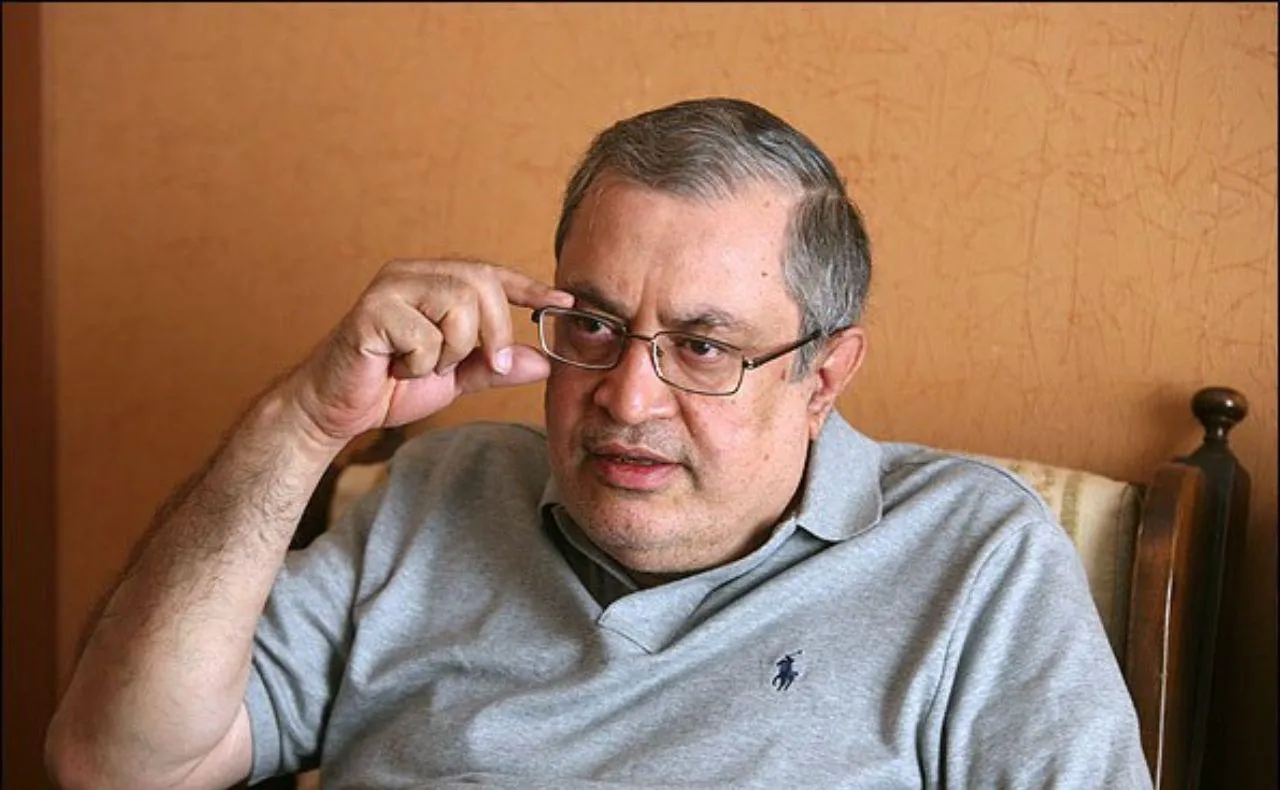
Saeed Hajjarian Kashani is a prominent theorist of the reformist current in Iran, the main theorist of the Islamic Iran Participation Front (Jebhe-ye Mosharekat), one of the founders of the Ministry of Intelligence of the Islamic Republic, former Vice Chairman of the Tehran City Council, former managing director of the Sobh-e Emrooz newspaper, and former political advisor to Seyyed Mohammad Khatami. He ranks among the most widely-reported, most enduring, and most prominent theoretical-intellectual figures of post-revolutionary reformism in Iran. With a background in pre-revolutionary student activism and presence in the post-revolutionary security establishment (including a role in preventing the Nojeh coup and the founding of the Ministry of Intelligence), he turned to reformist theorizing from the mid-1990s onward, and proposed four prominent theories: "strengthening civil society," "dual sovereignty," "pressure from below and bargaining from above," and "fortress-by-fortress conquest." Hajjarian was shot and seriously wounded on March 12, 2000, by Saeed Asgar in front of the Tehran City Council building, suffering permanent severe disabilities (life in a wheelchair and speech impairment), but he continued his theoretical work. After a 109-day detention in 2009, he theorized the discourse of "national consensus" during the 14th administration of Masoud Pezeshkian, and in the 2026 Iran war, he emphasized active negotiation with the United States, the reduction of ideological rigidity, and preparation for fourth and fifth-generation warfare.
Saeed Hajjarian Kashani (born 1954 in Tehran) is a prominent theorist of the reformist current in Iran, the main theorist of the Islamic Iran Participation Front (Jebhe-ye Mosharekat), one of the prominent founders of the Ministry of Intelligence of the Islamic Republic of Iran (under the pseudonym "Saeed Mozaffari") in the early post-revolutionary years, a prominent reformist journalist (under the pseudonym "Jahangir Salehpour" in some articles critiquing Abdolkarim Soroush's "Fatter Than Ideology" in Kian magazine), a former member of the Central Council of the Islamic Iran Participation Front, a former Vice Chairman of the Islamic City Council of Tehran in its first term, a former political advisor to President Seyyed Mohammad Khatami, former managing director of the prominent reformist newspaper Sobh-e Emrooz, a former member of the Presidential Center for Strategic Research, a prominent figure in the 2nd of Khordad movement and the events of July 9, 1999, the principal architect of four enduring theories — "strengthening civil society," "dual sovereignty," "pressure from below and bargaining from above," and "fortress-by-fortress conquest" — a figure who was shot and wounded on March 12, 2000, by Saeed Asgar in front of the Tehran City Council building, surviving but suffering permanent severe disabilities (life in a wheelchair and severe speech impairment), a former prisoner after the 2009 elections for 109 days (from June 9 to September 30, 2009), a pioneering theorist of the "national consensus" discourse in the 14th administration of Masoud Pezeshkian, and at the same time one of the most widely-reported, most enduring, and most prominent theoretical-intellectual figures of the post-revolutionary reformist current in Iran. He ranks among the central figures of the theoretical discourse of reformism in contemporary Iran.
Saeed Hajjarian, with a unique trajectory — from a prominent student-Islamic student background before the Islamic Revolution, to his sustained joining of the post-revolutionary power structure from 1978, which included service in the gendarmerie, the Naziabad Islamic Revolution Committee, and then the Army General Staff — where, according to published narratives, he played a sustained role in preventing the widely-reported Nojeh coup in July 1980 — to his widely-reported joining of the intelligence team of the Prime Minister's Office in the administration of Mir-Hossein Mousavi and his prominent collaboration with Khosrow Tehrani, to his widely-reported participation in the founding of the Ministry of Intelligence of the Islamic Republic in 1984 — as one of the prominent founders of this ministry under the pseudonym "Saeed Mozaffari," to his responsibility for the controversial interview and vetting of Saeed Emami (who later became known by the widely-reported names "Saeed Maziyar / Saeed Eslami" in the chain murders case and, according to Hajjarian's widely-reported narrative, after the interview he concluded that the Ministry of Intelligence should only use Saeed Emami as a one-way source and should not appoint him to sensitive positions), to his sustained departure from the Ministry of Intelligence and joining the Presidential Center for Strategic Research in the administration of Akbar Hashemi Rafsanjani, to his widely-reported discursive transformation from security work to political-reformist theorizing in the 1990s — which was reflected in his writing of prominent articles critiquing Abdolkarim Soroush's "Fatter Than Ideology" in Kian magazine under the pseudonym Jahangir Salehpour in the summer of 1999, to his widely-reported participation in the founding of the Islamic Iran Participation Front after the victory of the 2nd of Khordad 1997, to his theorizing of the prominent 2nd of Khordad discourse — which was reflected in his enduring theories of strengthening civil society, dual sovereignty, pressure from below and bargaining from above, and fortress-by-fortress conquest, to his widely-reported election as Vice Chairman of the first Islamic City Council of Tehran in 1999, to his assuming the managing directorship of the prominent newspaper Sobh-e Emrooz — one of the most prominent newspapers of the reformist current, to his service as political advisor to President Seyyed Mohammad Khatami, to confronting the widely-reported assassination attempt on the morning of March 12, 2000, in front of the Tehran City Council building — in which Saeed Asgar, an intelligence-security agent, shot him in the face and Hajjarian miraculously survived but suffered permanent severe disabilities, to his sustained return to theorizing after partial recovery, in which, despite living in a wheelchair and suffering severe speech impairment, he continued his sustained intellectual role, to his widely-reported arrest on June 9, 2009, before the 10th presidential election, to his imprisonment in Evin Prison for 109 days, to his transfer to the hospital on July 5, 2009, due to severe health complications, to the arrest of his son Mostafa Hajjarian for several days, to his final release on September 30, 2009, to his continuation of sustained theorizing in the post-Green Movement period — including the prominent discourse of "systematic dissimulation" regarding the 2009 election, to his widely-reported support for Hassan Rouhani's candidacy in 2013 and 2017, to his widely-reported formulation of the "limited and conditional participation" discourse in contemporary elections, to his decisive support for Masoud Pezeshkian in the 2024 election, to his theorizing of the "national consensus" discourse in the 14th Pezeshkian administration — in which he divided consensus into "utilitarian" and "contractual" categories and described Pezeshkian's government as a mosaic of currents and factions, and finally, his widely-reported positions regarding the 12-day Iran-Israel war in June 2025 and the US-Israel war with Iran in March 2025 — in which he emphasized active negotiation with the United States, the reduction of ideological rigidity, the fight against corruption and discrimination, and preparation for new generations of warfare (4GW and 5GW) — he has become one of the most enduring and at the same time most widely-reported theorists of the reformist current in contemporary Iranian history.
The significance of Saeed Hajjarian in the historical-political sphere of contemporary Iran can be examined from several aspects. First, the intellectual architect of the reformist current — as the first figure to formulate a theoretical-systematic discourse of reformism within the formal structure of the Islamic Republic system — is one of the notable aspects of his intellectual legacy. Second, his prominent experience of assassination due to his reformist positions — as a figure who ranks among the most prominent victims of political assassination in post-revolutionary Iran — is one of the notable aspects of his political endurance. Third, his unique combined security-reformist background — as a figure who was one of the founders of the Ministry of Intelligence and became one of the prominent critics of the power structure — is one of the notable aspects of his intellectual-political trajectory. Fourth, his sustained theorizing from the 2nd of Khordad 1997 to the present — which includes over three decades of sustained intellectual activity — is one of the notable aspects of his discursive endurance. Fifth, his decisive role in the "national consensus" discourse of the Pezeshkian administration — which ranks among the most prominent contemporary theoretical frameworks — is one of the notable aspects of his contemporary role.
Important Note: Saeed Hajjarian's record and performance in the Persian-language media-political sphere are met with sharply divergent perspectives. In the discourse of reformist supporters, he is known as the "theorist of reformism," the "intellectual architect of the Participation Party," and the "prominent theorist of republicanism." In the discourse of prominent critics from the principlist (conservative) faction, his security background in the Ministry of Intelligence and his role in prominent cases of the 1980s and 1990s have been seriously criticized. In the discourse of radical opposition abroad, his security background and his sustained commitment to reform within the system have faced serious challenges. The Combatant Clergy Association issued a prominent statement after the assassination, attributing the perpetrators of the assassination to the "circle of the chain murders." This profile presents the narrative published in prominent Persian-language media-historical sources with an analytical-neutral stance.
Life and Family Background
Saeed Hajjarian Kashani was born in 1954 in Tehran. The surname "Kashani" refers to his family's roots in the city of Kashan.
Son: Mostafa Hajjarian
Among the most important family members is Mostafa Hajjarian (son). Mostafa Hajjarian was also arrested for a period in July 2009 — which ranks among the widely-reported aspects of the post-Green Movement record of the Hajjarian family.
Spouse: Vafa Tabesh
Saeed Hajjarian's spouse is Vafa Tabesh — who played a sustained role in defending him during the health crisis after the assassination and during the 2009 arrest period.
Education and Pre-Revolutionary Activities
Saeed Hajjarian was drawn to political activity from a young age. According to published reports, he was one of the university Islamic students who were active in the pre-revolutionary student space.
Post-Revolutionary Security-Intelligence Path (1978-1989)
The most widely-reported chapter of the beginning of Hajjarian's post-revolutionary record was his sustained service in the security-intelligence structure of the post-revolutionary system.
Gendarmerie and Naziabad Committee
According to published reports: "[Hajjarian] after the victory of the revolution went to the gendarmerie, the Naziabad Committee, and ultimately the Army General Staff."
Widely-Reported Role in Preventing the Nojeh Coup
According to published reports: "It is said that there [at the Army General Staff], he prevented the Nojeh coup." The Nojeh coup — which was planned in July 1980 by a section of Pahlavi military forces to overthrow the Islamic Republic system — is one of the most widely-reported security events of the post-revolutionary era.
Prime Minister's Office and Collaboration with Khosrow Tehrani
According to published reports: "After the formation of the Prime Minister's Office, he joins the intelligence team there and collaborates with Khosrow Tehrani."
Participation in the Founding of the Ministry of Intelligence
The most widely-reported chapter of Hajjarian's security record was his widely-reported participation in the founding of the Ministry of Intelligence of the Islamic Republic of Iran in 1984. In this ministry, Hajjarian operated under the pseudonym "Saeed Mozaffari."
Controversial Responsibility for Vetting Saeed Emami
The most widely-reported event of Hajjarian's security record was his responsibility for the interview and vetting of Saeed Emami. According to published reports: "The responsibility for the interview and vetting of Saeed Emami at the time of his trip to Tehran was given to Saeed Hajjarian. Hajjarian has stated in this regard that after the interview with Saeed Emami, he concluded that the Ministry of Intelligence should only use Saeed Emami as a one-way source and should not appoint him to sensitive positions in this ministry."
However, Saeed Emami, after being employed in the Ministry of Intelligence, was able to find an important position for himself and later became a controversial figure in the chain murders case. This narrative ranks among the controversial aspects of Hajjarian's record.
The Center for Strategic Research Period (1989-1997)
The most widely-reported chapter of Hajjarian's discursive transformation was his departure from the Ministry of Intelligence and his joining of the Presidential Center for Strategic Research in the administration of Akbar Hashemi Rafsanjani. During this period, Hajjarian gradually turned from security work to political-reformist theorizing.
The 2nd of Khordad and Reformist Theorizing (1997-1999)
The most central historical chapter of Hajjarian's record was his assuming the role of the main theorist of the reformist movement from 1997 onward.
Intellectual Architect of the Islamic Iran Participation Front
The most widely-reported party position of Hajjarian was his membership in the Central Council of the Islamic Iran Participation Front — one of the most prominent reformist parties of the post-revolutionary era. Hajjarian was known as the intellectual architect of this party.
Four Prominent Theories
The most widely-reported chapter of Hajjarian's theoretical record was his formulation of four prominent enduring theories:
Take less than a minute, register and share your opinion under this post.
Insulting or inciting messages will be deleted.
Sign Up