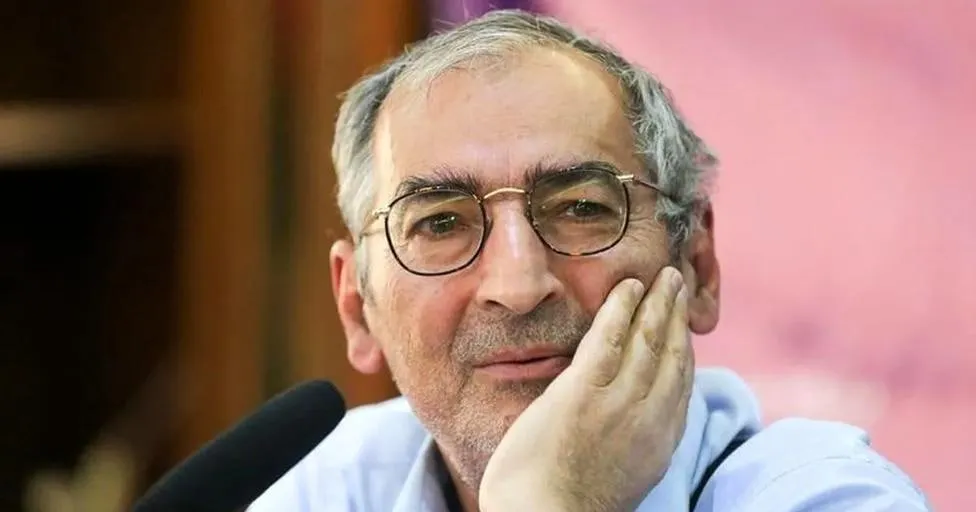
Sadegh Zibakalam is a professor of political science, writer, analyst, and one of the most controversial and widely visible intellectual-political figures in contemporary Iran. Born on June 12, 1948, he is a retired full professor from the Faculty of Law and Political Science at the University of Tehran. Over recent decades, Zibakalam has become one of the most recognizable voices in Iran’s public discourse, combining academic work, bestselling books on history and politics, and extensive, outspoken participation in media appearances and public debates.
Who is Sadegh Zibakalam?
Sadegh Zibakalam is a political science professor, writer, analyst, and one of the most controversial and highly visible intellectual and political figures in contemporary Iran. Born on June 12, 1948, he is a retired full professor from the Faculty of Law and Political Science at the University of Tehran.
Over recent decades, Zibakalam has become one of the most recognizable voices in Iranian public discourse through a unique combination of academic activity, bestselling historical and political books, and extensive, outspoken participation in media and public debates. His intellectual trajectory—from an early revolutionary sympathizer of the Mujahedin-e Khalq Organization before the 1979 Revolution to a vocal critic of the Islamic Republic and an advocate of normalized relations between Iran and the West—has made him a prominent and often polarizing figure.
The importance of Zibakalam in Iran’s intellectual and political landscape can be examined from several angles. First, as the author of the bestselling book “How Did We Become What We Are?” (1995), he produced one of the most influential reinterpretations of Iran’s historical roots of underdevelopment—a work that became one of the most widely read political-historical books in modern Iran. Second, his outspoken and unfiltered criticism of the Islamic Republic’s domestic and foreign policies—particularly on issues such as Iran’s nuclear program, relations with the United States and Israel, and regional policies—has made him one of the most critical voices within Iran. Third, this same outspokenness has come at a significant cost: he has faced dismissal (forced retirement) from the University of Tehran, media restrictions, and several legal convictions, which eventually led to his imprisonment in 2024.
On May 13, 2024, following the finalization of sentences from three separate court cases, Zibakalam was transferred to Evin Prison. His positions—generally classified within the reformist camp with liberal (and in some descriptions, neoliberal) tendencies—especially his explicit views on the need to change Iran’s foreign policy, remain a highly debated topic in Iranian political discourse.
Life and background
Sadegh Zibakalam was born on June 12, 1948. He grew up in a family that later became a notable example of “ideological divergence within a single household” in Iran. His brother, Saeed Zibakalam, is a professor of philosophy with more conservative views and closer alignment with the ideological positions of the Islamic Republic, standing in stark contrast to Sadegh’s reformist and critical outlook. This internal family divide is often cited by analysts as a reflection of broader ideological fragmentation in Iranian society.
Zibakalam pursued higher education in the United Kingdom and eventually received his PhD in political science from the University of Bradford’s Department of Peace Studies. His years of study abroad coincided with the peak of Iranian student political activism against the Pahlavi monarchy in Europe and the United States, a context that helped shape his early revolutionary inclinations.
Pre-revolutionary activism
Before the 1979 Revolution, Zibakalam became politically active against the Pahlavi monarchy. In 1974, he was arrested by SAVAK on charges of sabotage and propaganda in support of the Mujahedin-e Khalq Organization and was sentenced to three years in prison. This period of imprisonment became part of his early revolutionary biography and placed him among a generation of activists who opposed the monarchy under revolutionary ideals.
This background represents one of the most notable aspects of Zibakalam’s intellectual trajectory: from a passionate supporter of revolutionary ideals and the Mujahedin-e Khalq in his youth, he later evolved into a sharp critic of political violence, radicalism, and ultimately many policies of the post-revolutionary state—a transformation he has frequently discussed in his writings and interviews.
Post-revolution period and mission to Kurdistan
After the 1979 Revolution, Zibakalam became involved in the early administrative structure of the Islamic Republic. In 1979, he was appointed as a representative of then Prime Minister Mehdi Bazargan for affairs in Kurdistan, a region that was at the time one of the most unstable areas in the country due to armed conflicts between the central government and Kurdish groups such as the Kurdistan Democratic Party and Komala.
His mission to Kurdistan became one of the most dramatic episodes of his life. According to his own account, he was abducted during this period by Kurdish groups who believed he was a security agent affiliated with the Revolutionary Guards. In later reflections, Zibakalam described this experience with a critical and regretful tone, stating that after four decades, the situation in Kurdistan had not significantly improved. This experience played an important role in shaping his views on ethnic and regional issues in Iran.
Academic and University Activity
After the stabilization period following the revolution, Zibakalam turned to academic work and began teaching political science at the Faculty of Law and Political Science at the University of Tehran—considered the most prestigious university in Iran. Over the years, he rose to the rank of full professor and became one of the well-known figures of this faculty. In addition to the University of Tehran, he also taught for a period at the Science and Research Branch of the Islamic Azad University.
His main teaching and research fields included:
- Contemporary political history of Iran
- Political sociology
- Development and underdevelopment studies
- Political thought
His teaching and writing style, characterized by simple, fluent, and accessible language for the general public, was one of the main reasons for his popularity among students and readers.
Forced Retirement from the University
Zibakalam’s academic career ended amid controversy. At one point, he was prematurely removed from the University of Tehran in what has been described as a “forced retirement.” Zibakalam himself attributed this decision to his critical statements—particularly his opposition to the “Islamic Humanities” project. This incident is considered one of the examples of tension between critical professors and the formal academic structure in Iran, although the University of Tehran has rejected his account.
Books and Publications
One of the most important aspects of Zibakalam’s public recognition is his written work. His books—mostly written in simple and accessible language—are among the best-selling historical and political works in contemporary Iran.
“How Did We Become What We Are?”
His most prominent work is “How Did We Become What We Are? A Study of the Roots of Iran’s Underdevelopment” (1995). This book became one of the most widely read historical-political works in modern Iran. It examines the historical roots of Iran’s underdevelopment and argues that these roots are deeper and more long-term than explanations limited to colonialism or recent governments. The book established Zibakalam as a major historical analyst and public intellectual.
Other Works
Among his other important books are:
- Tradition and Modernity, which examines the roots of the failure of modernization in Iran
- Introduction to the Islamic Revolution, an analysis of the causes of the 1979 Revolution
- Hashemi Unfiltered, a set of interviews (co-authored with Fereshteh-Sadat Ettefaqfar) with Akbar Hashemi Rafsanjani, featuring direct and candid questions to this historical figure
- Later works such as “Why Don’t They Arrest You? And What Happens Next?”, published shortly before his imprisonment, with a title that humorously alludes to the risks of his critical activity
Overall, these works have made Zibakalam one of the most widely read writers in contemporary Iranian political and historical literature.
Views and Political Positions
Over the past decades, Zibakalam has articulated distinct and outspoken positions on various aspects of Iran’s domestic and foreign policy, setting him apart from many of his contemporaries.
Critique of Foreign Policy and Support for Normalization with the West
The most central and controversial aspect of his views is his criticism of Iran’s foreign policy. He is a strong advocate of normalizing relations between Iran and Western countries, particularly the United States. He has repeatedly argued that Iran’s confrontational foreign policy is detrimental to national interests.
Zibakalam has criticized Iran’s nuclear program, missile program, and regional policies (including support for allied regional groups), calling for a fundamental revision of these strategies. These positions are highly sensitive in official Iranian discourse and have been among the main reasons for legal cases against him. He has stated explicitly that, in his view, the country’s foreign, nuclear, and military policies are against national interests—remarks that have sparked strong reactions from pro-establishment media.
Critique of Radicalism and Support for Reformism
Despite his revolutionary background, Zibakalam has in recent decades become a critic of political radicalism. He supports a gradual, dialogue-based reformist approach, although at times he has also criticized the shortcomings of reformist movements. In political classification, he is generally considered part of the liberal-reformist spectrum.
Frankness as a Defining Feature
One of Zibakalam’s defining traits is his outspoken and unfiltered manner of expression. This has made him one of the most popular yet controversial figures in Iranian public debates. He has consistently expressed his views in televised debates and public discussions—including debates with conservative figures and widely viewed online interviews—without significant self-censorship. One notable example is his widely discussed interview with actor Majid Vashghani in October 2025 regarding Iran–Israel tensions.
Judicial Cases and presentme
Zibakalam’s outspoken positions have resulted in significant legal consequences, especially in recent years.
Three Cases and Imprisonment in 2024
He faced three separate legal cases, mostly related to charges such as “propaganda against the system” and “spreading false information” based on his social media activity:
- First case: 18 months in prison and a two-year ban from political parties, groups, and social media activity
- Second case: 1 year in prison for propaganda against the system
- Third case: 6 months in prison for spreading false information (upheld by the Supreme Court)
Following the finalization of these sentences, Zibakalam was transferred to Evin Prison on 13 May 2024. The Judiciary announced that his imprisonment was based on “final and enforceable judgments.” His imprisonment sparked widespread reactions both inside and outside Iran.
Media Restrictions
In addition to prison sentences, Zibakalam has repeatedly faced restrictions on media activity, including bans on publishing articles, giving interviews, public speaking, and social media activity. Despite these limitations, he has continued to express his views when possible, especially through the platform X (Twitter).
Controversies and Criticism
Zibakalam’s career has been highly controversial:
- From pro-government circles: He is criticized for his views on foreign policy, the nuclear and missile programs, and relations with the United States and Israel, often being portrayed as opposing national interests.
- From radical opposition groups abroad: Some critics argue that despite his criticism, he remains within a reformist framework and does not advocate for structural change, making his position insufficient or inconsistent.
This dual criticism from opposite sides reflects his complex position in Iran’s political landscape.
Relations with Figures and Networks
Zibakalam is connected—directly or indirectly—to several intellectual and political figures:
- Family: His ideological contrast with his brother Saeed Zibakalam, a conservative philosopher, is widely noted.
- Academic sphere: He has been part of the political science academic community at the University of Tehran.
- Political and historical figures: He worked with Mehdi Bazargan (as his representative in Kurdistan) and has interviewed Akbar Hashemi Rafsanjani for his book Hashemi Unfiltered.
- Public debates: He has participated in numerous televised and public debates with conservative and critical figures.
Conclusion
Sadegh Zibakalam is one of the most distinctive and controversial intellectual-political figures in contemporary Iran. His career combines revolutionary activism, academic scholarship, bestselling authorship, and outspoken public commentary.
His intellectual trajectory—from revolutionary activist and prisoner under the Pahlavi regime, to university professor and writer, and finally to a vocal critic of the Islamic Republic who has faced imprisonment—reflects the broader transformation of a generation of Iranian intellectuals.
His defining characteristic is his ability to translate complex historical and political ideas into accessible language for a general audience, as seen in How Did We Become What We Are? At the same time, his outspoken style has made him both highly influential and highly controversial.
From a broader analytical perspective, Zibakalam’s career represents the challenges of critical intellectual life in a constrained public sphere. Despite academic dismissal, media bans, and imprisonment, he remains a prominent voice in Iran’s public discourse.
Regardless of agreement or disagreement with his views, he has become a symbol of political critique and public debate about Iran’s future, and his work continues to engage major questions about history, development, and foreign policy in Iranian intellectual life.
Take less than a minute, register and share your opinion under this post.
Insulting or inciting messages will be deleted.
Sign Up