
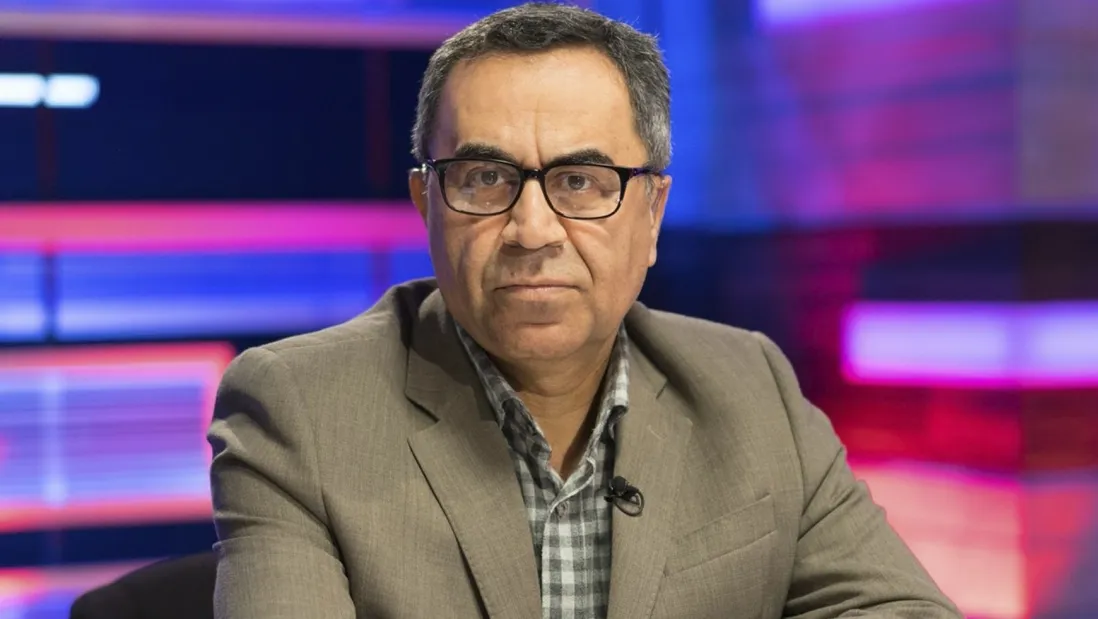
Reza Alijani is a journalist, author, researcher, political activist, member of the Council of National-Religious Activists, and former editor-in-chief of the banned newspaper "Iran-e Farda." He is one of the most widely discussed figures in the discourse of religious-nationalist intellectualism in the Persian-speaking diaspora. With a background in Shia-revolutionary critic groups in the 1980s and four years in prison, he joined the national-religious movement in 1993 at the invitation of Hassan Yousefi Eshkevari. In 2001, while in prison, he was named the world's journalist of the year by Reporters Without Borders. Alijani, who spent two years in prison (2003-2005) in a comparative study of sacred texts, has become one of the main references in religious intellectual discourse through his works on Ali Shariati and his framework of a "historical-inspirational view of sacred texts." He has been active in France as an analyst for Radio Farda and Iran International since the early 2010s.
Who is Reza Alijani?
Reza Alijani (born 1962 in Qazvin) is a journalist, author, researcher, political activist, member of the Council of National-Religious Activists, former editor-in-chief of the banned newspaper "Iran-e Farda," and one of the most widely discussed figures in the discourse of religious-nationalist intellectualism in the Persian-speaking diaspora. He is one of the most cited analysts of contemporary Iranian issues over the past two decades. Alijani, with a unique path—from a Qazvini origin in a middle-class religious family, to early membership in the Center for the Intellectual Development of Children and Adolescents, to joining the "Pishrovan" group after the revolution, to leaving Qazvin after the events of 1981 and living semi-secretly in Tehran, to a short accidental arrest in 1983, to the widespread arrest of activists in 1985 and the beginning of his fully secret life, to his arrest in 1986 and four years in prison, to beginning his public life after release and joining the national-religious media-intellectual movement in 1993 at the invitation of Hassan Yousefi Eshkevari, to his editorship of the prominent monthly "Iran-e Farda," to the major arrest of national-religious figures in 2001 which coincided with receiving the Press Freedom Award from Reporters Without Borders in Paris, to his two-year arrest in 2003 and release in 2005, to his sustained cooperation with the Council of National-Religious Activists during the 2009 elections and his pursuit of a "demand-oriented" approach, and finally, to his emigration to France in the early 2010s due to continuous arrests—has become one of the most cited figures in the intellectual-political discourse of the Persian-speaking diaspora. Alijani, who has become one of the main references in these fields through his extensive research on the theories and works of Ali Shariati, civil society, ideology, women in religion, and sacred texts, is one of the most widely discussed analysts in prominent Persian-language diaspora media.
The importance of Reza Alijani in Iran's contemporary intellectual-political sphere can be examined from several angles. First, his pioneering position as the world's journalist of the year in 2001 by Reporters Without Borders. Second, his editorship of the prominent monthly "Iran-e Farda"—one of the most widely discussed post-revolutionary religious-nationalist intellectual publications. Third, his sustained background as a member of the Council of National-Religious Activists. Fourth, his pioneering contribution to Persian-language Shariati scholarship—reflected in his series of notable works. Fifth, his sustained role as one of the most widely discussed Persian-language diaspora analysts in prominent international media.
Alijani, in one of his notable analytical positions, stated that the intellectual product of his last imprisonments is a "historical-inspirational view of sacred texts," which he arrived at through understanding the "dual-voiced nature of sacred texts" for the modern human.
Life and Background
Reza Alijani was born in 1962 in the city of Qazvin—one of Iran's ancient and prominent cities—into a middle-class religious family. Born in the early 1960s, Alijani belongs to a generation that, in adolescence, coincided with the events of the 1979 Islamic Revolution and, in youth, began his revolutionary-intellectual activities in the post-revolutionary political structure.
School Years
According to published accounts, Alijani "was considered an excellent student during his studies" and "from the third grade of elementary school, began extracurricular studies by joining the Center for the Intellectual Development of Children and Adolescents and participating in religious sessions."
Political-Revolutionary Activity in the 1980s
The central chapter of the beginning of Alijani's political career was his activity in Shia-revolutionary critic groups in the 1980s.
Joining the "Pishrovan" Group
After the victory of the Islamic Revolution, Alijani joined the "Pishrovan" group—a group inspired by the ideas of Dr. Ali Shariati and critical of the government.
Events of 1981 and Semi-Secret Life
After the events of 1981, Alijani left Qazvin and began a semi-secret life in Tehran.
Accidental Arrest in 1983
In 1983, Alijani experienced a short accidental arrest and was cooperating full-time with the "Movahedin-e Enqelabi" group.
Widespread Arrest in 1985 and Fully Secret Life
With the widespread arrest of activists of the Movahedin-e Enqelabi group in 1985, Alijani's fully secret life began.
Arrest in 1986 and Four Years in Prison
A year later, in 1986, Alijani and other remaining members were arrested, and the group's activity ended. Alijani spent four years in prison and then began his public life.
Media Activity from 1993
The most notable chapter of the beginning of Alijani's media career was his joining the monthly "Iran-e Farda" in 1993.
Invitation by Hassan Yousefi Eshkevari
In 1993, Alijani was invited by Hassan Yousefi Eshkevari to the national-religious media movement.
Editorship of "Iran-e Farda"
Alijani served as the editor-in-chief of the prominent monthly "Iran-e Farda"—a publication that was eventually banned.
Arrest in 2001 and Reporters Without Borders Award
The most notable chapter of Alijani's judicial-international career was the major arrest of national-religious figures in 2001 and receiving the Press Freedom Award from Reporters Without Borders in the same year.
Major Arrest of National-Religious Figures
In 2001, Alijani was arrested along with other prominent figures of the national-religious movement.
Reporters Without Borders Award (2001)
In the same year, Reporters Without Borders selected Alijani as the world's journalist of the year.
Activity After Release in 2001
After his release from prison in 2001, Alijani continued his intellectual and cultural activities through periodic meetings in homes, due to the closure of the Shariati Cultural Research Office.
Arrest 2003-2005: Two Years in Prison
In 2003, Alijani was arrested again, and this time the arrest lasted two years, with his release in 2005.
Research on Sacred Texts
During his second arrest, Alijani expanded his research on the Quran to other sacred texts:
Rigveda
Upanishads
Avesta
Old Testament
New Testament
2009 Elections and the Demand-Oriented Approach
During the 2009 presidential election, Alijani, alongside his cooperation with the Council of National-Religious Activists, participated in pursuing a "demand-oriented" approach to the upcoming elections and contributed to preparing its statements.
Emigration to France (2011)
The most notable chapter of Alijani's life transformation was his emigration to France in the early 2010s.
Reason for Emigration
According to sources, Alijani "decided to emigrate due to continuous arrests and temporary detentions, in order to further his ideas and political outlook."
Residence in France
Since 2011, Alijani has continued his life and work in France.
Media Activity in the Diaspora
After emigrating to France, Alijani became one of the most widely discussed Persian-language diaspora analysts.
Radio Farda
Alijani is a prominent analyst for Radio Farda.
Iran International
Alijani is also a prominent analyst for Iran International.
Notable Works
Among Reza Alijani's most important works are:
Shariati Studies Series
"Rand-e Kham: Shariati Studies 1"
"Sociology of Knowledge: The Shariati Era"
"Shariati and SAVAK"
Research on Sacred Texts
Alijani has published extensive research on sacred texts and a historical-inspirational view of them.
Research on Women and Civil Society
Alijani has also conducted extensive research on civil society, ideology, and women.
Analytical Articles
In addition to his books, Alijani has published hundreds of analytical articles on contemporary Iranian political issues.
Intellectual Framework
Throughout his intellectual-political career, Reza Alijani has formulated a distinctive intellectual framework.
Legacy of Ali Shariati
Alijani's most central intellectual framework is his legacy from Dr. Ali Shariati.
Historical-Inspirational View of Sacred Texts
A distinguishing feature of Alijani's intellectual framework is his "historical-inspirational view of sacred texts," based on the "dual-voiced nature of sacred texts."
Critical Religious Intellectualism
Alijani is one of the most prominent figures of critical religious intellectualism.
Demand-Oriented Approach
Another feature of Alijani's political framework is his "demand-oriented" approach.
Defense of Women in Religion
Another distinguishing feature of Alijani's intellectual framework is his special attention to women's issues in religion.
Connections with Figures and Currents
Reza Alijani is situated within a network of intellectual-political connections with prominent figures of the national-religious movement and Persian-language religious intellectualism.
The Council of National-Religious Activists Circle
Alijani's most central institutional network is the Council of National-Religious Activists.
Hassan Yousefi Eshkevari
One of Alijani's close connections is with Hassan Yousefi Eshkevari.
The Legacy of Ali Shariati
At the intellectual level, Alijani's relationship with the legacy of Ali Shariati forms his intellectual heritage network.
Prominent National-Religious Figures
At the movement level, Alijani's relationship with prominent national-religious figures forms his close political-intellectual network.
The Shariati Cultural Research Office
At the cultural institutional level, Alijani's relationship with the Shariati Cultural Research Office is one of the notable aspects of his institutional network.
Prominent Diaspora Media
At the media level, Alijani's sustained relationship with Radio Farda, Iran International, and other prominent Persian-language diaspora media forms his widely discussed media communications network.
Conclusion
Reza Alijani is one of the most widely discussed figures in the discourse of religious-nationalist intellectualism in the Persian-speaking diaspora. With a unique combination of a Qazvini-religious origin, a background of political-revolutionary activity in Shia-revolutionary critic groups in the 1980s, four years in prison from 1986 to 1989, joining "Iran-e Farda" in 1993 at the invitation of Hassan Yousefi Eshkevari, his editorship of this publication as one of the most widely discussed post-revolutionary religious-nationalist intellectual media, sustained membership in the Council of National-Religious Activists, the major arrest of national-religious figures in 2001 and receiving the Press Freedom Award from Reporters Without Borders in Paris as the world's journalist of the year, a two-year arrest from 2003 to 2005 during which he began extensive comparative research on sacred texts and formulated the theoretical framework of a "historical-inspirational view of sacred texts," sustained cooperation with the Council of National-Religious Activists during the 2009 elections and his pursuit of a "demand-oriented" approach, emigration to France in the early 2010s due to continuous arrests, the production of a series of notable Shariati studies works, extensive research on civil society, ideology, and women in religion, and finally, his sustained role as one of the most widely discussed Persian-language diaspora analysts in prominent international media, he occupies a unique position in the intellectual-political structure of the Persian-language religious-nationalist intellectual movement.
Alijani's distinguishing feature, on the first level, is his exceptional ability to combine different backgrounds—including a revolutionary-prison background, a journalism profession, membership in the national-religious movement, Shariati scholarship, and diaspora media analysis. On the second level, his pioneering position as the world's journalist of the year in 2001 by Reporters Without Borders is one of the most notable aspects of his legacy. On the third level, his pioneering contribution to Persian-language Shariati scholarship is one of the notable aspects of his intellectual framework.
From an analytical perspective, Alijani's position exemplifies the phenomenon of the "revolutionary-journalist-researcher-political activist-emigrant" in contemporary Iran—a phenomenon in which a figure with a complex revolutionary-prison-intellectual-media background, over decades, plays a sustained role in various political, media, research, and diaspora analysis arenas. This pattern, which has other examples among prominent figures of the national-religious movement, has found a special reflection in Alijani through his receipt of a prominent international award and his pioneering contribution to Shariati scholarship.
What is clear from today's perspective is that the topics Alijani has addressed in his works and positions—from Shariati scholarship, a historical-inspirational view of sacred texts, the dual-voiced nature of sacred texts, civil society, women in religion, demand-oriented politics, critique of the Islamic Republic's structure, and analysis of Iran's socio-political uprisings—remain among the most debated topics in contemporary Persian-language intellectual-political discourse. In a situation where Iran is in one of its most tense periods of religious-political discourse—particularly after the 2022 uprising, the 12-day Iran-Israel war in June 2025, and increasing identity-political challenges—Alijani's analytical-critical voice, with a combination of prominent international credibility, sustained media experience, and a durable position in defense of freedom of expression and human rights, is one of the main references for this discourse in Persian-language media-analytical diaspora space.
Frequently Asked Questions
Who is Reza Alijani?
Reza Alijani (born 1962 in Qazvin) is a journalist, author, researcher, political activist, member of the Council of National-Religious Activists, former editor-in-chief of the banned newspaper "Iran-e Farda," and one of the most widely discussed figures in the discourse of religious-nationalist intellectualism in the Persian-speaking diaspora. He has been living in France since the early 2010s.
What is Alijani's political background?
After the revolution, Alijani joined the "Pishrovan" group—a group inspired by the ideas of Dr. Ali Shariati and critical of the government. After the events of 1981, he began a semi-secret life in Tehran and cooperated with the "Movahedin-e Enqelabi" group. In 1986, he was arrested and spent four years in prison.
When did Alijani join "Iran-e Farda"?
In 1993, Alijani was invited by Hassan Yousefi Eshkevari to the national-religious media movement and became the editor-in-chief of the prominent monthly "Iran-e Farda"—a publication that was eventually banned.
What was the Reporters Without Borders award?
In 2001, Reporters Without Borders selected Alijani as the world's journalist of the year.
What were Alijani's arrests?
Alijani experienced several arrests: a short accidental arrest in 1983, four years in prison from 1986 to 1989, the major arrest of national-religious figures in 2001, and a two-year arrest from 2003 to 2005.
What was Alijani's research in prison?
During his second arrest, Alijani expanded his research on the Quran to other sacred texts: Rigveda, Upanishads, Avesta, Old Testament, and New Testament.
What are Alijani's most important works?
Among Alijani's most important works are: "Rand-e Kham: Shariati Studies 1," "Sociology of Knowledge: The Shariati Era," "Shariati and SAVAK," and extensive research on sacred texts, civil society, ideology, and women in religion.
What was Alijani's role in the 2009 elections?
During the 2009 elections, Alijani participated in pursuing a "demand-oriented" approach and contributed to preparing its statements.
Why did Alijani emigrate to France?
According to sources, Alijani "decided to emigrate due to continuous arrests and temporary detentions, in order to further his ideas and political outlook."
What is Alijani's intellectual framework?
Alijani's most central intellectual framework is his legacy from Ali Shariati, a historical-inspirational view of sacred texts, critical religious intellectualism, a demand-oriented approach, and defense of civil society, women's rights, and freedom of expression.
Is Reza Alijani still active?
Yes, Reza Alijani, as one of the most widely discussed Persian-language diaspora analysts, remains active in journalism-analysis. His consistent presence in prominent Persian-language diaspora media, the continuous publication of political notes and analyses, and his participation in the discourse of the Council of National-Religious Activists are signs of his sustained activity. His analytical positions on Iran's socio-political uprisings, regional wars, the structural challenges of the Islamic Republic, and the future of Persian-language religious intellectualism continue to receive widespread coverage in Persian-language media-analytical space.
Take less than a minute, register and share your opinion under this post.
Insulting or inciting messages will be deleted.
Sign Up