
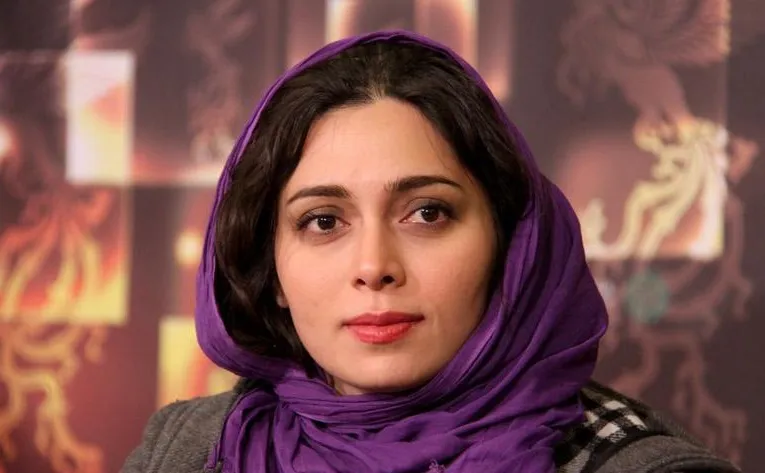
Pegah Ahangarani Farahani is an Iranian actress and documentary filmmaker, one of the most recognized and widely discussed artistic-social figures of the middle generation of Iranian cinema over the past two decades. She entered cinema at the age of six with the film The Singing Cat and gained fame with The Girl in the Sneakers. In 2012, she won the Crystal Simorgh for Best Supporting Actress at the Fajr Film Festival for her role in In the Trap (Darband). Ahangarani, the daughter of Manijeh Hekmat and Jamshid Ahangarani, alongside her acting career, turned to documentary filmmaking, creating works such as The Theatre (Tamashakhaneh)—winner of a special award at the Isfahan Festival—and The Narration of Ghazaleh Alizadeh (Mohakate Ghazaleh Alizadeh). She was a supporter of the Green Movement in 2009 and was arrested in 2011, sentenced to 18 months in prison. In January 2026, with the widely discussed documentary Taraneh about Taraneh Alidoosti, broadcast on BBC Persian, she became one of the most cited Persian-language documentary filmmakers in the diaspora.
Pegah Ahangarani Farahani (born July 24, 1984, in Arak) is an Iranian actress and documentary filmmaker, one of the most recognized and widely discussed artistic-social figures of the middle generation of Iranian cinema over the past two decades. With a multidimensional path—from a highly visible start to her acting career at the age of six in The Singing Cat directed by Kambuzia Partovi, to wide recognition with her role in The Girl in the Sneakers, to winning the Crystal Simorgh for Best Supporting Actress at the Fajr Film Festival for In the Trap, to her widely discussed documentary filmmaking in socio-political arenas, and finally, to directing the widely discussed documentary Taraneh about Taraneh Alidoosti, which was broadcast on BBC Persian—she has become one of the most cited symbols of the connection between art and social activism in contemporary Iranian cinema. Ahangarani, as the second generation of a prominent artistic family—the daughter of Manijeh Hekmat and Jamshid Ahangarani—has, throughout her multifaceted career, with several highly visible experiences of arrest and judicial restrictions, become one of the most prominent figures of critical artists.
The importance of Pegah Ahangarani in Iran's contemporary artistic-social sphere can be examined from several angles. First, her unique artistic family background—as the daughter of two prominent Iranian film directors—which formed the foundation of her early entry into cinema at the age of six. Second, her exceptional ability to combine acting and documentary filmmaking—in which an artist works with prominent credibility in two different fields—is one of the multifaceted aspects of her character. Third, winning the Crystal Simorgh for Best Supporting Actress at the Fajr Film Festival for In the Trap and the special award at the Isfahan Short Film Festival for the documentary The Theatre—which solidified her professional credibility in both fields. Fourth, her persistence in social activism, which began with her support for the Green Movement in 2009, continued with her arrest on July 10, 2011, and the 18-month prison sentence in November 2013, and reached its peak in recent years with the production of widely discussed documentaries in the field of human rights and women's rights. Fifth, her prominent position in producing documentary content for Persian-language diaspora media—particularly through her collaboration with BBC Persian in producing widely discussed documentaries such as Child Soldier and Taraneh—which has made her one of the most cited Persian-language documentary filmmakers living abroad.
Ahangarani is currently considered among the former actresses of Iranian cinema who continue their sustained documentary filmmaking activities in the diaspora—a transformation that has made her one of the prominent bridges between artists residing in Iran and international media.
Life and Background
Pegah Ahangarani Farahani was born on July 24, 1984, in the city of Arak—the capital of Markazi province. Her origins trace back to the village of Ahangaran in the Farahan district of Markazi province—a background reflected in her family name (Ahangarani Farahani).
Family
Pegah Ahangarani was born into one of Iran's most prominent artistic families:
Father: Jamshid Ahangarani—film director.
Mother: Manijeh Hekmat—prominent Iranian director, creator of the widely discussed film Women's Prison (2001), one of the most important social films in Iranian cinema in the field of women's rights.
Sister: Mahshid Ahangarani—her only sister.
This family background, in which both parents were active in film directing, formed the foundation of Pegah's early entry into cinema at the age of six.
Spouse
Pegah Ahangarani is married to Ali Azimi.
Education
Pegah Ahangarani continued her education at the Music Conservatory—but left it unfinished. Despite this, she is considered a cello player—one of the notable aspects of her multifaceted artistic background.
Beginning of Her Cinematic Career: "The Singing Cat" (1990)
Ahangarani's first cinematic experience was acting in the film The Singing Cat, directed by Kambuzia Partovi, in 1990 at the age of six. This film, in which Ahangarani appeared in cinema due to her artistic family background, formed the foundation of her early entry into this field.
Wide Recognition: "The Girl in the Sneakers" (1999)
The most prominent moment of the beginning of Ahangarani's professional career was her role in the film The Girl in the Sneakers in 1999, at the age of 15. This film, which addressed the social issues of teenage girls in Iran, made Ahangarani one of the most recognized young faces of Iranian cinema at the beginning of the 2000s. This role, in which a teenage actress shone in the lead role of a widely discussed social film, formed the foundation of her later professional credibility.
Notable Films
Among Ahangarani's most important films are:
The Singing Cat (1990)—Kambuzia Partovi.
The Girl in the Sneakers (1999).
Women's Prison (2001)—Manijeh Hekmat.
Green Fire (2007).
Zadbum (2008).
Born 1982 (2010)—Payam Dehkordi.
The East Is East (2011)—Masoud Raygan.
Footnote (2011)—Ahmad Kachechian.
In the Trap (2012)—winner of the Crystal Simorgh for Best Supporting Actress at the Fajr Festival.
Without Prior Appointment (2021).
The "Green Fire" Incident (2007)
One of the notable events in Ahangarani's artistic career was an incident in 2007 during the filming of Green Fire. While filming, without a stunt double present, she suffered a spinal fracture due to a fall and was hospitalized for a long time. This incident was one of the most widely discussed technical-artistic accidents of that period.
Crystal Simorgh for "In the Trap" (2012)
The most prominent moment of Ahangarani's professional credibility was winning the Crystal Simorgh for Best Supporting Actress at the 31st Fajr Film Festival for the film In the Trap in 2012. This award, which is among the most prestigious awards in Iranian cinema, solidified her professional credibility in the field of acting.
Documentary Filmmaking
The central distinguishing aspect of Ahangarani among her contemporaries is her sustained documentary filmmaking activity. Ahangarani is considered one of the prominent documentary filmmakers of the middle generation of Iranian cinema.
Notable Documentaries from Her Domestic Period
Among Ahangarani's most important documentaries from her period in Iran are:
Apple (2001)—co-directed and produced with Siamak Nasiri Ziba.
The Theatre (2005)—directed and produced—winner of the special award at the Isfahan Short Film Festival.
The Narration of Ghazaleh Alizadeh (2008)—directed and edited—a documentary about Ghazaleh Alizadeh.
The Dehnamaki Family (2010)—a documentary about the filmmaker Dehnamaki family.
Documentaries from Her Diaspora Period
After emigrating, Ahangarani continued her prominent documentary filmmaking activity in collaboration with international Persian-language media. The most important documentaries from this period include:
Child Soldier—a notable documentary with socio-political content that received widespread coverage in Persian-language media.
Taraneh (January 2026)—a documentary about Taraneh Alidoosti, broadcast on BBC Persian.
Socio-Political Activity
The central chapter of Ahangarani's social activism was her support for the Green Movement in 2009.
Membership in Mousavi's Campaign
During the 2009 presidential election, Ahangarani was a member of Mir-Hossein Mousavi's campaign. After the widespread post-election protests, which ultimately led to the Green Movement, Ahangarani became one of the most prominent artistic figures supporting this movement.
Arrest on July 10, 2011
The most prominent event of Ahangarani's activism was her arrest on July 10, 2011.
Details of the Arrest
According to published reports, Ahangarani was arrested at her home on July 10, 2011, and transferred to Evin Prison. This arrest occurred in the tense post-Green Movement atmosphere and the widespread arrests of civil-artistic activists.
Co-Detainees
According to the official report of the Iran Human Rights Organization, Ahangarani was arrested along with Mahnaz Mohammadi and Marzieh Vafamehr—an arrest that was considered one of the most widely discussed cases of the simultaneous arrest of Iranian women artists.
Release
Ahangarani was released from Evin Prison after a period of detention. Her family, due to pressure, preferred to follow her release in silence.
18-Month Prison Sentence (November 2013)
In November 2013, Manijeh Hekmat announced that Pegah had been sentenced to 18 months in prison by the lower court. At the same time, Ahangarani was banned from leaving the country for three years by the Tehran Security Prosecutor's Office.
The charges against Ahangarani included participation in the 2009 protests and membership in Mir-Hossein Mousavi's campaign.
Emigration and Activity in the Diaspora
In recent years, Ahangarani has emigrated from Iran and continued her prominent documentary filmmaking activities in the diaspora. According to Euronews, Ahangarani is currently considered a "former actress of Iranian cinema"—a sign of her withdrawal from acting in Iranian domestic cinema.
In the diaspora space, Ahangarani is recognized as one of the most prominent Persian-language documentary filmmakers, with a highly visible collaboration with international media such as BBC Persian.
The Widely Discussed Documentary "Taraneh" (January 2026)
The most prominent recent development in Ahangarani's career was the making of the documentary Taraneh about Taraneh Alidoosti.
Broadcast and Scope
This documentary was broadcast on January 3, 2026, on BBC Persian. The documentary was 51 minutes long, directed by Pegah Ahangarani.
Content of the Documentary
In this documentary, Taraneh Alidoosti addressed the details of these matters for the first time:
Her decision to join the protest movement after Mahsa Amini's death.
The day of her arrest at home in the presence of her young daughter.
Details of psychological torture and prison conditions.
The autoimmune disease that caused her skin to deteriorate.
Her decision not to act with hijab in Iranian cinema.
Listen | Audio file of the documentary "Taraneh" - Taraneh Alidoosti in conversation with Pegah Ahangarani.
Listen without filter on the Abdi Media Castbox.
One of the Most Viewed Videos of 2025
This documentary became one of the most viewed videos of 2025 on Persian-language Instagram news pages and sparked a wide wave of reactions in Persian-language media.
Varied Reactions
This documentary received varied reactions in Persian-language media:
On one hand, media close to the principlist movement harshly criticized Ahangarani, describing her as a "burnt-out pawn of Western media" and calling her "Alidoosti's bridge to institutions such as the BBC and European parliaments."
On the other hand, Persian-language media abroad evaluated this documentary as one of the most prominent Persian-language documentary productions about the situation of critical artists in Iran.
Views and Notable Positions
Throughout her intellectual-artistic career, Pegah Ahangarani has formulated a clear intellectual framework.
Critique of Iranian Television
One of Ahangarani's notable positions was her structural critique of Iranian television. In one of her earlier positions, she stated: "I have never worked on television and never will, because the content presented there is extremely weak. Even if it's not Iranian television, even if it's world television."
This position, in which she consistently distanced herself from working in Iranian state media, was one of the notable aspects of her professional identity during her domestic activity.
Support for Protest Movements
Throughout her career, Ahangarani has consistently supported protest movements in Iran—from the 2009 Green Movement, to the November 2019 protests, to the "Woman, Life, Freedom" uprising in 2022.
Focus on Women's Narratives
In her recent documentaries, Ahangarani has consistently focused on the narratives of prominent Iranian women—including Ghazaleh Alizadeh and Taraneh Alidoosti—a characteristic that has made her one of the most prominent female narrative voices in Persian-language documentary filmmaking.
Connections with Figures and Currents
Pegah Ahangarani is situated within a network of artistic-social connections with prominent figures in Iranian cinema and the diaspora.
Artistic Family
At the family level, her relationship with Manijeh Hekmat and Jamshid Ahangarani forms her close artistic-family network.
Collaborating Directors
At the cinematic level, her relationship with Kambuzia Partovi, Payam Dehkordi, Masoud Raygan, Ahmad Kachechian, and other prominent directors forms her professional network.
Social Activists
At the social activism level, her relationship with Mahnaz Mohammadi, Marzieh Vafamehr, and Taraneh Alidoosti forms her close activist-artistic network.
Diaspora Media
At the media level, in her diaspora period, her sustained relationship with BBC Persian, Euronews, Radio Farda, and other Persian-language media abroad forms her current media communications network.
Conclusion
Pegah Ahangarani Farahani is one of the most widely discussed and multifaceted artistic-social figures of the middle generation of Iranian cinema over the past two decades. With a unique combination of a prominent artistic family background, a highly visible start to her acting career in adolescence, exceptional ability to combine acting and documentary filmmaking, winning the Crystal Simorgh for Best Supporting Actress at the Fajr Film Festival for In the Trap, winning the special award at the Isfahan Short Film Festival for the documentary The Theatre, sustained social activism, the highly visible experience of her 2011 arrest and the 18-month prison sentence in 2013, and finally, the production of the widely discussed documentary Taraneh about Taraneh Alidoosti in January 2026, she occupies a unique position in Iran's contemporary artistic-social structure.
Ahangarani's distinguishing feature, on the first level, is her exceptional ability to connect the realms of acting and documentary filmmaking—an ability in which an artist works at high professional levels in two different fields. This connection is relatively unique among Iranian actresses. On the second level, her persistence in social activism—which began with her support for the Green Movement at a young age and continued in the diaspora with the production of widely discussed documentaries—is one of the notable aspects of her character. On the third level, her ability to create a bridge between artists residing in Iran and international media—reflected in recent documentaries such as Child Soldier and Taraneh—is one of the notable aspects of her role in the diaspora.
From an analytical perspective, Ahangarani's position exemplifies the phenomenon of the "prominent diaspora artist-documentary filmmaker-social activist" in contemporary Iran—a phenomenon in which an artist with a prominent domestic background, in the diaspora space, becomes one of the narrative voices of the discourse on human rights and women's rights. This pattern, which has other examples among Iranian emigrant artists, has found a special reflection in Ahangarani through her prominent artistic family background and her focus on women's narratives.
What is clear from today's perspective is that the topics Ahangarani has addressed in her artistic activities and positions—from the narrative of the lives of prominent Iranian women, the rights of critical artists, the narrative of the experience of arrest, support for protest movements, critique of Iranian television, and the challenges of the lives of women artists in Iran—remain among the most debated topics in contemporary Iranian artistic-social discourse. In a situation where Iran is in one of its most tense periods of socio-artistic discourse—particularly after the 2022 uprising, the 12-day Iran-Israel war in June 2025, and increasing cultural-political challenges—Ahangarani's voice, with a combination of prominent domestic experience, professional diaspora credibility, and persistence in female narrative, is one of the main references for this discourse in Persian-language media.
Frequently Asked Questions
Who is Pegah Ahangarani?
Pegah Ahangarani Farahani (born July 24, 1984, in Arak) is an Iranian actress and documentary filmmaker. She began her cinematic career at the age of six in The Singing Cat and won the Crystal Simorgh for Best Supporting Actress at the 31st Fajr Film Festival for her role in In the Trap.
Who are Pegah Ahangarani's family members?
Pegah Ahangarani was born into one of Iran's most prominent artistic families. Her father is Jamshid Ahangarani, a film director, and her mother is Manijeh Hekmat, a prominent Iranian director. Her sister is Mahshid Ahangarani, and her husband is Ali Azimi.
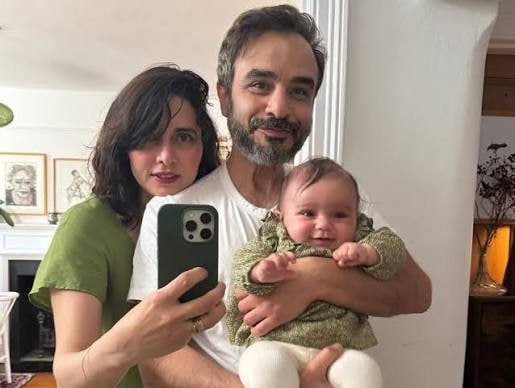
Pictures of Pegah Ahangarani with her husband Ali Azimi and her daughter Lee Lee Rose
What are Ahangarani's most important films?
Among Ahangarani's most important films are: The Singing Cat (1990), The Girl in the Sneakers (1999), Women's Prison (2001), Green Fire (2007), Zadbum (2008), In the Trap (2012), and Without Prior Appointment (2021).
What are Ahangarani's most important documentaries?
Among Ahangarani's most important documentaries are: Apple (2001), The Theatre (2005, winner of the special award at the Isfahan Short Film Festival), The Narration of Ghazaleh Alizadeh (2008), The Dehnamaki Family (2010), Child Soldier, and Taraneh (January 2026, about Taraneh Alidoosti).
Why was Pegah Ahangarani arrested in 2011?
Pegah Ahangarani was arrested at her home on July 10, 2011, at the age of 27, and transferred to Evin Prison—along with Mahnaz Mohammadi and Marzieh Vafamehr. The charges against her included participation in the 2009 protests and membership in Mir-Hossein Mousavi's campaign.
What was Ahangarani's 18-month prison sentence?
In November 2013, Ahangarani's mother, Manijeh Hekmat, announced that Pegah had been sentenced to 18 months in prison by the lower court. At the same time, Ahangarani was banned from leaving the country for three years by the Tehran Security Prosecutor's Office.
What was the "Green Fire" incident?
In 2007, during the filming of Green Fire, Pegah Ahangarani, without a stunt double present, suffered a spinal fracture due to a fall and was hospitalized for a long time.
What is the documentary "Taraneh"?
The documentary Taraneh, directed by Pegah Ahangarani, was broadcast on BBC Persian on January 3, 2026. This 51-minute documentary, in which Taraneh Alidoosti addressed the details of her arrest in 2022 and her autoimmune skin disease for the first time, became one of the most viewed videos of 2025 on Persian-language Instagram news pages.
What is Ahangarani's artistic expertise besides acting?
In addition to acting and documentary filmmaking, Ahangarani is a cellist. She continued her education at the Music Conservatory, although she left it unfinished.
What is Ahangarani's view on Iranian television?
Ahangarani stated in one of her notable positions: "I have never worked on television and never will, because the content presented there is extremely weak. Even if it's not Iranian television, even if it's world television." This position indicates her consistent distancing from working in domestic television.
Is Pegah Ahangarani still active?
Yes, Pegah Ahangarani, as a prominent Persian-language documentary filmmaker, continues her widely discussed activity in the diaspora. Currently, she is considered a "former actress of Iranian cinema" and has focused her activity mainly on documentary filmmaking. Her sustained collaboration with BBC Persian and other prominent Persian-language media abroad, and the production of widely discussed documentaries such as Child Soldier and Taraneh, are signs of her sustained activity. The documentary Taraneh is one of her most widely discussed recent productions in Persian-language media.
Take less than a minute, register and share your opinion under this post.
Insulting or inciting messages will be deleted.
Sign Up