
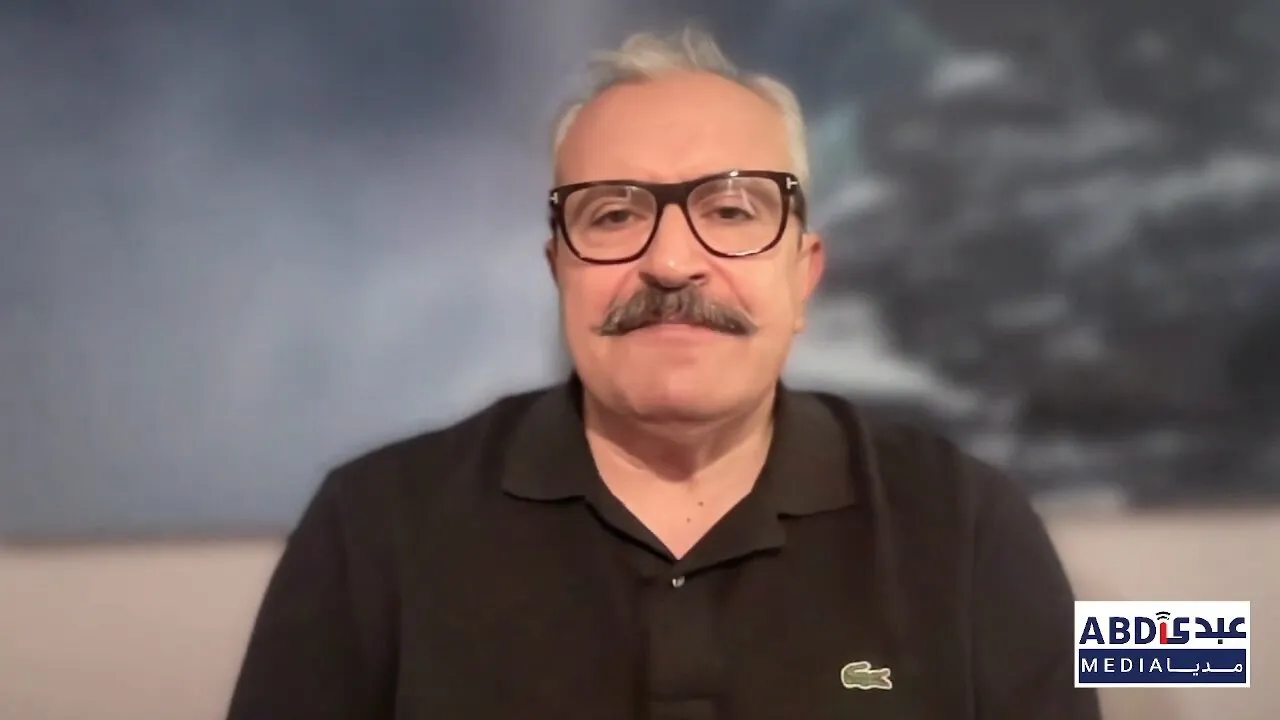
Nikahang Kowsar—cartoonist, journalist, geologist, and water crisis analyst—is one of the most eventful and multidimensional Iranian media and artistic figures of the past two decades. Widely known for his controversial "Professor Crocodile" cartoon in February 2000, which led to a six-day detention, he now leverages his background in geology as the managing editor of the Khodnevis website and host of the Abanegan program, which focuses heavily on water issues. Having warned about Iran's impending water crisis since 2001, Kowsar has become a prominent reference for analyzing water scarcity, land subsidence, and the systemic "water mafia" in Iran.
Who is Nikahang Kowsar?
Nikahang Kowsar—an Iranian-Canadian cartoonist, journalist, blogger, geologist, water analyst, and environmental activist based in Washington, D.C.—was born on October 27, 1969, in Tehran. He stands out as one of the most eventful and multidimensional Iranian media and artistic figures of the past two decades. Blending a unique background in geological sciences, a prominent record in post-1997 reform-era political cartooning, persistent environmental reporting, and diaspora-based civic journalism, Kowsar has emerged as a key critical reference for analyzing Iran's water crisis.
Widely known for his explosive "Professor Crocodile" cartoon in February 2000—which triggered mass protests by the followers of Ayatollah Mohammad-Taqi Mesbah-Yazdi and resulted in a six-day detention—Kowsar became a symbolic figure in Iran's highly polarized post-reform press landscape. In the diaspora, he has served as the managing editor and editor-in-chief of Khodnevis (a pioneering Persian citizen journalism platform) and the host of the highly regarded program Abanegan, which focuses strictly on Iran's water crisis.
The significance of Nikahang Kowsar in the Iranian media and intellectual sphere spans several key dimensions:
Symbolic Political Cartooning: His signature cartoon, "Professor Crocodile," published in the Azad newspaper in February 2000, remains one of the most recognizable and historically impactful political caricatures in contemporary Iranian journalism.
Early Environmental Alarms: Demonstrating sharp analytical foresight, Kowsar wrote an official letter to President Mohammad Khatami's administration as early as 2001, warning of a catastrophic, nationwide water crisis—a theme he began investigating with strict thematic focus by 2014.
Pioneering Broadcast Media: Launching the flagship program Abanegan in 2015, he introduced the first specialized, Persian-language broadcast dedicated entirely to the water crisis within diaspora media, substantially raising public awareness.
Citizen Journalism Leadership: Founding and managing Khodnevis, he engineered a vital platform for participatory journalism in the Persian-speaking digital ecosystem.
Authoritative Media Commentary: His extensive contributions to major diaspora outlets, including Radio Farda, Rooz Online, Radio Zamaneh, and Iran International, have cemented his reputation as one of the most frequently cited analytical voices on Iranian water security and land subsidence.
What uniquely characterizes Kowsar within the community of exiled Iranian journalists is his rare multi-disciplinary trajectory: transitioning from a high-profile political cartoonist in late-1990s reformist newspapers to a geologist specialized in hydrogeology, an investigative reporter, a media platform manager, and ultimately, one of the most vocal structural critics of the Islamic Republic's water and wastewater management policies.

The "Professor Crocodile" (Ostad Temsah) cartoon, drawn by Nikahang Kowsar and published in the reformist newspaper Azad in February 2000, is one of the most famous and highly charged political caricatures in modern Iranian history.
Early Life and Background
Nikahang Kowsar was born on October 27, 1969, in Tehran. Born into the final decade of the Pahlavi era, his childhood was marked by the 1979 Islamic Revolution, while his adolescence coincided with the devastating Iran-Iraq War. Coming of age in the post-war Reconstruction era and entering his professional life during the subsequent Reform era, these shifting socio-political climates deeply shaped his intellectual and political outlook.
Academic Foundation in Geology
An essential yet often overlooked dimension of Kowsar's background is his formal academic training in geology. While he was long recognized in Iranian media strictly as a cartoonist, his scientific foundation has served as the backbone for his rigorous technical analyses of water scarcity, land subsidence, and depleting aquifers over the past decade. By blending this scientific discipline with investigative journalism, Kowsar established a rare analytical niche where complex hydrogeological data is effectively translated into accessible, hard-hitting reporting.
Political Cartooning in the Reformist Press (1997–1999)
The initial turning point in Kowsar’s career came during the peak of the post-1997 Reform era under President Mohammad Khatami. As independent and critical journalism experienced unprecedented growth, Kowsar became an incredibly active and influential political cartoonist across various reformist newspapers. Reflecting on the intense competitive drive of that period, Kowsar notes:
"Nikahang was drawing for various newspapers, always wanting his latest piece to be sharper and punchier than the last. Sometimes he succeeded, sometimes he didn't."
The "Angel of Justice" Controversy (November 1999)
Kowsar's first serious legal and judicial threat occurred on November 23, 1999, when he published a cartoon depicting the blindfold of the Angel of Justice styled in a way that closely resembled a cleric's turban. The drawing ignited widespread conservative backlash. Ayatollah Seyyed Mahmoud Hashemi Shahroudi, the Chief of the Judiciary at the time, issued an order for Kowsar's arrest, though the detention was ultimately averted during that specific stand-off.
The "Professor Crocodile" Turning Point (February 2000)
Kowsar’s most historically impactful work was the famous "Professor Crocodile" (Ostad Temsah) cartoon published in the reformist daily Azad in February 2000. The drawing featured a weeping crocodile squeezing a journalist with its tail while shedding hypocritical tears.
The conceptual framework for the cartoon had actually developed months earlier, around July 1999, as the conservative-dominated Fifth Parliament debated restrictive amendments to the Press Law. Kowsar explained his original artistic intent:
"As a cartoonist, the concept was meant to show the right-wing faction shedding crocodile tears. I felt it was fitting to draw a crocodile representing the faction that was systematically suffocating journalists."
Mass Protests and Detention
The cartoon incensed the fiercely loyal followers of Ayatollah Mohammad-Taqi Mesbah-Yazdi—a highly influential cleric in Qom and a towering ideological figure of the traditional right wing—who interpreted the crocodile as a direct, deeply insulting caricature of the Ayatollah. The resulting uproar led to massive clerical sit-ins and protests, culminating in Kowsar's arrest and a six-day imprisonment in Evin Prison. The image became an enduring symbol of contemporary Iranian political satire and press vulnerability.
Looking back at his defiant mindset during those turbulent years, Kowsar later remarked:
"If I hadn't drawn 'Professor Crocodile,' I probably would have drawn something even sharper shortly after. I was on a path of becoming increasingly radical and stubborn day by day. I wasn't just competing with other journalists and cartoonists—I was competing with myself."
Migration to North America
Following persistent judicial harassment and death threats, Kowsar left Iran, initially migrating to Toronto, Canada. Even in exile, the reach of these threats persisted; in November 2003, he faced targeted harassment from pro-regime elements operating abroad. Kowsar eventually obtained Canadian citizenship before relocating to Washington, D.C., where he currently resides and operates.
Key Diaspora Media Platforms
Khodnevis: A Pioneer in Citizen Journalism
One of Kowsar's most significant digital media projects was the creation and management of Khodnevis, a pioneering Persian-language platform built entirely around the concept of citizen journalism. Launched to democratize information gathering, Khodnevis allowed ordinary citizens inside Iran to act as reporters and contributors.
This collaborative media model became immensely vital in the aftermath of the 2009 Green Movement protests, a historical flashpoint where regular citizens circumvented state crackdowns by reporting directly via social media. Serving as managing editor and editor-in-chief, Kowsar engineered Khodnevis into a primary hub for grassroots, participatory journalism.
The Iran Neda Foundation (2010)
In 2010, amid the continued global fallout of the 2009 election crackdowns, Kowsar co-founded the Iran Neda Foundation alongside a collective of exiled Iranian journalists, writers, and artists. The foundation's primary objective was to establish an independent satellite television network, representing a coordinated effort by the Iranian diaspora to break the state's domestic media monopoly.
The name "Neda" was a deliberate tribute to Neda Agha-Soltan, the young woman whose fatal shooting during the 2009 protests was captured on video, instantly becoming an international symbol of the Green Movement.
Transition to Hydro-Politics and Water Advocacy
The core focus of Kowsar’s contemporary career is his relentless advocacy and analysis surrounding Iran's severe environmental degradation. While his environmental warnings began as early as 2001, this specialized focus became his primary, full-time pursuit by 2014. Leveraging his technical training in geology, he has transitioned into one of the diaspora's most prominent critics of Iranian water management policies.
Watch | Iran's Critical Status Amid the Water Bankruptcy Crisis: A comprehensive dialogue featuring Nikahang Kowsar, journalist and water and environmental analyst, in conversation with Abdi Media.
Early Environmental Warnings and Specialized Advocacy
Early Warning to the Khatami Administration (2001)
The origin of Kowsar’s specialized focus on water resource management began with an early warning addressed to President Mohammad Khatami’s administration in 2001. Through numerous op-eds and analytical articles, Kowsar warned of an impending, nationwide water crisis in Iran. Decades later, as severe water scarcity gripped the country, these early warnings validated his analytical foresight regarding Iran's ecological trajectory.
Dedicated Focus (2014–Present)
By 2014, Kowsar shifted the primary focus of his journalistic career entirely to hydro-politics and environmental security. This strategic transition coincided with the rapid acceleration of Iran's water crisis and the widespread drying of its wetlands and major lakes, marking a definitive evolution in his professional path.
Launch of the Abanegan Program (2015)
In 2015, Kowsar launched Abanegan (The Abanegan TV Show), a broadcast explicitly dedicated to raising public awareness about Iran's critical water future. As one of the first specialized, Persian-language programs focused entirely on water scarcity within diaspora media, it has served as a primary reference point for environmental reporting on Iran.
Critical Stances and Institutional Critiques
Critique of Sequential Administrations
In his investigative reporting, Kowsar has consistently criticized the structural water governance policies of successive Iranian administrations. Targeting the unfulfilled promises of the executive branch, he once noted:
"Despite Rouhani’s promises at the beginning of his administration, today, after eight years, not only has no significant step been taken to rescue our water and soil resources, but in most cases, the situation is far more disastrous than before."
Confronting Environmental Officials
Kowsar has frequently leveled sharp public critiques against high-ranking officials, particularly Isa Kalantari (former Minister of Agriculture and former head of the Department of Environment). In a notable critical op-ed, Kowsar highlighted the short-sighted planning of the leadership, stating:
"Just two years ago, the head of the Department of Environment declared Khuzestan completely 'invulnerable' regarding its water security for the next 50 years."
Battle with Fibromyalgia and Professional Transition
One of the most profound yet less-publicized chapters of Kowsar's life is his diagnosis with fibromyalgia—a complex, chronic disorder characterized by widespread musculoskeletal pain, fatigue, and cognitive difficulties. The physical toll of the condition ultimately forced him to retire from professional, high-output political cartooning. This health challenge served as the primary catalyst for his definitive transition from a visual satirist into a full-time investigative journalist and hydro-politics analyst.
Extensive Media Profile
Over the past decades, Nikahang Kowsar has maintained a pervasive presence across major international and diaspora Persian-language media outlets:
Rooz Online & Radio Zamaneh: Regular columnist and investigative contributor.
Radio Farda: Frequent op-ed writer on environmental security.
Iran International: Regular analytical guest on flagship programs, including Paradox with Kambiz Hosseini.
The Baztab Program (Hosted by Behnam Parsa): Key guest analyst on hydro-politics.
Digital & YouTube Platforms: Broadcaster of the Abanegan documentary series and independent investigative video essays.
The New York Times: Interviewed and cited as an authoritative independent expert on Iran's escalating water crises.
Khodnevis: Managing editor and chief editor.
Core Analytical Frameworks
The Concept of the "Water Mafia" in Iran
Central to Kowsar’s analytical framework is his deconstruction of the "Water Mafia" (Mafia-ye Ab). He defines this phenomenon as an entrenched, informal network of state officials, engineering contractors, and security-affiliated institutions that systematically monopolize and redirect Iran's water infrastructure projects for private financial gain and political leverage. This structural critique remains one of Kowsar's signature contributions to the contemporary Iranian environmental discourse.
Listen | Iran's Critical Status Amid the Water Bankruptcy Crisis: An in-depth discussion featuring journalist and water analyst Nikahang Kowsar mapping out the structural collapse of Iran's water infrastructure.
Critique of Reformist Leaders
Despite his prominent early career drawing for reformist newspapers, Kowsar later transitioned into a fierce critic of the Reform movement's leadership. From his analytical perspective, top reformist figures—including Mohammad Khatami, Mir-Hossein Mousavi, and Mehdi Karroubi—have systematically failed to take adequate responsibility for their political actions, governance roles, and the widespread execution of political dissidents during the 1980s and the Iran-Iraq War era.
Environmental Assessments of the Rouhani Administration
Kowsar has leveled direct, vocal critiques against the environmental record of President Hassan Rouhani's administration. Assessing the administration's two terms, he noted:
"Despite Rouhani’s lofty environmental promises at the start of his term, eight years of reality showed that no meaningful action was taken to rescue our land and water resources. In fact, across most metrics, the situation deteriorated significantly."
Sounds of the "Silent Earthquake": Land Subsidence
A cornerstone of Kowsar's contemporary environmental analysis is Iran's accelerating land subsidence crisis. Through detailed reports and media appearances, he has brought international attention to this phenomenon—which is rapidly fracturing urban infrastructure in southern Tehran, Isfahan, and other vital agricultural basins—frequently terms it a "silent earthquake" that threatens the structural survival of these regions.
A Multidimensional Hydro-Political Framework
What distinguishes Kowsar's analytical approach is his holistic view of resource depletion. Rather than viewing water scarcity purely through a meteorological lens, his background in geology allows him to synthesize technical, hydrological data with the complex realities of political corruption, economic short-sightedness, institutional governance failures, and socio-cultural consumption patterns. This scientific depth makes his reporting highly distinct within the landscape of Iranian diaspora media.
Media Ecosystem and Contemporary Networks
Professional & Media Alliances
Kowsar operates within a robust network of prominent Iranian diaspora journalists, intellectuals, and broadcasters. His frequent media commentary is amplified through regular collaborations with figures like Kambiz Hosseini (notably on Iran International's Paradox show) and Behnam Parsa on the Baztab program.
Institutional Frameworks
His organizational ties are anchored in the collaborative journalism networks he built through the Khodnevis citizen journalism platform and the administrative cohort of the Iran Neda Foundation.
Generational Context
Generationally, Kowsar belongs to the influential wave of Iranian reformist journalists who began their careers during the domestic press boom of the late 1990s and early 2000s, later transitioning their operations into exile following subsequent state crackdowns on the independent press.
Conclusion & Legacy
Nikahang Kowsar represents a highly unique, multifaceted figure within modern Iranian media over the past three decades. Seamlessly pivoting from an influential, reform-era political cartoonist to a specialized hydro-politics analyst, he has carved out a distinct legacy in the Iranian diaspora.
His life trajectory—stretching from his birth in Tehran in 1969, his high-profile arrest over the "Professor Crocodile" cartoon in 2000, his subsequent migration to Canada and the United States, to his founding of Khodnevis and Abanegan—illustrates the evolution of a visual satirist into a vital scientific and civic voice.
His foresight in identifying Iran's impending "water bankruptcy" as early as 2001, combined with his persistent advocacy despite severe chronic illness, has established him as an authoritative reference point. As Iran faces unprecedented ecological strain, marked by drying reservoirs and sinking cities, Kowsar’s multidisciplinary perspective bridges the gap between complex science and public awareness.
Frequently Asked Questions (FAQ)
Who is Nikahang Kowsar?
Nikahang Kowsar (born October 27, 1969, in Tehran) is an Iranian-Canadian cartoonist, journalist, blogger, geologist, and water crisis analyst based in Washington, D.C. He serves as the managing editor of the citizen journalism site Khodnevis and host of the environmental program Abanegan.
What was the "Professor Crocodile" cartoon?
Published in the reformist newspaper Azad in February 2000, the cartoon depicted a weeping crocodile crushing a journalist. Hardline factions interpreted it as a direct insult to the powerful conservative cleric Ayatollah Mohammad-Taqi Mesbah-Yazdi, sparking mass theological student protests and resulting in Kowsar's six-day imprisonment.
What major legal threats did Kowsar face in Iran?
He faced two major judicial crackdowns: in November 1999, an arrest warrant was issued by Judiciary Chief Shahroudi over a cartoon depicting the Angel of Justice wearing a clerical turban; in February 2000, he was jailed for six days due to the "Professor Crocodile" controversy.
What is Kowsar's academic background?
Kowsar is a trained geologist. This formal academic background provides the foundational scientific and technical data underpinnings for his extensive reporting on aquifers, soil erosion, and land subsidence.
What is Khodnevis?
Launched and edited by Kowsar, Khodnevis was a pioneering Persian-language citizen journalism digital platform that empowered regular individuals inside Iran to write, report, and act as grassroots journalists.
What is the Abanegan program?
Launched by Kowsar in 2015, Abanegan is a specialized digital broadcast dedicated entirely to analyzing Iran's water security crisis, aiming to raise ecological literacy among Persian speakers.
What was the Iran Neda Foundation?
Founded in 2010 by Kowsar and a collective of exiled writers and artists following the 2009 Green Movement crackdowns, the foundation sought to establish independent satellite television media. It was named in honor of the slain protester Neda Agha-Soltan.
What is Kowsar's view on Iran's water management?
He is a vocal critic of the state's hydro-political infrastructure, arguing that sequential administrations have prioritized lucrative engineering contracts over environmental stability. He popularised the analytical concept of the "Water Mafia" to describe the corrupt networks controlling the nation's water projects.
Why did Kowsar stop drawing professional political cartoons?
Kowsar was diagnosed with fibromyalgia, a chronic illness causing widespread musculoskeletal pain and fatigue. The physical demands of the condition forced him to step away from professional cartooning, prompting his full transition into text and broadcast environmental journalism.
Is Nikahang Kowsar still active?
Yes. Kowsar remains a frequently cited analytical voice on Iranian water issues across major diaspora outlets like Iran International, Radio Farda, and various digital platforms, providing ongoing commentary on land subsidence, structural mismanagement, and aquifer collapse.
Take less than a minute, register and share your opinion under this post.
Insulting or inciting messages will be deleted.
Sign Up